The Clustered Regularly Interspaced Short Palindromic Repeats (CRISPR) and CRISPR-associated protein 9 (Cas9) technology has revolutionized the process of genome editing, making the protein engineering process much more simplified and focused on RNA-directed modification. Initially described as an adaptive immune response in bacteria, CRISPR-Cas9 technology makes possible targeted therapies, plant genome modification, and model organism generation. This review article will describe how Cas9 causes double-stranded DNA breaks, delivery methods of engineered Cas9 and guide RNAs to host cells using viral and non-viral vector systems, as well as new approaches to non-replicating cell genome editing and regulation without DNA breakage. Possible safety limitations such as off-target cleavage, unexpected rearrangement of genome, presence of existing immunity to the vectors and ethical concerns about germline and zygotic editing will be addressed.
Keywords
CRISPR-Cas9, Genome Editing, Single Guide RNA (sgRNA), Gene Therapy, Non-Homologous End Joining (NHEJ), Homology-Directed Repair (HDR).
Introduction
×
Genome editing technology allows for accurate modifications of genome DNA sequences in living beings [1, 2]. Prior to the appearance of CRISPR technology, genome editing was achieved using tools such as zinc finger nucleases (ZFNs) and transcription activator-like effector nucleases (TALENs). However, ZFNs and TALENs technologies were limited by their cost, difficulty of protein design, and technical complexity [2, 12]. The emergence of the CRISPR-Cas9 technology has greatly reduced these obstacles, as it provides for the introduction of a highly modifiable sgRNA that targets the endonuclease to a specific locus in the genome [3, 13].
2. Objectives & Scope
2.1 Objectives
Outline the history of CRISPR-Cas9 development starting from bacterial immune system to current gene-editing platforms [3, 13].
Describe CRISPR-Cas9 applications in human therapeutics, crops modification, and model organism generation (M. musculus, D. melanogaster, A. thaliana) [4, 5, 14, 15].
Analyze delivery systems (e.g., AAV vectors, liposomes), as well as new editing techniques (epigenetic editing, non-proliferating cells' editing) [6, 7, 16].
Discuss issues of ethics, legality, and safety of clinical studies involving human patients and zygote editing [9-11, 17].
2.2 Scope
This review highlights the main experimental results, technical achievements, and clinical achievements described in 52 key literature sources [1-52].
3. Historical Overview & Evolution
Bacterial Origin of CRISPR System: Found as an adaptive prokaryotic immune system protecting bacteria from viruses via cleavage of foreign nucleic acid molecules [3].
Development of Genome Editing Technique: Conversion of the dual-RNA guiding structure into the artificial single guide RNA (sgRNA) cleaving eukaryotic DNA targets [13].
Expanding Model Systems: Efficient use in genetic model organisms such as Drosophila, rodent models, and Arabidopsis thaliana [4, 5, 14, 15].
4. Key Topics & Technological Developments
4.1 Mechanisms of Action & Engineering
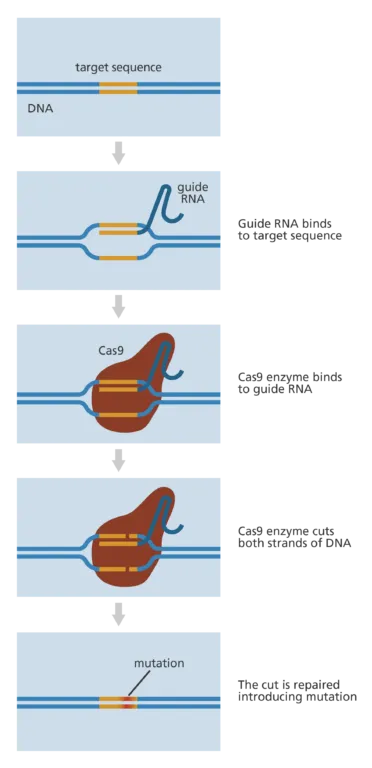
Targeted Guide RNA Delivery & DNA Cleavage: Engineered guide RNA directs Cas9 enzyme to desired genomic sites [13]. Cas9 enzyme recognizes PAM sequence and creates a double-strand break (DSB) [3, 13].
Genomic DNA Repair: Double-stranded breaks undergo repair through Non-Homologous End Joining (NHEJ), which results in random insertions of nucleotides at a target site and produces gene knockouts, and through Homology-Directed Repair (HDR), which involves insertion of a sequence via donor DNA [1, 2].
Increasing Efficiency: The introduction of cloning-free CRISPR procedures and rapid construction of endogenous transcriptional reporters [18, 19].
Genetic Modifications: Protocols enabling large fragment deletion and site-specific insertions [8].
Figure 1: CRISPR-Cas9 Working Principle 4.2 Delivery Methods & Vector Systems
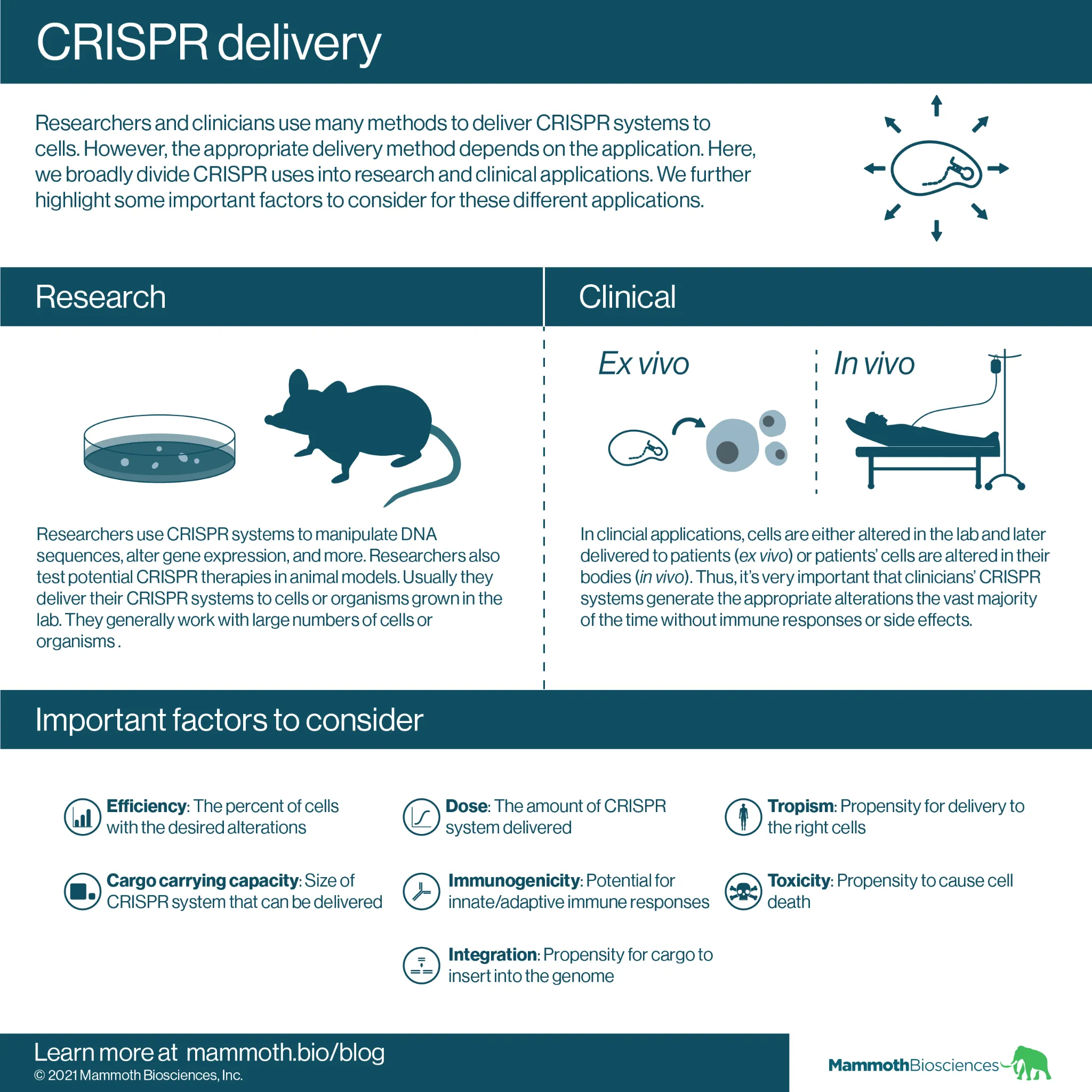
Viral-Based: Pre-established AAV delivery system designed for delivery of Cas9 and guide RNAs on a tissue-specific basis [6, 16].
In Zygote: Delivery in one step by injecting the zygote/embryo to produce knock-in and transgenic animals [5, 20].
Figure 2: CRISPR Delivery Protocols
4.3 Therapeutic & Agricultural Applications
Organ Transplant Therapy: Preserving the donor organs in an ex vivo fashion before the transplant surgery [21].
Non-Dividing Cells: Targeted integration methods for gene editing in non-dividing cells without resorting to cell division (homology-independent targeted integration) [7].
Plant Biotechnology: Homozygous mutant plants (crops) developed through the use of Arabidopsis egg cell-specific promoters in one generation [15, 22].
Epigenetic Editing: Fusion of inactive Cas9 protein (dCas9) to transcription factors, thus enabling locus-specific regulation of gene expression without changes in DNA sequence [23, 24].
4.4 Ethical, Safety, & Regulatory Considerations
Genome Integrity: Assessment of off-targets cutting events, chromosomal rearrangements, and large-scale structural deletions [9, 25].
Human Germline Modification: Ethical considerations of human tripronuclei zygote and germline modifications [11, 17, 26].
Regulation of Clinical Trials: Regulatory control over therapy dosages, safety regulations, and intellectual property rights in clinical human trials [10, 27, 28].
5. Future Aspects & Clinical Directions
Epigenetic Editing: Development of dCas9-based gene expression regulators that regulate gene expression without producing DNA double-strand breakage [23, 24].
Improvement of Non-viral Vectors: Modification of lipid nanoparticles (LNPs) to reduce immunogenicity and increase tissue-specificity outside liver cells [29, 30].
Clinical Trials in Humans: Expansion of human trials of treatments for blood diseases, transthyretin amyloidosis, and immunotherapy for cancer [31-33].
International Guidelines: Establishment of international regulatory guidelines for ethics and access to gene therapies [10, 27].
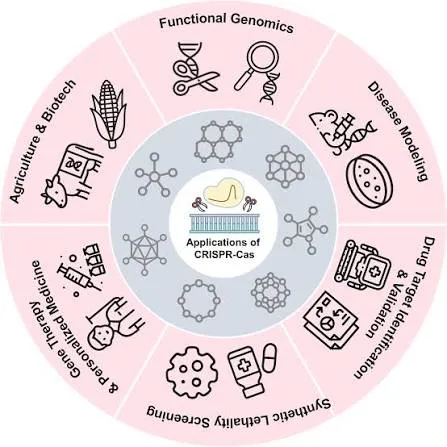
(Figure 3: CRISPR-Cas Applications)
5.1 Extended Clinical & Tool Categories
5.1.1 Human Therapeutics & Clinical Care
Genetic Disorders of Blood: Genetic modification of stem cells outside the body for Sickle Cell Anemia and $\beta$ thalassemia by disabling the enhancer of BCL11A gene [31].
In Vivo Therapy: Genetic editing directly into the liver to treat diseases like transthyretin amyloidosis [32].
Donor Organs: Ex vivo organ perfusion followed by CRISPR targeting to prevent organ rejection [21].
Post-mitotic Tissue Treatment: Targeted integration techniques for post-mitotic tissues [7].
5.1.2 Agriculture & Model Organism Engineering
Plant Tolerance & Productivity: Fast one-generation mutants generated through germline-specific promoter systems [15, 22].
Animal Model Development: Embryonic microinjection in Drosophila and mouse models to establish transgenic models [4, 5, 14, 20].
5.1.3 Advanced Genetic & Molecular Tools
Epigenetic Modulation: Catalytically dead dCas9 conjugated with transcription activators/repressors for transcriptional induction/silencing [23, 24].
Base & Prime Editing: Single-base changes and replacement editing without causing double-strand breaks [34-36].
6. Challenges and Limitations of CRISPR-Cas9
Off-Target Edits: Off-target cutting may occur when there is a mismatch between the sgRNA and genomic DNA sequence [9, 25].
On-Target Structural Changes: Double-strand breaks may result in big deletions, chromosomal changes, or translocations at the target locus [9].
Transport Obstacles: Encapsulation of Cas9 system elements in nontoxic organ-specific vehicles is a significant obstacle; AAVs are burdened by capacity issues, whereas LNPs have difficulty with targeting extrahepatically [6, 29, 30].
Reaction of the Immune System: The prior presence of antibodies and T cells to Cas9 proteins from S. aureus and S. pyogenes can be detrimental for treatment clearance and immune reactions [37, 38].
Inefficiency in Post-Mitotic Cell Types: Repair of DSB through HDR takes place mostly in dividing cells, hindering the replacement of genes in non-dividing post-mitotic tissues such as neurons [7].
Ethical and Accessibility Issues: Financial costs restrict global availability, while the germline and embryonic edition have long-term ethical consequences [10, 11, 17, 26, 27].
7. Case Studies
7.1 Sickle Cell Disease & β
-Thalassemia (Ex Vivo Stem Cell Therapy)
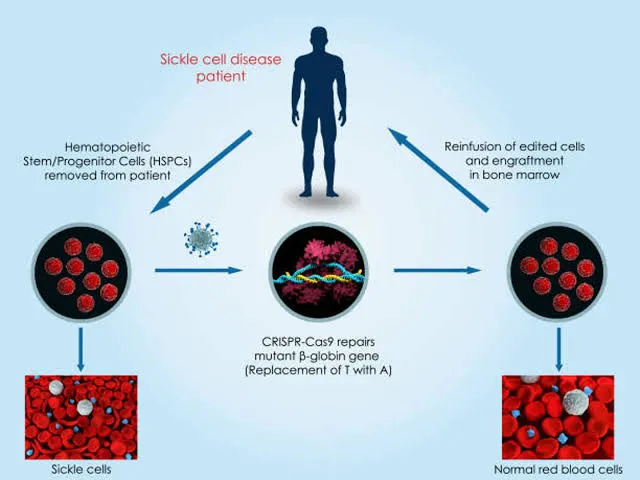
Approach for Treatment: Ex vivo gene editing of the patient’s own CD34+ hematopoietic stem and progenitor cells (HSPCs) [31].
Molecular Mechanism: CRISPR-Cas9 is used to target the erythroid-specific enhancer domain of BCL11A [31]. The disruption of this enhancer prevents the transcription of BCL11A and activates the production of fetal hemoglobin HbF (α2γ2) to prevent sickling of the red blood cells [31].
Clinical Evidence: The patients showed increased levels of HbF, absence of vaso-occlusive crises, and independence of blood transfusion [31].
(Figure 4: Pathway for Ex Vivo Editing of HSPCs)
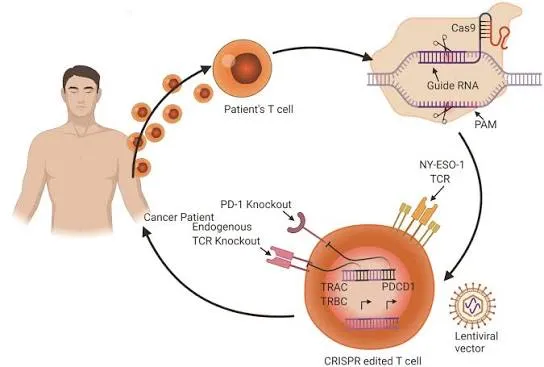
7.2 Cancer Immunotherapy (Engineered CAR-T Cells)
Approach for Treatment: T-cells from the patient or donors are first subjected to multiple rounds of CRISPR-Cas9 editing ex vivo prior to re-infusion.
Molecular Mechanism: Inactivation of the PDCD1 gene, which is responsible for producing PD-1, will hinder the development of exhaustion in T-cells due to the tumor [39]. Knockout of both endogenous T-cell receptor genes (TRAC/TRBC) and HLA genes allows for off-the-shelf allogenic CAR-T cells to be used without GvHD [33, 39].
Clinical Evidence: Gene editing for multiple genes has led to improvements in CAR-T persistence and antitumor effectiveness [33, 39].
(Insert Figure 5: Workflow of Engineered CAR-T Cells)
8. Declarations
Conflict of Interest: Authors report no conflict of interest concerning the publication of this manuscript.
Financial Disclosure: This manuscript did not receive any specific funding.
9. CONCLUSION
The CRISPR-Cas9 technology has marked a breakthrough in molecular biology and experimental medicine [1, 2]. The problems that need solving are those of off-target cleavage, delivery of targets, immunity, and bioethical issues [6, 9, 10, 37]. Improvements in base editing, prime editing, dCas9-based epigenetic control, and non-viral delivery systems will help increase the scope of use for gene-editing therapies [23, 29, 34, 35].
REFERENCES
https://pubmed.ncbi.nlm.nih.gov/31021185/M Adli. The CRISPR toolbox for genome engineering and beyond. Nat Commun. 2018;9(1):1911. Accessed
https://pubmed.ncbi.nlm.nih.gov/29628199/Doudna, JA; Charpentier, E. The Chemistry and Biology of RNA-Guided Genome Engineering. Science. 2014;34
https://pmc.ncbi.nlm.nih.gov/articles/PMC4529991/Jinek M, Chylinski K, Fonfara I, Hauer M, Doudna JA, Charpentier E. A programmable dual-RNA guided DNA endonuclease in adaptive bacterial immunity. Science. 201
https://www.ncbi.nlm.nih.gov/pmc/articles/PMC3730909/Bassett AR, Tibbit C, Ponting CP, Liu JL. Highly Efficient Targeted Mutagenesis of Drosophila Using the CRISPR/Cas9 System. Genetics. 2013;
https://www.ncbi.nlm.nih.gov/pmc/articles/PMC3961010/Yang H, Wang H, Shivalila CS, Cheng AW, Shi L, Jaenisch R. One-step generation of mice carrying gene-edited alleles by CRISPR/Cas-mediated genome engineering. Cell. 2013;153(4):
https://pubmed.ncbi.nlm.nih.gov/293120821/Hung SS, Chrysostomou V, Li F, Wang JH, Williamson R, Luu CD, et al. ACRISPR/Cas9 gene editing toolbox based on adeno-associated virus vectors. Human gene therapy. 2016;27
https://crisprmedicinenews.com/news/crispr-replaces-dna-in-non-dividing-cells/Suzuki K, Tsunekawa Y, Hernandez-Benitez R, Yu J, Chan J, Kurita M, et al. In vivo genome editing through homology-independent targeted integration by CRISPR/Cas9. Nature. 2016;54
https://www.researchgate.net/publication/320685855_Large_Genomic_Fragment_Deletions_and_Insertions_in_Mouse_Using_CRISPRCas9Kraft L, Kurita M, Suzuki K, Belmonte JCI. Large Genomic Fragment Deletions and Insertions in Mouse Using CRISPR/Cas9. Mamm Genome. 2017;28
https://pubmed.ncbi.nlm.nih.gov/30482590/Kosicki C, Tomberg K, Bradley A. CRISPR–Cas9-mediated targeting and repair of double-strand breaks causes extensive chromosomal rearrangements and complex deletions. Nat Biotechnol. 2018;3
https://academic.oup.com/jlb/article/3/2/413/1751234Sherkow JS. Law, arbitrary innovation, and CRISPR-Cas9. J Law Biosci. 2016
https://pmc.ncbi.nlm.nih.gov/articles/PMC4443921/P Liang, Y Xu, X Zhang, C Ding, R Huang, Z Zhang, et al. Gene editing in human tripronuclear zygotes using CRISPR/Cas9 system. Protein Cell. 2015;6(5):
https://www.ncbi.nlm.nih.gov/pmc/articles/PMC4322718/Sander JD, Joung JK. CRISPR-Cas systems for editing, regulating and targeting genomes. Nat Biotechnol. 2014;32(
https://pubmed.ncbi.nlm.nih.gov/26375006/Cong L, Ran FA, Cox D, Lin S, Barretto R, Koziarski C, et al. Multiplex genome engineering using CRISPR/Cas systems. Science. 2013;339(
https://www.ncbi.nlm.nih.gov/pmc/articles/PMC4489958/Fujii W, Kawasaki K, Sugiura K, Naito K. Cloning-free CRISPR/Cas system enables functional cassette knock-in in mice. J Reprod Dev. 2015;61
https://pmc.ncbi.nlm.nih.gov/articles/PMC4511082/Wang ZP, Xing HL, Dong L, Zhang H, Han CY, Wang XC, et al. Efficient generation of homozygous mutants targeting multiple genes by using the CRISPR/Cas9 system directed by an egg cell specific promoter in Arabidopsis within a single generation. Genome Biol. 2015;16(1):1
https://www.sciencedirect.com/science/article/pii/S2162253126000302Xu L, Wang J, Liu Y. Engineering of AAV capsid for improved tissue tropism in CRISPR gene editing. Mol Ther. 2026;34(1):21
https://pubmed.ncbi.nlm.nih.gov/28879860/H Ma, N Marti-Gutierrez, S W Park, J Wu, Y Lee, K Suzuki, et al. Correction of a Pathogenic Gene Mutation in Human Embryos. Nature. 2017;548(7668):
https://pmc.ncbi.nlm.nih.gov/articles/PMC4632001/Ratz M, Testa I, Hell SW, Jakobs S. Rapid creation of transcriptional reporters endogenously controlled in cells using CRISPR/Cas9 technology. Sci Rep. 2015;5:160
https://www.researchpublish.com/upload/book/CRISPRCas9%20Genome%20Editing-8103.pdfGupta M, Kumar S. CRISPR/Cas9 Genome Editing: Principles and Techniques. Monograph Series 8103. Research Publish Journals; 2020
https://bcsrj.com/index.php/bcsrj/article/view/17Tahir T, Ali Q, Rashid M, Malik A. Journey of CRISPR-Cas9 technology from bacterial defense system to an instrument of gene editing in animals as well as plants. Biol Clin Sci Res J. 2020;2020:e017. Available at: https://bcsrj.com
https://crisprmedicinenews.com/news/crispr-improves-ex-vivo-donor-organ-treatment-1/Jensen M, Smith A, Taylor R. CRISPR enhances treatment of donor organs in vitro. CRISPR Med News. 2025; Report 101.
https://pmc.ncbi.nlm.nih.gov/articles/PMC6315587/Chen K, Wang Y, Zhang R, Zhang H, Gao C. CRISPR/Cas systems in agricultural biotechnology and crop adaptation. Annual Review of Plant Biology. 2019;70:667-69
https://ingena.org.au/crisprs-next-act-what-epigenetic-editing-means-for-australias-genomics-system/Genomics Insights Group InGena. CRISPR's Next Act: The Significance of Epigenetic Editing for the Australian Genomics Ecosystem. Policy Brief. InGena; 2025.
https://pubmed.ncbi.nlm.nih.gov/31915817/Pickar-Oliver A, Gersbach CA. The next generation of CRISPR-Cas technologies and applications. Nat Rev Mol Cell Biol. 2019;20(8):
https://pmc.ncbi.nlm.nih.gov/articles/PMC9245484/Tsai SQ, Joung JK. Off-target profiling protocols: from GUIDE-seq to CIRCLE-seq. Nature protocols. 2019 Jan 2
https://www.hilarispublisher.com/open-access/crisprcas9-human-genome-editing-challenges-ethical-concerns-and-implications-2155-9627-1000253.pdfOtieno MO. CRISPR-Cas9 human genome editing: Challenges, ethical issues and implications. J Clin Res Bioeth. 2015;6(5):
https://papers.ssrn.com/sol3/papers.cfm?abstract_id=5252389Sherkow, JS, & Contreras, JL. Intellectual Property and Regulatory Frameworks for Gene Editing Technology. SSRN Electronic Journal 2025:Abstract ID 5252389.
https://www.nsf.gov/impacts/crisprAdvisory Board of the National Science Foundation. The Broader Impacts of Gene Editing Technologies on Science and Society. NSF Impact Reports; 2024. Accessed at: https://www.nsf.gov/
https://www.sciencedirect.com/science/article/pii/S1773224724000066Mendonça MC, Silva AL, Almeida RM. Nano-medicine strategies for the delivery of nucleic acids and components of CRISPR. Eur J Pharm Sci. 2024;192:
https://pmc.ncbi.nlm.nih.gov/articles/PMC10916045/A, R., S., B. and D. R. L. In vivo delivery paradigms for Cas endonucleases. Nature Biomedical Engineering, 2024;
https://pubmed.ncbi.nlm.nih.gov/30664785/Frangoul H, Altshuler D, Cappellini MD, Chen YS, Domm J, Eustace BK, et al. CRISPR-Cas9 Gene Editing for Sickle Cell Disease and $\beta$-Thalassemia. N Engl J Med.
https://pubmed.ncbi.nlm.nih.gov/33283989/Gillmore JD, Gane E, Taubel J, Kao J, Fontana M, Maitland ML, et al. In vivo gene editing of transthyretin amyloidosis using CRISPR-Cas9. N Engl J Med. 202
https://innovativegenomics.org/news/crispr-clinical-trials-2025/Stadtmauer EA, Fraietta JA, Davis MM, Cohen AD, Weiss BM, Integrated Oncology Group, et al. CRISPR-engineered T cells in patients with refractory cancer. Science. 2020;367(64
https://pubmed.ncbi.nlm.nih.gov/29339778/Gaudelli NM, Komor AC, Rees HA, Packer MS, Badran AH, Bryson Chung, et al. Programmable Base Editing of A·T to G·C in Genomic DNA without DNA Cleavage. Nature. 2017;551(768
https://pubmed.ncbi.nlm.nih.gov/30995964/Anzalone AV, Randolph PB, Davis JR, Sousa AA, Koblan LW, Levy JM, et al. Search-and-replacement genome editing without double-strand breaks or donor DNA. Nature. 2019;576(7785
https://pubmed.ncbi.nlm.nih.gov/31666940/Komor AC, Badran AH, Liu DR. Base editing: Deaminase reactions of cytosine and adenine in genomic DNA. Cell. 2019;179(3
https://www.hilarispublisher.com/open-access/immunological-barriers-to-in-vivo-gene-editing-using-bacterial-endonucleases.pdfAdelman ER, Huang G, Wood C. Immunological barriers to in vivo gene editing using bacterial endonucleases. J Clin Cell Immunol. 2018;9(5):1000300
https://pmc.ncbi.nlm.nih.gov/articles/PMC7765739/Charlesworth CT, Deshpande PS, San severe AI, Dejene BT, Gomez-Ospina N, Mantri S, et al. Pre-existing adaptive immune responses to Cas9 proteins in humans. Nat Med. 2019;25(2):249-5
https://www.researchgate.net/publication/387444991_A_Review_of_Research_on_CRISPRCas9_Gene_Editing_Technology_in_Disease_TreatmentSharma R, Patel K. Review of the Research in CRISPR/Cas9 Gene Editing Technology for Disease Treatment. J Med Res Synth. 2024;5(1):45-58. Retrieved
https://pmc.ncbi.nlm.nih.gov/articles/PMC7171402/Jiang F, Doudna JA. Innovations in the structural biology of CRISPR-Cas9 systems. J Cell Mol Med. 2020;24(
https://www.nature.com/articles/s41392-023-01309-7B Zhang, L Wang, C Liu. Engineered Cas9 Variants and High-Fidelity Derivatives for Precision Medicine. Signal Transduct Target Ther. 2023;8(1):120.
https://www.nature.com/articles/s41588-024-01758-yAnzalone AV, Koblan LW, Liu DR. Recent advancements in prime editing and search-and-replace genetics. Nat Genet. 2024;56(3
https://www.nature.com/articles/s41581-022-00636-2Kuroda T, Tanaka M, Sato Y. Therapeutic strategies targeting genes in diseases of the kidney and metabolism. Nat Rev Nephrol. 2022;18(11):
https://www.frontiersin.org/journals/pharmacology/articles/10.3389/fphar.2025.1552741/fullLiu Y, Zhao X, Chen Z. Pharmacology and pharmacokinetics of genome editing therapies. Front Pharmacol. 2025;16:1552
https://www.nature.com/subjects/cas9-endonucleaseNature Research Editors. Annotations on structure and function of Cas9 endonuclease. Nature Subject Collections. 2025. Available at: https://
https://ingena.org.au/publications/2025-breakthroughsInGena Research Group. The gene therapy advances of 2025 demonstrate the future of genomics in practice. InGena Publications. 2025. From: https://
https://pubmed.ncbi.nlm.nih.gov/31150758/Gao L, Cox DBT, Yan WX, Manteiga JC, Schneider MW, Yamano T, et al. Engineered miniature Cas12f and compact Cas nucleases. Science. 2019;365(6
https://pubmed.ncbi.nlm.nih.gov/31223254/Knott GJ, Doudna JA. CRISPR-Cas system paves way for future genetic engineering. Science. 2018;
https://pubmed.ncbi.nlm.nih.gov/29231142/Cox DB, Gootenberg JS, Abudayyeh OO, Franklin B, Zheng L, Zhang F. RNA editing with CRISPR-Cas13. Science. 201
https://pmc.ncbi.nlm.nih.gov/articles/PMC5889534/Gootenberg JS, Abudayyeh OO, Kellner MJ, Joung J, Collins JJ, Zhang F. Applications of the CRISPR-Cas System to Diagnostic Microbiology. Science. 2018
https://pmc.ncbi.nlm.nih.gov/articles/PMC7533657/Nelson CE, Wu Y, Gerson AL. Safety and efficacy parameters for CRISPR-based therapeutics in vivo. Nat Rev Drug Discov. 2020;19(11):755
https://pmc.ncbi.nlm.nih.gov/articles/PMC7447629/Dever DP, Porteus MH. Strategies to deliver genome editing components to stem cells. Hum Gene Ther. 2020;31(15):810-82
Reference
https://pubmed.ncbi.nlm.nih.gov/31021185/M Adli. The CRISPR toolbox for genome engineering and beyond. Nat Commun. 2018;9(1):1911. Accessed
https://pubmed.ncbi.nlm.nih.gov/29628199/Doudna, JA; Charpentier, E. The Chemistry and Biology of RNA-Guided Genome Engineering. Science. 2014;34
https://pmc.ncbi.nlm.nih.gov/articles/PMC4529991/Jinek M, Chylinski K, Fonfara I, Hauer M, Doudna JA, Charpentier E. A programmable dual-RNA guided DNA endonuclease in adaptive bacterial immunity. Science. 201
https://www.ncbi.nlm.nih.gov/pmc/articles/PMC3730909/Bassett AR, Tibbit C, Ponting CP, Liu JL. Highly Efficient Targeted Mutagenesis of Drosophila Using the CRISPR/Cas9 System. Genetics. 2013;
https://www.ncbi.nlm.nih.gov/pmc/articles/PMC3961010/Yang H, Wang H, Shivalila CS, Cheng AW, Shi L, Jaenisch R. One-step generation of mice carrying gene-edited alleles by CRISPR/Cas-mediated genome engineering. Cell. 2013;153(4):
https://pubmed.ncbi.nlm.nih.gov/293120821/Hung SS, Chrysostomou V, Li F, Wang JH, Williamson R, Luu CD, et al. ACRISPR/Cas9 gene editing toolbox based on adeno-associated virus vectors. Human gene therapy. 2016;27
https://crisprmedicinenews.com/news/crispr-replaces-dna-in-non-dividing-cells/Suzuki K, Tsunekawa Y, Hernandez-Benitez R, Yu J, Chan J, Kurita M, et al. In vivo genome editing through homology-independent targeted integration by CRISPR/Cas9. Nature. 2016;54
https://www.researchgate.net/publication/320685855_Large_Genomic_Fragment_Deletions_and_Insertions_in_Mouse_Using_CRISPRCas9Kraft L, Kurita M, Suzuki K, Belmonte JCI. Large Genomic Fragment Deletions and Insertions in Mouse Using CRISPR/Cas9. Mamm Genome. 2017;28
https://pubmed.ncbi.nlm.nih.gov/30482590/Kosicki C, Tomberg K, Bradley A. CRISPR–Cas9-mediated targeting and repair of double-strand breaks causes extensive chromosomal rearrangements and complex deletions. Nat Biotechnol. 2018;3
https://academic.oup.com/jlb/article/3/2/413/1751234Sherkow JS. Law, arbitrary innovation, and CRISPR-Cas9. J Law Biosci. 2016
https://pmc.ncbi.nlm.nih.gov/articles/PMC4443921/P Liang, Y Xu, X Zhang, C Ding, R Huang, Z Zhang, et al. Gene editing in human tripronuclear zygotes using CRISPR/Cas9 system. Protein Cell. 2015;6(5):
https://www.ncbi.nlm.nih.gov/pmc/articles/PMC4322718/Sander JD, Joung JK. CRISPR-Cas systems for editing, regulating and targeting genomes. Nat Biotechnol. 2014;32(
https://pubmed.ncbi.nlm.nih.gov/26375006/Cong L, Ran FA, Cox D, Lin S, Barretto R, Koziarski C, et al. Multiplex genome engineering using CRISPR/Cas systems. Science. 2013;339(
https://www.ncbi.nlm.nih.gov/pmc/articles/PMC4489958/Fujii W, Kawasaki K, Sugiura K, Naito K. Cloning-free CRISPR/Cas system enables functional cassette knock-in in mice. J Reprod Dev. 2015;61
https://pmc.ncbi.nlm.nih.gov/articles/PMC4511082/Wang ZP, Xing HL, Dong L, Zhang H, Han CY, Wang XC, et al. Efficient generation of homozygous mutants targeting multiple genes by using the CRISPR/Cas9 system directed by an egg cell specific promoter in Arabidopsis within a single generation. Genome Biol. 2015;16(1):1
https://www.sciencedirect.com/science/article/pii/S2162253126000302Xu L, Wang J, Liu Y. Engineering of AAV capsid for improved tissue tropism in CRISPR gene editing. Mol Ther. 2026;34(1):21
https://pubmed.ncbi.nlm.nih.gov/28879860/H Ma, N Marti-Gutierrez, S W Park, J Wu, Y Lee, K Suzuki, et al. Correction of a Pathogenic Gene Mutation in Human Embryos. Nature. 2017;548(7668):
https://pmc.ncbi.nlm.nih.gov/articles/PMC4632001/Ratz M, Testa I, Hell SW, Jakobs S. Rapid creation of transcriptional reporters endogenously controlled in cells using CRISPR/Cas9 technology. Sci Rep. 2015;5:160
https://www.researchpublish.com/upload/book/CRISPRCas9%20Genome%20Editing-8103.pdfGupta M, Kumar S. CRISPR/Cas9 Genome Editing: Principles and Techniques. Monograph Series 8103. Research Publish Journals; 2020
https://bcsrj.com/index.php/bcsrj/article/view/17Tahir T, Ali Q, Rashid M, Malik A. Journey of CRISPR-Cas9 technology from bacterial defense system to an instrument of gene editing in animals as well as plants. Biol Clin Sci Res J. 2020;2020:e017. Available at: https://bcsrj.com
https://crisprmedicinenews.com/news/crispr-improves-ex-vivo-donor-organ-treatment-1/Jensen M, Smith A, Taylor R. CRISPR enhances treatment of donor organs in vitro. CRISPR Med News. 2025; Report 101.
https://pmc.ncbi.nlm.nih.gov/articles/PMC6315587/Chen K, Wang Y, Zhang R, Zhang H, Gao C. CRISPR/Cas systems in agricultural biotechnology and crop adaptation. Annual Review of Plant Biology. 2019;70:667-69
https://ingena.org.au/crisprs-next-act-what-epigenetic-editing-means-for-australias-genomics-system/Genomics Insights Group InGena. CRISPR's Next Act: The Significance of Epigenetic Editing for the Australian Genomics Ecosystem. Policy Brief. InGena; 2025.
https://pubmed.ncbi.nlm.nih.gov/31915817/Pickar-Oliver A, Gersbach CA. The next generation of CRISPR-Cas technologies and applications. Nat Rev Mol Cell Biol. 2019;20(8):
https://pmc.ncbi.nlm.nih.gov/articles/PMC9245484/Tsai SQ, Joung JK. Off-target profiling protocols: from GUIDE-seq to CIRCLE-seq. Nature protocols. 2019 Jan 2
https://www.hilarispublisher.com/open-access/crisprcas9-human-genome-editing-challenges-ethical-concerns-and-implications-2155-9627-1000253.pdfOtieno MO. CRISPR-Cas9 human genome editing: Challenges, ethical issues and implications. J Clin Res Bioeth. 2015;6(5):
https://papers.ssrn.com/sol3/papers.cfm?abstract_id=5252389Sherkow, JS, & Contreras, JL. Intellectual Property and Regulatory Frameworks for Gene Editing Technology. SSRN Electronic Journal 2025:Abstract ID 5252389.
https://www.nsf.gov/impacts/crisprAdvisory Board of the National Science Foundation. The Broader Impacts of Gene Editing Technologies on Science and Society. NSF Impact Reports; 2024. Accessed at: https://www.nsf.gov/
https://www.sciencedirect.com/science/article/pii/S1773224724000066Mendonça MC, Silva AL, Almeida RM. Nano-medicine strategies for the delivery of nucleic acids and components of CRISPR. Eur J Pharm Sci. 2024;192:
https://pmc.ncbi.nlm.nih.gov/articles/PMC10916045/A, R., S., B. and D. R. L. In vivo delivery paradigms for Cas endonucleases. Nature Biomedical Engineering, 2024;
https://pubmed.ncbi.nlm.nih.gov/30664785/Frangoul H, Altshuler D, Cappellini MD, Chen YS, Domm J, Eustace BK, et al. CRISPR-Cas9 Gene Editing for Sickle Cell Disease and $\beta$-Thalassemia. N Engl J Med.
https://pubmed.ncbi.nlm.nih.gov/33283989/Gillmore JD, Gane E, Taubel J, Kao J, Fontana M, Maitland ML, et al. In vivo gene editing of transthyretin amyloidosis using CRISPR-Cas9. N Engl J Med. 202
https://innovativegenomics.org/news/crispr-clinical-trials-2025/Stadtmauer EA, Fraietta JA, Davis MM, Cohen AD, Weiss BM, Integrated Oncology Group, et al. CRISPR-engineered T cells in patients with refractory cancer. Science. 2020;367(64
https://pubmed.ncbi.nlm.nih.gov/29339778/Gaudelli NM, Komor AC, Rees HA, Packer MS, Badran AH, Bryson Chung, et al. Programmable Base Editing of A·T to G·C in Genomic DNA without DNA Cleavage. Nature. 2017;551(768
https://pubmed.ncbi.nlm.nih.gov/30995964/Anzalone AV, Randolph PB, Davis JR, Sousa AA, Koblan LW, Levy JM, et al. Search-and-replacement genome editing without double-strand breaks or donor DNA. Nature. 2019;576(7785
https://pubmed.ncbi.nlm.nih.gov/31666940/Komor AC, Badran AH, Liu DR. Base editing: Deaminase reactions of cytosine and adenine in genomic DNA. Cell. 2019;179(3
https://www.hilarispublisher.com/open-access/immunological-barriers-to-in-vivo-gene-editing-using-bacterial-endonucleases.pdfAdelman ER, Huang G, Wood C. Immunological barriers to in vivo gene editing using bacterial endonucleases. J Clin Cell Immunol. 2018;9(5):1000300
https://pmc.ncbi.nlm.nih.gov/articles/PMC7765739/Charlesworth CT, Deshpande PS, San severe AI, Dejene BT, Gomez-Ospina N, Mantri S, et al. Pre-existing adaptive immune responses to Cas9 proteins in humans. Nat Med. 2019;25(2):249-5
https://www.researchgate.net/publication/387444991_A_Review_of_Research_on_CRISPRCas9_Gene_Editing_Technology_in_Disease_TreatmentSharma R, Patel K. Review of the Research in CRISPR/Cas9 Gene Editing Technology for Disease Treatment. J Med Res Synth. 2024;5(1):45-58. Retrieved
https://pmc.ncbi.nlm.nih.gov/articles/PMC7171402/Jiang F, Doudna JA. Innovations in the structural biology of CRISPR-Cas9 systems. J Cell Mol Med. 2020;24(
https://www.nature.com/articles/s41392-023-01309-7B Zhang, L Wang, C Liu. Engineered Cas9 Variants and High-Fidelity Derivatives for Precision Medicine. Signal Transduct Target Ther. 2023;8(1):120.
https://www.nature.com/articles/s41588-024-01758-yAnzalone AV, Koblan LW, Liu DR. Recent advancements in prime editing and search-and-replace genetics. Nat Genet. 2024;56(3
https://www.nature.com/articles/s41581-022-00636-2Kuroda T, Tanaka M, Sato Y. Therapeutic strategies targeting genes in diseases of the kidney and metabolism. Nat Rev Nephrol. 2022;18(11):
https://www.frontiersin.org/journals/pharmacology/articles/10.3389/fphar.2025.1552741/fullLiu Y, Zhao X, Chen Z. Pharmacology and pharmacokinetics of genome editing therapies. Front Pharmacol. 2025;16:1552
https://www.nature.com/subjects/cas9-endonucleaseNature Research Editors. Annotations on structure and function of Cas9 endonuclease. Nature Subject Collections. 2025. Available at: https://
https://ingena.org.au/publications/2025-breakthroughsInGena Research Group. The gene therapy advances of 2025 demonstrate the future of genomics in practice. InGena Publications. 2025. From: https://
https://pubmed.ncbi.nlm.nih.gov/31150758/Gao L, Cox DBT, Yan WX, Manteiga JC, Schneider MW, Yamano T, et al. Engineered miniature Cas12f and compact Cas nucleases. Science. 2019;365(6
https://pubmed.ncbi.nlm.nih.gov/31223254/Knott GJ, Doudna JA. CRISPR-Cas system paves way for future genetic engineering. Science. 2018;
https://pubmed.ncbi.nlm.nih.gov/29231142/Cox DB, Gootenberg JS, Abudayyeh OO, Franklin B, Zheng L, Zhang F. RNA editing with CRISPR-Cas13. Science. 201
https://pmc.ncbi.nlm.nih.gov/articles/PMC5889534/Gootenberg JS, Abudayyeh OO, Kellner MJ, Joung J, Collins JJ, Zhang F. Applications of the CRISPR-Cas System to Diagnostic Microbiology. Science. 2018
https://pmc.ncbi.nlm.nih.gov/articles/PMC7533657/Nelson CE, Wu Y, Gerson AL. Safety and efficacy parameters for CRISPR-based therapeutics in vivo. Nat Rev Drug Discov. 2020;19(11):755
https://pmc.ncbi.nlm.nih.gov/articles/PMC7447629/Dever DP, Porteus MH. Strategies to deliver genome editing components to stem cells. Hum Gene Ther. 2020;31(15):810-82
Jiya Goswami
Corresponding author
Pioneer Pharmacy College, At & Post: Sayajipura, Ajwa-Nimeta Road, Vadodara, Gujarat, India.
Vani Varia
Co-author
Pioneer Pharmacy College, At & Post: Sayajipura, Ajwa-Nimeta Road, Vadodara, Gujarat, India.
Yagnesh Modi
Co-author
Assistant Professor, Pioneer Pharmacy College, At & Post: Sayajipura, Ajwa-Nimeta Road, Vadodara, Gujarat, India.
Satyajit Sahoo
Co-author
Associate Professor, Pioneer Pharmacy College, At & Post: Sayajipura, Ajwa-Nimeta Road, Vadodara, Gujarat, India.
D.B. Meshram
Co-author
Principal, Pioneer Pharmacy College, At & Post: Sayajipura, Ajwa-Nimeta Road, Vadodara, Gujarat, India






 10.5281/zenodo.22967571