

We use cookies to ensure our website works properly and to personalise your experience. Cookies policy
1Student, Bachelor of Pharmacy, S. C. S. M. S. S. Institute of Pharmacy, Maregaon, Yavatmal, Maharashtra, India.
2Student, Bachelor of Pharmacy, S. C. S. M. S. S. Institute of Pharmacy, Maregaon, Yavatmal, Maharashtra, India.
3Assistant Professor, Bachelor of Pharmacy, S. C. S. M. S. S. Institute of Pharmacy, Maregaon, Yavatmal, Maharashtra, India.
4Principal, Bachelor of Pharmacy, S. C. S. M. S. S. Institute of Pharmacy, Maregaon, Yavatmal, Maharashtra, India
Passiflora incarnata is an important medicinal plant widely used for its anti-inflammatory, antioxidant, anxiolytic, sedative, antimicrobial and wound healing properties. The plant contains flavonoids, alkaloids, glycosides and phenolic compounds responsible for several pharmacological activities. Topical gels have gained significant attention because of their non-greasy nature, ease of application, improved patient compliance and controlled drug release. This review focuses on phytochemistry, pharmacological activities and topical gel formulation of Passiflora incarnata leaf extract. Different formulation techniques, evaluation parameters and diffusion studies are discussed in detail. Physicochemical studies such as pH, viscosity, spreadability, swelling index, TLC and Franz diffusion studies demonstrated satisfactory characteristics of the prepared formulations. The review concludes that Passiflora incarnata based topical gels possess promising potential for anti-inflammatory and topical therapeutic applications.
Medicinal plants have been used since ancient times for the treatment of various diseases and disorders. medicines are preferred due to their safety, effectiveness, affordability and fewer side effects compared to synthetic drugs.[1] Among several medicinal plants, Passiflora incarnata has gained considerable attention because of its broad spectrum of pharmacological activities. The plant belongs to the family Passifloraceae and is commonly known as passion flower or Krishna Kamal. Traditionally, the plant has been used for anxiety, insomnia, inflammation, asthma and nervous disorders.[2] Topical drug delivery systems are widely used because they provide localized therapeutic action with reduced systemic side effects. Gels are preferred among semisolid dosage forms because they are transparent, non-greasy, easily washable and aesthetically acceptable.[3] topical gels prepared from medicinal plants have shown significant therapeutic effectiveness in dermatological disorders and inflammatory conditions.
Medicinal plants have been used since ancient times for the treatment of various diseases and disorders. medicines are preferred due to their safety, effectiveness, affordability and fewer side effects compared to synthetic drugs. Among several medicinal plants, Passiflora incarnata has gained considerable attention because of its broad spectrum of pharmacological activities.[4] The plant belongs to the family Passifloraceae and is commonly known as passion flower or Krishna Kamal. Traditionally, the plant has been used for anxiety, insomnia, inflammation, asthma and nervous disorders. Topical drug delivery systems are widely used because they provide localized therapeutic action with reduced systemic side effects. Gels are preferred among semisolid dosage forms because they are transparent, non-greasy, easily washable and aesthetically acceptable. Herbal topical gels prepared from medicinal plants have shown significant therapeutic effectiveness in dermatological disorders and inflammatory conditions.[5]
Taxonomy and Morphology
Passiflora incarnata is a perennial climbing vine with attractive bluish purple flowers and edible fruits. The plant is cultivated in tropical and subtropical regions. Leaves are alternate, three lobed and serrated. Flowers are large, fragrant and bisexual. Fruits are fleshy berries containing several seeds.[6]
The aerial parts of the plant are mainly used for medicinal purposes. The plant is classified under Kingdom Plantae, Family Passifloraceae and Genus Passiflora. Morphological and microscopic evaluations are important for authentication and quality control of the crude drug.[7]
Passiflora incarnata is a perennial climbing vine with attractive bluish purple flowers and edible fruits. The plant is cultivated in tropical and subtropical regions. Leaves are alternate, three lobed and serrated. Flowers are large, fragrant and bisexual. Fruits are fleshy berries containing several seeds.[8]
The aerial parts of the plant are mainly used for medicinal purposes. The plant is classified under Kingdom Plantae, Family Passifloraceae and Genus Passiflora. Morphological and microscopic evaluations are important for authentication and quality control of the crude drug.[9]
Phytochemical Constituents
The medicinal properties of Passiflora incarnata are attributed to the presence of various phytochemical constituents. Flavonoids such as apigenin, luteolin, quercetin, kaempferol and chrysin exhibit antioxidant and anti-inflammatory properties. Alkaloids including harmine and harmaline contribute to sedative and anxiolytic activities. Phenolic compounds provide free radical scavenging action and glycosides contribute to pharmacological effects. Phytochemical screening confirms the presence of flavonoids, alkaloids, glycosides and phenolic compounds in methanolic and ethanolic extracts of the plant.[10]
The medicinal properties of Passiflora incarnata are attributed to the presence of various phytochemical constituents. Flavonoids such as apigenin, luteolin, quercetin, kaempferol and chrysin exhibit antioxidant and anti-inflammatory properties. Alkaloids including harmine and harmaline contribute to sedative and anxiolytic activities. Phenolic compounds provide free radical scavenging action and glycosides contribute to pharmacological effects. Phytochemical screening confirms the presence of flavonoids, alkaloids, glycosides and phenolic compounds in methanolic and ethanolic extracts of the plant.[11]
Pharmacological Activities
Passiflora incarnata exhibits several pharmacological activities including anti-inflammatory, antioxidant, anxiolytic, anticonvulsant, antimicrobial and wound healing effects.[12] The anti-inflammatory activity is mainly due to inhibition of inflammatory mediators such as prostaglandins and cytokines.[13] Antioxidant activity helps reduce oxidative stress and tissue damage.[14] The plant also exhibits sedative and anxiolytic properties through modulation of GABA receptors. Studies have reported anticonvulsant activity against experimentally induced seizures. Antimicrobial studies indicate effectiveness against pathogenic microorganisms.[15]
Passiflora incarnata exhibits several pharmacological activities including anti-inflammatory, antioxidant, anxiolytic, anticonvulsant, antimicrobial and wound healing effects.[16] The anti-inflammatory activity is mainly due to inhibition of inflammatory mediators such as prostaglandins and cytokines. Antioxidant activity helps reduce oxidative stress and tissue damage.[17] The plant also exhibits sedative and anxiolytic properties through modulation of GABA receptors. Studies have reported anticonvulsant activity against experimentally induced seizures. Antimicrobial studies indicate effectiveness against pathogenic microorganisms.[18]
Gel Formulation
Topical gels are semisolid preparations intended for application on skin or mucosal surfaces. Gels are preferred because they provide better spreadability, cooling sensation and improved patient compliance.[19] Carbopol polymers are commonly used as gelling agents due to their excellent viscosity and stability characteristics. The gel formulation generally consists of active ingredient, gelling agent, preservatives, humectants and pH adjusters. The herbal extract is incorporated into the gel base under continuous stirring to obtain a smooth and homogeneous preparation.[20]
Topical gels are semisolid preparations intended for application on skin or mucosal surfaces. Gels are preferred because they provide better spreadability, cooling sensation and improved patient compliance.[21] Carbopol polymers are commonly used as gelling agents due to their excellent viscosity and stability characteristics. The gel formulation generally consists of active ingredient, gelling agent, preservatives, humectants and pH adjusters. The herbal extract is incorporated into the gel base under continuous stirring to obtain a smooth and homogeneous preparation.[22]
Materials Used in Gel Preparation
Carbopol 934 acts as the primary gelling agent and provides viscosity. Methyl paraben and propyl paraben are used as preservatives to improve product stability.[23] Propylene glycol acts as a humectant and enhances skin hydration. Menthol provides cooling sensation while triethanolamine is used for pH adjustment. Distilled water acts as the vehicle for formulation preparation.[24]
Carbopol 934 acts as the primary gelling agent and provides viscosity. Methyl paraben and propyl paraben are used as preservatives to improve product stability. Propylene glycol acts as a humectant and enhances skin hydration. Menthol provides cooling sensation while triethanolamine is used for pH adjustment. Distilled water acts as the vehicle for formulation preparation.[25]
Preparation of gel:
Ingredients
|
Sr. no |
Ingredients |
Role |
|
1. |
Carbopol 934 |
Gelling agent providing viscosity |
|
2. |
Methyl paraben |
Enhance product stability |
|
3. |
Propyl paraben |
Preservative |
|
4. |
Propyl glycol |
Absorb water and maintain moisture in food |
|
5. |
Menthol |
Cooling agent |
|
6. |
Triethanolamine |
PH balancer |
|
7. |
Distilled Water |
Solvent for preparation |
|
8. |
Passiflora incarnata leaves extract |
Active healing components |
Preparation of Different Formulation
|
Sr.no |
ingredient |
F1 |
F2 |
F3 |
F4 |
|
1 |
Carbopol 934 |
0.4 gm |
0.5 gm |
0.6 gm |
0.5 gm |
|
2 |
Methyl Paraben |
0.06 gm |
0.06 gm |
0.06 gm |
0.06 gm |
|
3 |
Propyl Paraben |
0.03 gm |
0.03 gm |
0.03 gm |
0.03 gm |
|
4 |
Propylene glycol |
2 gm |
4 gm |
2 gm |
3 gm |
|
5 |
Menthol |
0.10 gm |
0.15 gm |
0.20 gm |
0.15 gm |
|
6 |
Triethanolamine |
0.4 gm |
0.6 gm |
0.5 gm |
0.5 gm |
Evaluation Parameters
Prepared gels are evaluated for organoleptic properties such as colour, odour, appearance and consistency. pH determination ensures compatibility with skin. Spreadability determines ease of application while viscosity evaluation indicates flow behavior and stability. Swelling index measures hydration capacity of polymer. Thin Layer Chromatography is used for identification of phytoconstituents and standardization. Franz diffusion studies determine drug diffusion and release characteristics through membrane.
Prepared gels are evaluated for organoleptic properties such as colour, odour, appearance and consistency. pH determination ensures compatibility with skin. Spreadability determines ease of application while viscosity evaluation indicates flow behavior and stability. Swelling index measures hydration capacity of polymer. Thin Layer Chromatography is used for identification of phytoconstituents and standardization. Franz diffusion studies determine drug diffusion and release characteristics through membrane.
Spreadability and Viscosity
Spreadability is an important parameter for topical formulations. A good gel should spread easily on skin surface without excessive friction. Viscosity affects consistency and retention time on skin. Optimized formulations show satisfactory viscosity and excellent spreadability. Studies demonstrated that formulations containing optimized concentrations of Carbopol 934 exhibited stable viscosity and acceptable spreadability characteristics suitable for topical administration.[26]
Spreadability is an important parameter for topical formulations. A good gel should spread easily on skin surface without excessive friction.[27] Viscosity affects consistency and retention time on skin. Optimized formulations show satisfactory viscosity and excellent spreadability. Studies demonstrated that formulations containing optimized concentrations of Carbopol 934 exhibited stable viscosity and acceptable spreadability characteristics suitable for topical administration.[28]
Swelling Index and Ash Value
Swelling behavior of gels depends on polymer concentration and ionic strength. Swelling index indicates hydration capacity and structural integrity of the gel network. Ash value determination is important for quality control and standardization of crude plant material. Total ash value, acid insoluble ash and water soluble ash help determine purity and presence of inorganic contaminants.[29]
Swelling behavior of gels depends on polymer concentration and ionic strength. Swelling index indicates hydration capacity and structural integrity of the gel network. Ash value determination is important for quality control and standardization of crude plant material. Total ash value, acid insoluble ash and water soluble ash help determine purity and presence of inorganic contaminants.[30]
TLC and Franz Diffusion Studies
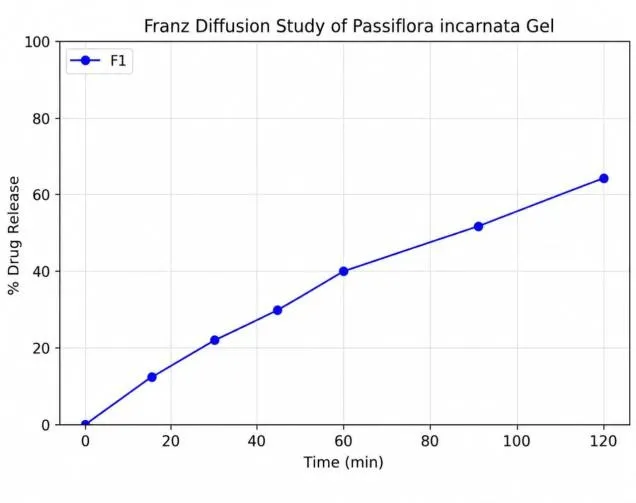
Thin Layer Chromatography analysis showed distinct spots indicating presence of flavonoids and secondary metabolites. Characteristic Rf values confirmed authenticity of the extract. Franz diffusion studies demonstrated controlled and sustained release of active constituents through membrane. Optimized formulations exhibited maximum diffusion and satisfactory permeation characteristics.
Thin Layer Chromatography analysis showed distinct spots indicating presence of flavonoids and secondary metabolites. Characteristic Rf values confirmed authenticity of the extract. Franz diffusion studies demonstrated controlled and sustained release of active constituents through membrane.
Optimized formulations exhibited maximum diffusion and satisfactory permeation characteristics.[31]
Advantages of Gels
Gels offer several advantages including non-greasy nature, better patient compliance, enhanced drug release and reduced systemic side effects. They are easily washable and suitable for localized therapy. formulations are generally safer and environmentally friendly compared to synthetic products. Plant based gels also possess additional therapeutic activities such as antioxidant and wound healing effects.
Gels offer several advantages including non-greasy nature, better patient compliance, enhanced drug release and reduced systemic side effects. They are easily washable and suitable for localized therapy. formulations are generally safer and environmentally friendly compared to synthetic products. Plant based gels also possess additional therapeutic activities such as antioxidant and wound healing effects.
Future Perspectives
Topical gels prepared from Passiflora incarnata possess significant therapeutic potential. Further research is required to evaluate clinical efficacy, long term stability and commercial applicability. Nanotechnology based herbal gels and advanced drug delivery systems may improve therapeutic performance in future applications.
Topical gels prepared from Passiflora incarnata possess significant therapeutic potential. Further research is required to evaluate clinical efficacy, long term stability and commercial applicability. Nanotechnology based herbal gels and advanced drug delivery systems may improve therapeutic performance in future applications.
RESULT:
1.Organoleptic Evaluation
|
Sr.no |
Parameter |
observation |
|
1. |
Colour |
Greenish |
|
2. |
Odour |
Moderate |
|
3. |
Appearance |
Homogenous |
|
4. |
Consistency |
Good consistency |
2.Determination of the PH
|
Sr.No |
Batch |
Value |
|
1. |
F1 |
6.87 |
|
2. |
F2 |
6.17 |
|
3. |
F3 |
6.32 |
|
4. |
F4 |
6.41 |
3.Spredability
|
Sr.no |
Batches |
Spreadibility result |
|
1. |
F1 |
Not applicable gel |
|
2. |
F2 |
Spreadable |
|
3. |
F3 |
Spreadable |
|
4 |
F4 |
Spreadable |
4.Swellimg index
|
Time(min) |
Initial Weight Wo (gm) |
Final Weight Wt (gm) |
Swelling Index |
|
5 min |
1.0 gm |
1.76 gm |
43% |
|
10 min |
1.0 gm |
1.70 gm |
41.4% |
|
15 min |
1.0 gm |
1.46 gm |
31% |
5.Franz Diffusion Test
6.Viscocity:
|
Batch |
Flow time (sec) |
Viscosity |
Remark |
|
Batch1 |
120 |
134.5 |
Acceptable gel viscosity |
|
Batch2 |
Not measured |
Not applicable |
Gel not formed |
|
Batch3 |
110 |
123.5 |
Stable gel |
|
Batch4 |
115 |
128.0 |
Stable and acceptable gel viscosity |
|
Batch |
Flow time (sec) |
Viscosity |
Remark |
|
Batch1 |
120 |
134.5 |
Acceptable gel viscosity |
|
Batch2 |
Not measured |
Not applicable |
Gel not formed |
|
Batch3 |
110 |
123.5 |
Stable gel |
|
Batch4 |
115 |
128.0 |
Stable and acceptable gel viscosity |
CONCLUSION
The present review concludes that Passiflora incarnata is an important medicinal plant with significant pharmacological activities. Topical gels prepared from its leaf extract demonstrated satisfactory physicochemical properties, controlled drug release and anti-inflammatory effectiveness. gel formulations based on Passiflora incarnata may serve as promising alternatives to synthetic topical preparations for inflammatory and dermatological conditions.
The present review concludes that Passiflora incarnata is an important medicinal plant with significant pharmacological activities. Topical gels prepared from its leaf extract demonstrated satisfactory physicochemical properties, controlled drug release and anti-inflammatory effectiveness. gel formulations based on Passiflora incarnata may serve as promising alternatives to synthetic topical preparations for inflammatory and dermatological conditions.
REFERENCES




Sneha Sonarkhan*,Shravani Asamwar, Gajanan Gujatwar, Nilesh Chachda, Design And Development Of Topical Gel Formulation From Leaf Extract Of Passiflora Incarnata, Int. J. of Pharm. Sci., 2026, Vol 4, Issue 7, 3776-3785. https://doi.org/10.5281/zenodo.21438909
 10.5281/zenodo.21438909