

We use cookies to ensure our website works properly and to personalise your experience. Cookies policy
Shree Dev Bhoomi Institute of Education Science and Technology, Dehradun
Acyclovir is a widely used antiviral drug for the treatment of ocular viral infections, particularly those caused by herpes simplex virus. However, conventional ophthalmic formulations such as eye drops show poor therapeutic efficiency due to rapid elimination from the precorneal area, low residence time, and limited permeability. The present study focuses on the design and evaluation of a novel ophthalmic emulgel formulation of acyclovir to overcome these limitations. Emulgel, being a combination of emulsion and gel systems, provides enhanced drug solubility, prolonged ocular retention, and controlled drug release. Different formulations were prepared using suitable gelling agents, emulsifiers, and stabilizers and evaluated for physicochemical properties such as pH, viscosity, spreadability, drug content, homogeneity, and in vitro drug release. The optimized formulation demonstrated satisfactory stability, uniform drug distribution, and sustained release behavior, indicating its suitability for ophthalmic application. The study suggests that acyclovir ophthalmic emulgel may serve as a promising alternative to conventional ocular dosage forms by improving bioavailability, therapeutic efficacy, and patient compliance.
Ophthalmic drug delivery is considered one of the most challenging areas in pharmaceutical sciences because of the complex anatomy and physiology of the eye. Protective mechanisms such as blinking, tear turnover, lacrimation, and nasolacrimal drainage rapidly remove instilled formulations from the ocular surface, resulting in poor drug retention and reduced therapeutic efficacy. It has been reported that only a very small fraction of a topically administered ophthalmic dose reaches the target ocular tissues, while the majority is lost through drainage and tear fluid turnover. This limitation often necessitates frequent dosing, which reduces patient compliance and may compromise therapeutic outcomes. Acyclovir is a synthetic antiviral drug widely used in the management of ocular viral infections, especially herpes simplex keratitis. Despite its clinical importance, acyclovir suffers from poor aqueous solubility and low ocular bioavailability when administered through conventional dosage forms. To overcome these limitations, emulgel systems have emerged as a promising approach. Emulgels combine the solubilization capacity of emulsions with the stability, viscosity, and ease of application of gels, thereby enhancing residence time, controlled drug release, and patient acceptability. Therefore, the present study was undertaken to design and evaluate a novel ophthalmic emulgel containing acyclovir for improved ocular drug delivery.1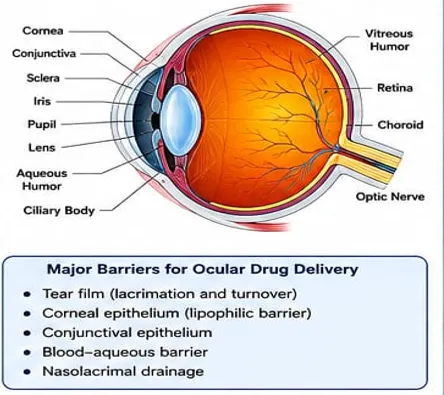
2. OBJECTIVES
The objectives of the present study are:
3. DRUG PROFILE
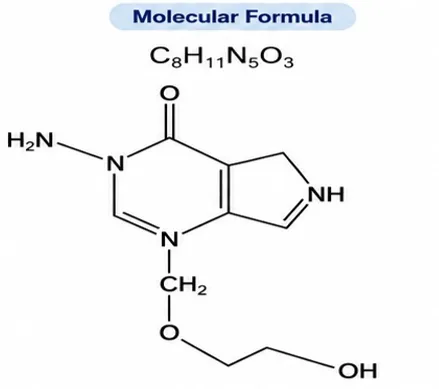
Chemical Name: 2-Amino-1,9-dihydro-9-[(2-hydroxyethoxy)methyl]-6H-purin-6-one
Molecular Formula: C₈H₁₁N₅O₃
Molecular Weight: 225.20 g/mol
Category: Antiviral Agent
Acyclovir is a synthetic purine nucleoside analogue with potent antiviral activity against herpes simplex virus and varicella-zoster virus. It appears as a white to off-white crystalline powder and is sparingly soluble in water, which presents challenges in formulation development for aqueous ophthalmic dosage forms. Acyclovir selectively inhibits viral DNA synthesis. It is initially converted into acyclovir monophosphate by viral thymidine kinase and then further phosphorylated to its active triphosphate form by cellular enzymes. The active metabolite inhibits viral DNA polymerase, incorporates into viral DNA, and causes chain termination, thereby preventing viral replication.3
CHEMICAL STRUCTURE
4. MATERIALS AND METHODS
4.1 Materials
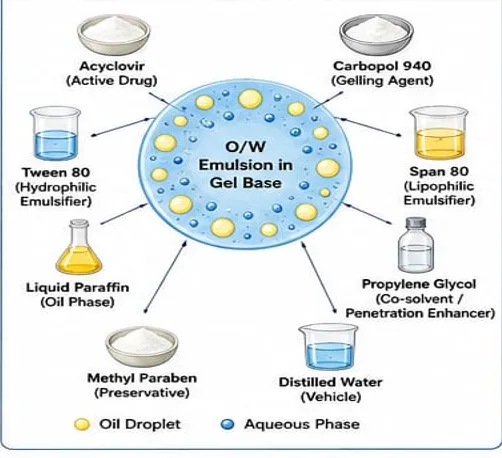
The following materials were used for the preparation of the ophthalmic emulgel:
Acyclovir : Active pharmaceutical ingredient
Carbopol 940 : Gelling agent
Tween 80 : Hydrophilic emulsifying agent
Span 80 : Lipophilic emulsifying agent
Liquid paraffin : Oil phase
Propylene glycol : Penetration enhancer / co-solvent
Triethanolamine : pH-adjusting agent
Methyl paraben : Preservative
Distilled water : Vehicle
All chemicals used were of analytical grade.4
4.2 Method of Preparation of Emulgel
4.2.1 Preparation of Emulsion
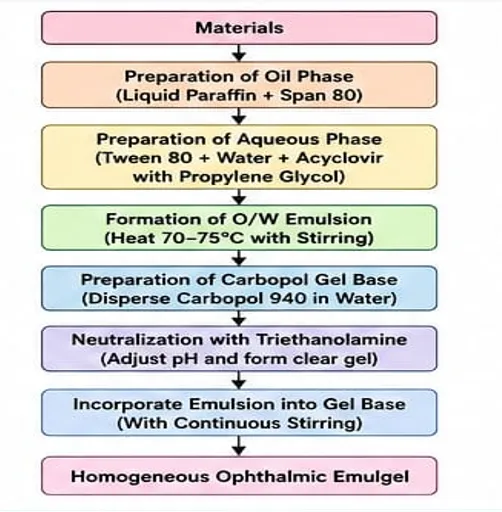
The oil phase consisting of liquid paraffin and Span 80 and the aqueous phase containing Tween 80 and distilled water were prepared separately and heated to 70:75°C. Acyclovir was dissolved in the aqueous phase with the help of propylene glycol. The oil phase was then slowly added to the aqueous phase with continuous stirring to form a stable oil-in-water emulsion.5
4.2.2 Preparation of Gel Base
Carbopol 940 was dispersed in distilled water with constant stirring to avoid lump formation. The dispersion was allowed to hydrate and swell completely. Triethanolamine was added dropwise to adjust the pH and obtain a clear gel base.6
4.2.3 Incorporation of Emulsion into Gel
The prepared emulsion was gradually incorporated into the gel base with continuous stirring to obtain a uniform emulgel. Care was taken to avoid air entrapment and to ensure homogeneity of the final preparation.7
5. EVALUATION PARAMETERS
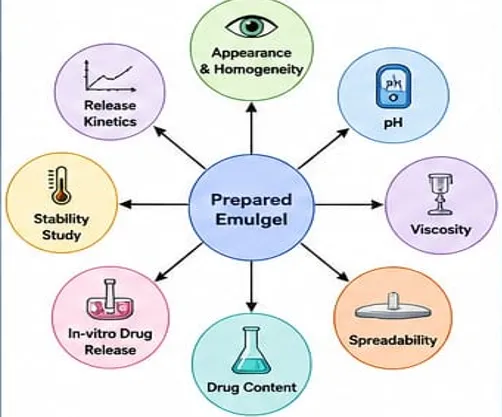
The developed ophthalmic emulgel was evaluated for physicochemical and performance characteristics such as:
These parameters were selected to assess ocular suitability, drug uniformity, release performance, and formulation stability. The uploaded file reports that the optimized formulation showed acceptable pH, good viscosity, satisfactory drug content, and sustained release characteristics.8
6. RECENT ADVANCES IN EMULGEL TECHNOLOGY
Recent years have witnessed significant advancements in emulgel technology, driven by the need to improve drug delivery efficiency, enhance bioavailability, and overcome the limitations associated with conventional dosage forms. Emulgel systems, which combine the advantages of emulsions and gels, have evolved considerably with the integration of novel materials, nanotechnology, and advanced formulation strategies. These developments have expanded the scope of emulgels beyond traditional applications, making them a promising platform for delivering a wide range of therapeutic agents, including antiviral drugs such as acyclovir.9
One of the most notable advancements in emulgel technology is the development of nanoemulgels, which incorporate nanosized emulsion droplets within a gel matrix. The reduction in droplet size to the nanometer range significantly increases the surface area, leading to enhanced drug solubility and improved drug release characteristics. Nanoemulgels also exhibit better stability compared to conventional emulsions, as the smaller droplet size reduces the chances of coalescence and phase separation. Furthermore, these systems enhance drug penetration across biological membranes, resulting in improved therapeutic efficacy. The use of high-energy methods such as ultrasonication and high-pressure homogenization has facilitated the production of stable nanoemulgels with uniform particle size distribution 10
Another important advancement is the incorporation of advanced polymers in emulgel formulations. Modern polymers such as Carbopol derivatives, poloxamers, and bioadhesive polymers have been widely used to improve the rheological properties and stability of emulgels. These polymers not only enhance the viscosity of the formulation but also contribute to prolonged retention time at the site of application. Bioadhesive polymers, in particular, have gained attention due to their ability to adhere to biological surfaces, thereby increasing contact time and improving drug absorption. The use of stimuli-responsive polymers, which respond to changes in pH, temperature, or ionic strength, represents a further advancement in emulgel technology, enabling controlled and targeted drug release.11
The application of nanotechnology in emulgel systems has opened new avenues for drug delivery. Nanoemulgels have been successfully used to deliver drugs with poor solubility and permeability, offering improved bioavailability and therapeutic outcomes. These systems can be designed to target specific tissues or cells, thereby reducing systemic side effects and enhancing treatment efficacy. In addition, the use of lipid-based nanocarriers, such as solid lipid nanoparticles and nanostructured lipid carriers, in combination with emulgel systems has further improved drug delivery performance.12
7. CHALLENGES AND LIMITATIONS
The development of emulgel systems, despite their promising advantages in drug delivery, is associated with several challenges and limitations that must be carefully addressed to ensure their effectiveness, stability, and patient safety. These challenges arise due to the complex nature of emulgels, which involve the integration of emulsion and gel systems, as well as the need to maintain optimal physicochemical and biological performance. Understanding these limitations is essential for the rational design and successful application of emulgel formulations, particularly for drugs such as acyclovir.13
One of the primary challenges in emulgel formulation is the inherent thermodynamic instability of emulsions. Emulsions are naturally unstable systems that tend to separate over time due to processes such as creaming, flocculation, coalescence, and phase inversion. Although the incorporation of a gel matrix improves stability by increasing viscosity and immobilizing droplets, it does not completely eliminate these instability issues. External factors such as temperature fluctuations, mechanical stress, and changes in pH can further accelerate these processes, leading to degradation of the formulation and reduced shelf life.14
Another significant limitation is the complexity involved in formulation development. Emulgels require the careful selection and optimization of multiple components, including oils, surfactants, co-surfactants, gelling agents, preservatives, and penetration enhancers. Each component plays a critical role in determining the stability, viscosity, drug release, and overall performance of the formulation. Achieving the right balance between these components is challenging and often requires extensive experimentation and optimization. Additionally, incompatibility between drug and excipients may lead to instability or reduced efficacy.15
Drug loading capacity is another important limitation of emulgel systems. The amount of drug that can be incorporated into the formulation depends on its solubility in the oil or aqueous phase. Drugs with very low solubility or those requiring high doses may not be suitable for emulgel formulations. Excess drug may precipitate out of the system, leading to inconsistent drug distribution and reduced therapeutic effectiveness.16
8. ROLE OF POLYMERS IN EMULGEL
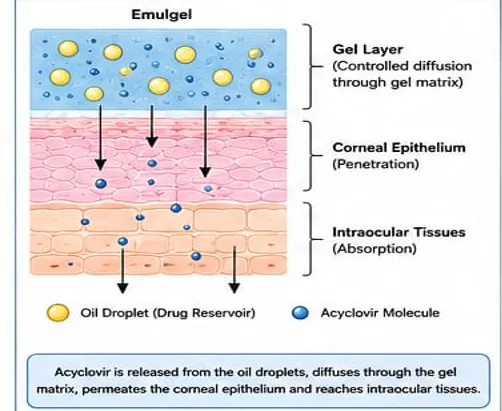
Polymers play a fundamental and multifunctional role in the formulation and performance of emulgel systems, particularly in ophthalmic drug delivery. They primarily act as gelling agents by forming a three-dimensional network structure that imparts viscosity, consistency, and stability to the formulation. This gel matrix serves as a continuous phase in which the emulsion is uniformly dispersed, thereby preventing phase separation and enhancing the overall physical stability of the system. The presence of polymers significantly improves the residence time of the formulation at the site of application, especially on the ocular surface, where rapid tear turnover and blinking often lead to quick drug elimination. By increasing viscosity and bioadhesion, polymers ensure prolonged contact of the drug with the corneal surface, thereby enhancing drug absorption and therapeutic efficacy .17
In addition to providing structural integrity, polymers play a crucial role in controlling the drug release profile from emulgels. The polymeric network acts as a diffusion barrier that regulates the movement of drug molecules from the internal phase (emulsion droplets) to the external environment. The rate of drug release is highly dependent on the type, concentration, and molecular weight of the polymer used. Higher polymer concentrations generally increase viscosity and create a denser network, which slows down drug diffusion and results in sustained release. Conversely, lower polymer concentrations allow faster drug diffusion, leading to a quicker release profile. This ability to modulate drug release makes polymers essential for designing controlled and sustained drug delivery systems .18
Various synthetic and natural polymers are commonly used in emulgel formulations, each contributing distinct properties to the system. Synthetic polymers such as Carbopol (Carbomer) are widely used due to their excellent gelling efficiency, high viscosity at low concentrations, and good bioadhesive properties. Carbopol-based gels exhibit pseudoplastic or shear-thinning behavior, which allows easy application under shear stress while maintaining viscosity at rest, thereby improving patient compliance. Hydroxypropyl Methylcellulose (HPMC) is another commonly used polymer that provides moderate viscosity and is particularly effective in controlling drug release. It forms a hydrophilic matrix that facilitates uniform drug distribution and sustained release. Natural polymers such as xanthan gum, chitosan, and alginate are also gaining attention due to their biocompatibility, biodegradability, and low toxicity. These polymers not only enhance the stability of the formulation but also improve mucoadhesive properties, which is particularly beneficial in ophthalmic applications.19
Furthermore, polymers influence the rheological behavior of emulgels, which is a critical factor in determining their spreadability, ease of application, and retention at the site of administration. Ideally, emulgels should exhibit non-Newtonian, shear-thinning behavior, where viscosity decreases upon application, allowing the formulation to spread easily, and increases again at rest to prevent runoff. Polymers are responsible for imparting these desirable rheological characteristics, ensuring both patient comfort and formulation efficiency.20
9. APPLICATIONS OF EMULGEL
Emulgel systems have emerged as a versatile and innovative drug delivery platform with wide-ranging applications across various fields of pharmaceutical and biomedical sciences. Due to their unique biphasic nature, combining the advantages of both emulsions and gels, emulgels are particularly suitable for delivering both hydrophilic and lipophilic drugs effectively. Their ability to enhance drug solubility, improve stability, provide controlled release, and increase patient compliance makes them highly valuable in modern therapeutics .21
One of the most important applications of emulgel systems is in ophthalmic drug delivery, where they address the major limitations associated with conventional eye drops. The presence of a gel matrix increases the viscosity of the formulation, thereby prolonging its residence time on the ocular surface and reducing drug loss due to tear turnover and blinking. At the same time, the emulsion component enhances the solubility of poorly water-soluble drugs such as acyclovir, improving their bioavailability. This combination results in better drug absorption, sustained therapeutic effect, and reduced dosing frequency. Emulgels are therefore highly promising for the treatment of ocular conditions such as herpes simplex keratitis, conjunctivitis, and other viral or inflammatory eye diseases .22
Apart from ophthalmic applications, emulgels have been extensively utilized in dermatological drug delivery. They are widely employed for the treatment of fungal infections, acne, psoriasis, eczema, and inflammatory skin disorders. Their non-greasy nature, ease of spreading, and controlled drug release improve patient acceptance compared to conventional ointments and creams.23
Emulgels are also used in transdermal drug delivery systems, where they facilitate drug penetration across the skin and provide prolonged systemic action. The incorporation of penetration enhancers and suitable oils helps improve permeation through the stratum corneum, making emulgels useful for analgesic, anti-inflammatory, and hormonal therapies .2
In addition, emulgel technology has found applications in oral mucosal, nasal, vaginal, and periodontal drug delivery, where enhanced mucoadhesion and sustained release contribute to improved therapeutic outcomes. These systems provide localized action with minimal systemic side effects and better patient compliance .25
10. COMPARISON WITH OTHER DRUG DELIVERY SYSTEMS
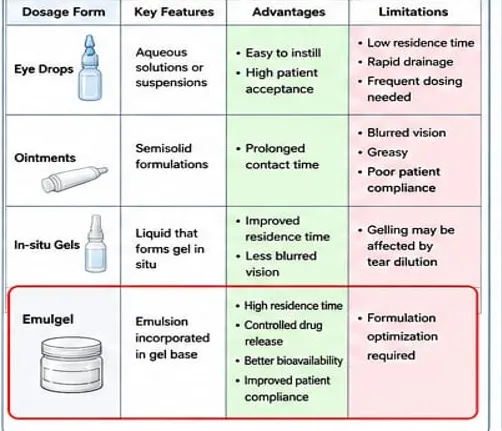
Emulgel systems represent a significant advancement in drug delivery technology by effectively combining the advantages of both emulsions and gels. When compared with conventional and advanced drug delivery systems, emulgels demonstrate superior performance in terms of drug solubility, stability, controlled release, and patient compliance. Traditional dosage forms such as eye drops, ointments, and creams have been widely used for topical and ophthalmic applications; however, they suffer from several limitations, including poor bioavailability, rapid drug elimination, and patient discomfort .26
Conventional eye drops, which are the most commonly used ophthalmic formulations, offer ease of administration but exhibit extremely low bioavailability due to rapid tear turnover, blinking, and nasolacrimal drainage. A large proportion of the administered dose is lost within minutes, necessitating frequent dosing and reducing therapeutic efficiency. In contrast, emulgels possess higher viscosity due to the gel matrix, which increases the residence time of the drug on the ocular surface. This prolonged contact enhances drug absorption and reduces the frequency of administration, thereby improving patient compliance .27
Compared with ointments, emulgels provide similar prolonged retention but eliminate disadvantages such as greasiness, blurred vision, and discomfort. Their transparent or translucent appearance and easy spreadability contribute to greater patient acceptance.28
Liposomes and nanoparticles have shown remarkable potential in drug delivery; however, they often require sophisticated manufacturing techniques and may suffer from stability issues. Emulgels provide a comparatively simpler and cost-effective alternative while still offering controlled release and improveddrug penetration .29
Similarly, in situ gelling systems provide prolonged residence time but may have limitations in incorporating highly lipophilic drugs. Emulgels overcome this limitation through the presence of an oil phase, which facilitates the incorporation of poorly soluble drugs and improves their bioavailability .30
11. FUTURE PERSPECTIVES
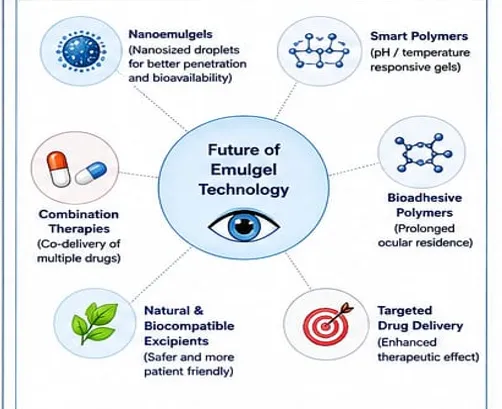
The field of emulgel technology is rapidly evolving, and it holds immense potential for the future of advanced drug delivery systems. With continuous progress in pharmaceutical sciences, material engineering, and nanotechnology, emulgel formulations are expected to overcome current limitations and achieve greater clinical and commercial success. Future research is primarily focused on enhancing formulation efficiency, improving patient compliance, and developing targeted and intelligent drug delivery systems .31
One of the most promising directions in emulgel technology is the integration of nanotechnology. The development of nanoemulgels, which incorporate nanosized droplets within a gel matrix, is expected to significantly improve drug solubility, stability, and bioavailability. These systems offer enhanced penetration across biological barriers due to their small particle size and large surface area. In the future, nanoemulgels can be further optimized for site-specific delivery, ensuring that the drug reaches the desired target tissue with minimal systemic exposure. This approach is particularly beneficial for antiviral drugs such as acyclovir, where localized and sustained delivery is crucial for effective therapy .
Another important area of advancement is the use of smart and stimuli-responsive polymers in emulgel formulations. These polymers can respond to changes in environmental conditions such as pH, temperature, or ionic strength, allowing for controlled and triggered drug release. For example, temperature-sensitive emulgels can undergo sol:gel transformation upon contact with body temperature, enhancing retention at the site of application. Similarly, pH-responsive systems can release the drug selectively in specific physiological conditions. Such intelligent delivery systems are expected to revolutionize the field by providing precise control over drug release and improving therapeutic outcomes.32
Future developments are also expected to focus on targeted drug delivery systems, where ligands, antibodies, or surface-modified nanoparticles can direct drugs specifically to diseased tissues. Such approaches may significantly reduce systemic toxicity while improving therapeutic efficacy .33
12. RESEARCH GAP
Despite significant advancements in ophthalmic drug delivery systems, the effective delivery of antiviral drugs such as acyclovir continues to face multiple challenges. Conventional ophthalmic formulations, including eye drops and ointments, suffer from extremely low bioavailability due to rapid precorneal elimination, tear turnover, nasolacrimal drainage, and limited corneal permeability. Although several novel drug delivery approaches have been developed to overcome these limitations, their clinical effectiveness remains suboptimal .34
Various advanced systems such as nanoparticles, liposomes, niosomes, and in situ gels have demonstrated potential in enhancing drug delivery; however, each system is associated with certain drawbacks. Nanoparticles may face issues related to stability, aggregation, and high production cost. Liposomal systems often suffer from leakage and limited shelf life, while in situ gels may not provide sufficient drug loading capacity for poorly soluble drugs. Therefore, there is still a need for a more efficient and stable delivery system that can simultaneously improve solubility, retention time, and controlled drug release .35
Although emulgel technology has shown considerable promise in topical and transdermal applications, limited research has been devoted to ophthalmic emulgel systems for antiviral therapy. Most existing studies have focused on anti-inflammatory or antibacterial agents, while relatively fewer investigations have explored the formulation and evaluation of acyclovir-loaded ophthalmic emulgels.36
Furthermore, there remains a lack of comprehensive studies evaluating long-term stability, ocular irritation, patient acceptability, and large-scale manufacturing feasibility of ophthalmic emulgel formulations. The absence of sufficient clinical studies and standardized regulatory guidelines further highlights the need for additional research in this area.37
Therefore, the present research aims to bridge these gaps by developing a stable and effective acyclovir-loaded ophthalmic emulgel capable of improving drug solubility, prolonging ocular residence time, and providing sustained drug release for enhanced therapeutic efficacy .38
13. FUTURE PERSPECTIVES
The field of ophthalmic drug delivery is rapidly evolving, and emulgel-based systems are expected to play a significant role in the development of next-generation therapeutic formulations. With continuous advancements in pharmaceutical technology, future research is likely to focus on improving the efficiency, safety, and patient acceptability of emulgel systems, particularly for the delivery of antiviral drugs such as acyclovir .39
One of the most promising directions is the integration of nanotechnology with emulgel systems. Nanoemulgels, which incorporate nanosized droplets within a gel matrix, have shown great potential in enhancing drug solubility, stability, and permeability. Future studies should focus on optimizing nanoemulgel formulations to achieve targeted drug delivery, improved corneal penetration, and enhanced therapeutic outcomes. The use of advanced techniques such as high-pressure homogenization and ultrasonication will further improve formulation uniformity and performance .40
Another important area of future research is the development of stimuli-responsive or smart- emulgel systems. These systems are designed to respond to specific physiological conditions such as changes in pH, temperature, or ionic strength. In ophthalmic applications, such systems can provide site-specific and controlled drug release, thereby improving therapeutic efficacy while minimizing side effects. The incorporation of thermosensitive and pH-sensitive polymers can significantly enhance the performance of emulgel formulations.41
The use of bioadhesive and mucoadhesive polymers represents another promising strategy for improving ocular drug delivery. These polymers can increase the residence time of the formulation on the ocular surface by adhering to the mucin layer, thereby enhancing drug absorption. Future research should focus on identifying and optimizing novel bioadhesive materials that are biocompatible, non-irritating, and capable of providing prolonged drug retention.42
Artificial intelligence, machine learning, and Quality by Design (QbD) approaches are expected to accelerate formulation optimization and improve reproducibility. These technologies may reduce development costs and facilitate the translation of laboratory-scale formulations into commercially viable products.43
Future investigations should also emphasize clinical evaluation, toxicity assessment, and regulatory standardization to ensure the safe and effective commercialization of ophthalmic emulgel formulations. The combination of nanotechnology, advanced polymers, and precision medicine is expected to shape the future of ocular drug delivery systems.44
14. RESULTS AND DISCUSSION
The developed ophthalmic emulgel formulation exhibited satisfactory physicochemical characteristics and was found to be smooth, homogeneous, and free from grittiness, indicating suitability for ocular use. The pH of the formulation was found to be within the acceptable ocular range, suggesting minimal irritation upon application. Viscosity was adequate to prolong retention time on the ocular surface while still maintaining acceptable spreadability. Drug content analysis indicated uniform distribution of acyclovir throughout the formulation. In vitro drug release studies showed sustained release of acyclovir over an extended period, demonstrating the ability of the emulgel system to reduce dosing frequency and improve therapeutic efficacy. Stability studies performed under accelerated conditions revealed only minor changes in pH and drug content, confirming that the formulation remained stable during the study period. Kinetic analysis indicated that drug release followed the Higuchi model and Korsmeyer:Peppas model, suggesting diffusion-controlled and anomalous transport mechanisms. Overall, the developed emulgel formulation offered improved retention, controlled release, and better potential therapeutic performance than conventional ophthalmic formulations.45
CONCLUSION
In recent years, the development of advanced drug delivery systems has become a major focus in pharmaceutical research, particularly for drugs that exhibit poor solubility, limited permeability, and low bioavailability. Emulgel technology has emerged as a highly promising and innovative approach that effectively combines the advantages of emulsions and gels, thereby addressing many of the limitations associated with conventional dosage forms. This review highlights the significant potential of emulgel systems in enhancing drug delivery performance, especially for antiviral agents such as acyclovir [124].
Acyclovir, although widely used and clinically effective in the treatment of viral infections, faces several challenges when administered through traditional formulations. Its poor aqueous solubility, low permeability, and rapid elimination from the site of application result in reduced therapeutic efficiency and the need for frequent dosing. These limitations not only affect drug efficacy but also lead to poor patient compliance. Therefore, the development of novel drug delivery systems capable of overcoming these barriers is essential
Emulgel systems provide several advantages, including improved drug solubility, enhanced stability, prolonged residence time, controlled drug release, and better patient acceptability. The incorporation of suitable polymers and emulsifying agents enables the formulation to maintain therapeutic drug concentrations for extended periods while minimizing dosing frequency and side effects [126].
Recent advances such as nanoemulgels, smart polymers, bioadhesive systems, and targeted delivery strategies have further expanded the potential applications of emulgel technology. These innovations have opened new possibilities for improving ocular bioavailability and achieving more effective antiviral therapy
Despite certain limitations related to formulation complexity, stability, and manufacturing challenges, continuous progress in nanotechnology, polymer science, and pharmaceutical engineering is expected to overcome these barriers. Future research focusing on optimization, clinical evaluation, and regulatory acceptance will further strengthen the role of emulgels in modern drug delivery
Overall, acyclovir-loaded ophthalmic emulgels represent a promising approach for enhancing ocular drug delivery and improving therapeutic outcomes. The integration of advanced technologies with emulgel systems is likely to contribute significantly to the development of safer, more efficient, and patient-friendly ophthalmic formulations in the future
SUMMARY
The present study focused on the formulation and evaluation of a novel ophthalmic emulgel of acyclovir for the treatment of ocular viral infections, especially herpes simplex infections. Conventional ophthalmic dosage forms such as eye drops suffer from poor bioavailability, rapid precorneal elimination, low residence time, and frequent dosing requirements. To overcome these limitations, an emulgel-based drug delivery system was developed by combining the advantages of both emulsions and gels. The formulation was prepared using suitable polymers, emulsifying agents, stabilizers, and other excipients to improve drug solubility, retention time, and controlled release.
The prepared ophthalmic emulgel was evaluated for physicochemical parameters such as appearance, homogeneity, pH, viscosity, spreadability, drug content, in vitro drug release, and stability. The optimized formulation showed satisfactory properties with pH in the acceptable ocular range, good viscosity, smooth consistency, and uniform drug distribution. The in vitro drug release study indicated a sustained release of acyclovir for up to 12 hours, suggesting the potential to reduce dosing frequency and improve patient compliance. Stability studies also confirmed that the formulation remained stable with only minor changes in physicochemical parameters. Overall, the study concluded that acyclovir ophthalmic emulgel is a promising alternative to conventional eye drops, offering improved ocular retention, enhanced bioavailability, controlled drug release, and better therapeutic effectiveness in the management of ocular viral infections.
In addition, the study highlights the growing importance of advanced ophthalmic drug delivery systems in improving the therapeutic performance of antiviral agents. By incorporating acyclovir into an emulgel system, the formulation not only enhances ocular contact time but also minimizes drug wastage caused by tear drainage and blinking. The sustained-release behavior of the optimized formulation may reduce the frequency of administration, thereby improving patient convenience and adherence to treatment. Thus, the developed ophthalmic emulgel demonstrates significant potential as an effective, stable, and patient-friendly dosage form for ocular antiviral therapy.
REFERENCES


Mritunjay Mishra, Meenakshi Kandwal, Shivanand Patil, Design and Evaluation of a Novel Opthalmic Emulgel using Acyclovir, Int. J. of Pharm. Sci., 2026, Vol 4, Issue 7, 3752-3764. https://doi.org/10.5281/zenodo.21436634
 10.5281/zenodo.21436634