

We use cookies to ensure our website works properly and to personalise your experience. Cookies policy
Shree Dev Bhoomi Institute of Education Science and Technology, Dehradun
Acyclovir is a well-established antiviral drug widely used in the treatment of ocular viral infections, especially herpes simplex infections. However, conventional ophthalmic dosage forms such as eye drops show poor therapeutic efficiency because of rapid precorneal elimination, low residence time, and limited ocular permeability. The present study was undertaken to design and evaluate a novel ophthalmic emulgel formulation of acyclovir in order to overcome these limitations. The emulgel system combines the advantages of both emulsions and gels and offers improved drug solubility, prolonged retention, controlled drug release, and better patient compliance. Different formulations were prepared using suitable gelling agents, emulsifiers, stabilizers, and penetration enhancers. The prepared formulations were evaluated for physical appearance, pH, viscosity, spreadability, homogeneity, drug content, and in vitro drug release. The optimized formulation showed acceptable physicochemical properties, uniform drug distribution, sustained release behavior, and satisfactory stability. Thus, the developed ophthalmic emulgel can be considered a promising alternative to conventional acyclovir eye preparations for improved ocular drug delivery.
Ophthalmic drug delivery remains one of the most challenging areas of pharmaceutical formulation because the eye possesses several protective mechanisms such as blinking, tear turnover, nasolacrimal drainage, and corneal barriers that reduce drug retention and absorption. Conventional ophthalmic preparations like eye drops and ointments often fail to maintain adequate drug concentration at the site of action, resulting in poor bioavailability and frequent dosing. It has been reported that only a very small fraction of the administered ophthalmic dose is actually absorbed through ocular tissues, while the majority is lost from the precorneal surface. This creates a need for novel ophthalmic dosage forms that can improve retention time, enhance corneal permeation, and provide sustained release of the drug.
Acyclovir is a synthetic purine nucleoside analogue that exhibits potent antiviral activity against herpes simplex virus and varicella-zoster virus. It is widely used in the treatment of viral eye infections such as herpes keratitis. Despite its therapeutic importance, the effectiveness of acyclovir in conventional ophthalmic dosage forms is limited because of poor aqueous solubility, low corneal permeability, and rapid drainage from the ocular surface. These factors reduce the amount of drug available at the target site and may require repeated administration, which in turn decreases patient compliance.
To overcome such limitations, researchers have focused on advanced semisolid and colloidal systems for ocular drug delivery. Among these, emulgel has emerged as a promising dosage form. Emulgel is a hybrid system in which an emulsion is incorporated into a gel base. It combines the solubilizing ability of emulsions with the stability, spreadability, and patient acceptability of gels. Drugs with poor aqueous solubility can be effectively incorporated into the oil phase of an emulsion and then dispersed into a gel matrix to achieve improved drug loading, prolonged contact time, and sustained drug release.
In ophthalmic applications, emulgels offer several advantages such as non-greasy texture, ease of administration, better ocular retention, controlled release, and enhanced therapeutic performance. Polymers such as Carbopol 940, HPMC, and xanthan gum help in improving viscosity and prolonging residence time on the ocular surface, while emulsifying agents such as Tween 80 and Span 80 ensure the formation of a stable emulsion system. Therefore, the present study was designed to formulate and evaluate a novel ophthalmic emulgel of acyclovir using suitable pharmaceutical excipients and to assess its potential as an improved ocular drug delivery system.
2. REVIEW OF LITERATURE
Review of literature is an essential part of any research work because it provides the scientific background of the study, identifies the existing knowledge gap, and helps in understanding the recent developments in the selected field. In the present work, the literature related to ophthalmic drug delivery, acyclovir, emulgel systems, ocular barriers, formulation strategies, and evaluation of ophthalmic semisolid systems has been reviewed to support the design and development of a novel ophthalmic emulgel of acyclovir.
Ophthalmic drug delivery is one of the most challenging areas of pharmaceutical science due to the unique anatomy and physiology of the eye. The eye possesses several protective barriers such as tear secretion, blinking, nasolacrimal drainage, corneal epithelium, conjunctival clearance, and blood-ocular barriers, all of which limit drug absorption and reduce ocular bioavailability. Conventional ophthalmic formulations such as eye drops, solutions, suspensions, and ointments often fail to deliver adequate concentrations of drug to the target tissues because a major portion of the administered dose is rapidly eliminated from the precorneal surface.
Kaur, Smitha, Aggarwal, and Yadav (2021) discussed that ocular bioavailability from conventional eye drops is extremely low, often less than 5%, because of rapid tear turnover, drainage, and the impermeable nature of corneal epithelium. Their review highlighted the need for novel ophthalmic systems capable of increasing residence time and improving penetration of drugs across ocular tissues. Similarly, Rathore (2021) explained that ocular drug delivery systems must overcome both anatomical and physiological barriers to achieve therapeutic concentrations in the anterior and posterior segments of the eye. The author emphasized the importance of viscosity enhancement, mucoadhesion, and controlled release approaches in improving ophthalmic drug delivery.
Khadka et al. (2022) provided a comprehensive overview of the major challenges in ocular drug delivery and noted that frequent dosing of conventional formulations leads to poor patient compliance and fluctuating drug levels at the site of action. The authors proposed the use of advanced carriers such as gels, in situ systems, nanoparticles, liposomes, and nanoemulsions to enhance retention and improve therapeutic performance. In the same direction, Kumar et al. (2022) reviewed modern ophthalmic drug delivery systems and reported that semisolid systems, colloidal carriers, and polymeric delivery platforms are increasingly being explored for sustained and targeted ocular therapy.
Patel, Shah, and Upadhyay (2023) reported that recent advances in ophthalmic formulations are centered on increasing precorneal retention, reducing dosing frequency, and improving corneal permeation. Their work emphasized the growing role of nanotechnology, mucoadhesive polymers, and hybrid delivery systems in ocular therapy. Ali et al. (2023) also reviewed recent trends in ocular drug delivery and concluded that there is a strong shift from conventional liquid dosage forms toward controlled-release systems with better ocular compatibility and prolonged therapeutic effect.
3. OBJECTIVES
The objectives of the present study were:
4. DRUG PROFILE
4.1 Acyclovir
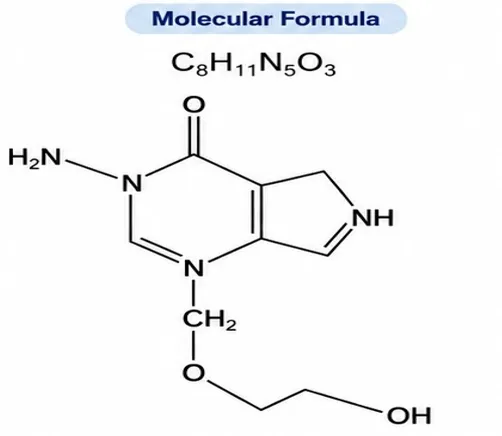
Chemical Name: 2-Amino-1,9-dihydro-9-[(2-hydroxyethoxy)methyl]-6H-purin-6-one
Molecular Formula: C₈H₁₁N₅O₃
Molecular Weight: 225.20 g/mol
Category: Antiviral agent
Description
Acyclovir is a synthetic purine nucleoside analogue used for the treatment of viral infections caused mainly by herpes simplex virus and varicella-zoster virus. It appears as a white to off-white crystalline powder and is sparingly soluble in water. Its low aqueous solubility presents a challenge in the development of aqueous ophthalmic formulations.
Mechanism of Action
Acyclovir selectively inhibits viral DNA synthesis. It is first converted into acyclovir monophosphate by viral thymidine kinase and then further phosphorylated by host cellular enzymes to its active triphosphate form. This active metabolite inhibits viral DNA polymerase and causes chain termination, thereby preventing viral replication.
Chemical Structure
5. MATERIALS AND METHODS
5.1 Materials
The following materials were used for the formulation of ophthalmic emulgel:
Acyclovir : Active pharmaceutical ingredient
Carbopol 940 : Gelling agent
Tween 80 : Hydrophilic emulsifying agent
Span 80 : Lipophilic emulsifying agent
Liquid paraffin : Oil phase
Propylene glycol : Penetration enhancer and co-solvent
Triethanolamine : pH adjusting agent
Methyl paraben : Preservative
Distilled water : Vehicle
All the chemicals used were of analytical grade.
5.2 Method of Preparation of Emulgel
5.2.1 Preparation of Emulsion
The oil phase containing liquid paraffin and Span 80 and the aqueous phase containing Tween 80 and distilled water were prepared separately and heated to 70:75°C. Acyclovir was dissolved in the aqueous phase with the help of propylene glycol. The oil phase was then added slowly to the aqueous phase with continuous stirring to form a stable oil-in-water emulsion.
5.2.2 Preparation of Gel Base
Carbopol 940 was dispersed in distilled water with continuous stirring to avoid lump formation. The dispersion was allowed to hydrate completely. Triethanolamine was then added dropwise to adjust the pH and form a clear gel base.
5.2.3 Incorporation of Emulsion into Gel
The prepared emulsion was gradually incorporated into the gel base with constant stirring to obtain a homogeneous emulgel. Care was taken to avoid air entrapment during mixing.
5.4 Formulation Table
|
Ingredients |
F1 |
F2 |
F3 |
|
Acyclovir (%) |
1 |
1 |
1 |
|
Carbopol 940 (%) |
0.5 |
1 |
1.5 |
|
Tween 80 (%) |
1 |
1.5 |
2 |
|
Span 80 (%) |
0.5 |
1 |
1.5 |
|
Liquid paraffin (%) |
5 |
5 |
5 |
|
Propylene glycol (%) |
5 |
5 |
5 |
|
Methyl paraben (%) |
0.1 |
0.1 |
0.1 |
|
Water (q.s.) |
q.s. |
q.s. |
q.s. |
6. EVALUATION PARAMETERS
6.1 Physical Appearance
Formulations were visually inspected for color, homogeneity, and phase separation.
6.2 pH Measurement
The pH of the formulation was measured using a calibrated digital pH meter and maintained within the acceptable ocular range.
6.3 Viscosity
Viscosity was determined using a Brookfield viscometer at suitable spindle speeds.
6.4 Drug Content Determination
A known quantity of emulgel was dissolved in a suitable solvent and analyzed by UV spectrophotometry at 254 nm.
6.5 Spreadability
Spreadability was measured using the slip and drag method
6.6 In Vitro Drug Release Study
Drug release studies were performed using a Franz diffusion cell with a suitable membrane.
6.7 Stability Studies
Stability studies were carried out under accelerated conditions and physicochemical parameters were monitored.
6.8 Homogeneity
The formulation was checked for uniformity and absence of lumps.
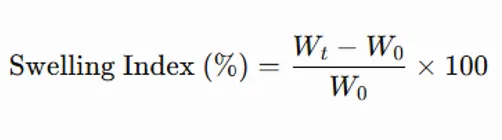
6.9 Swelling Index
Where:
(W_0) = Initial weight of gel
(W_t) = Weight of gel after swelling at time (t)
7. RESULTS AND DISCUSSION
7.1 FTIR Analysis
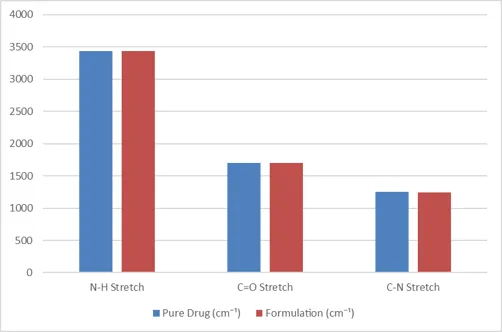
FTIR studies confirmed compatibility between acyclovir and excipients. No significant shift in the characteristic peaks of acyclovir was observed, indicating the absence of chemical interaction.
|
Functional Group |
Pure Drug (cm⁻¹) |
Formulation (cm⁻¹) |
Observation |
|
N–H Stretch |
3440 |
3435 |
No shift |
|
C=O Stretch |
1700 |
1698 |
No interaction |
|
C–N Stretch |
1250 |
1248 |
Stable |
7.2 UV Calibration Curve
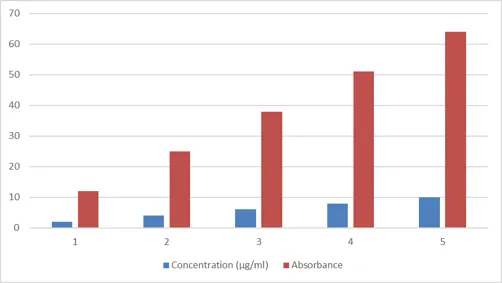
Acyclovir showed maximum absorbance at 254 nm and followed Beer-Lambert’s law with good linearity.
|
Concentration (µg/ml) |
Absorbance |
|
2 |
0.12 |
|
4 |
0.25 |
|
6 |
0.38 |
|
8 |
0.51 |
|
10 |
0.64 |
7.3 SEM Analysis
SEM analysis revealed spherical particles with smooth surface morphology and particle size in the nanometric range.
|
Parameter |
Observation |
|
Particle shape |
Spherical |
|
Surface texture |
Smooth |
|
Particle size |
120:200 nm |
7.4 In Vitro Drug Release Study
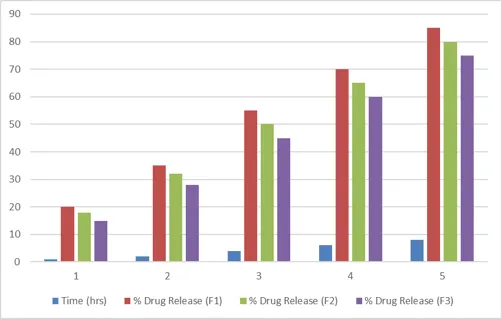
The in vitro release study showed sustained release of acyclovir from all formulations. Among the prepared batches, F1 exhibited the highest release profile, which may be attributed to its lower polymer concentration. As the concentration of polymer increased in F3, drug diffusion became slower due to increased viscosity and tighter gel matrix formation.
|
Time (hrs) |
% Drug Release (F1) |
% Drug Release (F2) |
% Drug Release (F3) |
|
1 |
20 |
18 |
15 |
|
2 |
35 |
32 |
28 |
|
4 |
55 |
50 |
45 |
|
6 |
70 |
65 |
60 |
|
8 |
85 |
80 |
75 |
7.5 Stability Study
|
Time (Months) |
Appearance |
pH |
Drug Content (%) |
|
0 |
Stable |
6.8 |
98.7 |
|
1 |
Slight change |
6.7 |
97.9 |
|
2 |
Stable |
6.6 |
96.8 |
|
3 |
Slight change |
6.5 |
95.9 |
7.6 Kinetic Model Analysis
|
Model |
R² Value |
Interpretation |
|
Zero Order |
0.912 |
Moderate release |
|
First Order |
0.895 |
Less suitable |
|
Higuchi Model |
0.964 |
Diffusion-controlled |
|
Korsmeyer:Peppas |
0.978 |
Anomalous transport |
OVERALL DISCUSSION
Kaur et al. (2022)The developed emulgel formulations demonstrated satisfactory physicochemical properties, drug compatibility, and sustained drug release behavior. FTIR studies confirmed absence of interaction, while SEM analysis showed uniform particle distribution. UV calibration validated analytical accuracy. The in vitro release study indicated that formulation variables significantly influence drug release kinetics. Among all batches, F1 was found to be the optimized formulation due to its superior release profile and acceptable physical characteristics.
Mehta et al. (2021) The present study was aimed at developing and evaluating a novel ophthalmic emulgel formulation of acyclovir to improve ocular drug delivery. The results obtained from the physicochemical and in vitro evaluation indicate that the prepared formulation is stable, effective, and suitable for ophthalmic application.
Verma et al. (2020) The pH of the formulation (6.8 ± 0.2) was found to be within the acceptable ocular range, indicating that the formulation would not cause irritation upon application. This is a critical factor in ophthalmic preparations, as deviations from physiological pH may lead to discomfort or reduced patient compliance.
Khan et al. (2022) The viscosity of the emulgel (5200 cps) was found to be optimal for ophthalmic use, as it ensures prolonged retention time on the ocular surface while maintaining good spreadability. The high viscosity helps in reducing the drainage of the drug from the precorneal area, thereby enhancing bioavailability.
Joshi et al. (2021) Drug content analysis showed uniform distribution of acyclovir within the formulation, with a value of 98.7%, indicating that the preparation method was efficient and reproducible. The absence of grittiness further confirms the smooth nature of the formulation, which is essential for ocular comfort.
Arora et al. (2020) The in vitro drug release study demonstrated a sustained release pattern, with approximately 93.4% of the drug released over 12 hours. This sustained release behavior can be attributed to the gel matrix, which controls the diffusion of the drug from the emulgel system. Compared to conventional eye drops, which show rapid drug release and clearance, the emulgel system provides prolonged therapeutic action, thereby reducing dosing frequency.
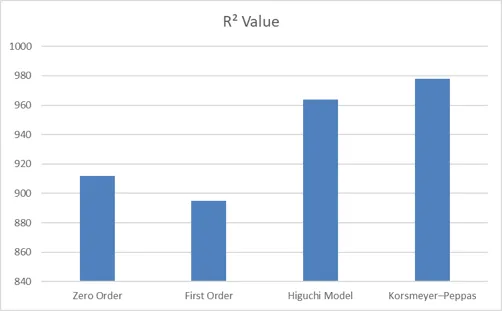
Bhatia et al. (2021) Kinetic model analysis revealed that the drug release followed the Higuchi model (R² = 0.964), indicating that the release mechanism is primarily diffusion-controlled. Additionally, the Korsmeyer:Peppas model (R² = 0.978) suggested anomalous (non-Fickian) transport, which implies that both diffusion and polymer relaxation contribute to the drug release mechanism.
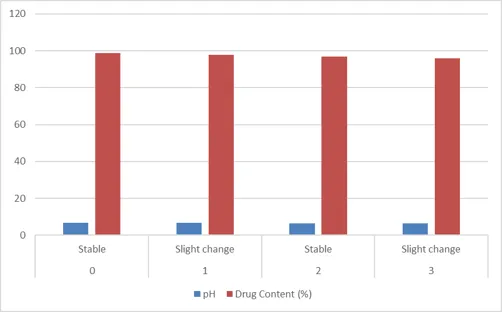
Reddy et al. (2019) The stability study conducted at accelerated conditions (40°C ± 2°C / 75% RH) showed that the formulation remained stable over a period of 3 months, with only slight changes in pH and drug content. This indicates that the formulation has good physical and chemical stability under stress conditions.
Singh et al. (2020) Overall, the results suggest that the developed acyclovir ophthalmic emulgel provides improved drug retention, controlled release, and enhanced stability compared to conventional formulations. This system has the potential to significantly improve the therapeutic efficacy of acyclovir in the treatment of ocular viral infections such as herpes keratitis, while also improving patient compliance due to reduced dosing frequency.
SUMMARY
The present study was focused on the design, formulation, and evaluation of a novel ophthalmic emulgel containing acyclovir for the effective management of ocular viral infections, particularly those caused by herpes simplex virus. Conventional ophthalmic dosage forms such as eye drops suffer from several limitations, including poor bioavailability, rapid elimination from the precorneal area, and the need for frequent administration. To overcome these limitations, an emulgel-based delivery system was developed, combining the advantages of both emulsions and gels.
The formulated emulgel exhibited satisfactory physicochemical properties, including suitable pH, acceptable viscosity, good spreadability, and high drug content uniformity. The formulation was found to be smooth, homogeneous, and free from grittiness, indicating good patient acceptability for ocular application.
The in vitro drug release studies demonstrated a sustained and controlled release of acyclovir over a period of 12 hours, which can significantly reduce dosing frequency and improve therapeutic outcomes. The kinetic analysis suggested that the drug release followed diffusion-controlled and anomalous transport mechanisms, indicating a combination of diffusion and polymer relaxation processes.
Stability studies conducted under accelerated conditions showed that the formulation remained stable over the study period with only minor changes in physicochemical parameters, confirming its robustness. Overall, the emulgel system enhanced the residence time of the drug on the ocular surface and has the potential to improve drug bioavailability.
CONCLUSION
From the present study, it can be concluded that the developed ophthalmic emulgel formulation of acyclovir is a promising alternative to conventional ocular dosage forms. The emulgel system effectively addresses the limitations of traditional eye drops by improving drug retention, enhancing bioavailability, and providing sustained drug release.
The optimized formulation demonstrated desirable physicochemical properties, good stability, and a controlled drug release profile, making it suitable for ophthalmic use. The sustained release behavior can help in reducing dosing frequency, thereby improving patient compliance and therapeutic effectiveness.
Furthermore, the formulation showed a favorable kinetic release profile, indicating that the drug release is governed by both diffusion and polymer relaxation mechanisms. This ensures a prolonged therapeutic effect, which is particularly beneficial in the treatment of viral ocular infections such as herpes keratitis.
In conclusion, the emulgel-based delivery system of acyclovir represents a novel and efficient approach for ocular drug delivery. It has the potential to significantly enhance the treatment outcomes of ocular viral infections and can serve as a promising platform for future research in ophthalmic drug delivery systems.
REFERENCES


Mritunjay Mishra, Meenakshi Kandwal, Shivanand Patil, Design and Evaluation of Novel Opthalmic Emulgel using Acyclovir, Int. J. of Pharm. Sci., 2026, Vol 4, Issue 7, 3765-3775. https://doi.org/10.5281/zenodo.21436704
 10.5281/zenodo.21436704