

We use cookies to ensure our website works properly and to personalise your experience. Cookies policy
1 Pharmaceutical Chemistry, Instituted of Pharmacy and Research Badnera, Amravati
2 Pharmaceutical Chemistry, Instituted of Pharmacy and Research Badnera, Amravati
Pyrimidine hydrazone derivatives have gained considerable attention in medicinal chemistry because of their unique structural features and broad spectrum of biological activities. The integration of the pyrimidine nucleus, an essential nitrogen-containing heterocyclic scaffold found in numerous biologically active molecules and clinically approved drugs, with the hydrazone pharmacophore has led to the development of promising therapeutic candidates with enhanced pharmacological properties. Among their diverse biological applications, antioxidant activity has emerged as a significant area of investigation owing to the pivotal role of oxidative stress in the initiation and progression of chronic diseases, including cancer, diabetes mellitus, cardiovascular disorders, neurodegenerative diseases, inflammatory conditions, and aging. Consequently, the discovery of effective antioxidant molecules capable of scavenging reactive oxygen and nitrogen species has become an important objective in modern drug design. This review presents a comprehensive overview of the recent progress in the design, synthesis, structural characterization, and antioxidant potential of pyrimidine hydrazone derivatives. Various synthetic methodologies, including conventional condensation reactions, microwave-assisted synthesis, ultrasound-assisted synthesis, catalyst-mediated protocols, and green synthetic approaches, are critically discussed with emphasis on their efficiency and applicability. The review also highlights the characterization techniques commonly employed for structural confirmation, including Fourier-transform infrared spectroscopy (FTIR), nuclear magnetic resonance (¹H and ¹³C NMR), mass spectrometry, elemental analysis, and X-ray crystallography. Furthermore, the molecular mechanisms responsible for antioxidant activity, such as hydrogen atom transfer (HAT), single electron transfer (SET), sequential proton loss electron transfer (SPLET), and metal ion chelation, are summarized. Particular attention is given to structure–activity relationship (SAR) studies that demonstrate the influence of electron-donating and electron-withdrawing substituents on antioxidant efficacy.Finally, current challenges, research gaps, and future perspectives, including molecular hybridization, computer-aided drug design, molecular docking, artificial intelligence-assisted drug discovery, and green chemistry approaches, are discussed. This review provides a valuable resource for researchers engaged in the rational design and development of novel pyrimidine hydrazone derivatives as potential antioxidant agents.
Medicinal chemistry plays a pivotal role in the discovery and development of novel therapeutic agents by integrating principles of organic chemistry, pharmacology, biochemistry, and molecular biology. Among the numerous chemical entities investigated for drug development, heterocyclic compounds occupy a prominent position because of their remarkable structural diversity, favorable physicochemical properties, and broad spectrum of biological activities. It has been estimated that more than 75% of small-molecule drugs approved by regulatory agencies contain at least one heterocyclic ring, highlighting the importance of heterocyclic scaffolds in modern medicinal chemistry [1,2]. Nitrogen-containing heterocycles are particularly significant because they exhibit excellent binding affinity toward biological targets through hydrogen bonding, π–π interactions, and coordination with metal ions, thereby improving pharmacological efficacy and selectivity [1,3].
Among nitrogen-containing heterocycles, the pyrimidine nucleus has attracted considerable attention owing to its presence in naturally occurring nucleic acid bases, including cytosine, thymine, and uracil, which are fundamental components of DNA and RNA. Pyrimidine derivatives have become indispensable scaffolds in medicinal chemistry because of their wide range of biological activities, including anticancer, antimicrobial, antiviral, antitubercular, anti-inflammatory, antimalarial, antioxidant, and antidiabetic properties [2,4]. Furthermore, numerous clinically approved drugs, such as 5-fluorouracil, trimethoprim, zidovudine, lamivudine, and capecitabine, incorporate the pyrimidine ring, demonstrating its therapeutic importance and versatility in drug discovery [2,5]. Recent advances in synthetic chemistry have enabled the preparation of structurally diverse pyrimidine analogues through conventional and green synthetic methodologies, thereby facilitating the development of compounds with improved pharmacological profiles and reduced toxicity [2].
Hydrazone derivatives constitute another important class of pharmacologically active compounds characterized by the presence of the azomethine (-C=N-NH-) functional group. These compounds are generally synthesized through the condensation of hydrazides or hydrazines with aldehydes or ketones, resulting in structurally flexible molecules capable of existing in different tautomeric forms. The hydrazone linkage offers several advantages, including ease of synthesis, structural modification, hydrogen-bonding capability, and metal-chelating properties, making hydrazones valuable pharmacophores in medicinal chemistry [6,7]. Numerous hydrazone derivatives have demonstrated diverse biological activities such as antimicrobial, antifungal, antiviral, antitubercular, anticancer, anticonvulsant, anti-inflammatory, analgesic, and antioxidant effects. Their versatility has encouraged medicinal chemists to utilize hydrazone moieties in the rational design of multifunctional therapeutic agents [6,7].
In recent years, the molecular hybridization approach has emerged as an effective strategy for developing novel drug candidates by combining two or more biologically active pharmacophores within a single molecular framework. The hybridization of the pyrimidine scaffold with the hydrazone moiety has generated a new class of compounds known as pyrimidine hydrazone derivatives, which exhibit enhanced biological activity through synergistic interactions of both pharmacophores [2,6]. Structural modifications involving electron-donating groups, electron-withdrawing substituents, heteroaromatic rings, and lipophilic fragments have been shown to significantly influence their physicochemical characteristics and biological performance. Consequently, pyrimidine hydrazones have been extensively investigated for their antimicrobial, anticancer, antiviral, anti-inflammatory, enzyme inhibitory, and antioxidant properties, with several compounds demonstrating promising activity in in vitro and in vivo studies [2,8].
Oxidative stress has emerged as one of the major pathological mechanisms responsible for the initiation and progression of numerous chronic diseases. It results from an imbalance between the excessive production of reactive oxygen species (ROS) and reactive nitrogen species (RNS) and the antioxidant defense system of the body. Excessive accumulation of ROS causes oxidative damage to lipids, proteins, carbohydrates, and nucleic acids, leading to cellular dysfunction, inflammation, mitochondrial damage, apoptosis, and tissue injury [3,9]. Oxidative stress has been implicated in the pathogenesis of cancer, diabetes mellitus, cardiovascular diseases, Alzheimer's disease, Parkinson's disease, rheumatoid arthritis, chronic kidney disease, and premature aging. Therefore, the discovery of efficient antioxidant molecules capable of scavenging free radicals, chelating transition metals, and interrupting oxidative chain reactions has become an important objective in pharmaceutical research [3,9].
Pyrimidine hydrazone derivatives have attracted increasing interest as potential antioxidant agents because both pyrimidine and hydrazone pharmacophores possess intrinsic free radical scavenging properties. Their antioxidant activity is primarily attributed to hydrogen atom transfer (HAT), single electron transfer (SET), sequential proton loss electron transfer (SPLET), and metal ion chelation mechanisms. Moreover, the incorporation of suitable electron-donating substituents such as hydroxyl, methoxy, and amino groups has been reported to enhance radical scavenging efficiency, whereas appropriate electron-withdrawing groups may improve molecular stability and biological selectivity depending on their position within the aromatic system [3,8]. Several recent investigations have demonstrated that rational structural modification of pyrimidine hydrazones significantly improves antioxidant potency, emphasizing the importance of structure–activity relationship (SAR) studies in the design of new therapeutic candidates [8].
Heterocyclic Compounds
Heterocyclic compounds represent one of the most important classes of organic molecules in pharmaceutical and medicinal chemistry due to their exceptional structural diversity and wide range of biological activities. A heterocyclic compound is defined as a cyclic organic molecule containing one or more heteroatoms, such as nitrogen, oxygen, or sulfur, incorporated into the ring system along with carbon atoms. The incorporation of heteroatoms significantly alters the electronic distribution, polarity, hydrogen-bonding capability, and physicochemical properties of these molecules, thereby enhancing their interaction with various biological targets. Consequently, heterocyclic compounds have become indispensable structural motifs in the design and development of therapeutic agents for numerous human diseases [9,10].
Nitrogen-containing heterocycles are particularly important because nitrogen atoms can function as hydrogen bond donors or acceptors, facilitate metal-ion coordination, and improve the binding affinity of drug molecules toward enzymes, receptors, and nucleic acids. The remarkable versatility of nitrogen heterocycles has resulted in their widespread application in medicinal chemistry, with approximately 75–85% of FDA-approved small-molecule drugs containing at least one heterocyclic ring [9,11]. Common nitrogen-containing heterocyclic scaffolds include pyrimidine, pyridine, pyrrole, imidazole, pyrazole, quinoline, quinazoline, triazole, indole, and benzimidazole, each exhibiting unique pharmacological properties that have contributed significantly to modern drug discovery [12].
Schiff Bases
Schiff bases are an important class of organic compounds containing the characteristic azomethine (–C=N–) functional group, typically formed by the condensation of primary amines or hydrazines with aldehydes or ketones. Owing to their simple synthesis, structural diversity, and ease of functionalization, Schiff bases have attracted considerable attention in medicinal and pharmaceutical chemistry. The azomethine linkage plays a crucial role in enhancing biological activity through hydrogen bonding, electron delocalization, and coordination with transition metal ions. Schiff base derivatives have been extensively investigated for their antimicrobial, antifungal, antiviral, anticancer, anti-inflammatory, antitubercular, antioxidant, and enzyme inhibitory activities. Moreover, Schiff bases serve as valuable synthetic intermediates for the preparation of numerous heterocyclic compounds, including pyrimidines, triazoles, oxadiazoles, and pyrazoles. Their excellent pharmacological profile and versatility continue to make Schiff bases attractive scaffolds in the rational design of novel therapeutic agents.[13–15]
General Synthesis of Pyrimidine Hydrazone Derivatives
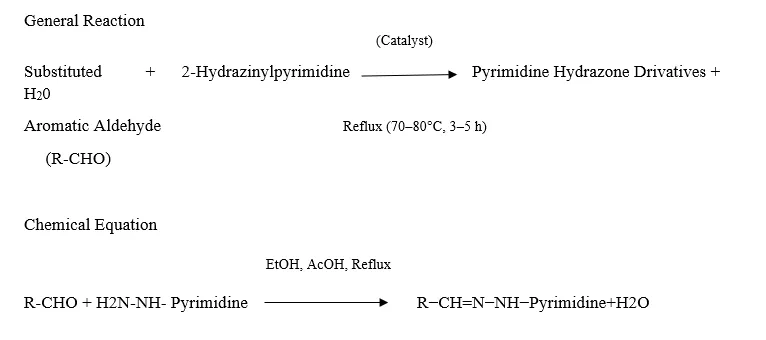
Mechanism of Hydrazone Formation (Schiff Base)
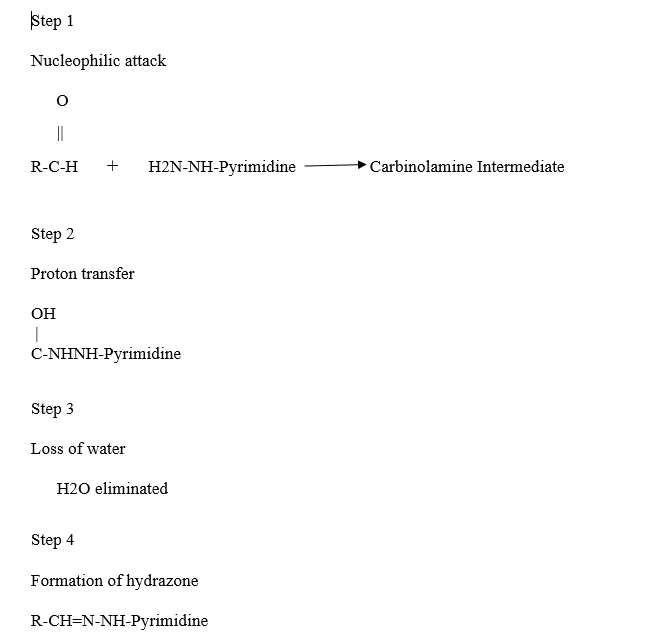
Synthetic Strategies for Pyrimidine Hydrazone Derivatives
The synthesis of pyrimidine hydrazone derivatives has attracted considerable interest due to their promising pharmacological properties and structural versatility. Generally, these compounds are prepared by the condensation of pyrimidine hydrazines or hydrazides with substituted aldehydes or ketones through the formation of an azomethine (–C=N–) linkage. Various synthetic methodologies have been developed to improve reaction efficiency, product yield, selectivity, and environmental sustainability. Conventional reflux synthesis remains the most widely employed method; however, modern approaches such as microwave-assisted synthesis, ultrasound-assisted synthesis, solvent-free synthesis, green chemistry protocols, and multicomponent reactions have gained increasing attention because they reduce reaction time, minimize solvent consumption, and improve overall synthetic efficiency.[16–18]
6.1 Conventional Synthesis (Reflux Method)
The conventional reflux method is the most frequently employed strategy for synthesizing pyrimidine hydrazone derivatives. In this approach, equimolar quantities of pyrimidine hydrazine (or hydrazide) and the appropriate aromatic aldehyde or ketone are dissolved in ethanol, followed by the addition of a catalytic amount of glacial acetic acid. The reaction mixture is refluxed at approximately 70–80 °C for 3–6 hours with continuous stirring. Completion of the reaction is generally monitored by thin-layer chromatography (TLC). Upon cooling, the precipitated product is filtered, washed with cold ethanol, and purified by recrystallization.
The reaction proceeds through nucleophilic attack of the amino nitrogen of the hydrazine on the carbonyl carbon of the aldehyde or ketone, followed by dehydration to form the characteristic hydrazone (Schiff base) linkage. Owing to its simplicity, reproducibility, and compatibility with a wide range of substrates, the reflux method remains the preferred synthetic route in medicinal chemistry laboratories.[19,20]
Advantages
Limitations
6.2 Microwave-Assisted Synthesis
Microwave-assisted organic synthesis (MAOS) has emerged as a rapid and efficient technique for preparing pyrimidine hydrazone derivatives. Microwave irradiation provides uniform volumetric heating, resulting in rapid molecular activation and accelerated reaction rates. Compared with conventional reflux methods, microwave-assisted synthesis significantly reduces reaction time from several hours to a few minutes while frequently improving product yields and purity.
Microwave irradiation promotes efficient condensation between pyrimidine hydrazines and carbonyl compounds under either solvent-free or minimal-solvent conditions. This methodology has become increasingly popular because it enhances reaction efficiency, minimizes side-product formation, and supports environmentally sustainable synthetic practices.[21,22]
Advantages
Limitations
6.3 Ultrasound-Assisted Synthesis
Ultrasound-assisted synthesis utilizes high-frequency sound waves (20–100 kHz) to generate acoustic cavitation, producing localized regions of high temperature and pressure that accelerate chemical reactions. Cavitation enhances mass transfer and mixing efficiency, thereby promoting rapid formation of hydrazone bonds under mild reaction conditions.
Ultrasonic irradiation has been successfully employed for synthesizing numerous Schiff base and pyrimidine hydrazone derivatives with shorter reaction times, improved yields, and reduced solvent consumption compared with conventional methods.[23]
Advantages
Limitations
6.4 Solvent-Free Synthesis
Solvent-free synthesis has become an attractive approach in modern medicinal chemistry because it minimizes the environmental impact associated with volatile organic solvents. In this method, reactants are mixed directly or ground together, often with a catalytic amount of acid or base, followed by heating or microwave irradiation to facilitate condensation.
The elimination of solvents not only reduces hazardous waste but also enhances reaction rates through increased reactant concentration. Solvent-free protocols generally provide high yields with simplified purification procedures and are considered an important component of sustainable organic synthesis.[24]
Advantages
Limitations
6.5 Green Synthesis
Green synthesis emphasizes environmentally sustainable methodologies that reduce hazardous chemicals, energy consumption, and waste production. Green approaches for pyrimidine hydrazone synthesis include the use of water or ethanol as environmentally acceptable solvents, biodegradable catalysts, reusable heterogeneous catalysts, ionic liquids, deep eutectic solvents, and plant-derived catalytic systems.
The application of green chemistry principles improves the environmental profile of synthetic processes while maintaining high reaction efficiency and product selectivity. Consequently, green synthesis has become increasingly important in pharmaceutical research and industrial drug manufacturing.[25,26]
Advantages
Limitations
6.6 Multicomponent Synthesis
Multicomponent reactions (MCRs) involve the one-pot reaction of three or more reactants to produce structurally complex molecules without isolating intermediates. MCRs have become valuable tools in medicinal chemistry because they enable rapid synthesis of structurally diverse pyrimidine derivatives with excellent atom economy.
The combination of aldehydes, active methylene compounds, nitrogen-containing nucleophiles, and hydrazines in a single reaction vessel significantly reduces reaction time and purification steps while facilitating the rapid generation of compound libraries for biological screening.[27]
Advantages
Limitations
Oxidative Stress and Antioxidants
Oxidative stress is a physiological condition resulting from an imbalance between the production of reactive oxygen species (ROS) and reactive nitrogen species (RNS) and the antioxidant defense mechanisms of the body. Under normal conditions, ROS participate in essential biological processes, including cell signaling, immune responses, and regulation of gene expression. However, excessive ROS production overwhelms endogenous antioxidant systems, leading to oxidative damage of lipids, proteins, carbohydrates, and nucleic acids, ultimately contributing to cellular dysfunction and apoptosis.[9]
The major reactive oxygen species include superoxide anion (O₂•⁻), hydroxyl radical (•OH), hydrogen peroxide (H₂O₂), singlet oxygen (¹O₂), and peroxyl radicals (ROO•). These reactive species are generated mainly from mitochondrial respiration, NADPH oxidase, xanthine oxidase, cytochrome P450 enzymes, and inflammatory cells. Exogenous factors such as ultraviolet radiation, environmental pollutants, cigarette smoke, pesticides, heavy metals, and various xenobiotics further enhance ROS production.[28,29]
Oxidative stress has been implicated in the development of several chronic diseases, including cancer, diabetes mellitus, cardiovascular diseases, neurodegenerative disorders, chronic inflammation, rheumatoid arthritis, and premature aging. Therefore, controlling oxidative stress has become an important strategy in modern drug discovery and medicinal chemistry.[28,30]
Antioxidants are molecules capable of preventing or delaying oxidative damage by scavenging free radicals or enhancing endogenous antioxidant defense systems. Endogenous antioxidants include enzymatic antioxidants such as superoxide dismutase (SOD), catalase (CAT), and glutathione peroxidase (GPx), whereas non-enzymatic antioxidants include glutathione, uric acid, bilirubin, and coenzyme Q. Exogenous antioxidants, including vitamin C, vitamin E, carotenoids, flavonoids, and synthetic antioxidant compounds, supplement the body's defense against oxidative damage.[28,30]
Pyrimidine hydrazone derivatives have emerged as promising antioxidant agents because both the pyrimidine nucleus and hydrazone moiety contribute to radical scavenging activity. The presence of electron-donating substituents such as hydroxyl, methoxy, and amino groups often enhances antioxidant activity by improving hydrogen- or electron-donating ability, whereas electron-withdrawing groups may influence activity depending on their position and electronic effects. Consequently, structural modification of pyrimidine hydrazones has become an effective strategy for developing potent antioxidant molecules.[3,8,]
9. Mechanism of Antioxidant Activity
Antioxidants protect biological systems through several complementary mechanisms. The most important mechanisms include hydrogen atom transfer (HAT), single electron transfer (SET), sequential proton loss electron transfer (SPLET), and metal-ion chelation.[31]
Hydrogen Atom Transfer (HAT)
In the HAT mechanism, the antioxidant donates a hydrogen atom to a free radical, thereby converting the radical into a more stable molecule while forming a relatively stable antioxidant radical.
R• + AH → RH + A• [31,32]
Single Electron Transfer (SET)
In the SET mechanism, antioxidants neutralize free radicals by transferring a single electron, producing a stable radical species.
R• + AH → R⁻ + AH•⁺ [31,32]
Sequential Proton Loss Electron Transfer (SPLET)
SPLET occurs in two consecutive steps involving proton dissociation followed by electron transfer. This mechanism is generally favored in polar solvents and contributes significantly to the antioxidant activity of many phenolic and heterocyclic compounds. [33]
Metal-Ion Chelation
Transition metals such as Fe²⁺ and Cu²⁺ catalyze the formation of highly reactive hydroxyl radicals through Fenton-type reactions. Pyrimidine hydrazone derivatives possess nitrogen donor atoms capable of coordinating these metal ions, thereby inhibiting radical generation and reducing oxidative stress. [31]
The antioxidant potential of pyrimidine hydrazone derivatives is commonly evaluated using in vitro assays such as DPPH, ABTS, FRAP, CUPRAC, ORAC, and nitric oxide radical scavenging assays. Among these, the DPPH assay is the most widely employed because of its simplicity, rapidity, and reproducibility. The antioxidant activity of pyrimidine hydrazones depends on molecular structure, substituent effects, hydrogen-bonding ability, and electronic properties, making structure–activity relationship (SAR) studies essential for the rational design of more potent antioxidant agents.[32]
Structure–Activity Relationship (SAR)
Structure–activity relationship (SAR) studies play a crucial role in the rational design and optimization of pyrimidine hydrazone derivatives as antioxidant agents. The antioxidant potential of these compounds is strongly influenced by the electronic nature, position, and type of substituents present on the aromatic ring, as well as by the pyrimidine nucleus and hydrazone linkage. Appropriate structural modifications can improve free-radical scavenging ability, binding affinity, and overall pharmacological activity while reducing toxicity [34–36].
The hydrazone (–CH=N–NH–) moiety is considered the principal pharmacophore responsible for antioxidant activity because it can donate hydrogen atoms or electrons to neutralize free radicals. The conjugated azomethine system also stabilizes the resulting radical through resonance, thereby enhancing antioxidant efficiency [35,37].
Electron-donating groups (EDGs), including hydroxyl (–OH), methoxy (–OCH₃), amino (–NH₂), and methyl (–CH₃), generally enhance antioxidant activity by increasing electron density and facilitating hydrogen atom or electron donation. Hydroxyl and methoxy substituents, particularly at the para and ortho positions, have frequently been associated with improved DPPH and ABTS radical-scavenging activities [36–38].
Electron-withdrawing groups (EWGs), such as nitro (–NO₂), chloro (–Cl), bromo (–Br), fluoro (–F), and trifluoromethyl (–CF₃), influence antioxidant activity in a structure-dependent manner. Although strong electron-withdrawing substituents may decrease hydrogen-donating ability, they can improve molecular stability, lipophilicity, and interactions with biological targets. Halogen substitution has also been reported to enhance membrane permeability and pharmacokinetic properties in some pyrimidine hydrazone derivatives [37–40].
The position of substituents on the aromatic ring significantly affects antioxidant activity. Para-substituted derivatives often exhibit greater radical-scavenging activity because of effective resonance stabilization, whereas ortho substituents may enhance activity through intramolecular hydrogen bonding. Meta substitution generally produces intermediate activity depending on the electronic characteristics of the substituent [38,39].
The pyrimidine nucleus contributes to biological activity by increasing molecular planarity, hydrogen-bonding capability, and electronic delocalization. The presence of nitrogen atoms within the pyrimidine ring facilitates interactions with biological macromolecules and may improve antioxidant performance. Molecular hybridization of the pyrimidine scaffold with hydrazone derivatives has therefore emerged as an effective strategy for developing multifunctional antioxidant agents [34,40].
Several studies have demonstrated that antioxidant activity depends on the combined effects of substituent electronics, steric factors, lipophilicity, and molecular geometry rather than a single structural feature. Consequently, systematic SAR investigations remain essential for the rational design of pyrimidine hydrazone derivatives with improved antioxidant potency and favorable pharmacokinetic characteristics [35–40].
General SAR Summary
CONCLUSION
Pyrimidine hydrazone derivatives represent a promising class of heterocyclic compounds with significant potential in medicinal chemistry due to the synergistic combination of the biologically active pyrimidine nucleus and hydrazone pharmacophore. The integration of these two scaffolds has led to the development of structurally diverse molecules exhibiting a wide range of pharmacological activities, among which antioxidant activity has emerged as an important area of research. Extensive studies have demonstrated that appropriate structural modifications, particularly the introduction of electron-donating and electron-withdrawing substituents, play a crucial role in modulating the antioxidant efficacy of pyrimidine hydrazone derivatives through various mechanisms, including hydrogen atom transfer (HAT), single electron transfer (SET), sequential proton loss electron transfer (SPLET), and metal-ion chelation.
This review has comprehensively summarized the chemistry of pyrimidine and hydrazone derivatives, recent advances in their design and synthetic strategies, characterization techniques, mechanisms of antioxidant activity, and structure–activity relationships (SAR). Conventional and modern synthetic approaches, including microwave-assisted, ultrasound-assisted, solvent-free, green chemistry, and multicomponent reactions, have significantly improved synthetic efficiency while supporting sustainable pharmaceutical research. Furthermore, spectroscopic techniques such as FTIR, NMR, mass spectrometry, and elemental analysis remain indispensable for confirming the structural identity and purity of newly synthesized compounds.
Although numerous pyrimidine hydrazone derivatives have shown promising in vitro antioxidant activity, several challenges remain, including limited in vivo evaluation, inadequate pharmacokinetic and toxicological investigations, and insufficient understanding of their molecular mechanisms of action. Future research should focus on rational molecular design guided by SAR studies, computer-aided drug design, molecular docking, molecular dynamics simulations, artificial intelligence-assisted drug discovery, and environmentally friendly synthetic methodologies. In addition, comprehensive biological evaluation, including in vivo studies, pharmacokinetic profiling, and clinical investigations, is essential to establish the therapeutic potential of these compounds.
Overall, pyrimidine hydrazone derivatives constitute a valuable and versatile scaffold for the development of next-generation antioxidant agents. Continued interdisciplinary research integrating synthetic chemistry, medicinal chemistry, computational approaches, and pharmacological evaluation is expected to accelerate the discovery of safe, effective, and clinically relevant pyrimidine hydrazone-based therapeutics for the management of oxidative stress-related diseases.
REFERENCES


Pooja Ingole*, Dr.Sachin Dighade, Design, Synthesis And Antioxidant Potential Of Pyrimidine Hydrazone Derivatives: A Comprehensive Review, Int. J. of Pharm. Sci., 2026, Vol 4, Issue 8, 421-433. https://doi.org/ 10.5281/zenodo.21780466
 10.5281/zenodo.21780466