

We use cookies to ensure our website works properly and to personalise your experience. Cookies policy
Maharaja Agrasen University, School of Pharmacy, Baddi, Himachal Pradesh, India
Pitavastatin calcium is a Biopharmaceutical Classification System (BCS) Class II drug that exhibits poor aqueous solubility, resulting in slow dissolution and reduced oral bioavailability despite its high membrane permeability. The present study aimed to develop and optimize polyethylene glycol (PEG)-based solid dispersions of Pitavastatin and incorporate the optimized formulation into fast dissolving oral films (FDOFs) to enhance dissolution and oral drug delivery. Nine solid dispersion formulations (F1–F9) containing different drug-to-PEG ratios were prepared and evaluated for physical appearance, percentage yield, drug content, saturated solubility, and in vitro drug release. Based on the evaluation results, the optimized formulation (F5) was selected for incorporation into fast dissolving oral films prepared by the solvent casting method. A total of twelve film formulations (F5G1–F5G12) were characterized for film-forming properties, surface pH, thickness, weight variation, drug content, folding endurance, disintegration time, and in vitro dissolution. All solid dispersion formulations exhibited satisfactory physicochemical characteristics, while formulation F5 demonstrated the highest percentage yield (96.28 ± 0.29%), drug content (98.14 ± 0.25%), saturated solubility (87.36 ± 0.33%), and drug release (92.16 ± 0.30% within 20 min). The optimized fast dissolving oral films showed uniform appearance, acceptable mechanical properties, near-neutral surface pH, rapid disintegration, and excellent drug content uniformity. Among the prepared films, formulation F5G5 exhibited the highest drug release (99.86 ± 0.28%) within 6 min, indicating a significant improvement in dissolution performance compared with the pure drug. The findings demonstrate that PEG-based solid dispersion effectively enhances the solubility and dissolution characteristics of Pitavastatin, while incorporation into fast dissolving oral films further improves drug release, ease of administration, and patient compliance. Therefore, the developed formulation represents a promising oral drug delivery system for improving the therapeutic performance of poorly water-soluble drugs such as Pitavastatin.
Cardiovascular diseases (CVDs) remain the leading cause of mortality worldwide, accounting for nearly one-third of all global deaths. Hypercholesterolemia and dyslipidemia are among the most significant modifiable risk factors responsible for the development of atherosclerosis, coronary artery disease, ischemic stroke, and peripheral vascular disorders. Effective lipid-lowering therapy has therefore become an essential component of cardiovascular disease prevention. Among currently available lipid-lowering agents, statins have demonstrated remarkable clinical success owing to their ability to inhibit hepatic cholesterol biosynthesis by competitively blocking the activity of 3-hydroxy-3-methylglutaryl coenzyme A (HMG-CoA) reductase. Besides reducing low-density lipoprotein cholesterol (LDL-C), statins also exhibit pleiotropic effects including anti-inflammatory activity, endothelial protection, plaque stabilization, and improvement of vascular function (Ansel et al., 2019; Aulton & Taylor, 2022).
Pitavastatin calcium is a synthetic lipophilic statin that has attracted considerable attention because of its potent lipid-lowering efficacy, favorable safety profile, and reduced potential for cytochrome P450-mediated drug interactions compared with several earlier statins (Kawabata et al., 2011). It effectively lowers total cholesterol, triglycerides, and LDL cholesterol while simultaneously increasing high-density lipoprotein cholesterol (HDL-C). Consequently, Pitavastatin is widely prescribed for primary hypercholesterolemia, mixed dyslipidemia, and prevention of cardiovascular complications in high-risk patients (Mikrani et al., 2024).
Despite its pharmacological advantages, Pitavastatin exhibits poor aqueous solubility and is classified as a Biopharmaceutical Classification System (BCS) Class II drug (Kawabata et al., 2011). Drugs belonging to this class possess high membrane permeability but low aqueous solubility, making dissolution the rate-limiting step for gastrointestinal absorption. The crystalline nature of Pitavastatin contributes significantly to its slow dissolution, leading to incomplete drug absorption, variability in oral bioavailability, delayed onset of action, and inconsistent therapeutic outcomes. Therefore, improving the dissolution behavior of Pitavastatin remains an important pharmaceutical challenge (Dasari et al., 2016).
Various formulation strategies have been explored to overcome the limitations associated with poorly soluble drugs, including micronization, nanosuspensions, cyclodextrin complexation, lipid-based formulations, self-emulsifying drug delivery systems, co-crystals, amorphous solid dispersions, and polymeric nanoparticles. Among these approaches, solid dispersion technology has emerged as one of the most successful and commercially viable techniques because of its simplicity, scalability, cost-effectiveness, and remarkable ability to enhance dissolution (Vasconcelos et al., 2007; Vo et al., 2013). In solid dispersions, drug molecules are molecularly dispersed or finely distributed within a hydrophilic polymeric matrix, leading to significant reduction in particle size, improved wettability, increased surface area, enhanced porosity, and partial or complete conversion of crystalline drug into an amorphous state. These physicochemical changes collectively improve the dissolution rate and may subsequently enhance oral bioavailability (Van den Mooter, 2012).
Hydrophilic polyethylene glycols (PEGs) are among the most widely investigated carriers for preparing solid dispersions because of their excellent aqueous solubility, biocompatibility, low toxicity, thermal stability, and regulatory acceptance (Zhang et al., 2018). PEGs improve wettability of hydrophobic drug particles, facilitate rapid dissolution of the polymer matrix, reduce drug crystallinity, and promote molecular dispersion of the active pharmaceutical ingredient. Owing to these favorable characteristics, PEG-based solid dispersions have been successfully employed to improve the dissolution of numerous poorly water-soluble therapeutic agents (Singh & Van den Mooter, 2016).
Although enhancement of dissolution is essential, conventional solid dosage forms such as tablets and capsules may still present challenges for pediatric, geriatric, and dysphagic patients who have trouble swallowing. Fast dissolving oral films (FDOFs) have therefore emerged as an attractive alternative oral drug delivery platform (Dixit & Puthli, 2009; Khan et al., 2015). These thin polymeric films rapidly hydrate upon contact with saliva, disintegrate within seconds, and release the incorporated drug without the need for water. Fast dissolving films provide several clinical advantages, including ease of administration, improved patient compliance, accurate dosing, portability, reduced choking risk, rapid onset of action, and enhanced convenience during emergency conditions or in patients with swallowing disorders (Sharma et al., 2015; Yadav et al., 2021).
The combination of solid dispersion technology with fast dissolving oral films offers a synergistic strategy for improving both the physicochemical performance and patient acceptability of poorly water-soluble drugs. Incorporation of an optimized amorphous solid dispersion into a rapidly dissolving polymeric film can simultaneously enhance dissolution, improve wettability, accelerate drug release, and simplify administration (Ahmed et al., 2023; Sangeetha et al., 2024).
2. MATERIALS AND METHODS
2.1 Materials
Pitavastatin calcium was obtained as a gift sample from a reputed pharmaceutical manufacturer. Polyethylene glycol (PEG 4000, PEG 6000 and PEG 20000) was employed as hydrophilic carriers for preparation of solid dispersions. Hydroxypropyl methylcellulose (HPMC E5), polyvinyl alcohol (PVA), polyvinylpyrrolidone (PVP K30), glycerol, propylene glycol, Tween 80, citric acid, sodium saccharin, and peppermint flavour were used during formulation of fast dissolving oral films. Methanol, ethanol, chloroform and all analytical-grade reagents were procured from certified chemical suppliers and used without further purification. Double-distilled water was used throughout the investigation.
2.2 Experimental Design
The study was carried out in two successive stages. Initially, Pitavastatin-polyethylene glycol solid dispersions were prepared using different polymer concentrations and preparation techniques to improve aqueous solubility and dissolution characteristics. The optimized solid dispersion was subsequently incorporated into a fast dissolving oral film using the solvent casting technique. All formulations were evaluated for physicochemical properties, drug content, mechanical characteristics and dissolution performance to identify the optimized formulation.
2.3 Preparation of Pitavastatin Solid Dispersion
Solid dispersions of Pitavastatin were prepared using polyethylene glycol as a hydrophilic carrier at different drug-to-polymer ratios. The carrier was accurately weighed and processed according to the selected preparation technique. Pitavastatin was incorporated gradually with continuous mixing to ensure homogeneous distribution throughout the polymer matrix.
The prepared dispersions were cooled to room temperature, pulverized gently using a mortar and pestle, passed through a suitable sieve and stored in airtight containers until further characterization.
Nine formulations (F1–F9) were prepared by varying the polymer composition and processing conditions to optimize drug loading, dissolution behaviour and physicochemical properties (Dasari et al., 2016; Mikrani et al., 2024).
2.4 Characterization of Solid Dispersion
2.4.1 Physical appearance
Prepared solid dispersions were visually examined for colour, homogeneity, flow behaviour and absence of aggregation.
2.4.2 Percentage yield
Percentage yield was determined to evaluate production efficiency using the following equation:
Percentage Yield =Practical Yield-Theoretical Yield\100 (Aulton & Taylor, 2022).
2.4.3 Drug content
Solid dispersion equivalent to a predetermined quantity of Pitavastatin was dissolved in methanol, filtered and analysed spectrophotometrically at 268 nm after suitable dilution. Drug content was calculated using the calibration curve (Indian Pharmacopoeia Commission, 2022).
2.4.4 Saturated solubility
Excess solid dispersion was added to distilled water and phosphate buffer (pH 6.8) and shaken for 24 h at 25 ± 2°C. The samples were filtered, diluted appropriately and analysed spectrophotometrically (Kawabata et al., 2011).
2.4.5 In vitro dissolution study
Dissolution studies of pure Pitavastatin and solid dispersions were carried out using USP Dissolution Apparatus II containing phosphate buffer (pH 6.8) maintained at 37 ± 0.5°C. Samples were withdrawn at predetermined intervals, filtered and analysed at 268 nm. Equal volumes of fresh dissolution medium were replaced after each withdrawal to maintain sink conditions (United States Pharmacopeia, 2024).
2.5 Selection of Optimized Solid Dispersion
The optimized formulation was selected based on percentage yield, drug content, saturated solubility, dissolution efficiency and overall physicochemical performance. The selected formulation was further utilized for fabrication of fast dissolving oral films.
2.6 Preparation of Fast Dissolving Oral Films
Fast dissolving oral films were prepared by the solvent casting method. The required quantity of film-forming polymer was dispersed in distilled water with continuous stirring until a clear and homogeneous solution was obtained. Plasticizer, sweetener, flavouring agent and other excipients were added sequentially with constant mixing.
The optimized Pitavastatin solid dispersion was dispersed uniformly into the polymeric solution to ensure homogeneous drug distribution. Air bubbles were removed by sonication before casting the solution onto a clean glass mould. The cast films were dried at room temperature under controlled conditions until complete solvent evaporation. The dried films were carefully peeled, cut into uniform dimensions and stored in aluminium foil until further evaluation.
Twelve formulations (F5G1–F5G12) were prepared by varying polymer and plasticizer concentrations to optimize film characteristics (Patel et al., 2010; Khan et al., 2015; Ahmed et al., 2023).
2.8 Evaluation of Fast Dissolving Oral Films
2.8.1 Physical appearance and film-forming capacity
Films were visually examined for transparency, smoothness, flexibility, stickiness, brittleness and ease of peeling.
2.8.2 Surface pH
Film samples (2 × 2 cm²) were placed in Petri dishes containing distilled water. After complete hydration, the pH electrode was brought into contact with the film surface and the pH was recorded.
2.8.3 Drug content
Film equivalent to the required quantity of Pitavastatin was dissolved in water, centrifuged and analysed spectrophotometrically at 268 nm following appropriate dilution (Indian Pharmacopoeia Commission, 2022).
2.8.4 Weight variation
Individual films (2 × 2 cm²) were weighed using a calibrated digital analytical balance, and the mean weight was calculated (United States Pharmacopeia, 2024).
2.8.5 Thickness
Film thickness was measured at different positions using a digital screw gauge, and the average value was reported.
2.8.6 Folding endurance
Mechanical strength was evaluated by repeatedly folding the film at the same position until visible cracking or breakage occurred. The number of folds required to break the film was recorded as the folding endurance (United States Pharmacopeia, 2024).
2.8.7 In vitro disintegration time
Film disintegration was determined using the USP disintegration apparatus containing distilled water maintained at 37 ± 0.5°C. The time required for complete disintegration of the film was recorded (United States Pharmacopeia, 2024).
2.8.8 In vitro dissolution study
Dissolution behaviour of the optimized films was evaluated using USP Dissolution Apparatus I containing 900 mL simulated salivary fluid (pH 6.8) maintained at 37 ± 0.5°C with a paddle speed of 50 rpm. Samples were withdrawn at predetermined intervals, filtered and analysed spectrophotometrically at 268 nm. Fresh dissolution medium was added after each withdrawal to maintain constant volume (United States Pharmacopeia, 2024).
3. RESULTS AND DISCUSSION
These investigations are a necessary part of the development process for a stable, reliable dosage form. By using a variety of analytical techniques, including melting point, solubility, melting spectroscopy, and UV/IR spectroscopy, the acquired drug sample was identified.
Organoleptic properties of drug Pitavastatin was found to be as per literature. The Organoleptic properties of Pitavastatin were found to the given in table 7.1.
Table 1: Organoleptic properties of Pitavastatin
|
Properties |
Description |
|
Form |
Crystalline Powder |
|
Odour |
Odourless |
|
Colour |
White or almost white |
3.1.2 Melting point
Table 2: Data of Pitavastatin Melting Point
|
Drug |
Observed melting point |
Reference melting point |
|
Pitavastatin |
191°C |
190-192°C |
The result of UV spectrum of Pitavastatin in 0.1N HCl is shown in Figure 1.
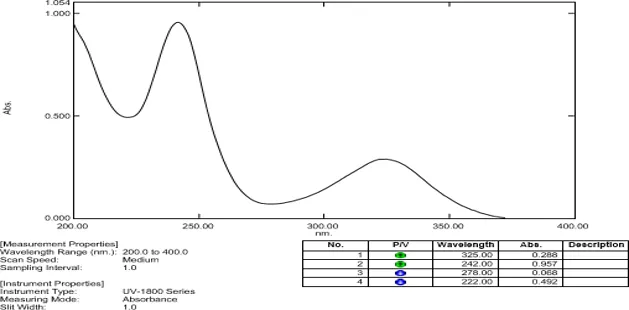
Figure 1: UV spectrum of Pitavastatin in 0.1N HCl
The FTIR spectrum and its interpretation Pitavastatinis shown in figure 2 and table 3 respectively.
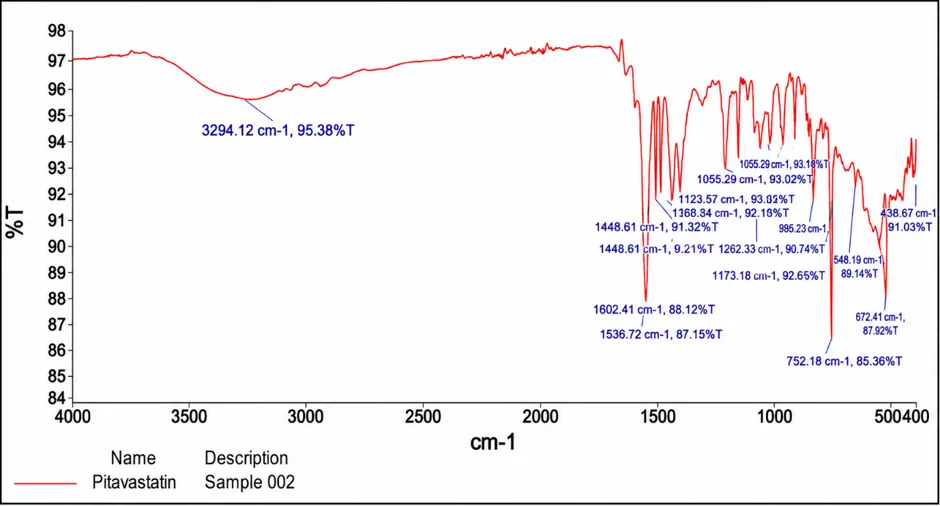
Figure 2: FTIR spectrum of Pitavastatin
Table 3: Interpretation of FTIR spectrum of Pitavastatin
|
Reported peak (cm-1) |
Observed peak (cm-1) |
Functional group |
|
3550-3200 |
3.294.12 |
O-H stretching |
|
1450 |
1448.61 |
C-H bending |
|
1250-1020 |
1173.18 |
C-N stretching |
3.2. Optimization of Pitavastatin Solid Dispersion
The successful formulation of an amorphous solid dispersion depends on the appropriate selection of carrier type, drug-to-polymer ratio, and preparation technique. Polyethylene glycol (PEG) was selected as the hydrophilic carrier because of its excellent aqueous solubility, biocompatibility, low toxicity, and ability to improve wettability and dissolution of poorly water-soluble drugs. Nine formulations (F1–F9) were prepared using different formulation variables and evaluated to identify the optimized solid dispersion for subsequent incorporation into fast dissolving oral films.
3.2.1 Physical Appearance
The physical appearance of pharmaceutical formulations provides valuable preliminary information regarding formulation homogeneity, drug dispersion, and process reproducibility. All prepared Pitavastatin solid dispersions (F1–F9) appeared as fine off-white powders without evidence of discoloration, visible drug crystals, or aggregation. The formulations exhibited satisfactory powder characteristics and were free-flowing, indicating successful incorporation of Pitavastatin into the polyethylene glycol matrix. The absence of visible crystalline particles suggested effective dispersion of the drug within the hydrophilic carrier.
The uniform appearance observed among all formulations indicates that the preparation method produced homogeneous dispersions with good reproducibility. Such homogeneous distribution of the drug is expected to facilitate rapid wetting and dissolution upon contact with aqueous media. Similar observations have been reported for PEG-based solid dispersions of poorly soluble drugs, where homogeneous powder characteristics were associated with improved dissolution performance.
Although all formulations demonstrated acceptable physical characteristics, formulation F5 exhibited the most desirable appearance with excellent flow properties and no evidence of aggregation, supporting its suitability for further characterization.
3.2.2 Percentage Yield
Production yield is an important parameter for evaluating manufacturing efficiency and the suitability of a formulation technique for large-scale production. The percentage yield of the prepared solid dispersions ranged from 90.86 ± 0.39% to 96.28 ± 0.29%, demonstrating excellent recovery during the preparation process.
Among all formulations, F5 exhibited the highest percentage yield (96.28 ± 0.29%), followed by F3 (95.14 ± 0.26%) and F6 (94.76 ± 0.36%), whereas formulation F1 showed the lowest recovery (90.86 ± 0.39%). The consistently high yields observed for all formulations indicate minimal processing loss during preparation and suggest that polyethylene glycol effectively retained the drug within the solid dispersion matrix.
The superior yield obtained for formulation F5 may be attributed to improved miscibility between Pitavastatin and the hydrophilic polymer, resulting in efficient incorporation of the drug and reduced material loss during processing. From an industrial perspective, production yields exceeding 95% are highly desirable because they improve manufacturing economics and facilitate scale-up.
3.2.3 Drug Content
Uniform drug distribution within a solid dispersion is essential for ensuring dosage accuracy and consistent therapeutic efficacy. Drug content analysis demonstrated that all prepared formulations contained Pitavastatin within the acceptable pharmacopeial range, indicating successful incorporation of the drug into the polymeric carrier.
The percentage drug content varied from 94.35 ± 0.35% to 98.14 ± 0.25%. Formulation F5 exhibited the highest drug content (98.14 ± 0.25%), while F3 (97.62 ± 0.29%) and F6 (97.25 ± 0.28%) also demonstrated excellent drug loading.
The high drug content values observed in the optimized formulations indicate negligible drug degradation during processing and confirm the compatibility of Pitavastatin with polyethylene glycol. Furthermore, the low standard deviation associated with each formulation reflects excellent reproducibility of the preparation method and homogeneous drug distribution throughout the polymeric matrix.
These findings suggest that the selected preparation technique effectively minimized drug loss and maintained formulation uniformity, which are critical quality attributes for pharmaceutical dosage forms.
3.2.4 Saturated Solubility
Poor aqueous solubility is the primary factor limiting the oral absorption of Pitavastatin. Therefore, enhancement of saturated solubility was considered one of the principal objectives of the present investigation.
The prepared solid dispersions exhibited a marked improvement in saturated solubility compared with the expected solubility of crystalline Pitavastatin. Solubility values ranged from 67.18 ± 0.48% for formulation F1 to 87.36 ± 0.33% for formulation F5. Other formulations, including F3 (82.47 ± 0.36%) and F6 (84.52 ± 0.39%), also demonstrated substantial enhancement in aqueous solubility.
The significant increase in saturated solubility can be attributed to several physicochemical mechanisms associated with solid dispersion technology. Incorporation of Pitavastatin into the hydrophilic polyethylene glycol matrix enhanced drug wettability, reduced particle aggregation, increased effective surface area available for dissolution, and promoted partial or complete transformation of the crystalline drug into a more soluble amorphous state. The hydrophilic carrier rapidly dissolved upon contact with the dissolution medium, exposing molecularly dispersed drug particles and facilitating faster dissolution.
Among all formulations, F5 demonstrated the greatest improvement in saturated solubility, suggesting that the selected drug-to-polymer ratio provided the most favorable environment for molecular dispersion of Pitavastatin within the PEG matrix.
3.2.5 In Vitro Drug Release
The dissolution profile of poorly water-soluble drugs is one of the most critical determinants of oral bioavailability. Accordingly, all prepared solid dispersions were evaluated for their in vitro drug release characteristics.
Considerable differences in dissolution performance were observed among the formulations. The percentage drug release after 20 min ranged from 71.25 ± 0.44% to 92.16 ± 0.30%. Formulation F5 exhibited the highest cumulative drug release (92.16 ± 0.30%), followed by F6 (89.74 ± 0.34%) and F3 (87.82 ± 0.39%). Formulations F1 and F7 exhibited comparatively lower dissolution rates, releasing approximately 71–73% of the drug within the same period.
The enhanced dissolution observed in formulation F5 is attributed to the synergistic effects of increased wettability, improved hydrophilicity of the polymer matrix, reduced crystallinity, and homogeneous molecular dispersion of Pitavastatin. Polyethylene glycol dissolved rapidly in the aqueous medium, facilitating immediate exposure of finely dispersed drug particles to the dissolution environment. Furthermore, reduction in particle size and increased surface area accelerated drug diffusion into the dissolution medium.
These observations are consistent with previously published studies demonstrating that PEG-based solid dispersions significantly enhance dissolution of BCS Class II drugs through improved wetting, amorphization, and reduced diffusion barriers.
3.2.6 Selection of Optimized Solid Dispersion
Selection of the optimized formulation was based on comprehensive evaluation of all critical quality attributes, including physical appearance, percentage yield, drug content, saturated solubility, and dissolution performance.
Among the nine prepared formulations, F5 consistently demonstrated the best overall performance. It exhibited the highest production yield (96.28 ± 0.29%), maximum drug content (98.14 ± 0.25%), greatest saturated solubility (87.36 ± 0.33%), and highest cumulative drug release (92.16 ± 0.30%) after 20 min.
The superior performance of formulation F5 indicates that the selected formulation variables successfully optimized the interaction between Pitavastatin and polyethylene glycol, resulting in enhanced molecular dispersion and improved dissolution behaviour. Consequently, formulation F5 was selected as the optimized solid dispersion and used for subsequent preparation of fast dissolving oral films.
Overall, the optimization study confirms that polyethylene glycol-based solid dispersion is an effective formulation strategy for enhancing the physicochemical performance of poorly water-soluble Pitavastatin and provides a suitable platform for the development of patient-friendly fast dissolving oral dosage forms.
4. RESULTS AND DISCUSSION
4.1 Evaluation of Pitavastatin Fast Dissolving Oral Films
The optimized Pitavastatin-polyethylene glycol solid dispersion (F5) was selected for the preparation of fast dissolving oral films using the solvent casting method. Twelve formulations (F5G1–F5G12) were prepared by varying the concentration of film-forming polymers and plasticizers to obtain films with desirable mechanical strength, flexibility, rapid disintegration, and enhanced dissolution characteristics. The prepared films were systematically evaluated for physicochemical properties, including visual appearance, film-forming capacity, surface pH, drug content, weight variation, thickness, and folding endurance.
4.1.1 Physical Appearance and Film-Forming Capacity
The visual appearance and film-forming characteristics are important quality attributes influencing patient acceptability and manufacturing feasibility of fast dissolving oral films. All prepared formulations were visually examined for colour, transparency, homogeneity, flexibility, stickiness, brittleness, and ease of peeling.
The observations are summarized in Table 4.
The majority of the prepared formulations exhibited smooth surfaces, satisfactory transparency, excellent flexibility, and uniform drug distribution without visible air bubbles or crystallization. Formulations F5G2, F5G3, F5G4, F5G6, F5G7, F5G8, F5G9, and F5G11 demonstrated excellent film-forming characteristics and were peeled easily from the casting surface without rupture.
Conversely, formulations F5G1, F5G5, F5G10, and F5G12 exhibited comparatively poor mechanical integrity due to brittleness or stickiness during peeling, indicating that the polymer–plasticizer ratio was not optimal. Brittle films generally result from insufficient plasticizer concentration, whereas excessive polymer hydration may produce sticky films. The results indicate that optimization of polymer composition significantly influences film quality and handling characteristics.
4.1.2 Surface pH
Surface pH is an important parameter because oral films remain in direct contact with the buccal mucosa during administration. Films with near-neutral pH minimize the possibility of irritation and improve patient comfort.
The surface pH values of all formulations are presented in Table 4.
The surface pH ranged from 6.874 ± 0.035 to 7.184 ± 0.055, indicating that all formulations possessed an approximately neutral pH. These values closely resemble the physiological pH of saliva, suggesting that the developed oral films are unlikely to cause irritation or discomfort following administration.
The minimal variation in pH among the formulations further indicates uniform distribution of formulation components and demonstrates that incorporation of the optimized solid dispersion did not significantly influence the acid-base characteristics of the films.
4.1.3 Drug Content
Drug content uniformity is a critical quality attribute that ensures accurate dosing and homogeneous distribution of the active pharmaceutical ingredient throughout the film matrix.
The results of drug content analysis are presented in Table 4.
Drug content ranged from 92.39 ± 0.49% to 99.21 ± 0.24%, demonstrating excellent uniformity among all prepared films. Formulation F5G11 exhibited the highest drug content (99.214 ± 0.241%), followed by F5G9 and F5G12, indicating highly efficient incorporation of Pitavastatin within the polymeric matrix.
The low standard deviation observed for all formulations confirms excellent reproducibility of the solvent casting process and homogeneous distribution of the optimized solid dispersion throughout the films.
4.1.4 Weight Variation
Uniform film weight reflects consistency in casting thickness and drug loading during manufacturing.
The weight variation results are summarized in Table 4.
Film weights varied depending on polymer composition and total solid content. The lowest weight was recorded for F5G5 (348.275 mg), whereas F5G7 (812.458 mg) exhibited the highest weight due to its comparatively greater polymer concentration.
The relatively low standard deviations indicate excellent reproducibility of the solvent casting technique and uniform distribution of formulation components.
4.1.5 Film Thickness
Film thickness influences drug loading, mechanical strength, disintegration, and dissolution characteristics.
The thickness measurements are presented in Table The film thickness ranged from 0.452 ± 0.002 mm to 1.248 ± 0.021 mm. Formulation F5G9 exhibited the minimum thickness, whereas F5G1 showed the maximum value.
Uniform thickness across most formulations demonstrates effective control of the casting process and contributes to consistent drug release characteristics.
4.1.6 Folding Endurance
Folding endurance reflects the flexibility and mechanical integrity of oral films during handling and administration.
The results are summarized in Table 4.
Most formulations demonstrated excellent mechanical strength with folding endurance exceeding 100 folds before breakage, confirming adequate flexibility and resistance to repeated handling. Formulations F5G1, F5G5, and F5G10 showed comparatively lower folding endurance because of their brittle nature, which is consistent with the observations made during visual evaluation.
Overall, formulations F5G2, F5G3, F5G4, F5G6, F5G7, F5G8, F5G9, F5G11, and F5G12 exhibited excellent physicochemical characteristics and mechanical properties, making them suitable candidates for further evaluation by disintegration and dissolution studies.
Table 4 Evaluation of Pitavastatin Fast Dissolving Oral Film Formulations (F5G1–F5G12) (Mean ± SD, n = 3)
|
Formulation |
Visual appearance |
Film Forming Capacity |
Surface pH |
Drug Content (%) |
Weight (mg) |
Thickness (mm) |
Folding Endurance |
|
F5G1 |
Homogeneous, smooth, slightly brittle during peeling |
Less |
6.912 ± 0.029 |
92.416 ± 1.482 |
428.365 ± 0.118 |
1.248 ± 0.021 |
<25 |
|
F5G2 |
Homogeneous, uniform, non-sticky, easily peeled |
Good |
7.024 ± 0.053 |
93.785 ± 0.875 |
439.582 ± 0.104 |
0.536 ± 0.005 |
>100 |
|
F5G3 |
Homogeneous, uniform, smooth, easily peeled |
Good |
6.874 ± 0.035 |
96.524 ± 0.964 |
441.127 ± 0.112 |
0.617 ± 0.023 |
>100 |
|
F5G4 |
Homogeneous, flexible, transparent |
Good |
7.098 ± 0.128 |
95.183 ± 0.724 |
426.954 ± 0.116 |
0.684 ± 0.028 |
>100 |
|
F5G5 |
Slightly brittle during peeling |
Less |
7.184 ± 0.055 |
93.462 ± 0.537 |
348.275 ± 0.528 |
0.548 ± 0.011 |
<30 |
|
F5G6 |
Homogeneous and flexible |
Good |
6.985 ± 0.022 |
96.108 ± 0.642 |
521.863 ± 0.437 |
0.642 ± 0.007 |
>100 |
|
F5G7 |
Uniform, transparent, non-sticky |
Good |
6.895 ± 0.039 |
94.275 ± 0.731 |
812.458 ± 0.701 |
0.578 ± 0.005 |
>100 |
|
F5G8 |
Uniform, smooth surface |
Good |
6.961 ± 0.021 |
95.247 ± 1.056 |
548.624 ± 0.615 |
0.667 ± 0.004 |
>100 |
|
F5G9 |
Uniform, flexible and transparent |
Good |
7.086 ± 0.012 |
97.563 ± 1.214 |
526.814 ± 0.986 |
0.452 ± 0.002 |
>100 |
|
F5G10 |
Brittle during peeling |
Less |
7.162 ± 0.036 |
92.387 ± 0.491 |
497.152 ± 0.205 |
0.556 ± 0.008 |
<50 |
|
F5G11 |
Homogeneous and flexible |
Good |
7.103 ± 0.043 |
99.214 ± 0.241 |
618.739 ± 0.131 |
0.481 ± 0.006 |
>100 |
|
F5G12 |
Uniform, flexible and transparent |
Less |
7.005 ± 0.017 |
96.875 ± 0.842 |
756.483 ± 0.348 |
0.589 ± 0.007 |
>100 |
Values are expressed as mean ± standard deviation (n = 3).
4.2 In Vitro Disintegration Study
Rapid disintegration is one of the most important quality attributes of fast dissolving oral films because it governs the onset of drug release and ultimately influences therapeutic efficacy. The disintegration time of formulations F5G1–F5G12 was evaluated using the USP disintegration apparatus in distilled water maintained at 37 ± 0.5°C. The results are presented in Table 2.
The prepared films exhibited disintegration times ranging from. The differences among formulations were primarily attributed to variations in polymer concentration and plasticizer content. Films containing an optimum polymer-to-plasticizer ratio disintegrated rapidly due to efficient hydration and swelling of the polymeric matrix. Conversely, formulations containing higher polymer concentrations exhibited relatively longer disintegration times because of increased matrix density and slower penetration of dissolution medium.
Among the prepared formulations, F5G5 demonstrated one of the shortest disintegration times, indicating rapid hydration and excellent film integrity. The optimized formulation satisfied the pharmacopeial requirement for fast dissolving oral films and is therefore expected to provide rapid drug availability in the oral cavity.
The rapid disintegration observed for the optimized formulation can be attributed to the combined effect of the hydrophilic polymer matrix, optimized plasticizer concentration, and incorporation of the PEG-based solid dispersion, which enhanced water uptake and accelerated film erosion.
In Vitro Dissolution Study
The dissolution profile of Pitavastatin from the prepared fast dissolving oral films was evaluated in phosphate buffer (pH 6.8) to investigate the influence of formulation variables on drug release. The cumulative percentage drug release profiles are presented in Table 5.
Table 5 Comparison of disintegration time and in vitro drug release of Pitavastatin fast dissolving oral film formulations (F5G1–F5G12).
|
Formulation Code |
Disintegration Time (Sec.) |
% Drug Release at 6 min |
|
F5G1 |
76.52 ± 0.41 |
82.15 ± 0.68 |
|
F5G2 |
39.24 ± 0.76 |
99.12 ± 0.35 |
|
F5G3 |
46.31 ± 0.25 |
97.84 ± 0.42 |
|
F5G4 |
43.18 ± 0.29 |
94.36 ± 0.57 |
|
F5G5 |
37.02 ± 0.24 |
99.86 ± 0.28 |
|
F5G6 |
54.28 ± 0.35 |
95.78 ± 0.46 |
|
F5G7 |
40.26 ± 0.18 |
95.02 ± 0.39 |
|
F5G8 |
64.73 ± 0.33 |
93.68 ± 0.51 |
|
F5G9 |
28.84 ± 0.23 |
98.94 ± 0.31 |
|
F5G10 |
44.96 ± 1.38 |
98.15 ± 0.48 |
|
F5G11 |
34.75 ± 0.72 |
96.82 ± 0.54 |
|
F5G12 |
66.88 ± 0.49 |
92.94 ± 0.62 |
4.4 Optimization of Fast Dissolving Oral Film
Selection of the optimized oral film was based on comprehensive evaluation of physicochemical properties, mechanical characteristics, disintegration behaviour, and dissolution performance.
Although several formulations demonstrated satisfactory film quality, F5G5 exhibited the most desirable balance between rapid disintegration and maximum drug release. The formulation also showed acceptable surface pH, satisfactory drug content, uniform thickness, and adequate mechanical properties.
The superior performance of F5G5 can be attributed to the optimized polymer composition, appropriate plasticizer concentration, and incorporation of the PEG-based solid dispersion. The presence of the hydrophilic carrier significantly improved drug wettability and facilitated rapid dissolution immediately after film hydration.
The optimization results confirm that careful selection of formulation variables is essential for developing oral films possessing both satisfactory mechanical integrity and rapid drug release characteristics.
4.5 Correlation Between Solid Dispersion and Oral Film Performance
The present investigation successfully integrated two formulation approaches to overcome the poor aqueous solubility of Pitavastatin. Initially, preparation of PEG-based solid dispersions reduced drug crystallinity and increased saturated solubility, resulting in enhanced dissolution. Subsequent incorporation of the optimized solid dispersion into fast dissolving oral films further accelerated drug release through rapid film hydration and disintegration.
The complementary findings obtained from physicochemical evaluation, solid-state characterization, and dissolution studies demonstrate that the developed formulation strategy effectively improved the pharmaceutical performance of Pitavastatin. The optimized formulation exhibited excellent physicochemical characteristics, rapid disintegration, and almost complete drug release within a few minutes, indicating its potential as an efficient immediate-release oral dosage form.
Overall, the results suggest that PEG-mediated solid dispersion combined with solvent-cast fast dissolving oral film technology represents a promising platform for improving the dissolution behaviour and potential oral bioavailability of poorly water-soluble drugs such as Pitavastatin.
REFERENCES


Anjana Thakur, Nishant Sharma, Dr. Mona Piplani, Pankaj Bhateja, Development and Optimization of Polyethylene Glycol-Based Solid Dispersion of Pitavastatin Incorporated into Fast Dissolving Oral Films for Enhanced Dissolution and Oral Drug Delivery, Int. J. of Pharm. Sci., 2026, Vol 4, Issue 8, 4939-4953. https://doi.org/10.5281/zenodo.22163089
 10.5281/zenodo.22163089