

We use cookies to ensure our website works properly and to personalise your experience. Cookies policy
Tatyaraoji More College Of Pharmacy Umarga
The present study was undertaken to develop and evaluate simple, rapid, sensitive and economical visible spectrophotometric methods for the determination of Ceftazidime in bulk drug and pharmaceutical dosage forms. Two visible spectrophotometric methods were developed based on colour formation using Bratton–Marshall reagent (BMR) and ?-naphthol reagent. In the BMR method, Ceftazidime was diazotized with sodium nitrite in acidic medium and subsequently coupled with Bratton–Marshall reagent to form a coloured chromogen, which was measured at 555 nm. The method showed linearity in the concentration range of 10–50 µg/mL. In the ?-naphthol method, diazotization followed by coupling with ?-naphthol produced a pink-to-purple coloured complex, with maximum absorption at 535 nm and linearity over 10–30 µg/mL. The developed methods demonstrated satisfactory linearity, accuracy, precision and recovery. The methods were successfully applied for the determination of Ceftazidime in pharmaceutical dosage forms. The proposed methods are simple and economical and can be suitably applied for routine quality-control analysis of Ceftazidime.
Quantitative pharmaceutical analysis is essential for confirming the identity, strength and quality of active pharmaceutical ingredients and finished dosage forms. The thesis describes analytical method development for ceftazidime using both visible spectrophotometry and RP-HPLC. The present manuscript focuses only on the visible spectrophotometric method using Bratton–Marshall reagent (BMR), as requested.
Ceftazidime is an important β-lactam antibacterial agent used in pharmaceutical preparations. Analytical methods for ceftazidime reported in the thesis include UV spectrophotometry, visible spectrophotometry and chromatographic approaches. The proposed BMR method exploits the analytically useful functional group of ceftazidime through diazotization followed by coupling to generate a measurable coloured species.
In the proposed reaction, ceftazidime is treated with hydrochloric acid and sodium nitrite under controlled cold conditions. The diazotized intermediate is then reacted with BMR after removal of excess nitrite with ammonium sulphamate. Formation of the dark-purple chromogen permits quantitative measurement at 555 nm.
UV Spectrophotometric Method
Need and importance of UV method:
Ultraviolet (UV) spectrophotometry is an important instrumental analytical technique used for the quantitative estimation of pharmaceutical substances. A simple, rapid, accurate, precise and economical analytical method is required for routine analysis of drugs in bulk drug substances and pharmaceutical formulations. UV spectrophotometric analysis is particularly useful when the drug shows suitable absorption in the UV region, as its concentration can be determined from the measured absorbance using the Beer-Lambert law. Therefore, development and validation of a suitable UV spectrophotometric method is important for obtaining reliable quantitative results and for routine pharmaceutical quality control.
File-based information
Quantitative chemical analysis is an important tool for assuring that raw materials and intermediate products meet the required specifications. Drug analysis forms the basis for determination of the quality of pharmaceutical products, and quality is particularly important in medicines because it involves human life. Analytical methods are broadly classified into classical and instrumental methods. Spectrophotometric methods are instrumental analytical techniques in which absorption of radiation is measured. UV/Visible spectrophotometry is used for quantitative analysis of pharmaceutical substances, where a transparent solution and a suitable analytical wavelength are important for measurement.
In absorption spectrophotometry, transmittance (T) is defined as the ratio of the intensity of transmitted light to the intensity of incident light, whereas absorbance (A) is the negative logarithm of transmittance to the base 10. The absorbance is expressed as A = log I₀/Iₜ and is related to the concentration of the absorbing substance. The fundamental relationship used for quantitative spectrophotometric analysis is the Beer-Lambert law, expressed as A = abc, where A is absorbance, a is absorptivity, b is the path length of the cell and c is the concentration of the solution.
Beer’s law is considered to be obeyed over a particular concentration range when a plot of concentration against absorbance gives a straight line passing through the origin. In single-component quantitative analysis, a series of solutions of the same substance are measured at the same wavelength, temperature and solvent conditions, and absorbance is plotted against concentration. When a linear relationship is obtained, the established calibration plot can be used for determination of the concentration of an unknown sample under the same experimental conditions.
The selection of the analytical wavelength is an important step in development of a quantitative absorption spectrophotometric method. The wavelength may be selected from literature or experimentally by scanning the spectrum in the UV-visible region. The wavelength of maximum absorbance is generally selected as the analytical wavelength because it helps to enhance the sensitivity and signal-to-noise ratio of the measurement. For quantitative analysis, concentration may be determined using a standard absorptivity value, calibration graph or single- or double-point standardization.
The development of a quantitative UV spectrophotometric method requires appropriate selection of the analytical wavelength and experimental conditions. The type of instrument is an important factor in analytical measurement, and the instrument used should be properly calibrated. The developed method should be evaluated for reproducibility and its compliance with Beer’s law. Thus, proper method development and validation are necessary to establish the reliability of the proposed UV spectrophotometric procedure for pharmaceutical analysis.
Objectives
MATERIALS AND REAGENTS
The following reagents and materials were reported for the BMR method:
Table 1 Materials and Reagents
|
Sr. No. |
Material / Reagent |
Specification / Concentration |
Purpose |
|
1 |
Ceftazidime |
API / Working standard |
Analyte |
|
2 |
Bratton–Marshall Reagent (BMR) |
0.25% w/v |
Coupling reagent |
|
3 |
Sodium Nitrite |
1% w/v |
Diazotization reagent |
|
4 |
Ammonium Sulphamate |
3% w/v |
Removal of excess nitrite |
|
5 |
Hydrochloric Acid |
Concentrated HCl |
Diazotization medium |
|
6 |
Distilled Water |
— |
Solvent / Diluent |
|
7 |
β-Naphthol |
0.2% w/v |
Coupling reagent |
|
8 |
Sodium Nitrite |
0.5% w/v |
Diazotization reagent |
|
9 |
Ammonium Sulphamate |
0.1% w/v |
Removal of excess nitrite |
|
10 |
Hydrochloric Acid |
5 N |
Diazotization medium |
|
11 |
Double Distilled Water |
— |
Solvent / Diluent |
Instrumentation
The thesis section describing the BMR method does not specify a separate UV-visible spectrophotometer model in the experimental text. Therefore, no instrument model has been added here. Absorbance measurements were performed at the selected wavelength of 555 nm against a reagent blank, as reported in the thesis.
METHODOLOGY
METHOD 1 Visible Spectrophotometric Methods By Daizotization Coupling Reaction
Visible Spectrophotometric determination of Ceftazidime with Bratton Marshall Reagent.
A. Preparation of standard calibration curve of bulk drug.
1. Solvents Used
Ammonium Sulphomate (3%w/v), Sodium Nitrite (1%w/v), Bratton Marshall Reagent (0.25%W/V), 1 ml Con HCL and Distilled Water
2. Preparation of standard stock solution
Accurately weighed 100mg of Ceftazidime (bulk drug) was dissolved in 40 ml of double distilled water in 100ml volumetric flask and volume was made upto the mark with double distilled water i.e.1000µg/ml.
3. Preparation of calibration curve
Fresh aliquots ranging from 1-5ml (i.e., 1ml = 100 mcg/ml) from standard stock solution were pipetted out and suitably diluted with double distilled water to get the final concentration range of 10 - 50µg/ml. To each flask add 1ml of con HCL, 2 ml of Sodium nitrite (1%w/v) solution added and a reaction time of 5 min at 0-5°c was maintained for the completion of reaction. Then add 1ml of ammonium sulphomate (3%w/v) to each flask with gentle shaking and after 2min, add 1ml of Bratton Marshall Reagent (0.25%w/v) was added and kept for 5 min. Finally the volume of each flask was brought upto 10ml mark with double distilled water. The absorbance of Dark Purple colored chromogen was measured at 555 nm against the reagent blank. The color species was stable for 3 hour. The amount of Ceftazidime present in the sample solution was computed from its calibration curve.
B. Analysis of Vial formulation
The sample of the powder Vial claimed to contain 1 gram. Then accurate quantity equivalent to 100mg of active ingredient was extracted with double distilled water and filtered through a 0.45um membrane filter, followed by adding double Distilled water upto 100ml to get the stock solution of 1 mg/ml (Stock Solution).
Subsequent dilutions 1-5 ml(1ml = 100 ug/ml) of the above solution were made with double distilled water to get concentrations of 10-50µg/ml and were prepared as above and analyzed at the selected analytical wavelength, 555 nm and their results were statistically validated.
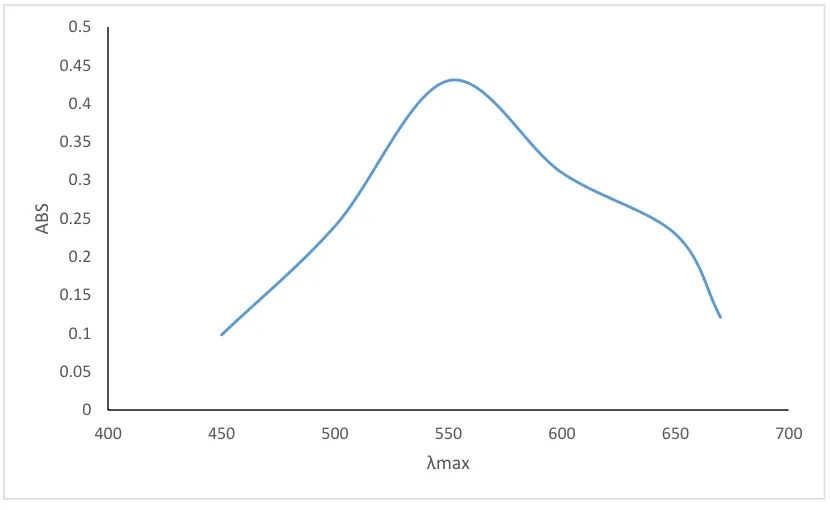
Figure 1 : Absorption Spectra of Ceftazidime by using BMR Reagent (50µg/ml, λmax 555nm)
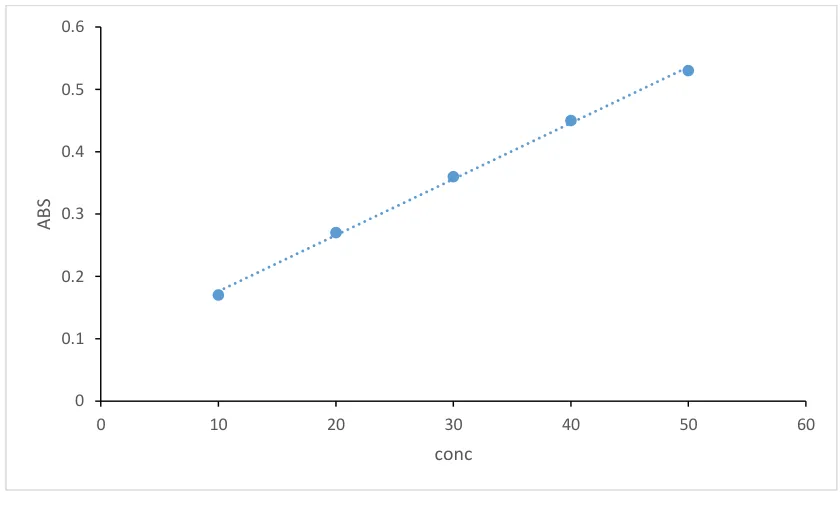
Figure 2: Calibration Curve of Ceftazidime with BMR Reagent ( 10-50µg/ml)
Reaction of Ceftazidime with Bratton marshall reagent:
A spectrophotometric method is developed which is based on diazotization of Ceftazidime with Nitrous acid (NaOH/HCL) at room temperature followed by its coupling in-situ with BMR, which leads to formation of dark purple coloured complex.
Table 2: Optical Characteristics and Precision of Ceftazidime with Bratton marshall reagent [BMR]
|
Parameters |
Results |
|
Λmax |
555nm |
|
Beer’s law limits (µg/ml) |
10-50µg/ml |
|
Molar Absorptivity(Lit. mol-1 cm-1) |
0.07661x10⁵ |
|
Limit of Detection (LOD/ mcg .ml-1) |
0.6910 |
|
Limit of Quantification (LOQ/ mcg.ml-1) |
2.087 |
|
Sandell’s Sensitivity(µg/ml 0.001 abs unit) |
0.00208 |
|
Regression equation (Y*) Slope (b) |
0.00902 |
|
Intercept(a) |
0.882 |
|
Correlation coefficient(r) |
0.9975 |
|
% RSD |
0.524 |
|
Range of Errors Confidence limits with 0.05 level |
0.0001997 |
|
Confidence limits with 0.01 level |
0.002955 |
Table: 3 Assay results of Ceftazidime in pharmaceutical dosage forms (vial) with Bratton marshal reagent
|
Sample |
Labeled Amount (mg) |
Amount found by the proposed method* (mg) |
% recovery by the proposed method ±SD |
Proposed method |
Reference Method |
|
V1 |
1000mg |
999.88 |
99.90 |
|
998.1 |
|
V2 |
500mg |
497.70 |
99.72 |
|
499.07 |
V1 and V2 (Tanzid & Meezat) are vials from different manufactures, *Average ± SD of three determinations.
Table 4 : Statistical data for Accuracy Determination
|
Level of Recovery (%) |
Amount of drug in formulation* (mg) |
Amount of standard drug added (mg) |
Total amount found (mean)* |
% Recovery |
|
80% |
449.37 |
5 |
454.37 |
98.89 |
|
100% |
449.90 |
10 |
502.9 |
99.01 |
|
120% |
549.78 |
15 |
564.78 |
97.34 |
Table 5 : Repeatability data for Ceftazidime with Bratton marshal reagent
|
Concentration (μg/ml) |
Abs 1 |
Abs 2 |
Abs 3 |
Mean |
Standard Deviation |
|
10 |
0.173 |
0.174 |
0.173 |
0.173 |
0.0023 |
|
20 |
0.272 |
0.271 |
0.273 |
0.272 |
0.001 |
|
30 |
0.361 |
0.363 |
0.362 |
0.362 |
0.001 |
|
40 |
0.456 |
0.455 |
0.453 |
0.454 |
0.0017 |
|
50 |
0.532 |
0.531 |
0.533 |
0.532 |
0.001 |
Method 2 Visible Spectrophotometric determination of Ceftazidime with β napthol.
A. Preparation of standard calibration curve of bulk drug.
1 .Solvents Used
Ammonium Sulphomate (0.1%w/v), Sodium Nitrite (0.5%w/v), β napthol reagent (0.2%w/v), 2 ml HCL (5N) and distilled water.
2 .Preparation of standard stock solution
Accurately weighed 100mg of Ceftazidime (bulk drug) was dissolved in 40 ml of double distilled water in 100ml volumetric flask and volume was made upto the mark with double distilled water i.e.1000µg/ml.
3 .Preparation of calibration curve
Fresh aliquots ranging from 1-3ml (i.e., 1ml = 100 µg/ml) from standard stock solution were pipetted out and suitably diluted with double distilled water to get the final concentration range of 10- 30µg/ml. To each flask add 2ml of 5N HCL, 1 ml of Sodium nitrite (0.5%w/v) solution added and a reaction time of 10min at 0-5°c was given for the completion of reaction. Then add 1ml of ammonium sulphomate (0.1%w/v) to each flask with gentle shaking and after 2min, add 2ml of β napthol reagent (0.2%w/v) was added and kept for 5 min. Finally the volume of each flask was brought upto 10ml mark with double distilled water. The absorbance of pink to purple colured chromogen was measured at 535nm against the reagent blank. The color species was stable for 5 hours. The amount of Ceftazidime present in the sample solution was computed from its calibration curve.
B Analysis of Vial formulation
The sample of the powder Vial claimed to contain 1gram. Then accurate quantity equivalent to 100mg of active ingredient was extracted with double distilled water and filtered through a 0.45um membrane filter, followed by adding double Distilled water upto 100ml to get the stock solution of 1000 µg/ml (Stock Solution).
Subsequent dilutions 1-3ml(1ml = 100 ug/ml) of this solution were made with double distilled water to get concentrations of 10-30µg/ml and were prepared as above and analyzed at the selected analytical wavelengths, 535 nm and their results were statistically validated.
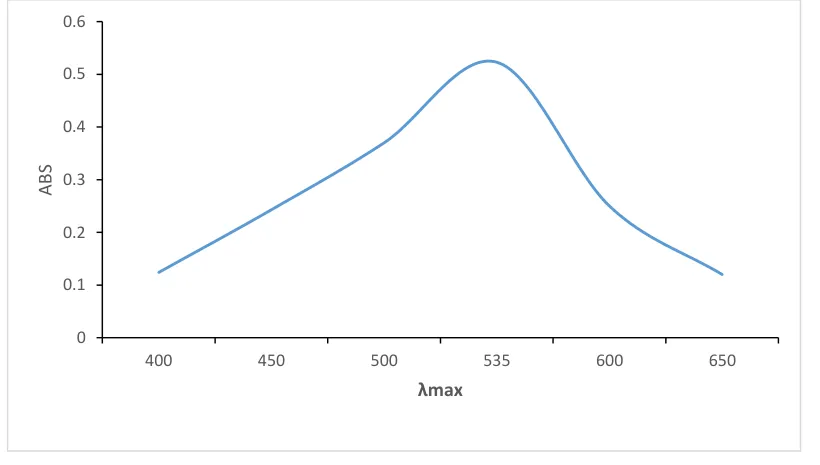
Figure 3: Absorption Spectra of Ceftazidime by using β napthol (25µg/ml, λmax 535nm)
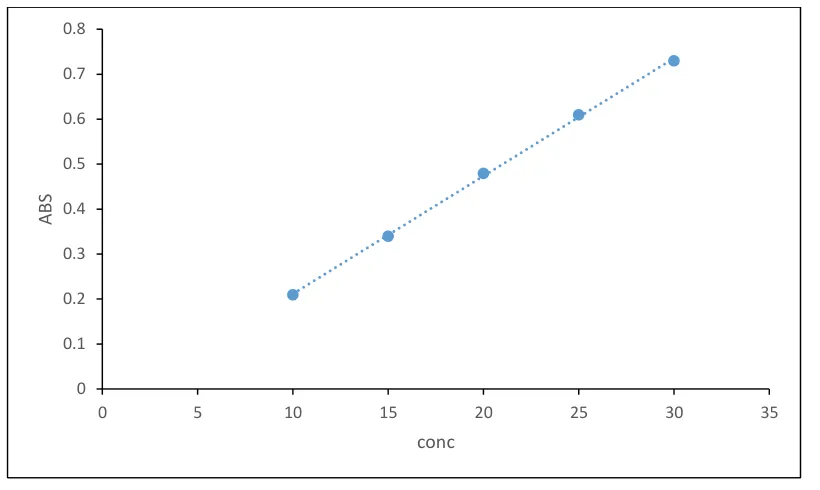
Figure 4: Calibration Curve of Ceftazidime with β napthol ( 10-30µg/ml)
Reaction of Ceftazidime with β napthol reagent :
A spectrophotometric method is developed which is based on diazotization of Ceftazidime with Nitrous acid (NaOH/HCL) at room temperature followed by its coupling in-situ with β naphthol reagent , which leads to formation of Dark purple coloured complex.
Table 7: Optical Characteristics and Precision of Ceftazidime with β Napthol
|
Parameters |
Results |
|
Λmax |
535nm |
|
Beer’s law limits (µg/ml) |
10-30µg/ml |
|
Molar Absorptivity(Lit. mol-1 cm-1) |
0.1553x10⁵ |
|
Limit of Detection (LOD/ mcg .ml-1) |
0.9855 |
|
Limit of Quantification (LOQ/ mcg.ml-1) |
2.9866 |
|
Sandell’s Sensitivity(µg/ml 0.001 abs unit) |
0.002986 |
|
Regression equation (Y*) Slope (b) |
0.2624 |
|
Intercept(a) |
0.0482 |
|
Correlation coefficient(r) |
0.9975 |
|
% RSD |
16.225x10³ |
|
Range of Errors Confidence limits with 0.05 level |
0.008287 |
|
Confidence limits with 0.01 level |
0.01226 |
Table 8: Assay results of Ceftazidime in pharmaceutical dosage forms ( vial ) with β naptthol reagent
|
Sample |
Labeled Amount (mg) |
Amount found by the proposed method* (mg) |
% recovery by the proposed method ±SD |
Proposed method |
Reference Method |
|
V1 |
1000mg |
998.21 |
99.77 |
|
997.21 |
|
V2 |
500mg |
497.70 |
99.72 |
|
499.07 |
V1 and V2 (Tanzid & Meezat) are vials from different manufactures, *Average ± SD of three determinations.
Table 9: Statistical data for Accuracy Determination
|
Level of Recovery (%) |
Amount of drug in formulation* (mg) |
Amount of standard drug added (mg) |
Total amount found (mean)* |
% Recovery |
|
80% |
449.37 |
5 |
454.37 |
98.89 |
|
100% |
449.90 |
10 |
502.9 |
99.01 |
|
120% |
549.78 |
15 |
564.78 |
97.34 |
Table 10: Repeatability data for Ceftazidime with β napthol
|
Concentration (μg/ml) |
Abs 1 |
Abs 2 |
Abs 3 |
Mean |
Standard Deviation |
|
10 |
0.212 |
0.213 |
0.211 |
0.212 |
0.001 |
|
15 |
0.341 |
0.352 |
0.346 |
0.346 |
0.0055 |
|
20 |
0.483 |
0.492 |
0.496 |
0.483 |
0.0080 |
|
25 |
0.615 |
0.607 |
0.622 |
0.624 |
0.0075 |
|
30 |
0.732 |
0.721 |
0.736 |
0.729 |
0.0064 |
RESULTS AND DISCUSSION
The optical characteristics such as absorption maxima, beer’s law limits, molar absorptivity and sandell’s sensitivity are presented. The regression analysis using the method of least squares was made for the slope (b), intercept (a) and co-relation coefficient from different concentrations and the results are summarized. The percent relative standard deviation and percent range of error (0.05 and 0.01 level of confidence limits) calculated from the eight measurements. The results showed that the method have reasonable precision.
Results obtained with the proposed methods confirm the suitability of these methods for pharmaceutical dosage forms. The other active ingredients and excipients usually present in pharmaceutical dosage forms did not interfere in estimation when some commercial dosage forms (I1 and I2) were analyzed by this method was confirmed by the recovery studies, by adding a known amount of the pure drug to the formulation already analyzed by this method and the analytical data is presented.
In all the above methods, the optimum concentration for the estimation of Ceftazidime was established by varying one parameter at a time and keeping the other fixed and observing the effects of product on the absorbance of the coloured species and incorporated in the procedures. The optimum concentration by keeping the reagent concentration fixed after establishing the optimum concentration for drug, the reagent concentration was varied. The above ranges of drug and reagents concentrations were chosen because the colored species formed gave better absorbance and obeyed Beer’s law satisfactorily.
The other active ingredients and excipients present in the vial dosage forms in the various concentration range did not interfere, when added in the main concentration range to the drug and estimated by the proposed method.
The methods reported here are found to be simple, sensitive, accurate, precise and economical and can be used in the determination of Ceftazidime from pharmaceutical dosage forms.
CONCLUSION
The present study successfully developed and evaluated two simple, rapid, sensitive and economical visible spectrophotometric methods for the determination of Ceftazidime in bulk and pharmaceutical dosage forms using Bratton–Marshall reagent and β-naphthol reagent. The developed methods showed good linearity over the respective concentration ranges, with satisfactory correlation coefficients. The methods also demonstrated acceptable accuracy, precision and reproducibility, with satisfactory recovery of Ceftazidime from pharmaceutical formulations.
The developed spectrophotometric methods require simple reagents and laboratory equipment and can be performed without complex sample preparation. Therefore, these methods can be considered suitable for routine quality-control analysis of Ceftazidime in bulk drug and pharmaceutical dosage forms.
REFERENCES

Deepak Ghotale* , Anil More , Development And Validation Of A Simple Uv-Visible Spectrophotometric Method For Quantitative Estimation Of Ceftazidime In Pharmaceutical Dosage Form, Int. J. of Pharm. Sci., 2026, Vol 4, Issue 9, 1585-1595. https://doi.org/10.5281/zenodo.22735202
 10.5281/zenodo.22735202