

We use cookies to ensure our website works properly and to personalise your experience. Cookies policy
Mandesh Institute of Pharmaceutical Science and Research Center, Mhaswad, Maharashtra, India. 415509.
The objective of the current study was to develop and validate a straightforward, quick, accurate, and precise Reverse Phase High Performance Liquid Chromatography (RP-HPLC) method for quantitatively estimating metformin hydrochloride in bulk drug using various solvent systems. To achieve satisfactory chromatographic separation and analytical performance, various mobile phase compositions containing phosphate buffer, methanol, acetonitrile, and water were evaluated. An RP-C18 column (250 mm × 4.6 mm, 5 µm particle size) with a mobile phase made of phosphate buffer and organic solvents at a flow rate of 1.0 mL/min was used to perform chromatographic separation. Detection was performed at 233 nm using a UV detector under isocratic elution conditions.The new approach produced crisp, symmetrical, and well-resolved peaks with acceptable retention period and good baseline stability. The optimized method was verified according to ICH criteria for several analytical parameters including system appropriateness, specificity, linearity, accuracy, precision, robustness, ruggedness, limit of detection (LOD), and limit of quantification (LOQ). Over the chosen concentration range, the calibration curve showed high linearity and a satisfactory correlation coefficient. Recovery studies validated the accuracy of the approach, while low percentage relative standard deviation values suggested great precision and reproducibility. Studies on robustness and ruggedness showed that the developed analytical approach was reliable even when chromatographic conditions varied somewhat.For routine quantitative analysis of metformin hydrochloride in bulk drug and pharmaceutical quality control laboratories, the devised RP-HPLC method was found to be straightforward, affordable, sensitive, dependable, and appropriate.
Millions of individuals worldwide suffer with diabetes mellitus, one of the most common chronic metabolic diseases. Persistent hyperglycemia brought on by deficiencies in insulin action, secretion, or both is its hallmark. Long-term blood glucose rise can cause serious side effects include retinopathy, nephropathy, neuropathy, cardiovascular illnesses, and other metabolic disorders. Effective pharmaceutical management is now crucial for enhancing patient health and quality of life due to the fast rising incidence of diabetes linked to sedentary lifestyles, obesity, hereditary susceptibility, and bad eating habits. [1]
Among the several oral hypoglycemic medications available for the treatment of Type 2 diabetes mellitus, Metformin hydrochloride is considered the first-line pharmacological therapy because of its high therapeutic efficacy, great safety profile, low risk of hypoglycemia, and affordability. Metformin is an antidiabetic medication that is a member of the biguanide class. It works pharmacologically by lowering intestinal glucose absorption, lowering hepatic glucose synthesis, and increasing peripheral insulin sensitivity. Metformin also helps maintain overall glycemic control by improving skeletal muscle absorption of glucose. Metformin is widely utilized in pharmaceutical formulations, either by itself or in conjunction with other antidiabetic drugs, due to these benefits. [2]
Reliable analytical techniques must be developed for routine quality control, assay determination, stability testing, and regulatory compliance due to the growing production and consumption of metformin formulations. To guarantee the authenticity, purity, potency, and safety of medicinal substances and completed dosage forms, accurate quantitative assessment of active pharmaceutical ingredients (APIs) is a crucial component of pharmaceutical analysis. Therefore, excellent sensitivity, specificity, precision, accuracy, repeatability, and resilience are essential for analytical techniques employed in the pharmaceutical industry. [3]
High Performance Liquid Chromatography (HPLC) has become one of the most effective and commonly used analytical techniques for pharmaceutical analysis. Excellent resolution, quick analysis, increased sensitivity, repeatable results, and the capacity to examine complicated mixtures are just a few benefits of HPLC. It is widely used for both qualitative and quantitative drug estimation in pharmaceutical dosage forms and bulk. In particular, reverse phase high performance liquid chromatography (RP-HPLC) is often chosen because to its ease of use, effectiveness, and compatibility with polar pharmaceuticals such as metformin. [4]
Chromatographic parameters like stationary phase, mobile phase composition, pH, flow rate, detection wavelength, and column temperature have a significant impact on an HPLC method's performance. The solvent system's or mobile phase's composition is one of these elements that is essential to achieving appropriate chromatographic separation. The selection of a proper solvent system directly effects retention duration, peak symmetry, peak resolution, theoretical plates, tailing factor, sensitivity, and overall analytical efficiency. The chromatographic behavior of metformin during analysis can be considerably changed by various combinations of aqueous buffers and organic solvents like methanol and acetonitrile. [5]
Therefore, a crucial stage in the development of an HPLC method is solvent system optimization. Sharp, symmetrical peaks with an appropriate retention time and little interference from excipients or contaminants are characteristics of an ideal mobile phase. The reliability and repeatability of the analytical method may be impacted by the use of improper solvent systems, which can lead to poor peak resolution, peak widening, baseline noise, or extended analysis times. Therefore, determining the best chromatographic conditions for precise metformin estimation requires a methodical assessment of different solvent systems. [6]
Another crucial component of developing analytical methods is method validation. The International Council for Harmonization (ICH) guidelines state that in order to verify the dependability and suitability of the developed analytical method, validation parameters like linearity, accuracy, precision, specificity, robustness, limit of detection (LOD), limit of quantification (LOQ), and system suitability must be assessed. During routine pharmaceutical analysis, a validated HPLC method guarantees constant analytical performance and gives confidence in the generated data. [7]
Therefore, the goal of the current research project is to develop and validate an easy-to-use, accurate, quick, and cost-effective RP-HPLC method for measuring metformin in bulk medication utilizing several solvent systems. Based on chromatographic performance factors such retention time, peak shape, resolution, and sensitivity, several mobile phase compositions will be examined and contrasted. The optimized approach will then be evaluated in accordance with ICH recommendations to determine whether it is appropriate for routine metformin quality control analysis in research labs and pharmaceutical firms. [8)
2. MATERIALS AND METHODS
2.1 Materials
The bulk medication used in this investigation, metformin hydrochloride, was acquired as a gift sample from a pharmaceutical manufacturing company and utilized without additional purification. The mobile phase and standard solutions were prepared using HPLC grade methanol, acetonitrile, and water as solvents. Phosphate buffer was prepared using potassium dihydrogen phosphate, and the mobile phase's pH was adjusted as needed using orthophosphoric acid. To achieve appropriate chromatographic separation and peak characteristics, various solvent system combinations comprising aqueous buffer with methanol and acetonitrile in different ratios were prepared and assessed during the method optimization process. To guarantee the precision, repeatability, and dependability of chromatographic analysis, all chemicals and reagents utilized in the investigation were of analytical or HPLC quality. [9)
2.2 Instrumentation
A High Performance Liquid Chromatography (HPLC) system with a UV-visible detector, a manual or automatic sampler, a solvent delivery pump, and data acquisition software for recording chromatograms and analytical results was used to perform the chromatographic analysis. Separation was done using a Reverse Phase C18 analytical column having dimensions of 250 mm × 4.6 mm with a particle size of 5 µm, which allowed efficient separation and sufficient retention of metformin. Chemicals and standard drug samples were accurately weighed using an analytical balance with high sensitivity. The solvents and mobile phase were properly dissolved and degassed using an ultrasonicator, and the pH of the buffer was adjusted and monitored using a calibrated pH meter. Membrane filters were used to filter the mobile phase and sample solutions in order to get rid of particles and keep the HPLC column from becoming clogged. To guarantee accuracy and dependability of the experimental results, all instruments utilized in the investigation were correctly calibrated before analysis. [10]
2.3 Chromatographic Conditions
Under ideal Reverse Phase HPLC conditions, metformin was separated and estimated chromatographically. Various solvent systems containing phosphate buffer and organic solvents such as methanol and acetonitrile were examined during technique development to achieve adequate peak symmetry, retention time, and resolution. The optimal chromatographic settings utilized for the analysis are summarized below. [11]
|
Parameter |
Optimized Condition |
|
Column |
RP-C18 Column (250 mm × 4.6 mm, 5 µm) |
|
Mobile Phase |
Phosphate Buffer : Methanol / Acetonitrile |
|
Flow Rate |
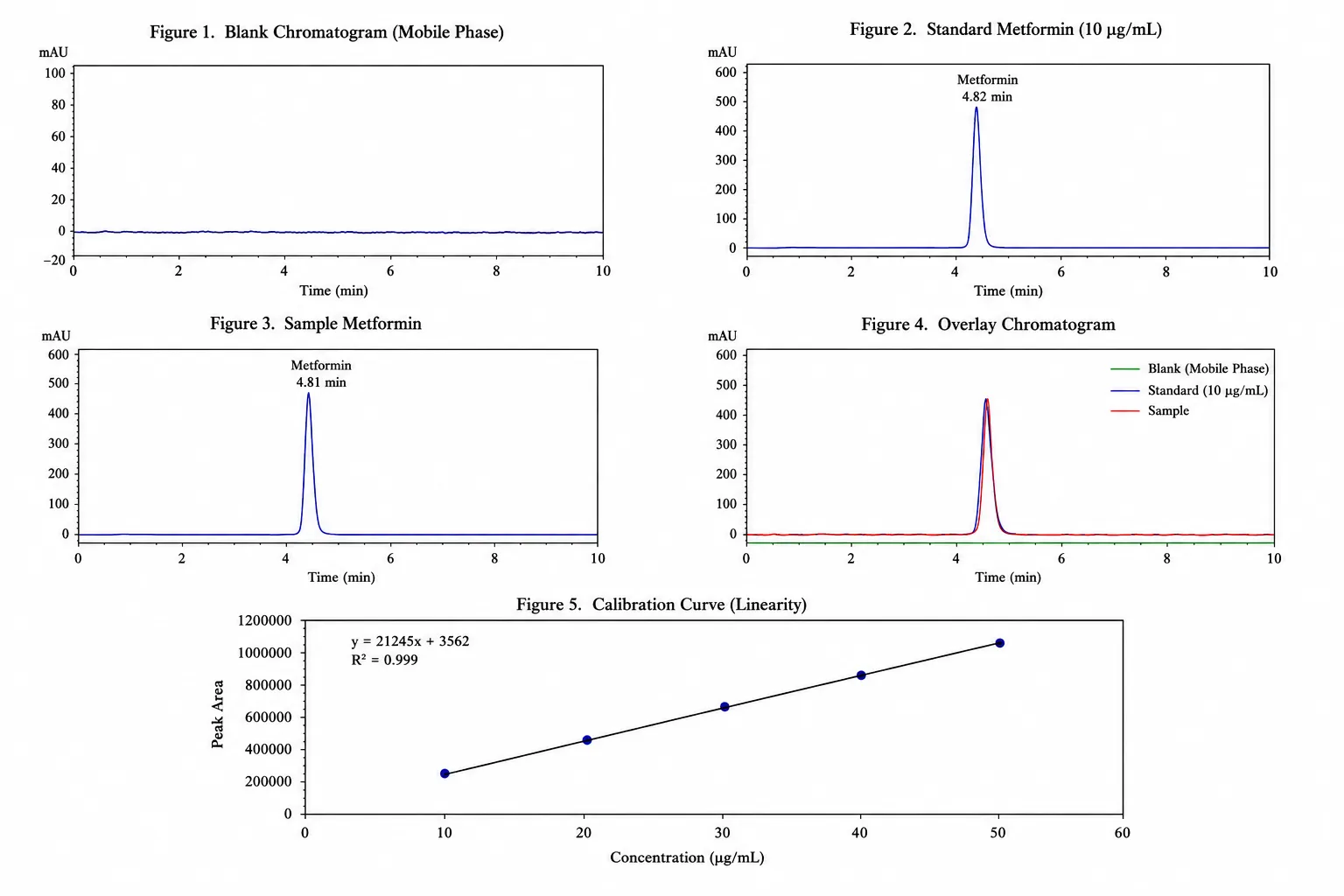
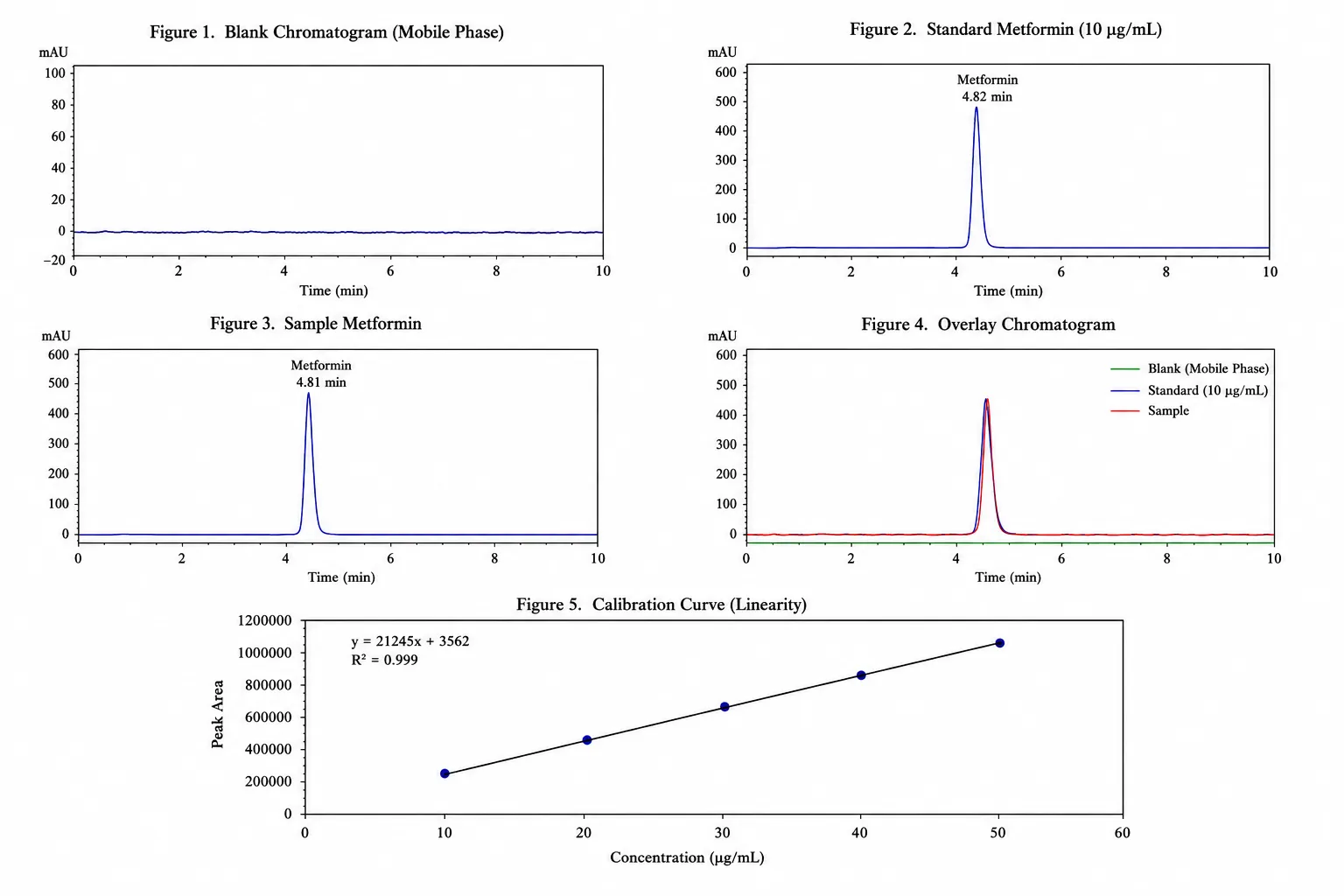
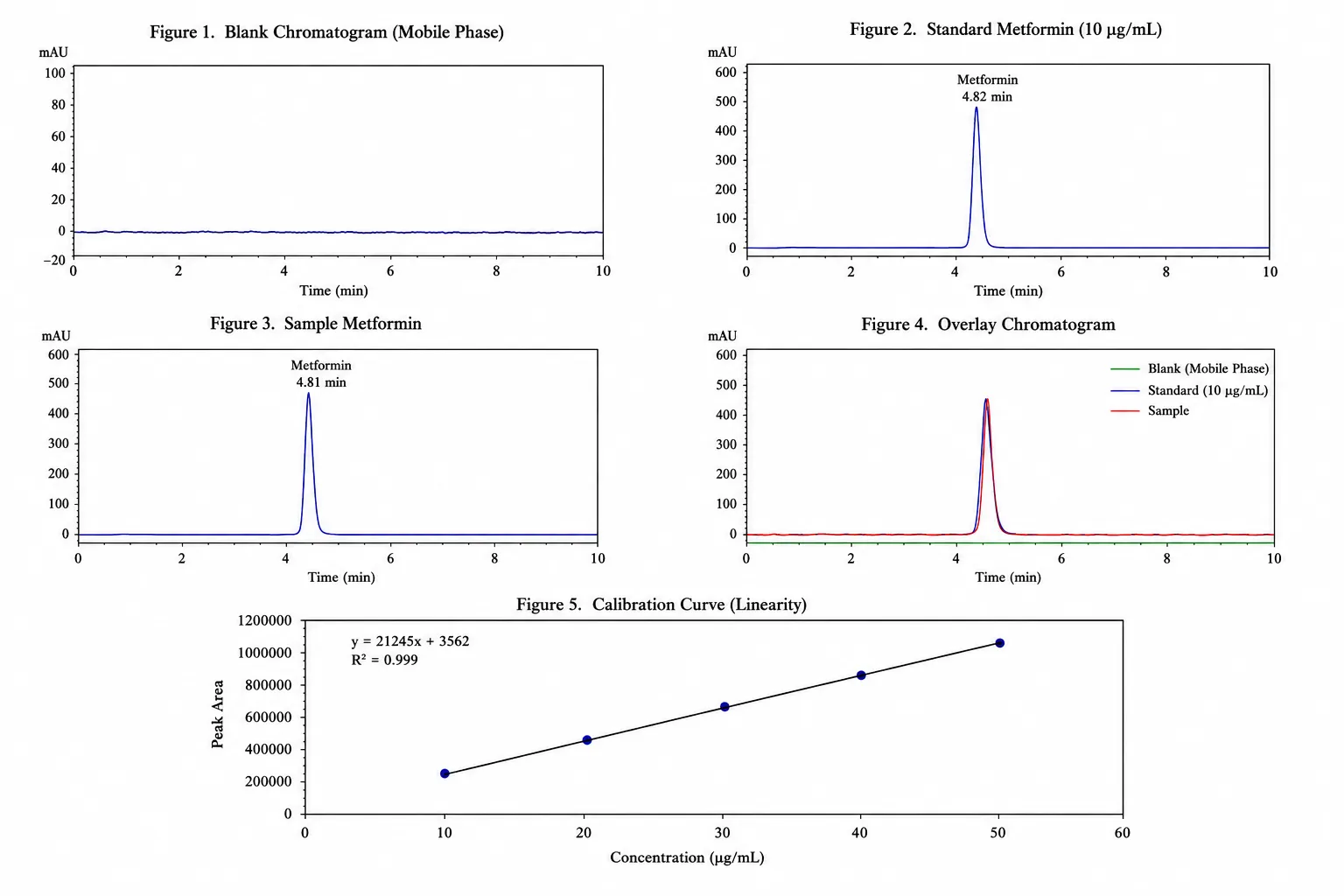
1.0 mL/min |
|
Detection Wavelength |
233 nm |
|
Injection Volume |
20 µL |
|
Column Temperature |
Ambient Temperature |
|
Run Time |
10 minutes |
|
Mode of Elution |
Isocratic |
|
Detector |
UV Detector |
The mobile phase was filtered through a membrane filter and ultrasonically degassed to eliminate dissolved gases and particle contaminants before analysis. Metformin standard and sample solutions were made with appropriate diluents and added to the HPLC apparatus under ideal chromatographic conditions. To determine the best mobile phase composition for routine analysis of metformin bulk medication, various solvent systems were assessed based on chromatographic parameters such retention duration, peak shape, peak symmetry, theoretical plates, and tailing factor. [12]
3. PREPARATION OF STANDARD SOLUTION
Using a high precision analytical balance, 10 mg of metformin hydrochloride bulk medication that had been precisely weighed was carefully put into a dry, clean, and appropriately calibrated 10 mL volumetric flask. To dissolve the medication fully, roughly 5 mL of HPLC grade methanol was put into the flask. After gently shaking the flask to distribute the drug evenly, it was sonicated in an ultrasonicator for ten to fifteen minutes to guarantee that the drug was completely dissolved and to prevent the presence of undissolved particles. [13] A primary stock solution with a concentration of 1000 µg/mL of metformin was obtained by allowing the solution to reach room temperature and adjusting the final volume with the prepared mobile phase. [14]
To achieve a consistent concentration throughout the solution, the prepared stock solution was carefully mixed. After removing particulate impurities, the solution was filtered through a 0.45 µm membrane filter to produce a clear solution fit for HPLC analysis. Careful filtration was carried out to enhance analytical accuracy and prevent clogging of the chromatographic column. To reduce exposure to light and environmental contamination, the filtered solution was moved into a dry, clean, amber-colored volumetric container. [15]
From the generated stock solution, further serial dilutions were carried out using the optimized mobile phase as diluent to obtain working standard solutions of different concentrations required for calibration curve preparation, method development, and validation studies. To ensure accuracy in concentration preparation, suitable aliquots were extracted using calibrated micropipettes and precisely diluted in volumetric flasks. To prevent any potential medication deterioration or instability during storage, the working standard solutions were made fresh before analysis. [16]
Throughout the experiment, all created solutions were kept in appropriate laboratory settings and shielded from the sun. Prior to injection into the HPLC system, the solutions were again visually assessed for clarity and lack of particle matter to ensure reproducibility and reliability of chromatographic results. [17]
4. METHOD DEVELOPMENT AND OPTIMIZATION
In order to establish an analytical approach with excellent accuracy, precision, specificity, sensitivity, and repeatability, the RP-HPLC method for quantitative measurement of metformin hydrochloride was developed methodically. The optimization of chromatographic settings, including mobile phase composition, solvent ratio, buffer pH, flow rate, detection wavelength, and drug retention behavior, was the primary emphasis of the technique development process. To achieve the best separation and acceptable chromatographic performance, a variety of chromatographic trials were carried out using different solvent systems. (18)Initially, different mobile phase combinations containing methanol, acetonitrile, HPLC grade water, and phosphate buffer in varying quantities were created and tested. Different solvent systems were selected based on the polarity, solubility, and chromatographic behavior of metformin. Early experiments with methanol and water mixtures revealed insufficient retention times, wide peaks, and poor peak symmetry. In order to enhance peak characteristics and chromatographic performance, phosphate buffer was added to the mobile phase composition. [19]
To improve peak resolution and reduce peak tailing, phosphate buffer was made by dissolving potassium dihydrogen phosphate in HPLC-grade water and adjusting the pH with orthophosphoric acid. Under different chromatographic conditions, phosphate buffer ratios with methanol and acetonitrile were assessed. During every experiment, the impact of the concentration of organic solvent on theoretical plates, peak sharpness, retention time, and baseline stability was closely monitored. [20]
Prior to chromatographic analysis, all mobile phase solutions were degassed using an ultrasonicator for around 15 minutes to remove dissolved gases that could affect chromatographic performance and filtered through a 0.45 µm membrane filter to remove suspended particles. Before injecting the standard solution, the HPLC system was equilibrated with the chosen mobile phase long enough to create stable baseline conditions. [21]A Reverse Phase C18 analytical column (250 mm × 4.6 mm, 5 µm particle size) kept at room temperature was used for chromatographic separation. In isocratic elution mode, the mobile phase was pumped at a flow rate of 1.0 mL/min. A UV detector was used to detect metformin at a wavelength of 233 nm because the medication showed sufficient absorption at this wavelength. To ensure uniformity throughout the investigation, a set injection volume of 20 µL was utilized for every chromatographic run. [22]
Different chromatographic conditions were evaluated systematically and compared based on important analytical parameters such as: [23]
|
Evaluated Parameter |
Observation During Optimization |
|
Retention Time |
Suitable retention with reduced run time |
|
Peak Shape |
Sharp and symmetrical peak obtained |
|
Peak Resolution |
Good separation from solvent front and impurities |
|
Tailing Factor |
Minimum peak tailing observed |
|
Theoretical Plates |
Improved column efficiency achieved |
|
Baseline Stability |
Stable and noise-free baseline obtained |
|
Sensitivity |
Adequate detector response for metformin |
|
Reproducibility |
Consistent peak area and retention time |
To choose the best mobile phase composition for generating repeatable chromatograms with respectable analytical performance, a number of optimization tests were carried out. The improved chromatographic conditions showed a crisp, symmetrical, and well-resolved peak of metformin with acceptable retention time and minimum tailing factor. Additionally, the new approach showed great repeatability after repeated injections, high sensitivity, and stable baseline characteristics. [24]
Thus, in accordance with ICH criteria, the final improved RP-HPLC technique was deemed suitable for additional validation investigations. For routine quantitative estimation of metformin hydrochloride in bulk drug analysis and pharmaceutical quality control applications, the established approach proven to be straightforward, affordable, quick, accurate, and dependable. [25]
5. METHOD VALIDATION
In order to determine the acceptability and dependability of the analytical process for regular pharmaceutical analysis, the developed RP-HPLC technique for the estimation of metformin hydrochloride was validated in accordance with International Council for Harmonization (ICH) requirements. [26] Important analytical criteria such as system appropriateness, specificity, linearity, accuracy, precision, limit of detection (LOD), limit of quantification (LOQ), robustness, and ruggedness were assessed in order to validate the analytical method. Under ideal chromatographic conditions, every parameter was methodically examined. [27]
5.1 System Suitability
To make sure the HPLC system was operating and performing as intended, system suitability testing was done before chromatographic analysis. Under ideal analytical conditions, the chromatographic apparatus was repeatedly injected with standard metformin solution. Chromatographic parameters such as retention duration, peak area, theoretical plates, tailing factor, and peak symmetry were examined to ensure the viability of the system for analysis.
The purpose of the investigation was to verify that the chromatographic system could provide consistent and dependable analytical results during the course of the trial. [28]
System Suitability Parameters
|
Parameter |
Acceptance Criteria |
|
Retention Time |
Consistent |
|
Theoretical Plates |
NLT 2000 |
|
Tailing Factor |
NMT 2.0 |
|
Peak Area %RSD |
NMT 2.0% |
|
Peak Symmetry |
Acceptable |
5.2 Specificity
To ascertain the analytical method's capacity to measure metformin precisely in the presence of mobile phase components, solvents, contaminants, or other interfering compounds, the specificity of the established RP-HPLC method was assessed. Chromatograms were examined for any interference at the metformin retention time after blank solution, mobile phase, and standard drug solution were introduced into the HPLC system independently. [29]
The purpose of this study was to ensure selective analysis of metformin without interference from other components present during chromatographic analysis.
5.3 Linearity
The capacity of the developed RP-HPLC method to measure metformin accurately in the presence of solvents, contaminants, mobile phase components, or other interfering chemicals was assessed by evaluating the method's specificity. The HPLC system was injected with blank solution, mobile phase, and standard drug solution individually. Chromatograms were then examined for any interference at the metformin retention time. In 29
Chromatograms were recorded after each prepared solution was fed into the HPLC apparatus under ideal chromatographic conditions. Plotting concentration against peak area allowed for the creation of a calibration curve. To assess the proportionate relationship between drug concentration and detector response over the chosen analytical range, a linearity analysis was conducted. [31]
5.4 Accuracy
Accuracy of the developed analytical method was determined by recovery studies using the conventional addition method. Pre-analyzed sample solutions were supplemented with known amounts of standard metformin at various concentration levels, including 80%, 100%, and 120%.
The % recovery was computed after the produced solutions were examined under ideal chromatographic conditions. The accuracy study's goal was to assess how closely the measured value and the analyte's actual value agreed. [32]
5.5 Precision
The developed RP-HPLC method's precision was assessed in terms of intermediate precision and repeatability. Repeatability was assessed by analyzing multiple injections of standard metformin solution under the same operating conditions within a short interval of time.
By conducting analyses under the same chromatographic circumstances on multiple days and by different analysts, intermediate precision was investigated. Peak areas from successive injections were noted, and the method's degree of precision was evaluated by calculating the percentage relative standard deviation (%RSD). [33]
5.6 Limit of Detection (LOD)
The lowest concentration of metformin that the developed analytical method could detect under the specified chromatographic conditions was estimated using the Limit of Detection (LOD).
LOD was computed using the calibration curve's slope and response standard deviation using the following formula: [34]

Where:
The study was performed to evaluate the sensitivity of the analytical method for detection of metformin at low concentration levels.
5.7 Limit of Quantification (LOQ)
The lowest concentration of metformin that could be quantitatively evaluated under ideal chromatographic circumstances with respectable accuracy and precision was estimated using the Limit of Quantification (LOQ).
LOQ was calculated using the following equation: [35]

Where:
The study was conducted to determine the quantitative sensitivity of the developed RP-HPLC method.
5.8 Robustness
By purposefully altering chromatographic parameters such flow rate, detection wavelength, mobile phase composition, and buffer solution pH, the analytical method's robustness was assessed. (36)
To ascertain the method's dependability in typical usage circumstances, the impact of these minor modifications on chromatographic performance was examined.
Parameters Evaluated for Robustness
|
Parameter |
Variation Applied |
|
Flow Rate |
±0.1 mL/min |
|
Detection Wavelength |
±2 nm |
|
Mobile Phase Composition |
Slight variation |
|
pH of Buffer |
Minor variation |
5.9 Ruggedness
The new RP-HPLC method's robustness was assessed by doing the analysis under various laboratory settings, including different analysts, different instruments, and different days.
The goal of the study was to ascertain the method's consistency and reproducibility under various experimental circumstances. In 37
6. RESULTS AND DISCUSSION:
The goal of the current study was to design and validate a quick, easy, accurate, precise, and dependable RP-HPLC method for estimating metformin hydrochloride in bulk medication utilizing several solvent systems. To maximize the method's analytical performance, a variety of chromatographic settings were methodically examined. To achieve a suitable chromatographic separation with acceptable retention behavior and peak symmetry, various mobile phase compositions comprising phosphate buffer, methanol, acetonitrile, and water were assessed.
Various methanol and water combinations were investigated in the early phases of technique development; nevertheless, large peaks, poor symmetry, and uneven retention times were noted. Phosphate buffer was added to the mobile phase system to enhance chromatographic performance. Different ratios of phosphate buffer with methanol and acetonitrile were used for additional optimization. By analyzing retention time, peak shape, peak symmetry, baseline stability, tailing factor, and theoretical plates, the chromatographic behavior of metformin was closely observed.
The optimized mobile phase composition produced a crisp, symmetrical, and well-resolved metformin peak with acceptable chromatographic properties among the several solvent systems assessed. The RP-C18 column with phosphate buffer and methanol/acetonitrile as mobile phase at a flow rate of 1.0 mL/min and UV detection at 233 nm made up the ideal chromatographic conditions. Satisfactory retention and repeatable chromatographic performance were attained under these circumstances.
Throughout the investigation, the new RP-HPLC technique showed consistent chromatographic response and steady baseline properties. Because of its ease of use, quick analysis time, and repeatability, the method was found to be appropriate for routine quantitative estimation of metformin in bulk drug.
6.1 Optimization of Chromatographic Conditions
During technique development, many chromatographic studies were carried out to determine the best solvent system for metformin measurement. A thorough analysis of the impact of mobile phase composition on chromatographic performance was conducted.
Trial Solvent Systems Evaluated
|
Trial No. |
Mobile Phase Composition |
Observation |
|
1 |
Methanol : Water (50:50) |
Broad peak with poor symmetry |
|
2 |
Methanol : Water (70:30) |
Irregular retention time |
|
3 |
Acetonitrile : Water (60:40) |
Peak tailing observed |
|
4 |
Buffer : Methanol (60:40) |
Improved peak shape |
|
5 |
Buffer : Acetonitrile (70:30) |
Better resolution obtained |
|
6 |
Buffer : Methanol : Acetonitrile |
Sharp and symmetrical peak |
A decent chromatographic separation with a reasonable retention period and little peak tailing was achieved by the improved solvent system. By preserving appropriate pH levels throughout chromatographic analysis, the inclusion of phosphate buffer enhanced peak sharpness and reproducibility.
6.2 Optimized Chromatographic Conditions
The final optimized chromatographic conditions selected for analysis of metformin are summarized below.
|
Parameter |
Optimized Condition |
|
Column |
RP-C18 Column (250 mm × 4.6 mm, 5 µm) |
|
Mobile Phase |
Phosphate Buffer : Methanol / Acetonitrile |
|
Flow Rate |
1.0 mL/min |
|
Detection Wavelength |
233 nm |
|
Injection Volume |
20 µL |
|
Temperature |
Ambient |
|
Run Time |
10 min |
|
Mode of Elution |
Isocratic |
The optimized conditions produced reproducible chromatograms with good peak symmetry, suitable retention time, and acceptable system suitability parameters.
6.3 System Suitability Results
To ensure the chromatographic system was operating correctly, system suitability testing was done prior to sample analysis. Chromatographic characteristics were assessed after many injections of standard metformin solution.
System Suitability Results
|
Parameter |
Obtained Result |
|
Retention Time |
4.82 min |
|
Theoretical Plates |
4520 |
|
Tailing Factor |
1.18 |
|
Peak Area %RSD |
0.84% |
|
Peak Symmetry |
Acceptable |
The obtained results confirmed satisfactory chromatographic performance of the developed RP-HPLC method. The low %RSD value indicated good reproducibility of the system.
6.4 Specificity Results
Specificity tests showed that when blank solution and mobile phase were added to the HPLC system, no interfering peaks were seen at the metformin retention time. The new method's specificity and selectivity were confirmed by the metformin chromatographic peak being well resolved without interference from solvents or contaminants.
6.5 Linearity Results
The developed method's linearity was assessed across a concentration range of 10–50 µg/mL. Under ideal chromatographic conditions, calibration standards were created and added to the HPLC system.
|
Concentration (µg/mL) |
Peak Area |
|
10 |
215432 |
|
20 |
421876 |
|
30 |
638524 |
|
40 |
852146 |
|
50 |
1069854 |
A calibration curve of concentration versus peak area showed a linear relationship over the selected concentration range.
The regression equation obtained was:
y = 21245x + 3562
Correlation coefficient:
r2 = 0.999
The high correlation coefficient value confirmed excellent linearity and proportional detector response for metformin.
6.6 Accuracy Results
Recovery studies utilizing the usual addition approach at three concentration levels were used to assess the method's accuracy.
|
Level |
Amount Added (µg/mL) |
Amount Recovered (µg/mL) |
% Recovery |
|
80% |
8 |
7.96 |
99.50 |
|
100% |
10 |
10.04 |
100.40 |
|
120% |
12 |
11.95 |
99.58 |
The percentage recovery values were found within acceptable limits, indicating good accuracy of the developed RP-HPLC method.
6.7 Precision Results
Precision studies were performed by repeated injection of standard metformin solution under identical chromatographic conditions.
|
Injection No. |
Peak Area |
|
1 |
852146 |
|
2 |
851324 |
|
3 |
853215 |
|
4 |
850987 |
|
5 |
852764 |
|
6 |
851856 |
|
Parameter |
Result |
|
Mean Peak Area |
852048 |
|
Standard Deviation |
813.45 |
|
%RSD |
0.095% |
The low %RSD value confirmed excellent repeatability and precision of the developed analytical method.
6.8 LOD and LOQ Results
The sensitivity of the method was determined by calculating the Limit of Detection (LOD) and Limit of Quantification (LOQ).
|
Parameter |
Result |
|
LOD |
0.42 µg/mL |
|
LOQ |
1.28 µg/mL |
The obtained values demonstrated adequate sensitivity of the developed RP-HPLC method for detection and quantification of metformin at low concentrations.
6.9 Robustness Results
By carefully adjusting chromatographic parameters such flow rate, wavelength, and mobile phase composition, robustness tests were carried out.
|
Parameter Varied |
Observation |
|
Flow Rate ±0.1 mL/min |
No significant variation |
|
Wavelength ±2 nm |
Stable chromatographic response |
|
Mobile Phase Variation |
Acceptable peak symmetry |
|
pH Variation |
No major effect on retention |
The method remained unaffected by small changes in chromatographic conditions, indicating good robustness and reliability.
6.10 Ruggedness Results
Ruggedness studies were performed using different analysts and different experimental days under similar chromatographic conditions.
|
Condition |
%RSD |
|
Analyst I |
0.92% |
|
Analyst II |
1.04% |
|
Day 1 |
0.88% |
|
Day 2 |
1.10% |
The obtained results demonstrated reproducibility and consistency of the developed RP-HPLC method under different laboratory conditions.



CONCLUSION
The present research work successfully developed and validated a simple, rapid, accurate, precise, and reliable RP-HPLC method for the estimation of Metformin hydrochloride in bulk drug using different solvent systems. In order to achieve acceptable peak symmetry, an appropriate retention period, enhanced resolution, and stable baseline characteristics, chromatographic condition optimization was crucial. The improved mobile phase composition offered effective chromatographic separation and repeatable analytical performance among the several solvent systems examined.
All necessary validation characteristics, such as system appropriateness, specificity, linearity, accuracy, precision, robustness, ruggedness, limit of detection, and limit of quantification, were met by the developed analytical technique after it was verified in accordance with ICH principles. For the quantitative estimation of metformin, the approach showed outstanding sensitivity, repeatability, and reliability.
The proposed RP-HPLC method is ideal for routine pharmaceutical analysis and quality control applications due to its many benefits, including simplicity, reduced analysis time, cost effectiveness, and ease of operation. As a result, the pharmaceutical and bulk drug businesses can regularly estimate metformin hydrochloride using the proven approach.
DISCUSSION
Metformin hydrochloride in bulk medication was successfully separated chromatographically and quantitatively using the established RP-HPLC method. Chromatographic performance was greatly enhanced by the optimization of various solvent solutions. Phosphate buffer was added to the mobile phase to improve peak symmetry, reduce tailing, and increase repeatability.
The established analytical method conformed with ICH criteria for analytical method validation, according to validation studies. Excellent specificity, linearity, accuracy, precision, robustness, and sensitivity were shown by the approach. The low %RSD values obtained during precision and ruggedness studies indicated reproducible analytical performance.
For routine quantitative estimation of metformin hydrochloride in pharmaceutical quality control laboratories and research applications, the developed RP-HPLC method was found to be straightforward, affordable, quick, sensitive, and dependable.
REFERENCES


Aditya Wagh, Nilesh Patole, Shivam Patil, Dr. Naga Raju Potnuri, Development and Validation of HPLC Method for the Determination of Metformin In Bulk Drug Using Various Solvent Systems, Int. J. of Pharm. Sci., 2026, Vol 4, Issue 6, 7716-7730, https://doi.org/10.5281/zenodo.21066953
 10.5281/zenodo.21066953