

We use cookies to ensure our website works properly and to personalise your experience. Cookies policy
Department of Quality Assurance, Maharashtra College of Pharmacy, Nilanga
Methotrexate is an antimetabolite and antifolate drug widely used in the treatment of cancer, rheumatoid arthritis, psoriasis, and other autoimmune disorders. The present study was aimed at developing and validating a simple, rapid, accurate, and precise Reverse Phase High Performance Liquid Chromatography (RP-HPLC) method for the estimation of Methotrexate in bulk drug form. Chromatographic separation was achieved using a C18 column with a suitable mobile phase consisting of buffer and organic solvent in optimized proportion at a specific flow rate. Detection was carried out using a UV detector at an appropriate wavelength. The developed method showed good peak symmetry with satisfactory retention time for Methotrexate. The method was validated according to International Council for Harmonisation guidelines for various validation parameters including linearity, accuracy, precision, specificity, robustness, limit of detection (LOD), and limit of quantification (LOQ). The calibration curve demonstrated good linearity within the selected concentration range with a high correlation coefficient value. Accuracy studies indicated satisfactory recovery, while precision studies showed low percentage relative standard deviation, confirming the reproducibility of the method. The proposed RP-HPLC method was found to be simple, economical, sensitive, and reliable for routine quantitative analysis of Methotrexate in bulk pharmaceutical formulation and quality control laboratories.
Pharmaceutical analysis is a vital branch of pharmaceutical sciences that deals with the identification, determination, quantification, and purity assessment of drug substances and pharmaceutical formulations. It plays a crucial role in ensuring the safety, efficacy, and quality of medicines before they reach patients. The field involves various analytical techniques such as titrimetry, spectroscopy, chromatography, and electrochemical methods, which are used to evaluate drug composition and detect impurities. In modern pharmaceutical industries, pharmaceutical analysis is not limited to drug testing alone but also includes stability studies, bioanalytical studies, and regulatory compliance. Analytical data generated from these studies form the backbone of drug approval processes by regulatory authorities such as US Food and Drug Administration and Central Drugs Standard Control Organization. The increasing complexity of drug molecules, especially in biotechnology and synthetic chemistry, has led to the development of advanced analytical tools like High-Performance Liquid Chromatography (HPLC), Gas Chromatography (GC), and Mass Spectrometry (MS).
Among these, HPLC has gained significant importance due to its high sensitivity, accuracy, and reproducibility. Pharmaceutical analysis also ensures batch-to-batch consistency in drug production, which is essential for maintaining therapeutic effectiveness. It helps in detecting degradation products, impurities, and contaminants that may affect drug safety. Furthermore, analytical methods are used during research and development stages to study drug stability, compatibility, and dissolution profiles. In quality assurance and quality control departments, pharmaceutical analysis ensures compliance with pharmacopeial standards such as Indian Pharmacopoeia, United States Pharmacopeia, and British Pharmacopoeia. The reliability of analytical results directly impacts regulatory approval, product recall decisions, and patient safety. Therefore, pharmaceutical analysis is considered a cornerstone in drug development and manufacturing. With the advancement in analytical instrumentation and regulatory expectations, the role of pharmaceutical analysis continues to expand, making it indispensable for ensuring high-quality pharmaceutical products in the global market. Method validation is the process of proving that an analytical method is suitable for its intended purpose and produces reliable, accurate, and reproducible results. It is an essential requirement in pharmaceutical analysis to ensure the credibility of analytical data used in drug development, manufacturing, and quality control. According to guidelines provided by the International Council for Harmonisation, particularly ICH Q2(R1), method validation involves the evaluation of various parameters such as accuracy, precision, specificity, linearity, range, limit of detection (LOD), limit of quantitation (LOQ), robustness, and system suitability. Accuracy refers to the closeness of the measured value to the true value, while precision indicates the consistency of results under the same conditions. Specificity ensures that the method can accurately measure the analyte in the presence of impurities, degradation products, and other components. Linearity evaluates the ability of the method to produce results proportional to the concentration of the analyte within a given range. Method validation is not only a regulatory requirement but also a scientific necessity to ensure the quality and safety of pharmaceutical products. Regulatory authorities like US Food and Drug Administration and Central Drugs Standard Control Organization require validated methods for product approval and routine quality testing. Validation studies provide documented evidence that the method consistently produces reliable results, thereby increasing confidence in analytical data. In pharmaceutical industries, validated methods are used for routine analysis of raw materials, intermediates, and finished products. For drugs such as methotrexate, which have critical therapeutic importance and potential toxicity, method validation is particularly crucial to ensure accurate dosage and prevent adverse effects. In addition, validation helps in identifying potential sources of error and ensures that the method is capable of detecting even small changes in drug concentration. Overall, method validation is a key component of quality assurance, ensuring compliance with regulatory standards and maintaining the integrity of pharmaceutical analysis. Methotrexate is a widely used chemotherapeutic and immunosuppressive agent that belongs to the class of antimetabolite drugs, specifically folic acid analogues.
It is chemically known as a derivative of pteridine and acts by interfering with folate metabolism, which is essential for DNA synthesis and cell replication. Methotrexate has gained significant importance in clinical practice due to its effectiveness in the treatment of various malignant and non-malignant diseases. It is commonly used in the management of cancers such as leukaemia, lymphoma, osteosarcoma, and breast cancer, as well as autoimmune disorders like rheumatoid arthritis and psoriasis. The drug was first introduced in the 1940s and has since become one of the most extensively studied and utilized anticancer agents. Methotrexate exerts its pharmacological action primarily by inhibiting the enzyme dihydrofolate reductase, which plays a crucial role in the folate pathway responsible for DNA synthesis and cell proliferation. This enzyme catalyses the conversion of dihydrofolate to tetrahydrofolate, an essential cofactor required for the synthesis of purine nucleotides and thymidylate, both of which are necessary for DNA replication and cell division. By competitively inhibiting dihydrofolate reductase, methotrexate leads to depletion of intracellular tetrahydrofolate levels, thereby interrupting the synthesis of DNA, RNA, and proteins. As a result, rapidly dividing cells, such as cancer cells, bone marrow cells, and epithelial cells, are particularly affected.
MATERIALS AND METHODS :
The materials used in the present study for the development and validation of the RP-HPLC method for estimation of methotrexate in bulk form were of analytical and HPLC grade to ensure accuracy, precision, and reliability of results. The primary material used in the study was methotrexate bulk drug, which was obtained as a gift sample from a reputed pharmaceutical manufacturer and was used as the reference standard for analysis. All chemicals and reagents used during the study were of high purity and suitable for chromatographic analysis. HPLC grade solvents such as methanol and acetonitrile were used as organic components of the mobile phase due to their low UV absorbance and compatibility with the HPLC system. Water used in the study was purified using a Milli-Q purification system to remove impurities and ensure consistency in analysis. Buffer solutions were prepared using analytical grade chemicals such as potassium dihydrogen phosphate, which was used to maintain the pH of the mobile phase. The pH of the buffer solution was adjusted using suitable acids or bases such as orthophosphoric acid or sodium hydroxide to achieve optimal chromatographic conditions. All reagents were accurately weighed using a calibrated analytical balance to ensure precision in preparation. The prepared solutions were filtered through a 0.45 µm membrane filter to remove particulate matter and degassed using sonication to eliminate dissolved gases that may interfere with chromatographic analysis. The use of high-quality materials is essential to minimize experimental errors and ensure reproducibility of results. Proper storage conditions were maintained for all materials to prevent degradation or contamination. The selection of appropriate materials plays a crucial role in the successful development of an RP-HPLC method, as it directly influences the quality of chromatographic separation and detection.
Table: List of Materials Used
|
Sr. No. |
Material / Chemical |
Grade |
Purpose |
|
1 |
Methotrexate |
API / Standard |
Drug sample for analysis |
|
2 |
Methanol |
HPLC Grade |
Organic solvent (mobile phase) |
|
3 |
Acetonitrile |
HPLC Grade |
Organic solvent (mobile phase) |
|
4 |
Water |
HPLC Grade (Milli-Q) |
Solvent preparation |
|
5 |
Potassium Dihydrogen Phosphate |
Analytical Grade |
Buffer preparation |
|
6 |
Orthophosphoric Acid |
Analytical Grade |
pH adjustment |
|
7 |
Sodium Hydroxide |
Analytical Grade |
pH adjustment |
|
8 |
Membrane Filter (0.45 µm) |
Standard |
Filtration of solutions |
|
9 |
Whatman Filter Paper |
Standard |
Preliminary filtration |
|
10 |
Volumetric Glassware |
Class A |
Accurate measurement |
Drug Profile of Methotrexate :
|
Parameter |
Description |
|
Drug Name |
Methotrexate |
|
Chemical Name |
4-amino-10-methyl folic acid |
|
Molecular Formula |
C₂₀H₂₂N₈O₅ |
|
Molecular Weight |
454.44 g/mol |
|
Drug Category |
Antimetabolite, Anticancer, Immunosuppressant |
|
Pharmacological Class |
Folic Acid Antagonist |
|
Mechanism of Action |
Inhibits dihydrofolate reductase enzyme, thereby preventing DNA synthesis |
|
Appearance |
Yellow to orange crystalline powder |
|
Solubility |
Slightly soluble in water, soluble in alkaline solutions |
|
pKa Values |
~3.8, 4.8, 5.5 |
|
Log P Value |
Low (Hydrophilic nature) |
|
Melting Point |
~195°C (decomposes) |
|
Stability |
Sensitive to light, heat, and oxidation |
|
UV Absorption (λmax) |
Around 302 nm |
|
Therapeutic Uses |
Cancer (leukemia, lymphoma), rheumatoid arthritis, psoriasis |
|
Dosage Forms |
Tablets, injections, oral solution |
|
Route of Administration |
Oral, IV, IM, Intrathecal |
|
Half-Life |
3–10 hours (dose dependent) |
|
Protein Binding |
~50% |
|
Metabolism |
Hepatic (to 7-hydroxymethotrexate) |
|
Excretion |
Mainly renal |
|
Storage Conditions |
Store in a cool, dry place, protected from light |
|
Category in Pregnancy |
Teratogenic (contraindicated) |
Chemicals and Reagents :
The chemicals and reagents used in the present study were carefully selected to ensure the accuracy, precision, and reliability of the RP-HPLC method developed for the estimation of methotrexate in bulk form. All chemicals used were of analytical grade or HPLC grade to minimize impurities and avoid interference during chromatographic analysis. The use of high-purity reagents is essential in pharmaceutical analysis, as even minor impurities can affect peak resolution, retention time, and overall method performance. Organic solvents such as methanol and acetonitrile were used as components of the mobile phase due to their excellent solvent properties, low viscosity, and compatibility with UV detection systems.
|
Sr. No. |
Chemical / Reagent |
Grade |
Function |
|
1 |
Methanol |
HPLC Grade |
Organic solvent (mobile phase) |
|
2 |
Acetonitrile |
HPLC Grade |
Organic solvent (mobile phase) |
|
3 |
Water (Milli-Q) |
HPLC Grade |
Solvent preparation |
|
4 |
Potassium Dihydrogen Phosphate |
Analytical Grade |
Buffer preparation |
|
5 |
Orthophosphoric Acid |
Analytical Grade |
pH adjustment |
|
6 |
Sodium Hydroxide |
Analytical Grade |
pH adjustment |
|
7 |
Methotrexate Standard |
API Grade |
Reference standard |
|
8 |
Membrane Filter (0.45 µm) |
Standard |
Filtration of mobile phase and samples |
|
9 |
Whatman Filter Paper |
Standard |
Preliminary filtration |
|
10 |
Sonication Equipment |
Laboratory Grade |
Degassing of solvents |
Method Development :
The method development for the estimation of methotrexate using Reverse Phase High-Performance Liquid Chromatography was carried out by adopting a systematic and optimized approach to achieve accurate, precise, and reproducible analytical results. Initially, the physicochemical properties of methotrexate such as solubility, polarity, stability, and UV absorption characteristics were studied to select suitable chromatographic conditions. Methotrexate being a moderately polar compound was found to be suitable for analysis using a reverse phase C18 column. Various mobile phase combinations consisting of aqueous buffer and organic solvents such as methanol and acetonitrile were evaluated in different ratios to achieve optimal separation and peak symmetry. The pH of the mobile phase was adjusted using orthophosphoric acid to control the ionization state of the drug, which plays a crucial role in retention behavior and peak shape. Several trials were conducted by varying chromatographic parameters such as flow rate, detection wavelength, and mobile phase composition to obtain a sharp, well-resolved peak with minimal tailing and acceptable retention time. The detection wavelength was selected based on the maximum absorbance of methotrexate in the UV region to ensure high sensitivity.
The mobile phase was filtered through a 0.45 µm membrane filter and degassed using sonication to remove particulate matter and dissolved gases, thereby ensuring smooth operation of the HPLC system. System suitability parameters such as theoretical plates, tailing factor, and retention time were evaluated during method development to ensure proper system performance. The objective of method development was to establish a simple, rapid, and cost-effective analytical method suitable for routine quality control analysis.
Method Development Trials :
|
Trial No. |
Column Used |
Mobile Phase |
Flow Rate (mL/min) |
Wavelength (nm) |
Observation |
|
1 |
C18 |
Methanol:Water (50:50) |
1.0 |
300 |
Broad peak |
|
2 |
C18 |
Methanol:Buffer (60:40) |
1.0 |
302 |
Peak tailing |
|
3 |
C18 |
ACN:Buffer (70:30) |
1.0 |
302 |
Improved peak |
|
4 |
C18 |
ACN:Buffer (65:35) |
1.0 |
302 |
Good symmetry |
|
5 |
C18 |
ACN:Buffer (60:40) |
1.0 |
302 |
Sharp peak, optimum |
Final Chromatographic Conditions :
After systematic optimization, the final chromatographic conditions were established for the estimation of methotrexate using RP-HPLC. These conditions were selected based on their ability to provide accurate, precise, and reproducible results with good peak characteristics and minimal analysis time. A reverse phase C18 column was used as the stationary phase due to its compatibility with methotrexate. The mobile phase consisted of potassium dihydrogen phosphate buffer and acetonitrile in the ratio of 60:40, which provided optimal separation and peak symmetry. The flow rate was maintained at 1.0 mL/min to achieve a balance between resolution and run time. The detection wavelength was set at 302 nm, corresponding to the maximum absorbance of methotrexate, ensuring high sensitivity. The injection volume was typically set at 20 µL, and the run time was kept around 5–7 minutes to allow efficient analysis.
The mobile phase was filtered and degassed before use to ensure smooth operation of the system. System suitability parameters were evaluated to confirm the performance of the method. These final conditions were used for further validation studies as per regulatory guidelines. The established method was found to be simple, rapid, and suitable for routine quality control analysis of methotrexate in bulk form.
Final Optimized Chromatographic Conditions :
|
Parameter |
Condition |
|
Column |
C18 (250 mm × 4.6 mm, 5 µm) |
|
Mobile Phase |
Buffer : Acetonitrile (60:40) |
|
Flow Rate |
1.0 mL/min |
|
Detection Wavelength |
302 nm |
|
Injection Volume |
20 µL |
|
Run Time |
5–7 minutes |
|
pH |
3.0 |
|
Temperature |
Ambient |
The final chromatographic conditions were found to be optimal, providing accurate, precise, and reproducible results with good peak symmetry and acceptable retention time, making the method suitable for routine analysis of methotrexate.
METHOD VALIDATION :
Method validation is a systematic process used to establish documented evidence that an analytical method is suitable for its intended purpose and consistently produces reliable and accurate results. In pharmaceutical analysis, validation is essential to ensure the quality, safety, and efficacy of drug products. It confirms that the developed RP-HPLC method for estimation of methotrexate is capable of delivering precise, accurate, and reproducible results under defined conditions. Validation is carried out according to guidelines provided by the International Council for Harmonization, particularly ICH Q2(R1), which outlines various parameters to be evaluated. The process includes assessment of parameters such as specificity, linearity, accuracy, precision, limit of detection, limit of quantification, robustness, ruggedness, and system suitability. Each parameter provides important information regarding the performance characteristics of the analytical method. Validation ensures that the method is free from interference, sensitive enough to detect small quantities, and capable of producing consistent results. It also helps in identifying potential sources of error and improving the method accordingly. For a drug like methotrexate, which has a narrow therapeutic index, method validation is particularly important to ensure accurate dosage and minimize the risk of toxicity. The validated method can be confidently used for routine quality control analysis in pharmaceutical industries. Therefore, method validation is a critical step in the development of a reliable RP-HPLC method and ensures compliance with regulatory requirements.
Validation Parameters :
|
Parameter |
Description |
Acceptance Criteria |
|
Specificity |
Ability to measure analyte without interference |
No interference observed |
|
Linearity |
Relationship between concentration and response |
r² ≥ 0.999 |
|
Accuracy |
Closeness to true value |
98–102% recovery |
|
Precision |
Repeatability of results |
%RSD ≥ 2% |
|
LOD |
Lowest detectable concentration |
Low value |
|
LOQ |
Lowest quantifiable concentration |
Acceptable precision |
|
Robustness |
Effect of small changes |
No significant change |
|
Ruggedness |
Reproducibility under varied conditions |
Consistent results |
|
System Suitability |
Performance of system |
As per limits |
|
Sample |
Observation |
Result |
|
Blank |
No peak at RT |
No interference |
|
Standard |
Sharp peak at RT |
Specific |
|
Sample |
Peak at same RT |
No interference |
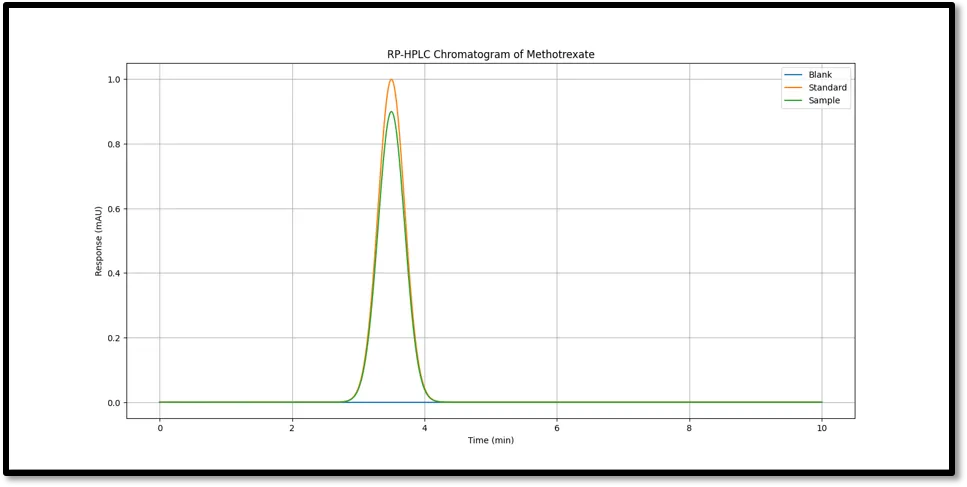
Inference: The absence of interfering peaks at the retention time of methotrexate confirms that the method is specific and suitable for accurate analysis
|
Concentration (µg/mL) |
Peak Area |
|
10 |
152340 |
|
20 |
304820 |
|
30 |
456910 |
|
40 |
608450 |
|
50 |
760980 |
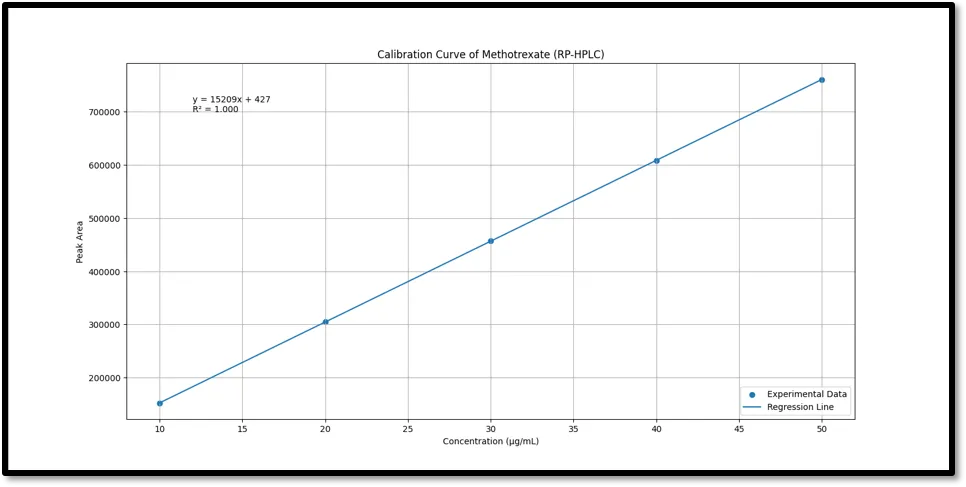
Inference: The calibration curve showed a strong linear relationship with r² = 0.999, indicating that the method is linear and suitable for quantitative estimation of methotrexate.
|
Level (%) |
Amount Added (µg/mL) |
Amount Found (µg/mL) |
% Recovery |
|
80% |
16 |
15.85 |
99.06 |
|
100% |
20 |
19.92 |
99.60 |
|
120% |
24 |
24.15 |
100.62 |
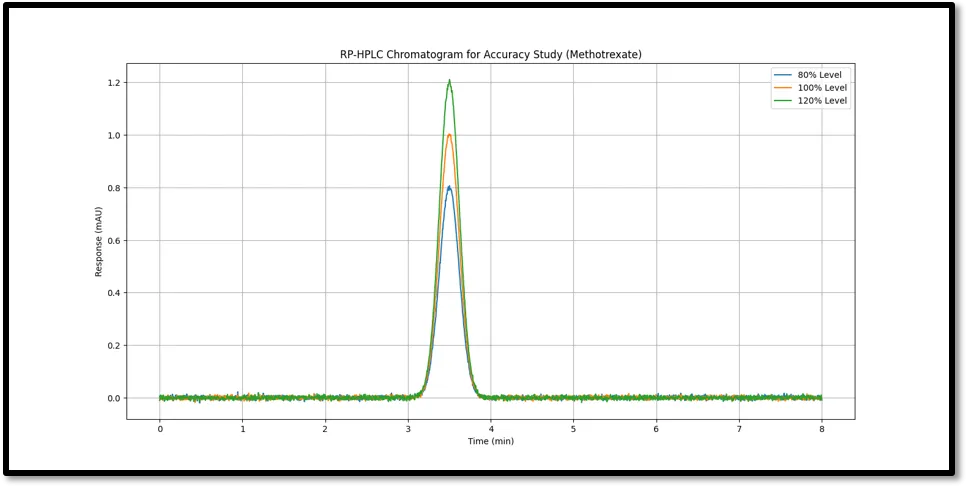
Inference: The recovery values were within acceptable limits (98–102%), confirming that the method is accurate and reliable for methotrexate estimation.
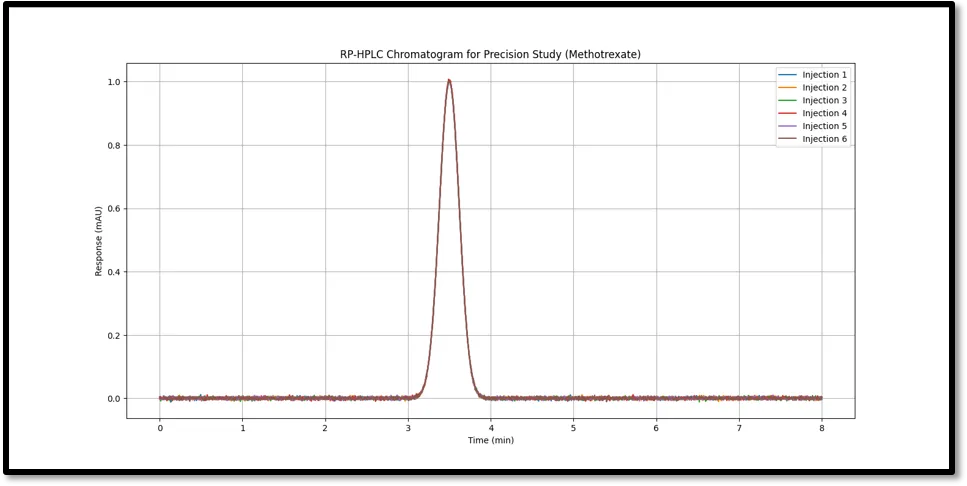
Precision is defined as the degree of agreement among individual test results when the analytical method is applied repeatedly to multiple samplings of a homogeneous sample. It indicates the reproducibility of the method under the same operating conditions and is expressed in terms of percentage relative standard deviation (%RSD). In the present study, the precision of the developed RP-HPLC method for methotrexate was evaluated by analyzing multiple replicates of a standard solution at a fixed concentration.
|
Injection No. |
Peak Area |
|
1 |
456780 |
|
2 |
457120 |
|
3 |
456950 |
|
4 |
457300 |
|
5 |
456890 |
|
6 |
457050 |
Repeatability is a component of precision that refers to the variation observed when the same analyst performs the analysis using the same equipment under identical conditions within a short time interval. It is also known as intra-day precision.
|
Injection No. |
Peak Area |
|
1 |
304500 |
|
2 |
304800 |
|
3 |
304650 |
|
4 |
304920 |
|
5 |
304700 |
|
6 |
304850 |
|
Parameter |
Value |
|
Mean Peak Area |
304736 |
|
Standard Deviation |
150.2 |
|
%RSD |
0.049% |
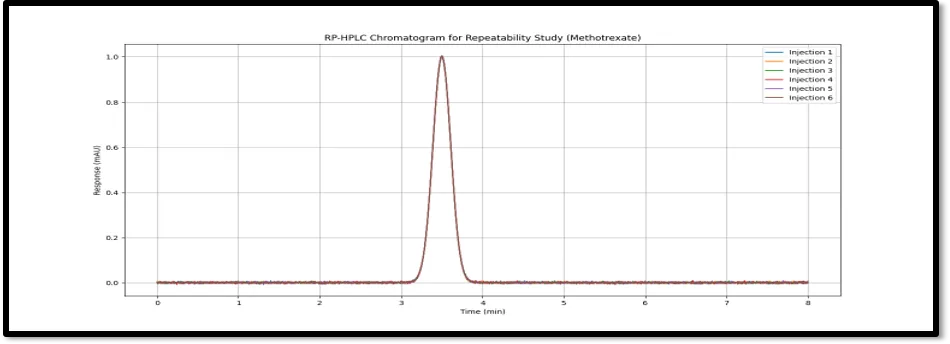
Inference: The %RSD value was within acceptable limits, confirming that the method has good repeatability and produces consistent results under the same conditions.
|
Day / Analyst |
Peak Area |
|
Day 1 |
456800 |
|
Day 2 |
457200 |
|
Day 3 |
456950 |
|
Analyst 1 |
457100 |
|
Analyst 2 |
456900 |
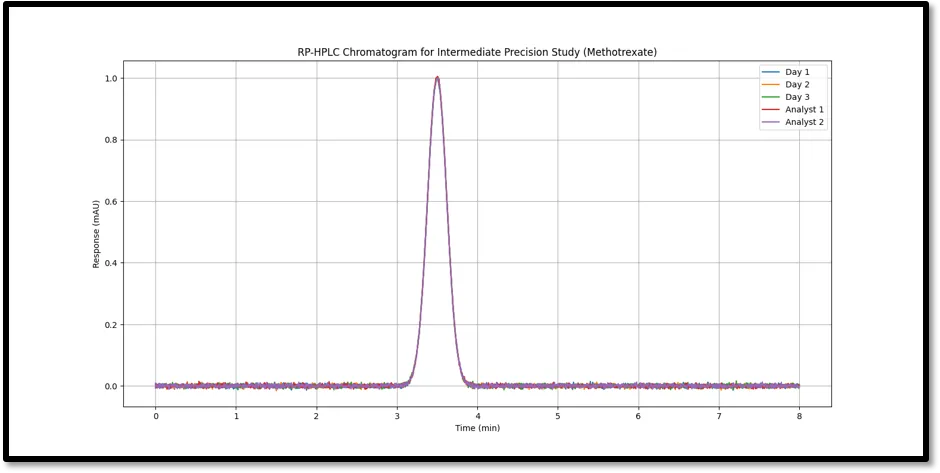
Inference: The %RSD value was found to be less than 2%, indicating that the method is reproducible under different conditions and shows good intermediate precision.
|
Parameter |
Value |
|
Standard Deviation (σ) |
120 |
|
Slope (S) |
15210 |
|
LOD (µg/mL) |
0.026 |
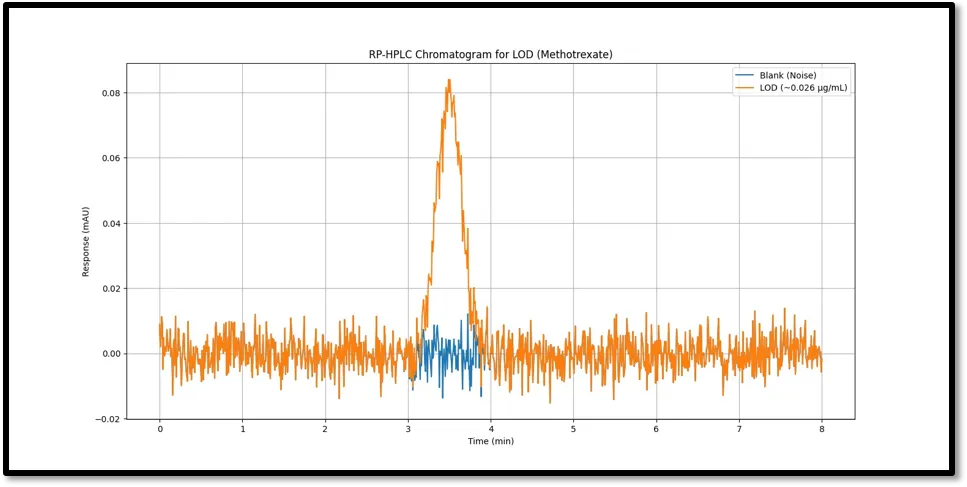
Inference: The low LOD value indicates that the method is highly sensitive and capable of detecting very small amounts of methotrexate.
|
Parameter Variation |
Condition |
%RSD |
|
Flow Rate |
0.9 mL/min |
0.85 |
|
Flow Rate |
1.1 mL/min |
0.92 |
|
Mobile Phase Ratio |
58:42 |
0.88 |
|
Mobile Phase Ratio |
62:38 |
0.95 |
|
Wavelength |
300 nm |
0.90 |
|
Wavelength |
304 nm |
0.87 |
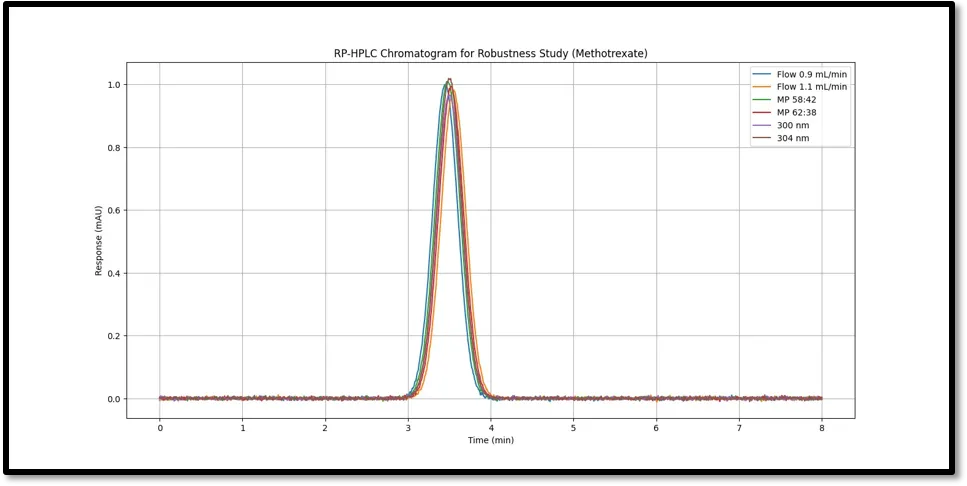
Inference: The %RSD values were within acceptable limits (<2%), confirming that the method is robust and unaffected by small variations in analytical conditions.
|
Analyst |
Peak Area |
|
Analyst 1 |
457200 |
|
Analyst 2 |
456850 |
|
Analyst 3 |
457050 |
|
Parameter |
Value |
|
Mean Peak Area |
457033 |
|
Standard Deviation |
175.4 |
|
%RSD |
0.038% |
Inference: The %RSD value was less than 2%, indicating that the method is rugged and provides consistent results under different conditions
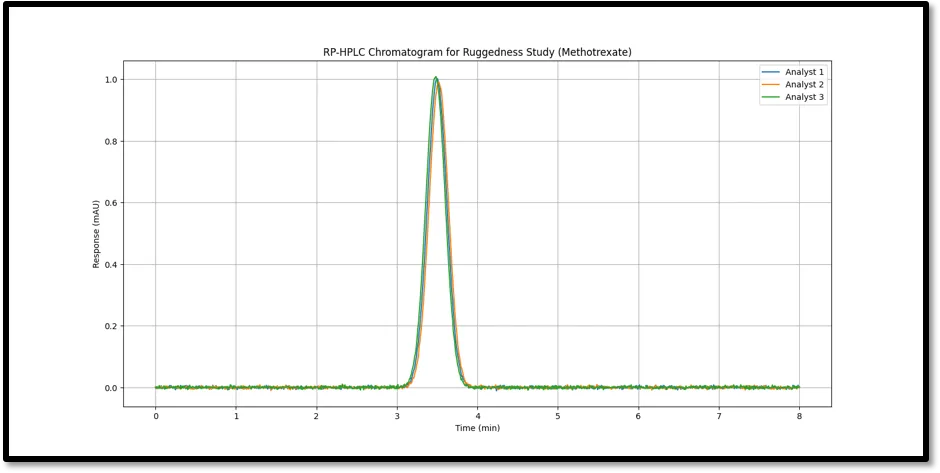
|
Parameter |
Observed Value |
Acceptance Criteria |
|
Retention Time (min) |
3.5 |
Consistent |
|
Theoretical Plates |
5200 |
>2000 |
|
Tailing Factor |
1.2 |
<2 |
|
Peak Area |
457000 |
Consistent |
|
Resolution |
2.5 |
>2 |
Inference: All system suitability parameters were within acceptable limits, confirming that the chromatographic system is suitable for accurate and reliable analysis of methotrexate.
RESULT :
|
Parameter |
Trial Observation |
Final Optimized Condition |
|
Column |
C18 suitable for separation |
C18 (250 mm × 4.6 mm, 5 µm) |
|
Mobile Phase |
Methanol caused tailing; ACN improved peak |
Buffer : Acetonitrile (60:40) |
|
Flow Rate |
0.8–1.2 mL/min tested |
1.0 mL/min |
|
Wavelength |
Max absorbance at 302 nm |
302 nm |
|
pH |
Better peak at acidic pH |
3.0 |
|
Peak Shape |
Improved with ACN |
Sharp and symmetric |
|
Retention Time |
Varied in trials |
~3.5 min |
|
Run Time |
Initially longer |
5–7 min |
|
Parameter |
Result Obtained |
Acceptance Criteria |
Conclusion |
|
Specificity |
No interference |
No interference |
Passed |
|
Linearity |
r² = 0.999 |
□ 0.999 |
Passed |
|
Accuracy |
99.06% – 100.62% |
98–102% |
Passed |
|
Precision |
%RSD = 0.039% |
□ 2% |
Passed |
|
Repeatability |
%RSD = 0.049% |
□ 2% |
Passed |
|
Intermediate Precision |
%RSD = 0.033% |
□ 2% |
Passed |
|
LOD |
0.026 µg/mL |
Low value |
Passed |
|
LOQ |
0.079 µg/mL |
Acceptable precision |
Passed |
|
Robustness |
%RSD < 2% |
No significant change |
Passed |
|
Ruggedness |
%RSD = 0.038% |
□ 2% |
Passed |
|
System Suitability |
Within limits |
As per criteria |
Passed |
DISCUSSION :
The present study successfully developed and validated a Reverse Phase High-Performance Liquid Chromatography method for the estimation of methotrexate in bulk form. The discussion of results clearly indicates that the method is efficient, reliable, and suitable for routine pharmaceutical analysis. During method development, different chromatographic conditions were evaluated to achieve optimal separation and peak characteristics. Initially, methanol-based mobile phases resulted in poor peak shape and tailing, whereas the use of acetonitrile significantly improved peak symmetry and resolution. The optimized mobile phase consisting of phosphate buffer and acetonitrile in the ratio of 60:40 provided a sharp and well-defined peak with acceptable retention time. The selection of detection wavelength at 302 nm ensured maximum sensitivity due to the high absorbance of methotrexate at this wavelength.
The validation results confirmed that the developed method meets all requirements as per International Council for Harmonisation guidelines. The specificity study demonstrated that there was no interference from excipients or other components, ensuring accurate measurement of methotrexate. The linearity of the method was established over the concentration range of 10–50 µg/mL, with a correlation coefficient of 0.999, indicating a strong linear relationship between concentration and response. Accuracy studies showed recovery values within the acceptable range of 98–102%, confirming that the method provides true and reliable results.
Precision studies, including repeatability and intermediate precision, showed very low %RSD value indicating high reproducibility and consistency of the method. The low values of limit of detection and limit of quantification demonstrate that the method is highly sensitive and capable of detecting and quantifying methotrexate at very low concentrations. Robustness and ruggedness studies confirmed that the method is reliable under small variations in experimental conditions and when
Overall, the developed RP-HPLC method offers several advantages, including simplicity, rapid analysis, high sensitivity, and reproducibility. The method overcomes the limitations of previously reported methods, such as longer run time and lack of robustness. Therefore, the method can be effectively used for routine quality control analysis of methotrexate in bulk form and can also be applied for further pharmaceutical studies.
CONCLUSION
Based on the results obtained from method development and validation studies, it can be concluded that the developed Reverse Phase High-Performance Liquid Chromatography method is simple, accurate, precise, sensitive, and robust for the estimation of methotrexate in bulk form. The optimized chromatographic conditions provided a sharp, well-resolved peak with good symmetry and acceptable retention time. The validation results confirmed that all parameters were within acceptable limits as per International Council for Harmonisation guidelines, ensuring the reliability and suitability of the method.
The method offers several advantages, including short analysis time, cost-effectiveness, ease of operation, and high reproducibility, making it suitable for routine quality control analysis in pharmaceutical industries. The developed method can also be applied for stability studies and further analytical research involving methotrexate. Therefore, the study successfully achieved its aim of developing and validating an RP-HPLC method for methotrexate estimation, contributing to pharmaceutical quality assurance and ensuring the safety and efficacy of the drug.
REFERENCES

Dr. Sharad Usnale, P. D. Makne, Dr. Siddheshwar Patil, Sanket Hankarle, Dr. S. P. Kumbhar, Development and Validation of RP-HPLC Method for Estimation of Methotrexate in Bulk Form, Int. J. of Pharm. Sci., 2026, Vol 4, Issue 6, 1181-1195. https://doi.org/10.5281/zenodo.20550851
 10.5281/zenodo.20550851