

We use cookies to ensure our website works properly and to personalise your experience. Cookies policy
K. V. N. Naik S. P. Sanstha’s, Institute of Pharmaceutical Education & Research, Canada Corner, Nashik, Maharashtra, India 422002
Wrinkle formation represents a complex biological phenomenon resulting from the interplay between intrinsic aging mechanisms and extrinsic environmental stressors that collectively compromise skin structural integrity and aesthetic appearance. The global anti-wrinkle market, valued at USD 12.11 billion in 2023, is projected to reach USD 17.92 billion by 2032, with consumers increasingly prioritizing natural, botanically-derived formulations over conventional synthetic alternatives. This shift reflects growing awareness of adverse effects associated with synthetic chemicals and an emerging preference for gentle, sustainable skincare solutions. Butterfly pea flower (Clitoria ternatea L.), a traditional Ayurvedic medicinal plant, has emerged as an exceptional botanical active ingredient for anti-wrinkle cosmetic development due to its remarkable phytochemical composition. The plant contains exceptionally high anthocyanin concentrations of 541 mg/100g, exceeding blueberries (387-487 mg/100g), alongside diverse flavonoids and phenolic acids including kaempferol, quercetin, and caffeic acid. These bioactive constituents provide multifaceted anti-wrinkle mechanisms: potent antioxidant activity with 82% free radical scavenging efficacy prevents oxidative stress-induced collagen degradation; direct matrix metalloproteinase-1 inhibition protects collagen from enzymatic breakdown; and kaempferol glycosides demonstrate 92?vanced glycation end product inhibition, preventing collagen cross-linking. This comprehensive review examines the botanical characteristics, traditional applications, and contemporary scientific validation of butterfly pea, with particular emphasis on formulation techniques for herbal anti-wrinkle creams utilizing both oil-in-water and water-in-oil emulsion systems. The synergistic properties of herbal formulations offer superior biocompatibility, reduced adverse effects, enhanced consumer acceptance, and alignment with sustainable production practices, positioning butterfly pea-based anti-wrinkle creams as transformative alternatives within the expanding natural skincare market.
Human skin is a multifunctional organ composed of three primary layers: the epidermis, dermis, and hypodermis, each with distinct physiological roles. The epidermis, the outermost layer, is primarily composed of keratinocytes that continuously renew by migrating from the basal layer to the surface, completing a full renewal cycle approximately every four weeks. The dermis, lying beneath the epidermis, contains fibro-elastic connective tissue rich in collagen and fibroblasts, which are responsible for extracellular matrix deposition and tissue remodeling. The hypodermis, the innermost layer, consists mainly of adipose tissue that provides cushioning, insulation, and support to the overlying structures1.
The aging process significantly alters the structural and functional properties of all three skin layers. With advancing age, keratinocyte turnover in the epidermis decreases, with the migration time from the basal layer increasing by up to 50%, while simultaneously the stratum corneum thickens and the stratum spinosum thins. The basement membrane, which serves as the interface between the epidermis and dermis, atrophies with age, flattening the dermal-epidermal junction and reducing epidermal adhesion as the protein composition changes. In the dermis, the number of fibroblasts and their capacity for extracellular matrix deposition decline, resulting in disorganized and fragmented collagen and elastin deposition that leads to weaker and less elastic skin. Furthermore, the physical cushioning function of the hypodermis diminishes as subcutaneous adipose tissue decreases, contributing to skin sagging and loss of volume1.
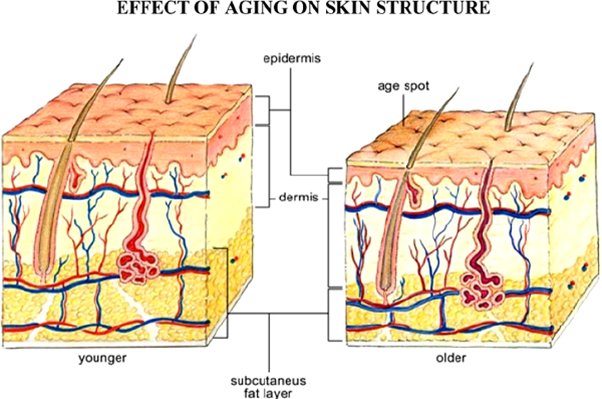
Figure No. 1: Morphological Differences Between Young and Aged Skin
Causes of Wrinkles:
Intrinsic Aging Factors:
Intrinsic aging represents the natural physiological decline that occurs over time, determined largely by genetic predisposition and cellular metabolism. Genetic variants significantly influence the rate of skin aging; for example, polymorphisms in the matrix metalloproteinase 1 (MMP1) gene affect collagen breakdown rates, while variations in genes associated with oxidative stress responses such as superoxide dismutase 2 (SOD2) and glutathione peroxidase 1 (GPX1) modify an individual's capacity to neutralize free radicals2.
Hormonal changes, particularly the decline in estrogen levels during and after menopause, profoundly affect skin aging. Estrogen is essential for maintaining skin thickness, hydration, and elasticity; its reduction leads to decreased collagen production, reduced skin moisture retention, and accelerated wrinkle formation. Additionally, aging is associated with chronic, low-grade inflammation known as "inflammaging," characterized by elevated levels of inflammatory markers and cytokines that damage skin cells and extracellular matrix components, accelerating collagen and elastin degradation2.
Extrinsic Aging Factors:
Extrinsic aging is driven by environmental and lifestyle factors, with ultraviolet (UV) radiation from the sun being the most significant contributor to premature skin aging, a process termed photoaging. UV exposure damages skin cells through multiple mechanisms: it generates free radicals causing oxidative stress, induces direct DNA mutations through cyclobutane pyrimidine dimer (CPD) and 6-4 photoproduct formation, triggers inflammation, and upregulates MMPs. This repeated cycling of UV-induced damage and repair results in the characteristic features of photoaged skin including wrinkles, loss of elasticity, and pigmentation changes. Beyond UV exposure, additional extrinsic factors contribute significantly to accelerated skin aging. Environmental pollution generates oxidative stress through free radical formation. Lifestyle choices substantially impact skin aging rates: cigarette smoking introduces toxins that cause oxidative stress and directly break down collagen and elastin; poor dietary patterns, particularly diets high in sugar and unhealthy fats, promote glycation—a process that irreversibly damages collagen and elastin proteins; chronic stress elevates stress hormones that interfere with the skin's repair mechanisms and break down collagen; and inadequate sleep impairs skin repair and regeneration processes3.
Demand for Herbal and Natural Anti-Wrinkle Products:
The global anti-wrinkle products market has experienced substantial growth, driven by increasing consumer awareness of skin aging and rising demand for skincare solutions. The anti-wrinkle market was valued at approximately USD 12.11 billion in 2023 and is projected to reach USD 17,923.26 million by 2032, exhibiting a compound annual growth rate (CAGR) of 6.4-7.5%. This expansion is significantly attributed to a paradigm shift toward natural and organic anti-wrinkle products4.
Consumer awareness regarding the adverse effects of synthetic chemicals has catalyzed a substantial transition toward natural, plant-based alternatives. Herbal and natural anti-wrinkle products have experienced remarkable growth in Western Europe and globally, as consumers increasingly seek milder, skin-friendly formulations associated with lower adverse effects. This preference is particularly pronounced among health-conscious consumers who view natural ingredients as inherently safer and more compatible with long-term skin health. Dermatological understanding of ingredient safety and efficacy, combined with environmental concerns regarding sustainability and eco-friendly practices, further reinforces this consumer preference5.
In India specifically, the herbal beauty and skincare market reached USD 3.1 billion in 2024 and is expected to expand to USD 10.3 billion by 2033, representing a remarkable CAGR of 14.4% during 2025-2033. This exceptional growth trajectory reflects the integration of Ayurvedic principles and traditional botanical knowledge into modern skincare formulations. Natural compounds including aloe vera, turmeric, neem, tulsi, and ashwagandha have gained prominence due to their demonstrated efficacy in addressing common skin concerns such as wrinkles, pigmentation, and dryness while offering the safety profile demanded by modern consumers6.
Technological advancements and ingredient innovation have further enhanced the effectiveness and consumer appeal of natural anti-wrinkle products. The application of peptides, retinoids derived from natural sources, and plant-derived active compounds has rendered natural serums and creams increasingly desirable. Furthermore, environmentally conscious consumers, particularly millennials and Generation Z, actively seek products with certifiable organic credentials and eco-friendly packaging, driving brands to develop innovative formulations that align with these ethical consumption values7.
Rationale for Selecting Butterfly Pea:
Butterfly pea flower (Clitoria ternatea L.) represents an exceptional candidate for anti-wrinkle cosmetic formulations due to its rich phytochemical composition and scientifically documented skin-beneficial properties. This botanical ingredient addresses multiple mechanisms implicated in wrinkle formation and skin aging8.
The primary bioactive constituents of butterfly pea flowers are anthocyanins, particularly delphinidin-3,5-glucoside, along with other powerful antioxidant compounds including ternatins, kaempferol, quercetin, and p-coumarin acid. These polyphenolic compounds provide comprehensive protection against oxidative damage caused by free radicals, which is a fundamental mechanism contributing to both intrinsic and extrinsic skin aging8.
Research demonstrates that butterfly pea flower extract increases skin hydration by up to 70% within one hour of topical application, attributed to its content of flavonoids, polyphenols, and antioxidants that stimulate the natural production of collagen and elastin. This enhanced hydration capacity directly counteracts the xerosis (dryness) and loss of skin turgor characteristic of aged skin. Furthermore, butterfly pea flower possesses anti-glycation properties that prevent the cross-linking of collagen and elastin molecules, thereby slowing the intrinsic aging process. The anti-inflammatory properties of butterfly pea flower extracts further support skin rejuvenation by reducing chronic inflammation associated with inflammaging and addressing UV-induced inflammatory responses9.
The scientific validation of butterfly pea flower's efficacy is corroborated by evidence of significant antioxidant activity, with some formulations achieving free radical scavenging activity exceeding 85%. Its multifactorial mechanisms—addressing oxidative stress, supporting collagen synthesis, promoting hydration, preventing glycation, and reducing inflammation—make butterfly pea flower a rationally selected botanical ingredient for combating both intrinsic and extrinsic causes of wrinkle formation. Additionally, as a plant-derived ingredient, butterfly pea flower aligns with the contemporary consumer demand for natural, safe, and effective anti-aging cosmetics, positioning it as a valuable component in the development of herbal anti-wrinkle formulations10.
Overview of Butterfly Pea (Clitoria ternatea):
1. Botanical Description:
Taxonomy:
Clitoria ternatea L., commonly known as butterfly pea, blue pea, Asian pigeonwings, bluebellvine, cordofan pea, or Darwin pea, is a plant species belonging to the family Fabaceae (legume family). In Indian Ayurvedic medicine, it is traditionally referred to as "Aparajita," meaning "invincible," reflecting its valued therapeutic role in the traditional medical system. The genus Clitoria comprises three subgenera with approximately 58 valid species, though the full species richness remains unclear. Clitoria ternatea serves as the holotype (representative specimen) of Clitoria subgenus Clitoria. The specific epithet "ternatea" is postulated to derive from the island of Ternate in the Indonesian archipelago, though the plant's exact native range remains obscured by its extensive cultivation and naturalization across tropical regions worldwide11.
Taxonomic Classification:
- Kingdom: Plantae
- Family: Fabaceae
- Genus: Clitoria
- Species: C. ternatea
- Subgenus: Clitoria (holotype)11.
Morphology:
Clitoria ternatea is a perennial herbaceous climbing vine or creeper that can grow woody with age, reaching lengths of up to 10 meters. The plant exhibits versatility in growth habit, performing well in moist, neutral soil while displaying excellent adaptability to various environmental conditions12.
Leaf Morphology: The plant produces pinnately compound leaves arranged alternately along the stem, typically with 5-7 leaflets that are obovate and entire with emarginate (notched) tips. Individual leaflets are elliptic, ovate, or nearly orbicular in shape, measuring 1.5-5 cm in length and 0.3-3 cm in width, with acute or rounded apexes and cuneate or rounded bases. The leaves are imparipinnately (odd-pinnately) compound, stipulate, and display reticulate venation. The epidermis on both leaf surfaces consists of a single layer of cells protected by a thick cuticle with trichome outgrowths. Petioles are shorter than the rachis, and stipels are filiform and persistent12.
Floral Morphology: The plant's most striking feature is its large, solitary, axillary flowers measuring approximately 4 cm (1.5 inches) long by 3 cm (1.25 inches) wide. The flowers exhibit zygomorphic (bilaterally symmetrical) pea-shaped structure with pentamerous organization. The calyx consists of five fused sepals forming a membranous tube (1.5-2 cm) with five lanceolate lobes. The corolla displays remarkable color diversity, with flowers occurring in deep blue to sky blue (most common), pale blue, violet, pink, or white, often with light yellow or white markings and faint white or orange centers. The standard (banner) petal is broadly obovate and funnel-shaped (2-5.5 cm long, 2-4 cm wide), while the wings and keels are substantially shorter than the standard. The flower contains white pollen-bearing anthers with four lobes each and a monocarpellary ovary bearing approximately ten ovules13.
Fruit and Seed Morphology: Fruits are linear-oblong, flattened legume pods measuring 4-13 cm in length and 0.7-1.2 cm in width, with thickened margins and a persistent style forming a long beak. Pods are initially yellow-green and become pale brown at maturity. Each pod contains 6-10 (occasionally 11) seeds that are smooth, subreniform or oblong, black to brown in color, compressed, and approximately 4-5 mm × 5-6 mm in size with a strophiole. The tender pods are edible when immature14.
Geographical Distribution:
Native Range: The precise native range of Clitoria ternatea remains uncertain due to the plant's extensive historical cultivation and naturalization across tropical regions. Current evidence suggests the species is native to Africa and probably to India. Some sources indicate the Maluku Archipelago in Indonesia, particularly the island of Ternate, as a possible origin point, though this attribution may be a misnomer15.
Current Pantropical Distribution: The species has become widely naturalized throughout the humid and sub-humid lowlands globally, including:
- Asia: India, Thailand, China, Philippines, and other tropical Asian regions
- Australia: Extensively naturalized in northern and central Queensland, northern Western Australia, Northern Territory, and Christmas Island
- Americas: Southern United States (Florida, Georgia, Texas, California), Mexico, Central America, South America, and the Caribbean
- Pacific Islands: Hawaii (naturalized since 1871 on islands including O?ahu, Kaua?i, Lana?i, and Maui), Fiji, Galapagos Islands, and other Pacific island nations16.
Habitat Preferences: In its natural range, C. ternatea grows in open mesic forests, grasslands, bushlands, and shrublands. The plant prefers humid to sub-humid habitats at elevations from sea level to 1,600-1,800 meters with mean annual temperatures ranging from 15 to 28°C. It demonstrates remarkable soil adaptability, thriving in sandy to deep alluvial loams and heavy clays with pH ranging from 5.5 to 8.9. In disturbed ecosystems, the plant often colonizes river banks, creek lines, wetland margins, irrigation channels, roadsides, and disturbed open woodlands17.
Ecological Characteristics: As a member of the Fabaceae family, C. ternatea forms symbiotic associations with soil rhizobia bacteria that fix atmospheric nitrogen, enhancing soil quality through nitrogen mineralization. This characteristic, combined with its tolerance to drought conditions, self-pollination capability, and minimal care requirements, has facilitated its widespread naturalization. However, these same traits have led to its classification as an invasive species in some regions, where vigorous growth can suppress native vegetation in riparian areas and disturbed sites17.
Traditional and Medicinal Uses:
Ayurvedic and Folk Uses:
Clitoria ternatea holds a significant position in traditional Ayurvedic medicine with a documented therapeutic legacy spanning centuries. In the classical Ayurvedic framework, the plant is integrated into formulations of "Medhya Rasayana," a rejuvenating therapeutic category specifically designed to enhance cognitive abilities and treat neurological conditions18.
Traditional Ayurvedic Applications:
Memory and Cognitive Enhancement: In Ayurveda, the drug formulation known as "Shankhpushpi" comprises the roots and seeds of C. ternatea and is traditionally utilized as a brain tonic, nootropic agent, and memory enhancer. The plant is classified as a "medhya" herb—denoting substances that nourish and rejuvenate brain function. Historical texts acknowledge two varieties with differential efficacy: the white-flowered variant is recognized for superior therapeutic efficacy and is thus favored for medicinal applications, while the blue-flowered variety is more commonly encountered and widely used.
Neuropsychological Uses: Traditional applications encompass the treatment of stress-related disorders, anxiety management, and psychological wellness. The plant has been employed to enhance mental clarity, reduce nervousness, and support emotional resilience in the Ayurvedic medical framework19.
Organ System-Specific Applications: Beyond cognitive benefits, Clitoria ternatea has been traditionally employed for:
- Nervous System: Body pain relief, nerve tonic effects, and treatment of neurological complaints
- Urinary System: Management of urinary disorders and diuretic applications
- Gastrointestinal System: Treatment of constipation as a mild laxative, management of indigestion, dyspepsia, emesis, and jaundice; also employed as a cholagogue to stimulate bile flow
- Parasitic Infections: Anthelminthic (anti-worm) and antiparasitic applications
- Dermatological Uses: Treatment of skin infections, wounds, and in some traditional practices, application of root extract for leucoderma (depigmentation disorder)20.
Chemical Constituents Supporting Traditional Use:
The extensive traditional use of C. ternatea is substantiated by its rich phytochemical profile. Diverse secondary metabolites have been isolated, including:
- Triterpenoids and steroids
- Flavonol glycosides (quercetin, kaempferol, and myricetin derivatives)
- Anthocyanins, particularly ternatins (polyacylated derivatives of delphinidin 3,3′,5′-triglucoside)
- Cyclotides (cyclic macrocyclic peptides of 26-37 residues)21.
Documented Pharmacological Activities:
Modern scientific validation has confirmed numerous traditional uses through pharmacological screening, demonstrating the plant's capacity for:
- Neuropharmacological actions: Acetylcholine level enhancement, nootropic effects supporting memory and cognitive function
- Psychotropic properties: Anxiolytic (anxiety-reducing), antidepressant, anticonvulsant, tranquilizing, and sedative effects
- Anti-inflammatory: Marked inflammation-suppressing capacity
- Antimicrobial: Broad-spectrum antimicrobial activity
- Antipyretic: Fever-reducing properties
- Analgesic: Pain-relieving effects
- Diuretic: Enhancement of urine output
- Antidiabetic: Blood glucose modulation
- Antiplatelet: Inhibition of blood platelet aggregation
- Vascular effects: Vascular smooth muscle relaxation22.
Cosmetic Applications and Benefits:
Anthocyanin-Rich Extract as Active Ingredient: The primary cosmetic value of C. ternatea derives from its exceptional richness in anthocyanins, particularly ternatins, which impart a distinctive deep vibrant blue color while providing potent bioactive properties. The extraction of these compounds through cold water extraction of flower petals preserves valuable bioactive substances for cosmetic formulation23.
Antioxidant Protection: Anthocyanins and flavonoids present in C. ternatea extract demonstrate powerful antioxidant activity, protecting skin from free radical damage induced by environmental pollutants and ultraviolet radiation. The water-ethanol extract has been demonstrated to effectively inhibit free radicals generated by UV radiation and hydrogen peroxide in keratinocytes, with anthocyanins and flavanols identified as the principal active components mediating this protective effect24.
Anti-inflammatory and Soothing Properties: The extract displays marked anti-inflammatory capacity, making it particularly suitable for sensitive or irritated skin. Studies have shown that C. ternatea extracts inhibit BSA (bovine serum albumin) denaturation by approximately 49-51%, indicating significant anti-inflammatory potential applicable to minimizing effects of inflammatory skin diseases24.
Moisturizing and Hydrating Effects: Scientific investigation has revealed exceptional moisturizing properties of C. ternatea extract for dermatological application. Following a 60-minute application period, the extract increased skin hydration levels by approximately 70% compared to control and maintained sustained hydration improvement over extended periods (360 minutes). The transepidermal water loss (TEWL) measurement showed a decrease of approximately 25% compared to control values after prolonged application, demonstrating lasting moisture-retention benefits particularly advantageous for dry or dehydrated skin conditions25.
Anti-aging and Skin Elasticity: The stimulation of collagen and elastin production through fibroblast proliferation contributes to the plant's anti-aging potential. Anthocyanins promote skin regeneration and combat premature aging signs, helping to maintain skin elasticity and a youthful appearance25.
Hair Care Applications: When incorporated into hair care formulations, C. ternatea extract strengthens hair roots, improves scalp condition, promotes hair growth, adds shine, and revitalizes damaged hair. The extract's nutrient profile provides benefits for tired and damaged hair structure.
Natural Food Colorant with Dual Function: Beyond cosmetics, the distinctive blue color of C. ternatea flowers, derived from ternatins and other anthocyanins, has established the plant as a valued natural food colorant with simultaneous provision of bioactive compounds for nutritional and health applications26.
Safety and Consumer Appeal: Clitoria ternatea flower extract is recognized as a safe ingredient in cosmetic formulations by regulatory bodies including the European Union. Its gentle yet effective composition appeals to modern consumers seeking nature-inspired beauty care solutions, reflecting the growing concept of botanically-derived cosmetics. The extract's traditional use in Asian beauty and wellness practices provides both cultural heritage and contemporary scientific validation27.
Formulation Versatility: Due to its mild efficacy profile and multifunctional properties, C. ternatea extract is incorporated in diverse cosmetic product categories including moisturizing face creams, serums, gentle toners, essences for sensitive skin, and hair masks, with increasing prevalence in K-Beauty and other premium cosmetic product lines27.
PHYTOCHEMICAL PROFILE OF BUTTERFLY PEA (CLITORIA TERNATEA L.):
Bioactive Constituents:
The butterfly pea flower has been utilized for centuries in traditional Ayurvedic and Southeast Asian medicine to treat various health conditions, including indigestion, skin disorders, and inflammatory diseases. In recent years, scientific investigations have validated the traditional applications of this plant, particularly its potential in cosmetic and dermatological fields. The vibrant blue coloration of butterfly pea flowers is attributed to high concentrations of bioactive anthocyanins, alongside a diverse array of flavonoids and phenolic compounds that contribute to its therapeutic properties. With anthocyanin content of 541 mg/100g—surpassing that of blueberries (387-487 mg/100g), raspberries (365 mg/100g), and acai berries (320 mg/100g)—butterfly pea represents a remarkable source of natural antioxidants. This review comprehensively evaluates the major bioactive constituents and their specific roles in promoting skin rejuvenation and maintaining dermatological health28.
Major Bioactive Constituents:
Anthocyanins constitute the most prominent bioactive compounds in butterfly pea flowers, functioning as both natural colorants and therapeutic agents. These water-soluble flavonoid pigments are responsible for the characteristic blue to purple coloration of the plant29.
Specific Anthocyanin Compounds:
Advanced analytical techniques, including ultra-high-performance liquid chromatography coupled with ultraviolet detection and mass spectrometry (UPLC/UV/MS), have identified five major anthocyanins in butterfly pea flower extract30:
2. Ternatins:
Polyacylated Anthocyanins:
Among the anthocyanin constituents, ternatins represent a unique class of highly polyacylated anthocyanins that are particularly abundant in butterfly pea and absent in most other botanical sources. Ternatins are structurally derived from delphinidin 3,3′,5′-triglucosides, with characteristic 3′,5′-side chains containing alternating units of D-glucose and p-coumaric acid residues. The identification of ternatins includes four major subtypes: ternatins A1-A3, B1-B4, C1-C4, and D1-D3, totaling approximately 15 polyacylated delphinidin glucoside variants. These polyacylated structures contribute significantly to the exceptional thermal and storage stability of butterfly pea anthocyanins compared with non-acylated anthocyanins from other sources.
The abundance and stability of anthocyanins in butterfly pea flowers demonstrate remarkable antioxidant efficacy. Using the 2,2-diphenyl-1-picrylhydrazyl (DPPH) free radical scavenging assay, butterfly pea flower anthocyanin extract exhibited an IC?? value of 0.47 mg/mL, indicating potent radical scavenging capacity32.
3. Flavonoids:
Beyond anthocyanins, butterfly pea flowers contain an extensive array of flavonoid compounds that contribute to the plant's therapeutic potential. These flavonoids exist both as aglycones and glycosides, with the glycosidic forms often demonstrating enhanced bioavailability and biological activity33.
4. Major Flavonoid Constituents:
Kaempferol (3,5,7-trihydroxy-2-(4-hydroxyphenyl)-4H-chromen-4-one) represents one of the most significant flavonoid constituents. Recent research has identified kaempferol glycosides as the key antiglycative components in butterfly pea flower, with kaempferol glycoside content significantly surpassing that of quercetin glycosides. The antiglycative potential of kaempferol glycosides is demonstrated by their ability to prevent advanced glycation end product (AGE) formation with inhibition rates reaching 92.11% at a concentration of 1 g/mL34.
5. Quercetin and Quercetin Glycosides:
Quercetin (2-(3,4-dihydroxyphenyl)-3,5,7-trihydroxychromen-4-one) and its glycosidic derivatives, particularly quercetin-3β-D-glucoside, are present in butterfly pea flowers in notable concentrations. Research demonstrates that quercetin-3β-D-glucoside exhibits potent anti-inflammatory activity through multiple mechanisms: significant reduction of myeloperoxidase activity, decreased release of pro-inflammatory cytokines and chemokines, and reduced reactive oxygen species (ROS)/reactive nitrogen species production. Additionally, quercetin glycosides suppress the expression of inflammatory mediators including tumor necrosis factor α-receptor 1, toll-like receptor 2, inducible isoform of nitric oxide synthase (iNOS), cyclooxygenase-2 (COX-2), and matrix metalloproteinase-2 (MMP-2)35.
6. Additional Flavonoid Compounds:
Other important flavonoid constituents include:
7. Phenolic Acids and Other Phenolic Compounds:
Butterfly pea flowers contain an extensive profile of phenolic acids, which are small molecular weight phenolic compounds characterized by a benzene ring with one or more hydroxyl groups and carboxylic acid functionality37.
Major Phenolic Acid Constituents:
8. Minor Bioactive Components:
Beyond the major phytochemical categories, butterfly pea flowers contain additional bioactive compounds that contribute to their therapeutic properties:
Inositol Compounds:
Myo-inositol and other inositol derivatives have been identified in butterfly pea extracts, with preliminary research suggesting anticancer activity against various cancer cell lines.?
Fatty Acids:
Butterfly pea seeds contain noteworthy quantities of fatty acids: oleic acid (51-52%), linoleic acid (17%), stearic acid (10%), linolenic acid (4%), and palmitic acid (19%), contributing approximately 500 calories per 100g39.?
MECHANISM OF ANTI-WRINKLE ACTION OF BUTTERFLY PEA:
1. Antioxidant Activity:
Quantitative Evidence:
Butterfly pea demonstrates exceptional antioxidant capacity through multiple assays:
Molecular Mechanisms:
Hydrogen Atom Transfer (HAT):
Anthocyanins and flavonoids donate labile hydrogen atoms from aromatic hydroxyl (-OH) groups to free radicals (R•), converting reactive radicals into more stable products. The resulting antioxidant radical is stabilized through electron delocalization across the polycyclic ring structure40.
Single-Electron Transfer (SET):
Antioxidant molecules donate electrons to free radicals through the SET mechanism. The catechol (1,2-diphenol) structure in butterfly pea anthocyanins—particularly in delphinidin with its 1,2,3-triphenol structure—facilitates sequential electron donation with formation of resonance-stabilized semiquinone radicals40.
Metal Chelation:
Flavonoids chelate transition metals (Fe²?, Cu²?), preventing Fenton reaction-mediated ROS generation:
Fe²? + H?O? → Fe³? + •OH + OH?
Enzyme Inhibition:
Phenolic compounds inhibit ROS-producing enzymes (lipoxygenases, NADPH oxidase, xanthine oxidase), providing sustained antioxidant protection.
Protection Against ROS-Induced Damage:
2. Collagen Protection and Stimulation:
2.1 Inhibition of Matrix Metalloproteinase-1 (Collagenase):
Mechanism of MMP-1 Upregulation:
UV-B radiation generates ROS, activating MAPK cascades → phosphorylation of AP-1 and NF-κB translocation → increased MMP1 gene expression → collagen degradation.
Quercetin and Kaempferol as MMP-1 Inhibitors:
Inhibitory Mechanisms:
2.2 Promotion of Collagen Synthesis:
PDGF-Mediated Pathway:
Butterfly pea extract markedly increases PDGF gene expression. PDGF binds to fibroblast receptors, activating signaling cascades that promote:
TGF-β Signaling:
Botanical extracts enhance TGF-β1 expression, leading to SMAD2/3 phosphorylation and activation of collagen synthesis genes. This promotes procollagen type I synthesis and subsequent maturation into functional collagen fibers.
Result: Enhanced PDGF and TGF-β signaling compensates for age-related decline in fibroblast collagen productivity, maintaining dermal collagen content43.
2.3 Prevention of AGE-Mediated Collagen Cross-Linking:
AGE Formation Problem:
Non-enzymatic glycation forms advanced glycation end products (AGEs) that covalently cross-link collagen molecules, rendering collagen rigid and inelastic, while triggering RAGE-mediated inflammatory responses.
Kaempferol Glycosides as AGE Inhibitors:
Mechanism: Kaempferol glycosides bind to protein substrates through hydrogen bonding, competing with sugar molecules and preventing Schiff base formation—the initial step in glycation44.
3. Inhibition of Elastase and Elastin Preservation:
Elastin Importance:
Elastin comprises 2-4% of dermis and provides elasticity and recoil capacity; elastase-mediated degradation causes loss of skin elasticity and wrinkle formation.
Elastase Inhibition by Butterfly Pea:
Phenolic compounds (quercetin, kaempferol, caffeic acid) demonstrate elastase inhibition rates up to 90%. Flavonoids directly bind to elastase active site, sterically blocking elastin substrate access.
Dual Collagenase/Elastase Inhibition:
Butterfly pea's high total phenolic content (30-49.2 mg GAE/g dry matter) enables simultaneous inhibition of both MMP-1 (collagenase) and elastase enzymes, providing multi-targeted protection against collagen and elastin degradation45.
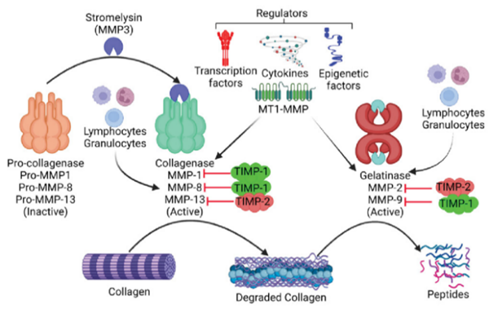
Figure No. 2: Mechanistic Overview of MMP-Driven Collagen Degradation
4. Free Radical Scavenging and Signaling Pathway Suppression:
ROS-Dependent Pathway Interruption:
MAPK Pathway Suppression:
ROS oxidatively modifies protein tyrosine phosphatases (PTPs), allowing MAPK activation. Butterfly pea reduces ROS levels, preventing MAPK phosphorylation of c-Jun/c-Fos (AP-1 components), thereby suppressing MMP1, MMP3, and MMP9 gene expression.
NF-κB Pathway Inhibition:
ROS oxidatively modifies and phosphorylates IκB, leading to its degradation and NF-κB nuclear translocation. By reducing ROS, butterfly pea maintains IκB integrity, sequestering NF-κB in the cytoplasm and preventing upregulation of pro-inflammatory genes (TNF-α, IL-6, IL-1β, MMP1).
Nrf2/HO-1 Pathway Activation:
Moderate oxidative modification of Keap1 protein releases Nrf2 transcription factor, permitting nuclear translocation and binding to antioxidant response elements (ARE). This increases expression of heme oxygenase-1 (HO-1) and other phase II detoxification enzymes, enhancing cellular antioxidant defenses46.
Prevention of Photoaging-Induced Fibroblast Apoptosis:
UV-B-induced ROS activates TNF-α signaling → caspase-3 activation → fibroblast apoptosis → loss of collagen-producing cells.
By reducing ROS-mediated TNF-α signaling, butterfly pea prevents UV-induced fibroblast apoptosis, preserving the fibroblast population essential for collagen synthesis47.
5. Integrated Multi-Mechanism Efficacy:
Butterfly pea achieves comprehensive anti-wrinkle effects through synergistic operation of multiple mechanisms:
Result: Comprehensive wrinkle prevention, visible wrinkle reduction, and restoration of skin firmness and elasticity48.
Extraction Methods for Butterfly Pea:
Aqueous Extraction:
Aqueous extraction employs optimal parameters of 50-60°C temperature, 30-60 minutes extraction time, and 1:20 g/mL ratio in pH 1-2 acidic water to maximize anthocyanin yield. This method produces the highest total anthocyanin content of 7925.29 ± 36.07 mg/L with 78% antioxidant activity (DPPH), alongside total phenolics of 35-45 mg GAE/g and flavonoids of 14 mg QE/g. The aqueous extraction is highly advantageous due to eco-friendly nature, cost-effectiveness, GRAS approval status, and excellent pH stability across 1-12 range. However, disadvantages include lower flavonoid recovery, requirement for higher temperatures and extended extraction times, and limited shelf stability of approximately 6 months. Representative studies demonstrate total phenolic content of 53 mg GAE/g and DPPH IC?? of 470 µg/mL under boiling conditions49.
Alcoholic Extraction (100% Ethanol):
Absolute ethanol extraction at room temperature or 50-70°C for 24 hours using 1:5 to 1:10 g/mL ratio preferentially extracts flavonoids, yielding 29 mg QE/g (approximately 2× higher than aqueous methods) with key compounds including myricetin, epicatechin, rutin, kaempferol, and quercetin. However, total anthocyanin recovery is significantly lower at 3000 ± 150 mg/L with 65% antioxidant activity and total phenolics of 28-35 mg GAE/g. Alcoholic extraction offers rapid cold maceration advantages but demonstrates critical disadvantages including lowest anthocyanin content, poor color stability, toxicity concerns, unsuitability for direct cosmetic application without dilution, higher solvent costs, and restricted regulatory status. Representative studies show total phenolic content of 102.4 mg GAE/g but only 42.4% DPPH inhibition50.
Hydroalcoholic Extraction:
(30% Ethanol:70% Water) - Optimal for Cosmetics
Hydroalcoholic extraction represents the gold standard for cosmetic formulations, utilizing 30% ethanol combined with 70% water at 40-77°C for 60 minutes using 1:20 g/mL ratio with naturally stable pH of 3.5-5.5. This balanced-polarity solvent system achieves superior bioactive recovery: total anthocyanins of 5500 ± 200 mg/L (69% of aqueous yield), highest total phenolics of 58.55 ± 1.2 mg GAE/g, total flavonoids of 22 ± 1.5 mg QE/g, and exceptional antioxidant activity of 82% (DPPH—highest among all methods). The synergistic extraction mechanism combines water's high polarity for glycosylated anthocyanins and phenolic acids with ethanol's amphiphilicity for semi-polar aglycone flavonoids, producing broader compound extraction than either solvent alone. The step-by-step procedure involves preparing 30% ethanol solution (300 mL water + 129 mL ethanol), drying butterfly pea flowers at 40-50°C in shade, grinding to powder, heating extraction solvent to 77°C, adding 20g plant material, maintaining temperature for 60 minutes with stirring, cooling to room temperature, filtering through Whatman paper, and evaporating under reduced pressure at 40-50°C before storage in desiccator at 4°C in dark bottles. Key advantages include highest total phenolic content, superior antioxidant activity, safe topical application profile (30% ethanol within cosmetic limits), optimal 60-minute extraction time, 12-month shelf stability at 4°C, pH stability across 1-12 range, GRAS/cosmetic regulatory approval, cost-effectiveness, and reproducible results. Representative studies confirm total phenolic content of 58.55 mg GAE/g with 82% DPPH inhibition and 12-month shelf-life stability51.
FORMULATION OF ANTI-WRINKLE CREAM:
Ingredient Selection:
|
Category |
Ingredient Name |
Concentration |
Function/ Type |
Anti-Wrinkle Benefit |
|
EMOLLIENTS (Skin-Conditioning Agents) |
Jojoba Esters (Acticare MB) |
1–3.75% |
Biomimetic barrier restoration |
Hydration, elasticity, reduces fine lines |
|
Octyldodecyl Myristate (MOD) |
1–5% |
Spreadability, elegant feel |
Non-greasy hydration, sensory appeal |
|
|
Caprylic/Capric Triglyceride |
3–10% |
Lightweight, rapid absorption |
Comfortable hydration without heaviness |
|
|
Hydrogenated Ethylhexyl Olivate |
5–10% |
Natural silicone alternative |
Softness, antioxidant support |
|
|
Cetylstearyl Alcohol |
2–3% |
Co-emulsifier + emollient |
Stability + skin conditioning |
|
|
EMULSIFIERS (O/W System Stabilization) |
Emulium Delta MB |
4–6% |
Glyceryl Stearate + PEG-75 Stearate |
Stable professional formulation |
|
Olivem 1000 |
3–5% |
Plant-based emulsifier |
Natural positioning, elegant texture |
|
|
Montanov 68 |
3–5% |
Ecocert-certified natural |
Premium natural, easy processing |
|
|
PRESERVATIVES (Antimicrobial Protection) |
Phenoxyethanol + Ethylhexylglycerin |
0.9–1% |
Broad-spectrum synthetic |
Bacteria, yeast & mold protection |
|
Leuconostoc Ferment |
2–3% |
Natural probiotic-like |
Moderate antimicrobial spectrum |
|
|
Sodium Anisate + Levulinate |
2–3% |
Natural salts |
pH-independent antimicrobial efficacy |
|
|
NATURAL ADDITIVES (Bioactive Anti-Wrinkle Actives) |
Butterfly Pea Extract |
2–5% |
Antioxidant, anti-inflammatory |
Collagen protection, free radical scavenging |
|
Hyaluronic Acid (LMW 20–50 kDa) |
0.5–2% |
Fine line plumping |
Wrinkle reduction, hydration |
Methods of Preparation of Anti-Wrinkle Cream with Emulsion Technique and Butterfly Pea Extract Incorporation:
1. Oil-in-Water (O/W) Emulsion Technique:
Oil-in-water emulsions constitute the predominant formulation methodology for contemporary anti-wrinkle facial creams, characterized by dispersion of lipophilic (oil) droplets throughout a continuous hydrophilic (water) phase. This emulsion architecture yields lightweight textures with rapid dermal absorption, rendering them particularly advantageous for daytime application and individuals with combination or oily skin phenotypes52.
Phase 1: Oil Phase Preparation:
The oil phase comprises stearic acid (2.0-2.75 gm) functioning as primary emulsifier and thickening agent, natural oils including almond oil (1.25-1.70 ml) and jojoba oil (0.75-1.25 ml) providing nourishing and emollient properties, shea butter (2.0-2.75 gm) contributing skin conditioning benefits, and beeswax (1.0-2.0 gm) enhancing emulsion stability. These lipophilic ingredients are combined in a borosilicate glass beaker and heated gradually to 70-75°C with periodic stirring to ensure complete melting and homogenization while maintaining uniform temperature throughout the process53.
Phase 2: Aqueous Phase Preparation
The aqueous phase consists of purified water (11.0-12.0 ml) as primary solvent, glycerin (2.5-3.0 ml) functioning as humectant for enhanced skin hydration, carbopol 934 (0.20-0.25 gm) serving as stabilizing and thickening agent, hyaluronic acid (0.50-0.75 gm) providing hydration and anti-wrinkle efficacy, and preservative parabens (methyl paraben 0.20-0.50 gm; propyl paraben 0.10-0.25 gm). Carbopol 934 is dispersed in distilled water and allowed 20-30 minutes for complete hydration, then heated to 70-75°C to match the oil phase temperature. Hyaluronic acid is first dissolved in a small portion of warm water before incorporation into the main aqueous phase to ensure complete dissolution of all hydrophilic ingredients prior to emulsification54.
Phase 3: Emulsification Process
Upon attainment of 70-75°C by both phases, the aqueous phase is slowly added to the oil phase in small incremental portions (1-2 ml) while maintaining continuous vigorous stirring—critical methodology as reverse addition can result in poor emulsion formation. High-speed mechanical homogenization or stirring is maintained for 10-15 minutes to ensure uniform, creamy appearance with complete absence of visible oil or water layers. The mixture undergoes gradual cooling to 40°C while maintaining gentle stirring to prevent phase separation and ensure formulation stability54.
Phase 4: Active Ingredient Incorporation
At 40°C, pH is adjusted to the physiologically compatible range of 6.0-6.5 using triethanolamine (TEA) to accommodate skin's naturally slightly acidic pH of 4.5-5.5. Butterfly pea extract (pre-prepared via 30% hydroalcoholic extraction), hyaluronic acid, and antioxidant compounds are incorporated with thorough mixing for 10-15 minutes using gentle to moderate stirring to ensure even distribution. Optional fragrance (2-3 drops) may be added, followed by final pH verification and transfer to sterile, wide-mouth containers while the formulation maintains warmth55.
2. Water-in-Oil (W/O) Emulsion Technique:
Water-in-oil emulsions represent an alternative, more occlusive formulation paradigm wherein diminutive aqueous droplets are dispersed within a continuous lipophilic phase. This architecture facilitates enhanced delivery of hydrating actives while establishing a protective moisture barrier, rendering this methodology particularly efficacious for intensive nocturnal anti-wrinkle treatments and applications targeting severely dehydrated or mature dermatological conditions56.
Phase 1: Oil Phase Preparation
The oil phase comprises cocoa butter (5-8 gm) functioning as rich emollient providing occlusive barrier properties, vegetable oils including jojoba oil (8-10 ml) and almond oil (8-10 ml) contributing nourishing benefits, mineral oil or liquid paraffin (10-15 ml) serving as lightweight carrier, beeswax (2-3 gm) stabilizing W/O emulsion integrity, and stearyl alcohol or cholesterol (2-3 gm) functioning as co-emulsifiers. These lipophilic constituents are combined in a heat-resistant beaker and heated to 70-75°C with regular stirring to ensure complete melting of cocoa butter and formation of homogeneous liquid oil phase while maintaining thermal stability56.
Phase 2: Aqueous Phase Preparation
The aqueous phase, comprising a lower water percentage (10-20 ml) relative to O/W systems, consists of distilled water, glycerin (3-5 ml) functioning as humectant attracting moisture to cutaneous surfaces, hyaluronic acid (0.5-1.0 gm) serving as hydrating anti-wrinkle active ingredient, and botanical extracts including butterfly pea, green tea, and natural preservatives (phenoxyethanol or hydrolyzed wheat protein). The aqueous phase is heated separately to 70-75°C with complete dissolution of hyaluronic acid and water-soluble actives prior to combination with the oil phase57.
Phase 3: Emulsification Process
Unlike O/W systems, W/O emulsifications require specialized high-shear mixing equipment such as rotor-stator mixers, Ultra-Turrax homogenizers, or electric hand mixers operating at high speed, as manual stirring proves insufficient for adequate emulsification. The aqueous phase is added to the oil phase in extremely small incremental portions (0.5-1.0 ml) with continuous high-shear mechanical stirring for 15-20 minutes, during which the formulation undergoes transformation from oily liquid to rich, creamy texture. W/O systems demonstrate heightened sensitivity to phase inversion; therefore, meticulous adherence to gradual addition protocols and continuous high-velocity stirring is essential to prevent emulsion destabilization57.
Phase 4: Cooling and Stabilization
The emulsion undergoes gradual cooling to 45°C while maintaining continuous stirring, ideally utilizing water bath immersion to ensure controlled thermal reduction and prevent abrupt temperature fluctuations that precipitate phase separation. Upon attainment of ambient temperature, pH is assessed and adjusted to the optimal range of 5.5-6.5 when necessary, followed by incorporation of heat-sensitive active ingredients including supplementary botanical extracts, fragrance, or photolabile compounds. Final organoleptic and physicochemical quality assessments are conducted prior to packaging58.
BUTTERFLY PEA EXTRACT INCORPORATION METHODOLOGY:
Extraction Procedure: Hot Water Extraction Method:
Hot water extraction represents the recommended methodology for preparing butterfly pea flower extract intended for topical cosmetic cream formulations, balancing anthocyanin yield optimization with preservation of thermolabile bioactive compounds.
Material Preparation and Solvent Selection:
Fresh or dried butterfly pea flowers (Clitoria ternatea) are sourced and measured according to a 1:15 to 1:20 substrate-to-solvent ratio (exemplified as 1 gm flowers combined with 15-20 ml solvent), employing distilled or deionized water as the extraction solvent to minimize ionic contamination and enhance extract purity59.
Heating and Extraction Protocol:
The botanical material is combined with water in a borosilicate glass beaker and progressively heated to 70-80°C, a temperature range optimized to extract anthocyanins while preventing thermal degradation through excessive vigorous boiling. The mixture is maintained at the specified temperature for 30-40 minutes with periodic stirring to facilitate efficient solute diffusion while ensuring complete extraction of bioactive polyphenolic compounds. Temperature control represents a critical parameter, as temperatures exceeding 85°C risk significant anthocyanin degradation and consequent loss of therapeutic efficacy60.
Filtration and Clarification:
The heated extract undergoes sequential filtration procedures: initial passage through fine mesh or cheesecloth removes larger plant particulates, followed by filtration through Whatman filter paper (Grade 1) to obtain optically clear filtrate suitable for cosmetic applications. The clarified filtrate is collected in a clean container for subsequent processing61.
Concentration and Drying:
The clarified filtrate is transferred to shallow, clean containers and subjected to drying via one of three methodologies optimized for anthocyanin preservation: vacuum drying at 40°C for 36-48 hours represents the preferred technique, minimizing thermal exposure of photolabile anthocyanins; freeze-drying (when available) provides superior anthocyanin preservation through sublimation under reduced pressure; room temperature air-drying, though economical, requires extended duration (5-7 days) and risks oxidative degradation. The resulting product constitutes a concentrated, dry anthocyanin extract suitable for subsequent cream incorporation61.
Incorporation into Cream Base:
1. Trituration Method:
Materials and Equipment Requirements:
The trituration methodology employs a porcelain or glass mortar and pestle for mechanical incorporation, combined with prepared cream base (formulated via O/W or W/O emulsion technique) and butterfly pea extract (available as powdered form or concentrated liquid suspension).
Procedural Methodology
A small portion of cooled cream base (approximately 2-3 gm) is placed in the mortar, to which the calculated amount of butterfly pea extract (typically 1-2% w/w of total formulation) is added incrementally. The mixture undergoes thorough grinding via circular mortar-and-pestle motions for 5-10 minutes, generating a uniform, smooth paste free from visible extract aggregates or inhomogeneities. The resulting homogeneous paste is reincorporated into the main cream batch with vigorous mechanical stirring for an additional 10-15 minutes, ensuring complete distribution throughout the entire formulation volume and preventing localized concentration gradients of bioactive compounds62.
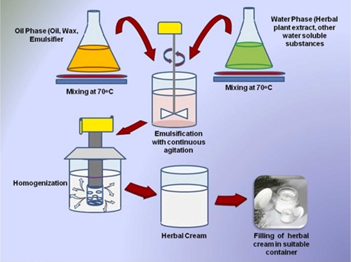
Figure No. 3: Process Flowchart for the Development of Herbal Topical Cream
Advantages of Trituration Approach:
The trituration methodology provides multiple formulation advantages: ensures microscopically homogeneous distribution of anthocyanins throughout the cream matrix; prevents extract particle aggregation that could compromise sensory texture or bioavailability; maintains anthocyanin chemical integrity through minimal thermal stress; demonstrates particular suitability for small-scale laboratory-based and research-oriented cream preparations; and allows precise quantitative control of bioactive incorporation ratios63.
2. Direct Addition During Cool-Down Phase:
Procedural Approach:
Following completion of emulsification via either O/W or W/O methodology, the cream base is cooled to 40-45°C, at which point pre-prepared butterfly pea extract liquid is added directly in calculated proportion (1-2% of total cream weight). The modified formulation undergoes thorough mechanical stirring for 10-15 minutes to achieve uniform distribution, followed by continued cooling to ambient temperature while maintaining gentle stirring to prevent phase separation and ensure stable incorporation of the hydrophilic extract components64.
Technical Considerations:
The direct addition methodology represents a more expeditious incorporation technique relative to trituration, particularly suited for large-scale manufacturing applications; however, successful implementation demands vigorous mechanical stirring to achieve adequate extract homogenization throughout the cream matrix. This approach demonstrates compatibility with both O/W and W/O emulsion architectures, with the cream's emulsifying capacity accommodating the aqueous extract constituent without compromising emulsion stability65.
Evaluation of Anti-Wrinkle Cream:
1. Physical Appearance:
Anti-wrinkle cream formulations undergo comprehensive organoleptic evaluation assessing color, odor, and texture. The cream should exhibit uniform, consistent coloration (typically peach or yellowish tones) without discoloration, indicating stable active ingredients and absence of oxidative degradation. Odor evaluation confirms pleasant herbal fragrance without off-odors, rancidity, or unusual smells that might suggest microbial contamination or essential oil degradation. Texture assessment involves visual inspection and tactile evaluation to confirm smooth, creamy consistency completely free from lumps, grit, or particles, ensuring superior spreadability and consumer satisfaction66.
2. pH Determination:
The pH of anti-wrinkle creams is critical for skin compatibility and efficacy. Human skin maintains natural pH of 4.5-5.5, while topical facial creams should maintain pH between 5.5-6.5 to ensure compatibility with skin physiology and barrier function. Measurement involves dispersing 1 gram cream in 10 mL distilled water and measuring with calibrated digital pH meter in triplicate. Formulations deviating from ideal range cause irritation, dryness, or barrier disruption, reducing efficacy and increasing adverse reactions67.
3. Viscosity:
Viscosity, measured in centipoise (cP) using a Brookfield viscometer at 25°C and 50 rpm, directly influences texture, spreadability, and sensory appeal. Optimal viscosity ranges from 500-1000 cP, ensuring semi-solid consistency suitable for facial application with excellent emulsion stability. Higher viscosity (800-1000 cP) prevents phase separation and conveys premium perception, while measurements below 500 cP risk reduced stability and rapid absorption68.
4. Spreadability:
Spreadability is quantitatively measured using the formula: Spreadability = (m × l) / T, where m is weight (typically 30g), l is slide length (5 cm), and T is time (seconds). Superior spreadability ensures uniform active ingredient distribution, reducing application friction and product waste. Formulations incorporating natural emollients demonstrate exceptional spreadability characteristics69.
5. Stability Studies:
Stability testing ensures formulations maintain physical, chemical, and microbiological integrity throughout shelf life. Accelerated testing at 40-45°C/75% relative humidity for 90 days simulates long-term aging. Parameters monitored at predefined intervals include color, pH, viscosity, phase separation, and microbiological stability. Products remaining stable at 45°C for 90 days may be considered stable for 1-2 years at room temperature70.
6. Skin Irritation Test:
Skin irritation testing employs OECD 439 in vitro methodology using reconstructed human epidermis (RhE) models comprising non-transformed human keratinocytes. Test substances are applied to pre-warmed tissue models at 37°C/5% CO?, with cell viability measured via MTT assay. Tissue viability ≤50% indicates irritation. Complementary in vivo patch testing confirms absence of erythema, edema, and inflammation over 28-day application period, establishing long-term safety and tolerability profiles71.
CONCLUSION
Butterfly pea (Clitoria ternatea L.) emerges as a scientifically validated botanical ingredient for anti-wrinkle cosmetic formulations, addressing multiple mechanisms of skin aging through its rich phytochemical composition. The plant's exceptional anthocyanin content, coupled with diverse flavonoids and phenolic compounds, provides comprehensive protection against both intrinsic and extrinsic causes of wrinkle formation through antioxidant, anti-inflammatory, and collagen-protective mechanisms. With demonstrated free radical scavenging activity exceeding 82% and AGE inhibition rates reaching 92%, butterfly pea extract represents a multifunctional anti-aging active with robust scientific support.
The formulation of anti-wrinkle creams utilizing butterfly pea extract through optimized hydroalcoholic extraction (30% ethanol:70% water) yields stable, bioavailable preparations achieving the highest total phenolic content (58.55 mg GAE/g) and optimal antioxidant activity. Both oil-in-water and water-in-oil emulsion techniques successfully incorporate this botanical extract while maintaining product stability, texture quality, and sensory appeal. Rigorous evaluation parameters, including pH stability, viscosity, spreadability, and accelerated stability testing, confirm the pharmaceutical quality of herbal formulations.
The adoption of herbal anti-wrinkle creams reflects contemporary consumer consciousness regarding safety, efficacy, and sustainability. These formulations eliminate problematic synthetic chemicals while delivering superior biocompatibility, reduced adverse effects, and enhanced user satisfaction. With the global anti-wrinkle market projected to reach USD 17.9 billion by 2032, herbal alternatives, particularly in India's expanding market valued at USD 10.3 billion by 2033, represent a transformative opportunity in dermatological skincare. Butterfly pea-based formulations exemplify the successful integration of traditional botanical knowledge with modern cosmetic science, offering accessible, effective, and sustainable anti-aging solutions that address both consumer demands and environmental imperatives.
REFERENCES


Dhanshree Kumbhar, Aishwarya Jadhav, Development of Emulsion-Based Herbal Anti-Wrinkle Creams Using Butterfly Pea (Clitoria Ternatea L.): Extraction Methods, Bioactivity, And Product Evaluation, Int. J. of Pharm. Sci., 2026, Vol 4, Issue 4, 362-387. https://doi.org/10.5281/zenodo.19394053
 10.5281/zenodo.19394053