

We use cookies to ensure our website works properly and to personalise your experience. Cookies policy
Ashokrao Mane Institute of Pharmacy, Ambap.
Zingiber officinale (ginger) is a widely used spice and medicinal plant. Its rhizome contains important bioactive compounds such as phenolics, flavonoids, and essential oils, with gingerol being the major active component along with shogaols, paradols, and related compounds. Ginger also contains polysaccharides, amino acids, organic acids, and minerals. These compounds provide many health benefits, including antioxidant, anti-inflammatory, antibacterial, antiviral, antifungal, antihyperlipidemic, anti-obesity, and liver-protective effects. Ginger products are commonly used in food, beverages, and herbal medicines. To ensure quality and safety, authentication methods such as HPLC, DNA analysis, and vibrational spectroscopy are applied. This review highlights the phytochemical composition, biological activities, and quality-control techniques of ginger, supporting its use in pharmaceutical and nutraceutical products. Ginger (Zingiber officinale) is a common kitchen spice that belongs to the family Zingiberaceae. It is rich in phytochemistry that is promoting health benefits
The plant family Zingiberaceae consists of more than 50 genera and over 1,200 species, mainly found in South and Southeast Asia. Some well-known members include ginger (Zingiber officinale), turmeric (Curcuma longa), and bitter ginger (Zingiber zerumbet). Among these, ginger is the most widely used for both culinary and medicinal purposes. The rhizome of ginger has been utilized for over 3,000 years in traditional medical systems such as Ayurveda, Chinese medicine, and Unani therapy for the treatment of various health conditions.Ginger rhizome contains essential oils and oleoresins, along with important phytochemicals such as gingerols, shogaols, zingerone, flavonoids, and terpenes. These compounds contribute to its pungent taste, characteristic aroma, and therapeutic properties. Ginger is known to exhibit several medicinal effects, including antioxidant, anti-inflammatory, antimicrobial, antidiabetic, antihyperlipidemic, and antihypertensive activities. It is particularly effective in managing nausea, digestive disorders, arthritis, and metabolic diseases. Due to increasing consumer demand and high commercial value, ginger products are sometimes subject to adulteration or substitution, which can compromise quality and safety. Therefore, accurate authentication of ginger raw materials and products is essential. Modern analytical methods such as HPLC, DNA-based techniques, and spectroscopic analysis combined with chemometrics are commonly used to ensure product authenticity. This review focuses on the phytochemical composition of ginger, its biological activities, and the analytical methods used for authentication, highlighting its importance as a valuable pharmaceutical and nutraceutical resource.
Botanical Description of Zingiber officinale:
Zingiber officinale is a perennial herb growing up to 90 cm tall. It has thick, aromatic yellow rhizomes and narrow, lance-shaped leaves arranged alternately. The plant bears small flowers on oblong or cylindrical spikes.
History and Origin:
Ginger belongs to the Zingiberaceae family, which includes turmeric and cardamom. The rhizome is the edible part responsible for its pungent flavor, mainly due to gingerols. The word ginger comes from the Sanskrit term “srngaveram” and has been used for over 3,000 years. Ginger originated in tropical Asia and is widely cultivated, especially in India and China, with India being the largest producer today.
2. Varieties of ginger:
Table No.1
|
COUNTRY |
VARIETIES |
|
India |
Varada, Mahima, Rejhata, Suruchi, Suprabha, Himanchal,Maran, Nadia, Karakkal, Mananthody, Sabarimala, Ellakallan, Kakakkalan, Kozhikkalan, Pink ginger, Bhaise, Jolpaiguri |
|
China |
China ginger |
|
Nepal |
Naval parasi, Bakthapur |
|
Japan |
Kintoki |
|
Nigeria |
Jugiggan |
|
Brazil |
Brazil |
|
Pakistan |
Pakistan |
3. Taxonomic classification:
Table No.2
|
Domain |
Eukaryota |
|
Kingdom |
Plantae |
|
Phylum |
Spermatophyta |
|
Sub-Phylum |
Angiospermae |
|
Class |
Monocotyledonae |
|
Order |
Zingiberales |
|
Family |
Zingiberaceae |
|
Genus |
Zingiber |
|
Species |
Officinale |
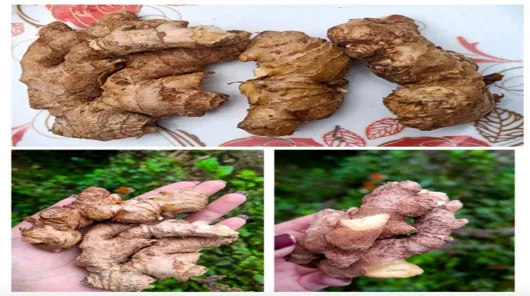
Image No.1
4.Morphology:
Botanical Profile of Zingiber officinale
Scientific name: Zingiber officinale Roscoe
Family: Zingiberaceae
Common name: Ginger
Part used: Rhizome (underground stem)
Habit: Perennial herb
Height: 60–90 cm
Stem: Pseudostem formed by overlapping leaf sheaths
Rhizome: Thick, branched, aromatic; brownish-yellow outside and pale yellow inside; pungent taste
Leaves: Simple, alternate, lance-shaped, sessile with sheathing base
Inflorescence: Spike arising from the rhizome or with leafy shoots
Flowers: Zygomorphic, bisexual, yellow-green with purple markings
Fruits and seeds: Rare; capsule observed occasionally
Identification Features:
Strong aromatic and spicy smell when crushed
Circular leaf scars and nodes visible on rhizome
Yellow fibrous interior of the rhizome
5. MATERIALS AND METHODS:
Parts used for extraction:
The part used is the rhizome (underground stem) of the ginger plant.
1. Solvent Extraction (SE):
This method uses organic solvents to dissolve and separate ginger bioactive compounds based on their solubility. Common techniques include percolation and Soxhlet extraction. Ethanol (70–95%) is the most effective solvent for recovering gingerols and shogaols. Higher extraction temperatures improve yields, especially for shogaols, but the process is time-consuming and solvent-intensive. Although efficient, SE has environmental and safety drawbacks due to solvent use.
2. Subcritical Water Extraction (SWE):
SWE is a green extraction technique that uses water at high temperature and pressure instead of organic solvents. Under these conditions, water behaves like a low-polarity solvent and efficiently extracts gingerols and shogaols. Optimal conditions are about 130 °C for 20–30 minutes, providing high recoveries. Soil-grown ginger extracts show higher antioxidant activity than hydroponically grown samples. SWE is considered superior because it is eco-friendly, fast, and solvent-free.
3. Microwave-Assisted Extraction (MAE)
MAE uses microwave energy to heat solvents rapidly, improving extraction efficiency and reducing time. It is suitable for heat-sensitive compounds like gingerols. Ethanol-based MAE and ionic-liquid MAE show higher yields compared to conventional extraction. Optimal conditions include 70% ethanol, 180 W microwave power, and 10 minutes extraction time.
4. Enzyme-Assisted Extraction (EAE):
EAE employs enzymes such as cellulase, pectinase, α-amylase, and viscozyme to break plant cell walls, increasing compound release. Enzyme pretreatment significantly improves the yield of gingerols and polyphenols. This method works at low temperatures and is environmentally friendly, making it a promising technique for ginger extraction.
5. Ultrasonic-Assisted Extraction (UAE):
UAE uses ultrasound waves to enhance solvent penetration and mass transfer. Ionic liquid-based and deep eutectic solvent-based UAE produce high gingerol yields with short extraction times. High-frequency ultrasound provides better recovery of thermally sensitive compounds than low-frequency systems.
6. Magnetic Solid-Phase Extraction (MSPE):
MSPE is a modern technique using magnetic nanoparticles as sorbents to capture gingerols. The particles are easily separated using a magnetic field, eliminating filtration or centrifugation steps. MSPE is rapid, reusable, eco-friendly, and highly efficient for extracting gingerols from foods and herbal products.
6. PHYTOCHEMICAL CONSTITUENTS OF Zingiber Officinale:
The phytochemical composition of Zingiber officinale rhizome varies depending on growing conditions and geographic location. Ginger is widely used in food products because of its distinct aroma, flavor, and nutritional value. The major bioactive compounds present in ginger include gingerols, shogaols, zingerone, and paradols, with gingerols and shogaols being the most important for pharmacological activity. The essential oil of ginger contains volatile compounds such as zingiberene, sesquiterpenes, zingiberol, and bisabolene, which contribute to its aroma and medicinal properties. In addition to these active constituents, ginger rhizome is rich in nutrients including carbohydrates, proteins, fats, lipids, fiber, fatty acids, lecithins, and minerals such as calcium, phosphorus, and potassium. It also provides essential vitamins including vitamin C, riboflavin, thiamine, and niacin. Other phytochemical groups found in ginger include flavonoids, phenolic compounds, alkaloids, saponins, terpenoids, tannins, glycosides, steroids, and proteins, which collectively contribute to its wide range of health benefits.
Table No.3
|
Class of Compounds |
Compounds |
Plant Part |
|
Glucosides (6-gingerdiol) |
1-(4-O-β-D-glucopyranosyl-3-)- 5-O-β-D-glucopyranosyl-3-hydroxy-1-(4-hydroxy-3 |
Fresh ginger |
|
Terpene |
α-terpinene, α-terpineol, 4-terpineol, terpinolene, γ-terpinolene |
Rhizome |
|
Alcohol |
Cineol, β-eudesmol, borneol, geraniol, farnesol, zingiberol |
Rhizome |
|
Acid |
L-Bornyl acetate, geranic acid, undecanoic acid |
Rhizome |
|
Gingerols |
Gingerol, Shogaol, isoshogaol, paradol, gingerdione, zingerine, β-sitosterol |
Rhizome |
Table No.4
|
Phytochemicale constituents |
Inference |
|
Saponins |
Present |
|
Tannins |
Present |
|
Simple phenolics |
Present |
|
Flavonoids |
Present |
|
Glycosides |
Present |
|
Alkaloids |
Present |
|
Carbohydrate |
Present |
|
Reducing sugar |
Present |
7. Chemical Constituents:
The medicinal activity of ginger is mainly attributed to its essential oil content, which represents approximately 1–3% of the rhizome weight. The oil is rich in sesquiterpenes, particularly zingiberene, along with bisabolene, zingiberol, β-sesquiphellandrene, and farnesene. Smaller amounts of monoterpenes such as cineole, citral, and β-phellandrene are also present. The quantity of these compounds varies depending on environmental and cultivation conditions. The pungent taste and distinctive aroma of ginger arise from phenolic compounds, mainly gingerols and shogaols, with zingerone forming during drying or cooking processes. Gingerol is the principal pungent constituent and exhibits several biological activities including analgesic, antipyretic, sedative, and antibacterial effects. Shogaols, which are dehydration products of gingerols, generally demonstrate stronger biological activity and have been reported to show antioxidant, anti-inflammatory, antimicrobial, anticancer, antidiabetic, anti-obesity, anti-allergic, and anti-ulcer properties. Ginger essential oil has shown protective effects against certain cancers in experimental studies, while gingerols have also demonstrated potential anticancer activity. Additionally, ginger stimulates saliva production (sialagogue action), which aids swallowing. Overall, the diverse chemical profile of ginger supports its wide use in pharmaceutical and nutraceutical applications.
8. Traditional uses:
Ginger has long been valued in traditional medicine as a pungent stimulant and carminative agent. It is commonly used to relieve indigestion, stomach discomfort, fever, and malaria, and is particularly recommended for conditions related to imbalances of Kapha and Vata in Ayurvedic practice. A mixture of ginger with lime juice and rock salt is traditionally taken to enhance appetite and stimulate gastric secretions. Ethnomedicinal use of ginger includes treatment of a wide range of disorders such as abdominal pain, loss of appetite, arthritis, dyspepsia, bleeding disorders, respiratory infections, cough, common cold, diarrhea, nausea, vomiting, hyperacidity, rheumatism, sore throat, flatulence, morning sickness, bronchitis, hyperglycemia, hypercholesterolemia, and gallbladder ailments. Ginger is also incorporated into numerous formulations listed in Ayurvedic pharmacopoeias, highlighting its importance in traditional healthcare systems.
1. Antioxidant Activity:
Ginger contains natural antioxidants such as gingerols, shogaols, zingerone, and geraniol that neutralize free radicals and reduce oxidative damage. It protects DNA, inhibits the ROS-producing enzyme xanthine oxidase, increases glutathione levels, and shows strong radical-scavenging activity.
2. Anti-Inflammatory Activity:
Ginger shows powerful anti-inflammatory effects. Gingerol and shogaol block the formation of inflammatory mediators by inhibiting enzymes like COX and 5-LOX and suppressing NF-κB activation. Ginger reduces levels of NO, iNOS, PGE₂, TNF-α, and IL-1β, helping to relieve inflammation, pain, and stiffness, especially in arthritis.
3. Analgesic Activity:
The compound 6-shogaol has shown significant analgesic effects in animal studies. It reduces chemically induced pain responses and raises the pain threshold in inflamed tissue. Research suggests this effect may involve inhibition of Substance P release from sensory neurons, similar to the pain-modulating action of capsaicin.
4. Anti-Diabetic Activity:
Ginger extracts significantly lower blood glucose levels and improve insulin sensitivity. 6-Gingerol enhances glucose uptake by cells, supports insulin signaling, and shows hypoglycemic effects. Fresh ginger juice and extracts have demonstrated benefits in both diabetic and non-diabetic studies, contributing to better blood sugar control.
5. Anti-Cancer Activity:
Ginger shows strong chemopreventive potential, with its bioactive compounds inhibiting the growth of various cancers, including lung, colon, breast, prostate, and skin cancers. Key constituents such as 6-gingerol, 6-shogaol, paradol, zingerone, and geraniol induce cancer cell death through apoptosis and cell-cycle arrest. Ginger also suppresses inflammatory and tumor-promoting pathways (COX-2 and NF-κB) and inhibits H. pylori, helping reduce the risk of gastric cancer.
6. Antimicrobial Activity:
Ginger possesses strong antibacterial and moderate antifungal activity, making it of interest for food preservation and natural therapies. Methanolic extracts have shown inhibitory effects against pathogens such as Escherichia coli, Salmonella enteritidis, and Staphylococcus aureus. Zingerone has demonstrated protective action against E. coli–induced diarrhea by reducing intestinal motility. Ginger-derived supplementation has also improved immune responses in aquatic models challenged with bacterial infections. Essential oils obtained from ginger rhizomes have been effective against bacterial and fungal strains including Aspergillus niger, Bacillus cereus, Lactobacillus acidophilus, and Saccharomyces cerevisiae. Antifungal activity has been largely attributed to 6-, 8- and 10-gingerols and gingerdiols.
7. Anti-Obesity Activity:
Research indicates that 6-gingerol (6-GN) reduces weight gain and fat accumulation in animal models. In cultured adipocytes, it suppresses lipid droplet formation and reduces droplet size by inhibiting adipocyte differentiation. Decreased expression of enzymes involved in fat synthesis, including fatty acid synthase and fatty acid-binding proteins, has also been reported.
8. Anti-Emetic Activity:
Ginger is widely used to alleviate nausea and vomiting, especially during pregnancy and following surgery. Clinical studies suggest that ginger may be more effective than vitamin B6 for reducing nausea severity while being equally effective in preventing vomiting episodes. Animal studies have identified 5-HT3 receptor antagonism as a key mechanism underlying its anti-emetic properties.
9. Anti-Atherosclerotic Activity:
Long-term administration of ginger powder has been shown to slow the progression of atherosclerosis by reducing lipid oxidation and enhancing fibrinolytic activity, even without significantly altering blood lipid concentrations. Histological evaluations have demonstrated decreased plaque development in both the aorta and coronary arteries.
10. Cardiovascular Activity:
In traditional medicine, ginger is described as a cardiac tonic. It is reputed to support cardiovascular health by reducing platelet aggregation, improving blood circulation, lowering vascular resistance, and helping to manage cholesterol levels. Experimental studies show that ginger extracts and gingerols influence eicosanoid signaling in vascular smooth muscle.
Early pharmacological investigations reported a positive inotropic effect of gingerol derivatives on heart muscle preparations, linked to enhanced calcium transport by Ca²⁺-ATPase enzymes. Additional studies have demonstrated that ginger extracts can lower arterial blood pressure by blocking voltage-dependent calcium channels, thereby supporting its traditional reputation as a cardioprotective agent.
8. RESULT:
Zingiber officinale rhizome contains key bioactive compounds such as gingerols, shogaols, and essential oils. Advanced extraction methods enhance their recovery. Ginger shows strong antioxidant, anti-inflammatory, antidiabetic, antimicrobial, anticancer, anti-emetic, and cardioprotective activities and is widely used in pharmaceutical and nutraceutical products. Authentication methods like HPLC and DNA analysis ensure quality and safety.
CONCLUSION
Gingerols and shogaols are the main therapeutic compounds of ginger, responsible for its pungency and medicinal effects. Ginger is a valuable natural source for food, herbal medicine, and nutraceutical development.
REFERENCES


Bhosale Sahil, Chalke Shruti, Ghugare Snehal, Gingirols And Shogaols as Main Active Ingridients in Zingiber Officinale, Int. J. of Pharm. Sci., 2026, Vol 4, Issue 9, 4107-4116, https://doi.org/10.5281/zenodo.23051918
 10.5281/zenodo.23051918