

We use cookies to ensure our website works properly and to personalise your experience. Cookies policy
Department of Pharmacy, LCIT School of Pharmacy, Bilaspur, CG
Cardiovascular disease (CVD) is a major global health problem and remains one of the leading causes of mortality. Herbal medicines have gained increasing attention due to their therapeutic efficacy, safety, and rich phytochemical composition. The present study was undertaken to formulate and evaluate a polyherbal tablet containing ethanolic extracts of Azadirachta indica (Neem) and Ocimum tenuiflorum (Tulsi) for potential cardiovascular disease management. The plant materials were extracted using the Soxhlet extraction method, yielding an extraction efficiency of 8%. The obtained extracts were subjected to qualitative phytochemical screening, thin-layer chromatography (TLC), and UV–Visible spectrophotometric analysis. Phytochemical screening confirmed the presence of important bioactive constituents, including alkaloids, flavonoids, phenolic compounds, tannins, saponins, and terpenoids. TLC analysis further confirmed the presence of characteristic phytoconstituents. UV–Visible spectroscopy revealed ?max values of 359 nm for neem and 412 nm for tulsi, with the corresponding spectra included in the Results and Discussion section. Four tablet formulations (F1–F4) were prepared by direct compression and evaluated for pre-compression and post-compression parameters according to standard pharmaceutical procedures. Among all formulations, F3 exhibited the most satisfactory physicochemical characteristics and complied with acceptable quality standards, indicating its suitability as the optimized formulation. The combined presence of bioactive phytochemicals and the favorable evaluation results suggest that the developed polyherbal tablet may serve as a promising complementary herbal formulation for cardiovascular disease management. However, further pharmacological and clinical investigations are required to establish its therapeutic efficacy and safety.
. 1.1 Pathophysiology of Cardiovascular Diseases
Cardiovascular diseases are multi factorial in origin. The pathogenesis typically begins with endothelial injury triggered by hyperlipidaemia, hypertension, or toxins such as nicotine.
1.2 Need for Herbal Interventions in Cardiovascular Diseases
Despite major advances in pharmacological therapy—such as beta-blockers, ACE inhibitors, and statin conventional treatments are often associated with side effects and high costs.
1.3 Neem [Azadirachta indica] :

Neem, belonging to the family Meliaceous, has been traditionally employed for its antimicrobial, anti-inflammatory, and antioxidant effects. The plant contains bioactive constituents like azadirachtin, imboiled, cardiovascular diseases (CVDs) such as hypertension, atherosclerosis, myocardial infarction, and stroke are the leading causes of morbidity and mortality worldwide. The search for safe, effective, and affordable natural remedies has turned scientific. Among various medicinal plants used in traditional systems of medicine, Neem (Azadirachta indica) and Tulsi (Ocimum sanctum) have gained considerable attention due to their broad spectrum of pharmacological activities. The global view is changing towards the development and therapeutic use of safer preparations from medicinal plants for controlling various diseases. Azadirachta indica A., Juss, locally famous as “Neem”, is a popular herb for its medicinal value in a wide range of diseases including cardiovascular disorders, such as, hypertension and cardiac arrhythmia [29].
Neem (Azadirachta indica)
↓ [Antioxidant, Anti-inflammatory, Lipid-lowering actions]
Tulsi (Ocimum sanctum)
↓ [Stress modulation, HDL enhancement, Vaso protection]
Combined Effect
→ [Figure 1.3: Comparative mechanisms of Neem and Tulsi contributing to cardiovascular protection. Endothelial repair, Reduced atherogenesis, Cardio protection]a. Antihyperlipidemic Effects. [40].
1.4 Pharmacological activities of neem: [15]

Figure - 1.2 : Different Action of Neem
1.5 Cardiovascular benefits of neem :
a. Hypolipidemic and Antiatherogenic
Neem extracts have demonstrated lipid-lowering effects by reducing total cholesterol, triglycerides, and LDL while increasing HDL levels.
Mechanism: Enhances bile acid excretion and modulates hepatic lipid metabolism.
Evidence: preliminary human trials show neem leaf extract decreases serum cholesterol significantly.
b. Antioxidant and Anti-inflammatory Activity
Neem leaves contain potent antioxidants such as quercetin and nimbolide that neutralize free radicals, preventing oxidative stress—a major contributor to endothelial dysfunction and atherosclerosis.
Mechanism: Inhibition of lipid peroxidation and reduction of C-reactive protein levels.
c. Antihypertensive Activity
Studies suggest neem extracts cause vasodilation and reduce blood pressure through calcium channel blockade and nitric oxide modulation. Human relevance: Small clinical studies indicate a mild but sustained reduction in systolic and diastolic blood pressure.
d. Antithrombotic and Anti-platelet Effects
Neem may prevent platelet aggregation and thrombosis formation, reducing risk of myocardial infarction and stroke..
e. Hypoglycaemic and Insulin-Sensitizing Effects
By improving glucose metabolism, neem indirectly helps prevent diabetic cardiovascular complications.
1.6 Tulsi [Ocimum sanctum]
Plant Tulsi (Ocimum sanctum Linn.) belongs to the Lamiacae family which is known for its specific aromatic fragrance and medicinal values in traditional medicine system. Tulsi considered as the sacred plant in Indian subcontinent. Its medicinal properties have been mentioned in the ancient medicinal texts of various civilizations of the world [1]..


Pharmacological Active Components:
Tulsi contains several bioactive compounds contributing to its cardiovascular benefits:
Eugenol – an antioxidant and anti-inflammatory agent that protects cardiac tissue.
Ursolic acid – improves lipid metabolism and reduces atherosclerotic plaque formation.
Rosmarinic acid – exerts antioxidant and endothelial-protective effects.
Apigenin and Luteolin – flavonoids with potent free radical scavenging properties.
1.7 Pharmacological Activities of Tulsi :
- Cardioprotective effect, Anti-inflamatory activity ,Anti-diabetic effect ,Anti-ulcer activity ,
Anti-microbial activity , Immunomodulator effect , Hypolipidemic effect [15
METHOD AND MATERIALS
⁎ Materials used in the experiment
Table - 1 : List of chemicals
|
MATERIALS |
MANUFACTURER |
|
Neem leaves |
LCIT medicinal garden ,Bilaspur |
|
Tulsi leaves |
LCIT medicinal garden ,Bilaspur |
|
Lactose |
Loba Chemie Pvt.Ltd, Mumbai India |
|
Dicalcium phosphate |
Burgoyne Burbidges & Co.Pvt ,Mumbai,India |
|
Maize starch |
Loba Chemie Pvt.Ltd, Mumbai India |
|
Sodum starch glycolate |
Molychem,Mumbai ,India |
|
Magnesium stearate |
Molychem,Mumbai ,India |
|
Talc |
Loba Chemie Pvt.Ltd, Mumbai India |
|
Ethanol |
Changshu Hongheng Fin Chemical Co.Ltd |
1] Collection of plant materials
In the present research work Neem and Tulsi leaves were collected from LCIT medicinal garden Bilaspur and authenticated by the head of the department of botany ,GGU, Bilaspur, Chhattisgarh, India.
⁎ Plant Profile of Neem and Tulsi
1. Neem
Botanical Name - Azadirachta indica A. Juss.
Common Names - Neem, Indian lilac, Margosa, Nim.
Family - Meliaceae
Genus - Azadirachta
Species - Azadirachta indica
Geographical Distribution: Neem is native to the Indian subcontinent and is widely cultivated in tropical and subtropical regions. It grows well in dry climates and is drought tolerant.
Botanical Description: Neem is a medium-to-large evergreen tree, commonly about 15–20 m tall. It has a straight trunk with rough grey-brown bark. The leaves are alternate and pinnately compound, bearing several narrow, serrated leaflets. Its flowers are small, white, fragrant, and arranged in axillary panicles. The fruit is an oval yellow drupe containing a single seed.
Parts Used : Leaves ,Bark, Seed ,Seed oil, Flowers, Fruits.
Major Phytoconstituents; Azadirachtin, nimbin, nimbidin, nimbolide, gedunin, quercetin, tannins, flavonoids, limonoids, and fatty acids.
Traditional Uses: Neem has been traditionally used in Ayurveda for skin disorders, dental hygiene, fever, inflammation, wound care, and infections. It is also used as a natural insecticidal plant product.
2. Tulsi
Botanical Name - Ocimum tenuiflorum L.
Synonym: Ocimum sanctum L.
Common Names - Tulsi, Holy basil, Sacred basil, Tulasi.
Family - Lamiaceae
Genus -Ocimum
Species - Ocimum tenuiflorum
Geographical Distribution: Tulsi is native to the Indian subcontinent and grows widely in tropical and subtropical Asia. It is commonly cultivated in household gardens throughout India and Southeast Asia.
Botanical Description: Tulsi is an aromatic, erect, branched herb or small subshrub, generally 30–90 cm tall. The stem is often hairy and quadrangular. Leaves are opposite, simple, ovate, serrated, and strongly aromatic. Flowers are small, white to pale purple, arranged in terminal spikes. The fruit consists of four small nutlets.
Parts Used : Leaves, Aerial parts ,Seeds ,Roots ,Essential oil
Major Phytoconstituents: Eugenol, methyl eugenol, ursolic acid, rosmarinic acid, linalool, β-caryophyllene, apigenin, orientin, vicenin, tannins, and flavonoids.
Traditional Uses: Tulsi is widely used in Ayurveda for cough, cold, fever, respiratory disorders, stress, inflammation, and digestive complaints. It is also valued as a sacred plant in India.
2] Extraction of Neem and Tulsi using Soxhlet apparatus
Procedure :
Preparation of hydroalcoholic extract (Soxhlet Extraction)
Materials Needed:
Procedure:
A. Preparation:
B. Solvent Preparation:
C. Loading the Extractor:
D. Assembling the Soxhlet Apparatus:
E. Heating :
F. Extraction Process:
G. Completion of Extraction:
H. Post-Extraction:
I. Final Steps:
J. Preliminary phytochemical screening of HA extracts
i. Saponins Test
Saponins are glycosides with foaming properties when shaken with water. Here are the chemicals commonly used in their detection:
a) Frothing Test:
b) Frothing with Alcohol:
ii. Tannins Test
Tannins are polyphenolic compounds that often form precipitates with metal salts. The following reagents are commonly used for tannin detection:
a) Ferric Chloride (FeCl₃) Test:
• Ferric Chloride (FeCl₃): A reagent that reacts with tannins to form a blue, green, or black color.
• Test: Add a few drops of ferric chloride solution to the plant extract. A color change to blue, green, or black indicates the presence of tannins.
b) Lead Acetate Test:
• Lead Acetate (Pb(C₂H₃O₂)₂): Forms a white precipitate with tannins.
• Test: Add lead acetate solution to the plant extract. A white precipitate indicates tannins.
iii. Alkaloids Test
Alkaloids are nitrogenous organic compounds with pharmacological effects, and several reagents are used to detect them. Common tests for alkaloids include:
a) Mayer's Test:
b) Dragendorff's Test:
c) Wagner's Test:
d) Hager's Test:
e) Tannic Acid Test:
f) Sulfuric Acid Test:
3] TLC of Extract
Procedure : The ethanolic extracts of neem and tulsi were analyzed by Thin Layer Chromatography (TLC) using pre-coated silica gel 60 F254 plates. Approximately 10 mg of each extract was dissolved in 1 mL methanol, and the solutions were applied as small spots on the TLC plate using a capillary tube. The plate was developed in a solvent system of Toluene : Ethyl acetate (5:4:1, v/v) until the solvent front migrated about 8 cm. The plate was then removed, air-dried, and examined under UV light at 254 nm and 366 nm. The separated spots were observed, and the Rf values were calculated using the formula:
Rf = Distance travelled by the compound / Distance travelled by the solvent front
4] UV- Spectroscopy of Extract
Procedure :Prepare extract solution: dissolve 100 mg extract in 100 mL ethanol.Filter the solution using Whatman No. 1 filter paper.Switch on the UV–Visible spectrophotometer and allow it to warm up.Fill a quartz cuvette with methanol and set it as the blank.Scan the sample solution from 200–800 nm. Record the wavelength of maximum absorbance (λmax).Measure absorbance at the selected λmax. Use the absorbance value for estimation or comparison of the extract.Common Wavelength Range Extract Approximate λmax range, Neem extract 200–800 nm , Tulsi extract 200–800 nm.
5] Selection and Compatibility of Excipients :
Procedure :Take equal quantities of Neem extract, Tulsi extract, and selected excipient.Mix each combination separately in small airtight vials.Keep one set at room temperature and one set at accelerated condition, such as 40 ± 2°C and 75 ± 5% relative humidity, for about 2–4 weeks.Observe for: Change in colour, Change in odour ,Caking or liquefaction ,Moisture absorption, Change in flow property ,Change in tablet hardness or friability ,Compare the mixtures with freshly prepared samples.
Compatibility of Neem and Tulsi Extracts with Excipients :
Neem extract + Lactose - Compatible when extract is properly dried.
Tulsi extract + Lactose - Compatible when protected from moisture.
Neem/Tulsi extract + DCP - Compatible in dry tablet formulation.
Neem/Tulsi extract + Maize starch - Compatible and useful for wet granulation.
Neem/Tulsi extract + SSG - Compatible; supports rapid disintegration.
Neem/Tulsi extract + Magnesium stearate - Compatible in small amount.
Neem/Tulsi extract + Talc - Compatible and improves granule flow.
6] Prepartion of Granules via Wet Granulation Technique
Procedure :Sieve neem extract, tulsi extract, lactose, DCP, and SSG separately. Mix neem extract + tulsi extract + lactose + DCP + SSG uniformly. Prepare 10% maize-starch paste using maize starch and purified water.Add starch paste slowly to the powder blend and mix until a cohesive wet mass forms.Pass wet mass through sieve No. 12 or 16 to make wet granules. Dry granules at 40–50°C until they are dry.Pass dried granules through sieve No. 20. Add talc and magnesium stearate; mix gently for 2–3 minutes.Compress the lubricated granules into 420 mg tablets.
Preparation of 10% starch paste
Procedure :Take maize starch as per needed.Mix it with cold water to make a smooth slurry.Heat few mL dis.water separately. Add starch slurry slowly into hot water while stirring.Heat and stir for 3-5 minutes until a smooth paste forms , Cool slightly.Add the paste slowly to the powder mixture to preapare wet granules.
Evalution of Granules
Preformulation studies
Bulk density : Bulk density was carried out in 100 ml dried measuring cylinder. Pouring of dried granules in measuring cylinder and calculated by using the following formula;
Bulk density = Mass of the granules/Bulk volume of the granules
Tapped density ; Tapped density was carried out by pouring of dried granules in 100 ml measuring cylinder.100 tapping was done, note down the volume and calculate by using the following formula;
Tapped density= Granules weight/Volume of tapped granules
Hausner’s ratio : Hausner’s ratio is the ratio of the tapped density of granules to the bulk density of granules. Calculated by using the following formula.
Hausner’s ratio= Tapped density/Bulk density
Carr’s index
Carr’s index or compressibility index is determined by the following formula
Carr’s index[%]= Tapped density –Bulk density /Tapped density ×100
Angle of repose : Angle of repose was determined by using the funnel method. Following formula was used to calculate the angle of repose
ϴ = Tan-1[h/r]
Where h = height of granule cone formed. , r = radius of the granule cone formed.
Table - 2: Scale of flowability
7] Compression of Tablets : Check granules ensure that are dry and free –flowing. Clean the machine and Select punch and die . 8-10mm for 420mg tablet.Fill the hopper.Adjust tablet weight.Set Compression force then Prepare trial tablets.Check trial tablets ,compress full batch.Collect and store tablets .
Physical evalution of tablets ;
General appearance : The general appearance and color of tablets were found by visual determination.
Weight variation test : The weight variation test was performed by following procedure. Weigh 20 tablets individually and consider as X1, X2,X3,…. .X20. Determine the average weight of 20 tablets X= (X1+X2+X3+….+X20)/20. The individual weight was compared with the upper limit and lower limit. Not more than two of the tablets differs from the average weight by more than the % error listed, and no tablets differ by more than double that percentage. Results are shown in table 8.
Table - 3 : Weight variation tolerance
|
S.NO. |
Average weight of tablets [mg] |
Max.% difference is allowed |
|
1 |
80 or less |
10% |
|
2 |
80-250 |
7% |
|
3 |
More than 250 |
5% |
Hardness and thickness test: For each formulation, the hardness and thickness of 20 tablets were determined. Hardness test was determined by Monsanto hardness tester and the thickness of tablets was determined by Vernier Calipers. Results are shows in table 8.
Friability test : Friability of a tablets can determine in a laboratory by Roche friabilator. The friabilator consists of plastic chamber that rotates at 25rpm, dropping the tablets through a distance of six inches in the friabilator, which is then operated for 100 revolutions. The tablets are reweighed. Compress tablets loss less than 0.5% to 1.0% of the tablet weight are considered acceptable. Results are shown in table 8.
Disintegration time : This test was a time required for the tablet to separate into particles, the disintegration test measure only of the time required under a given set of a conditions for a group of tablets to disintegrate into particles. This test was performed to identify the disintegration of tablet in a specific time period. Results are shown in table 8.
Tablets - 4 : Formulation chart for the preparation of table
|
ngreedients (mg) |
F1 |
F2 |
F3 |
F4 |
|
Neem extract |
60 |
60 |
60 |
60 |
|
Tulsi extract |
60 |
60 |
60 |
60 |
|
Lactose |
135 |
120 |
125 |
90 |
|
DCP |
90 |
105 |
120 |
135 |
|
Maize starch |
45 |
40 |
20 |
30 |
|
SSG |
10 |
15 |
15 |
25 |
|
Magnessium stearate |
10 |
10 |
10 |
10 |
|
Talc |
10 |
10 |
10 |
10 |
15.Monsanto Hardness Tester Testing for Hardness
Figure- 4.1: Evalution’s
RESULT AND DISCUSSION
5.1 Physicochemical Evalution of plant materials
5.1.1 Percentage yield of all the hydroalvoholic plant extract Roche Friabilator
The percentage yield of HA plant extract are given in the Table.
Table - 5 : Extract obtain
|
Name of the plant Drug |
Powdered plant drug [gm] |
Solvent used ethanol |
|
Neem |
20gm |
2L |
|
Tulsi |
20gm |
2L |
5.1.2. Preliminary Phytochemical screening of HA plant extract
Table - 6: Phytochemical Test
|
Constituent |
Test |
Tulsi |
Neem |
Observation |
|
Alkaloids |
Mayer’s test |
+ |
+ |
Cream or pale yellow |
|
Flavonids |
Shioda test |
+ |
+ |
Reddish colour |
|
Tannins |
Ferric chloride test |
+ |
+ |
Blue-black/ greenish colour |
|
Phenolic compounds |
Ferric chloride test |
+ |
+ |
Blue- green colour |
|
Saponins |
Foam test |
+ |
+ |
Persistent foam for 10 -15 min |
|
Terpenoids |
Salkowaski test |
+ |
+ |
Reddish - brown ring at interface |
|
Glycoside |
Keller killiani test |
+ |
+ |
Brown ring at the interface |
5.1.3 . Evaluation of Powder Blend/ Granules /Preformulation Parame
Table -7: Preformulation Evalution
|
Preformulation parameters |
F1 |
F2 |
F3 |
F4 |
|
Angle of Repose |
32.5 |
32.5 |
33.7 |
33.7 |
|
Bulk density |
0.42 |
0.43 |
0.41 |
0.44 |
|
Tapped density |
0.50 |
0.51 |
0.49 |
0.52 |
|
Hausner’s ratio |
1.19 |
1.19 |
1.20 |
1.18 |
|
Carr’s Index |
16.00 |
15.69 |
16.33 |
15.38 |
5.1.4. Post Formulation Parameters
Table - 8: Post formulation Evalution
|
Evaluation parameter |
F1 |
F2 |
F3 |
F4 |
|
Wt. Variation |
400 [-4.76%] |
410 [ -2.38%] |
425 [ +1.19%] |
430 [+2.38] |
|
Friability |
0.79% |
0.80% |
0.78% |
0.81% |
|
Hardness kg/cm2 |
3.5 kg/cm2 |
3.8 kg /cm2 |
4.0 kg/cm2 |
4.0 kg/cm2 |
|
Disintegration |
10 |
11 |
12 |
12 |
|
Thickness |
3.8 mm |
4 mm |
4 mm |
4 mm |
5.1.5. Experimental UV- Visible absorption Data for Neem extract
Table - 9: UV-absorption /Wavelength for neem extract
|
Peak No. |
Wavelength λmax. |
Absorbance |
Peak Shape |
|
1. |
318 nm |
0.56 |
Sharp, distinct |
|
2. |
359 nm |
0.97 |
Sharp, High Intensity |
|
3. |
410 nm |
0.81 |
Sharp |
|
4. |
672 nm |
0.28 |
Sharp |
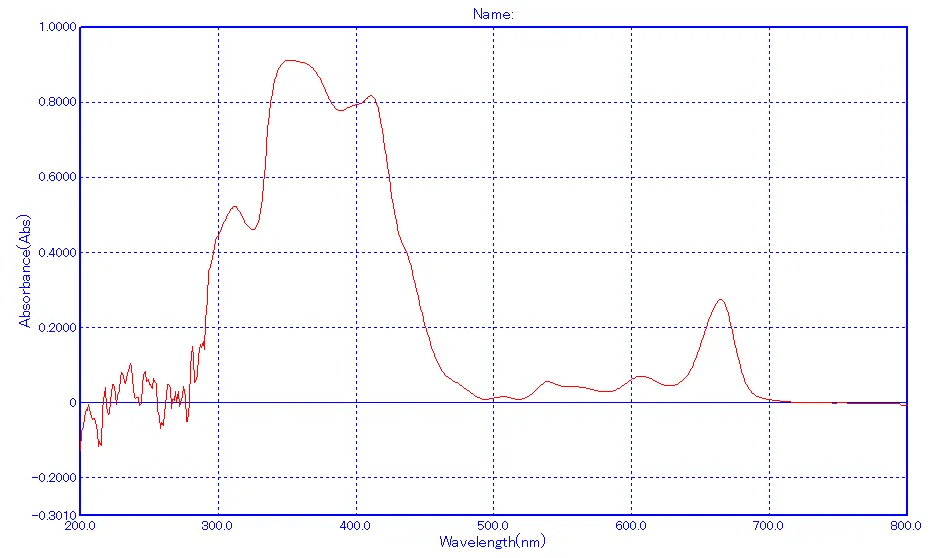

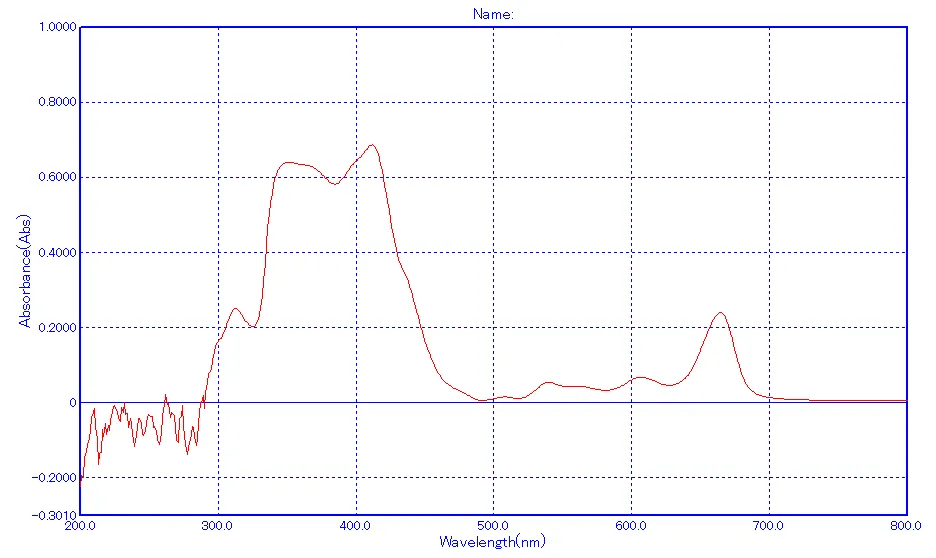

Figure- 5.1: UV-Graph of Neem extract
Table - 10 : UV- absorption / Wavelength for Tulsi
|
Peak No. |
Wavelength [λmax] |
Absorbance |
Peak Shape |
|
1. |
311 nm |
0.1578 |
Sharp |
|
2. |
354 nm |
0.3419 |
Sharp |
|
3. |
412 nm |
0.4994 |
Sharp, High Intensity |
|
4. |
665 nm |
0.1916 |
Sharp |


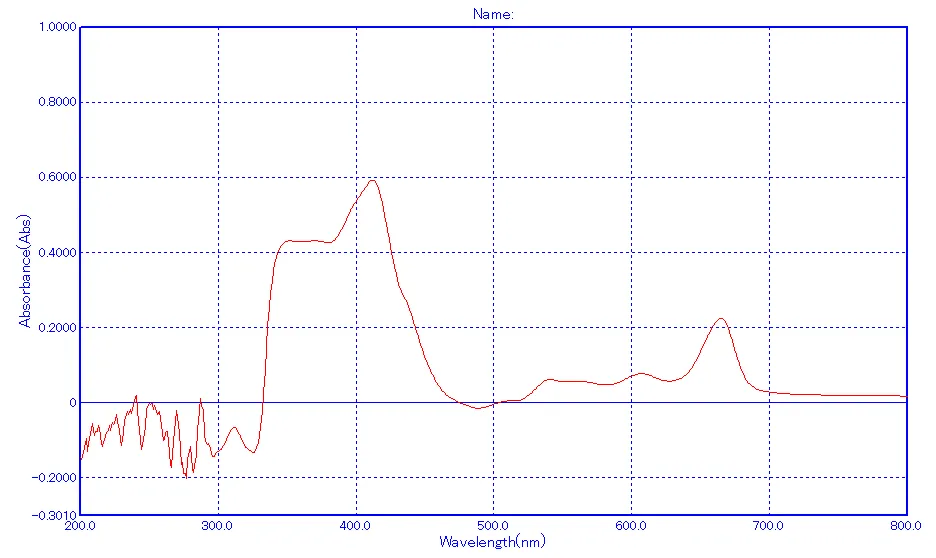

Figure- 5.2: UV- Graph of Tulsi extract
5.1.6 Determination of λmax.
The absorotion spectrum of pure drug was scanned 200-800 nm with 10mg/ml prepared in ethanol .The λmax. of Neem and Tulsi was to be 359 and 412 nm.
5.1.7 Observation table :
Table- 11: Compound identified in Neem extract
|
Sr. No. |
Compound |
|
1. |
Salannin |
|
2. |
4-cyclooctane-1-ol,8,8’-(iminodi-2,1-phenylene)bis (C28H35NO2) |
|
3. |
Azadirectin |
|
4. |
Nimbin, nimbinin |
|
5. |
Germanicol [C30H50O] |
|
6. |
Phytol [C30H50O] |
Table- 12 : Compound identified in Tulsi extract
|
Sr. No. |
Compound |
|
1. |
Cirsiliol |
|
2. |
Cirsimaritin |
|
3. |
Eugenol |
|
4. |
Rosamaric acid |
|
5. |
Isothymusin |
|
6. |
Carvacrol |
CONCLUSION
Neem (Azadirachta indica) and Tulsi (Ocimum sanctum), which are adored in ancient Ayurvedic medicine, have shown promising pharmacological properties as natural treatments. Their broad range of therapeutic actions, including antibacterial, anti inflammatory, antioxidant, hepatoprotective, antidiabetic, and immunomodulatory properties, make them essential resources in current phytotherapy. Neem includes bioactive chemicals such azadirachtin, nimbin, and nimbidin, which help it fight bacteria, viruses, and fungal infections. Similarly, Tulsi contains eugenol, ursolic acid, and rosmarinic acid, which are known to have adaptogenic, cardioprotective, characteristics. and antistress Both herbs have showed promise in preclinical and clinical trials for treating chronic ailments such as diabetes, cardiovascular disease, and respiratory disorders. Their usage as complementary medicines may lessen reliance on synthetic pharmaceuticals. Similarly, Tulsi is known for its adaptogenic, antibacterial, antioxidant, hepatoprotective, and anti diabetic properties. Key phytochemicals such as eugenol, ursolic acid, and rosmarinic acid help it manage stress, metabolic disorders, respiratory ailments, and infections. Both herbs have minimal toxicity profiles and offer interesting alternatives or supplementary options to synthetic pharmaceuticals, particularly for designing safe, multi-targeted treatments. Their synergistic potential is being investigated in polyherbal formulations to improve medicinal outcomes. However, despite widespread traditional use and preliminary scientific evidence, more in depth research, including clinical trials and extract standardization, is required to ensure uniform dose, efficacy, and safety. Finally, Neem and Tulsi are significant therapeutic plants with solid pharmacological foundations and promising future use in evidence-based integrative healthcare systems. Further research could open up more targeted applications and assist their widespread acceptance in modern medicine.
REFERENCES:


Roshan Kumar*, Sudhir Kathane , Ritesh Jain, Development of Neem and Tulsi Tablets for Cardiovascular Care, Int. J. of Pharm. Sci., 2026, Vol 4, Issue 7, 2647-2666. https://doi.org/10.5281/zenodo.21344921
 10.5281/zenodo.21344921