
View Article

Abstract

Poor aqueous solubility remains a primary barrier to oral bioavailability for many new chemical entities. Strategies that convert poorly soluble actives into higher-energy, higher-surface-area, or otherwise more readily dissolved forms have shown success; among these, stimuli-responsive systems and smart film/tablet approaches are emerging as promising routes to combine dissolution enhancement with targeted, on-demand release. This review surveys the design principles and materials for stimuli-responsive oral systems (pH, temperature, enzyme, redox, and mechanical), examines the “smart film” concept and its transformation into compressible tablets, and reviews fabrication approaches (solvent casting, hot melt extrusion, spray drying, nano-milling, electrospinning). We describe how combination strategies -e.g., amorphous solid dispersion in a cellulose film matrix, or nanocrystals embedded in mucoadhesive, pH-responsive films - can synergize to improve dissolution rate, dissolution extent, and local vs systemic exposure. Key characterization methods, regulatory considerations for modified dissolution behavior, and outstanding challenges are discussed along with future directions for translation. Furthermore, emerging strategies such as multi-layer film architecture, microenvironmental pH modulation, and hybrid ASD–nanocrystal systems offer additional control over drug release kinetics and site-specific absorption, thereby enhancing therapeutic efficacy and patient compliance

Keywords

paper, granules, oral drug delivery, tablet manufacturing, ex vivo porcine intestinal model, intestinal permeability

Introduction

× Popup Image

Oral delivery is the most preferred route for drug administration [1]. The efficient delivery of oral drugs to the systemic circulation is primarily affected by the physico-chemical properties of the drug (e.g., solubility, stability) and/or the physiological properties of the gastrointestinal tract (GIT), e.g., the harsh acidic environment, the abundance of digestive enzymes, and the intestinal mucosal physical absorption barrier [2].

Various approaches have been utilized to increase the poor aqueous solubility of drugs, including micelle formation, lipid-based formulations, nanoemulsions, self-emulsifying drug delivery systems, solid dispersions, inorganic nanocarriers, or nanocrystals [3,4,5]. Recently, smartFilms have emerged as novel oral delivery systems to improve the poor aqueous solubility of drugs [6]. The smartFilm technology utilizes the pores of cellulose matrices as loading sites in which the therapeutic agent is loaded in an amorphous form, resulting in enhancing the dissolution rate of the loaded drug. The production of smartFilms involves dissolving a poorly soluble drug in an appropriate solvent, applying the resulting solution on a porous cellulose-based paper, and drying the obtained drug-loaded smartFilms.
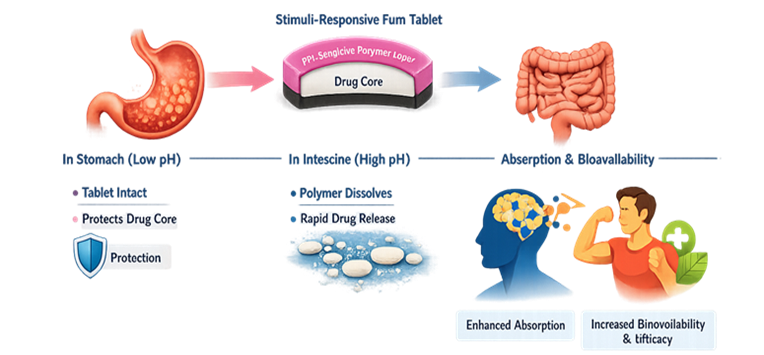
Fig 1. Stage-Wise pH-Responsive Oral Delivery of Poorly Soluble Bioactives via SmartFilm Tablets

The matrix of the paper retains the drug in an amorphous state, and thus improves its solubility [6,7]. Several studies highlight the smartFilm technology as a potential oral drug delivery system and were able to transform smartFilms into an appropriate oral dosage form (i.e., paper tablets), which can be conveniently administered. These tablets were manually produced, without the addition of any excipients and fulfilled all requirements of the European Pharmacopoeia [8,9,10].Despite its proven effectiveness, still, the smartFilm technology remained unrecognized by the pharmaceutical industry, because a large-scale production of paper tablets from paper cut outs—due to the poor flowability of the paper cut outs—was not possible. To address this issue, unloaded smartFilms were transformed into a free-flowing physical form (i.e., paper granules), rendering them highly convenient for high-speed, large-scale tablet manufacturing [10,11]. The transfer of paper into paper granules is required to allow for a large-scale production of the tablets. However, this granulation process requires wetting steps [10,11]. These wetting steps are not critical for the production of non-loaded, i.e., drug free, paper tablets, but might be critical if drug-loaded smartFilms—that contain drug in amorphous form—are transferred into tablets. The wetting might cause a (partial) dissolution of the drug during the wetting process and a subsequent re-crystallization upon the drying. The changes in crystalline state can then affect the dissolution velocity of the drug and—consequently—the oral bioavailability of the drug that was loaded into the smartFilms.

The aim of this study was therefore to investigate

(i) if drug-loaded smartFilms can be transferred into smartFilm granules and smartFilm tablets and

(ii) if these smartFilm tablets can maintain the amorphous state of the incorporated drug, which then should result in an improved dissolution rate and in an enhanced intestinal permeability of the poorly-water soluble drug.

Stimuli-responsive materials

Stimuli-responsive materials are an emerging class of materials used for tissue engineering and drug delivery. A variety of stimuli (including temperature, pH, redox-state, light, and magnet fields) are being investigated for their potential to change a material’s properties, interactions, structure, and/or dimensions. The specificity of stimuli response, and ability to respond to endogenous cues inherently present in living systems provide possibilities to develop novel tissue engineering and drug delivery strategies (for example materials composed of stimuli responsive polymers that self-assemble or undergo phase transitions or morphology transformations). Herein, smart materials as controlled drug release vehicles for tissue engineering are described, highlighting their potential for the delivery of precise quantities of drugs at specific locations and times promoting the controlled repair or remodeling of tissues.
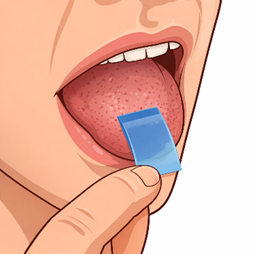
Fig. 2 Application of Oral Dissolvable Strip on Tongue

The ability of a material to respond to different stimuli is related to their physico-chemical characteristics [12,13,14,15,16]. Taking advantage of such features with the recent developments in technology, we expect to be able to control the interaction between the biomaterial and its contents (e.g., cells, drugs) and surrounding environment in response to various stimuli (including but not limited to pH, temperature, redox potential, magnetic fields, and light) [12,13,17,18].

Stimuli-responsive materials have numerous applications in the biomedical field, from drug delivery systems to diagnostics and treatment. The delivery of drugs and genes requires the pharmaceutical compound or gene to reach the site of action at the right time and at an appropriate concentration, traversing obstacles like biological barriers, enzymatic or hydrolytic degradation, and solubility. More often than not, secondary effects arise from non-specific interactions with cells and tissues, so that vehicles that react to specific stimuli would be promising carriers for the targeted delivery of drugs and genes [19,20]. Tissue engineering also faces numerous challenges such as a paucity of renewable sources of functional cells that are immunologically compatible; a lack of suitable materials with the desired chemical composition, mechanical properties, and biological function; and an inability to generate large, vascularized tissues that can easily integrate into the circulatory system of the host with the inherently complexity of native tissues architecture, some of which can be addressed through the utilization of smart responsive biomaterials [21]. In this context, stimuli-responsive nanomaterials have received great attention. Significant progress has been made to tailor nanoparticles with stimuli-responsive properties, which have potential for future therapies for human or veterinary applications. Size, shape, and surface functionalization, as well as modifications, are necessary for active targeting or stimulus-responsive drug release [22].

The stimuli can be internal or external, meaning that they can build up at the site of action or that they could be applied externally to achieve the desired effect. For example, redox conditions and pH vary in the different tissues and between intracellular and extracellular compartments. The properties of redox polymers (ionic, electrical, optical, mechanical, or chemical) change depending on their oxidation state, offering potential for inclusion in actuators, biosensors, and drug delivery systems [23] The review of Guo and coworkers summarized the state-of-the-art of knowledge on reduction/oxidation responsive polymeric drug carriers (specifically focusing on functional groups employed for this end goal) [24]. Drug delivery and tissue engineering strategies based on electroactive materials represents an innovative field of research [25].
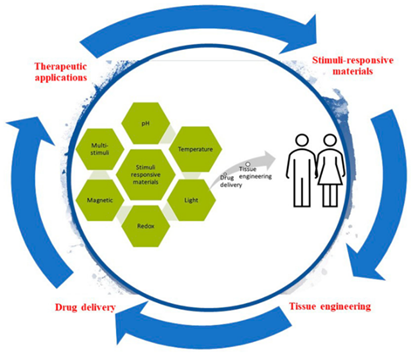
Fig. 3 stimuli responsive nanocarriers

The effects of electrical stimulation on cell growth and differentiation and tissue growth has led to interest in using piezoelectric scaffolds for tissue repair [26], influenced by the inherent piezoelectric properties of bone [27], and studies showing enhanced bone regeneration in response to the use of piezoelectric biomaterials [28]. Consequently, piezoelectric materials have begun to find a variety of biomedical applications, including drug delivery and tissue engineering applications [29,30,31]. Of particular interest is the ability of smart polymers to differentiate between the redox potential in tumors and normal tissues (with the former exhibiting 4-fold higher glutathione concentrations), or respond to the presence of reactive oxygen species (ROS), believed to play a role in diseases like cancer, heart injury, and arteriosclerosis [24]. Similarly, pH responsive polymers bearing ionizable acidic/basic residues can be employed in drug/gene delivery, sensors, and membranes [32]. They are of interest as it has been shown that the pH is altered in pathological conditions such as cancer, inflammation, and infection and their ability to respond to changes in the pH by undergoing changes in surface activity, chain conformation, solubility, and configuration has led to the development of several drug delivery systems and wound dressings [33,34,35]. For instance, the variability of pH values between 5.6 and 7.0 in tumor masses has inspired the development of new pH-responsive materials [36]. The pH spectrum observed in different sites within the body in physiological conditions also provides attractive targets for use in biomedicine [37], wherein pH-responsive carriers may be able to target a specific area in the body and release their bioactives with a high therapeutic impact and minimal side-effects [38].

Aim of the Study

The aim of this study is to develop and evaluate stimuli-responsive film tablets capable of enhancing the dissolution rate and oral bioavailability of poorly soluble bioactive compounds by utilizing responsive polymeric systems that react to physiological triggers such as pH and enzymatic conditions.

Objectives of the Study

  1. To formulate stimuli-responsive smart film tablets incorporating poorly soluble bioactive compounds using suitable polymeric matrices.
  2. To select and optimize stimuli-responsive polymers such as Chitosan, Hydroxypropyl methylcellulose, and Eudragit for controlled drug release.
  3. To improve the dissolution behavior of bioactives belonging to low-solubility classes of the Biopharmaceutics Classification System.
  4. To characterize the prepared film tablets using physicochemical and mechanical evaluation techniques.
  5. To evaluate drug–polymer interactions and structural properties using analytical methods such as Fourier Transform Infrared Spectroscopy, Differential Scanning Calorimetry, and Scanning Electron Microscopy.
  6. To investigate in-vitro drug release profiles of the developed smart film tablets under simulated gastrointestinal conditions.
  7. To assess the improvement in oral performance and bioavailability compared with conventional dosage forms.

Poorly Soluble Bioactives: Challenges

Solubility is the phenomenon of dissolving a solute in a solvent, which is essential to produce a homogenous system. In quantitative terms, solubility may be defined as the required strength of the solute dissolved in a solution at a given pH, temperature, and pressure [39]. In contrast, in qualitative terms, solubility is the material’s ability to be melted in a saturated solution at a specific temperature [40,41]. Solubility is presented with numerous terminologies such as molality, volume fraction, parts of solvent, percentage, molarity, mole fraction, and so forth [41]. US Pharmacopoeias define solubility as the milliliters of solvent necessary to dissolve one gram of solute [45]. Solubility is standardly determined using two approaches: thermodynamic solubility and kinetic solubility. The main distinction between the two methods is that the solid compound is added to the aqueous medium to determine thermodynamic solubility, whereas the pre-dissolved compound is used as the initial substance to determine kinetic solubility. Thermodynamic solubility provides a response to the question: “How much does the substance dissolve?” Conversely, kinetic solubility answers: “How much does the molecule precipitate?” [46]. It is obvious that thermodynamic solubility plays a vital role in the solubility determination of poorly soluble drugs. In addition, dissolution is dependent on thermodynamic solubility. Notably, one should distinguish between the terms ‘dissolution’ and ‘solubility’. When a solute in any phase, either the gaseous, liquid, or solid phase, dissolves in a solvent to create a solution, the term “dissolution” is used. In contrast, the term “solubility” refers to the highest concentration of a solute that may dissolve in a solvent at a specific temperature [47].

Drugs administered via the oral route in a solid dosage form are first disintegrated into smaller parts or even primary particles, from which the drug molecules are freer to dissolve in the gastrointestinal tract (GIT) fluids than from an intact tablet; the molecular dissolution of the drug is then followed by its penetration through the intestinal barrier, as displayed in Figure 1 [48]. Given that all bodily fluids are water-based solutions, aqueous solubility is an essential criterion to achieve the appropriate concentrations of the drug molecules in the systemic circulation to elicit the required therapeutic efficacy. If a drug molecule has very low solubility, it cannot be dissolved in the GIT fluids, which hinders its permeability and, thus, bioavailability because it is directly related to the drug solubility. Low bioavailability observed with poorly soluble drugs make the final formulation expensive because high doses are needed to obtain therapeutic benefits and, sometimes, they might cause toxicity [49,50].

 Depending on the solubility and permeability in the GIT, drug substances are categorized in four BCS classes (biopharmaceutical classification system, as listed in Table 1) [51,52]. Because of low solubility, despite high permeability, BCS class II drugs are associated with a slower dissolution rate in the GI tract, leading to low bioavailability. Owing to low aqueous solubility, a small concentration gradient between the intestine and the bloodstream results in restricted transport across biological membranes and, consequently, poor absorption is often reported. In contrast, in addition to low aqueous solubility, BCS-class IV drugs also have low permeability, which reduces their ability to be absorbed. However, BCS class IV drugs sometimes make poor drug development candidates due to limited membrane permeability since solubility and dissolution augmentation may not be sufficient to increase their bioavailability. However, these types of compounds cannot be neglected only because of their permeability difficulties. Therefore, class IV compounds may be developed via the current methods utilized for BCS class II drugs along with absorption enhancers. In the lead optimization stage, choosing a better drug candidate with more suitable physiochemical characteristics is another formulation development strategy for class IV drugs [52]. The development of various techniques to address unsatisfactory biopharmaceutical properties and the advancement of knowledge in the field of drug delivery systems for oral administration were both influenced by the need for efficient formulations for BCS-classes II and IV drugs. It has even been estimated that up to 90% of new molecular entities fall in BCS classes II and IV. It has been reported that only eight percent of novel drug candidates currently exhibit excellent permeability and solubility. Water-insoluble or poorly water-soluble medications account for more than 1/3 of the pharmaceuticals classified in the US Pharmacopeia [53]. Recently, it was claimed that around half of all drug molecules failed during the development stage due to poor aqueous solubility. Lead compounds with poor solubility characteristics resulted in inefficient absorption from the administration site, resulting in a higher rate of therapeutic loss due to poor pharmacokinetics [54].

Table 1. BCS Classification.

BCS Class

Solubility

Permeability

Drug Molecule Examples

I

High

High

Mefoquine hydrochloride, Nelfnavir mesylate, Quinine sulfate, Clomiphene citrate

II

Low

High

Ibuprofen, Nifedipine, Carbamazepine, Diazepam, Efavirenz

III

High

Low

Amiloride hydrochloride, Amoxicillin, Ethosuximide, Fluconazole, Isoniazid, Salbutamol

IV

Low

Low

Acetazolamide, Dapsone, Doxycycline, Nalidixic acid, Theophylline

Polymers Used in Stimuli Film Tablets:-

Stimuli polymeric materials respond with a considerable change in their properties to small changes in their environment. Environmental stimuli include temperature, pH, chemicals, and light. “Smart” stimuli-sensitive materials can be either synthetic or natural. This review discusses the application of smart materials as tools to solve biological problems such as bioseparation, drug delivery, biosensor design, tissue engineering, protein folding, and microfluidics. The goal for these endeavors is to mimic the “smartness” of biological systems and ultimately moderate complex systems such as immune responses at desired levels. The versatility and untapped potential of smart polymeric materials makes them one of the most exciting interfaces of chemistry and biology.

Over the last decade, smart polymeric materials have been used in biochemical sciences in many ways. Since the term “smart polymeric materials” encompasses a wide spectrum of different compounds with unique potential for biological applications, and since interest in generating and manipulating these compounds is growing, we felt that it would be useful to assemble an overview of the field to aid in catalyzing cross-fertilization of ideas. The present review aims to bring together the exciting design of these materials and the ever-expanding range of their uses by focusing on hydrogels as a key example of this technology. Smart or stimuli-responsive polymers respond to small changes in their environment with dramatic changes in their physical properties (Table 1). Smart polymers are either reversibly soluble-insoluble (SIS) in aqueous media or crosslinked in the form of hydrogels. Specifically, hydrogels are networks of hydrophilic polymers that expand or swell by taking up “from 10%–20% up to thousands of times their dry weight in water” [55]. Physical hydrogels are held together with noncovalent forces, whereas chemical hydrogels are obtained by chemical crosslinking; both kinds of gels are structurally inhomogeneous. Physical hydrogels have hydrophilic and hydrophobic domains, whereas chemical hydrogels have “clusters” or regions of high crosslinking density (low swelling structure) present in an otherwise low crosslinking density (high swelling structure) polymeric network. During water uptake, hydration occurs first at hydrophilic moieties (“primary bound water”), then at hydrophobic sites (“secondary bound water”) and at spaces between the chains and pores (“free or bulk water”) [56]. SIS polymers can be synthetic [poly(N-isopropylacrylamide) and methyl-methacrylates polymers]  or natural (alginate, chitosan, and κ-carrageenan 57, 58), or a combination of both [collagen-acrylate and poly(polyethylene glycol-co-peptides)] [61]. Both SIS polymers and hydrogels have been shown to respond to a variety of stimuli such as changes in pH, temperature, ionic strength, light, electricity, and magnetic field (Table 1) [62]. The swelling (uptake of additional water) and solubility responses for hydrogels and SIS polymers, respectively, have a common mechanism.
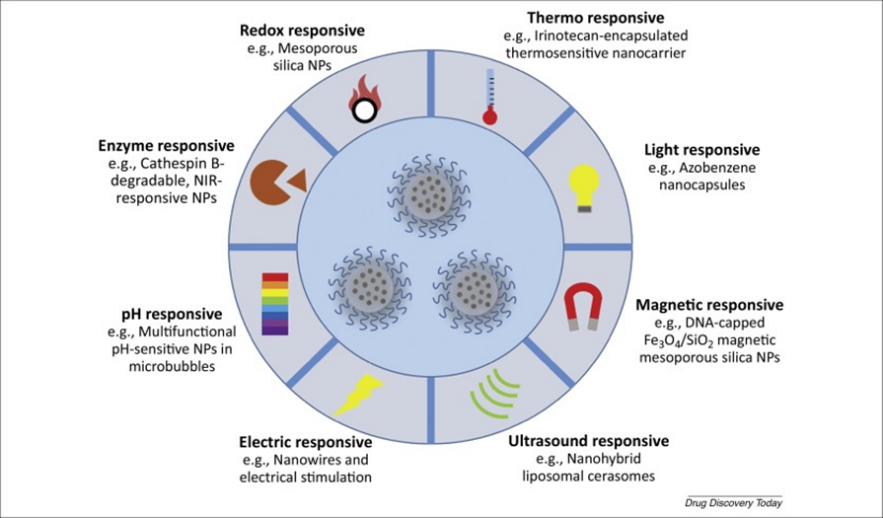
Fig 4. stimuli responsive materials

Application of stimulus changes the nanostructure and increases or decreases the overall hydrophilicity. For example, a pH-responsive polymer (or hydrogel) could be subjected to ionization of a free carboxyl group (like in methacrylates), and a thermosensitive polymer, like poly(N-isopropylacrylamide) [poly (NIPAAm)], would deswell as the temperature is raised beyond lower critical solution temperature (LCST). The change in network volume (the smartness readout) arises because there is a balance of hydrophilic (-CONH-) and hydrophobic [-CH(CH3)2-] moieties, therefore, below LCST; the gel is swollen, hydrated, and hydrophilic. However, above LCST it is collapsed, dehydrated, and hydrophobic.

Table 2.  Stimuli-Responsive Smart Polymeric Materials

Type of Stimulus

Responsive Polymer Material(s)

Reference(s)

pH

dendrimers

71, 72, 73, 74


poly(L-lysine) ester


poly(hydroxyproline)

[75]


lactose-PEG grafted poly (L-lysine) nanoparticle


poly (L-lysine)-g-poly (histidine)

[76]


poly (propyl acrylic acid)


poly (ethacrylic acid)

[77]


polysilamine


Eudragit S-100

[77]


Eudragit L-100


chitosan

[78]


PMAA-PEG copolymer


Ca2+

alginate

[78]

Mg2+

chitosan


Organic solvent

Eudragit S-100

[79]

Temperature*

PNIPAAm


Magnetic field

PNIPAAm hydrogels containing ferromagnetic material PNIPAAm-co-acrylamide

[80]

Ru2+→Ru3+ (redox reaction)

PNIPAAm hydrogels containing Tris (2,2′-bipyridyl) ruthenium (II)


Temperaturea (sol-gel transition)

poloxamers

[81]


chitosan-glycerol phosphate-water


prolastin

[82]


hybrid hydrogels of polymer and protein domains


Electric potential

polythiophen gel

[83]

IR radiation

poly (N-vinyl carbazole) composite


UV radiation

polyacrylamide crosslinked with 4-(methacryloylamino)azobenzene Polyacrylamide-triphenylmethane leuco derivatives

[84]

Ultrasound

dodecyl isocyanate-modified PEG-grafted poly(HEMA)


Dual-Stimuli-Sensitive Polymers

Ca2+ and PEG

carboxymethyl cellulose


Ca2+ and temperature

Eudragit S-100

[86]

Ca2+ and acetonitrile

Eudragit S-100


32°C and 36°C

hydrogels of oligoNIPAAm and oligo(N-vinylcaprolactum)

[87]

pH and temperature

poly (N-acryloyl-N-propyl piperazine)


Light and temperature

poly(vinyl alcohol)-graft-poly-acrylamide-triphenylmethane leucocyanide derivatives

88, 89

Design and Synthesis of stimuli Polymeric Materials:-

The thermosensitive gel poly(N-isopropylacrylamide) (NIPAAm) is one of the most commonly studied smart systems, and various strategies for synthesizing the hydrogel and its derivatives have been described. Efforts have been directed toward altering the swelling/shrinking behavior and preparing copolymers that also respond to other stimuli. Critical insight into the deswelling mechanism was gained by the Hoffman group's seminal work on PNIPAAm [65]. Researchers showed that gel collapse at LCST (38.5°C) is entropy driven since bound water molecules are freed. Collapse is accompanied by “skin” formation around the trapped pockets of water; therefore, deswelling kinetics are biphasic with faster expulsion of water through weakly densified gel portions followed by slower release of water through the more densified collapsed gel layer on the surface. The comonomers (along with NIPAAm) which have been assessed are acrylic acid, methacrylic acid, 2-methyl-2-acrylamidopropane sulfonic acid, trimethyl-acrylamidopropyl ammonium 3-methyl-1-vinylimidazolium iodide, sodium acrylate, sodium methacrylate, and 1-(3-sulphopropyl)-2-vinyl-pyridinium betaine 66, 67, 68. The use of methacrylic acid, along with NIPAAm, not only changes LCST but also makes the hydrogels responsive to both temperature and pH [68].

Polymethacrylic acid chains do not expand readily before a critical charge density (due to ionized carboxyl groups) is reached. The copolymers of NIPAAm and methacrylic acid, in addition to hydrophobic and ionic binding, also involve hydrogen bonding between the amide and carboxyl groups of the two monomers [69]. Consequently, it was found that at any pH below pKa of the methacrylate moiety, the copolymers reached lower swelling ratios as compared to either of the homopolymers, since hydrogen bonding presumably acts as additional crosslinks that keep water out.

Soluble copolymers of N-isopropylacrylamide and acrylic acid containing photodimerizable chromophores, like stilbene, styryl pyridinium, and acridizinium moieties, have been synthesized with a view to using light for inducing crosslinking [70]. Unfortunately, adequate reversibility of this photochemical switching could not be achieved in any of the cases.

The most frequently used method of polymerizing NIPAAm with N,N′-methylene bisacrylamide as a crosslinker via free radical crosslinking polymerization is exothermic [71]. The usual polymerization temperatures are close to LCST. Thus, any local or overall temperature increase above LCST results in pockets of phase separation and formation of spatially inhomogeneous gels. Real-time temperature and photon transmission measurements showed that polymerization even below LCST produced inhomogeneous network, whereas at temperatures higher than LCST, the gel system “undergoes a phase transition via a spinodal decomposition process” [71]. Kim et al. [72] have grafted PNIPAAm onto the surface of pH-responsive alginate to obtain a macroporous hydrogel with faster swelling/deswelling rates.

Much less work has been done with hydrogels, which respond to stimuli other than pH, temperature, and light. A hydrogel based upon ethylene-co-vinyl acetate, responsive to magnetic field, has been described [73]. Hydrogels based upon similar structures have also been described as responsive to ultrasonic radiation [73] Of special interest are naturally occurring polysaccharides like chitosan, alginate, and κ-carrageenan that behave as reversibly soluble-insoluble polymers by responding to pH, Ca2+, and K+, respectively 72, 73. Recently, a polymer sensitive to pH and temperature has been prepared by genetic engineering [74]. These are block copolymers containing repeating sequences from silk (GAGAGS) and elastin (GVGVP), where, in some cases, valine has been replaced by glutamic acid. By varying the extent of this change, the sensitivity to pH, temperature, and ionic strength could be controlled fairly precisely. Recombinant methods have also been used to design multidomain assemblies in which leucine zipper domains flank a central flexible polyelectrolyte [75]. pH/temperature stimuli trigger sol-gel transition. Extrapolation of this to create a seamless conjugate with specific biological activity is an exciting possibility.

Formulation Strategies for Stimuli-Responsive Film Tablets

The development of stimuli-responsive film tablets requires advanced formulation approaches to incorporate poorly soluble bioactive compounds into polymeric matrices capable of responding to physiological triggers such as pH, temperature, enzymes, or redox conditions. These strategies aim to enhance drug dissolution, stability, and controlled release behavior.

1. Solvent Casting Method

The solvent casting technique is one of the most commonly used approaches for preparing polymeric smart films and oral film tablets.

Principle

In this method, the polymer and drug are dissolved or dispersed in a suitable solvent to form a homogeneous solution or suspension. The solution is then poured into molds or casting plates and dried to form thin films.

Process Steps

  1. Dissolution of polymer (e.g., hydrophilic or stimuli-responsive polymer).
  2. Addition of plasticizer and drug.
  3. Homogenization of the mixture.
  4. Casting the solution onto flat surfaces.
  5. Controlled solvent evaporation.
  6. Cutting the dried film into tablets or strips.

Advantages

  • Simple and cost-effective process
  • Uniform drug distribution
  • Suitable for thermolabile drugs
  • Easy scalability for pharmaceutical manufacturing

Limitations

  • Residual solvent issues
  • Longer drying time
  • Possible drug crystallization during solvent evaporation

Solvent casting is widely used for polymer-based drug delivery films due to its ability to create uniform matrices capable of controlled drug release. Stimuli-responsive polymers incorporated in these films can swell or shrink depending on environmental conditions, enabling controlled drug delivery(80).

2. Hot-Melt Extrusion (HME)

Hot-melt extrusion is an advanced pharmaceutical manufacturing technique widely used to produce solid dispersions and smart drug delivery systems.

Principle

In this method, the drug and polymer are mixed and melted under controlled temperature and pressure in an extruder. The molten mass is then extruded through a die to form films or sheets.

Process Steps

  1. Blending drug and polymer
  2. Feeding mixture into extruder
  3. Melting and mixing through rotating screws
  4. Extrusion through die
  5. Cooling and cutting into film tablets

Advantages

  • Solvent-free process
  • Enhanced drug dispersion in polymer matrix
  • Improved dissolution of poorly soluble drugs
  • Continuous and scalable manufacturing

Limitations

  • Not suitable for heat-sensitive drugs
  • High energy requirement

Hot-melt extrusion improves dissolution by converting drugs into amorphous forms and enhancing their dispersion within polymer matrices, which significantly increases drug solubility and bioavailability.

3. Electrospinning Technique

Electrospinning is an emerging technology for fabricating nanofibrous drug delivery films with high surface area and rapid dissolution properties.

Principle

Electrospinning uses a high-voltage electric field to generate ultrafine polymer fibers from a polymer solution or melt. These fibers can encapsulate drugs within a nanofiber matrix.

Process

  1. Preparation of polymer-drug solution
  2. Loading solution into syringe
  3. Application of high voltage
  4. Formation of polymer jet
  5. Deposition of nanofibers on collector plate

Advantages

  • Very high surface-to-volume ratio
  • Improved dissolution rate
  • Efficient drug encapsulation
  • Controlled and stimuli-responsive release

Electrospun nanofibers exhibit high porosity and surface area, which enhances drug dissolution and enables rapid response to environmental stimuli such as pH, temperature, or light.

4. 3D Printing Technology

Three-dimensional (3D) printing is a novel technique used to fabricate personalized smart drug delivery systems.

Principle

3D printing creates dosage forms layer by layer based on digital design models. Different polymers and drugs can be precisely deposited to create complex structures.

Advantages

  • Personalized drug dosage
  • Complex geometries for controlled release
  • Multi-drug incorporation
  • Precise control over film thickness and structure

Limitations

  • High equipment cost
  • Limited pharmaceutical polymer compatibility

3D printing technologies allow precise control over drug distribution and structural properties of polymer matrices, which can improve the responsiveness and dissolution characteristics of smart drug delivery systems(85).

5. Polymer Blending and Nanocomposite Formulation

Another important strategy involves combining multiple polymers or nanoparticles to develop stimuli-responsive nanocomposite films.

Purpose

  • Enhance mechanical strength
  • Improve drug loading capacity
  • Provide multi-stimuli responsiveness

Biopolymer-based nanocomposites are particularly attractive because they offer high biocompatibility, biodegradability, and the ability to respond to physiological stimuli such as pH, enzymes, or redox conditions.

Mechanisms for Improving Dissolution in Stimuli-Responsive Film Tablets

Poor aqueous solubility is a major limitation for many bioactive compounds, leading to slow dissolution and low oral bioavailability. According to the Biopharmaceutics Classification System, drugs in Class II and Class IV show limited solubility, which restricts their absorption in the gastrointestinal tract. Stimuli-responsive smart film tablets are designed to overcome these limitations by employing several mechanisms that enhance dissolution and drug release.

1. Particle Size Reduction

Reducing the particle size of a poorly soluble drug significantly increases its surface area, which enhances the rate of dissolution according to the Noyes–Whitney equation.

Mechanism:

  • Smaller particles expose a larger surface area to the dissolution medium.
  • Faster interaction with gastrointestinal fluids improves drug dissolution.

Application in smart films:

  • Drugs are dispersed as micronized or nanosized particles within polymer matrices.
  • Nanoparticles embedded in film systems dissolve rapidly after film hydration.

Reference concept:

The dissolution rate of a solid drug is governed by the Noyes–Whitney Equation, which states that dissolution rate increases with surface area and concentration gradient.

2. Amorphous Drug Dispersion

Many poorly soluble drugs exist in a crystalline form, which has strong intermolecular interactions that reduce solubility. Converting the drug into an amorphous form improves dissolution.

Mechanism:

  • Amorphous drugs have higher internal energy and molecular mobility.
  • They dissolve faster than crystalline forms.

Role in smart film tablets:

  • Drugs are molecularly dispersed within polymer matrices.
  • Techniques like solvent casting or hot-melt extrusion prevent recrystallization.

Benefits:

  • Increased apparent solubility
  • Faster drug release
  • Enhanced bioavailability

3. Polymer-Mediated Solubilization

Stimuli-responsive polymers play a critical role in improving dissolution by interacting with drug molecules and enhancing wettability.

Mechanism:

  • Polymers reduce drug aggregation.
  • They improve wettability and dispersion of hydrophobic drugs.
  • Formation of drug–polymer complexes enhance solubility.

Common polymers include:

  • Hydroxypropyl methylcellulose
  • Chitosan
  • Polyvinyl alcohol

These polymers can form hydrophilic matrices that facilitate rapid water penetration and drug release.

4. Increased Surface Area of the Film Matrix

Smart film tablets are thin structures with a large surface area-to-volume ratio, which enhances contact with gastrointestinal fluids.

Mechanism:

  • Rapid hydration of the film.
  • Faster drug diffusion into the surrounding medium.

This is particularly beneficial for drugs with poor aqueous solubility because the large surface exposure accelerates dissolution.

5. Stimuli-Responsive Swelling and Erosion

Stimuli-responsive polymers can swell or erode when exposed to physiological conditions such as changes in pH or temperature.

Mechanism:

  • Swelling increases the porosity of the polymer matrix.
  • Drug molecules diffuse through swollen polymer networks.
  • Erosion of the matrix releases encapsulated drug molecules.

For example, pH-responsive polymers such as Eudragit dissolve in intestinal pH, triggering rapid drug release.

6. Enhanced Wettability and Hydration

Hydrophilic polymers incorporated in film formulations improve the wettability of poorly soluble drugs(92).

Mechanism:

  • Hydrophilic polymers absorb water quickly.
  • Improved wetting reduces interfacial tension between drug particles and dissolution medium.
  • This promotes faster drug dissolution.

7. Formation of Porous Structures

Some fabrication techniques (such as electrospinning or rapid solvent evaporation) create porous film structures.

Mechanism:

  • Increased porosity allows rapid penetration of dissolution medium.
  • Drug molecules diffuse quickly through pores.

Porous matrices therefore enhance both drug dissolution and release rate.

Applications of Stimuli-Responsive Film Tablets

Stimuli-responsive smart film tablets represent an advanced drug delivery system designed to improve the dissolution and oral bioavailability of poorly soluble bioactive compounds. These systems respond to physiological triggers such as pH, temperature, or enzymatic activity, enabling controlled and targeted drug release.

1. Delivery of Poorly Soluble Drugs

Many pharmaceutical compounds exhibit poor aqueous solubility, resulting in low oral bioavailability. According to the Biopharmaceutics Classification System, drugs classified under BCS Class II and Class IV exhibit low solubility, which limits their dissolution and absorption in the gastrointestinal tract. Smart film tablets improve dissolution by incorporating drugs into hydrophilic polymer matrices that enhance wettability and dispersion, leading to improved therapeutic efficacy(93) .

Examples of poorly soluble bioactive compounds include:

  • Curcumin
  • Resveratrol
  • Quercetin

These compounds possess significant pharmacological properties but exhibit poor bioavailability due to low solubility .

2. Targeted Drug Delivery

Stimuli-responsive smart films can release drugs selectively at specific sites in the gastrointestinal tract. pH-responsive polymers such as Eudragit remain stable in acidic gastric conditions but dissolve in intestinal pH, enabling targeted drug release and reducing drug degradation in the stomach .

This approach is particularly beneficial for drugs that require intestinal absorption or are unstable in acidic environments.

3. Controlled and Sustained Drug Release

Smart film tablets can be designed to provide controlled or sustained drug release over extended periods. Stimuli-responsive polymers such as Hydroxypropyl methylcellulose and Chitosan swell or erode in response to physiological conditions, gradually releasing the drug .

Controlled drug release offers several advantages:

  • maintenance of therapeutic drug concentration
  • reduced dosing frequency
  • improved patient compliance.

4. Oral Delivery of Nutraceuticals and Herbal Bioactives

Smart film tablets are increasingly used for the delivery of nutraceuticals and plant-derived bioactive compounds. Many natural compounds demonstrate therapeutic benefits but suffer from poor water solubility and stability.

Examples include:

  • Curcumin
  • Epigallocatechin gallate
  • Resveratrol

Smart film formulations enhance their dissolution, stability, and oral absorption .

5. Fast-Dissolving Oral Drug Delivery Systems

Stimuli-responsive smart films can also act as fast-dissolving oral dosage forms. When placed in the oral cavity, the films rapidly dissolve in saliva and release the drug for absorption. This approach is particularly beneficial for pediatric and geriatric patients who experience difficulty swallowing conventional tablets .

6. Personalized Medicine and Advanced Drug Delivery

Recent advances in pharmaceutical technology such as 3D printing allow the development of personalized smart film tablets with customized drug doses and release profiles. These systems can be tailored according to patient-specific therapeutic needs, improving treatment outcomes

Advantages of Stimuli-Responsive Film Tablets

Stimuli-responsive smart film tablets are advanced drug delivery systems designed to improve the dissolution, stability, and oral performance of poorly soluble bioactive compounds. These systems utilize polymers that respond to physiological triggers such as pH, temperature, or enzymatic activity, enabling controlled and efficient drug release. The major advantages of these systems are discussed below.

1. Improved Dissolution of Poorly Soluble Drugs

One of the primary advantages of smart film tablets is their ability to enhance the dissolution of poorly soluble drugs. According to the Biopharmaceutics Classification System, many drugs fall under Class II and Class IV, where poor solubility limits their absorption. Smart film tablets incorporate hydrophilic polymers that improve wettability, dispersion, and solubilization of the drug, leading to faster dissolution and improved therapeutic effectiveness .

2. Enhanced Oral Bioavailability

Improved dissolution of drugs directly contributes to increased oral bioavailability. The thin film structure allows rapid hydration and drug diffusion, which facilitates faster absorption in the gastrointestinal tract. This property is particularly beneficial for bioactive compounds with low aqueous solubility such as Curcumin and Resveratrol .

3. Controlled and Targeted Drug Release

Stimuli-responsive polymers enable the drug to be released in response to specific physiological conditions. For example, pH-responsive polymers like Eudragit remain stable in acidic gastric conditions but dissolve in the intestinal environment, enabling targeted drug delivery. This targeted release minimizes drug degradation and enhances therapeutic efficiency .

4. Rapid Drug Release and Fast Onset of Action

Due to their thin structure and large surface area, stimuli film tablets hydrate quickly when exposed to saliva or gastrointestinal fluids. This rapid hydration allows the drug to dissolve quickly, resulting in a faster onset of therapeutic action compared with conventional tablets .

5. Improved Patient Compliance

Stimuli film tablets are easy to administer and do not require water for swallowing. This makes them particularly beneficial for pediatric, geriatric, and dysphagic patients who may have difficulty swallowing conventional tablets or capsules. The convenient dosage form improves patient compliance and adherence to medication regimens .

6. Flexible and Versatile Formulation

Stimuli-responsive film systems allow the incorporation of a wide variety of drugs, including synthetic pharmaceuticals, herbal bioactives, and nutraceutical compounds. Hydrophilic polymers such as Hydroxypropyl methylcellulose and Chitosan can be easily modified to produce films with desired mechanical properties and drug release profiles .

7. Reduced Dose Frequency and Side Effects

Controlled release of drugs from stimuli-responsive films can maintain therapeutic drug levels for extended periods. This reduces the need for frequent dosing and minimizes fluctuations in plasma drug concentration, thereby decreasing potential side effects .

CONCLUSION

Stimuli-responsive film tablets represent a promising and innovative approach for improving the dissolution and oral performance of poorly soluble bioactive compounds. Poor aqueous solubility remains a major challenge in drug development, particularly for drugs categorized under the Biopharmaceutics Classification System Class II and Class IV. The incorporation of stimuli-responsive polymers enables these advanced delivery systems to respond to physiological triggers such as pH, temperature, or enzymatic activity, thereby facilitating controlled and targeted drug release.

The use of hydrophilic and functional polymers such as Hydroxypropyl methylcellulose, Chitosan, and Eudragit improves drug dispersion, wettability, and dissolution behavior. Additionally, formulation strategies such as solvent casting, hot-melt extrusion, and electrospinning contribute to the development of films with enhanced surface area and optimized drug release characteristics.

Overall, stimuli-responsive film tablets offer several advantages, including improved dissolution rate, enhanced oral bioavailability, controlled drug release, and improved patient compliance. These systems are particularly useful for the delivery of poorly soluble drugs and bioactive compounds such as Curcumin and Resveratrol.

Despite the promising potential of these systems, further research is required to address challenges related to formulation stability, large-scale manufacturing, and regulatory approval. Future advancements in polymer science, nanotechnology, and personalized medicine are expected to further enhance the effectiveness and applicability of stimuli-responsive smart film tablets in modern pharmaceutical drug delivery systems.

REFERENCES

        1. Homayun B., Lin X., Choi H.-J. Challenges and Recent Progress in Oral Drug Delivery Systems for Biopharmaceuticals. Pharmaceutics. 2019;11:129. doi: 10.3390/pharmaceutics11030129. [DOI] [PMC free article] [PubMed] [Google Scholar]
        2. Hua S. Advances in Oral Drug Delivery for Regional Targeting in the Gastrointestinal Tract-Influence of Physiological, Pathophysiological and Pharmaceutical Factors. Front. Pharmacol. 2020;11:524. doi: 10.3389/fphar.2020.00524. [DOI] [PMC free article] [PubMed] [Google Scholar]
        3. Da Silva F.L.O., Marques M.B.D., Kato K.C., Carneiro G. Nanonization techniques to overcome poor water-solubility with drugs. Expert Opin. Drug Discov. 2020;15:853–864. doi: 10.1080/17460441.2020.1750591. [DOI] [PubMed] [Google Scholar]
        4. Boyd B.J., Bergström C.A.S., Vinarov Z., Kuentz M., Brouwers J., Augustijns P., Brandl M., Bernkop-Schnürch A., Shrestha N., Préat V., et al. Successful oral delivery of poorly water-soluble drugs both depends on the intraluminal behavior of drugs and of appropriate advanced drug delivery systems. Eur. J. Pharm. Sci. 2019;137:104967. doi: 10.1016/j.ejps.2019.104967. [DOI] [PubMed] [Google Scholar]
        5. Fathi H.A., Allam A., Elsabahy M., Fetih G., El-Badry M. Nanostructured lipid carriers for improved oral delivery and prolonged antihyperlipidemic effect of simvastatin. Colloids Surf. B. 2018;162:236–245. doi: 10.1016/j.colsurfb.2017.11.064. [DOI] [PubMed] [Google Scholar]
        6. Lemke S., Strätling E.J. SmartFilms-oral and peroral films for optimized delivery of nanoparticulate or amorphous drugs; Proceedings of the Controlled Release Society Local Chapter; Saarbrücken, Germany. 7 March 2016. [Google Scholar]
        7. Lemke S., Strätling E.J., Welzel H.P. Cellulosefaserbasierte Trägermatrices (smartFilms) zur Applikation von Inhaltsstoffen Sowie Deren Herstellung. DE102016000541A1. German Patent Application. 2017 July 20;
        8. Ornik J., Knoth D., Koch M., Keck C.M. Terahertz-spectroscopy for non-destructive determination of crystallinity of L-tartaric acid in smartFilms® and tablets made from paper. Int. J. Pharm. 2020;581:119253. doi: 10.1016/j.ijpharm.2020.119253. [DOI] [PubMed] [Google Scholar]
        9. Subrahmanyeswari C.D., Prasanth Y., Sameeda R. Formulation and development of efavirenz tablets by paper technique using co-solvency method. Int. J. Curr. Pharm. Res. 2019;11:87–92. doi: 10.22159/ijcpr.2019v11i6.36349. [DOI] [Google Scholar]
        10. Stumpf F., Keck C.M. Tablets made from paper. Int. J. Pharm. 2018;548:812–819. doi: 10.1016/j.ijpharm.2018.05.071. [DOI] [PubMed] [Google Scholar]
        11. Abdelkader A., Moos C., Pelloux A., Pfeiffer M., Alter C., Kolling S., Keck C.M. Granulation as a reliable approach for large scale production of paper tablets. Pharmaceuticals. 2022 doi: 10.3390/ph15101188. submitted . [DOI] [PMC free article] [PubMed] [Google Scholar]
        12. Badeau B.A., DeForest C.A. Programming Stimuli-Responsive Behavior into Biomaterials. Annu. Rev. Biomed. Eng. 2019;21:241–265. doi: 10.1146/annurev-bioeng-060418-052324. [DOI] [PubMed] [Google Scholar]
        13. Ooi H.W., Hafeez S., van Blitterswijk C.A., Moroni L., Baker M.B. Hydrogels that listen to cells: A review of cell-responsive strategies in biomaterial design for tissue regeneration. Mater. Horizons. 2017;4:1020–1040. doi: 10.1039/C7MH00373K. [DOI] [Google Scholar]
        14. Kondiah P., Choonara Y., Kondiah P., Marimuthu T., Kumar P., du Toit L., Pillay V. A Review of Injectable Polymeric Hydrogel Systems for Application in Bone Tissue Engineering. Molecules. 2016;21:1580. doi: 10.3390/molecules21111580. [DOI] [PMC free article] [PubMed] [Google Scholar]
        15. Albert K., Hsu H.-Y. Carbon-Based Materials for Photo-Triggered Theranostic Applications. Molecules. 2016;21:1585. doi: 10.3390/molecules21111585. [DOI] [PMC free article] [PubMed] [Google Scholar]
        16. Shen L. Biocompatible Polymer/Quantum Dots Hybrid Materials: Current Status and Future Developments. J. Funct. Biomater. 2011;2:355–372. doi: 10.3390/jfb2040355. [DOI] [PMC free article] [PubMed] [Google Scholar]
        17. Galdopórpora J.M., Morcillo M.F., Ibar A., Perez C.J., Tuttolomondo M.V., Desimone M.F. Development of Silver Nanoparticles/Gelatin Thermoresponsive Nanocomposites: Characterization and Antimicrobial Activity. Curr. Pharm. Des. 2019;25:4121–4129. doi: 10.2174/1381612825666191007163152. [DOI] [PubMed] [Google Scholar]
        18. Mousavi S.T., Harper G.R., Municoy S., Ashton M.D., Townsend D., Alsharif G.H.K., Oikonomou V.K., Firlak M., Au-Yong S., Murdock B.E., et al. Electroactive Silk Fibroin Films for Electrochemically Enhanced Delivery of Drugs. Macromol. Mater. Eng. 2020;n/a:2000130. doi: 10.1002/mame.202000130. [DOI] [Google Scholar]
        19. Gonçalves G.A.R., Paiva R.D.M.A. Gene therapy: Advances, challenges and perspectives. Einstein (São Paulo) 2017;15:369–375. doi: 10.1590/s1679-45082017rb4024. [DOI] [PMC free article] [PubMed] [Google Scholar]
        20. Pattni B.S., Torchilin V.P. Targeted Drug Delivery Systems: Strategies and Challenges. In: Devarajan P.V., Jain S., editors. Targeted Drug Delivery: Concepts and Design. Springer International Publishing; Cham, Switzerland: 2015. pp. 3–38. [Google Scholar]
        21. Khademhosseini A., Langer R. A decade of progress in tissue engineering. Nat. Protoc. 2016;11:1775–1781. doi: 10.1038/nprot.2016.123. [DOI] [PubMed] [Google Scholar]
        22. Mura S., Nicolas J., Couvreur P. Stimuli-responsive nanocarriers for drug delivery. Nat. Mater. 2013;12:991–1003. doi: 10.1038/nmat3776. [DOI] [PubMed] [Google Scholar]
        23. Gracia R., Mecerreyes D. Polymers with redox properties: Materials for batteries, biosensors and more. Polym. Chem. 2013;4:2206–2214. doi: 10.1039/c3py21118e. [DOI] [Google Scholar]
        24. Huo M., Yuan J., Tao L., Wei Y. Redox-responsive polymers for drug delivery: from molecular design to applications. Polym. Chem. 2014;5:1519–1528. doi: 10.1039/C3PY01192E. [DOI] [Google Scholar]
        25. Hardy J.G., Lee J.Y., Schmidt C.E. Biomimetic conducting polymer-based tissue scaffolds. Curr. Opin. Biotechnol. 2013;24:847–854. doi: 10.1016/j.copbio.2013.03.011. [DOI] [PubMed] [Google Scholar]
        26. Rajabi A.H., Jaffe M., Arinzeh T.L. Piezoelectric materials for tissue regeneration: A review. Acta Biomater. 2015;24:12–23. doi: 10.1016/j.actbio.2015.07.010. [DOI] [PubMed] [Google Scholar]
        27. Baxter F.R., Bowen C.R., Turner I.G., Dent A.C.E. Electrically active bioceramics: A review of interfacial responses. Ann. Biomed. Eng. 2010;38:2079–2092. doi: 10.1007/s10439-010-9977-6. [DOI] [PubMed] [Google Scholar]
        28. Ribeiro C., Sencadas V., Correia D.M., Lanceros-Méndez S. Piezoelectric polymers as biomaterials for tissue engineering applications. Colloids Surfaces B Biointerfaces. 2015;136:46–55. doi: 10.1016/j.colsurfb.2015.08.043. [DOI] [PubMed] [Google Scholar]
        29. Chorsi M.T., Curry E.J., Chorsi H.T., Das R., Baroody J., Purohit P.K., Ilies H., Nguyen T.D. Piezoelectric Biomaterials for Sensors and Actuators. Adv. Mater. 2018;31:1–15. doi: 10.1002/adma.201802084. [DOI] [PubMed] [Google Scholar]
        30. Yuan H., Lei T., Qin Y., He J.H., Yang R. Design and application of piezoelectric biomaterials. J. Phys. D. Appl. Phys. 2019;52:194002–194012. doi: 10.1088/1361-6463/ab0532. [DOI] [Google Scholar]
        31. Kapat K., Shubhra Q.T.H., Zhou M., Leeuwenburgh S. Piezoelectric Nano-Biomaterials for Biomedicine and Tissue Regeneration. Adv. Funct. Mater. 2020:1–22. doi: 10.1002/adfm.201909045. [DOI] [Google Scholar]
        32. Kocak G., Tuncer C., Bütün V. pH-Responsive polymers. Polym. Chem. 2017;8:144–176. doi: 10.1039/C6PY01872F. [DOI] [Google Scholar]
        33. Omidi M., Yadegari A., Tayebi L. Wound dressing application of pH-sensitive carbon dots/chitosan hydrogel. RSC Adv. 2017;7:10638–10649. doi: 10.1039/C6RA25340G. [DOI] [Google Scholar]
        34. Banerjee I., Mishra D., Das T., Maiti T.K. Wound pH-Responsive Sustained Release of Therapeutics from a Poly(NIPAAm-co-AAc) Hydrogel. J. Biomater. Sci. Polym. Ed. 2012;23:111–132. doi: 10.1163/092050610X545049. [DOI] [PubMed] [Google Scholar]
        35. Ninan N., Forget A., Shastri V.P., Voelcker N.H., Blencowe A. Antibacterial and Anti-Inflammatory pH-Responsive Tannic Acid-Carboxylated Agarose Composite Hydrogels for Wound Healing. ACS Appl. Mater. Interfaces. 2016;8:28511–28521. doi: 10.1021/acsami.6b10491. [DOI] [PubMed] [Google Scholar]
        36. Qiao Y., Wan J., Zhou L., Ma W., Yang Y., Luo W., Yu Z., Wang H. Stimuli-responsive nanotherapeutics for precision drug delivery and cancer therapy. WIREs Nanomed. Nanobiotechnol. 2019;11:e1527. doi: 10.1002/wnan.1527. [DOI] [PubMed] [Google Scholar]
        37. Ferreira N.N., Ferreira L.M.B., Cardoso V.M.O., Boni F.I., Souza A.L.R., Gremião M.P.D. Recent advances in smart hydrogels for biomedical applications: From self-assembly to functional approaches. Eur. Polym. J. 2018;99:117–133. doi: 10.1016/j.eurpolymj.2017.12.004. [DOI] [Google Scholar]
        38. Karimi M., Eslami M., Sahandi-Zangabad P., Mirab F., Farajisafiloo N., Shafaei Z., Ghosh D., Bozorgomid M., Dashkhaneh F., Hamblin M.R. pH-Sensitive stimulus-responsive nanocarriers for targeted delivery of therapeutic agents. WIREs Nanomed. Nanobiotechnol. 2016;8:696–716. doi: 10.1002/wnan.1389. [DOI] [PMC free article] [PubMed] [Google Scholar]
        39. Rathi P.B., Kale M., Soleymani J., Jouyban A. Solubility of etoricoxib in aqueous solutions of glycerin, methanol, polyethylene glycols 200, 400, 600, and propylene glycol at 298.2 K. J. Chem. Eng. Data. 2018;63:321–330. doi: 10.1021/acs.jced.7b00709. [DOI] [Google Scholar]
        40. Murdande S.B., Pikal M.J., Shanker R.M., Bogner R.H. Solubility advantage of amorphous pharmaceuticals: II. Application of quantitative thermodynamic relationships for prediction of solubility enhancement in structurally diverse insoluble pharmaceuticals. Pharm. Res. 2010;27:2704–2714. doi: 10.1007/s11095-010-0269-5. [DOI] [PubMed] [Google Scholar]
        41. MS A.K., RAJESH M., SUBRAMANIAN L. Solubility enhancement techniques: A comprehensive review. World J. Biol. Pharm. Health Sci. 2023;13:141–149. doi: 10.30574/wjbphs.2023.13.3.0125. [DOI] [Google Scholar]
        42. Jain S., Patel N., Lin S. Solubility and dissolution enhancement strategies: Current understanding and recent trends. Drug Dev. Ind. Pharm. 2015;41:875–887. doi: 10.3109/03639045.2014.971027. [DOI] [PubMed] [Google Scholar]
        43. Mantri R., Sanghvi R. Developing Solid Oral Dosage Forms. Elsevier; Amsterdam, The Netherlands: 2017. Solubility of pharmaceutical solids; pp. 3–22. [Google Scholar]
        44. Saal C., Petereit A.C. Optimizing solubility: Kinetic versus thermodynamic solubility temptations and risks. Eur. J. Pharm. Sci. 2012;47:589–595. doi: 10.1016/j.ejps.2012.07.019. [DOI] [PubMed] [Google Scholar]
        45. Lu J.X., Tupper C., Murray J. Biochemistry, Dissolution and Solubility. StatPearls; Treasure Island, FL, USA: 2022. [PubMed] [Google Scholar]
        46. Gabor F., Fillafer C., Neutsch L., Ratzinger G., Wirth M. Drug Delivery. Springer; Berlin/Heidelberg, Germany: 2010. Improving Oral Delivery; pp. 345–398. [DOI] [PubMed] [Google Scholar]
        47. Bhalani D.V., Nutan B., Kumar A., Singh Chandel A.K. Bioavailability Enhancement Techniques for Poorly Aqueous Soluble Drugs and Therapeutics. Biomedicines. 2022;10:2055. doi: 10.3390/biomedicines10092055. [DOI] [PMC free article] [PubMed] [Google Scholar]
        48. Joshi J., Nainwal N., Saharan V.A. Review on hydrotropy: A potential approach for the solubility enhancement of poorly soluble drug. Asian J. Pharm. Clin. Res. 2019;12:19–26. doi: 10.22159/ajpcr.2019.v12i10.34811. [DOI] [Google Scholar]
        49. Tsume Y., Mudie D.M., Langguth P., Amidon G.E., Amidon G.L. The Biopharmaceutics Classification System: Subclasses for in vivo predictive dissolution (IPD) methodology and IVIVC. Eur. J. Pharm. Sci. 2014;57:152–163. doi: 10.1016/j.ejps.2014.01.009. [DOI] [PMC free article] [PubMed] [Google Scholar]
        50. Khadka P., Ro J., Kim H., Kim I., Kim J.T., Kim H., Cho J.M., Yun G., Lee J. Pharmaceutical particle technologies: An approach to improve drug solubility, dissolution and bioavailability. Asian J. Pharm. Sci. 2014;9:304–316. doi: 10.1016/j.ajps.2014.05.005. [DOI] [Google Scholar]
        51. Kalepu S., Nekkanti V. Insoluble drug delivery strategies: Review of recent advances and business prospects. Acta Pharm. Sin. B. 2015;5:442–453. doi: 10.1016/j.apsb.2015.07.003. [DOI] [PMC free article] [PubMed] [Google Scholar
        52. Khan A.D., Tabish M., Kaushik R., Saxena V., Kesharwani P., Gupta S., Alam M.N., Sharma V. Hydrotropy: Recent Advancements in Enhancement of Drug Solubility and Formulation Development. Int. J. Drug Deliv. Technol. 2021;11 doi: 10.25258/ijddt.11.3.47. [DOI] [Google Scholar]
        53. A.S. Hoffman Hydrogels for biomedical applications Adv. Drug Deliv. Rev., 43 (2002), pp. 1-12 Google Scholar
        54. M.N. Gupta, B. Mattiasson Affinity precipitation G. Street (Ed.), Highly Selective Separations in Biotechnology, Chapman and Hall, London (1994), pp. 7-33 View at publisherCrossrefGoogle Scholar
        55. I. Roy, M.N. Gupta κ-Carrageenan as a new smart macroaffinity ligand for purification of pullulanase J. Chromatogr. A., 998 (2003), pp. 103-108 View PDFView articleView in ScopusGoogle Scholar
        56. M.N. Gupta, I. Roy Applied biocatalysis: An overview Indian J. Biochem. Biophys., 39 (2002), pp. 220-228 View in ScopusGoogle Scholar
        57. T.G. Park, A.S. Hoffman Estimation of temperature-dependent pore size in poly(N-isopropylacrylamide) hydrogel beads Biotechnol. Prog., 10 (1994), pp. 82-86 CrossrefView in ScopusGoogle Scholar
        58. W. Xue, I.W. Hamley thermoreversible swelling behaviour of hydrogels based on N-isoprylacrylamide with a hydrophobic comonomer Polym., 43 (2002), pp. 3069-3077mView PDFView articleView in ScopusGoogle Scholar
        59. D. Solpan, S. Duran, O. Guven Synthesis and properties of radiation-induced acrylamide-acrylic acid hydrogels J. Appl. Polym. Sci., 86 (2002), pp. 357-358 Google Scholar
        60. W.-F. Lee, C.-H. Shieh pH-Thermoreversible hydrogels. II. Synthesis and swelling behaviours of N-isopropylacrylamide-co-acrylic acid-co-sodium acrylate hydrogels J. Appl. Polym. Sci., 73 (1999), pp. 1955-1967 View in ScopusGoogle Scholar
        61. E. Diez-Pena, A. Quijada-Garrido, J.M. Barrales-Rienda On the water swelling behaviour of poly(Nisopropylacrylamide) [P(N-iPAAm)], poly(methacrylic acid) [P(MAA)], their random copolymers and sequential interpenetrating polymer networks (IPNs) Polym., 43 (2002), pp. 4341-4348 View PDFView articleGoogle Scholar
        62. D. Kuckling, I.G. Ivanova, H.-J.P. Adler, T. Wolff Photochemical switching of hydrogel film properties Polym., 43 (2002), pp. 1813-1820 View PDFView articleView in ScopusGoogle Scholar
        63. S. Kara, O. Okay, O. Pekcan Real-time temperature and photon transmission measurements for monitoring phase separation during the formation of poly(N-isopropylacrylamide) gels J. Appl. Polym. Sci., 86 (2002), pp. 3589-3595 View in ScopusGoogle Scholar
        64. J.H. Kim, S.B. Lee, S.J. Kim, Y.M. Lee Rapid temperature/pH response of porous alginate-g-poly(N-isopropylacrylamide) hydrogels Polym., 43 (2002), pp. 7549-7558 View PDFView articleView in ScopusGoogle Scholar
        65. P. Gupta, K. Vermani, S. Garg Hydrogels: from controlled release to pH-responsive drug delivery Drug Discov. Today, 7 (2002), pp. 569-579 View PDFView articleView in ScopusGoogle Scholar
        66. A. Nagarsekar, J. Crissman, M. Crissman, F. Ferrari, J. Cappello, H. Ghandehari Genetic engineering of stimuli-sensitive silkelastin-like protein block copolymers Biomacromolecules, 4 (2003), pp. 602-607 View in ScopusGoogle Scholar
        67. W.A. Petka, J.L. Harden, K.P. McGrath, D. Wirtz, D.A. Tirrell Reversible hydrogels from self-assembling artificial proteins Science, 281 (1998), pp. 389-392 View in ScopusGoogle Scholar
        68. M.X. Tang, C.T. Redemann, F.C. Szoka Jr. In vitro gene delivery by degraded polyamidoamine dendrimers Bioconjug. Chem., 7 (1996), pp. 703-714 View in ScopusGoogle Scholar
        69. W.T. Godbey, K.K. Wu, A.G. Mikos Poly(ethylenimine) and its role in gene delivery J. Control. Release, 60 (1999), pp. 149-160 View PDFView articleView in ScopusGoogle Scholar
        70. A. Urtti, J. Polansky, G.M. Lui, F.C. Szoka Gene delivery and expression in human retinal pigment epithelial cells: effects of synthetic carriers, serum, extracellular matrix and viral promoters J. Drug Target., 7 (2000), pp. 413-421 CrossrefView in ScopusGoogle Scholar
        71. W.T. Godbey, A.G. Mikos Recent progress in gene delivery using non-viral transfer complexes J. Control. Release, 72 (2001), pp. 115-125 View PDFView articleView in ScopusGoogle Scholar
        72. Y.B. Lim, S.O. Han, H.U. Kong, Y. Lee, J.S. Park, B. Jeong, S.W. Kim Biodegradable polyester, poly[alpha-(4-aminobutyl)-L-glycolic acid], as a non-toxic gene carrier Pharm. Res., 17 (2000), pp. 811-816 View in ScopusGoogle Scholar
        73. Y.B. Lim, Y.H. Choi, J.S. Park A self-destroying polycationic polymer: biodegradable poly(4-hydroxy-L-proline ester) J. Am. Chem. Soc., 121 (1999), pp. 5633-5639 View in ScopusGoogle Scholar
        74. Y.H. Choi, F. Liu, J.S. Choi, S.W. Kim, J.S. Park Characterization of a targeted gene carrier, lactose-polyethylene glycol-grafted poly-L-lysine and its complex with plasmid DNA Hum. Gene Ther., 10 (1999), pp. 2657-2665 CrossrefView in ScopusGoogle Scholar
        75. N. Murthy, J.R. Robichaud, D.A. Tirrell, P.S. Stayton, A.S. Hoffman The design and synthesis of polymers for eukaryotic membrane disruption J. Control. Release, 61 (1999), pp. 137-143 View PDFView articleView in ScopusGoogle Scholar
        76. L.Y. Lou, M. Kato, T. Tsuruta Stimuli sensitive polymer gels that stiffen upon swelling Macromolecules, 33 (2000), pp. 4992-4994 Google Scholar
        77. M. Sardar, R. Agarwal, A. Kumar, M.N. Gupta Noncovalent immobilization of enzymes on an enteric polymer Eudragit S-100 Enzyme Microb. Technol., 20 (1997), pp. 361-367 View PDFView articleView in ScopusGoogle Scholar
        78. M. Sardar, I. Roy, M.N. Gupta Simultaneous purification and immobilization of Aspergillus niger xylanase on the reversibly soluble polymer EudragitTM L-100 Enzyme Microb. Technol., 27 (2000), pp. 672-679 View PDFView articleView in ScopusGoogle Scholar
        79. C. Senstad, B. Mattiasson Affinity precipitation using chitosan as a ligand carrier Biotechnol. Bioeng., 33 (1989), pp. 216-220 CrossrefView in ScopusGoogle Scholar
        80. M. Torres-Lugo, N.A. Peppas Molecular design and in vitro studies of novel pH sensitive  hydrogels for the oral delivery of calcitonin Macromolecules, 32 (1999), pp. 6646-6651 View in ScopusGoogle Scholar
        81. O. Smirsød, G. Skjak-Break Alginate as immobilization matrix for cells Trends Biotechnol., 8 (1990), pp. 71-78 Google Scholar
        82. R. Tyagi, A. Kumar, M. Sardar, S. Kumar, M.N. Gupta Chitosan as an affinity macroligand for precipitation of N-acetyl glucosamine binding proteins/enzymes Isol.Purif., 2 (1996), pp. 217-226 Google Scholar
        83. D. Guoquiang, R. Batra, R. Kaul, M.N. Gupta, B. Mattiasson Alternative modes of precipitation of Eudragit S-100: a potential ligand carrier for affinity precipitation of protein Bioseparation, 5 (1995), pp. 339-350 Google Scholar
        84. Z.L. Ding, G.H. Chen, A.S. Hoffman Unusual properties of thermally sensitive oligomer-enzyme conjugates of poly(N-isopropylacrylamide)-trypsin J. Biomed. Mater. Res., 39 (1998), pp. 498-505 View in ScopusGoogle Scholar
        85. F. Takahashi, Y. Sakai, Y. Mizutani Immobilized enzyme reaction controlled by magnetic heating: γ-Fe2O3-loaded thermosensitive polymer gels consisting of N-isopropylacrylamide and acrylamide J. Ferment. Bioeng., 83 (1997), pp. 152-156 View PDFView articleView in ScopusGoogle Scholar
        86. R. Dagani Intelligent gels Chem. Eng. News, 9 (1997), pp. 26-37 Google Scholar
        87. S.-C. Song, S.B. Lee, J. Jin, Y.S. Sohn A new class of biodegradable thermosensitive polymers. I. Synthesis and characterization of poly(organophosphazenes) with methoxy-poly(ethylene glycol) and amino acid esters as side groups Macromolecules, 32 (1999), pp. 2188-2193 View in ScopusGoogle Scholar
        88. M. Malmsten, B. Lindman Self-assembly in aqueous block copolymer solution Macromolecules, 25 (1992), pp. 5446-5450 CrossrefView in ScopusGoogle Scholar
        89. L. Bromberg Properties of aqueous solutions and gels of poly(ethylene oxide)-b-poly(ethylene oxide)-g-poly(acrylic acid) J. Phys. Chem. B, 102 (1998), pp. 10736-10744 View in ScopusGoogle Scholar
        90. A. Chenite, C. Chaput, D. Wang, C. Combes, M.D. Buschmann, C.D. Hoemann, J.C. Leroux, B.L. Atkinson, F. Binette, A. Selmani Novel injectable neutral solutions of chitosan form biodegradable gels in situ Biomaterials, 21 (2000), pp. 2155-2161 View PDFView articleView in ScopusGoogle Scholar
        91. J. Cappello, J.W. Crissman, M. Crissman, F.A. Ferrari, G. Textor, O. Wallis, J.R. Whitledge, X. Zhou, D. Burman, L. Aukerman, et al. In-situ self-assembling protein polymer gel systems for administration, delivery, and release of drugs J. Control. Release, 53 (1998), pp. 105-117 View PDFView articleView in ScopusGoogle Scholar
        92. C. Wang, R.J. Stewart, J. Kopecek Hybrid hydrogels assembled from synthetic polymers and coiled-coil protein domains Nature, 397 (1999), pp. 417-420 View in ScopusGoogle Scholar
        93. D.J. Irvin, S.H. Goods, L.L. Whinnery Direct measurement of extension and force in conductive polymer gel actuators Chem. Mater., 13 (2001), pp. 1143-1145 View in ScopusGoogle Scholar
        94. B. Kippelen, S.R. Marder, E. Hendrickx, J.L. Maldonado, G. Guillemet, B.L. Volodin, D.D. Steele, Y. Enami, Y. Sandalphon, J.F.R. Wang, et al. Infrared photorefractive polymers and their applications for imaging Science, 279 (1998), pp. 54-57 View in ScopusGoogle Scholar
        95. M. Irie, D. Kunwatchakun Photoresponsive polymers. 8. Reversible photostimulated dilation of polyacrylamide gels having triphenylmethane leuco derivatives Macromolecules, 19 (1986), pp. 2476-2480 CrossrefView in ScopusGoogle Scholar
        96. C.S. Kwok, P.D. Mourad, L.A. Crum, B.D. Ratner Self-assembled molecular structures as ultrasonically-responsive barrier membranes for pulsatile drug delivery J. Biomed. Mater. Res., 57 (2001), pp. 151-164 View in ScopusGoogle Scholar
        97. A. Lali, N. Aruna, R. John, D. Thakrar Reversible precipitation of proteins on carboxymethyl cellulose Process Biochem., 35 (2000), pp. 777-785 View PDFView articleView in ScopusGoogle Scholar
        98. T. Inoue Temperature sensitivity of a hydrogel network containing different LCST oligomers grafted to the hydrogel backbone Polym. Gels Netw., 5 (1997), pp. 561-575 Google Scholar
        99. L.H. Gan, Y.Y. Gan, G.R. Deen Poly(N-acryloyl-N'-propylpiperazine): A new stimuli-responsive polymer Macromolecules, 33 (2000), pp. 7893-7897View in ScopusGoogle Scholar
        100. S. Kurihara, Y. Ueno, T. Nonaka Preparation of poly(vinyl alcohol)-graft-N-isopropylacrylamide copolymer membranes with triphenylmethane leucocyanide and permeation of solutes through the membranes J. Appl. Polym. Sci., 67 (1998), pp. 1931-1937 View in ScopusGoogle Scholar
        101. Savjani KT, Gajjar AK, Savjani JK. Drug solubility: importance and enhancement     techniques. ISRN Pharm. 2012;2012:195727.
        102. Dixit RP, Puthli SP. Oral strip technology: overview and future potential. J Control Release. 2009;139(2):94-107

Reference

  1. Homayun B., Lin X., Choi H.-J. Challenges and Recent Progress in Oral Drug Delivery Systems for Biopharmaceuticals. Pharmaceutics. 2019;11:129. doi: 10.3390/pharmaceutics11030129. [DOI] [PMC free article] [PubMed] [Google Scholar]
  2. Hua S. Advances in Oral Drug Delivery for Regional Targeting in the Gastrointestinal Tract-Influence of Physiological, Pathophysiological and Pharmaceutical Factors. Front. Pharmacol. 2020;11:524. doi: 10.3389/fphar.2020.00524. [DOI] [PMC free article] [PubMed] [Google Scholar]
  3. Da Silva F.L.O., Marques M.B.D., Kato K.C., Carneiro G. Nanonization techniques to overcome poor water-solubility with drugs. Expert Opin. Drug Discov. 2020;15:853–864. doi: 10.1080/17460441.2020.1750591. [DOI] [PubMed] [Google Scholar]
  4. Boyd B.J., Bergström C.A.S., Vinarov Z., Kuentz M., Brouwers J., Augustijns P., Brandl M., Bernkop-Schnürch A., Shrestha N., Préat V., et al. Successful oral delivery of poorly water-soluble drugs both depends on the intraluminal behavior of drugs and of appropriate advanced drug delivery systems. Eur. J. Pharm. Sci. 2019;137:104967. doi: 10.1016/j.ejps.2019.104967. [DOI] [PubMed] [Google Scholar]
  5. Fathi H.A., Allam A., Elsabahy M., Fetih G., El-Badry M. Nanostructured lipid carriers for improved oral delivery and prolonged antihyperlipidemic effect of simvastatin. Colloids Surf. B. 2018;162:236–245. doi: 10.1016/j.colsurfb.2017.11.064. [DOI] [PubMed] [Google Scholar]
  6. Lemke S., Strätling E.J. SmartFilms-oral and peroral films for optimized delivery of nanoparticulate or amorphous drugs; Proceedings of the Controlled Release Society Local Chapter; Saarbrücken, Germany. 7 March 2016. [Google Scholar]
  7. Lemke S., Strätling E.J., Welzel H.P. Cellulosefaserbasierte Trägermatrices (smartFilms) zur Applikation von Inhaltsstoffen Sowie Deren Herstellung. DE102016000541A1. German Patent Application. 2017 July 20;
  8. Ornik J., Knoth D., Koch M., Keck C.M. Terahertz-spectroscopy for non-destructive determination of crystallinity of L-tartaric acid in smartFilms® and tablets made from paper. Int. J. Pharm. 2020;581:119253. doi: 10.1016/j.ijpharm.2020.119253. [DOI] [PubMed] [Google Scholar]
  9. Subrahmanyeswari C.D., Prasanth Y., Sameeda R. Formulation and development of efavirenz tablets by paper technique using co-solvency method. Int. J. Curr. Pharm. Res. 2019;11:87–92. doi: 10.22159/ijcpr.2019v11i6.36349. [DOI] [Google Scholar]
  10. Stumpf F., Keck C.M. Tablets made from paper. Int. J. Pharm. 2018;548:812–819. doi: 10.1016/j.ijpharm.2018.05.071. [DOI] [PubMed] [Google Scholar]
  11. Abdelkader A., Moos C., Pelloux A., Pfeiffer M., Alter C., Kolling S., Keck C.M. Granulation as a reliable approach for large scale production of paper tablets. Pharmaceuticals. 2022 doi: 10.3390/ph15101188. submitted . [DOI] [PMC free article] [PubMed] [Google Scholar]
  12. Badeau B.A., DeForest C.A. Programming Stimuli-Responsive Behavior into Biomaterials. Annu. Rev. Biomed. Eng. 2019;21:241–265. doi: 10.1146/annurev-bioeng-060418-052324. [DOI] [PubMed] [Google Scholar]
  13. Ooi H.W., Hafeez S., van Blitterswijk C.A., Moroni L., Baker M.B. Hydrogels that listen to cells: A review of cell-responsive strategies in biomaterial design for tissue regeneration. Mater. Horizons. 2017;4:1020–1040. doi: 10.1039/C7MH00373K. [DOI] [Google Scholar]
  14. Kondiah P., Choonara Y., Kondiah P., Marimuthu T., Kumar P., du Toit L., Pillay V. A Review of Injectable Polymeric Hydrogel Systems for Application in Bone Tissue Engineering. Molecules. 2016;21:1580. doi: 10.3390/molecules21111580. [DOI] [PMC free article] [PubMed] [Google Scholar]
  15. Albert K., Hsu H.-Y. Carbon-Based Materials for Photo-Triggered Theranostic Applications. Molecules. 2016;21:1585. doi: 10.3390/molecules21111585. [DOI] [PMC free article] [PubMed] [Google Scholar]
  16. Shen L. Biocompatible Polymer/Quantum Dots Hybrid Materials: Current Status and Future Developments. J. Funct. Biomater. 2011;2:355–372. doi: 10.3390/jfb2040355. [DOI] [PMC free article] [PubMed] [Google Scholar]
  17. Galdopórpora J.M., Morcillo M.F., Ibar A., Perez C.J., Tuttolomondo M.V., Desimone M.F. Development of Silver Nanoparticles/Gelatin Thermoresponsive Nanocomposites: Characterization and Antimicrobial Activity. Curr. Pharm. Des. 2019;25:4121–4129. doi: 10.2174/1381612825666191007163152. [DOI] [PubMed] [Google Scholar]
  18. Mousavi S.T., Harper G.R., Municoy S., Ashton M.D., Townsend D., Alsharif G.H.K., Oikonomou V.K., Firlak M., Au-Yong S., Murdock B.E., et al. Electroactive Silk Fibroin Films for Electrochemically Enhanced Delivery of Drugs. Macromol. Mater. Eng. 2020;n/a:2000130. doi: 10.1002/mame.202000130. [DOI] [Google Scholar]
  19. Gonçalves G.A.R., Paiva R.D.M.A. Gene therapy: Advances, challenges and perspectives. Einstein (São Paulo) 2017;15:369–375. doi: 10.1590/s1679-45082017rb4024. [DOI] [PMC free article] [PubMed] [Google Scholar]
  20. Pattni B.S., Torchilin V.P. Targeted Drug Delivery Systems: Strategies and Challenges. In: Devarajan P.V., Jain S., editors. Targeted Drug Delivery: Concepts and Design. Springer International Publishing; Cham, Switzerland: 2015. pp. 3–38. [Google Scholar]
  21. Khademhosseini A., Langer R. A decade of progress in tissue engineering. Nat. Protoc. 2016;11:1775–1781. doi: 10.1038/nprot.2016.123. [DOI] [PubMed] [Google Scholar]
  22. Mura S., Nicolas J., Couvreur P. Stimuli-responsive nanocarriers for drug delivery. Nat. Mater. 2013;12:991–1003. doi: 10.1038/nmat3776. [DOI] [PubMed] [Google Scholar]
  23. Gracia R., Mecerreyes D. Polymers with redox properties: Materials for batteries, biosensors and more. Polym. Chem. 2013;4:2206–2214. doi: 10.1039/c3py21118e. [DOI] [Google Scholar]
  24. Huo M., Yuan J., Tao L., Wei Y. Redox-responsive polymers for drug delivery: from molecular design to applications. Polym. Chem. 2014;5:1519–1528. doi: 10.1039/C3PY01192E. [DOI] [Google Scholar]
  25. Hardy J.G., Lee J.Y., Schmidt C.E. Biomimetic conducting polymer-based tissue scaffolds. Curr. Opin. Biotechnol. 2013;24:847–854. doi: 10.1016/j.copbio.2013.03.011. [DOI] [PubMed] [Google Scholar]
  26. Rajabi A.H., Jaffe M., Arinzeh T.L. Piezoelectric materials for tissue regeneration: A review. Acta Biomater. 2015;24:12–23. doi: 10.1016/j.actbio.2015.07.010. [DOI] [PubMed] [Google Scholar]
  27. Baxter F.R., Bowen C.R., Turner I.G., Dent A.C.E. Electrically active bioceramics: A review of interfacial responses. Ann. Biomed. Eng. 2010;38:2079–2092. doi: 10.1007/s10439-010-9977-6. [DOI] [PubMed] [Google Scholar]
  28. Ribeiro C., Sencadas V., Correia D.M., Lanceros-Méndez S. Piezoelectric polymers as biomaterials for tissue engineering applications. Colloids Surfaces B Biointerfaces. 2015;136:46–55. doi: 10.1016/j.colsurfb.2015.08.043. [DOI] [PubMed] [Google Scholar]
  29. Chorsi M.T., Curry E.J., Chorsi H.T., Das R., Baroody J., Purohit P.K., Ilies H., Nguyen T.D. Piezoelectric Biomaterials for Sensors and Actuators. Adv. Mater. 2018;31:1–15. doi: 10.1002/adma.201802084. [DOI] [PubMed] [Google Scholar]
  30. Yuan H., Lei T., Qin Y., He J.H., Yang R. Design and application of piezoelectric biomaterials. J. Phys. D. Appl. Phys. 2019;52:194002–194012. doi: 10.1088/1361-6463/ab0532. [DOI] [Google Scholar]
  31. Kapat K., Shubhra Q.T.H., Zhou M., Leeuwenburgh S. Piezoelectric Nano-Biomaterials for Biomedicine and Tissue Regeneration. Adv. Funct. Mater. 2020:1–22. doi: 10.1002/adfm.201909045. [DOI] [Google Scholar]
  32. Kocak G., Tuncer C., Bütün V. pH-Responsive polymers. Polym. Chem. 2017;8:144–176. doi: 10.1039/C6PY01872F. [DOI] [Google Scholar]
  33. Omidi M., Yadegari A., Tayebi L. Wound dressing application of pH-sensitive carbon dots/chitosan hydrogel. RSC Adv. 2017;7:10638–10649. doi: 10.1039/C6RA25340G. [DOI] [Google Scholar]
  34. Banerjee I., Mishra D., Das T., Maiti T.K. Wound pH-Responsive Sustained Release of Therapeutics from a Poly(NIPAAm-co-AAc) Hydrogel. J. Biomater. Sci. Polym. Ed. 2012;23:111–132. doi: 10.1163/092050610X545049. [DOI] [PubMed] [Google Scholar]
  35. Ninan N., Forget A., Shastri V.P., Voelcker N.H., Blencowe A. Antibacterial and Anti-Inflammatory pH-Responsive Tannic Acid-Carboxylated Agarose Composite Hydrogels for Wound Healing. ACS Appl. Mater. Interfaces. 2016;8:28511–28521. doi: 10.1021/acsami.6b10491. [DOI] [PubMed] [Google Scholar]
  36. Qiao Y., Wan J., Zhou L., Ma W., Yang Y., Luo W., Yu Z., Wang H. Stimuli-responsive nanotherapeutics for precision drug delivery and cancer therapy. WIREs Nanomed. Nanobiotechnol. 2019;11:e1527. doi: 10.1002/wnan.1527. [DOI] [PubMed] [Google Scholar]
  37. Ferreira N.N., Ferreira L.M.B., Cardoso V.M.O., Boni F.I., Souza A.L.R., Gremião M.P.D. Recent advances in smart hydrogels for biomedical applications: From self-assembly to functional approaches. Eur. Polym. J. 2018;99:117–133. doi: 10.1016/j.eurpolymj.2017.12.004. [DOI] [Google Scholar]
  38. Karimi M., Eslami M., Sahandi-Zangabad P., Mirab F., Farajisafiloo N., Shafaei Z., Ghosh D., Bozorgomid M., Dashkhaneh F., Hamblin M.R. pH-Sensitive stimulus-responsive nanocarriers for targeted delivery of therapeutic agents. WIREs Nanomed. Nanobiotechnol. 2016;8:696–716. doi: 10.1002/wnan.1389. [DOI] [PMC free article] [PubMed] [Google Scholar]
  39. Rathi P.B., Kale M., Soleymani J., Jouyban A. Solubility of etoricoxib in aqueous solutions of glycerin, methanol, polyethylene glycols 200, 400, 600, and propylene glycol at 298.2 K. J. Chem. Eng. Data. 2018;63:321–330. doi: 10.1021/acs.jced.7b00709. [DOI] [Google Scholar]
  40. Murdande S.B., Pikal M.J., Shanker R.M., Bogner R.H. Solubility advantage of amorphous pharmaceuticals: II. Application of quantitative thermodynamic relationships for prediction of solubility enhancement in structurally diverse insoluble pharmaceuticals. Pharm. Res. 2010;27:2704–2714. doi: 10.1007/s11095-010-0269-5. [DOI] [PubMed] [Google Scholar]
  41. MS A.K., RAJESH M., SUBRAMANIAN L. Solubility enhancement techniques: A comprehensive review. World J. Biol. Pharm. Health Sci. 2023;13:141–149. doi: 10.30574/wjbphs.2023.13.3.0125. [DOI] [Google Scholar]
  42. Jain S., Patel N., Lin S. Solubility and dissolution enhancement strategies: Current understanding and recent trends. Drug Dev. Ind. Pharm. 2015;41:875–887. doi: 10.3109/03639045.2014.971027. [DOI] [PubMed] [Google Scholar]
  43. Mantri R., Sanghvi R. Developing Solid Oral Dosage Forms. Elsevier; Amsterdam, The Netherlands: 2017. Solubility of pharmaceutical solids; pp. 3–22. [Google Scholar]
  44. Saal C., Petereit A.C. Optimizing solubility: Kinetic versus thermodynamic solubility temptations and risks. Eur. J. Pharm. Sci. 2012;47:589–595. doi: 10.1016/j.ejps.2012.07.019. [DOI] [PubMed] [Google Scholar]
  45. Lu J.X., Tupper C., Murray J. Biochemistry, Dissolution and Solubility. StatPearls; Treasure Island, FL, USA: 2022. [PubMed] [Google Scholar]
  46. Gabor F., Fillafer C., Neutsch L., Ratzinger G., Wirth M. Drug Delivery. Springer; Berlin/Heidelberg, Germany: 2010. Improving Oral Delivery; pp. 345–398. [DOI] [PubMed] [Google Scholar]
  47. Bhalani D.V., Nutan B., Kumar A., Singh Chandel A.K. Bioavailability Enhancement Techniques for Poorly Aqueous Soluble Drugs and Therapeutics. Biomedicines. 2022;10:2055. doi: 10.3390/biomedicines10092055. [DOI] [PMC free article] [PubMed] [Google Scholar]
  48. Joshi J., Nainwal N., Saharan V.A. Review on hydrotropy: A potential approach for the solubility enhancement of poorly soluble drug. Asian J. Pharm. Clin. Res. 2019;12:19–26. doi: 10.22159/ajpcr.2019.v12i10.34811. [DOI] [Google Scholar]
  49. Tsume Y., Mudie D.M., Langguth P., Amidon G.E., Amidon G.L. The Biopharmaceutics Classification System: Subclasses for in vivo predictive dissolution (IPD) methodology and IVIVC. Eur. J. Pharm. Sci. 2014;57:152–163. doi: 10.1016/j.ejps.2014.01.009. [DOI] [PMC free article] [PubMed] [Google Scholar]
  50. Khadka P., Ro J., Kim H., Kim I., Kim J.T., Kim H., Cho J.M., Yun G., Lee J. Pharmaceutical particle technologies: An approach to improve drug solubility, dissolution and bioavailability. Asian J. Pharm. Sci. 2014;9:304–316. doi: 10.1016/j.ajps.2014.05.005. [DOI] [Google Scholar]
  51. Kalepu S., Nekkanti V. Insoluble drug delivery strategies: Review of recent advances and business prospects. Acta Pharm. Sin. B. 2015;5:442–453. doi: 10.1016/j.apsb.2015.07.003. [DOI] [PMC free article] [PubMed] [Google Scholar
  52. Khan A.D., Tabish M., Kaushik R., Saxena V., Kesharwani P., Gupta S., Alam M.N., Sharma V. Hydrotropy: Recent Advancements in Enhancement of Drug Solubility and Formulation Development. Int. J. Drug Deliv. Technol. 2021;11 doi: 10.25258/ijddt.11.3.47. [DOI] [Google Scholar]
  53. A.S. Hoffman Hydrogels for biomedical applications Adv. Drug Deliv. Rev., 43 (2002), pp. 1-12 Google Scholar
  54. M.N. Gupta, B. Mattiasson Affinity precipitation G. Street (Ed.), Highly Selective Separations in Biotechnology, Chapman and Hall, London (1994), pp. 7-33 View at publisherCrossrefGoogle Scholar
  55. I. Roy, M.N. Gupta κ-Carrageenan as a new smart macroaffinity ligand for purification of pullulanase J. Chromatogr. A., 998 (2003), pp. 103-108 View PDFView articleView in ScopusGoogle Scholar
  56. M.N. Gupta, I. Roy Applied biocatalysis: An overview Indian J. Biochem. Biophys., 39 (2002), pp. 220-228 View in ScopusGoogle Scholar
  57. T.G. Park, A.S. Hoffman Estimation of temperature-dependent pore size in poly(N-isopropylacrylamide) hydrogel beads Biotechnol. Prog., 10 (1994), pp. 82-86 CrossrefView in ScopusGoogle Scholar
  58. W. Xue, I.W. Hamley thermoreversible swelling behaviour of hydrogels based on N-isoprylacrylamide with a hydrophobic comonomer Polym., 43 (2002), pp. 3069-3077mView PDFView articleView in ScopusGoogle Scholar
  59. D. Solpan, S. Duran, O. Guven Synthesis and properties of radiation-induced acrylamide-acrylic acid hydrogels J. Appl. Polym. Sci., 86 (2002), pp. 357-358 Google Scholar
  60. W.-F. Lee, C.-H. Shieh pH-Thermoreversible hydrogels. II. Synthesis and swelling behaviours of N-isopropylacrylamide-co-acrylic acid-co-sodium acrylate hydrogels J. Appl. Polym. Sci., 73 (1999), pp. 1955-1967 View in ScopusGoogle Scholar
  61. E. Diez-Pena, A. Quijada-Garrido, J.M. Barrales-Rienda On the water swelling behaviour of poly(Nisopropylacrylamide) [P(N-iPAAm)], poly(methacrylic acid) [P(MAA)], their random copolymers and sequential interpenetrating polymer networks (IPNs) Polym., 43 (2002), pp. 4341-4348 View PDFView articleGoogle Scholar
  62. D. Kuckling, I.G. Ivanova, H.-J.P. Adler, T. Wolff Photochemical switching of hydrogel film properties Polym., 43 (2002), pp. 1813-1820 View PDFView articleView in ScopusGoogle Scholar
  63. S. Kara, O. Okay, O. Pekcan Real-time temperature and photon transmission measurements for monitoring phase separation during the formation of poly(N-isopropylacrylamide) gels J. Appl. Polym. Sci., 86 (2002), pp. 3589-3595 View in ScopusGoogle Scholar
  64. J.H. Kim, S.B. Lee, S.J. Kim, Y.M. Lee Rapid temperature/pH response of porous alginate-g-poly(N-isopropylacrylamide) hydrogels Polym., 43 (2002), pp. 7549-7558 View PDFView articleView in ScopusGoogle Scholar
  65. P. Gupta, K. Vermani, S. Garg Hydrogels: from controlled release to pH-responsive drug delivery Drug Discov. Today, 7 (2002), pp. 569-579 View PDFView articleView in ScopusGoogle Scholar
  66. A. Nagarsekar, J. Crissman, M. Crissman, F. Ferrari, J. Cappello, H. Ghandehari Genetic engineering of stimuli-sensitive silkelastin-like protein block copolymers Biomacromolecules, 4 (2003), pp. 602-607 View in ScopusGoogle Scholar
  67. W.A. Petka, J.L. Harden, K.P. McGrath, D. Wirtz, D.A. Tirrell Reversible hydrogels from self-assembling artificial proteins Science, 281 (1998), pp. 389-392 View in ScopusGoogle Scholar
  68. M.X. Tang, C.T. Redemann, F.C. Szoka Jr. In vitro gene delivery by degraded polyamidoamine dendrimers Bioconjug. Chem., 7 (1996), pp. 703-714 View in ScopusGoogle Scholar
  69. W.T. Godbey, K.K. Wu, A.G. Mikos Poly(ethylenimine) and its role in gene delivery J. Control. Release, 60 (1999), pp. 149-160 View PDFView articleView in ScopusGoogle Scholar
  70. A. Urtti, J. Polansky, G.M. Lui, F.C. Szoka Gene delivery and expression in human retinal pigment epithelial cells: effects of synthetic carriers, serum, extracellular matrix and viral promoters J. Drug Target., 7 (2000), pp. 413-421 CrossrefView in ScopusGoogle Scholar
  71. W.T. Godbey, A.G. Mikos Recent progress in gene delivery using non-viral transfer complexes J. Control. Release, 72 (2001), pp. 115-125 View PDFView articleView in ScopusGoogle Scholar
  72. Y.B. Lim, S.O. Han, H.U. Kong, Y. Lee, J.S. Park, B. Jeong, S.W. Kim Biodegradable polyester, poly[alpha-(4-aminobutyl)-L-glycolic acid], as a non-toxic gene carrier Pharm. Res., 17 (2000), pp. 811-816 View in ScopusGoogle Scholar
  73. Y.B. Lim, Y.H. Choi, J.S. Park A self-destroying polycationic polymer: biodegradable poly(4-hydroxy-L-proline ester) J. Am. Chem. Soc., 121 (1999), pp. 5633-5639 View in ScopusGoogle Scholar
  74. Y.H. Choi, F. Liu, J.S. Choi, S.W. Kim, J.S. Park Characterization of a targeted gene carrier, lactose-polyethylene glycol-grafted poly-L-lysine and its complex with plasmid DNA Hum. Gene Ther., 10 (1999), pp. 2657-2665 CrossrefView in ScopusGoogle Scholar
  75. N. Murthy, J.R. Robichaud, D.A. Tirrell, P.S. Stayton, A.S. Hoffman The design and synthesis of polymers for eukaryotic membrane disruption J. Control. Release, 61 (1999), pp. 137-143 View PDFView articleView in ScopusGoogle Scholar
  76. L.Y. Lou, M. Kato, T. Tsuruta Stimuli sensitive polymer gels that stiffen upon swelling Macromolecules, 33 (2000), pp. 4992-4994 Google Scholar
  77. M. Sardar, R. Agarwal, A. Kumar, M.N. Gupta Noncovalent immobilization of enzymes on an enteric polymer Eudragit S-100 Enzyme Microb. Technol., 20 (1997), pp. 361-367 View PDFView articleView in ScopusGoogle Scholar
  78. M. Sardar, I. Roy, M.N. Gupta Simultaneous purification and immobilization of Aspergillus niger xylanase on the reversibly soluble polymer EudragitTM L-100 Enzyme Microb. Technol., 27 (2000), pp. 672-679 View PDFView articleView in ScopusGoogle Scholar
  79. C. Senstad, B. Mattiasson Affinity precipitation using chitosan as a ligand carrier Biotechnol. Bioeng., 33 (1989), pp. 216-220 CrossrefView in ScopusGoogle Scholar
  80. M. Torres-Lugo, N.A. Peppas Molecular design and in vitro studies of novel pH sensitive  hydrogels for the oral delivery of calcitonin Macromolecules, 32 (1999), pp. 6646-6651 View in ScopusGoogle Scholar
  81. O. Smirsød, G. Skjak-Break Alginate as immobilization matrix for cells Trends Biotechnol., 8 (1990), pp. 71-78 Google Scholar
  82. R. Tyagi, A. Kumar, M. Sardar, S. Kumar, M.N. Gupta Chitosan as an affinity macroligand for precipitation of N-acetyl glucosamine binding proteins/enzymes Isol.Purif., 2 (1996), pp. 217-226 Google Scholar
  83. D. Guoquiang, R. Batra, R. Kaul, M.N. Gupta, B. Mattiasson Alternative modes of precipitation of Eudragit S-100: a potential ligand carrier for affinity precipitation of protein Bioseparation, 5 (1995), pp. 339-350 Google Scholar
  84. Z.L. Ding, G.H. Chen, A.S. Hoffman Unusual properties of thermally sensitive oligomer-enzyme conjugates of poly(N-isopropylacrylamide)-trypsin J. Biomed. Mater. Res., 39 (1998), pp. 498-505 View in ScopusGoogle Scholar
  85. F. Takahashi, Y. Sakai, Y. Mizutani Immobilized enzyme reaction controlled by magnetic heating: γ-Fe2O3-loaded thermosensitive polymer gels consisting of N-isopropylacrylamide and acrylamide J. Ferment. Bioeng., 83 (1997), pp. 152-156 View PDFView articleView in ScopusGoogle Scholar
  86. R. Dagani Intelligent gels Chem. Eng. News, 9 (1997), pp. 26-37 Google Scholar
  87. S.-C. Song, S.B. Lee, J. Jin, Y.S. Sohn A new class of biodegradable thermosensitive polymers. I. Synthesis and characterization of poly(organophosphazenes) with methoxy-poly(ethylene glycol) and amino acid esters as side groups Macromolecules, 32 (1999), pp. 2188-2193 View in ScopusGoogle Scholar
  88. M. Malmsten, B. Lindman Self-assembly in aqueous block copolymer solution Macromolecules, 25 (1992), pp. 5446-5450 CrossrefView in ScopusGoogle Scholar
  89. L. Bromberg Properties of aqueous solutions and gels of poly(ethylene oxide)-b-poly(ethylene oxide)-g-poly(acrylic acid) J. Phys. Chem. B, 102 (1998), pp. 10736-10744 View in ScopusGoogle Scholar
  90. A. Chenite, C. Chaput, D. Wang, C. Combes, M.D. Buschmann, C.D. Hoemann, J.C. Leroux, B.L. Atkinson, F. Binette, A. Selmani Novel injectable neutral solutions of chitosan form biodegradable gels in situ Biomaterials, 21 (2000), pp. 2155-2161 View PDFView articleView in ScopusGoogle Scholar
  91. J. Cappello, J.W. Crissman, M. Crissman, F.A. Ferrari, G. Textor, O. Wallis, J.R. Whitledge, X. Zhou, D. Burman, L. Aukerman, et al. In-situ self-assembling protein polymer gel systems for administration, delivery, and release of drugs J. Control. Release, 53 (1998), pp. 105-117 View PDFView articleView in ScopusGoogle Scholar
  92. C. Wang, R.J. Stewart, J. Kopecek Hybrid hydrogels assembled from synthetic polymers and coiled-coil protein domains Nature, 397 (1999), pp. 417-420 View in ScopusGoogle Scholar
  93. D.J. Irvin, S.H. Goods, L.L. Whinnery Direct measurement of extension and force in conductive polymer gel actuators Chem. Mater., 13 (2001), pp. 1143-1145 View in ScopusGoogle Scholar
  94. B. Kippelen, S.R. Marder, E. Hendrickx, J.L. Maldonado, G. Guillemet, B.L. Volodin, D.D. Steele, Y. Enami, Y. Sandalphon, J.F.R. Wang, et al. Infrared photorefractive polymers and their applications for imaging Science, 279 (1998), pp. 54-57 View in ScopusGoogle Scholar
  95. M. Irie, D. Kunwatchakun Photoresponsive polymers. 8. Reversible photostimulated dilation of polyacrylamide gels having triphenylmethane leuco derivatives Macromolecules, 19 (1986), pp. 2476-2480 CrossrefView in ScopusGoogle Scholar
  96. C.S. Kwok, P.D. Mourad, L.A. Crum, B.D. Ratner Self-assembled molecular structures as ultrasonically-responsive barrier membranes for pulsatile drug delivery J. Biomed. Mater. Res., 57 (2001), pp. 151-164 View in ScopusGoogle Scholar
  97. A. Lali, N. Aruna, R. John, D. Thakrar Reversible precipitation of proteins on carboxymethyl cellulose Process Biochem., 35 (2000), pp. 777-785 View PDFView articleView in ScopusGoogle Scholar
  98. T. Inoue Temperature sensitivity of a hydrogel network containing different LCST oligomers grafted to the hydrogel backbone Polym. Gels Netw., 5 (1997), pp. 561-575 Google Scholar
  99. L.H. Gan, Y.Y. Gan, G.R. Deen Poly(N-acryloyl-N'-propylpiperazine): A new stimuli-responsive polymer Macromolecules, 33 (2000), pp. 7893-7897View in ScopusGoogle Scholar
  100. S. Kurihara, Y. Ueno, T. Nonaka Preparation of poly(vinyl alcohol)-graft-N-isopropylacrylamide copolymer membranes with triphenylmethane leucocyanide and permeation of solutes through the membranes J. Appl. Polym. Sci., 67 (1998), pp. 1931-1937 View in ScopusGoogle Scholar
  101. Savjani KT, Gajjar AK, Savjani JK. Drug solubility: importance and enhancement     techniques. ISRN Pharm. 2012;2012:195727.
  102. Dixit RP, Puthli SP. Oral strip technology: overview and future potential. J Control Release. 2009;139(2):94-107

Photo
Anuj Kumar
Corresponding author

Institute of Pharmacy, Bundelkhand University, Jhansi

Photo
Dr. Ram Narayan Prajapati
Co-author

Institute of Pharmacy, Bundelkhand University, Jhansi

Photo
Saurabh Dubey
Co-author

Institute of Pharmacy, Bundelkhand University, Jhansi

Photo
Dr. Sunil Kumar Prajapati
Co-author

Institute of Pharmacy, Bundelkhand University, Jhansi

Anuj Kumar, Dr. Ram Narayan Prajapati, Saurabh Dubey, Dr. Sunil Kumar Prajapati, Development of Stimuli-Responsive Film Tablets to Improve Dissolution and Oral Performance of Poorly Soluble Bioactives, Int. J. of Pharm. Sci., 2026, Vol 4, Issue 4, 1505-1528. https://doi.org/10.5281/zenodo.19484011

More related articles
Formulation And Evaluation of Antihistaminic Nanog...
Preeti Darode, Kishor Rajmalle, Dr. Ravi Kurhade, Dr. Amol Shinde...
Phytotherapeutic Strategies in Urolithiasis: Mecha...
Vitthal Kundgir, Sunil Mahajan, Durgesh Pagar, Jubershaha Fakir, ...
Review on Herbal Immunomodulators...
Anisha Lohiya , Ankita Shegokar , Mohit Wadhwani, Varun Choudhary...
Formulation and Evaluation of Sustained Release Matrix Tablet of Salbutamol...
Hanuman Kolse , Gayatri Awachar, Vaishnavi Kulthe, Vaishnavi Rohankar, Vasundhara Giram, Ramesh Ingo...
A Review on Analytical Techniques for the Determination of Anti-diabetic Drugs i...
Muskan Mulla, Ruturaj Sapate, Sayali Khabale, Prajkta Pawar, Pratiksha Kamble, U.A. DEOKATE...
Related Articles
Off-Label Medication Use in Paediatric Patients: Prevalence, Safety Concerns and...
Ananda Krishnan , Archa S., Anugraha Biju , Anjum K. , Manasa T. , J.S. Venkatesh ...
A Review on Diabetes Mellitus...
M. Prasadarao, G. Raghu, S. Rajini, Y. Narasimharao...
Synthesis and Evaluation of Antioxidant and Anti-inflammatory Activities of Chal...
Neelotpal Sarmah, Atanu Sarma, Abhijit Das, Chayandeep Hazarika...
Formulation And Evaluation of Antihistaminic Nanogel for Improved Dermal Deliver...
Preeti Darode, Kishor Rajmalle, Dr. Ravi Kurhade, Dr. Amol Shinde...
More related articles
Formulation And Evaluation of Antihistaminic Nanogel for Improved Dermal Deliver...
Preeti Darode, Kishor Rajmalle, Dr. Ravi Kurhade, Dr. Amol Shinde...
Phytotherapeutic Strategies in Urolithiasis: Mechanistic Insights and Clinical P...
Vitthal Kundgir, Sunil Mahajan, Durgesh Pagar, Jubershaha Fakir, Kajal Pansare, Chandrashekhar Patil...
Review on Herbal Immunomodulators...
Anisha Lohiya , Ankita Shegokar , Mohit Wadhwani, Varun Choudhary, Aditi Dahapute, Anjali Pawsale ...
Formulation And Evaluation of Antihistaminic Nanogel for Improved Dermal Deliver...
Preeti Darode, Kishor Rajmalle, Dr. Ravi Kurhade, Dr. Amol Shinde...
Phytotherapeutic Strategies in Urolithiasis: Mechanistic Insights and Clinical P...
Vitthal Kundgir, Sunil Mahajan, Durgesh Pagar, Jubershaha Fakir, Kajal Pansare, Chandrashekhar Patil...
Review on Herbal Immunomodulators...
Anisha Lohiya , Ankita Shegokar , Mohit Wadhwani, Varun Choudhary, Aditi Dahapute, Anjali Pawsale ...
