

We use cookies to ensure our website works properly and to personalise your experience. Cookies policy
*Pharmacy Academy, Faculty of Pharmacy, IFTM University, Moradabad, Uttar Pradesh, INDIA.
2Institute of Pharmaceutical Sciences, Shri Ramswaroop Memori University, Barabanki, India
3Department of Pharmaceutics, Shree ji institute of pharmaceutical education and research Bilari Mmoradabad, Uttar Pradesh, India
4Sharda School of Pharmacy, Sharda University, Agra, Uttar Pradesh, India
Digital therapeutics (DTx) have emerged as a novel class of evidence-based, software-driven interventions designed to prevent, manage, or treat medical disorders. Unlike general digital health applications, DTx are increasingly positioned as adjuncts to pharmacotherapy, enhancing therapeutic outcomes through improved medication adherence, real-time monitoring, and personalized behavioral interventions. This review aims to critically examine the evolving role of DTx in combination with conventional drug therapy, with a focus on their clinical effectiveness, regulatory status, and commercial viability. Current clinical evidence from randomized controlled trials and real-world studies suggests that DTx can significantly improve disease management in areas such as diabetes, mental health disorders, and cardiovascular conditions. However, challenges remain regarding the standardization of clinical validation, long-term efficacy, and integration into routine healthcare practice. The regulatory landscape for DTx is rapidly developing, with frameworks such as Software as a Medical Device (SaMD) guiding approvals, though inconsistencies across regions persist. From a commercial perspective, issues related to reimbursement, pricing models, and market adoption continue to influence scalability. Additionally, concerns surrounding data privacy, cybersecurity, and patient accessibility must be addressed to ensure equitable implementation. Overall, DTx represent a promising adjunct to pharmacotherapy, but their widespread adoption will depend on robust clinical evidence, harmonized regulatory pathways, and sustainable business models.
Definition and Scope of Digital Therapeutics (DTx)
Digital therapeutics (DTx) are a class of evidence-based therapeutic interventions delivered through high-quality software programs to prevent, manage, or treat medical disorders or diseases. Unlike general wellness or fitness applications, DTx are grounded in scientific validation and are typically supported by clinical evidence demonstrating their safety and efficacy. These interventions often utilize technologies such as mobile applications, web-based platforms, and connected devices to deliver structured therapeutic content, including behavioral modification strategies, cognitive interventions, and real-time feedback mechanisms1.
The scope of DTx spans a wide range of therapeutic areas, including chronic diseases (e.g., diabetes and cardiovascular disorders), mental health conditions (e.g., depression and anxiety), neurological disorders, and substance use disorders. They may be used as standalone treatments or, more commonly, as adjuncts to pharmacotherapy, enhancing the effectiveness of conventional drug therapy by improving medication adherence, enabling continuous patient monitoring, and supporting personalized treatment approaches2.
From a regulatory standpoint, many DTx products are classified as Software as a Medical Device (SaMD), requiring rigorous clinical evaluation and approval by regulatory authorities prior to market entry. Their scope also includes integration with healthcare systems, enabling data sharing with clinicians and facilitating informed clinical decision-making. Digital therapeutics represent a significant advancement in modern healthcare, bridging traditional pharmacological treatment with digital innovation and contributing to improved patient outcomes and healthcare delivery3.
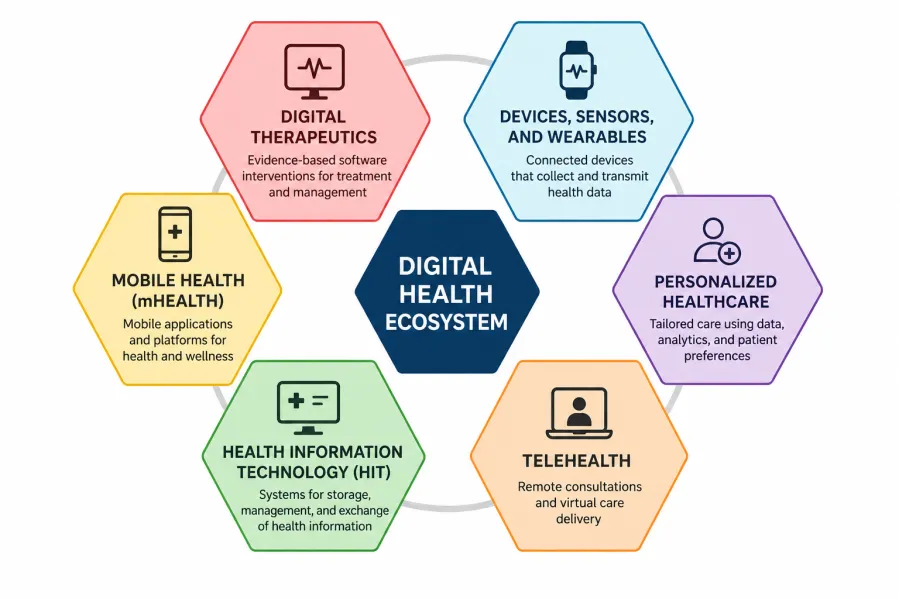
Figure 1: Digital health Ecosystem
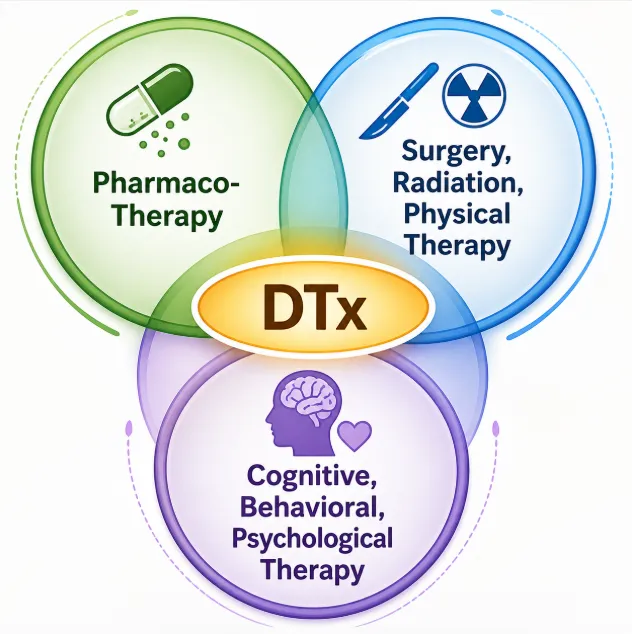
Figure 2: Conceptual position of Digital Therapeutics (DTx) in relation to the existing therapeutic options.
Distinction from Digital Health and Wellness Apps
Digital therapeutics (DTx) are distinctly different from general digital health tools and wellness applications in terms of purpose, evidence base, regulatory oversight, and clinical integration. While all DTx fall under the broader umbrella of digital health, not all digital health applications qualify as therapeutics4.
Digital health is a broad category that includes mobile health (mHealth), telemedicine, wearable devices, and health information systems aimed at improving healthcare delivery and monitoring. Within this spectrum, wellness apps are typically designed to support general health and lifestyle goals such as fitness tracking, diet management, sleep improvement, or stress reduction. These applications are usually non-clinical, do not claim to treat or manage diseases, and are not subject to stringent regulatory requirements5.
In contrast, digital therapeutics are specifically developed to deliver clinical interventions for the prevention, management, or treatment of diseases. They are supported by robust clinical evidence, often derived from randomized controlled trials or real-world studies, and are intended to produce measurable therapeutic outcomes. Many DTx products require regulatory approval as Software as a Medical Device (SaMD) and may even be prescribed by healthcare professionals6.
Another key distinction lies in integration with pharmacotherapy and clinical practice. DTx are frequently used alongside conventional drug therapy to enhance treatment effectiveness, improve medication adherence, and enable personalized care through continuous monitoring and feedback. Wellness apps, on the other hand, function independently of formal medical treatment and are not typically integrated into clinical decision-making. Thus, the defining features of DTx include clinical intent, evidence-based validation, regulatory oversight, and therapeutic impact, which clearly differentiate them from general digital health and wellness applications7.
Rationale for Adjunct Use of Digital Therapeutics with Pharmacotherapy
Digital therapeutics (DTx) are integrated with pharmacotherapy to overcome limitations of conventional drug treatment, including poor medication adherence, lack of continuous monitoring, and limited behavioral support. DTx enhance treatment outcomes through personalized and data-driven interventions such as reminders, educational content, and real-time health monitoring. They also support behavioral modification through cognitive behavioral therapy (CBT), lifestyle coaching, and gamification strategies, particularly in chronic diseases like diabetes, hypertension, and mental health disorders. Additionally, DTx contribute to personalized medicine by analyzing patient-specific data and optimizing treatment recommendations for improved clinical outcomes8.
Table 1: Rationale for Combining Digital Therapeutics with Pharmacotherapy
|
Limitation of Pharmacotherapy Alone |
Role of Digital Therapeutics (DTx) |
Impact on Patient Outcomes |
|
Poor medication adherence |
Reminders, alerts, behavioral nudges |
Improved compliance and efficacy |
|
Lack of continuous monitoring |
Real-time data tracking (e.g., vitals) |
Early detection of complications |
|
Limited patient engagement |
Interactive interfaces, gamification |
Increased patient involvement |
|
Absence of behavioral support |
CBT, lifestyle modification programs |
Better disease management |
|
Variability in patient response |
Data-driven personalization |
Optimized therapy outcomes |
|
Infrequent clinical follow-up |
Remote monitoring and feedback |
Reduced hospital visits |
Table 2: Examples of Disease Areas Benefiting from Adjunct DTx
|
Disease Area |
Role of Pharmacotherapy |
Adjunct Role of DTx |
|
Diabetes |
Glycemic control (e.g., insulin) |
Glucose monitoring, diet & activity tracking |
|
Depression |
Antidepressants |
Cognitive behavioral therapy, mood tracking |
|
Hypertension |
Antihypertensive drugs |
BP monitoring, lifestyle modification |
|
Asthma/COPD |
Bronchodilators, corticosteroids |
Inhaler usage tracking, symptom monitoring |
|
Substance use disorder |
Pharmacological support |
Behavioral therapy, relapse prevention tools |
2. Concept and Classification of Digital Therapeutics
Digital therapeutics (DTx) are structured, software-based interventions designed to deliver clinically validated therapeutic outcomes. Their conceptual foundation lies in combining medical science with digital technology to influence patient behavior, monitor health status, and support disease management. Based on their mode of use and regulatory status, DTx can be broadly classified into distinct categories.
2.1 Types of Digital Therapeutics
Digital therapeutics (DTx) can be classified based on their mode of use and regulatory status. Based on mode of use, standalone DTx function independently without pharmacotherapy and are mainly used for conditions where behavioral or cognitive interventions are sufficient, such as insomnia or mild mental health disorders. Adjunct DTx are used alongside pharmacotherapy to improve treatment outcomes through medication adherence support, patient monitoring, and behavioral interventions, particularly in chronic diseases like diabetes and cardiovascular disorders9.
Based on regulatory status, prescription digital therapeutics (PDTx) require authorization from healthcare professionals, undergo strict clinical validation, and are integrated into formal healthcare systems for disease management. In contrast, non-prescription DTx are available directly to consumers, generally have fewer regulatory requirements, and are mainly focused on prevention, early intervention, and self-management10.
Table 3: Classification of Digital Therapeutics
|
Classification Basis |
Type |
Key Features |
Examples of Use |
|
Mode of Use |
Standalone |
Independent therapy |
Insomnia management |
|
Adjunct |
Used with pharmacotherapy |
Diabetes, depression |
|
|
Regulatory Status |
Prescription (PDTx) |
Clinically validated, physician-prescribed |
Substance use disorder treatment |
|
Non-prescription |
Direct-to-consumer, preventive focus |
Lifestyle and early intervention |
2.2 Mechanisms of Action of Digital Therapeutics
Digital therapeutics (DTx) produce therapeutic effects through behavioral, cognitive, and data-driven approaches rather than direct biochemical action. They promote behavioral modification using reminders, habit formation, and reinforcement strategies to improve healthy behaviors and medication adherence. Many DTx also incorporate cognitive behavioral therapy (CBT) techniques to help manage conditions such as anxiety, depression, and addiction by modifying thought patterns and emotional responses. In addition, DTx enable real-time monitoring through mobile applications and wearable devices, allowing continuous tracking of patient parameters and providing immediate personalized feedback. Advanced therapeutic algorithms analyze patient-specific data to tailor interventions according to individual needs. DTx also improve patient education and engagement by delivering structured health information, increasing disease awareness, and encouraging active participation in healthcare management10.
Table 4: Mechanisms of Action and Their Therapeutic Impact
|
Mechanism |
Description |
Therapeutic Impact |
|
Behavioral modification |
Habit formation, reminders |
Improved adherence and lifestyle changes |
|
Cognitive interventions |
CBT-based strategies |
Better mental health outcomes |
|
Real-time monitoring |
Continuous tracking of patient data |
Early detection and intervention |
|
Personalized algorithms |
Data-driven customization |
Optimized individual therapy |
|
Patient education |
Information and guidance delivery |
Increased awareness and engagement |
3. Integration with Pharmacotherapy
3.1 Role in Improving Therapeutic Outcomes
Digital therapeutics (DTx) improve therapeutic outcomes by supporting patients throughout the treatment process and complementing pharmacotherapy. While medications target the biological cause of disease, DTx help ensure proper medicine use, encourage behavioral modifications, and facilitate timely clinical interventions. This integration contributes to better disease control, reduced complications and hospitalizations, and improved quality of life. In chronic diseases requiring long-term management, DTx help maintain consistent therapeutic effectiveness and minimize variations in treatment response11.
3.2 Medication Adherence and Patient Monitoring
Medication non-adherence is a significant challenge in pharmacotherapy, and DTx help address this through automated medication reminders, digital adherence tracking, and feedback systems that encourage patient compliance. Additionally, DTx enable continuous patient monitoring through mobile applications and wearable devices that track parameters such as blood glucose, blood pressure, physical activity, and symptom progression in real time. This supports early detection of treatment failure or adverse effects, enables data-driven dose adjustments, and reduces the need for frequent hospital visits12.
3.3 Application Across Disease Areas
The combined use of DTx and pharmacotherapy has shown benefits across several disease areas. In diabetes, DTx support glucose monitoring, dietary management, and adherence to antidiabetic therapy, improving glycemic control. In cardiovascular diseases, they assist in blood pressure monitoring, lifestyle management, and risk reduction alongside antihypertensive and lipid-lowering drugs. In mental health disorders, DTx incorporating cognitive behavioral therapy enhance the effectiveness of antidepressants and anxiolytics while reducing relapse rates. For respiratory disorders such as asthma and COPD, digital tools monitor inhaler use, symptoms, and environmental triggers to improve treatment outcomes. In substance use disorders, DTx provide behavioral support and relapse prevention strategies together with pharmacological therapy13.
Table 5: Integration of Digital Therapeutics with Pharmacotherapy Across Disease Areas
|
Disease Area |
Pharmacotherapy Role |
DTx Contribution |
Outcome Improvement |
|
Diabetes |
Glycemic control |
Glucose tracking, diet & activity monitoring |
Better HbA1c control |
|
Cardiovascular disease |
BP and lipid management |
BP monitoring, lifestyle coaching |
Reduced cardiovascular risk |
|
Depression/Anxiety |
Neurochemical regulation |
CBT, mood tracking |
Improved symptom control |
|
Asthma/COPD |
Bronchodilation, inflammation control |
Inhaler tracking, symptom alerts |
Reduced exacerbations |
|
Substance use disorder |
Craving suppression, relapse prevention |
Behavioral therapy, digital support programs |
Lower relapse rates |
4. Clinical Evidence and Outcomes
The clinical value of digital therapeutics (DTx) as adjuncts to pharmacotherapy is increasingly supported by a growing body of randomized controlled trials (RCTs) and real-world evidence (RWE). These studies evaluate not only clinical efficacy but also safety, usability, and long-term impact on disease management.
4.1 Clinical Trials and Real-World Evidence
The clinical validation of digital therapeutics (DTx) is mainly based on randomized controlled trials (RCTs), which are considered the gold standard for evaluating therapeutic effectiveness. Many prescription DTx have demonstrated benefits in improving clinical outcomes such as glycemic control, symptom reduction, and relapse prevention. In addition to RCTs, real-world evidence (RWE) collected from observational studies, patient registries, and digital health data helps evaluate the long-term performance of DTx in routine clinical practice. RWE is useful for assessing long-term effectiveness, patient adherence, engagement, and outcomes across diverse populations. Together, RCTs and RWE strengthen the evidence base for regulatory approval and clinical decision-making14.
4.2 Efficacy and Safety
Digital therapeutics have shown significant clinical benefits when combined with pharmacotherapy. They contribute to improved disease-specific outcomes such as reduced HbA1c levels in diabetes, lower depression and anxiety scores, better medication adherence, and reduced hospitalizations and disease-related complications. In terms of safety, DTx are generally considered low-risk because they do not produce direct pharmacological effects. However, concerns remain regarding data privacy, cybersecurity risks, inaccurate recommendations, digital fatigue, and improper use. Therefore, regulatory-approved DTx must demonstrate both clinical efficacy and safety before receiving authorization for use15.
4.3 Limitations of Current Evidence
Despite promising results, several limitations affect the current evidence supporting DTx. Many studies are short-term, limiting knowledge about sustained long-term benefits. Some clinical trials include small patient populations, reducing generalizability. Variations in study design, endpoints, and patient populations also create inconsistencies in results. Furthermore, treatment outcomes are highly dependent on patient engagement and adherence to digital interventions. Publication bias, where positive findings are reported more frequently, and the lack of standardized guidelines for evaluating DTx efficacy remain additional challenges in this field16.
Table 6: Summary of Clinical Evidence for Digital Therapeutics
|
Parameter |
Findings |
Implications |
|
Clinical trials (RCTs) |
Demonstrate efficacy in multiple disease areas |
Support regulatory approval |
|
Real-world evidence |
Reflects performance in routine practice |
Validates long-term applicability |
|
Efficacy outcomes |
Improved biomarkers and symptom control |
Enhanced therapeutic effectiveness |
|
Safety profile |
Generally low risk, non-invasive |
Favorable for widespread use |
|
Evidence limitations |
Short duration, small samples, variability |
Need for more robust and standardized studies |
5. Regulatory Landscape
The regulatory framework for digital therapeutics (DTx) is evolving to ensure safety, efficacy, and quality while accommodating the unique characteristics of software-based interventions. Most DTx are regulated under the concept of Software as a Medical Device (SaMD), with region-specific approval pathways and increasing emphasis on lifecycle oversight, including post-market monitoring17.
5.1 Software as a Medical Device (SaMD)
Software as a Medical Device (SaMD) refers to software designed for medical purposes without being part of a physical medical device. Most digital therapeutics (DTx) fall into this category as they are used for disease prevention, diagnosis, management, or treatment. SaMD-based DTx function as standalone therapeutic software and require clinical validation, risk-based classification, and continuous lifecycle management, including development, deployment, and software updates. Regulatory authorities evaluate these products based on intended use, risk level, and supporting clinical evidence before approval18.
5.2 Approval Pathways (US, EU, Global)
Regulatory approval pathways for DTx differ across countries but generally follow evidence-based and risk-oriented frameworks. In the United States, the Food and Drug Administration (FDA) regulates DTx through pathways such as 510(k), De Novo classification, and Premarket Approval (PMA), along with initiatives like the Digital Health Software Precertification Program. In the European Union, DTx require CE marking under the Medical Device Regulation (MDR) to confirm compliance with safety and performance standards. Globally, countries such as Japan and Canada are adopting regulations aligned with international standards established by the International Medical Device Regulators Forum (IMDRF)19.
5.3 Post-Market Surveillance
Post-market surveillance (PMS) is an essential aspect of DTx regulation because software products are frequently updated and modified. Continuous monitoring helps ensure patient safety, therapeutic effectiveness, and data integrity after market approval. PMS activities include tracking safety and performance metrics, collecting real-world evidence and patient feedback, reporting adverse events or software malfunctions, and reassessing clinical effectiveness after software updates. Regulatory agencies such as the FDA require developers to maintain software change controls and submit risk assessments for updates to ensure that modifications do not compromise safety or efficacy20.
Table 7: Comparison of Regulatory Frameworks for Digital Therapeutics
|
Region |
Regulatory Authority |
Approval Pathway |
Key Features |
|
United States |
FDA |
510(k), De Novo, PMA |
Risk-based classification, innovation support |
|
European Union |
MDR (CE marking) |
Conformity assessment |
Strict safety and performance requirements |
|
Global (Others) |
National agencies + IMDRF |
Region-specific pathways |
Increasing harmonization efforts |
6. Technological Framework
The effectiveness of digital therapeutics (DTx) as adjuncts to pharmacotherapy relies heavily on a robust technological infrastructure that supports the seamless capture, processing, and secure delivery of therapeutic interventions. This framework includes cloud‑based platforms, mobile apps, sensors or wearables, and backend analytics systems that work together to collect real‑world physiological and behavioral data, transform it into actionable insights, and deliver personalized, adaptive interventions in real time. Such a system enables continuous monitoring and feedback loops between patients and clinicians, allowing interventions to be tailored to individual needs while maintaining scalability across diverse patient populations. By integrating data from electronic health records, remote monitoring devices, and user‑reported outcomes, the technological backbone of DTx ensures that pharmacological treatment is complemented by consistent, evidence‑informed, and digitally mediated support, thereby enhancing adherence, safety, and long‑term clinical outcomes21.
6.1 Platforms: Mobile Applications, Wearables, and AI Integration
Digital therapeutics (DTx) are mainly delivered through mobile applications, web-based platforms, wearable devices, and AI-integrated systems. Mobile applications provide therapeutic interventions such as medication reminders, educational content, and behavioral therapy programs, improving patient engagement and treatment adherence. Wearable devices like smartwatches and biosensors continuously monitor physiological parameters such as heart rate, activity levels, and sleep patterns, supporting real-time health assessment. Artificial intelligence (AI) and machine learning further enhance DTx by analyzing patient data, predicting disease progression, and enabling personalized and adaptive treatment strategies based on individual responses22.
6.2 Data Collection and Interoperability
A major advantage of DTx is their ability to continuously collect and process patient data from sources such as symptom logs, wearable sensors, and electronic health records (EHRs). These platforms gather information related to clinical parameters, medication adherence, lifestyle factors, and patient-reported outcomes, allowing healthcare providers to monitor patient progress and make timely treatment adjustments. Effective interoperability with EHRs and healthcare systems is essential for seamless data exchange. Standardized protocols such as APIs and HL7/FHIR support secure and structured communication, improving coordinated care and clinical decision-making23.
6.3 Cybersecurity Considerations
Cybersecurity is a critical component of DTx because of the sensitive nature of patient health data. Ensuring data privacy, integrity, and system security is necessary to maintain patient trust and comply with regulations. Important cybersecurity measures include data encryption, access control through authentication and authorization systems, compliance with data protection laws such as GDPR and HIPAA, risk management to identify cyber threats, and secure software updates that prevent the introduction of vulnerabilities24.
Table 8: Components of Technological Framework in Digital Therapeutics
|
Component |
Description |
Role in DTx |
|
Mobile applications |
Software interface for users |
Delivery of therapeutic interventions |
|
Wearable devices |
Sensors and tracking tools |
Real-time physiological monitoring |
|
AI/ML algorithms |
Data analysis and predictive modeling |
Personalized treatment and decision support |
|
Data systems |
Storage and processing infrastructure |
Continuous data collection and analysis |
|
Interoperability |
Integration with healthcare systems |
Coordinated and efficient care delivery |
|
Cybersecurity |
Data protection and system security measures |
Ensures privacy, safety, and regulatory compliance |
7. Commercial and Market Perspectives
7.1 Business Models
Digital therapeutics (DTx) use various business models to support adoption and revenue generation. Direct-to-consumer (DTC) models provide DTx directly to patients through apps or subscription platforms, mainly for self-management and prevention. Business-to-business (B2B) models involve partnerships with hospitals, healthcare providers, or employers to integrate DTx into healthcare programs. In the business-to-business-to-consumer (B2B2C) approach, insurers or pharmaceutical companies deliver DTx as part of treatment packages. Some DTx also follow a prescription-based model, where clinicians prescribe them similarly to drugs or medical devices25.
7.2 Reimbursement and Pricing
Reimbursement is a major factor influencing the adoption of DTx. Coverage may come from private or public insurance providers, employer-sponsored healthcare programs, or government digital health initiatives. Pricing models commonly include subscription-based payments, one-time licensing fees, and outcome-based or value-based pricing. However, challenges such as the absence of standardized reimbursement frameworks, limited awareness among payers, and difficulties in proving long-term cost-effectiveness continue to affect wider adoption26.
7.3 Industry Adoption and Partnerships
The expansion of the DTx market is supported by collaborations among pharmaceutical companies, technology firms, healthcare providers, and insurers. Pharma–DTx partnerships help combine digital tools with medications to improve treatment outcomes. Technology collaborations enhance DTx capabilities through AI, cloud computing, and advanced analytics. Hospitals and clinics increasingly use DTx for remote monitoring and chronic disease management, while insurers work with DTx companies to establish reimbursement models and demonstrate economic value. These partnerships improve scalability, market access, and integration of DTx into routine healthcare practice27.
Table 9: Commercial Aspects of Digital Therapeutics
|
Aspect |
Key Features |
Implications |
|
Business models |
DTC, B2B, B2B2C, prescription-based |
Determines reach and scalability |
|
Reimbursement |
Insurance, employer, government support |
Influences adoption and accessibility |
|
Pricing strategies |
Subscription, licensing, value-based |
Affects affordability and sustainability |
|
Industry partnerships |
Pharma, tech, healthcare collaborations |
Drives innovation and integration |
|
Market challenges |
Regulatory gaps, reimbursement barriers |
Slows widespread adoption |
8.1 Patient Engagement and Usability
Patient engagement plays a vital role in the effectiveness of digital therapeutics (DTx), as treatment success depends on consistent usage. User-friendly interfaces, simple navigation, and clear instructions improve usability across different patient groups. Personalization through tailored reminders, feedback, and content enhances adherence and patient satisfaction. Behavioral strategies such as gamification, goal setting, and motivational feedback further support long-term engagement. In addition, involvement of healthcare professionals in monitoring and feedback strengthens patient commitment. Poor usability or overly complex systems can reduce adherence and limit therapeutic benefits28.
8.2 Data Privacy and Ethical Considerations
DTx collect and process sensitive health information, making data privacy and ethical practices essential. Patient data must be protected through encryption, secure storage, and controlled access systems. Patients should be fully informed about how their data is collected, used, and shared through proper informed consent procedures. Transparency regarding data ownership and accessibility is necessary to maintain trust. Ethical concerns may also arise from non-transparent algorithms or biased decision-making systems. Compliance with regulations such as GDPR and HIPAA is important to ensure responsible and ethical use of DTx. Failure to address these concerns can reduce patient trust and hinder adoption29.
8.3 Accessibility and Digital Divide
Accessibility remains a significant challenge in the widespread adoption of DTx. Limited digital literacy may prevent some patients from effectively using digital health technologies. Economic barriers, including the cost of devices, internet access, and subscription services, can further restrict access. Geographic disparities, particularly in rural or underserved regions, may also limit the availability of digital infrastructure. Therefore, DTx should be designed to support different languages, age groups, and individuals with disabilities to ensure inclusivity and equitable healthcare access. Addressing the digital divide is essential for reducing healthcare disparities and ensuring that the benefits of DTx are available to all populations30.
Table 10: Patient-Centric and Ethical Considerations in Digital Therapeutics
|
Aspect |
Key Considerations |
Impact on DTx Implementation |
|
Patient engagement |
Usability, personalization, motivation |
Improved adherence and outcomes |
|
Data privacy |
Encryption, secure access, compliance |
Builds trust and ensures legal safety |
|
Ethical concerns |
Consent, data ownership, algorithm transparency |
Promotes responsible use |
|
Accessibility |
Digital literacy, affordability, infrastructure |
Determines reach and inclusivity |
|
Digital divide |
Socioeconomic and geographic disparities |
Affects equitable healthcare delivery |
9. Challenges, Future Perspectives, and Conclusion
The integration of digital therapeutics (DTx) with pharmacotherapy presents significant opportunities, yet several clinical, regulatory, technological, and societal challenges must be addressed to enable widespread adoption and sustained impact.
9.1 Key Barriers
Although digital therapeutics (DTx) show promising potential in combination with pharmacotherapy, several barriers limit their widespread adoption. Limited large-scale and long-term clinical studies reduce confidence among healthcare professionals and regulators. Variability in regulatory approval pathways across countries creates challenges for developers and delays market access. Reimbursement limitations and the absence of standardized payment models further affect accessibility and commercial success. In addition, physician resistance, difficulties in integrating DTx into clinical workflows, declining patient engagement due to digital fatigue, and concerns related to data privacy and cybersecurity remain important obstacles31.
9.2 FUTURE TRENDS
The future of DTx is expected to be driven by advancements in technology and evolving healthcare systems. Integration of artificial intelligence (AI) will improve personalization, predictive analytics, and adaptive treatment strategies. DTx applications are also expanding into areas such as oncology, neurological disorders, and rare diseases. Increased use of real-world evidence will strengthen regulatory approvals and clinical acceptance. Furthermore, value-based healthcare models are likely to link reimbursement with clinical outcomes and cost-effectiveness. Greater global regulatory harmonization and stronger collaborations between pharmaceutical and technology companies are expected to support the development of integrated drug–DTx therapies and broader adoption in healthcare practice32.
10. CONCLUSION
Digital therapeutics are emerging as a valuable complement to conventional pharmacotherapy, offering opportunities to enhance treatment adherence, enable continuous monitoring, and support personalized care. Their ability to address behavioral and lifestyle factors provides an added dimension that traditional drug therapy alone cannot fully achieve.
For successful integration into routine clinical practice, it is essential to strengthen clinical evidence, establish clear regulatory and reimbursement frameworks, and ensure patient-centric design with robust data protection measures. Continued collaboration among healthcare providers, regulators, technology developers, and pharmaceutical companies will be crucial in unlocking the full potential of DTx in modern healthcare systems.
REFERENCES

Chaya Rani, Amit Kumar, Akshay Sharma, Gurvinder Pal Singh, Digital Therapeutics as Adjuncts to Pharmacotherapy: Regulatory Landscape, Clinical Evidence, and Commercial Challenges, Int. J. of Pharm. Sci., 2026, Vol 4, Issue 5, 8053-8067. https://doi.org/ 10.5281/zenodo.20459401
 10.5281/zenodo.20459401