

We use cookies to ensure our website works properly and to personalise your experience. Cookies policy
1Student, Department of Pharmaceutical Quality Assurance, Vidya Niketan Institute of Pharmacy and Research center Bota,Tal-Sangamner, Dist-A.Nagar, Pin Code- 422620.
2Associate Professor, Department of Pharmaceutical Quality Assurance,Vidya Niketan Institute of Pharmacy and Research center Bota,Tal-Sangamner, Dist-A.Nagar, Pin Code- 422620
The stratum corneum presents a formidable physicochemical barrier that excludes most therapeutic molecules from reaching dermal targets, confining conventional liposomes to the uppermost skin layers and restricting the clinical utility of topical drug delivery. Elastic and deformable phospholipid vesicles transfersomes, ethosomes, glycerosomes, transethosomes, and invasomes represent a scientifically evolved response to this limitation, engineered through compositionally distinct strategies that confer membrane deformability, bilayer fluidization, or polyol-mediated flexibility. This review critically examines the mechanistic distinctions separating each vesicle subtype, demonstrating that transfersomes navigate the stratum corneum via a transepidermal osmotic gradient requiring non-occluded application, while ethosomes achieve deep penetration through simultaneous fluidization of the vesicle membrane and stratum corneum lipid domains. Glycerosomes and transethosomes operate through hybrid mechanisms that remain incompletely elucidated. The contributions of phospholipid selection, edge activator identity, alcohol concentration, and quality-by-design optimization to vesicle performance are analyzed alongside the integration of vesicular dispersions into semisolid dosage platforms. Therapeutic evidence spanning acne, psoriasis, infectious dermatoses, hyperpigmentation, skin cancer, and musculoskeletal pain management is synthesized with tolerability data from preclinical and clinical studies, including the IDEA-033 ketoprofen transfersome trial. Surface functionalization, microneedle combination strategies, and regulatory data requirements define the translational horizon for this emerging class of precision dermal carriers.
The topical and transdermal routes of administration have been considered clinically appealing alternatives to the oral and parenteral routes, with advantages such as: avoidance of first-pass liver metabolism, controlled release of the drug, ease of stopping therapy when needed, and patient compliance1. The skin is the largest surface area in the adult body, covering the entire surface, comprising about 15% of the body weight, and is an easily reachable, extensive target for drug application. But this seeming accessibility hides a complex biological paradox: the organ that is open to therapeutic contact still has one of the most efficient of molecular barriers known in human physiology2. The outermost barrier formed by dead cells (stratum corneum) is the main barrier and the barrier organisation of stratum corneum is composed of a tightly packed lipid matrix around the terminally differentiated corneocytes that limit the passage of most therapeutic molecules, irrespective of the concentration applied at the surface3. The physicochemical restrictions imposed by the stratum corneum have always restricted the number of transdermal candidates to those of low molecular weight (usually not exceeding 500 Daltons), with a balance of lipophilicity and being uncharged at physiological pH. Conventional topical formulations have been unavailable or impractical for drugs of biological origin, most anti-infective agents, poorly water-soluble high molecular weight molecules and highly polar therapeutics4.
The initial attempts to overcome this obstacle were to use chemical penetration enhancers, which increased flux at the expense of disrupting the membrane and causing irritation at the site, or to use physical methods such as iontophoresis, ultrasound and microneedles, which increased the complexity of the device and were unsuitable for chronic self-administered therapies. A novel concept that arose was the use of phospholipid vesicular carriers5. Liposomes were originally suggested by Mezei and Gulasekharam in 1980 for topical delivery of triamcinolone acetonide and proposed as a method to change the partition and residence behavior of a drug within the skin by having it encapsulated in a phospholipid bilayer structure. Decades of studies, however, consistently demonstrated that the main problem with conventional liposomes is that they do not penetrate beyond the upper stratum corneum and are therefore limited to the skin surface, where they basically act as depots rather than skin-penetrating carriers. This restriction spurred the next generation of vesicular innovation: not to alter the drug's characteristics, but to modify the characteristics of the vesicle itself to traverse the barrier. This next generation of carrier vesicles are elastic and deformable phospholipid vesicles, which include transfersomes, ethosomes, glycerosomes, transethosomes and invasomes6. The unique feature is the ability to deform and undergo bilayer reorganization under stress to traverse intercellular channels and interlamellar spaces in the stratum corneum which are considerably smaller than the diameter of the vesicle itself. This is done by compositional differences such as inclusion of edge activators that disrupt the lipid bilayer to give it extreme elasticity, by using high ethanol concentration (which fluidizes the vesicle membrane and also interacts with the lipids in the stratum corneum), by changing the flexibility of the bilayer by adding polyhydric alcohols like glycerol, or by a hybrid approach that incorporates all three of the above. Every strategy has its own mechanism of action and therefore its own clinical tolerability7.
Although there has been a growing body of preclinical and clinical work on these systems, reviews of deformable vesicles have often merged together the two broad classes of carriers and generally omitted tolerability data yet overlooked the formulation design principles that apply to the functioning of vesicles in practice. This review identifies and explores these deficits from three interconnected perspectives: the architectural aspects of the skin which define the design challenge, the mechanistic differences between the various types of vesicles, and the formulation, therapeutic, and tolerability evidence that determine the clinical utility. The discussion spans from vesicle integration with advanced semisolid dosage platforms, the evidence base in key dermatological indications and a forward-looking evaluation of the direction the field is taking as it merges with quality-by-design principles and surface functionalization and emerging combination technologies.
2. The Skin as a Biological Barrier: Architecture, Transport Pathways, and Therapeutic Implications
The stratum corneum is just 15-20 μm thick but has a disproportionately large effect on the passage of almost all molecules applied from the outside. It is made up of 10 to 15 layers of compressed, terminally differentiated keratinocytes (corneocytes) in a continuous intercellular lipid matrix. The architectural metaphor of bricks in mortar is a good one for describing this organization: the corneocytes are relatively impermeable structural units and their sole continuous pathway through the tissue is the precisely organized lipid continuum. Importantly, there are no phospholipids within the lipid matrix of the stratum corneum, which represents a formulating significance because the barrier is composed of lipids of a lipid class different from the one of the phospholipid-based vesicular carriers8. There are three main classes of intercellular lipids, ceramides, free fatty acids, and cholesterol. The lipids form two coexisting lamellar crystalline phases: long periodicity (LP) phase (repeat distance of ~13nm) and short periodicity (SP) phase (repeat distance of ~ 6nm). Lipids within these lamellar sheets are in an orthorhombic lateral packing arrangement, the most efficient and best barrier skin-tightening of the three possible lateral packing arrangements of lipids in the lamellar sheets. This is the reason the stratum corneum is so resistant to passive permeationthe long hydrocarbon chains of ceramides and strong hydrophobic forces between acyl chains are what make this happen9.
The common mechanism for most penetration enhancement strategies is the chemical perturbation of either the lamellar organization or the lateral packing, whether with surfactants, alcohols, or bilayer-modifying excipients in the case of vesicular formulations. There are three pathways in which exogenous molecules can penetrate the skin10. The intercellular route, which takes place within the tortuous lipid matrix between corneocytes, is the route most relevant to the majority of drugs and the one that is the main target for deformable vesicle design. A penetrant traversing this route experiences a path about 50 times longer than the physical thickness of stratum corneum because of tortuosity of the interlamellar domains and must diffuse repeatedly between aqueous and lipid domains. The other route is the intracellular pathway which is traversed directly through the corneocytes, but it is usually less efficient as the corneocytes are filled with a dense network of keratin protein. The transappendageal route (through hair follicles, sebaceous glands and sweat glands) accounts for about 0.1% of the total surface area of the skin and is therefore not a significant pathway for steady-state permeation, but is more important in practical terms for ions, large polar molecules and nanoparticulate systems that are capable of follicular penetration11,12.
2.1 Physicochemical Determinants of Skin Permeation and the 500-Dalton Rule
The physicochemical properties of a permeant can influence which of these pathways it will take advantage of and how well it will cross the barrier. One of the most extensively investigated determinants is the molecular weight: molecules with molecular weight higher than about 500 Daltons are generally not considered to be passively transcutaneously penetrating through intact skin. Most of the biological therapeutics peptides, proteins and nucleic acids are not accessible to the passive delivery methods; this is the empirical threshold that has been established based on the data analysis of compounds that are capable of percutaneous absorption13. Lipophilicity (logP) controls the partitioning into the lipid-rich stratum corneum; generically, molecules with a logP of 1-3 are most favorable for transcutaneous permeation, a highly hydrophilic compound will accumulate in the stratum corneum too slowly, and a too lipophilic compound will not partition out of the stratum corneum into the aqueous viable epidermis. Permeation is also further modified by charge and ionization state: the intact stratum corneum is much more permeable to the unionized than to the ionized molecular forms under physiological conditions. It is in this exact and harsh physicochemical space that vesicles that are elastic and deformable must function not by changing the physical properties of the drugs, but by changing the geometry of the drug delivery, or by fluidifying the barrier, or by physically squeezing the drugs through a channel that is too small for a rigid particulate system to navigate14.
3. Evolution and Classification of Phospholipid Vesicular Systems: From Liposomes to the Deformable Generation
The story of phospholipid vesicles in dermatology is one of continuous refinement of composition, but always one thing recurs: the inability of conventional liposomes, although structurally elegant and versatile in terms of drug loading, to penetrate into living skin. The use of phospholipid vesicles as carriers for dermal therapy was a promising concept in 1980 when Mezei and Gulasekharam first applied liposomal triamcinolone acetonide to skin. Over the years, however, it became clear that, although the rigid phospholipid bilayers bound to cholesterol, on topical application, penetrate the outer layers of the stratum corneum, they are not able to deliver their load to the deeper viable skin where the majority of dermatological targets are found15. This basic constraint paved the way for a series of vesicle reengineering which is ongoing until today. In 1992, the first conceptual leap was taken by Cevc and Blume who presented the first generation of ultradeformable phospholipid vesicles, called Transfersomes, which was a registered trademark of IDEA AG, Munich. The key idea was straightforward yet paradigm-shifting: the membrane could be made sufficiently deformable to change shape under applied stress, so that it could squeeze through intercellular pores much smaller than itself by adding a single-chain surfactant, called an "edge activator," to the phospholipid bilayer. Bile salts (e.g., sodium cholate and sodium deoxycholate), non-ionic (e.g., Tween 80, the Span series), and dipotassium glycyrrhizinate are common edge activators16.
This led to a vesicle which maintained its structure whilst being deformable under stress, a distinctly different behaviour to the one of a conventional liposome as a passive drug depot. The next big concept in composition was the introduction of the ethosomes as a new family of vesicular carriers by the group of Touitou and colleagues in 2000. Instead of using edge activators to provide flexibility to the membrane, the flexibility of ethosomes is achieved by the addition of ethanol in high concentrations (usually 20-45% v/v) in a phospholipid–water system which causes the fluidization of the bilayer17. Ethanol at the same time fluidizes phospholipid bilayers of the vesicles and lipid lamellae of the stratum corneum, thus producing a dual-action penetration pathway, which is not an osmotic gradient driven pathway as in the case of transfersomes. The mechanistic difference has significant practical implications: while transfersomes have to be applied unoccluded to create the transepidermal water-activity gradient for them to permeate; ethosomal formulations can enhance penetration under both occluded and non-occluded conditions. Invasomes were a third formulation strategy: inclusion of terpenes (cineole, fenchone or a blend of these compounds), along with ethanol and phospholipids18.
Terpenes act as other penetration enhancers by fluidizing the tight packing of lipids by breaking up the structure of the vesicles membrane, and by intercalating into the lipid bilayer, they also fluidize the tight lipid packing of the stratum corneum. Published EM images have shown that a fraction of the invasome vesicle ruptures during penetration of the skin, releasing the terpene and phospholipid contents as in situ penetration enhancers; remaining smaller vesicles penetrate through the skin via the follicular routes and narrow hydrophilic intercellular channels19. The latest generation of deformable carriers has adopted the compositional hybridization approach. Song and colleagues (2012) developed transethosomes, which are designed to combine the bilayer fluidizing properties of ethanol with the ultra-elastic properties of edge activators. In 2013 Manca et al. coined the term glycerosomes for the modern formulation, where the alcohol modifier is replaced by the trihydric alcohol glycerol at 10-30% v/v, taking advantage of its humectant and bilayer-modulating properties without the irritation effects of high ethanol levels. Glycethosomes are another combinatorial feat, which combines glycerol and ethanol inside the same vesicle. These systems constitute a landscape of deformable carriers which can be organized into two functional classes: the ones that increase the membrane deformability mainly by bilayer destabilization, and the ones that increase the membrane deformability mainly by lipid fluidization, this latter distinction is of great mechanistic and clinical relevance (summarized in Table 1)20.
3.1 Invasomes and Hybrid Architectures: Bridging Terpene Chemistry with Phospholipid Vesicle Technology
The terpenes used in the formulation of invasomes such as cineole, fenchone, citral and mixture of terpenes are themselves chemical penetration enhancers that disrupt the ordered lipid packing of the stratum corneum without the need of a vesicular vehicle. When these are added to a phospholipid bilayer, they provide two benefits: the vesicle is made more fluid and penetrance-competent; and, when vesicle-skin interaction results in partial disintegration, the vesicle-released terpene molecules serve as local chemical enhancers that gradually condition the permeation pathway. This release-enhance process is different from the more conventional elastic-type vehicle and is specifically applicable to delivery of a pharmacological agent to the mid-dermal layers rather than into systemic circulation21.
TABLE 1: Comparative Compositional and Physicochemical Profile of Deformable Phospholipid Vesicle Subclasses22-24
|
Vesicle Type |
Modifying Excipient(s) |
Functional Role |
Typical Modifier Concentration |
Deformability Index (published range) |
Typical Vesicle Size (nm) |
Typical Zeta Potential (mV) |
Reported EE Range (%) |
Required Application Mode |
|
Transfersomes |
Edge activators (sodium cholate, Tween 80, Span 80, sodium deoxycholate, dipotassium glycyrrhizinate) |
Bilayer destabilization; extreme membrane elasticity |
0.05–5% w/v (varies by EA type) |
5.0–13.5 mL/s (extrusion-based) |
70–300 |
−15 to −45 |
40–90 |
Non-occluded only |
|
Ethosoms |
Ethanol |
Bilayer fluidization; stratum corneum lipid disruption; negative charge provider |
20–45% v/v |
Lower than transfersomes; no standard method |
100–500 |
−20 to −55 |
50–92 |
Occluded or non-occluded |
|
Glycerosomes |
Glycerol |
Bilayer flexibility modulation; ceramide headgroup mobility; humectancy |
10–30% v/v |
Deformability index increased ≥10% vs liposomes |
100–350 |
−10 to −40 |
55–90 |
Non-occluded (inferred) |
|
Transethosomes |
Ethanol + edge activator (Tween 80, sodium cholate, sodium deoxycholate, sodium taurocholate) |
Synergistic bilayer fluidization and elasticity |
Ethanol 20–40% v/v; EA 0.1–0.3% w/v |
Higher than ethosomes alone |
90–500 |
−19 to −45 |
41–91 |
Occluded or non-occluded |
|
Invasoms |
Terpenes (cineole, fenchone, citral or blends) + ethanol |
Bilayer fluidization + in situ SC lipid disruption; follicular penetration |
Terpenes 0.5–2%; ethanol 7–10% |
Moderate; dependent on terpene type |
130–450 |
−20 to −40 |
45–85 |
Occluded (more common) |
|
Glycethosomes |
Glycerol + ethanol |
Combined bilayer fluidization and membrane flexibility |
Glycerol 10–20%; ethanol 10–20% |
Intermediate; limited published data |
150–400 |
−15 to −42 |
60–88 |
Occluded or non-occluded |
EE: Encapsulation efficiency. Deformability index values measured by membrane extrusion methods vary by protocol; values reflect ranges reported across published studies and are not directly comparable across laboratories without standardized methodology.
4. Mechanisms of Skin Penetration Enhancement: A Carrier-Specific Analysis
What is the most significant scientific difference between the various types of deformable phospholipid vesicles, whether in terms of their composition or otherwise?What is the most important scientific difference between various types of deformable phospholipid vesicles, either in terms of their composition or otherwise? This aggregation of transferosomes, ethosomes, glycerosomes and transethosomes, referred to as "penetration-enhancing nanocarriers" (PENCs) masks the mechanism-important differences which directly influence formulation design choices, the choice of appropriate drug class and clinical tolerability outcomes. Different carrier types deliver the skin with a different physical or chemical mechanism, or in hybrid systems, a combination of mechanisms that provide properties beyond simply one or the other25.
Transfersomes are based on a simple thermodynamic law, the transepidermal water-activity gradient (also called an osmotic or hydration gradient). The water content in the skin surface is significantly lower than the viable tissue. Phospholipids are hydrophilic and thus have a xerophobic character; they tend to congregate in the most hydrated environments. When a suspension with a transferred vesicle is applied to non-occluded skin, the hydration gradient continuously drives the vesicle towards the water-rich viable epidermis26. Edge activators are essential for the ability of the vesicle to bend, squeeze and pass through intercellular spaces that are smaller than the diameter of the vesicle, estimated to be in the range of 30 nm or less within the lipid lamellar regions of the stratum corneum. Its single-chain geometry and its attraction to highly curved molecular assemblies make edge activator molecules concentrate at the maximum stresses in the membrane during deformation. This stress-driven self-induced redistribution of edge activator in the bilayer leads to a local redistribution of resistance to shape change that permits the vesicle to change shape without rupturing, even in a reversible manner. Within this framework an important mechanistic constraint is that if the skin surface is occluded, then there is no transepidermal water-activity gradient to drive the migration of the transepidermal carrier (transfersome) and hence occluded application is ineffective for this carrier subtype27.
The penetration mechanism of ethosomes is quite different, based on lipid fluidization instead of osmotic stress. Ethanol in the bilayer of the vesicles exists in two states: first, in the bilayer, it fluidizes the barrier membrane, giving rise to the soft and malleable membrane structure of vesicles, and second, when it comes into contact with the vesicle, it partitions into the lipid lamellae of the stratum corneum, fluidizing the ordered lipid domains and decreasing the density and organization of the barrier. This dual-site action, which can be characterized as pushing/pulling, generates a pathway through the conditioned skin that allows the delivery of the soft vesicles to deeper layers of the epidermis, where they eventually fuse with the cell membranes of the viable epidermis, releasing their contents intracellularly28. The studies with calcein as a fluorescent marker by confocal laser scanning microscopy showed that ethosomal carriers were able to penetrate the mouse skin up to a depth of about 160 μm, whereas other formulations such as hydroethanolic solution and conventional liposomes achieved 80 μm and 60 μm, respectively. Chronic dermatological therapies often entail hydration of the skin from formulation vehicles and therefore ethosomes have practical benefits over transfersomes because they can achieve penetration enhancement both with and without occlusion29.
There is also a scenario that is less well documented but different from both of the above; that is the glycerosome. As a trihydric alcohol, glycerol has a moderate effect on decreasing the transition temperature of phospholipid bilayers, thus making them more fluid than conventional liposomes. The evidence published shows that the deformability index of glycerosomes is at least 10% greater than that of conventional liposomes indicating that part of the penetration process is similar to the osmotic or pressure-driven penetration of transfersomes. A second proposed mechanism is action of glycerol on ceramide headgroups in the stratum corneum, whereby the glycerol might cause the headgroup of the ceramide to be more mobile and increase the fluidity of the hydrophobic domain of the lipid lamellae, an action conceptually similar to, but milder than, ethanol's action in ethosomes. Glycerol may also potentially increase permeation by increasing the hydration state of stratum corneum, as a result of the concurrent humectant activity, which serves to increase the water content of the SC30.
4.1 Osmotic Gradient-Driven vs. Lipid Fluidization-Dependent Penetration: Mechanistic Discrimination and its Formulation Implications
Combined with the lipid fluidization of ethanol and the stress deformability of transfersomes, it is expected that the transethosomes would incorporate both effects but the actual mechanistic contribution of each component in a combined system has not yet been experimentally deconvoluted. The result of published data that proved transethosomes are more deformable than ethosomes and transfersomes alone and their ranking of skin flux for lipophilic drugs is transethosomes ≥ ethosomes ≥ transfersomes, supports inference of synergistic action; however, the superiority of transethosomes over ethosomes and transfersomes is not mechanistically additive, but it is to be established by controlled mechanistic experiments. The clinical formulation implication of these mechanistic differences is significant: drugs that are required to be deposited locally in the skin (such as anti-inflammatory agents for psoriasis or retinoids for acne) will be better formulated as ethosomes or glycerosomes that will favour deeper penetration, and also that the transdermal flux will not be the determining factor in the drug's action; in contrast, drugs that must be deposited in the systemic circulation will do so better with transfersomes under non-occluded conditions (as shown in Figure 1) because the intact-skin penetration will be more important than the transdermal flux31.
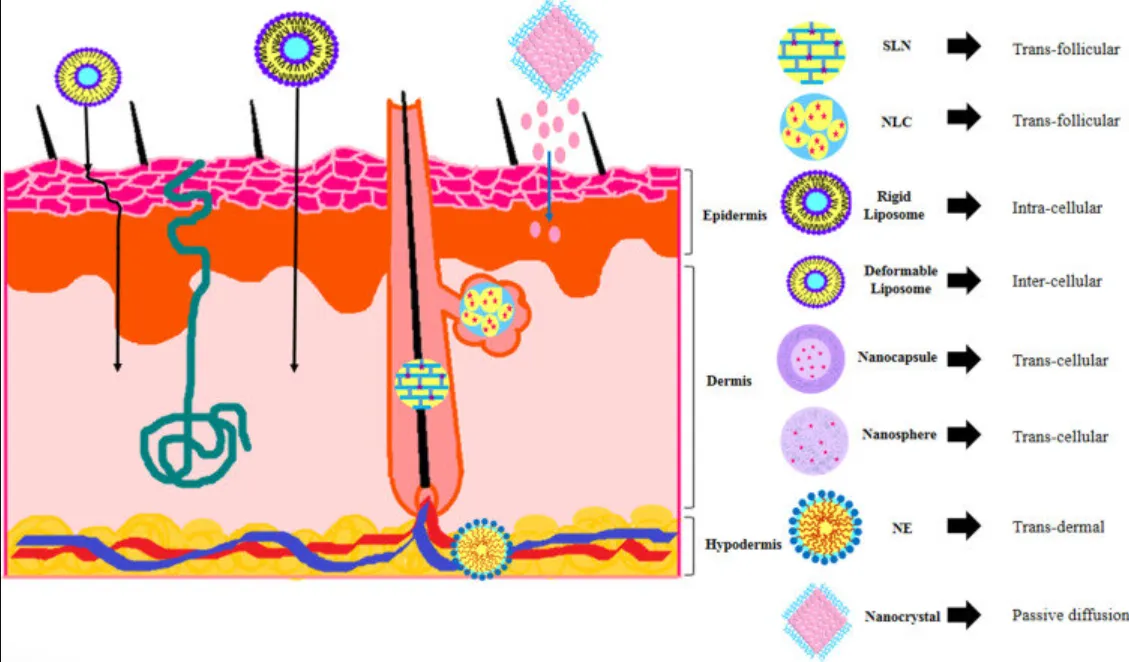
Figure 1. Schematic representation of carrier-specific skin penetration mechanisms of major deformable phospholipid vesicle subclasses..
5. Formulation Design, Excipient Science, and Optimization Strategies
Formulation of elastic and deformable phospholipid vesicles is not a straightforward selection of any of the available ingredients from a standard "recipe" list; it is a careful exercise of balancing competing thermodynamics and biophysics. The size, deformability, encapsulation efficiency, surface charge, and therefore the penetration behavior exhibited by the formulation, are measurably influenced by each compositional variable, which can interact with one another. The rational vesicle formulation design of understanding these relationships is what distinguishes from trial and error, and what Quality by Design frameworks strive to codify today. All deformable vesicular systems are built of phospholipids. The most widely used species are soya phosphatidylcholine, egg phosphatidylcholine and their hydrogenated forms, with the unsaturated soya derived lecithins (including Phospholipon 90G and Phospholipon 90H) being the most commonly used for most soft vesicle applications because of their low transition temperatures and high bilayer fluidity at room temperature32. The phospholipid concentration dictates the yield and lamellarity of vesicles: generally, more multilamellar vesicles with higher level of encapsulated lipophilic drug appeared at higher phospholipid concentration and more unilamellar vesicles with lower level of encapsulated lipophilic drug appeared at lower phospholipid concentration. The ratio of phospholipid to edge activator is perhaps the most important formulation parameter for transfersomes; the edge activator molecules should be able to integrate with the bilayer at optimal ratios, and provide elasticity; concentrations above the critical micellar concentration would result in the formation of micelles, which would affect formulation integrity. Among the most effective edge activators for maximum deformability has been found to be tween 80, better than bile salts and Span derivatives in direct comparative studies33.
5.1 Edge Activators as Bilayer Disruptors: Selecting the Right Surfactant Architecture for Maximum Deformability
The properties of vesicles, such as geometry, charge character and suitability for encapsulation, are highly influenced by the choice of edge activator. Since the zeta potential of vesicles is strongly negative using bile salt derived edge activators, sodium cholate and sodium deoxycholate, the resulting vesicles are more stable in terms of colloids and aggregate less in the presence of hydrophilic drugs in the aqueous core, especially when formulated with bile salts. The more neutral surface charge of the vesicles in the Span series makes them more suitable for loading of lipophilic drugs in the bilayer34. However, in ethosomal systems, ethanol itself acts as a negative charge provider at the vesicular surface, and the more negatively charged an empty ethosome is, the more they are intrinsically stabilized, which allows for a decrease of the need of using additional charged excipients. In conventional liposomes, cholesterol is an important rigidity modulator, but in deformable vesicle systems, it has to be used with care; published data has reported that the use of cholesterol in ethosomal systems leads to decrease of the characteristic softness also to the penetration enhancement capacity of these vesicles, due to the bilayer rigidifying effect of cholesterol. The methodology of preparation is also of significant importance35. The most common approach for preparing transfersomes is the thin-film hydration method, which consists of co-dissolving the drug and the lipid components in an organic solvent mixture (e.g., chloroform:methanol), drying them under reduced pressure to create a dried lipid film, and then increasing the water content by introducing the aqueous phase containing the modifier at the desired concentration. The cold method (where the ethanolic phase is prepared at ~30°C and added dropwise to the aqueous phase at a controlled rate of ~12 mL/h while stirring) is preferred for ethosomes and is used to avoid the degradation of thermolabile drugs, as well as the disruption of the phospholipid bilayer. Ambient temperature preparation also helps the preparation of glycerosomes, which are vesicles that contain glycerol, because the transition temperature of the phospholipid does not need to be exceeded during the preparation, a practical advantage for thermosensitive active ingredients. Membrane extrusion through sequentially smaller polycarbonate membranes is routinely used to further decrease the vesicle size and polydispersity index to below 0.25 (widely used criteria for physicochemical homogeneity) after initial preparation36.
5.2 Statistical Design Approaches for Elastic Vesicle Optimization: Translating Variables into Predictive Models
One-variable-at-a-time optimization can be applied to compositions that are not deformable. Box-Behnken design, central composite design and D-optimal designs have become the most widely used response surface methodologies for simultaneously testing several independent variables and their interactions on several quality responses. The variables that are generally included in optimization studies published in the literature are independent variables—these are phospholipid concentration, edge activator or ethanol concentration, drug loading, and preparation parameters (if applicable), such as sonication time. The vesicle size, polydispersity index, encapsulation efficiency, zeta potential, deformability index and transdermal flux are dependent responses. These designs enable the generation of mathematical models that are used to construct a three-dimensional response surface plot and contour diagram that show the exact formulation space that generates the optimum simultaneous response profile, which is completely consistent with the pharmaceutical development framework of ICH Q8 Quality by Design. The representative published QbD applications for deformable vesicles (DV) are summarized in Table 237.
TABLE 2: Quality by Design Applications in Elastic Phospholipid Vesicle DevelopmentSummary of Representative Published Optimization Studies[38–40]
|
Drug |
Vesicle Type |
Design Applied |
Independent Variables |
Dependent Responses Optimized |
Key Optimized Values |
Therapeutic Indication |
|
Valsartan |
Nanoethosomes |
Box-Behnken (4-factor 3-level) |
Phospholipid 90G, ethanol, drug concentration, sonication time |
Entrapment efficiency (EE%), vesicle size, transdermal flux |
Size: 103 ± 5.0 nm; EE: 89.34%; Flux: 801.36 μg/cm²/h |
Hypertension (transdermal) |
|
Naproxen sodium |
Transfersomes and transethosomes |
Box-Behnken |
Phosphatidylcholine, Span 80, drug (TFs); phosphatidylcholine, ethanol, Span 80 (TEs) |
Vesicle size, EE% |
TF size: 114.91 nm, EE: 80.11%; TE size: 102.91 nm, EE: 86.97% |
Anti-inflammatory |
|
Celecoxib and cupferron |
Glycerosomes (gel) |
Box-Behnken |
Glycerol concentration, phospholipid type, drug:lipid ratio |
Permeation (μg/cm²), in vivo anti-inflammatory activity |
Permeation: 900.18 ± 50.24 μg/cm² (celecoxib); 100% inhibition of paw edema (vs 20% indomethacin 1% gel) |
Anti-inflammatory |
|
Glycyrrhizic acid |
Transethosomes (carbopol gel) |
Box-Behnken |
Phospholipid 90G concentration, sodium cholate, ethanol % |
Vesicle size, PDI, zeta potential, EE%, drug loading |
Size: 127.6 nm; PDI: 0.256; ZP: −24.41 mV; EE: 85.22%; DL: 6.22% |
Skin cancer |
|
Fisetin |
Glycerol soft nanovesicles |
Box-Behnken |
Lipid concentration, glycerol %, drug amount |
Vesicle size, EE%, deformability, flux |
Optimized glycerol at 30% v/v produced lowest size with highest EE |
Topical anti-inflammatory |
|
Azithromycin |
Transethosomes |
Central composite design |
Phospholipid concentration, edge activator type and %, ethanol % |
Vesicle size, PDI, zeta potential, EE%, flux |
Optimization achieved significantly superior antibacterial efficacy vs plain drug gel |
Dermal bacterial infection |
TF: Transfersome; TE: Transethosome; EE: Encapsulation efficiency; DL: Drug loading; PDI: Polydispersity index; ZP: Zeta potential. Published data compiled from independent studies; values reflect mean optimized responses reported in respective publications.
6. Integration with Advanced Topical Dosage Platforms: Gels, Emulgels, and Vesicular Hybrid Systems
Besides being unable to penetrate the skin, deformable phospholipid vesicles are practically unsuitable for any clinical application because of several problems related to their use: low contact time of the skin, poor spreadability, low patient acceptance because of runny consistency, and physical destabilization on storage. The most common way of overcoming these drawbacks is the incorporation of vesicular dispersions into semi-solid dosage forms such as hydrogels, emulgels and in situ gelling systems that increase the contact time at the skin, regulate the vesicle-skin interaction and offer the convenience of handling that is required for chronic dermatological therapy. The challenge in the integration is, however, its formulation, as the gelling agent must form a network that gives the desired rheological properties without compressing or destroying the vesicle structure, causing the release of the drug too early, and removing the advantage of drug encapsulation41.
Carbopol grades, especially Carbopol 940, Carbopol 914 and Carbopol Ultrez 10, are some of the most commonly used gelling agents in the development of vesicular gel systems as they form transparent aqueous polymer networks at low concentrations (0.5–2% w/w) to neutralize into soft, pseudoplastic gels suitable for loading with vesicles. Cumulative amount of the drug which has permeated through rat skin after 24 hours from the ethosomal and transfersomal gel formulation was 2256.9 ± 68.3 and 2405.5 ± 110.6 μg/cm² of skin area, respectively, in contrast to 176.6 ± 6 μg/cm² of skin area obtained from the plain Carbopol gel and 84.3 ± 2.3 μg/cm² of skin area obtained from the hydroethanolic drug solution; a difference of more than one order of magnitude due to the entire preserved vesicular architecture in the gel matrix. The skin permeation profile of Ketorolac transethosomes embedded in the Carbopol Ultrez 10 gel was found to be higher than the two hydroethanolic and plain drug solutions in ex vivo studies and in vivo use in inflammation induced rats, the drug appeared to inhibit edema & swelling better than the marketed topical gel formulation42. The formulations in which the emulsion is combined with a gelling polymer (emulgel) at concentrations of around 4% w/w (hydroxypropyl methylcellulose) represent an interesting platform for the loading of vesicles. This dual-phase nature of the emulgel (lipophilic and hydrophilic micro-environments), fits well with the amphiphilic drug-carrying capacity of phospholipid vesicles, and the emulsion phase can provide an additional partitioning barrier, delaying the drug from interacting with the vesicular bilayer or the skin interface. Transfersomes surface modified with a HA and containing a drug (indomethacin) and embedded in a Carbopol 940 hydrogel, had a slow and sustained drug release, 68.8% cumulative release in 48 hours and 9.7% release in the first 2 hours43.
The skin penetration study across porcine skin showed a 1.73-fold improvement in the cumulative drug permeation (171.73 ± 30.29 μg/cm²) and a 2.54-fold higher drug deposition in the skin with respect to the unmodified transfersome gel highlighting the synergistic effect of surface functionalization and dosage platform design on vesicle performance. In addition to semisolid integration, the pairing of elastic vesicles and physical permeation enhancement techniques especially arrays of microneedleshas proven to be an attractive platform for the next generation in drug delivery44. Microneedles form defined micro-channels through the stratum corneum, which avoids the need for intact-skin permeation through fluidization or osmotic mechanisms and makes the cells of the viable epidermis and dermis directly accessible to the vesicular carriers. This enhancement was confirmed with a study evaluating the transfer of aspirin using a combination of transfersomes and microneedles, as the permeation of the combination was greater than four times the permeation of free aspirin, and the permeation of the microneedles with the polycarbonate or solid silicon microneedles was greater than the permeation of the free aspirin (13-fold increase with solid silicon microneedles, 10-fold increase with solid polycarbonate microneedles). Iontophoresis is another physical combination approach involving the use of a low electrical current to promote the delivery of charged vesicle components and drug molecules to the skin via an electromotive gradient; it may be a further avenue for enhancing the delivery of a hydrophilic molecule by an ethosomic or surface-charged transferosome. The full potential of these physical-vesicular hybrid platforms has yet to be realised, however the trend in the evidence is clear – dosage platform design is a fundamental aspect of the vesicle formulation strategy that is deformable45.
7. Therapeutic Applications Across Dermatological and Systemic Indications
No drug delivery platform can ever outperform its ability to deliver therapeutic benefits over and above those of conventional formulations. The published evidence base now covers a broad range of dermatological and transdermal therapeutic targets for elastic and deformable phospholipid vesicles, including inflammatory skin diseases, dermatoses of infectious origin, hyper pigmentation disorders, dermatological oncology, musculoskeletal pains and even hair loss, each of which represents a unique pharmacological context that challenges different aspects of delivery performance in the vesicles. This evidence can be sorted by indication and thus provide a pattern that indicates the most suitable vesicle subtypes for therapy and their rationale46.
7.1 Elastic Vesicles in Dermatological Inflammation and Anti-Acne Therapy: Evidence from Preclinical and Clinical Models
Acne vulgaris is a therapeutic challenge because an effective therapeutic approach requires a deep delivery of drugs at the pilosebaceous level, a mechanism that is required by the interaction of the three factors: sebum hypersecretion, follicular hyperkeratinization and colonization of the follicles by Cutibacterium acnes. The typical topical product will release most of its active ingredient into or onto the surface of the stratum corneum, which is not where the targets of action are located (the pilosebaceous unit). Because they have been shown to penetrate as deep as 160 μm into the skin and to deliver drugs intracellularly via membrane fusion, ethosomal carriers are ideal for this indication. A clinical trial using a gel formulation of clindamycin phosphate and salicylic acid in ethosomal carriers was performed on a population of patients suffering from moderate acne and showed that the greater follicular deposition of the drug led to clinically visible improvement after 8 weeks of treatment, thus demonstrating that the improvement in the follicular delivery of clindamycin phosphate was clinically measurable in a human study47. The in vivo penetration superiority and preclinical safety of karanjin loaded ethosomal gel formulations over conventional gel for acne was also reconfirmed from the preclinical investigations. For rosacea, efficacy was compared in croton oil induced rosacea models for liposomes, hexosomes, glycerosomes and ethosomes, with glycerosomes and ethosomes showing greater efficacy in delivering tretinoin and providing anti-inflammatory effects, thus highlighting the direct effect of the vesicle modifying component on efficacy. Glycerosomal systems can be used as platforms for natural antimicrobial actives and synthetic drugs: In skin infections, in vitro mammalian cell models have been used to show that glycerosomes containing the essential oil of Melissa officinalis efficiently inhibit herpes simplex virus type 1 (HSV-1) infection without causing any cytotoxic effects. Dermal drug delivery using griseofulvin and terbinafine hydrochloride ethosomal and transfersomal formulations have been studied and these formulations were always found to possess better skin drug deposition than free drug and conventional liposomes. Vesicular carriers present a therapeutic window in skin cancer for achieving high local exposure to the tumour cells in the dermis, with lower systemic exposure48. CLSM was used to quantify the intracellular delivery advantage of ethosomes, a hydroethanolic solution, and liposomes (150, 40, and 20 arbitrary units, respectively) in fibroblasts, with rhodamine red fluorescence intensities; this is especially relevant for intracellular delivery that is required for cancer therapies involving intracellular drug accumulation. A direct comparative study was conducted using the murine B16-F10 tumour cell line, the IC50 values for a glycerosomal formulation, the conventional liposomal system and a drug suspension were 4.1, 10.4 and 19.1 μg/mL respectively, and showed that the cytotoxicity of the glycerosomal formulation could be increased by 4.6-fold when compared with the conventional liposomal system and the drug suspension. In melanoma, basal cell and squamous cell applications, the consistent results of transfersome based platforms are that the drugs penetrate the skin better and stay longer in the skin as compared to conventional liposomes. Celia and co. explored ethosomal linoleic acid as a vehicle to boost dermal delivery of depigmenting fatty acids, a formulation approach which takes advantage of the ability of ethosomes to carry lipophilic actives as well as skin conditioning agents. The use of transfersome-based minoxidil gel for hair loss management has been investigated, and the advantage of targeting the elastic vesicle to hair follicles is that it increases deposition of the drug at the bulb level where its vasodilatory activity is most relevant to the treatment. Tacrolimus-containing ethosomes have been physically characterised and tested in vivo for atopic dermatitis management, and published results have demonstrated that these ethosomes deliver superior skin delivery and maintain anti-inflammatory effects for a longer time than commercial tacrolimus cream; this supports the idea of incorporating ethosomes into these chronic inflammatory dermatoses where long-term topical therapy is required. Suitable pre-clinical and clinical data are summarized in Table 349,50.
TABLE 3: Preclinical and Clinical Evidence for Elastic Phospholipid Vesicles Across Key Dermatological Indications 51,52
|
Indication |
Vesicle Type |
Drug/Active |
Study Model |
Key Outcome |
Tolerability Finding |
Evidence Level |
|
Acne vulgaris |
Ethosome (gel) |
Clindamycin phosphate + salicylic acid |
Clinical (human, 8 weeks, moderate acne) |
Visible clinical improvement documented by pre/post photographs |
No major adverse effects reported |
Clinical |
|
Acne vulgaris |
Ethosome (gel) |
Karanjin |
In vitro + preclinical |
Superior skin penetration vs conventional gel; favorable preclinical safety |
Nonirritating on preclinical assessment |
Preclinical |
|
Rosacea |
Glycerosome, hexosome, ethosome |
Tretinoin |
In vivo (croton oil-induced rosacea model) |
Glycerosomes and ethosomes superior to conventional liposomes for tretinoin delivery and anti-inflammatory effect |
Glycerosomes reported as better tolerated than ethosomes |
Preclinical |
|
HSV-1 skin infection |
Glycerosome |
Melissa officinalis essential oil |
In vitro (mammalian cells) |
Efficient HSV-1 inhibition without cytotoxic effects |
No cytotoxicity on cell lines |
In vitro |
|
Antifungal (skin) |
Ethosome, Transfersome |
Griseofulvin, terbinafine HCl |
In vitro (Franz diffusion) + CLSM |
Ethosomes: significantly higher drug accumulation in skin layers vs liposomes; transfersomes: superior skin deposition |
No irritation data reported separately |
In vitro/Ex vivo |
|
Skin cancer (melanoma) |
Glycerosome |
Unspecified antitumor drug |
In vitro (B16-F10 murine tumor cells) |
IC50 glycerosome 4.1 vs liposome 10.4 vs free drug suspension 19.1 μg/mL; 4.6-fold cytotoxicity improvement |
Not assessed at cytotoxic concentrations |
In vitro |
|
Psoriasis |
Hyaluronan-modified ethosome (gel) |
Curcumin |
In vivo (psoriasis model) |
Improved efficacy via CD44-mediated targeting; inhibition of NF-κβ pathway |
No significant skin irritation reported |
Preclinical |
|
Melasma/hyperpigmentation |
Ethosome |
Linoleic acid |
In vitro |
Enhanced dermal delivery of depigmenting agent vs conventional carriers |
Not separately reported |
In vitro |
|
Hair loss (alopecia) |
Transfersome (gel) |
Minoxidil |
In vitro + preclinical |
Enhanced follicular deposition; improved drug retention at bulb level |
Formulation showed acceptable skin tolerability |
Preclinical |
|
Atopic dermatitis |
Ethosome |
Tacrolimus |
In vitro + in vivo |
Improved skin delivery and sustained anti-inflammatory effect vs commercial tacrolimus cream |
Improved tolerability vs commercial cream |
Preclinical |
|
Musculoskeletal pain |
Transethosome (gel) |
Ketorolac tromethamine |
Ex vivo + in vivo (inflammation model) |
Higher skin permeation vs hydroethanolic and plain drug solutions; superior edema inhibition vs marketed gel |
Histopathological assessment showed no epidermal damage |
Preclinical |
Evidence hierarchy: Clinical > Preclinical > Ex vivo > In vitro. CLSM: confocal laser scanning microscopy.
8. Safety Profile, Skin Tolerability, and Biocompatibility: From Bench Evidence to Clinical Reality
One of the most significant research needs that remain key to translating deformable phospholipid vesicles are carrier-specific tolerability data. There is a wealth of published information on the permeation enhancement properties, but less structured information on structured safety evidence, which may partly be due to the historical view of formulation scientists that phospholipid-based systems are always safe and natural because of their lipid composition. The biocompatible and biodegradable nature of phospholipid vesicular systems, and the low inherent toxicity of the main structural lipids, is the safety story, but the situation is far from simple when the modifying excipients such as high concentration ethanol and surfactant edge activators are introduced. The main ingredient of both ethosomes and transethosomes is ethanol, which has known dermal safety concerns when applied at concentrations of 20–45% v/v over long periods of time. These are known side effects at these concentrations in conventional topical formulations and the relevance to vesicular systems is subject to whether ethanol's free-solvent effect is the same when it is encapsulated in the bilayer. Classical ethosomal systems have been published in vivo evaluated in human and animal models and demonstrated excellent skin tolerability; the bilayer environment of an ethosome seems to reduce the direct irritating potential of ethanol compared to that in the free solution53.
However, comprehensive long term safety data on transethosomes (ethanol + edge activator) are still limited and several authors have pointed out that the use of two modifying agents might enhance the risk of causing adverse skin reactions like localized irritation or sensitization, which is the reason for the need to conduct structured studies prior to long term dermatological use. There are tolerability issues with edge activators as well. Bile salts are generally recognized as safe at low concentrations, but when they are present at concentrations above their critical, they may disrupt the organization of the stratum corneum lipids, which could impair the barrier that they are supposed to support54. Non-ionic surfactants like the Tween series and Span series are widely biocompatible but provided they are used at levels below the CMC, they do not disrupt the vesicle bilayer; thus, they will not form micelles at the surface of the skin. By comparison, glycerosomes have the best tolerability profile of all deformable vesicle sub-types: glycerol is a well known pharmaceutical humectant, with very good skin safety profile, and the lack of significant ethanol or surfactant content also minimizes the risk of irritation55.
The humectant property of glycerol also has a positive effect on the hydration of the stratum corneum, which can have a therapeutic effect on inflammatory dermatoses with "barrier dysfunction". Most clinical tolerability results for a deformable vesicle product are from the IDEA-033 program (a ketoprofen-in-Transfersome topical product, studied in a double-blinded randomized, multicenter clinical trial in the management of knee osteoarthritis, compared with oral celecoxib and placebo). Overall, IDEA-033 was safe and tolerable; IDEA-033 had a higher number of events of skin irritation at the application site compared to placebo gel; however, the skin irritation events were generally mild in intensity and were reversible. Most importantly, plasma levels of systemic ketoprofen exposure from IDEA-033 were very low compared to plasma levels after oral administration, ranging from 4.6 to 677 ng/mL, which is only 0.1–10% of the peak plasma levels seen after a 200 mg oral dose of ketoprofen daily, demonstrating the topical selectivity and low systemic risk of the transfersomal formulation. Reconstructed human epidermis models, MTT cytotoxicity assays and in vivo histopathological evaluation of treated skin, with no increase in epidermal thickness or inflammatory cell infiltration with optimized vesicular formulations, represent the expected minimum safety dataset for any vesicle formulation going forward to clinical development56.
9. Challenges, Regulatory Landscape, and Future Perspectives
However, the field is beset with a number of longstanding obstacles which have hampered the process of bringing these elastic and deformable phospholipid vesicles to market, despite the impressive preclinical evidence and the increasing number of clinical studies that demonstrate their therapeutic potential. The most immediately practical concern is physical stability - phospholipid vesicles are thermodynamically metastable systems that are susceptible to vesicle fusion, aggregation, sedimentation, and leakage of drugs from the vesicles during storage, and these instabilities are exacerbated by the need for the bilayer structure to simultaneously provide the primary level of stability for the vesicles, which is the reason for using vesicles. While refrigerated storage at 4°C is often recommended and is generally sufficient for prototype systems, it is restrictive for clinical use and commercial viability of pharmaceuticals, and the development of storage-stable, room-temperature compatible vesicle formulations for all deformable sub types is still a research challenge. One of the most important and overlooked methodological challenges is the lack of uniformity in the measurement protocol for deformability throughout the field57.
The most common method, the extrusion-based deformability index, involves forcing a vesicle dispersion through a membrane of known pore size under known pressure, and measuring the volume of the recovered dispersion over a known time interval, but the size of the pores and applied pressures, as well as the normalization method, can vary significantly from lab to lab. The methodological diversity makes it difficult to compare the values for deformability published in different studies, and to calibrate new formulations against the existing literature and to generate regulatory grade data. There are similar concerns associated with scale-up and batch reproducibility: Probe sonication and membrane extrusion systems that are commonly used at the laboratory scale are challenging to scale-up to the industrial manufacturing level without adding process variability in vesicle size distribution, lamellarity and entrapment efficiency, parameters which directly impact clinical performance. One of the most promising research trends is surface functionalization of ultradeformable vesicles58.
Hyaluronic acid, folic acid, transferrin and polyethylene glycol can be used to coat the surface of deformable vesicles to provide targeting specificity and stealth properties that increase the half-life of vesicles at the application site, and increase the accumulation of carrier vesicles in specific cell populations of the skin such as CD44 expressing keratinocytes in inflammatory diseases, folate receptor expressing tumour cells in skin cancers or hair follicle epithelium in alopecia. Multiple surface functionalization with the mechanical deformability of the underlying carrier material forms a multi-modal delivery system that could potentially deliver at therapeutic targets more effectively than either surface functionalization or mechanical deformability alone. Likewise, the marriage of deformable vesicle technology with machine learning-driven formulation design, leveraging on literature datasets of vesicle characterization, could help rapidly identify the best excipient combinations and process parameters without the need for tedious experiments to be repeated endlessly. ICH Q8 (Pharmaceutical Development), ICH Q9 (Risk Management), ICH Q10 (Pharmaceutical Quality Systems), and guidance on nanotechnology-based drug products from both the FDA and EMA are all regulatory criteria that must be met for deformable vesicle formulations to be used for topical or transdermal delivery of drug products in major markets. The critical data package for approval of a novel vesicular topical formulation would usually involve detailed physicochemical characterization for batch to batch consistency of the vesicles in terms of size, PDI, zeta potential, EE, and deformability; stability testing under ICH conditions; in vitro permeation testing through appropriate skin models; dermal safety testing, such as Draize testing for irritation and sensitization; and pharmacokinetic data for the localization of drug disposition and/or systemic exposure within acceptable limits. These requirements can be met with current analytical ability, but require a level of formulation repeatability that is yet to be achieved at scale by all deformable vesicle systems. Harmonized in vitro permeation testing guidelines for vesicular topical dosage forms similar to the ones for conventional semi-solid dosage forms would be extremely useful in the field, as it would offer a clear regulatory route for the manufacturers from the bench to the market59.
10. CONCLUSION
The evidence taken together presented in this manuscript firmly posits that elastic and deformable phospholipid vesicles are not laboratory curios but have emerged onto a scientifically valid and clinically relevant pathway in contemporary topical drug delivery. This mechanistic diversity is not only a mere compositional variation but essentially different interaction with the skin barrier that directly affects the choice of a drug class, occlusion control and clinical tolerability in seven ways, between the transfersomes, the ethosomes, the glycerosomes and the transethosomes. The rational formulation design requires this mechanistic heterogeneity, which has been significantly well expressed, but full molecular resolution of the mechanisms in glycerosomes and transethosomes will come after more rigorous experimental advances. The literature, however, also shows that there is a consistent disconnect between elegance of science and readiness for translation. There are three most important problems that are not resolved: the absence of standardized deformability measurement methodology, there is limited long-term safety data for vesicle subtypes when applied under chronic application conditions, and there are few head-to-head clinical comparisons between vesicle subtypes for the same therapeutic indication. To overcome these gaps, a deliberate shift needs to be made in research priority: from the generation of new variant variables of vesicles to systematic validation, standardisation and regulatory contextualisation of the most promising existing platforms. The most promising path for the next research phase is the surface-functionalization of ultradeformable vesicles with microneedle-based permeation strategies using quality by design optimization and testing on reconstructed human epidermis models, which mimic diseased rather than healthy skin. Deformable phospholipid vesicles will not just improve dermatological drug delivery; they will change the way dermatological care is delivered when targeting the follicles, deep penetration into the epidermis and maintaining local bioavailability are required.
REFERENCES:


Sanjyot Taware, Kiran Shinde, Elastic and Deformable Phospholipid Vesicles as Precision Tools for Skin-Targeted Drug Delivery: Advances in Formulation Design and Clinical Tolerability, Int. J. of Pharm. Sci., 2026, Vol 4, Issue 7, 93-118. https://doi.org/ 10.5281/zenodo.21103529
 10.5281/zenodo.21103529