

We use cookies to ensure our website works properly and to personalise your experience. Cookies policy
Department of Pharmaceutics, School of Pharmaceutical Sciences and Technologies, Jawaharlal Nehru Technological University Kakinada (JNTUK), Kakinada-533003, Andhra Pradesh, India
The technology known as artificial neural networks (ANNs) simulates the brain's neural networks' capacity for pattern recognition. An artificial neuron unit accepts inputs from a variety of external sources, evaluates them, and makes decisions, much like a single neuron in the brain. Artificial Neural Networks (ANNs) have proven to be highly beneficial in a variety of pharmaceutical research areas, such as brain neural network modelling, analytical data analysis, drug modelling, protein structure and function, dosage optimization and manufacturing, and pharmacokinetics. Because ANNs can replicate the brain's natural functioning, they are quickly becoming the preferred tool for the pharmaceutical industry. Modelling of pharmacodynamics and IVIVC correlation. The pharmaceutical sector is increasingly using Artificial Neural Networks (ANN) as their preferred tool because of their capacity to replicate how the brain works. The pharmaceutical industry has recently become interested in finding potential pharmaceutical items that meet all technical standards thanks to computational and statistical methodologies. Numerous neural network types have previously been created, and new ones are created every week. However, all of them may be characterized by the connection formula, learning rule, and transfer functions of their neurons. Particularly for data sets with nonlinear correlations, which are commonly seen in pharmaceutical operations, ANN is a viable modelling tool.
Neural networks have drawn a lot of interest from scientists and engineers during the last 10 years, and they are being hailed as one of the best computing tools ever created. Even when given insufficient information, this network makes decisions and draws inferences. Furthermore, neural networks mimic the brain's creative process at a rudimentary level when it comes to adjusting to a novel scenario [1]. For a variety of numerical and nonnumeric computations, it is an excellent statistical tool. In many different domains, such as engineering [1], psychology, medicinal chemistry [2, 3], diagnostics [4, 5], and pharmaceutical research [6], artificial neural networks (ANNs) have been used to mimic a variety of non-linear systems. The brain, which has the ability to regulate the entire body, is a vital organ in humans. In a short amount of time, it can assess information that is disorganized and ambiguous. It is related to the quantity of cells, especially neurons. Artificial Neural Networks (ANN) are a sort of artificial intelligence system that functions similarly to one mathematical model of the human brain. The topology of biological neural networks in the human brain is identical to that of artificial neural networks (ANN). For example, a processing element (PE) or artificial node in an artificial neural network (ANN) is comparable to neurons in the brain. Precision medicine also makes substantial use of AI to develop and improve prognoses, treatment plans, and diagnosis pathways. Precision medicine's medication discovery process is being expedited by utilizing AI's enhanced computational capabilities for biological data processing [7]. AI depends on the convergence of various technologies. by providing an unparalleled level of comprehension of both pharmaceutical candidate attributes and patient specifics [8]. The input layer, which obtains the required data, is the first of these levels. After that, the input layer's data is gathered, processed, and sent to the output layer by one or more hidden layers. As they go deeper, the hidden layers record every little detail. Ultimately, the output layer generates a result that is easy to understand. This method is called parallel processing since it is done in parallel [9]. ANN has been successfully applied in the field of drug research and discovery since the turn of the 20th century. ANN has been used for a variety of applications, including virtual screening (VS) or high-throughput screening (HTS), formulation development, chemical synthesis design, docking, quantitative structure-activity relationship (QSAR) [10], quantitative structure-toxicity relationship (QSTR), pharmacokinetics, pharmacodynamics, and more.
ANN modelling:
ANN is a biologically inspired computing model that can mimic the human brain's neurological processing capabilities. There are over 100 billion neurons in the average human brain, and each neuron has 1,000–10,000 connections to other neurons. The three main components of a single neuron are the cell body, which receives and processes the information; the axon, which is a single longer extension; and the dendrites, which are tiny, branched threads that transport signals into the cell (Fig.1). The signal is transported by the axon and transmitted to the dendrites of the subsequent neuron or target cell receptor. The signals pass through the cells in an all-or-none manner. While a single neuron may carry out certain basic information processing tasks, neural calculations are powered by the connections between neurons in a network. Artificial neural networks' purported intelligence is debatable. The human brain contains 100 billion neurons, whereas artificial neural networks rarely have more than a few hundred or a few thousand PEs. Therefore, artificial networks that are as sophisticated as the human brain are still well beyond the human brain's creative potential. Unfortunately, many of the intellectual activities of the human brain are still poorly understood due to its greater complexity. However, ANNs can process large volumes of data and produce predictions that are occasionally remarkably correct. These systems may be better described by the phrase "computer intelligence" because they are not intelligent in the traditional "human" meaning of the word. The schematic illustrates the biological neuron's structure. The signal is received by branched-out dendrites. The signal is processed by the cell body and sent by the axon to the subsequent target; the extended extension was depicted in Fig. 1 [11].
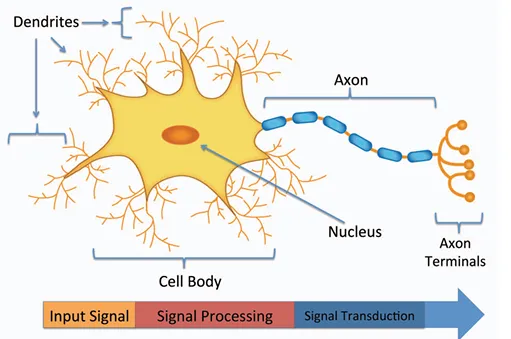
Fig:1 Schematic representing structure of biological neuron
Types of Neural Networks
The depth of a neural network is determined by the number of hidden layers, or layers between the input and the output.
ANN MODELS AND LEARNING ALGORITHM:
ANNs come in a wide variety of forms, some of which are more widely used than others. Differentiating between ANN models, which are the network's configuration, and ANN algorithms, which are the calculations that ultimately result in the network outputs, is crucial when using neural networks for data processing. A network is prepared for training once it has been configured for a specific use. Supervised and unsupervised training are the two methods. A fully connected, supervised network with a backpropagation learning rule is the most popular type of artificial neural network. When it comes to classification and prediction tasks, this kind of ANN excels. Another is the Kohonen, or Self- Organizing Map, with an unsupervised learning algorithm, which excels at identifying connections across intricate data sets [12]. Fig. 2 depicted the four layers of an artificial neural network [13].
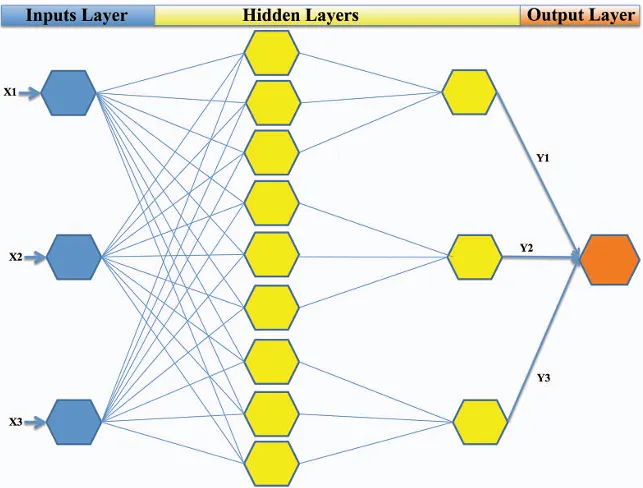
Fig 2: A schematic of four-layered artificial network. Input layer units (in blue) receive input signals (x1, x2, x3) and transfer the signal to the hidden layers via weighted connections. Output layer receives the signals and provides the representative output signal.
ROLE OF ANN IN PHARMACEUTICAL SCIENCES
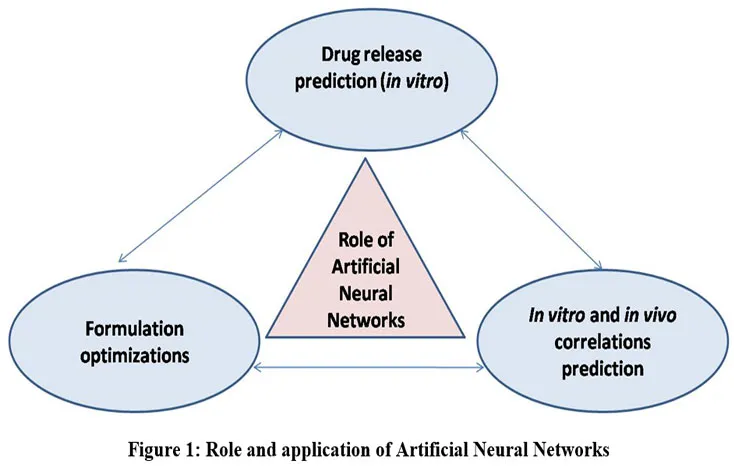
Fig 3: Role and application of Artificial Neural Networks
ANN in the creation of pharmaceutical formulations such as solubility, permeability, stability, processability, and bioavailability are among the unique characteristics of the drug material that are sometimes unacceptable. By converting a drug material into an efficient pharmaceutical drug product, pharmaceutical technology improves its intrinsic features. To explain pharmaceutical formulations in terms of the characteristics of their constituent parts, pharmaceutical technology requires a solid physicochemical basis. The concept of quality by design (QbD) was introduced by the Food and Drug Administration (FDA) in 2004 [17]. They use nonlinear data to examine how variables interact without making any assumptions about the nature or significance of the data. Because ANNs can examine and interpret complex and hidden patterns in datasets, they are valuable tools for predictive modelling in the development of pharmaceutical products [18, 19]. Critical quality characteristics (CQC) must be determined in order for the formulation to be produced to fulfill the quality target product profile (QTPP). Critical process parameters (CPP) and critical material attributes (CMA) are necessary for the CQC. The drug's basic physicochemical qualities can be produced using the trained ANNs as useful pre-formulation tools. The most important function of the data-driven empirical model is to describe the problem by merely reflecting the current level of information about it. An empirical model can be created through data mining, and ANN is utilized in predictive modeling. Studying derivatives of outputs over the sensitivity of ANN inputs is another way to perform sensitivity analysis. Conventional mathematical models are not appropriate for decision-making. For instance, a tablet should disintegrate well and have the appropriate hardness. Low compression force can result in a soft tablet with good decomposition, while high compression force gives hardness but may have poor disintegration. A process or unit operation can be simulated using ANN. For example, the ANN approach can be used to replicate dry granulation using a roller compactor. Spherical vesicles with an aqueous center (cerosomes) will eventually form as a result of thin-film hydration, which disperses liquid in a solution to rehydrate the thin film created after the organic solvent is removed. Cerosomes are similarly disseminated in an aqueous solution prior to ultrasonication in the ultrasonic dispersion procedure. Particle size reduction is directly influenced by sonication time and intensity, although it is indirectly influenced by other factors such as phospholipid ratio and choice. To improve targeting efficacy at the intended location of action, cerasomes can also have their surfaces altered for pegylation or targeting ligands. In conclusion, by using ANN to change component ratios, cerasomes can be effectively constructed and grown with ideal sizes. [20,21]
FORMULATION OPTIMIZATIONS
Traditional trial-and-error and Design of Experiment (DoE) procedures are time-consuming since formulation development involves many variable parameters. A potent substitute is provided by Artificial Neural Networks (ANNs), which successfully capture nonlinear interactions between formulation results, processing parameters, and key material characteristics (CMAs). For example, ANN was used to optimize 5-fluorouracil lipid nanoparticles, obtaining optimal properties for cutaneous administration. When it comes to prediction and optimization, artificial neural networks (ANNs) outperform response surface methodology (RSM). Research by Koletti, Li, and Reza Zaki confirmed that ANNs predict encapsulation efficiency, particle size, and ζ-potential more accurately than multilinear regression and RSM. Additionally, Sansare et al. optimized liposome preparation using Multiple Input, Multiple Output (MIMO) and Multiple Input, Single Output (MISO) ANN models, with MISO exhibiting fewer mean errors. In order to minimize experimentation and maximize formulation quality, Rodríguez-Dorado used a Multilayer Perceptron – Genetic Algorithm (MLP-GA) model to fine-tune the creation of alginate core-shell microparticles. All things considered, ANNs surpass traditional techniques in both prediction and process comprehension, allowing for the effective, precise, and economical optimization of pharmaceutical formulations. Cerasomes are bilayered nanohybrids coated with silica that combine the structural advantages of liposomes with improved stability and functionality. They are widely used in drug delivery and cancer diagnostics. Their vesicular nature allows for precise targeting of cancer cells via the increased permeability and retention (EPR) effect, exploiting tumor-specific vascular permeability. Techniques like thin-film hydration and ultrasonic dispersion enable the creation of spherical cerosomes with water cores, where parameters such as sonication time, intensity, and phospholipid content determine particle size. Artificial neural networks (ANN) can be used in advanced design to optimize these parameters for optimal performance and size. Furthermore, surface modifications such as ligand conjugation or PEGylation can enhance therapeutic efficacy and targeted selectivity. Therefore, cerasomes offer a promising platform that combines machine learning-driven formulation with nanostructural precision for successful cancer treatment [22,23,24,25]. A Quality by Design (QbD) method utilizing Box-Behnken Design in conjunction with an Artificial Neural Network (ANN) based on the Levenberg-Marquardt (LMT) algorithm was used to create curcumin nanophytosomes surface-functionalized with chondroitin sulphate-A (CSA). This approach made it possible to develop a strong CSA-PEG-CR formulation in a suitable design space. The ANN model used purelin for the output layer and transit as the hidden layer transfer function. Each of the ten hidden layers in the model included fifteen neurons. With a training mean squared error (MSE) of 0.0969, the model demonstrated great repeatability and efficacy in formulation parameter optimization [26].
IN VITRO AND IN VIVO CORRELATION PREDICTION
Validated in vitro–in vivo correlation (IVIVC) is necessary to improve efficiency and lessen ethical burdens like animal testing because the number of drug candidates and clinical trials has increased, driving up development expenses. IVIVC facilitates drug development, formulation modifications, and regulatory procedures by connecting in vitro drug dissolution to in vivo pharmacokinetics. Artificial Neural Networks (ANNs) provide better capabilities by capturing intricate nonlinear interactions, whereas standard IVIVC frequently depends on linear models. For a probucol self-emulsifying drug delivery system (SEDDS), Fatouros et al. developed an ANN-based neuro-fuzzy IVIVC model that produced plasma concentration estimates that closely matched in vivo data. Without requiring complicated setups, the neuro-fuzzy model showed outstanding predictive ability across a variety of data sets, with a correlation above 0.91 and prediction errors close to zero. These encouraging initial findings showed that combining the dynamic lipolysis model with ANN-IVIVC provides a useful method for precisely predicting the in vivo behavior of lipid-based formulations, improving formulation design and performance prediction. ANNs also exhibit potential in pharmacokinetic investigations, such as forecasting human medication clearance from animal data. They made precise ANN-based predictions using structural and clearance data. ANN-based IVIVC models offer better accuracy and flexibility than Partial Least Squares (PLS) regression, suggesting their great promise for pharmacokinetics and drug development optimization [27,28,29,30].
ANN Software’s
The vast amount of ANN technology is practically generally accessible. These systems have previously been frequently observed in the pharmaceutical industry and will continue to grow in popularity. Table 1 provides examples of these ANN-based applications that are utilized for the design or analysis of different formulations.
Table-1 ANN software’s and their Description
|
Name of the Software |
Description |
|
MATLAB (The Mathwork’s, Natick, MA, USA, 2012) |
Software for neural network construction, design, visualization, and simulation is provided by the Artificial Neural Toolkit. Neural networks are utilized in situations where systematic analysis is challenging, such as pattern recognition, nonlinear detection, and structural regulation. [31]
|
|
CAD/Chem v5.0 (AI Waare, Inc., Cleveland, OH) |
These are Microsoft Windows-based programs. The amount of hidden neurons, hidden nodes, model training iterations, learning algorithms, and transition functions can all be selected by the user of this application [32].
|
|
STATISTICA 10 (Stat soft, USA, 2012) |
STATISTICA Artificial Neural Networks; C and PMML code generators (Predictive Model Markup Language) contain a comprehensive set of statistics, marking choices, network designs, and training procedures. The C code generator is an add-on [33].
|
|
Stuttgart Neural Network Simulator (SNNS 4.2, 2012) |
· The following network structures and mechanisms of learning are currently included: · For feed forward networks, back propagation (BP) · Reverse Transmission · Swift prop · Back percolation 1 · RProp · Modified functions of the radial base (RBF) · Correlation between cascades · Repeated Correlation of Cascade · Flexible LVQ · Back propagation with time (for recurrent networks) · Fast prop over time (for recurrent networks) · Maps for self-organizing (Kohonen maps) · TDNN with propagation by Back · Network with Jordan · Elman systems expanded Elman hierarchical networks · Adaptive Remembrance [34] |
|
Pythia – The Neural Network designer |
The "learning process" and the "regeneration phase" are the two stages of a neural network. To maximize the network's performance, which entails lowering variability, sample data that includes all inputs and target outputs is analyzed during the training phase [35].
|
|
Neuro solutions© 6.07 (Neuro Dimension, Inc, USA) |
The primary program for developing neural networks is called Neuro Technologies. It combines cutting-edge learning techniques like Levenberg-Marquardt and backpropagation over time with a modular, icon-based interface for network building. Other notable capabilities include the creation of C++ source code, customized DLL components, neuro-fuzzy designs, and programmatic management with Visual Basic's OLE Automation. We advise you to download a free test copy of the software in order to fully comprehend it. Once you have completed the extensive collection of live demonstrations, you should attempt building and training a neural network using your own data. [36]
|
|
Brain Maker v3.7 |
Your software can be used for medical research, industry and sales forecasting, market, share, product, and futures estimation, pattern recognition, medical diagnosis, sports disability, and more with the Brain Maker Neural Network Program. almost any job that requires special insight. Brief articles about a few of our clients and their Brain Builder software can be found in the menu on the left [37].
|
|
Neural Works Professional II/PLUS (Neural Ware, USA) |
Neural Works® Technical II/PLUS is the industry standard for intricate neural network development environments. Professional II/PLUS is compatible with UNIX, Linux, and Windows operating systems on a variety of hardware architectures; data and network files are interchangeable.
|
Applications of ANN in Pharmacological Research and Pharmaceutical Research:
Since ANNs' capabilities may be summed up by modelling, pattern recognition, and prediction, the prospective applications of the ANN technique in the pharmaceutical sciences are numerous, such as drug modelling, dose planning, pharmacokinetic and pharmacodynamic modelling, protein structure and function prediction, analytical data interpretation, and in vitro/in vivo correlations [38].
A) ANNs in Pharmacological Research: Structure Retention Relationship (SRR) Methodology and Analytical Data Analysis: ANNs are highly helpful in pharmacological research data analysis because they can identify patterns from complex sets of analytical data, including non-linear correlations from noisy data. For example, ANNs can be used to analyze spectral data of multi-component samples, like mixes, in order to quantify the concentrations in the mixture utilizing the entire spectrum throughout the identification phase [39, 40 ,41]. Tryptophan, tyrosine, and histidine are examples of amino acids with similar structures and spectra that have been detected and calibrated using ANNs by Hasani et al. [42]. Furthermore, because ANNs can recognize non-linear connections, they can help determine the amounts of a chiral sample and enantiomeric excess in a single spectrophotometric test [43]. Additionally, ANNs can serve as the foundation for computer-assisted optimization techniques that choose the best gradient conditions for anion separations in chromatography [44,45]. Retention durations for anions in linear gradient elution ion chromatography using hydroxide eluents have been found to be quickly and accurately predicted by ANNs with the 1-10-9 design. ANNs were used by Tham et al. to estimate chromatographic retention periods in quantitative structure gradient elution retention relationships of chemicals, such as derivatives of phenyl thiocarbamyl amino acids [46].
The attempt to simulate how a biological brain processes information is the foundation of the ANN technique. As a result, it differs significantly from conventional statistical analysis techniques. Particularly for data sets with the kind of non-linear connections that are commonly found in pharmaceutical operations, ANN is a viable modelling tool. Neural networks can employ a variety of training techniques, require less formal statistical training, and are capable of identifying intricate non-linear correlations between dependent and independent variables as well as all potential interactions without complex equations. Artificial neural networks don't require knowledge of the data source when it comes to model specification, but they do require large training sets because they frequently have a lot of estimated weights. ANNs can also integrate and mix experimental and literature-based data to address issues. In the realm of pharmacological research, the application of ANNs is a relatively new yet developing topic [47, 48, 49, 50,].
CONCLUSION
The increasing complexity of pharmaceutical research and development can be handled by artificial Neural Networks (ANNs), which have become potent computational tools. They outperform conventional statistical techniques in applications including drug design, formulation optimization, pharmacokinetic/pharmacodynamic modeling, and IVIVC prediction because of their capacity to analyze vast, nonlinear, and multidimensional datasets. These days, ANN is used in advanced pharmaceutical process modeling, drug discovery, dosage form creation, and analytical data interpretation. Researchers can reduce experimental burden, increase the accuracy of formulation behavior predictions, and speed up decision-making by combining ANN models with Quality by Design (QbD), genetic algorithms, and contemporary optimization techniques. Additionally, ANN-based methods are revolutionizing the design of nanotechnology-based delivery systems by providing exact control over drug release profiles, encapsulation effectiveness, and particle size.
All things considered, ANNs offer a flexible, effective, and extremely predictive platform that enhances contemporary pharmaceutical sciences. ANN-driven approaches will increasingly influence drug discovery, personalized medicine, and intelligent manufacturing as computational technologies progress, thereby lowering development costs, time, and experimental variability.
REFERENCES



Vinay Kumar Dangeti, Srinivasa Reddy Karri, Dara Harini, Kaladi Satya Sri, Kudipudi Saroja, Emerging Role of Artificial Neural Networks in Pharmaceutical Sciences: From Drug Modelling to Formulation Optimization, Int. J. of Pharm. Sci., 2026, Vol 4, Issue 8, 435-445, https://doi.org/10.5281/zenodo.21785472
 10.5281/zenodo.21785472