

We use cookies to ensure our website works properly and to personalise your experience. Cookies policy
1Post Graduate Student, Department of Pharmacy Practice, J.K.K. Nattraja College of Pharmacy, Kumarapalayam - 638183, Namakkal District, Tamil Nadu, India.
2Department of Pharmacy Practice, J.K.K. Nattraja College of Pharmacy, Kumarapalayam - 638183, Namakkal District, Tamil Nadu, India
Background: Arthritis is a major cause of disability among elderly populations, characterized by diverse subtypes and frequently associated with multimorbidity, functional limitation, and reduced quality of life. In India, hospital-based studies that jointly examine subtype distribution, comorbid disease burden, functional status, and health-related quality of life in elderly patients are scarce. Methods: A hospital-based cross-sectional study was conducted among 423 elderly patients aged 60 years and above diagnosed with arthritis at a tertiary care center in Tamil Nadu, India, over a period of six months. Data were summarized using frequencies, percentages, and mean ± standard deviation, with chi-square test and independent samples t-test used for inferential comparisons where appropriate. Results: Osteoarthritis was the most prevalent subtype (61.9%), followed by rheumatoid arthritis (16.8%) and gout (10.9%). The study population showed female predominance (58.2%) and a substantial burden of cardiometabolic comorbidities, including hypertension (67.1%), diabetes mellitus (41.6%), cardiovascular disease (32.9%), and chronic kidney disease (23.6%). Multimorbidity was present in 73.8% of participants. Functional limitation was observed in 50.4%, and 47.8% required assistive devices. Quality-of-life assessment showed lower scores, particularly in pain (35.43 ± 19.33) and general health (44.39 ± 18.55). Conclusion: Arthritis in elderly patients is a heterogeneous and multidimensional condition characterized by a high burden of osteoarthritis, multimorbidity, and functional impairment. Integrated, multidisciplinary management strategies focusing on comorbidity control and functional rehabilitation may help improve care in this population. Because functional limitation was assessed using a study-specific operational definition rather than a validated instrument, these findings should be interpreted with caution.
Arthritis is one of the most common musculoskeletal conditions in older adults and includes osteoarthritis, rheumatoid arthritis, gout, and several less prevalent inflammatory subtypes. It remains one of the leading causes of disability worldwide, with a rapidly increasing global burden driven by population aging, rising obesity, and longer survival with chronic diseases. Among the inflammatory arthritis subtypes, rheumatoid arthritis (RA) continues to contribute substantially to disability-adjusted life years (DALYs) and impaired quality of life, with projections indicating a continued rise in global prevalence over the coming decades.1
The burden of arthritis is particularly pronounced in elderly populations. Advancing age is a major risk factor for both degenerative and inflammatory joint diseases, with epidemiological evidence demonstrating a marked increase in prevalence across older age groups. Global and national analyses have consistently shown a higher burden among females compared to males, reflecting biological susceptibility, hormonal influences, and sociocultural determinants of health. In India, arthritis burden has increased steadily over the past decades, with recent estimates highlighting significant regional variation and a disproportionately higher female burden of RA in states such as Tamil Nadu.2
Among the various subtypes, osteoarthritis (OA) constitutes the largest proportion of arthritis cases in the elderly and is a major contributor to disability. A recent systematic review and meta-analysis from India reported a pooled prevalence of knee OA of approximately 47% among older adults, with higher rates observed among women. Global epidemiological evidence further supports the increasing prevalence of OA, particularly in individuals aged 40 years and above.3,4 Contemporary understanding also recognizes OA as a multifactorial disorder involving not only mechanical degeneration but also metabolic and inflammatory pathways, particularly in the context of obesity and aging.5
In addition to OA, RA remains clinically important due to its systemic inflammatory nature, potential for extra-articular complications, and long-term disability burden. Recent literature highlights that RA in older adults presents unique challenges, including atypical clinical features, delayed diagnosis, and increased treatment complexity, particularly in late-onset disease.6,7 Gout, another major inflammatory arthritis, has also shown increasing prevalence in elderly populations, particularly among men, with global burden analyses projecting further increases in disease burden and associated complications.8
A critical dimension of arthritis in older adults is its strong association with multimorbidity. Patients with arthritis frequently present with coexisting chronic conditions such as hypertension, diabetes mellitus, cardiovascular disease, and metabolic disorders, which complicate disease management and worsen clinical outcomes.9 Recent studies have demonstrated that individuals with RA have significantly higher rates of multimorbidity compared to the general population and are at increased risk of infections, hospitalization, and mortality. Cardiometabolic comorbidities further amplify systemic inflammation and contribute to poorer prognosis, emphasizing the need for integrated and multidisciplinary care approaches.10,11
Physical function and health-related quality of life are often substantially reduced in elderly patients with arthritis. Chronic pain and restricted mobility limit activities of daily living and increase dependence on others. Recent studies in older adults with arthritis have highlighted the multidimensional nature of quality-of-life impairment, including physical, psychological, and social domains. Evidence from Indian and South Asian populations further demonstrates that comorbid conditions such as obesity, diabetes, and hypertension exacerbate functional limitation and reduce overall well-being.12,13
Despite the growing burden of arthritis, comprehensive hospital-based data from India that simultaneously assess subtype distribution, multimorbidity burden, functional limitation, and quality of life among elderly patients remain limited. Many existing studies are either community-based or focused on individual arthritis subtypes, which may underestimate the clinical heterogeneity and complexity encountered in routine geriatric practice. Therefore, there is a need for integrated real-world clinical evidence to better characterize the overall burden and profile of arthritis in elderly populations.
In this context, the present study was undertaken to evaluate the epidemiology and multimorbidity burden of arthritis among elderly patients attending a tertiary care hospital. The study aimed to describe the epidemiology, subtype distribution, multimorbidity burden, functional limitation, and quality-of-life profile of elderly patients with arthritis attending a tertiary care hospital.
MATERIALS AND METHODS
Study design and setting
A hospital-based cross-sectional study was conducted over a six-month recruitment period at a tertiary care teaching hospital in Tamil Nadu, India. All variables were assessed at the time of participant enrollment, and no longitudinal follow-up outcomes were included in the present analysis. The study was reported in accordance with the Strengthening the Reporting of Observational Studies in Epidemiology (STROBE) guidelines.14 The study aimed to assess the epidemiology, subtype distribution, multimorbidity burden, and functional and quality-of-life outcomes among elderly patients with arthritis.
Study population and eligibility criteria
Elderly patients aged 60 years and above diagnosed with any form of arthritis, including osteoarthritis, rheumatoid arthritis, gout, and other inflammatory arthritis subtypes, were included. Patients attending the outpatient or inpatient departments during the study period and willing to participate were enrolled. Those with incomplete clinical data, severe cognitive impairment, or unwillingness to provide informed consent were excluded.
Sample size and sampling technique
The sample size was estimated using the single-population proportion formula, assuming an osteoarthritis prevalence of 41.1% among elderly persons, a 5% absolute precision, and a 95% confidence level.15 The minimum required sample size was 372; after accounting for a 10% allowance for incomplete data, the final target sample size was 410. The present study included 423 participants, which exceeded the minimum required sample size.
Data collection and clinical assessment
Data were collected using a structured data collection form developed by the investigators to record relevant information from patient medical records and direct patient assessment, including sociodemographic characteristics, lifestyle factors, occupational history, and clinical features. Arthritis subtypes were classified based on the treating physician diagnosis documented in the medical records, supported by available clinical, laboratory, and radiological findings. Osteoarthritis, rheumatoid arthritis, and gout were identified from documented physician diagnosis with corresponding supporting clinical records and investigations, while less common subtypes were classified according to the documented specialist diagnosis available in the medical records. The role physical and role emotional domains were combined and analyzed as a single composite variable because the recorded study dataset did not retain these two domains separately. This derived variable is therefore reported descriptively as the combined role physical and role emotional domains rather than as a standard individual SF-36 subscale.
Outcome measures
The primary outcomes included arthritis subtype distribution, comorbidities, multimorbidity, functional limitation, and health-related quality of life. Comorbid conditions such as hypertension, diabetes mellitus, cardiovascular disease, and other chronic illnesses were recorded. Multimorbidity was defined as the presence of two or more chronic conditions in the same individual. Functional limitation was assessed using the structured data collection form based on documented or self-reported difficulty in routine daily activities and mobility-related tasks, including walking, climbing stairs, prolonged standing, or requiring support for mobility. Assistive device use was recorded separately based on the use of walking aids or other support devices. Health-related quality of life was evaluated using the Short Form-36 (SF-36) questionnaire.16
Statistical analysis
Data were summarized using descriptive statistics. Categorical variables were expressed as frequencies and percentages, and continuous variables as mean ± standard deviation. Associations between categorical variables were assessed using the chi-square test, and comparisons of continuous variables between two groups were performed using the independent samples t-test. To further examine whether the observed subtype-demographic associations were independent of potential confounding, a multivariable binary logistic regression analysis was performed with osteoarthritis as the dependent outcome variable and non-osteoarthritis subtypes as the reference group. Sex, age group, and BMI category were entered as covariates. Because several non-osteoarthritis subtypes had small cell counts, arthritis subtype was not modelled using a full multinomial regression approach. For model stability, BMI was grouped as <25.0 kg/m², 25.0-29.9 kg/m², and ≥30.0 kg/m². Adjusted odds ratios (AORs) with 95% confidence intervals (CIs) were reported. A p-value <0.05 was considered statistically significant.
Ethical considerations
The study was conducted in accordance with the principles of the Declaration of Helsinki.17 Ethical approval was obtained from the Institutional Ethics Committee of JKKN College of Pharmacy, Kumarapalayam, Tamil Nadu, India, with approval number JKKNCP/IEC-CER/1826I25/MP. Written informed consent was obtained from all participants prior to their enrollment in the study.
RESULTS
A total of 423 elderly patients diagnosed with arthritis were included in the study. Osteoarthritis was the most common subtype, followed by rheumatoid arthritis and gout. The study population showed a predominance of females and a considerable burden of comorbid conditions, particularly hypertension and diabetes mellitus. A substantial proportion had functional limitation or used assistive devices, and quality-of-life scores were reduced across most SF-36 domains.
Sociodemographic Characteristics of Study Participants
A total of 423 elderly patients with arthritis were included in the study. Most participants belonged to the younger elderly age groups, with 52.0% aged between 65 and 74 years, indicating that arthritis-related healthcare utilization was more prominent in the early geriatric population. Females constituted 58.2% of the study population. Most participants were married (68.1%), while 27.9% were widowed, reflecting the typical social composition of the elderly population. Educational attainment was generally low, with 40.7% of participants having no formal education and only 7.6% having graduate or postgraduate education. Overall, the study population was characterized by a predominantly female, moderately aged elderly group with lower educational attainment, which may influence disease awareness, treatment adherence, and healthcare outcomes.
Clinical Characteristics and Arthritis Subtype Distribution
The distribution of arthritis subtypes is shown in Figure 1. Osteoarthritis was the predominant subtype, accounting for 61.9% of all cases, followed by rheumatoid arthritis (16.8%) and gout (10.9%). Sex-specific distribution varied across subtypes, with osteoarthritis and rheumatoid arthritis being more common in females, whereas gout showed a marked male predominance.
The BMI profile of the cohort showed that most participants were either overweight or obese, with overweight individuals constituting the largest category (47.5%). In the present study, osteoarthritis, the most common subtype, was more frequently observed among participants with higher BMI categories, whereas rheumatoid arthritis was relatively more frequent among leaner elderly participants. A history of joint trauma was reported in 33.3% of the study population. These findings indicate variation in clinical profile across arthritis subtypes in the study cohort.
Comorbidities, Multimorbidity, Functional Status, and Quality of Life
The distribution of comorbidities, multimorbidity, functional status, and quality-of-life outcomes is presented in Table 1. Hypertension and diabetes mellitus were the most common comorbid conditions, indicating a high burden of cardiometabolic disorders in the study population. A substantial proportion of participants exhibited multimorbidity, reflecting the coexistence of multiple chronic conditions in elderly patients with arthritis.
Functional assessment revealed that more than half of the participants experienced limitations in daily activities, and nearly half required assistive devices for mobility, indicating reduced independence. Quality-of-life assessment demonstrated reduced scores across multiple domains, with the lowest scores observed in pain and general health, highlighting the impact of arthritis on overall well-being.
Association of multimorbidity with functional status and quality-of-life outcomes
The association of multimorbidity with functional status and quality-of-life outcomes is presented in Table 2. No statistically significant association was observed between multimorbidity and functional limitation (p = 0.565) or assistive device use (p = 1.000). Similarly, most SF-36 domains did not differ significantly between participants with and without multimorbidity. However, the general health domain score was significantly lower among participants with multimorbidity compared with those without multimorbidity (p < 0.001).
Association of arthritis subtype with selected demographic and clinical variables
The distribution of arthritis subtypes differed significantly according to sex, age group, and BMI category (Table 3). Osteoarthritis was more frequently observed among females and among overweight or obese participants, whereas gout showed marked male predominance. Rheumatoid arthritis demonstrated a distinct distribution pattern across age and BMI categories compared with the other subtypes. To assess whether these subtype-demographic associations persisted after adjustment, a multivariable binary logistic regression analysis was performed with osteoarthritis as the outcome (Table 4). Compared with females, males had significantly lower odds of osteoarthritis (AOR 0.44, 95% CI 0.29-0.69; p<0.001). Compared with participants aged 60-64 years, those aged 75-79 years (AOR 2.34, 95% CI 1.16-4.72; p=0.018) and ≥80 years (AOR 11.62, 95% CI 3.16-42.73; p<0.001) had higher odds of osteoarthritis, whereas the 65-69 and 70-74 year groups did not differ significantly. Similarly, compared with participants with BMI <25.0 kg/m², overweight participants had higher odds of osteoarthritis (AOR 2.65, 95% CI 1.67-4.20; p<0.001), and obese participants had still higher odds (AOR 6.22, 95% CI 2.65-14.56; p<0.001).
DISCUSSION
Burden and subtype distribution of arthritis
In the present study, osteoarthritis was the predominant subtype, accounting for 61.9% of all cases, followed by rheumatoid arthritis (16.8%) and gout (10.9%). This pattern is consistent with recent evidence showing that osteoarthritis remains the dominant arthritis subtype in older adults and continues to account for a major share of musculoskeletal disability worldwide. Recent global burden analyses have shown that osteoarthritis burden in older adults has continued to rise, with further increases projected over the coming decades.18
The predominance of osteoarthritis in elderly patients is not unexpected: cartilage integrity declines with age, subchondral bone remodelling is altered, and low-grade synovial inflammation accumulates over decades. Shumnalieva R et al also recognises that metabolic factors, particularly obesity, accelerate this process through both mechanical loading and adipokine-mediated pathways.19 The female predominance observed in our cohort (58.2%) and the higher proportion of women with osteoarthritis are similarly in line with recent systematic review indicating greater arthritis burden among women, especially in later life.18
Gout showed marked male predominance in the present study, which is also supported by recent epidemiological studies in older populations demonstrating a higher burden of gout among men and a continuing increase in elderly age groups.20 The subtype variation in this sample confirms that arthritis in elderly patients is not a single clinical problem but a spectrum of conditions with differing pathophysiology, risk profiles, and management needs.
Demographic and metabolic factors associated with arthritis subtypes
In the present study, osteoarthritis was more frequently observed among females, older participants, and those with higher BMI categories. After adjustment in multivariable logistic regression, male sex remained inversely associated with osteoarthritis, whereas older age, particularly 75 years and above, and higher BMI remained positively associated with osteoarthritis. These findings suggest that the observed distribution of osteoarthritis in this cohort was not explained solely by crude bivariate patterns and remained evident after accounting for the joint effects of sex, age group, and BMI. These findings are broadly consistent with recent epidemiological evidence indicating a greater osteoarthritis burden among older adults and females, as well as among individuals with elevated BMI.18,21,22
However, because the present study is cross-sectional, these associations should not be interpreted as causal. Rather than demonstrating that age or adiposity caused osteoarthritis in this cohort, the findings indicate that osteoarthritis was disproportionately observed alongside these characteristics. Residual confounding and reverse relationships, including reduced mobility leading to weight gain, cannot be excluded.
In contrast, rheumatoid arthritis showed a different distribution pattern from osteoarthritis across age and BMI categories in the present study. This difference may be related to the distinct clinical and pathophysiological characteristics of rheumatoid arthritis, which are generally considered to differ from the predominantly degenerative profile of osteoarthritis. Additionally, the variation in subtype distribution observed in this study highlights the heterogeneity of arthritis in elderly populations and underscores the limitation of considering arthritis as a single clinical entity.23
Multimorbidity, functional limitation, and quality of life
A major finding of this study was the high burden of associated chronic disease. Hypertension was present in 67.1%, diabetes mellitus in 41.6%, and multimorbidity in 73.8% of the study population. Shared pathogenic mechanisms including chronic low-grade inflammation and insulin resistance likely contribute to the clustering of arthritis with these conditions, and their coexistence complicates treatment by limiting pharmacological options and increasing the risk of adverse events. Similarly, a primary study in women with generalized osteoarthritis found that multimorbidity was associated with poorer functional outcomes and reduced quality of life, supporting the view that coexisting chronic conditions substantially amplify the burden of arthritis.24 Contemporary work on RA multimorbidity has shown higher multimorbidity prevalence, faster accumulation of chronic conditions, and worse outcomes compared with non-RA populations.9 This is further supported by a recent cross-sectional study by Sah RK et al. among older patients with rheumatoid arthritis, which documented the frequent coexistence of hypertension, diabetes, ischemic heart disease, and other chronic disorders that complicate clinical management in later life.25 Recent multimorbidity studies in older adults also confirm that chronic disease clustering is the rule rather than the exception in aging populations.18
The clinical consequences of this complexity were reflected in the high rates of disability in our study. Longitudinal evidence from middle-aged and older adults further indicates that multimorbidity is associated with a higher risk of functional limitation and persistently poorer quality of life, which is consistent with the functional burden observed in the present cohort.26 Functional limitation was present in 50.4% of participants, and 47.8% required assistive devices. These observations are compatible with recent work showing that older adults with arthritis experience substantial decline in mobility, independence, and physical functioning over time, especially when arthritis coexists with other chronic conditions.27
Quality of life was also markedly compromised in our cohort, with the lowest SF-36 scores observed for pain (35.43 ± 19.33) and general health (44.39 ± 18.55). Earlier population-based evidence among older adults also showed that both osteoarthritis and rheumatoid arthritis adversely affect multiple dimensions of health-related quality of life, indicating that the observed reductions in pain and general health scores in the present study are clinically plausible.28 This pattern is concordant with recent RA and OA literature showing that pain remains the dominant driver of poor health-related quality of life and often interacts with reduced mobility, fatigue, and psychosocial burden.25 A cross-sectional study comparing adults and elderly patients with rheumatoid arthritis also demonstrated substantial quality-of-life impairment in older patients, reinforcing the relevance of age-related disease burden in shaping patient-reported outcomes.29
Although multimorbidity was highly prevalent in the study population, inferential analysis did not demonstrate significant differences in functional limitation, assistive device use, or most quality-of-life domains between participants with and without multimorbidity. However, a significant reduction was observed in the general health domain among those with multimorbidity, suggesting that the cumulative burden of chronic conditions may primarily influence overall health perception rather than specific functional or psychosocial domains in this cohort. This finding demonstrates the complexity of multimorbidity in elderly patients, in whom overall perceived health can be adversely affected even in the absence of measurable differences in specific functional domains.30
Clinical and public health implications
The present study has important implications for both clinical care and public health planning. First, the predominance of osteoarthritis, the influence of age, sex, and BMI, and the coexistence of hypertension, diabetes, and multimorbidity all suggest that elderly arthritis care should move beyond symptom relief alone toward a more integrated chronic disease model. Recent reviews and burden studies support this broader framework, emphasizing prevention, weight management, rehabilitation, and structured comorbidity screening as key components of arthritis care in older adults.31
Second, the observed differences between osteoarthritis, rheumatoid arthritis, gout, and other subtypes indicate that management strategies should be individualized. For osteoarthritis, lifestyle modification and weight reduction are likely to be especially relevant. For rheumatoid arthritis, early recognition and appropriate disease-modifying management remain central, particularly in older adults where presentation can be atypical and treatment decisions are more complex. For gout, metabolic and urate-lowering strategies remain highly relevant, especially in male elderly populations.23
Overall, our findings show that arthritis in elderly patients is a multifactorial and heterogeneous condition shaped by demographic, metabolic, and comorbid influences. In tertiary care settings, this complexity requires coordinated, multidisciplinary, and subtype-sensitive care pathways. From a public health perspective, the results support targeted screening for obesity, hypertension, diabetes, and functional limitation, alongside efforts to improve early diagnosis and long-term supportive care in aging populations.
The cross-sectional design limits causal and temporal inference. As a single-center tertiary care hospital-based study, the findings may also be affected by selection bias, and the burden of arthritis, comorbidities, functional limitation, and impaired quality of life may be over-represented compared with the general elderly population. Arthritis subtype classification was based on routine clinical diagnosis documented in medical records, which may have introduced some degree of misclassification, particularly for less common subtypes. Functional limitation was assessed using a study-specific operational definition recorded in the structured data collection form, rather than a validated disability instrument. Participants were categorized as having functional limitation if documented clinical assessment or patient report indicated difficulty in one or more routine mobility-related activities, including walking, climbing stairs, prolonged standing, or requiring support for mobility. This approach was used because the dataset was derived from routine clinical documentation and did not include a validated functional assessment scale such as the HAQ, Barthel Index, or WOMAC functional subscale. Accordingly, the estimated prevalence of functional limitation in the present study should not be considered directly comparable with studies using validated functional instruments.
CONCLUSION
Arthritis in elderly patients attending tertiary care is characterized by a high burden of osteoarthritis, multimorbidity, functional limitation, and reduced quality of life. The frequent coexistence of cardiometabolic conditions such as hypertension and diabetes highlights the clinical complexity of arthritis management in geriatric populations. These findings support the need for comprehensive, multidisciplinary, and integrated care approaches in tertiary care settings. Further analytical and longitudinal studies are needed to better clarify the relationships between arthritis subtypes, multimorbidity, and functional outcomes.
DECLARATIONS
Ethics Approval and Consent to Participate
Ethical approval for this study was obtained from the Institutional Ethics Committee of JKKN College of Pharmacy, Kumarapalayam, Tamil Nadu, India (Approval No: JKKNCP/IEC-CER/1826I25/MP). Written informed consent was obtained from all participants prior to their inclusion in the study. All procedures performed were in accordance with the ethical standards of the institutional and/or national research committee and with the 1964 Declaration of Helsinki and its later amendments or comparable ethical standards.
Data Availability Statement
The datasets generated and/or analyzed during the current study are not publicly available due to patient confidentiality and institutional restrictions. However, de-identified data may be made available from the corresponding author on reasonable request, subject to ethical approval.
Conflicts of Interest
The authors declare that they have no conflicts of interest.
Funding
This research did not receive any specific grant from funding agencies in the public, commercial, or not-for-profit sectors.
Acknowledgements
The authors sincerely thank all the patients who participated in this study and the healthcare staff of the tertiary care hospital for their cooperation and support. The authors also acknowledge the guidance and oversight provided by the Institutional Ethics Committee of J.K.K. Nattraja College of Pharmacy. Appreciation is extended to the multidisciplinary team involved in patient care for their valuable contributions.
Authors’ Contributions
Study concept and design: SM; Acquisition of data: ST; Analysis and interpretation of data: SM and ST; Drafting of the manuscript: SM and ST; Critical revision of the manuscript: SM; Statistical analysis: SM and ST; Administrative, technical, or material support: ST; Study supervision: SM.
TABLES
Table 1: Comorbidities, multimorbidity, functional status, and quality of life (n = 423)
|
Variable |
Category |
n (%) / Mean ± SD |
|
Comorbidities |
Hypertension |
284 (67.1) |
|
Diabetes mellitus |
176 (41.6) |
|
|
Cardiovascular disease |
139 (32.9) |
|
|
Chronic kidney disease |
100 (23.6) |
|
|
Obesity (BMI ≥30 kg/m²) |
55 (13.0) |
|
|
Osteoporosis |
49 (11.6) |
|
|
Thyroid disorders |
44 (10.4) |
|
|
Depression |
40 (9.5) |
|
|
Chronic back pain |
20 (4.7) |
|
|
Psoriasis |
16 (3.8) |
|
|
Other musculoskeletal conditions |
10 (2.4) |
|
|
Systemic lupus erythematosus (SLE) |
9 (2.1) |
|
|
Multimorbidity |
Present |
312 (73.8) |
|
Absent |
111 (26.2) |
|
|
Functional limitation |
Present |
213 (50.4) |
|
Absent |
210 (49.6) |
|
|
Assistive device use |
Yes |
202 (47.8) |
|
No |
221 (52.2) |
|
|
SF-36 Domains |
Physical functioning |
56.52 ± 22.07 |
|
Combined role physical and role emotional domains |
55.52 ± 26.24 |
|
|
Pain |
35.43 ± 19.33 |
|
|
General health |
44.39 ± 18.55 |
|
|
Vitality |
43.42 ± 16.47 |
|
|
Social functioning |
52.94 ± 16.35 |
|
|
Mental health |
52.68 ± 18.18 |
Note: Values are presented as number (percentage) or mean ± standard deviation. Comorbidity data were extracted from documented medical records. Multimorbidity was defined as the presence of two or more chronic conditions recorded for each participant. SF-36: Short Form-36 Health Survey. The combined role physical and role emotional domains variable represents a combined measure of the role physical and role emotional domains of the SF-36 questionnaire
Table 2: Association of multimorbidity with functional status and quality-of-life outcomes
|
Parameter |
Variable |
Multimorbidity Present |
Multimorbidity Absent |
Test Statistic |
p-value |
|
Functional limitation |
Present |
154 (49.4%) |
59 (53.2%) |
χ² = 0.33 |
0.565 |
|
Absent |
158 (50.6%) |
52 (46.8%) |
|||
|
Assistive device use |
Yes |
149 (47.8%) |
53 (47.7%) |
χ² = 0.00 |
1.000 |
|
No |
163 (52.2%) |
58 (52.3%) |
|||
|
SF-36 Domains |
Physical functioning |
56.07 ± 22.15 |
57.77 ± 21.90 |
t = -0.70 |
0.484 |
|
Combined role physical and role emotional domains |
55.38 ± 26.36 |
55.90 ± 26.03 |
t = -0.18 |
0.857 |
|
|
Pain |
35.11 ± 19.55 |
36.35 ± 18.73 |
t = -0.59 |
0.554 |
|
|
General health |
40.41 ± 16.99 |
55.57 ± 18.26 |
t = -7.65 |
<0.001 |
|
|
Vitality |
43.58 ± 16.82 |
42.95 ± 15.48 |
t = 0.36 |
0.716 |
|
|
Social functioning |
52.71 ± 16.86 |
53.59 ± 14.87 |
t = -0.52 |
0.606 |
|
|
Mental health |
51.92 ± 18.22 |
54.80 ± 17.99 |
t = -1.44 |
0.150 |
Note: Categorical variables are presented as number (percentage) and compared using the chi-square test. Continuous variables are presented as mean ± standard deviation and compared using the independent samples t-test. A p-value <0.05 was considered statistically significant. The combined role physical and role emotional domains variable represents a combined measure of the role physical and role emotional domains of the SF-36 questionnaire
Table 3: Association of arthritis subtype with sex, age group, and BMI category
|
Parameter |
Variable |
Osteoarthritis n (%) |
Rheumatoid Arthritis n (%) |
Gout n (%) |
Other subtypes n (%) |
Test Statistic |
p-value |
|
Sex |
Female |
172 (65.6%) |
43 (60.6%) |
8 (17.4%) |
23 (52.3%) |
χ² = 38.25 |
<0.001 |
|
Male |
90 (34.4%) |
28 (39.4%) |
38 (82.6%) |
21 (47.7%) |
|||
|
Age group |
60–64 |
36 (13.7%) |
16 (22.5%) |
12 (26.1%) |
5 (11.4%) |
χ² = 45.10 |
<0.001 |
|
65–69 |
54 (20.6%) |
21 (29.6%) |
16 (34.8%) |
19 (43.2%) |
|||
|
70–74 |
64 (24.4%) |
21 (29.6%) |
9 (19.6%) |
16 (36.4%) |
|||
|
75–79 |
67 (25.6%) |
11 (15.5%) |
9 (19.6%) |
3 (6.8%) |
|||
|
≥80 |
41 (15.6%) |
2 (2.8%) |
0 (0.0%) |
1 (2.3%) |
|||
|
BMI category |
Underweight (<18.5) |
2 (0.8%) |
1 (1.4%) |
0 (0.0%) |
2 (4.5%) |
χ² = 46.64 |
<0.001 |
|
Normal (18.5–24.9) |
78 (29.8%) |
42 (59.2%) |
15 (32.6%) |
27 (61.4%) |
|||
|
Overweight (25.0–29.9) |
135 (51.5%) |
27 (38.0%) |
25 (54.3%) |
14 (31.8%) |
|||
|
Obese I (30.0–34.9) |
42 (16.0%) |
1 (1.4%) |
6 (13.0%) |
1 (2.3%) |
|||
|
Obese II+ (≥35.0) |
5 (1.9%) |
0 (0.0%) |
0 (0.0%) |
0 (0.0%) |
Note: Values are presented as number (percentage). Percentages were calculated within each arthritis subtype. “Other subtypes” included psoriatic arthritis, ankylosing spondylitis, systemic lupus erythematosus, and other musculoskeletal conditions. Associations were assessed using the chi-square test. A p-value <0.05 was considered statistically significant
Table 4: Multivariable logistic regression analysis of factors independently associated with osteoarthritis
|
Variable |
Category |
AOR |
95% CI |
p-value |
|
Sex |
Male vs Female |
0.44 |
0.29-0.69 |
<0.001 |
|
Age group |
65-69 vs 60-64 |
0.69 |
0.36-1.32 |
0.264 |
|
70-74 vs 60-64 |
1.00 |
0.52-1.91 |
0.999 |
|
|
75-79 vs 60-64 |
2.34 |
1.16-4.72 |
0.018 |
|
|
≥80 vs 60-64 |
11.62 |
3.16-42.73 |
<0.001 |
|
|
BMI category |
25.0-29.9 vs <25.0 |
2.65 |
1.67-4.20 |
<0.001 |
|
≥30.0 vs <25.0 |
6.22 |
2.65-14.56 |
<0.001 |
Note: Osteoarthritis was modelled as the dependent outcome variable versus all other arthritis subtypes combined. BMI categories were collapsed for model stability because of sparse counts in extreme BMI subgroup
FIGURES
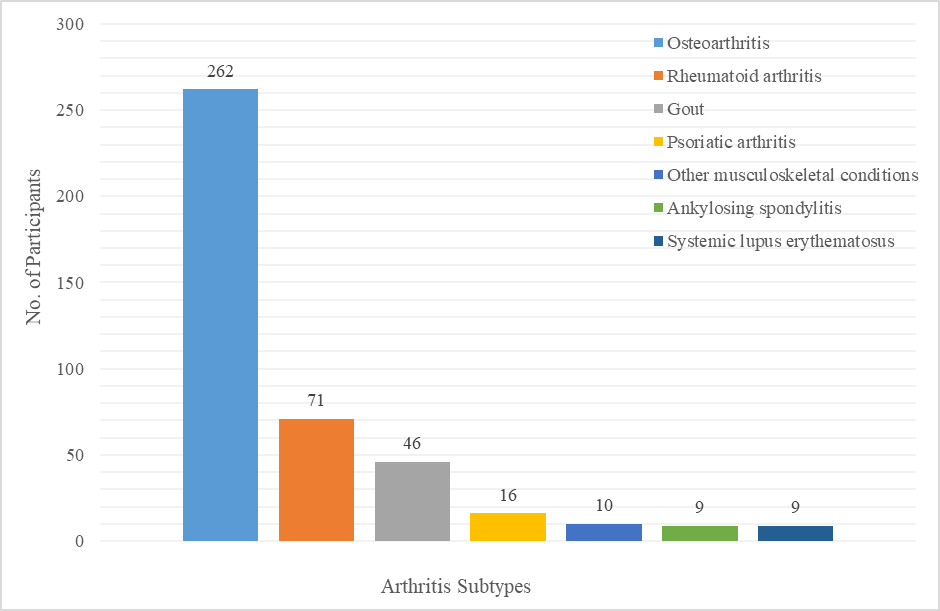
Figure 1: Distribution of arthritis subtypes among elderly patients with arthritis (n = 423)
Osteoarthritis was the most common subtype (n = 262), followed by rheumatoid arthritis (n = 71) and gout (n = 46). Less frequent subtypes included psoriatic arthritis (n = 16), other musculoskeletal conditions (n = 10), ankylosing spondylitis (n = 9), and systemic lupus erythematosus (n = 9).
REFERENCES


M Sherin T. T., Senthil M., Epidemiology And Multimorbidity Burden Of Arthritis Among Elderly Patients: A Hospital-Based Cross-Sectional Study In South India, Int. J. of Pharm. Sci., 2026, Vol 4, Issue 9, 899-913. https://doi.org/10.5281/zenodo.22670990
 10.5281/zenodo.22670990