
View Article

  • Estimation for Azelnipidine & Telmisartan in Bulk & Pharmaceutical Dosage Form by RP–HPLC

  • Centre for Pharmaceutical Sciences, Institute of Science and Technology, Jawaharlal Nehru Technological University Hyderabad, Kukatpally, Hyderabad, 500085, Telangana, India

Abstract

RP-HPLC method was developed for the estimation of Azelnidipine and Telmisartan in tablet dosage form. The proposed methods were applied for the determination of drug in tablet dosage form. Determination of Azelnidipine and Telmisartan is equation method. In this method concentration of each drug was obtained by using the absorptivity values calculated for drug wavelength 270 nm and solving the equation. A rapid and reliable RP- HPLC method was developed and validated estimation of Azelnidipine and Telmisartan in tablet dosage form. The RP-HPLC method was performed C18-(100mm x 4.6 mm,)2.5 ?m particle size in gradient mode, and the sample was analyzed using methanol 75 ml and 25 ml (pH 4.3 0.1% OPA with TEA) as a mobile phase at a flow rate of 0.8 ml/min and detection at 249 nm. By the retention time for Azelnidipine and Telmisartan found 3.20 and 6.23 min respectively. The method was applied to marketed tablet formulations. The tablet assay was performed for combination was validated for accuracy, precision, linearity, specificity, and sensitivity in accordance with ICH guidelines. Validation related the method is specific, rapid, accurate, precise, reliable, and reproducible. Calibration plots by both HPLC were linear over the 4-20 and 10-50 ?g/ml for Azelnidipine and Telmisartan respectively, and recoveries from tablet dosage form were between 100.34 and 101.68 %. The method can be used for routine of the quality control in pharmaceuticals. The RP-HPLC method was found to be simple, economical and rapid as compared to MS method was found to be more accurate, precise and robust. Both these methods can be used for routine analysis of Azelnidipine and Telmisartan in tablet dosage form.

Keywords

RP-HPLC, UV, LOD, LOQ, Azelnidipine, Telmisartan

Introduction

× Popup Image

The ultimate goal of chemotherapy is a cure, suppression of every neoplastic cell requires a true treatment. If treatment is not achievable, then the goal becomes control of the disease to extend survival and maintain the best quality of life. This allows the individual to maintain a normal existence with the cancer thus being treated as a chronic disease. In either case neoplastic cell burden is initially reduced, either by surgery or by radiation followed by chemo therapy immunotherapy or a combination of these treatment modalities. In advanced stages of cancer, the likelihood of controlling the cancer is far from reality and the goal is palliation. This mean that chemotherapeutic drugs may be used to relieve symptoms caused by the cancer and improve the quality of life, even though the drugs may not lengthen life. Treatment of cancer include log kill, pharmacologic sanctuaries, combinations of drugs – cytotoxic agents with qualitatively different toxicities, and with different molecular sites and mechanisms of action, are usually combined at full doses. This results in higher response rates, due to additives and potentiated cytotoxic effects, and non- overlapping host toxicities, advantages of drug combinations, treatment protocol. Some problems associate with chemotherapy like resistance, multidrug resistance, toxicity followed by common adverse effect, minimizing adverse effects, treatment include tumor.

Azelnidipine is an antimetabolites which structurally related to normal compounds that exist within the cell. And interfere with purine /pyrimidine nucleotide precursors available by inhibit their synthesis, their maximum cytotoxic effect are in s-phase. The vitamin Telmisartan plays a central role in a variety of metabolic reactions involving the transfer of one carbon units and is essential for cell replication. Azelnidipine is structurally related to Telmisartan and acts as an antagonist of that vitamin by inhibiting dihydrofolate reductase. Telmisartan is obtained from dietary sources or from that produced by intestinal flora. It undergoes reduction to the tetrahydrofolate form via a reaction catalyzedby intracellular   nicotinamide-adenine   dinucleotide phosphate-dependent. Azelnidipine enters the cell by active-transport processes that normally mediate the entry of N5-Methyl-FH4. Literature gave brief information of method development on bulk of Azelnidipineand Telmisartan followed validate that method as per ICH guideline on spectrophotometry and HPLC method. Specific method are reported for the analysis and determination of AZN&TLM in bulk and dosage form. The reported method is complex and time consuming hence there was a need for developing a validated method for estimation of AZN&TLM in pharmaceutical dosage form.[1]

MATERIAL AND METHOD

AZN and TLM was procured as a gift sample from Pharma Company. Methanol and water were received from JS (Jinendra Scientifics), Jalgaon (HPLC grade). Tablet was purchased from the local pharmacy store Jalgaon. All required chemical and reagents having analytical grade.

Instrumentation

The study was processed on Agilent 1100 series instrument. Chemstation software using c18 column, length 100 mm, internal diameter 4.6 μm. Particle size DAD detector.

Azelnidipine (Biotrexate; Emtexate; Neotrexate), It is a 4-amino-4-deoxy-10-methylpteroyl-L-glutamic acid. It is yellow to orange-brown, crystalline powder. It is practically insoluble in water. it dissolves in dilute solutions of alkali hydroxides and carbonates. The solution are sterilized by filtration. It is stored in well- closed, light-resistant containers. Azelnidipine is mainly used in the management of acute lymphoblastic leukemia and for the treatment of choriocarcinoma. It has been used as an immunosuppressant. It is given by mouth, or by injection as Azelnidipine sodium.

Telmisartan having structural units corresponding to pteridine, p-amino benzoic acid, L-glutamic acid. Chemical name of Telmisartan is 4-(2-amino-4- hydroxypteridin-6-yl) -methylamino-benzoyl-L-glutamic acid. Telmisartan is free or combined with several L- glutamic acid moieties in peptide linkage, in liver, yeast, leafy green vegetables, and certain other natural products. It may be prepared synthetically. It is yellow to yellowish orange, odorless crystalline powder, practically insoluble in cold water, soluble in dilute sodium hydroxide solution.[2]

Preparation of standard stock solution Telmisartan standard stock solution: (StockI)

An accurately weighed quantity, 25 mg of Telmisartan (TLM) was dissolved in methanol in a 25 ml volumetric flask and volume made up to 10 ml to produce a solution of 1000 ug/ml.

Azelnidipine standard stock solution: (StockII)

An accurately weighed quantity, 10 mg of Azelnidipine (AZL) was dissolved in methanol in 25 ml volumetric flask and volume made up to 10 ml to produce a solution of 400ug/ml Figure 1.

Preparation of Stock Standard Combination Solution: (Stock III)

Accurately weight and transfer 25 mg Telmisartan and Azelnidipine 10 mg working standard into 25 ml volumetric flask as about diluent methanol completely and make volume up to the mark with the same solvent to get 1000 & 400 µg/ml standard (stock solution) and 15 min sonicate to dissolve it and remove the unwanted gas, further an aliquots portion of Telmisartan and Azelnidipine stock solution in ratio of 1:2.5 were mixed in volumetric flask in 10 ml and volume was adjusted up to mark with mobile phase from the resulting solution 0.1ml was transferred to 10 ml volumetric flask and the volume was made up to the mark with MEOH :Water (0.1% OPA), prepared in (75 ml MEOH : 25 ml Water (0.1% OPA)) solvent. Result as shown as;

Assay preparation of marketed formulation

Determination of assay method followed by weighing a 20 tablet of marketed brand contain TLM&AZL. Calculate the total weight into average weight of tablet for measure the equivalent with Azelnidipine 10 mg and Telmisartan 25 mg crush the all 20 weighed tablet into fine powder with help of mortar and pestle, take out 55.62 mg powder which equivalent with TLM&AZL. Dilute in 10 mL MEOH. To ensure complete extraction it was sonicated for 15 min. 0.3 mL of supernatant was then diluted up to 10 mL with mobile phase. The resulting solution was injected in HPLC and drug peak area was noted Figure 2.

Method validation

The proposed methods were validated in accordance to ICHQ2 (R1) guideline for precision, accuracy, linearity, robustness, limit of detection and limit of quantification.

RESULTS

Linearity and Range

The mobile phase was allowed to equilibrate with the stationary phase until OPA by baseline was obtained. From the freshly prepared standard stock solution, pipette out 10 mg AZL and 25 mg TLM in 10 ml of volumetric flask and diluted with the mobile phase. From it 0.1, 0.2, 0.3, 0.4 & 0.5 of solution were pipette out in 10 ml volumetric flask and volume were made up to 10 ml with mobile phase to get final concentration 4,8,12,16 and 20 µg/ml of Telmisartan and 10,20,30,40 and 50µg/ml of Azelnidipine. The respective linear equation for Azelnidipine was y = 35.812 x+ 14.564 and Telmisartan equation y = 65.50 x + 43.341 where x is the concentration and y is area of peak. The correlation coefficient was 0.999 and 0.999. The calibration curve of Azelnidipine and Telmisartan is depicted in.
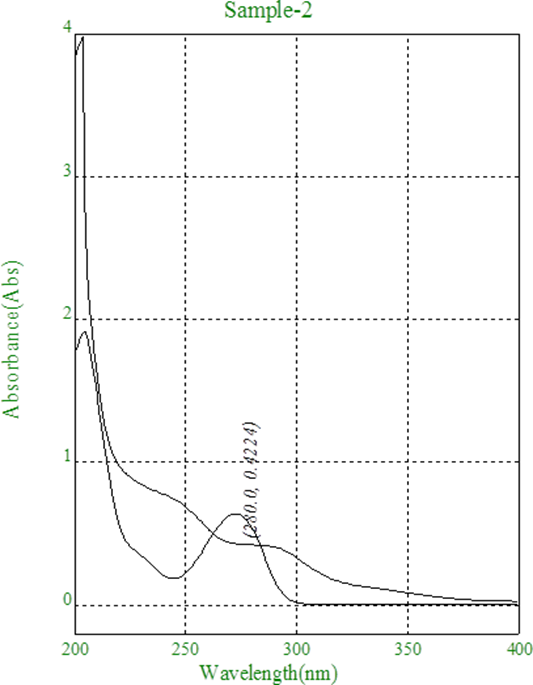
Figure 1: Typical UV spectrum of Azelnidipine and Telmisartan.
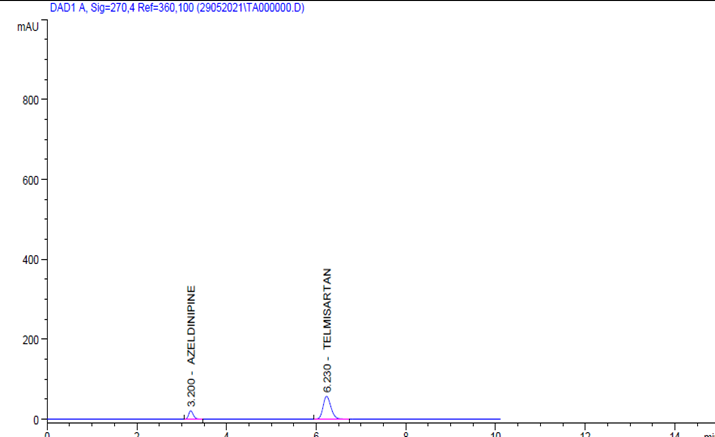
Figure 2: Chromatograph of analyzed marketed dosage form.
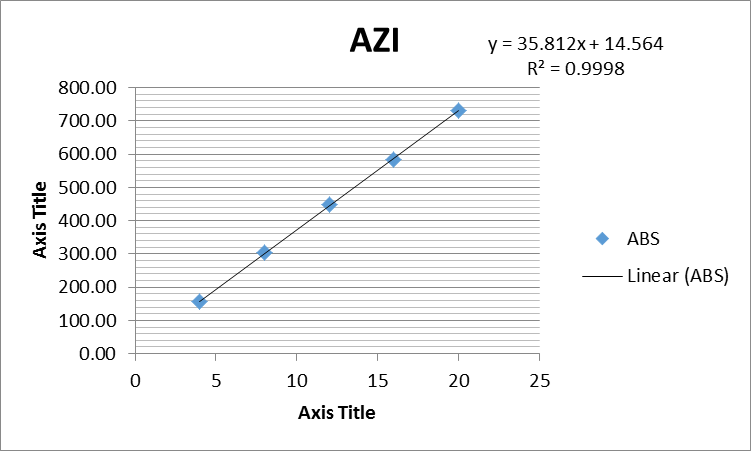
Figure 3: Calibration curve for Azelnidipine.
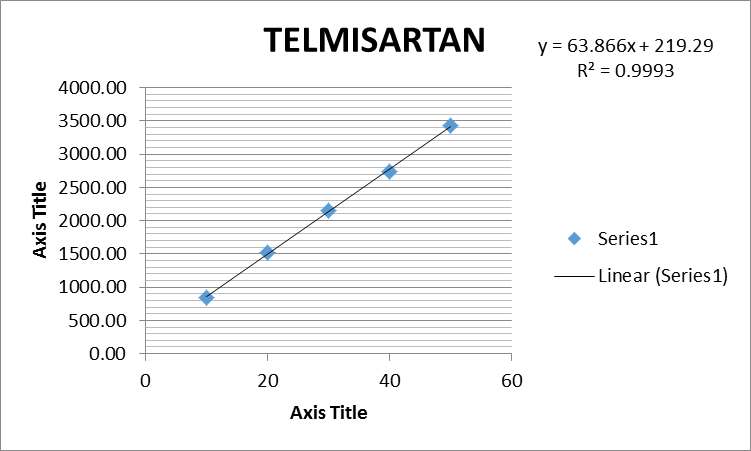
Figure 4: Calibration curve for Telmisartan.

Table 1: Analysis of marketed formulation.

Assay

Drug

Amt. Found

% Label Claim

SD

%RSD

Rp-HPLC Method

AZL

20.34

101.66

0.062

0.063

TLM

51.50

103.00

0.94

0.91

Table 2: Recovery data of Azelnidipine and Telmisartan by HPLC method.

Method

Drug

Level

%

Amount taken μg/ml

Amount added μg/ml

Absorbance mean ± S.D

Amount recovery mean ± S.D

% recovery mean ± S.D

RP-HPLC

Method

TLM

80%

10

8

17.96±0.007

7.96±0.007

99.52±0.09

100%

10

10

22.12±0.059

12.12±0.059

101.02±0.59

120%

10

12

20.01±0.063

10.01±0.063

100.08±0.63

AZL

80%

4

3.2

7.20±0.012

3.20±0.012

99.96±0.36

100%

4

4

8.02±0.010

4.02±0.010

100.62±0.24

120%

4

4.8

8.86±0.013

4.86±0.013

101.16±0.27

Table 3: Recovery data of Azelnidipine and Telmisartan by HPLC method.

METHOD

Level of Recovery (%)

Drug

% RSD

Standard Deviation*

Mean % Recovery

Rp-HPLC Method

80%

TLM

0.007

0.007

99.52

AZL

0.059

0.059

101.02

100%

TLM

0.063

0.063

100.08

AZL

0.012

0.012

99.96

120%

TLM

0.010

4.02±0.010

100.62

AZL

0.013

4.86±0.013

101.16

Table 4: Intra day and Inter day precision of Azelnidipine and Telmisartan.

METHOD

Drug

Conc (µg/ml)

Interday Precision

Intraday Precision

Mean± SD

%Amt Found

Mean± SD

%Amt Found

RP- HPLC METHOD

TLM

10

9.89±0.96

98.93

10.00±0.65

100.00

15

15.37±0.11

102.51

15.45±0.28

102.05

20

19.76±0.15

98.80

19.87±0.14

99.38

AZL

75

105.55±0.9

99.82

105.41±0.65

99.69

112.5

161.51±0.8

102.39

161.02±0.73

101.44

150

209.37±0.17

98.84

209.37±0.17

98.84

Accuracy

Recovery study done to validate the accuracy of the developed method. To pre-analyzed tablet solution, a definite concentration of the standard drug (80%, 100% and 120%) was added, and then its recovery was analyzed Table 5. The accuracy of UV spectroscopic method was ascertained by recovery studies performed at different levels of concentrations (80%, 100%, and 120%). The % recovery was found to be within 98- 101%. Statistical validation of recovery studies shown in Table 2.

Precision

Precision was studied to find out intra and inter-day variations in the test method of TLM and AZL. Intra?day precision was determined by analyzing three concentrations in three replicate measurements of within the linearity range of drugs on three different times in the same day. Inter?day precision was conducted during routine operation of the system over a period of 3 consecutive days. Intraday and Inter day Precision studies on HPLC method for TLM and AZL, which shows the high precision % amount in between 98% to 101% indicates to analytical method that concluded. Table .

Limit of detection and quantification

LOD is the lowest amount of analyte in a sample that can be detected but not necessarily quantify under the stated experimental conditions. LOQ is the lowest concentration of an analyte in a sample that can be determined with acceptable precision and accuracy under stated experimental conditions. The LOD and LOQ of AZL were found to be 0.21μg/ml and 0.64μg/ml, TLM were found to be 0.77μg/ml and 2.36μg/ml, respectively.

DISCUSSION

The proposed methods for simultaneous estimation of AZL and TLM in tablet dosage forms were found to be simple, accurate, economical, and rapid. The method was validated as per the ICH Q2 (R1) guidelines. Standard calibration yielded a correlation coefficient (r2) of 0.999 for both AZL and TLM at all the selected wavelengths. The values of % RSD are within the prescribed limit of 2%, showing high precision of methods, and recovery was close to 100% for both drugs. Results of the analysis of pharmaceutical formulations reveal that the proposed method is suitable for their simultaneous determination with virtual interference of any additive present in pharmaceutical formulations. Hence, the above methods can be applied successfully for simultaneous estimation of AZL and TLM in formulations.

CONCLUSION

The developed UV spectrophotometric method in that linearity, precision, range, and robustness were found to be more accurate, precise, and reproducible. The methods were found to be simple and time-saving. All proposed methods could be applied for routine analysis in quality control laboratories.

REFERENCES

  1. Finkel R, Clark M, Cubeddu luigi x. lipincots illustrated reviews: pharmacology. Wolters Kluwer, 2009; 564.
  2. Singh harkishan, kapoor v k. organic pharmaceutical chemistry. M k Jain for Vallabh Prakashan, 295.
  3. Sethi pd. 1997. Quantitative analysis of drugs in pharmaceutical formulations. 3rd edn., cbs publishers and distributors: new delhi; 6-9., jeffery gh, bassett j, mondham j, denney rc., 1989; 5: 216-217.
  4. Douglas a skoog, donald m west, james f holler, stanley r crouch. Fundamentals of analytical chemistry. 8th edn., thomson asia pvt. Ltd: singapore, 2007; 4: 921-975.
  5. Sharma bk. Instrumental methods of chemical analysis. 22nd edn., krishna prakshan media pvt. Ltd: meerut; c-9, c-292, c-295. Beckett ah, stenlake jb. Practical pharmaceutical chemistry. Part-ii. 4th edn., cbs publishers and distributors: new delhi, 2002; 85: 86-92.
  6. Jeffery gh, bassett j, mondham j, denney rc, singapore; 5, 216-217., hobart h willard, lynne l merritt, jr., john a dean, frank a settle, jr. 1986. Instrumental methods of analysis. 7th edn., cbs publishers and distributors: new delhi; 1, 592, 622- 628., mendham j, denney rc, barnes jd, thomas mjk. 2008, new delhi, 1989; 29(36): 289-295.
  7. International conference on harmonization, "q2a: text on validation of analytical procedures," federal register, 1995; 60(40): 11260–11262.
  8. Lloyd r slyder, joseph j kirkland, joseph l glajch. Practical hplc method development. 2nd edn. John wiley and sons, inc., usa, 1997; 22-24(42): 235-24.
  9. G.sartori prayas acharya, prasanth kumar, immanuel agasteen, sreerama rajasekhar, a review on analytical methods for determination of Azelnidipine alone and in combination with other drugs in pharmaceutical formulations,. Saudi journal of and pharmaceutical sciences, 2008; 148-159.
  10. Elias begas, christos papandreou, andreas tsakalof, danai daliani, george papatsibas, eftihia asprodini.?simple and reliable hplc method for the monitoring of Azelnidipine in osteosarcoma patients .? Journal of chromatographic science, 2014; 52(7): 590-595.
  11. Cristina magalhães santos, millene, da costa, vivian mara, pereira, adriana de fátima, silva-cunha, armando, ligório fialho, sílvia, pereira santinho gomes,  ana  julia,  rodrigues  da  silva  gisele.?development and validation of spectrophotometric method for determination of Azelnidipine incorporated into plga implants.? Int. J. Drug dev. & res., 2013.
  12. Ehab f elkady, marwa h tammam , ayman a mohamed. ?development and validation of an rp- hplc method for the determination of vinpocetine and Telmisartan in the presence of a vinpocetine alkaline degradation product in bulk and in capsule form.? Pub med, 2017. Doi: 10.5740/jaoacint.16- 0239.
  13. Talegaonkar, shweta pandey asiya mahtab archu singh farhan jalees ahmad mohd. Aqil sushama.?development and validation of stability indicating reversed?phase liquid chromatographic method for simultaneous quantification of Azelnidipine and teriflunomide in nanoparticles and marketed formulation.? Biomedical chromatography, 2018.
  14. Review on step-by-step analytical method validation. Panchumarthy ravisankar, ch. Naga navya, d. Pravallika, d. Navya sri., 2015; 10(5): 7-19.
  15. Analytical method development and validation by qbd approach – a review. Sinica dp, gholve sb, ajgunde rr, bhusnure og, thonte ss. 8, s.l. : pelagia research library, 2015; 6.
  16. Devesh a. Bhatt, smita i. Rane. ?qbd approach to analytical rphplc, 2011; 3(1).
  17. Neeraj k. Garg, gajanand sharma, bhupinder singh, pradip nirbhavane & om prakash katare quality by design (qbd)-based development and optimization of a simple, robust rp-hplc method for the estimation of Azelnidipine, journal of liquid chromatography & related technologies, 2015; 38(17): 1629-1637. doi: 10.1080/10826076.2015.1087409.
  18. Carr gp, vahlich jc. apractical approach to method validation in pharmaceutical analysis, j. Pharmaceutical biomedical analysis, 1990; 86: 613-618.
  19. ICH Harmonized Tripartite guideline, validation of analytical procedures: Text and Methodology Q2 (R1) Current Step 4 version, November, 2005.
  20. Henry TR, The history of valproate in clinical neuroscience, Psychopharmacology Bulletin, 2003; 37(2): 5–16.
  21. Rosenberg G, The mechanisms of action of valproate in neuropsychiatric disorders: can we see the forest for the trees? Cellular and Molecular Life Sciences, 2007; 64(16): 2090–2103.
  22. Shiba M, Hashi S, Nakanishi H, Masuda S, Katsura T, and Yano I, Detection of 22 antiepileptic drugs by ultra-performance liquid chromatography coupled with tandum mass spectrometry applicable to routine therapeutic drug monitoring, Biomedical Chromatography, 2012; 26: 1519–1528.
  23. LGC, In-House Method Validation: A Guide for Chemical Laboratories, 2003.
  24. U.S. FDA – Guidance for Industry (draft): Analytical Procedures and Methods Validation: Chemistry, Manufacturing, and Controls and Documentation, 2000.
  25. U.S. FDA – Guidance for Industry, Bioanalytical Method Validation, 2001.
  26. ICH Q2A, Validation of Analytical Procedures: Definitions and Terminology, Geneva, 1995, in incorporated in Q2(R1), 2005.
  27. ICH Q2B, Validation of Analytical Procedures: Methodology, adoptedin 1996, Geneva Q2B, in incorporated in Q2(R1), 2005.
  28.  IUPAC Technical Report, Harmonized Guidelines for Single-Laboratory Validation of Methods of Analysis, Pure Appl. Chem., 2002; 74(5): 835/855.
  29. Eurachem – The Fitness for Purpose of Analytical Methods A Laboratory Guide to Method Validation and Related Topics, 1998.
  30. L. Huber, Validation and Qualification in Analytical Laboratories, Informa Healthcare, New York, USA, 2007.
  31. AOAC, How to Meet ISO 17025 Requirements for Methods Verification, 2007.
  32. C. T. Viswanathan et al., Workshop/Conference Report — Quantitative Bioanalytical Methods Validation and Implementation: Best Practices for Chromatographic and Ligand Binding Assays. AAPS Journal, 2007; 9(1): E30-E42.
  33. USP 32 – NF 27, General Chapter 1225, Validation of Compendial Methods, 2009.
  34. Quality Assurance Guide - OPP Analytical Method De velopment and Validation, Michael Swartz, Swartz Swartz, Michael Swartz, CRC press, 1997.
  35. Modern HPLC for practicing scient ists, Michael W.Dong (google.com).
  36. Practical HPLC method development 2 nd edition, Llyod R.synder (google.com).
  37. Pharmaceutical process validati on, nashra and Watcher AH, CBS publishers and Distributors, Newdelhi.
  38. Modern Pharmaceutical analysis, Volume1-4, Satish Ahuja, CBS publishers and Distributors, Newdelhi.
  39. Crowther JB. Validation of pharmaceutical test methods. In: Handbook of modern pharmaceutical analysis, Academic press, New York, 2001; 415–443.
  40. B Ramu, N. Ramakrishna, Meruva Sathish, D. Anoosha (2015). Formulation of tellmisartan Hcl Fast Disintegrating Tablets by Sublimation Technique. International Journal of Pharm Tech Research. 8(3), 330-339..
  41. Ramu, B., Manasa, M.S. (2015). Formulation and Evaluation of Colon Specific Drug Delivery of Press Coated Lansoprazole Tablets. Indo American Journal of Pharmaceutical Research, 5(4),1522.
  42. Ramu B. Formulation of Lamotrigine Orodispersible Tablets By Using New Generation Superdisintegrants Generation Superdisintegrants World Journal Of Pharmacy And Pharmaceutical Sciences. 2015; 4:631- 43.
  43. Nagaraju, B.; Ramu, B.; Saibaba, S.V.; Rajkamal, B. Formulation and evaluation of floating bioadhesive Doxofylline tablets. Int. J. Drug Deliv. 2016, 8, 134–141..
  44. P.P. Deepika et al. Formulation and evaluation of doxorubicin nanopsonges for targeted drug delivery African J. Biol. Sci. (South Africa)(2024).
  45. RAMESH, C., RAMU, B., RAJKAMAL, B. (2016) .Formulation of Colon Specific Didanosine Enteric Coated Matrix Tablets Using Sensitive Polymer. The Pharmaceutical and Chemical Journal, 3(2), 1-14.

Reference

  1. Finkel R, Clark M, Cubeddu luigi x. lipincots illustrated reviews: pharmacology. Wolters Kluwer, 2009; 564.
  2. Singh harkishan, kapoor v k. organic pharmaceutical chemistry. M k Jain for Vallabh Prakashan, 295.
  3. Sethi pd. 1997. Quantitative analysis of drugs in pharmaceutical formulations. 3rd edn., cbs publishers and distributors: new delhi; 6-9., jeffery gh, bassett j, mondham j, denney rc., 1989; 5: 216-217.
  4. Douglas a skoog, donald m west, james f holler, stanley r crouch. Fundamentals of analytical chemistry. 8th edn., thomson asia pvt. Ltd: singapore, 2007; 4: 921-975.
  5. Sharma bk. Instrumental methods of chemical analysis. 22nd edn., krishna prakshan media pvt. Ltd: meerut; c-9, c-292, c-295. Beckett ah, stenlake jb. Practical pharmaceutical chemistry. Part-ii. 4th edn., cbs publishers and distributors: new delhi, 2002; 85: 86-92.
  6. Jeffery gh, bassett j, mondham j, denney rc, singapore; 5, 216-217., hobart h willard, lynne l merritt, jr., john a dean, frank a settle, jr. 1986. Instrumental methods of analysis. 7th edn., cbs publishers and distributors: new delhi; 1, 592, 622- 628., mendham j, denney rc, barnes jd, thomas mjk. 2008, new delhi, 1989; 29(36): 289-295.
  7. International conference on harmonization, "q2a: text on validation of analytical procedures," federal register, 1995; 60(40): 11260–11262.
  8. Lloyd r slyder, joseph j kirkland, joseph l glajch. Practical hplc method development. 2nd edn. John wiley and sons, inc., usa, 1997; 22-24(42): 235-24.
  9. G.sartori prayas acharya, prasanth kumar, immanuel agasteen, sreerama rajasekhar, a review on analytical methods for determination of Azelnidipine alone and in combination with other drugs in pharmaceutical formulations,. Saudi journal of and pharmaceutical sciences, 2008; 148-159.
  10. Elias begas, christos papandreou, andreas tsakalof, danai daliani, george papatsibas, eftihia asprodini.?simple and reliable hplc method for the monitoring of Azelnidipine in osteosarcoma patients .? Journal of chromatographic science, 2014; 52(7): 590-595.
  11. Cristina magalhães santos, millene, da costa, vivian mara, pereira, adriana de fátima, silva-cunha, armando, ligório fialho, sílvia, pereira santinho gomes,  ana  julia,  rodrigues  da  silva  gisele.?development and validation of spectrophotometric method for determination of Azelnidipine incorporated into plga implants.? Int. J. Drug dev. & res., 2013.
  12. Ehab f elkady, marwa h tammam , ayman a mohamed. ?development and validation of an rp- hplc method for the determination of vinpocetine and Telmisartan in the presence of a vinpocetine alkaline degradation product in bulk and in capsule form.? Pub med, 2017. Doi: 10.5740/jaoacint.16- 0239.
  13. Talegaonkar, shweta pandey asiya mahtab archu singh farhan jalees ahmad mohd. Aqil sushama.?development and validation of stability indicating reversed?phase liquid chromatographic method for simultaneous quantification of Azelnidipine and teriflunomide in nanoparticles and marketed formulation.? Biomedical chromatography, 2018.
  14. Review on step-by-step analytical method validation. Panchumarthy ravisankar, ch. Naga navya, d. Pravallika, d. Navya sri., 2015; 10(5): 7-19.
  15. Analytical method development and validation by qbd approach – a review. Sinica dp, gholve sb, ajgunde rr, bhusnure og, thonte ss. 8, s.l. : pelagia research library, 2015; 6.
  16. Devesh a. Bhatt, smita i. Rane. ?qbd approach to analytical rphplc, 2011; 3(1).
  17. Neeraj k. Garg, gajanand sharma, bhupinder singh, pradip nirbhavane & om prakash katare quality by design (qbd)-based development and optimization of a simple, robust rp-hplc method for the estimation of Azelnidipine, journal of liquid chromatography & related technologies, 2015; 38(17): 1629-1637. doi: 10.1080/10826076.2015.1087409.
  18. Carr gp, vahlich jc. apractical approach to method validation in pharmaceutical analysis, j. Pharmaceutical biomedical analysis, 1990; 86: 613-618.
  19. ICH Harmonized Tripartite guideline, validation of analytical procedures: Text and Methodology Q2 (R1) Current Step 4 version, November, 2005.
  20. Henry TR, The history of valproate in clinical neuroscience, Psychopharmacology Bulletin, 2003; 37(2): 5–16.
  21. Rosenberg G, The mechanisms of action of valproate in neuropsychiatric disorders: can we see the forest for the trees? Cellular and Molecular Life Sciences, 2007; 64(16): 2090–2103.
  22. Shiba M, Hashi S, Nakanishi H, Masuda S, Katsura T, and Yano I, Detection of 22 antiepileptic drugs by ultra-performance liquid chromatography coupled with tandum mass spectrometry applicable to routine therapeutic drug monitoring, Biomedical Chromatography, 2012; 26: 1519–1528.
  23. LGC, In-House Method Validation: A Guide for Chemical Laboratories, 2003.
  24. U.S. FDA – Guidance for Industry (draft): Analytical Procedures and Methods Validation: Chemistry, Manufacturing, and Controls and Documentation, 2000.
  25. U.S. FDA – Guidance for Industry, Bioanalytical Method Validation, 2001.
  26. ICH Q2A, Validation of Analytical Procedures: Definitions and Terminology, Geneva, 1995, in incorporated in Q2(R1), 2005.
  27. ICH Q2B, Validation of Analytical Procedures: Methodology, adoptedin 1996, Geneva Q2B, in incorporated in Q2(R1), 2005.
  28.  IUPAC Technical Report, Harmonized Guidelines for Single-Laboratory Validation of Methods of Analysis, Pure Appl. Chem., 2002; 74(5): 835/855.
  29. Eurachem – The Fitness for Purpose of Analytical Methods A Laboratory Guide to Method Validation and Related Topics, 1998.
  30. L. Huber, Validation and Qualification in Analytical Laboratories, Informa Healthcare, New York, USA, 2007.
  31. AOAC, How to Meet ISO 17025 Requirements for Methods Verification, 2007.
  32. C. T. Viswanathan et al., Workshop/Conference Report — Quantitative Bioanalytical Methods Validation and Implementation: Best Practices for Chromatographic and Ligand Binding Assays. AAPS Journal, 2007; 9(1): E30-E42.
  33. USP 32 – NF 27, General Chapter 1225, Validation of Compendial Methods, 2009.
  34. Quality Assurance Guide - OPP Analytical Method De velopment and Validation, Michael Swartz, Swartz Swartz, Michael Swartz, CRC press, 1997.
  35. Modern HPLC for practicing scient ists, Michael W.Dong (google.com).
  36. Practical HPLC method development 2 nd edition, Llyod R.synder (google.com).
  37. Pharmaceutical process validati on, nashra and Watcher AH, CBS publishers and Distributors, Newdelhi.
  38. Modern Pharmaceutical analysis, Volume1-4, Satish Ahuja, CBS publishers and Distributors, Newdelhi.
  39. Crowther JB. Validation of pharmaceutical test methods. In: Handbook of modern pharmaceutical analysis, Academic press, New York, 2001; 415–443.
  40. B Ramu, N. Ramakrishna, Meruva Sathish, D. Anoosha (2015). Formulation of tellmisartan Hcl Fast Disintegrating Tablets by Sublimation Technique. International Journal of Pharm Tech Research. 8(3), 330-339..
  41. Ramu, B., Manasa, M.S. (2015). Formulation and Evaluation of Colon Specific Drug Delivery of Press Coated Lansoprazole Tablets. Indo American Journal of Pharmaceutical Research, 5(4),1522.
  42. Ramu B. Formulation of Lamotrigine Orodispersible Tablets By Using New Generation Superdisintegrants Generation Superdisintegrants World Journal Of Pharmacy And Pharmaceutical Sciences. 2015; 4:631- 43.
  43. Nagaraju, B.; Ramu, B.; Saibaba, S.V.; Rajkamal, B. Formulation and evaluation of floating bioadhesive Doxofylline tablets. Int. J. Drug Deliv. 2016, 8, 134–141..
  44. P.P. Deepika et al. Formulation and evaluation of doxorubicin nanopsonges for targeted drug delivery African J. Biol. Sci. (South Africa)(2024).
  45. RAMESH, C., RAMU, B., RAJKAMAL, B. (2016) .Formulation of Colon Specific Didanosine Enteric Coated Matrix Tablets Using Sensitive Polymer. The Pharmaceutical and Chemical Journal, 3(2), 1-14.

Photo
CH. Bhavani
Corresponding author

Department of Pharmaceutical Analysis, Centre for Pharmaceutical Sciences, Institute of Science and Technology, Jawaharlal Nehru Technological University Hyderabad, Kukatpally, Hyderabad, 500085, Telangana, India

Photo
Dr. M. Sunitha Reddy
Co-author

Principal, Centre for Pharmaceutical Sciences, Institute of Science and Technology, Jawaharlal Nehru Technological University Hyderabad, Kukatpally, Hyderabad, 500085, Telangana, India

CH. Bhavani, Dr. M. Sunitha Reddy, Estimation for Azelnipidine & Telmisartan in Bulk & Pharmaceutical Dosage Form by RP–HPLC, Int. J. of Pharm. Sci., 2025, Vol 3, Issue 11, 453-461. https://doi.org/10.5281/zenodo.17521166

More related articles
Formulation and Evaluation of Polyherbal Shampoo...
Priyanka Bandichhode, Predeep Chabukswar, Shruti Narayankar, Kris...
Formulation and Evaluation of Natural Herbal Face ...
Pradeep Chabukswar, Priyanka Bandichhode, Shivani Biskite, Deepak...
A Research on Formulation and Evaluation of Herbal...
Gurude Sneha, Shivraj Suryawanshi, Hambire Shradha, Gudde Saraswa...
Virtual Screening of Bioactive Constituents of Lagenaria siceraria as Potential ...
Dinesh Kawade, Gun Chourasia, Shashwati Motghare, Dipak Rinait, Alpana Asnani...
Antibody-Drug Conjugates in Modern Prodrug Design: Linker Chemistry and Payload ...
G. E. Ebimo-Moko, T. Ganatra, V. Ebimo-Moko, W. E. Madu, J. E. Sampson, J. D. Joel, F. O. Oladele...
Related Articles
Formulation and Evaluation of Polyherbal Shampoo...
Priyanka Bandichhode, Predeep Chabukswar, Shruti Narayankar, Krishnamurthy Kamalapurkar...
More related articles
Formulation and Evaluation of Polyherbal Shampoo...
Priyanka Bandichhode, Predeep Chabukswar, Shruti Narayankar, Krishnamurthy Kamalapurkar...
Formulation and Evaluation of Natural Herbal Face Wash Tablets Containing Sandal...
Pradeep Chabukswar, Priyanka Bandichhode, Shivani Biskite, Deepak Bhosale...
A Research on Formulation and Evaluation of Herbal Soap...
Gurude Sneha, Shivraj Suryawanshi, Hambire Shradha, Gudde Saraswati, Ghevare Omkar, Gangapure Sakshi...
Formulation and Evaluation of Polyherbal Shampoo...
Priyanka Bandichhode, Predeep Chabukswar, Shruti Narayankar, Krishnamurthy Kamalapurkar...
Formulation and Evaluation of Natural Herbal Face Wash Tablets Containing Sandal...
Pradeep Chabukswar, Priyanka Bandichhode, Shivani Biskite, Deepak Bhosale...
A Research on Formulation and Evaluation of Herbal Soap...
Gurude Sneha, Shivraj Suryawanshi, Hambire Shradha, Gudde Saraswati, Ghevare Omkar, Gangapure Sakshi...