

We use cookies to ensure our website works properly and to personalise your experience. Cookies policy
Department of Pharmacology, St. Soldier Institute of Pharmacy, Lidhran Campus, Behind NIT (R.E.C.), Jalandhar –Amritsar by pass, NH-1, Jalandhar -144011, Punjab, India.
Aim: To evaluate the anti-Parkinson activity of the ethanolic extract of Moringa Oleifera and Ashwagandha (Withania Somnifera) in a mice model of socially induced Parkinson's. Methods: The research involves the extraction of Several Phytoconstituents using water as a solvent in a Soxhlet apparatus, followed by an analysis of the extract’s biochemical properties.Male mice weighing 30–35g were used for the study. They were housed in groups of five under standard laboratory conditions with a temperature of 23 ± 1°C and humidity of 55 ± 5%. The animals had free access to pellet food and water. Before starting the study, they were given 7 days to acclimatize to the laboratory environment. Conclusion: : The consistent performance of Group V across multiple behavioral tests strongly supports the extract’s ability to alleviate Parkinson’s-like symptoms, likely through its neuroprotective and dopamine-regulating properties. The extract’s efficacy in improving motor functions, as evidenced by the Hanging/Grip Test, Rota Rod Test, and Catalepsy Test, suggests its role in reducing rigidity, enhancing voluntary movement control, and promoting better physical condition. Additionally, the reduction in depression-like and anxiety-like behaviors observed in the Elevated Plus Maze reflects the extract’s impact on mood regulation and emotional stability. Increased exploratory behavior and locomotor activity seen in the Open Field Test and Actophotometer Test further emphasize the extract’s potential in enhancing overall motor and cognitive functions.
The most sophisticated and highly evolved organ in multicellular organisms is the human brain. The brain is a convoluted organs composed up of a large number of nerve cells that the are enclosed within the skull and operate as the central nervous system's (CNS) command center (1–4) The brainstem, cerebellum, and cerebrum constitute its three primary lobes. These brain regions are in responsible for controlling an array of psychological functions, include the acquisition, processing, as well as coordination of sensory input. (5–8).
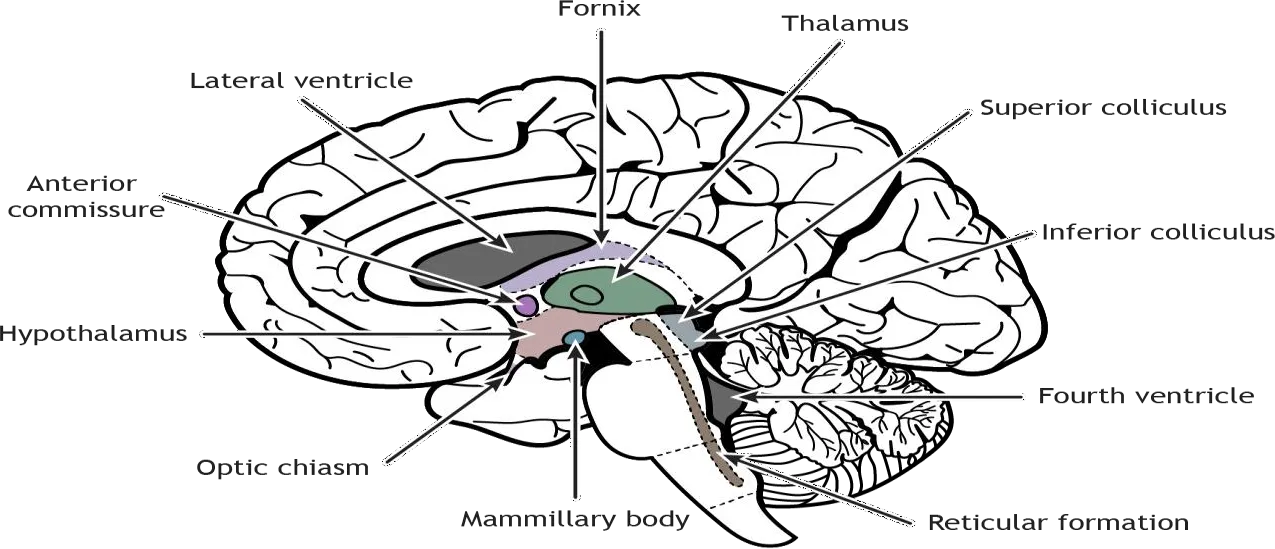
Figure 1: Internal Structure of the Brain
The blood-brain barrier (BBB), which is put together by the special vascular system of the central nervous system (CNS), firmly controls the flow of ions, chemical compounds, and cells between the bloodstream and the brain (9).
The most common neurodegenerative disease with an adult onset and the second most chronic and progressive condition is Parkinson's disease (PD). In Parkinson's disease (PD), dopaminergic neurons in the substantia nigra pars compacta consistently disappear, and striatal dopamine levels that drive muscle control and musculoskeletal movement significantly decline [10].
Bradykinesia (slowness and decreased amplitude of movement), shivering at rest, muscular rigidity, diminished postural reflexes, and bent body alignment are each sign of the clinical illness known as parkinsonism. [11]
The Indian native tree Moringa oleifera (MO) can be found all over the world. Its several parts—bark, leaf, root, seeds, pod, fruits, and flowers—are used as a medicinal alternative to cure many kinds of diseases as Anti-Inflammatory, analgesic and antipyretic, antimicrobial, immunomodulatory, anti-diabetic and neuroprotective. In addition, this plant has an ideal value for nutrition, particularly in its leaves (12). M. oleifera is a small in size, 5–12 cm large, drought-resistant deciduous tree. It has an incredible capacity to be used as food for animals as well as for human nutritional, healthcare and industrial applications [13-14].Carotenoids, tocopherols (α, γ, and δ), flavonoids, phenolic acids, folate, polyunsaturated fatty acids, and numerous other minerals are among the most significant substances found in it[15].Moringa extract is known to reduce ROS formation, mitochondrial damage, and apoptosis (16).
"Indian Ginseng" and "Indian Winter Cherry" names for ashwagandha (Withania somnifera, fam. Solanaceae) [17,18]. Many ailments, such as stress [19], anxiety [20], arthritis [21], and other disorders affecting the central nervous system (CNS), such as Parkinson's [22-23] and Alzheimer's [24], can be effectively treated with this indigenous medicinal plant. Ashwagandha has been shown to improve memory and the functioning of the brain and nervous system This increases cell-mediated immunity, which fortifies the body's protections against disease. Ashwagandha's potent antioxidant properties.[25] Additionally, Ws is a potent neuronal tonic and has been used in animal models to treat a number of neurological conditions, including Parkinson's disease [26], epileptic [27], memory loss [28].
Parkinson's disease (PD) is a prevalent neurodegenerative disorder characterized by a movement disorder marked by bradykinesia, rest tremor, and rigidity. Additionally, it involves postural instability, subtle motor symptoms, and numerous non-motor features (29) The primary motor symptoms arise from the depletion of a specific group of neurons – the dopaminergic neurons located in the substantia nigra pars compacta, which extend axons to the striatum (30).
P.D involves degeneration of the nigrostriatal pathway, thus reducing the neurotransmitter Dopamine. Transport of dopamine is impaired, as a result of which excitability of the Striatum is altered and Other neurotransmitters are released.[31]
Experimental protocol:
Male mice weighing between-30-35g will be used for the study. The animals were kept in groups of five under standard lab conditions, with the temperature set at 23 ± 1°C and humidity at 55 ± 5%. They had unlimited access to pellet food (from Hindustan Lever Foods, Bangalore, India) and water. They were given seven days to acclimate to the lab setting before to the trial.Animals were divided into 5 groups, each group contain 6 mice.
Group I is taken as ‘Control group’ and receives regular food and received 0.9% w/v NaCl (10 ml/kg) orally once daily for seven days.
Group II is taken as ‘Negative control group’ and treated with MPTP of 20mg/kg (for the study of disease).
In Group III, which is considered the "Standard group," participants were given SYNDOPA (Levodopa + Carbidopa) orally once daily at a dose of 10 mg/kg for seven days. Then, intraperitoneal MPTP injections at 20 mg/kg once daily for the seven days to evaluate the effectiveness of a standard treatment for Parkinson’s disease.
Group IV is taken as ‘Test preparation I (Low dose)’ and treated with test preparation Ethanolic Extract of Ashwagandha and Moringa Oleifera at 200mg/kg is given orally for 7 days, MPTP (20 mg/kg, i.p.) is then given once every day for seven days..
Group V is taken as ‘Test preparation II (High dose)’ and treated with test preparation Ethanolic Extract of Ashwagandha and Moringa Oleifera at 400 mg /kg, given orally for 7 days, MPTP (20 mg/kg, i.p.) is After that, it is given once a day for seven days.
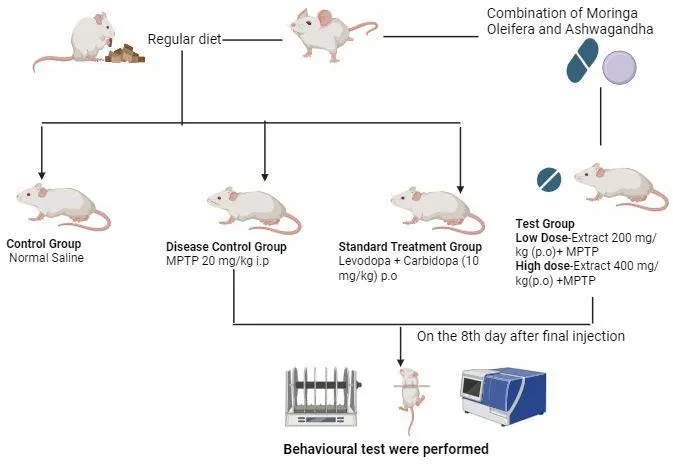
Figure 2: Behavioural Test Performed
Behavioural test performed
Preparation of Ashwagandha extracts (WSE):
Ashwagandha leaves weighing 66 grams were extracted with 10 L of 40% fermented ethanol, followed by soaking for over 15 hours. The extraction procedure was then carried out at 50 °C for four hours. The extracted solution was filtered and concentrated to a Brix level of 15 or higher, and then maltodextrin was added in an amount equal to the solid content of the concentrate. After sterilization at 65 ◦C for 30 min, it was spray-dried. The dry powder was sealed for use in research.This mixed extract of ashwagandha was named WSE [32].
Preparation of Moringa extract:
After being air-dried and ground into a powder, 500 g of the leaves were macerated in 1 L of 50% ethanol for 72 hours. It (the ethanol) was decanted, filtered several times using cotton wool and Whatman’s No.1 filter paper and concentrated using a rotary evaporator (BUCHI Rota vapour R-205) at the Central Laboratory of the University of Ibadan, Ibadan, Nigeria. The percentage yield was 15.61%, representing 78.05 g of extraction from the 500 g of dried
pulverized leaves. On each day of the experiment, the dark tan coloured extract obtained was freshly dissolved in 5% Tween 80 (vehicle), which served as the vehicle[33].
• Experimental Parameters:
• Behaviour parameters-
1. General Behavioural Analysis
2. Rotarod Test
3. Hanging Test
4. Catalepsy bar Test
5. Open field test for anxiety-like behavior measurement
6. Actophotometer Test
7. Elevated plus maze Test.
1. Analysis of General Behaviour. Before the experiment started and weekly up to the dosing, the behavior of each animal was recorded. The final assessment was made 24 hours after the last dose. Behavior was evaluated using a specific scoring system. Score 0: Normal behaviour,
Score 1: General slowness of displacement resulting from mild hind limb impairment, Score 2: In-coordination and marked gait abnormalities,
Score 3: Hind limb paralysis,
Score 4: Incapacity to move resulting from forelimb and hindlimb paralysis, and Score 5: Recumbency.
2. Rotarod Test. The Rotarod is an apparatus that is used to check motor coordination and balance. In this test, the mice were placed on the horizontal rod that rotates about its long axis. The time taken by each of the mice to fall off was recorded. The normal mouse should remain on the rod for a long time, while the mouse treated with MPTP and that showed Parkinson 's-like symptoms fell off from the rod as they were not able to maintain their motor coordination and balance.[34]
3. Hanging test- In the hanging test, mice were put on a flat grid until they grabbed onto it. The next step was to invert the grid, which resulted in the mice hanging upside down. The researchers timed how long the mice could hang before they fell. This process was repeated
four times for each mouse, and the average time from all the attempts was calculated.[35-36]
4. Catalepsy Bar Test. The test used a typical bar test to measure catalepsy in accordance with Hoffman's approach. The animal's front paws were positioned on a wooden bar that was 0.9 cm in diameter and 3 cm high. The amount of time the animal remained in this posture was noted. Catalepsy ended when the animal either removed its paws from the bar or moved its head to explore.[37]
5. Open field test for anxiety-like behavior measurement Anxiety behaviors in the new environment were measured using OFT.[38] The tool used on the OFT, measuring 40 cm in length and height, and 160 cm in width, of acrylic material. The observation was recorded for 10 min with a video camera. Anxiety levels are calculated by recording the time spent in the central area (TCA) and the number of trips back to the center (NRC).
6. Actophotometer Test: An actophotometer is mainly used to check the locomotor activity of the rodent. An actophotometer consists of photoelectric cells coupled in a circuit with a counter. When a beam of light strikes the photoelectric cell, the circuit is complete. The animal was placed in the metal box, and when it walked through it, the lights of the photocell were turned off, and then a count was recorded. All the animals were initially placed in the apparatus for five minutes for acclimatization. In the main test, mice were kept for five minutes in the apparatus, and then the readings were recorded as activity scores.[39]
7. Elevated plus maze test: The elevated plus maze test was used to evaluate anxiety-like behaviour in mice. Before the test, the mice were allowed to adapt to the experimental room for 30 minutes. They were then placed in a cross-shaped maze with open arms (5 cm × 50 cm) and closed arms (5 cm × 50 cm × 10 cm), with a central area of 5 cm × 5 cm. A video camera recorded their movement for 1 minute as they explored freely. During the test, their movements under dim light were tracked for 5 minutes using Super Maze software. The maze was cleaned with 75% ethanol between tests to remove animal odors.[40].
RESULTS
1. Changes in Body Weight: -
Table 1: Effect of Moringa Oleifera and Withania Somnifera on Body Weight
| Groups | Treatment | Day 1 | Day 7 |
|---|---|---|---|
| I | Vehicle control (NaCl 0.9% w/v at dose of 10ml/kg) |
22.84±0.96 | 23.4±01.86 |
| II | MPTP (20mg/kg) | 22.79±1.16 | 20.66±1.55 |
| III | Levodopa + Carbidopa (10 mg/kg) + MPTP |
23.57±1.023 | 25.28±1.23### |
| IV | Moringa Oleifera and Withania Somnifera (L.D) (200 mg/kg) + MPTP |
21.86±1.23 | 24.04±1.95## |
| V | Moringa Oleifera and Withania Somnifera (H.D) (400 mg/kg) + MPTP |
22.78±1.66 | 24.56±1.12# |
#P < 0.05, ## P < 0.01, ### P < 0.001
When compared with the control group. All values represent = Mean ± SEM, n= 6 in each group
2. Changes in feed intake:
Table 2: Effect of Moringa Oleifera and Withania Somnifera on Feed Intake
| Groups | Treatment | Day 1 | Day 7 |
|---|---|---|---|
| I | Vehicle control (NaCl 0.9% w/v at dose of 10ml/kg) |
3.38±1.24 | 4.54±1.24 |
| II | MPTP (20mg/kg) | 3.63±1.37 | 2.44±1.26 |
| III | Levodopa + Carbidopa (10 mg/kg) + MPTP |
3.95±1.95 | 4.85±1.25### |
| IV | Moringa Oleifera and Withania Somnifera (L.D) (200 mg/kg) + MPTP |
3.46±1.24 | 4.68±1.45## |
| V | Moringa Oleifera and Withania Somnifera (H.D) (400 mg/kg) + MPTP |
3.73±1.17 | 4.79±1.16# |
#P < 0.05, ## P < 0.01, ### P < 0.001
When compared with the control group. All values represent = Mean ± SEM, n= 6 in each group
3. Changes in water intake:- Table 3: Effect of Moringa Oleifera and Withania Somnifera on Water Intake
| Groups | Treatment | Day 1 | Day 7 |
|---|---|---|---|
| I | Vehicle control (NaCl 0.9% w/v at dose of 10ml/kg) |
2.44±1.23 | 3.11±1.14 |
| II | MPTP (20mg/kg) | 2.49±1.15 | 3.37±1.24 |
| III | Levodopa + Carbidopa (10 mg/kg) + MPTP |
2.56±1.23 | 3.26±0.98### |
| IV | Moringa Oleifera and Withania Somnifera (L.D) (200 mg/kg) + MPTP |
2.46±1.24 | 3.24±1.16## |
| V | Moringa Oleifera and Withania Somnifera (H.D) (400 mg/kg) + MPTP |
2.54±0.97 | 3.24±1.65# |
#P < 0.05, ## P < 0.01, ### P < 0.001
When compared with the control group. All values represent = Mean ± SEM, n= 6 in each group
4. Hanging/Grip Test: -
(A) Bar Test 0.5mm:
Table 4: Effect of Moringa Oleifera and Withania Somnifera on bar Test 0.5mm
| Groups | Treatment | Fall off time (sec) |
|---|---|---|
| I | Vehicle control (NaCl 0.9% w/v at dose of 10ml/kg) | 32.26±1.8 |
| II | MPTP (20mg/kg) | 15.15±0.7 |
| III | Levodopa + Carbidopa (10 mg/kg) + MPTP | 27.38±1.5### |
| IV | Moringa Oleifera and Withania Somnifera (L.D) (200 mg/kg) + MPTP | 21.47±0.5## |
| V | Moringa Oleifera and Withania Somnifera (H.D) (400 mg/kg) + MPTP | 25.28±1.4# |
#P < 0.05, ## P < 0.01, ### P < 0.001
When compared with the control group. All values represent = Mean ± SEM, n= 6 in each group
(B) Bar Test 2mm:
Table 5: Effect of Moringa Oleifera and Withania Somnifera on bar Test 2mm
| Groups | Treatment | Fall off time (sec.) |
|---|---|---|
| I | Vehicle control (NaCl 0.9% w/v at dose of 10ml/kg) | 31.24±2.6 |
| II | MPTP (20mg/kg) | 16.28±0.5 |
| III | Levodopa + Carbidopa (10 mg/kg) + MPTP |
28.21±1.6### |
| IV | Moringa Oleifera and Withania Somnifera (L.D) (200 mg/kg) + MPTP | 22.12±1.6## |
| V | Moringa Oleifera and Withania Somnifera (H.D) (400 mg/kg) + MPTP | 26.15±1.8# |
#P < 0.05, ## P < 0.01, ### P < 0.001
When compared with the control group. All values represent = Mean ± SEM, n= 6 in each group
(C) Bar Test 4mm:
Table 6: Effect of Moringa Oleifera and Withania Somnifera on bar Test 4mm
| Groups | Treatment | Fall off time (sec.) |
|---|---|---|
| I | Vehicle control (NaCl 0.9% w/v at dose of 10ml/kg) | 30.26±2.6 |
| II | MPTP (20mg/kg) | 12.14±0.5 |
| III | Levodopa + Carbidopa (10 mg/kg) + MPTP |
26.25±1.7### |
| IV | Moringa Oleifera and Withania Somnifera (L.D) (200 mg/kg) + MPTP | 17.12±0.3## |
| V | Moringa Oleifera and Withania Somnifera (H.D) (400 mg/kg) + MPTP | 24.28±1.6# |
#P < 0.05, ## P < 0.01, ### P < 0.001
When compared with the control group. All values represent = Mean ± SEM, n= 6 in each group
5. Rota Rod Test:
Table 7: Effect of Moringa Oleifera and Withania Somnifera on Rota Rod
| Groups | Treatment | Time spent on Rota rod (sec) |
|---|---|---|
| I | Vehicle control (NaCl 0.9% w/v at dose of 10ml/kg) | 178.68±0.96 |
| II | MPTP (20mg/kg) | 61.334±0.18 |
| III | Levodopa + Carbidopa (10 mg/kg) + MPTP | 120.68±0.56### |
| IV | Moringa Oleifera and Withania Somnifera (L.D) (200 mg/kg) + MPTP | 94.668±0.72## |
| V | Moringa Oleifera and Withania Somnifera (H.D) (400 mg/kg) + MPTP | 111.64±0.14# |
#P < 0.05, ## P < 0.01, ### P < 0.001
When compared with the control group. All values represent = Mean ± SEM, n= 6 in each group
6. Elevated Plus Maze:
Table 8: Effect of Moringa Oleifera and Withania Somnifera on Elevated Plus Maze
| Groups | Treatment | Time spent(sec) | No. of Entries | |
|---|---|---|---|---|
| Closed arm | Open arm | |||
| I | Vehicle control (NaCl 0.9% w/v at dose of 10ml/kg) | 378.56±1.57 | 122.77±2.32 | 9.18±2.04 |
| II | MPTP (20mg/kg) | 101.17±1.06 | 111.28±1.24 | 4.16±1.18 |
| III | Levodopa + Carbidopa (10 mg/kg) + MPTP | 114.55±0.24### | 402.59±0.25### | 22.28±0.26### |
| IV | Moringa Oleifera and Withania Somnifera (L.D) (200 mg/kg) + MPTP | 312.16±1.26## | 218.24±1.96## | 15.16±1.64## |
| V | Moringa Oleifera and Withania Somnifera (H.D) (400 mg/kg) + MPTP | 242.16±0.57# | 264.58±2.36# | 19.18±0.25# |
#P < 0.05, ## P < 0.01, ### P < 0.001
When compared with the control group. All values represent = Mean ± SEM, n= 6 in each group
7. Catalepsy Test: -
Table 9: Effect of Moringa Oleifera and Withania Somnifera on Catalepsy Test
| Groups | Treatment | Catalepsy Time (sec) |
|---|---|---|
| I | Vehicle control (NaCl 0.9% w/v at dose of 10ml/kg) | 36.16±0.12 |
| II | MPTP (20mg/kg) | 55.18±1.02 |
| III | Levodopa + Carbidopa (10 mg/kg) + MPTP | 44.12±0.08### |
| IV | Moringa Oleifera and Withania Somnifera (L.D) (200 mg/kg) + MPTP | 28.14±0.06## |
| V | Moringa Oleifera and Withania Somnifera (H.D) (400 mg/kg) + MPTP | 32.13±0.14# |
#P < 0.05, ## P < 0.01, ### P < 0.001
When compared with the control group. All values represent = Mean ± SEM, n= 6 in each group
8. Open Field Test:
Table 10: Effect of Moringa Oleifera and Withania Somnifera on Open Field Test
| Groups | Treatment | Time at centre (sec) | Grooming (sec) | Line of crossing |
|---|---|---|---|---|
| I | Vehicle control (NaCl 0.9% w/v at dose of 10ml/kg) | 16.66±1.56 | 25.28±2.34 | 49.16±2.02 |
| II | MPTP (20mg/kg) | 10.13±0.26 | 1.57±1.17 | 8.24±1.07 |
| III | Levodopa + Carbidopa (10 mg/kg) + MPTP | 41.56±0.22### | 3.26±0.26## # |
11.28±0.25### |
| IV | Moringa Oleifera and Withania Somnifera (L.D) (200 mg/kg) + MPTP | 31.44±1.24## | 9.58±1.98## | 26.14±1.64## |
| V | Moringa Oleifera and Withania Somnifera (H.D) (400 mg/kg) + MPTP | 35.49±0.58# | 7.62±2.36# | 22.66±0.22# |
#P < 0.05, ## P < 0.01, ### P < 0.001
When compared with the control group. All values represent = Mean ± SEM, n= 6 in each group
9. Actophotometer Test: -
#P < 0.05, ## P < 0.01, ### P < 0.001
When compared with the control group. All values represent = Mean ± SEM, n= 6 in each group
Table 11: Effect of Moringa Oleifera and Withania Somnifera on Actophotometer Test
| Groups | Treatment | Locomotive score (sec) |
|---|---|---|
| I | Vehicle control (NaCl 0.9% w/v at dose of 10ml/kg) | 386.32±1.58 |
| II | MPTP (20mg/kg) | 145.38±0.25 |
| III | Levodopa + Carbidopa (10 mg/kg) + MPTP | 246.32±0.76### |
| IV | Moringa Oleifera and Withania Somnifera (L.D) (200 mg/kg) + MPTP | 215.66±0.58## |
| V | Moringa Oleifera and Withania Somnifera (H.D) (400 mg/kg) + MPTP | 236.68±1.84# |
DISCUSSION
The results of this study demonstrate the potential Antiparkinson activity of the ethanolic extract of Moringa Oleifera and Withania Somnifera in the MPTP-induced PD model in mice. Across various behavioral tests, the extract showed promising neuroprotective and motor function-enhancing effects, often surpassing the performance of untreated groups and approaching or even exceeding the results seen in control groups. Group V consistently outperformed other experimental groups, showing enhanced motor coordination and grip strength in the Hanging/Grip Test and better balance, motor planning, and physical condition in the Rota Rod Test.
The study aimed to assess changes in body weight across different groups of mice during the experimental period. Groups IV and V exhibited a significant increase in body weight compared to Groups I and II. Group III also showed a moderate gain in body weight. In contrast, Group II displayed a reduction in body weight over the course of the study. Among all groups, the weight gain in Groups IV and V was most prominent, whereas Group II showed a clear decline, indicating varying physiological responses among the groups.
In the Elevated Plus Maze, Group V demonstrated lower anxiety-like behaviour, spending more time in the open arm and exhibiting higher exploratory activity, indicating enhanced cognitive and emotional stability. The Catalepsy Test further confirmed the extract’s impact on motor coordination, with Group V displaying lower catalepsy scores, reflective of reduced rigidity and improved voluntary movement control. Similarly, the Open Field Test supported these findings, with Group V showing increased exploratory behaviour and greater time spent in the centre of the field. Lastly, the Actophotometer Test highlighted the increased locomotor activity of Group V, reinforcing the extract’s effectiveness in improving overall motor function and reducing Parkinson’s-like symptoms. Taken together, these findings underscore the significant potential of Moringa Oleifera and Withania Somnifera extract in mitigating PD symptoms through multiple mechanisms, including enhancing motor coordination, reducing anxiety and depression-like behaviours, and promoting overall neuroprotection. Further studies with larger sample sizes, varied dosages, and biochemical analysis would be essential to elucidate the precise pathways and long-term efficacy of this herbal preparation.
The study aimed to assess changes in feed intake across different groups of mice during the experimental period. Groups IV and V exhibited a significant increase in feed intake compared to Groups I and II. Group III also showed a moderate increase in feed consumption. In contrast, Group II displayed a reduction in feed intake over the course of the study. Among all groups, the increase in feed intake was most prominent in Groups IV and V, whereas Group II showed a noticeable decline, indicating varying dietary responses among the groups.
The study aimed to assess changes in water intake across different groups of mice during the experimental period. Group II showed an increase in water intake compared to the other groups. Groups IV and V also exhibited a significant increase in water consumption compared to Group I. Group III demonstrated a higher increase in water intake than Groups IV and V. Overall, Groups II and III showed the highest water intake, indicating a stronger hydration response in these groups.
The test was conducted to evaluate motor coordination by measuring how long mice could balance on a horizontal bar with varying diameters—0.5 mm, 2 mm, and 4 mm—where larger diameters posed greater difficulty due to reduced grip efficiency. Group I demonstrated the highest performance, maintaining balance on the bar for the longest duration, while Group II showed the lowest performance, staying on the bar for the shortest time. Groups III, IV, and V performed better than Group II but did not match the performance of Group I. Among these, Group V remained on the bar longer than Group IV, while Group III outperformed both but still fell short of Group I. Notably, the performance of Group V closely approached that of Group III, indicating relatively strong motor coordination.
In the rotarod test, the length of time spent on the rotating rod was measured in Groups I–V to assess motor coordination, balance, physical condition, and motor planning. Group I demonstrated the highest performance, staying on the rod for the
longest duration, while Group II showed the lowest performance, spending the least amount of time on the rod. Groups III, IV, and V remained on the rod for longer than Group II but for a shorter time than Group I. Among these, Group V stayed on the rod longer than Group IV, with Group III outperforming both but still falling short of Group I. Notably, the performance of Group V closely approached that of Group III.
In the elevated plus maze test, the number of entries and the time spent in open and closed arms were measured in Groups I–V. Group I spent the maximum time in the closed arm, while Group II spent the minimum time in the closed arm, indicating the highest and lowest anxiety-like behaviour, respectively. Groups III, IV, and V spent less time in the closed arm than Group I but more than Group II. Among these, Group IV spent the most time in the closed arm, followed by Group V and then Group III. Group III spent the maximum time in the open arm, suggesting the lowest anxiety-like behaviour, whereas Group II spent the minimum time in the open arm. Group I spent more time in the open arm than Group II but less than the other groups. Group V spent more time in the open arm than Group IV but less than Group III. The number of entries was highest for Group III and lowest for Group II. Group I had more entries than Group II but fewer than the other groups. Group V had more entries than Group IV but fewer than Group III.
In this test, motor coordination was measured using the catalepsy score by positioning the animals with their front paws on a horizontal bar and measuring the time spent with at least one forepaw on the bar. Once the animal removed its forepaw, the time was recorded. Group II exhibited the maximum time on the bar, indicating the highest catalepsy score and the lowest motor coordination. Group IV demonstrated the minimum time, reflecting the best motor coordination. Group I spent less time on the bar than Group II but more than the other groups. Group III stayed on the bar longer than Groups IV and V, while Group V remained on the bar for more time than Group IV and showed results close to Group III. A lower catalepsy score corresponds to better motor coordination.
The open field test was conducted to evaluate locomotor behavior by recording the time mice spent at the centre; time spent grooming, and the number of line crossings. Group III spent the maximum time at the centre, while Group II spent the least. Group I spent more time at the centre than Group II, and Groups III, IV, and V spent more time at the centre compared to Groups I and II, with Group III spending the most time, followed by Group V and then Group IV. In terms of grooming behavior, Group I spent the most time grooming, while Group II spent the least. Groups III, IV, and V groomed longer than Group II but less than Group I, with Group IV grooming more than Group V and Group III spending the least time grooming. For the number of line crossings, Group I crossed the most lines and Group II the fewest. Groups III, IV, and V crossed more lines than Group II but fewer than Group I, with Group IV crossing more than Group V and Group III crossing the least among them.
In this test, locomotor activity was measured in Groups I–V. Group I demonstrated the highest locomotor activity, spending the maximum time in movement, while Group II exhibited the lowest activity, spending the least time in movement. Groups III, IV, and V displayed more activity compared to Group II but less than Group I. Among these, Group III showed the highest activity, followed by Group V, with Group IV exhibiting the least activity. Notably, the locomotor activity of Group V was close to that of Group III.
CONCLUSION:
The study highlights the promising Antiparkinson potential of the ethanolic extract of Moringa Oleifera and Withania Somnifera, demonstrating its effectiveness in improving motor coordination, reducing anxiety and depression-like behaviours, and enhancing overall neuroprotection in the MPTP-induced PD model in mice. The consistent performance of Group
V across multiple behavioral tests strongly supports the extract’s ability to alleviate Parkinson’s-like symptoms, likely through its neuroprotective and dopamine-regulating properties. The extract’s efficacy in improving motor functions, as evidenced by the Hanging/Grip Test, Rota Rod Test, and Catalepsy Test, suggests its role in reducing rigidity, enhancing voluntary movement control, and promoting better physical condition. Additionally, the reduction in depression-like and anxiety-like behaviors observed in the Elevated Plus Maze reflects the extract’s impact on mood regulation and emotional stability. Increased exploratory behavior and locomotor activity seen in the Open Field Test and Actophotometer Test further emphasize the extract’s potential in enhancing overall motor and cognitive functions. These collective findings point toward the multifaceted therapeutic effects of Moringa Oleifera and Withania Somnifera, which may outperform conventional treatments in terms of safety and efficacy. Nevertheless, despite these promising results, further research is crucial to fully establish the extract’s clinical applicability. Studies with larger sample sizes, different dosage regimens, and extended treatment durations would help validate the observed effects and determine the optimal therapeutic dose. Moreover, detailed biochemical analyses are essential to identify the active compounds responsible for the extract’s efficacy and to elucidate the underlying molecular mechanisms. Future research should also explore potential side effects, long-term safety, and the extract’s interactions with standard PD medications. In conclusion, the ethanolic extract of Moringa Oleifera and Withania Somnifera holds significant potential as a natural, effective therapeutic agent for PD, offering a holistic approach to managing motor, cognitive, and emotional symptoms associated with this debilitating condition.
Acknowledgment
It’s our privilege to express the profound sense of gratitude and cordial thanks to our respected Chairman Mr. Anil Chopra, Vice Chairperson Ms. Sangeeta Chopra and Managing Director Prof. Manhar Arora, St. Soldier Educational Society, Jalandhar for providing the necessary facilities to complete this review/research work.
Conflicts of interests
There are no conflicts of interest.
Funding
Nil
Authors Contributions
All the authors have contributed equally.
REFERENCES

Shivani, Ajeet Pal Singh, Amar Pal Singh, Evaluation of Neuroprotective Activity of Moringa Oleifera and Ashwagandha Extract in MPTP Induced Parkinsonism in Mice, Int. J. of Pharm. Sci., 2026, Vol 4, Issue 10, 4091-4103. https://doi.org/10.5281/zenodo.23684532
 10.5281/zenodo.23684532