

We use cookies to ensure our website works properly and to personalise your experience. Cookies policy
Department of Pharmaceutics, Ultra College of pharmacy.
Extended-release drug delivery systems are designed to achieve a slow and controlled release of the drug over an extended period, thereby prolonging absorption and maintaining therapeutic levels for longer durations. Milnacipran Hydrochloride, a fourth-generation antidepressant, possesses a short elimination half-life of 6–8 hours and requires frequent dosing (2–4 times daily). This frequent administration, along with its associated side effects, often leads to poor patient compliance and treatment discontinuation.In this study, extended-release pellets of Milnacipran Hydrochloride were formulated in three batches (Batch 1, Batch 2, and Batch 3) using a Fluidized Bed Processor (FBP). All formulations were evaluated for critical parameters, including drug content, disintegration time, and dissolution characteristics. Based on the regression analysis of the dissolution data, Batch 1 was identified as the optimized formulation, exhibiting zero-order drug release with a regression value of 0.991. Further evaluation using Higuchi and Peppas models yielded correlation coefficients of 0.894 and 0.981, respectively.The diffusional exponent (n) for the optimized batch was calculated as 0.981, indicating a non-Fickian (anomalous) transport mechanism approaching super case-II behaviour (n > 1.0). The findings suggest that the developed extended-release capsules of Milnacipran Hydrochloride can potentially enhance patient compliance and improve therapeutic efficacy by providing sustained drug release and reducing dosing frequency.
Antidepressants are psychiatric medications given to patients with depressive disorders to alleviate symptoms. They correct chemical imbalances of neurotransmitters in the brain which probably cause changes in mood and behavior. Antidepressants may be used for a wide range of psychiatric conditions, including disorder, anxiety disorders, and dysthymia (mild chronic depression). Depression is a state of low mood and aversion to activity or apathy that can affect a person's thoughts, social anxiety behavior, feelings and sense of well-being. [1,2]
Milnacipran Hydrochloride is a potential fourth generation antidepressant drug. Milnacipran Hydrochloride is a selective norepinephrine and serotonin reuptake inhibitor, it inhibits nor epinephrine uptake with greater potency than serotonin.
Milnacipran Hydrochloride (IR) [trade names Ixel (UK), Savella (USA), Dalcipran (USA), Toledomin] is a serotonin-nor epinephrine reuptake inhibitor (SNRI). Milnacipran Hydrochloride has been approved since 1997 for treatment of depression and also approved FDA in January 2009 for treatment of fibromyalgia (under the brand name SAVELLA®). Milnacipran Hydrochloride is available as conventional dosage forms such as (12.5, 25, 50, 100mg) and capsules (25, 50, 100mg). Milnacipran Hydrochloride is available in India as capsule and tablets from all leading pharmaceutical companies. In case of major depressive disorders and fibromyalgia, patients having jaw and facial tenderness, impaired concentration, troubled in thinking, difficulty in remembering. The treatment of above-mentioned condition requires continuous drug therapy and patient compliance.
Milnacipran Hydrochloride has short elimination half-life (6-8 h), frequent dosing requirement (2-4 times) and the number of associated side-effects such as nausea, vomiting cause lack of patient compliance, which led to discontinuation problem.The available immediate-release formulation of Milnacipran Hydrochloride presents considerable dosing limitations in therapeutic scenarios requiring total daily doses of 100 mg or more administered once or twice daily, as such regimens are associated with a higher incidence of treatment-emergent adverse effects, ultimately compromising patient tolerability and adherence.Milnacipran Hydrochloride dosing regimen of 100-250 mg daily was reported for the treatment of fibromyalgia. [3]
Fluidized bed processing is amenable to large scale manufacture of coated granules meant for extended release. Hence in the present study extended-release pellets were prepared by using sugar spheres as the substrate for drug coating followed by coating with Ethyl cellulose 10cps as a rate controlling polymer and the pellet coating was performed by fluidized bed coating technique.
Extended release is providing promising way to decrease the side effect of drug by preventing the fluctuation of the therapeutic concentration of the drug in the body. The extended-release product will optimize therapeutic effect and safety of a drug at the same time improving the patient convenience and compliance.
Thus, there is an opportunity to formulate an Extended release (ER) tablet of Milnacipran Hydrochloride which will reduce the frequency of dosing and lower the incidence and intensity of side effects to get patient compliance with improved therapeutic level for the treatment of depression and fibromyalgia.[3]
MATERIALS AND METHODS:
Milnacipran Hydrochloride was kindly offered by Par Pharmaceuticals, Chennai, India.Sugar spheres, Surespheres (saccharose) (250-355 µm) was received as a gift sample from Colorcon, India. Polyvinylpyrrolidone (PVP K30) were purchased from S.D Fine Chemicals. Ltd, India. Ethylcellulose10cps, Hypromellose (Hydroxypropyl methylcellulose 15cps) were received as a gift sample from Dr.Reddy’s Laboratories, Polyethylene glycol obtained from Qualigens chemicals. All other reagents and chemicals used were of analytical grade.
Formulation And Development:
Preformulation Studies:
Preformulation studies were conducted initially to assess the physicochemical properties of the dosage form.
API characterization and Physical appearance:
To formulate any drug substance into a suitable dosage form, it is essential to evaluate its physicochemical properties. API characterization was performed by assessing the physical appearance and confirming the identity of the drug using Fourier Transform Infrared (FTIR) spectroscopy. The physical appearance of Milnacipran Hydrochloride was examined through visual observation.
Drug- Excipients compatibility studies:
FTIR Spectroscopy for pure drug, polymer used and physical mixture were performed to test the intactness between drug and excipients. FTIR Spectra of samples were recorded by KBr disk method using FTIR-8400s. Spectrophotometer with IR solution software (Shimadzu, Japan). Sample powder was thoroughly mixed, triturated with potassium bromide in a glass mortar with pestle and compressed into KBr disks in a hydraulic press (Techno search Instrument, India). FTIR Spectra of all the samples were recorded over a spectral region from 4000 to 400 cm-1 resolution.
Drug coating on sugar spheres:
Milnacipran Hydrochloride drug loading was carried out using the solution layering technique to obtain uniform drug-loaded pellets. The drug was initially dissolved in isopropyl alcohol with continuous mechanical stirring until a clear and homogeneous solution was formed. Polyvinylpyrrolidone (PVP K30), a polymer known for its binding and film-forming properties, was separately dissolved in a small quantity of isopropyl alcohol and subsequently added to the drug solution under continuous stirring. The final coating solution was sprayed onto sugar spheres using a Fluidized Bed Processor (Mini-Glatt fluid bed processor, lab model; Pharma Technologies Pvt. Ltd.) to produce uniformly drug-layered pellets.
Table 1: Composition For Drug Coating On Sugar Spheres
|
S.No |
Ingredients |
Quantity(gm)/ Batch |
|
1 |
Sugar Spheres (250-355 µm) |
70 |
|
2 |
Milnacipran Hydrochloride |
5 |
|
3 |
Polyvinylpyrrolidone (PVP K30) |
2 |
|
4 |
Isopropyl alcohol |
100 ml |
Fluidized Bed Coating:
The sugar spheres in size range from 250-355 µm were used for drug layering of Milnacipran Hydrochloride with Polyvinylpyrrolidone (PVP K30) as binder. Polyvinylpyrrolidone (PVP K30) concentration selected was 2%w/v. The prepared drug–binder solution was sprayed on sugar spheres using bottom spray coating (Wurster coating) in Fluidized Bed Processor with following parameters.
Equipment Parameter:
1. Type of Base plate : Bottom mesh sieve size 5µ
2. Peristaltic pump : 400 ml/min
3. Type of filter : SS.
4. Nozzle diameter : 0.5 mm
List of Parameters maintained in FBP bottom spray coating:
Table 2: Parameters Maintained In Fbp Bottom Spray Coating
|
S. No |
Parameters |
Unit |
Used Parameters |
||
|
Pre-Heating Conditions |
Wurster Spraying Condition |
Drying Condition |
|||
|
1 |
Inlet Air Temperature |
ºc |
45-65 |
65-70 |
44-60 |
|
2 |
Product Temperature |
ºc |
35-50 |
35-45 |
40-45 |
|
3 |
Atomizing Air |
Kg/Cm2 |
0.7 |
0.7-1 |
0.7-1 |
|
4 |
Flow Pump % |
% |
3 |
3-20 |
20-25 |
|
5 |
Spray Pump Speed |
Rpm |
0 |
1-3 |
0 |
Polymer coating:
Preparation of Ethyl cellulose coating solution:
Ethyl cellulose (10 cps) was dissolved in isopropyl alcohol at different concentrations (10% w/v, 15% w/v, and 24% w/v) under mechanical stirring until a clear solution was obtained. Separately, Hypromellose (HPMC 5 cps) was pre-soaked overnight in a suitable quantity of solvent to allow complete hydration and formation of a gel. The prepared HPMC gel was then slowly added to the ethyl cellulose solution under continuous mechanical stirring to ensure uniform mixing. Subsequently, polyethylene glycol (1.5% w/v) was incorporated into the mixture as a plasticizer and stirred thoroughly until a homogeneous coating solution was obtained.
Equipment Parameter and Polymer coating process:
Equipment parameters for polymer coating were same as described in drug coating. Drug coated pellets were taken in to the Fluidized Bed Processor (Wurster coating). The coating solution was sprayed on to the drug layered pellets.
List of Parameters maintained in FBP bottom spray coating (Polymer coating):
Table 3: List Of Parameters Maintained In Polymer Coating
|
S. No |
Parameters |
Unit |
Used Parameters |
||
|
Preheating condition |
Coating condition |
Drying condition |
|||
|
1 |
Inlet temperature |
ºC |
55 |
45-55 |
50 |
|
2 |
Product temperature |
ºC |
35 |
30-40 |
35 |
|
3 |
Atomizing air |
Kg/cm2 |
0.7 |
0.8-1 |
0.8 |
|
4 |
Flow pump % |
% |
2 |
2-8 |
3 |
|
5 |
Spray pump speed |
Rpm |
0 |
1-3 |
0 |
Loading of Milnacipran Hydrochloride Pellets into capsules:
Milnacipran Hydrochloride pellets equivalent to 100 mg of the drug were accurately weighed and blended with suitable cushioning agents, including microcrystalline cellulose, along with talc as a glidant to ensure uniform flow and optimal filling performance. The quantity of pellets required for capsule filling was calculated based on the drug content value to ensure accurate drug content per unit dose. Size 2 hard gelatin capsules were selected as the container for the prepared pellet encapsulation. The remaining fill volume was adjusted using microcrystalline cellulose, and 1% talc was incorporated to enhance flow properties of the final blend. The total quantity of blend required for filling 200 capsules was determined using the tapped density of the final mixture to achieve uniform capsule weight and consistent drug content.
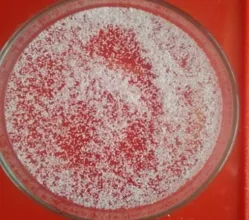
Figure 1: Drug- polymer coated pellets
EVALUATION OF PREPARED PELLETS:
1. Physical appearance:
About 0.500 g of pellets were transferred into a dry Petri dish or placed on a clean white card. The pellets were visually observed for colour, shape, uniformity????
2. Thickness:
The thickness of the randomly selected Milnacipran Hydrochloride drug layered pellets were determined by using digital vernier caliper.
3. Drug content:
Drug content analysis was carried out to quantify the amount of Milnacipran Hydrochloride present in the drug-layered pellets. An accurately weighed portion of pellets, corresponding to the required drug quantity, was taken, suitably processed, and analysed using the validated analytical method. The measured drug content was used to assess uniformity and ensure compliance with formulation specifications.
4. Loss on drying:
The Loss on Drying (LOD) of Milnacipran Hydrochloride pellets is determined to measure the amount of moisture or residual solvent present in the sample. About 1 g of the sample is accurately weighed and placed in a pre-weighed moisture dish. The sample is then dried in a hot air oven at 105°C until a constant weight is obtained. After drying, the sample is cooled in a desiccator and reweighed. The percentage loss in weight represents the amount of moisture or volatile components present in the sample.
Evaluation tests for capsule containing MilnacipranHydrochloride:
1. Weight variation test:
Twenty capsules were randomly selected and weighed individually. Each capsule was opened, the contents were removed completely, and the emptied shell was reweighed. The net content weight was determined by subtracting the shell weight from the filled capsule weight. The procedure was repeated for all capsules, and the mean net weight was calculated. Individual capsule weights were compared with the mean to assess compliance within the acceptable range of 90–110%. Percentage deviation from the mean was calculated for each capsule, and all values were evaluated as per the limits specified in the Indian Pharmacopoeia (IP).
Table No: 5 % Deviation Limits Of Capsule
|
Average net weight of capsule |
Deviation (%) |
|
Less than 300 mg |
± 10.0 |
|
300 mg or more |
±7.5 |
2. Disintegration Time:
The capsules were placed in the disintegration basket, which was repeatedly immersed 30 times per minute in a thermostatically controlled medium maintained at 37 °C. The capsules were observed for disintegration within the time specified in the respective monograph. The test was considered satisfactory when each capsule disintegrated completely into a soft mass without any firm core, leaving only small fragments of the gelatin shell.
3. In-vitro drug dissolution studies:
In-vitro dissolution study was conducted using dissolution apparatus (Lab India, Disso-8000), samples were withdrawn at specified time interval and the % drug release was measured by UV spectroscopy as described.
In-vitro Drug release study in 0.1M HCl (Acid medium):
In-vitro drug release studies were carried out in 0.1 M HCl to simulate the acidic environment. The dissolution test was performed using USP Type II (paddle) apparatus (Disso-8000) with a dissolution medium volume of 900 ml, maintained at 37 ± 0.5°C. The paddle speed was set at 75 rpm. Samples of 1 ml were withdrawn at predetermined time intervals of 60 and 120 minutes for analysis, and the withdrawn volume was replaced with fresh medium maintained at the same temperature.
In-vitro Drug release study in pH 6.8 Phosphate Buffer (Buffer medium):
In-vitro drug release studies were further conducted in pH 6.8 phosphate buffer to simulate intestinal conditions. The dissolution testing was performed using a USP Type II (paddle) apparatus (Disso-8000) with 900 ml of dissolution medium maintained at 37 ± 0.5°C. The paddle speed was set at 75 rpm. Samples of 2 ml were withdrawn at the predetermined time point of 10 hours, and each withdrawn volume was immediately replaced with an equal volume of fresh medium maintained at the same temperature to maintain sink conditions.
The amount of drug released was determined by UV spectrophotometer at a wavelength 220nm against pH 6.8 Phosphate Buffer as blank.To study the release kinetics, data obtained from in-vitro release are plotted in various kinetic models.
Zero order equation:
The graph was plotted as % drug release Vs time.
C=K0t
Where,
K0 is Zero order rate constant in concentration/time. t is Time.
The graph would yield a straight line with a slope equal to K0 and intercept the origin of the axis.
First order equation:
The graph was plotted as log cumulative % drug remaining to get absorbed Vs time.
Log C=log C0-Kt/2.303
Where,
C0 is initial concentration of the drug. K is first order constant. t is Time.
Higuchi Kinetics:
The graph was plotted as cumulative % drug release Vs square root of time.
Q=Kt1/2
Where,
K is constant reflecting design variable of the system. (Differential rate constant), t is time.
Hence drug release rate is proportional to the reciprocal of square root of time. If the plot yields a straight line, and the slope is one, then the particular dosage form is considered to follow Higuchi kinetic of drug release.
Korsmeyer Peppas equation:
To evaluate the mechanism of drug release, it was further plotted in Peppas equation as log cumulative % drug release Vs log time.
Mt/Mɑ=Ktn
Log Mt/ Mɑ=log K+n logt
Where,
Mt/Mɑ is a fraction of drug released at time t. t is release time. K is Kinetic constant.
If n value is 0.5 or less, the release mechanism follows “Fickian Diffusion” and higher values of 0.5<n<1 for mass transfer follow non-Fickian model (anomalous transport).
Table 6: ‘N’values And Release Mechanism.
|
n values |
Drug release mechanism |
|
0.45 |
Fickian Diffusion |
|
0.45 < n < 0.89 |
Non-fickian transport (anomalous transport) |
|
0.89 |
Case II Transport |
|
>0.89 |
Super case II transport |
Hixon and Crowell equation:
The graph was plotted as cube root of % drug remaining to get absorbed Vs time.
Q01/3-Qt1/3= KHCt
Where,
Qt is quantity of drug released in time t. Q0 is the initial amount of the drug in capsule.
KHC is Hixon-Crowell rate constant.
RESULTS AND DISCUSSION:
Preformulation studies:
Preformulation studies were performed to evaluate the physico-chemical properties of Milnacipran hydrochloride prior to formulation development.
Organoleptic properties:
Physical appearance of Milnacipran Hydrochloride is presented in Table 7.
Table 7: Organoleptic Properties
|
Properties |
Observations |
|
Color |
White to off-white crystalline powder |
|
Odour |
Odourless |
|
Taste |
Slightly bitter |
Analytical Method Development:
Construction of standard curve for Milnacipran Hydrochloride:
The drug solution exhibited maximum absorbance at 220 nm, and the calibration data showed satisfactory linearity over the investigated concentration range, in accordance with Beer–Lambert’s law, using pH 6.8 phosphate buffer as the blank.
Drug-Excipient compatibility studies:
From the Drug-Excipients compatibility study, it was concluded that all the excipients were compatible with Milnacipran Hydrochloride.
Table 8: FTIR spectra of Milnacipran Hydrochloride, Placebo, and Blend
|
S. No |
IR Spectra of Milnacipran Hydrochloride |
IR Spectra of Milnacipran Hydrochloride, EC, HPMC |
IR Spectra of EC and HPMC |
|||
|
Observed Wavenumber (cm-1) |
Interference |
Observed Wavenumber (cm-1) |
Interference |
Observed Wavenumber (cm-1) |
Interference |
|
|
1 |
3151.79 |
NH Str. |
3390 |
O-H Str. |
3600-3200 |
O-H Str. |
|
2 |
2972 |
C-H Str. |
3588 |
O-H Str. |
2974-2937 |
C-H Str. |
|
3 |
2899 |
C-H Str. |
3000-2500 |
O-H def. |
1438 |
C-H def. |
|
4 |
1650 |
N-H def. |
3100 – 2974 |
C-H Str. |
1150-1070 |
C-O-C Str. |
|
5 |
1614 |
C=0 Str. |
3338 |
N-H Str. |
1122 |
O-H Str. |
|
6 |
770 and 620 |
O-C-N def. |
2933 |
C-H Str. |
729 |
O-H Str. |
|
7 |
700 |
N-H def. |
1572 |
N-H def. |
680 |
O-H def. |
|
8 |
|
|
1238-1207 |
C-N Str. |
|
|
|
9 |
|
|
700 |
C-H def. |
|
|
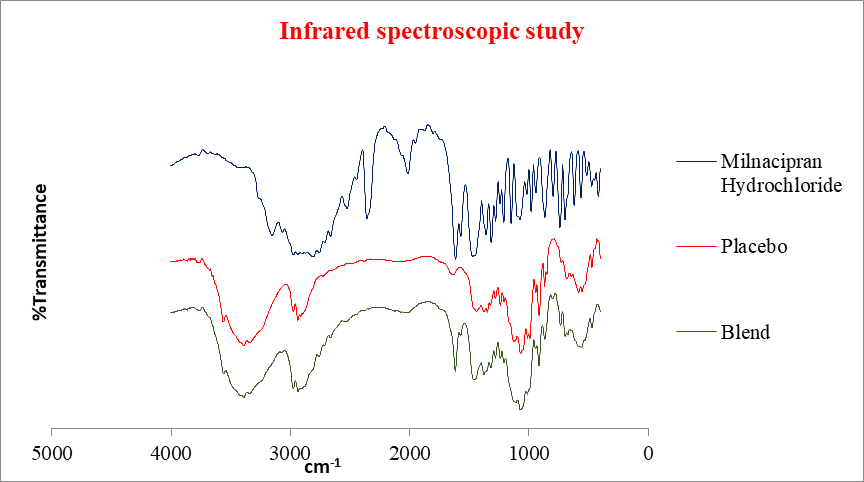
Figure 2: FTIR spectra of Milnacipran Hydrochloride, Placebo, and Blend
Evaluation of prepared drug layered pellets:
1.Physical Appearance:
Milnacipran Hydrochloride pellets were found to be off-white in color, uniform in shape, and surface was found to be smooth.
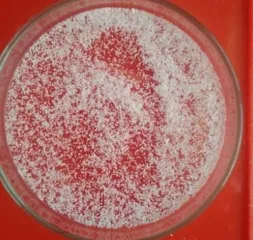
Figure 3: Milnacipran Hydrochloride layered pellets
Table 9: Characterization of the Formulated Product
|
S. No |
Batch Code |
Thickness of Milnacipran Hydrochloride pellets(mm) |
Drug content (%) |
Weight Variation(mg) |
Disintegration Time(mins) |
|
1.
|
Batch 1 |
0.36± 0.05 |
99.45 ± 10 |
378 ± 0.79 |
7.13 ± 1 |
|
2.
|
Batch 2 |
0.37±0.05 |
98.32 ± 10 |
375 ± 0.526 |
7.66 ± 1 |
|
3.
|
Batch 3 |
0.38±0.05 |
98.13 ± 10 |
379 ± 0.263 |
7.15 ± 1 |
In-vitro Dissolution Studies:
The dissolution results indicated that the formulation released less than 10% of the drug in the acidic medium, confirming its suitability for delayed release. The remaining drug was released gradually over a period of 10 hours in the intestinal pH (pH 6.8 phosphate buffer). Among the evaluated batches, the formulation containing 10% w/v polymer-coated pellets (Batch 1) demonstrated complete drug release at 10 hours, outperforming the other two formulations. This enhanced release profile may be attributed to the lower polymer weight gain. Therefore, Batch 1 was selected as the optimized formulation, and its release data were further assessed to elucidate the drug-release mechanism. The dissolution results are presented in Figure: 5
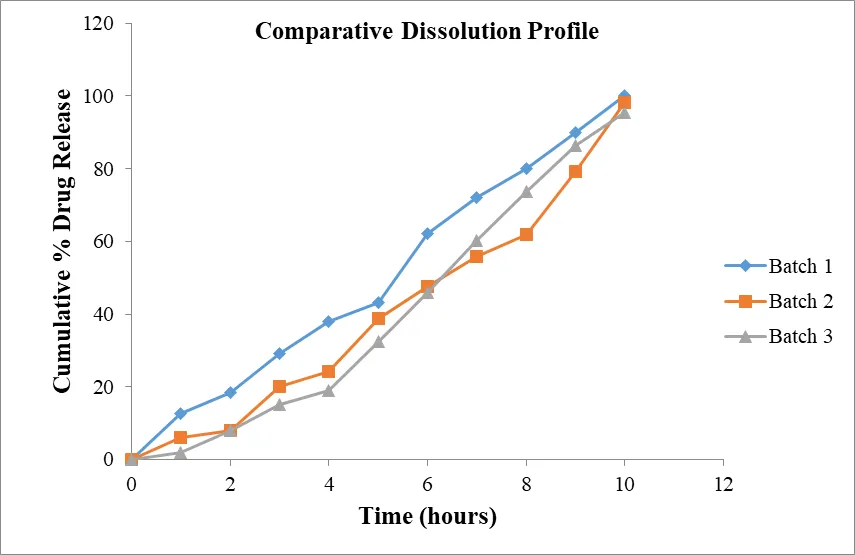
Figure 4: Comparative Dissolution profiles of Batch No 1, 2, 3.
|
Y=10.051x – 0.6977 R2 = 0.994
|
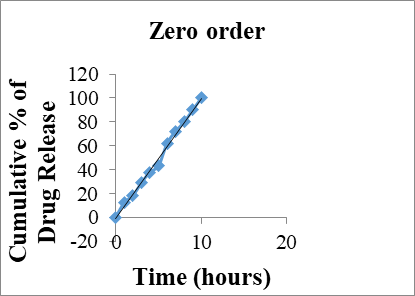
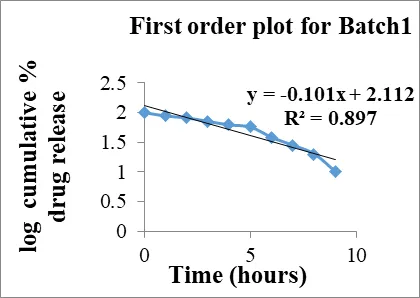
Figure 5: Zero order plot for Batch No:1 Figure 6: First order plot for Batch No: 1
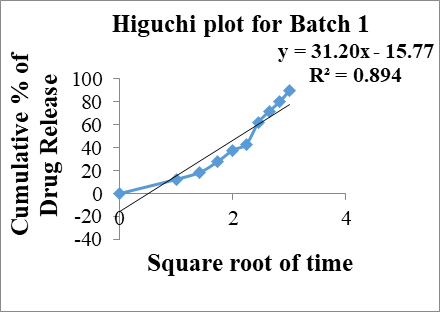
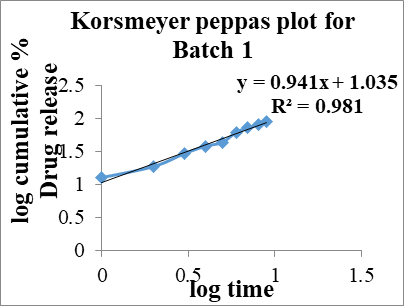
Figure 7: Higuchi plot for Batch 1 Figure 8: Korsmeyer peppas plot for Batch 1
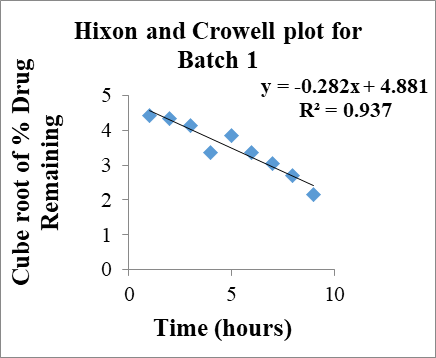
Figure 9: Hixon and Crowell plot for Batch 1
Table 10: Drug kinetic results for optimized formulation Batch 1
|
S. No |
Zero order |
First order |
Higuchi |
Krosmeyer peppas |
|
Value |
R2 |
R2 |
R2 |
R2 |
|
Batch 1 |
0.994 |
0.897 |
0.894 |
0.981 |
|
Batch 2 |
0.970 |
0.841 |
0.845 |
0.969 |
|
Batch 3 |
0.966 |
0.819 |
0.779 |
0.991 |
The result was observed that the optimized formulation Batch 1 (10% weight gained polymer coated pellets, followed Zero order release where the regression value was found to be 0.991. To ascertain the drug release mechanism, the drug release data was also subjected to Higuchi and Peppas plots and the correlation coefficient values was found to be 0.894 and 0.981 respectively. Values nearer to 1 are suggesting that drug release by diffusion mechanism. In the present study mean diffusional exponent values (n) for the optimized formulation was found to be 0.981 indicating that it presented behavior controlled by non-fickian super case II (when n>1.0).
Summative Outline:
The present work was undertaken with an aim to prepare extended release of Milnacipran Hydrochloride, an anti-depressant which is highly appropriate as it has ease of administration for the patients having major depressive disorder and fibromyalgia. The technique selected was fluidized bed coating of pellets with active solution layering of drug followed by controlled release polymer ethyl cellulose coating.
Preliminary drug layering was carried out with PVP K 30 as a binder. Ethyl cellulose was selected as a rate controlling polymer and HPMC 5cps (2% w/v) was used as a pore former. Poly ethylene glycol (PEG 400) was used as a plasticizer at 1.5%w/v concentration. The drug pellets were coated above mentioned polymer coating composition in three different levels of % weight gain of 10%, 15% and 24% w/w respectively. The physical appearance of all the coated pellets were found to be smooth and uniform. The prepared pellets were filled in hard gelatin capsules of size 2 with suitable diluents. The results of in-vitro dissolution study shows that less than 10% of drug was release at acidic medium and remaining drug was slowly released over an extended period of time in intestinal pH (pH 6.8 Phosphate buffer). Among the batches taken formulation with 10%w/v of polymer coated pellets (Batch 1) was found to have complete release at 10 hours than other two formulations. It might be due to lower weight gain of polymer. Hence, the Batch 1 was selected as an optimized formula and further the results were evaluated for release mechanism. Further the dissolution profiling of all batches was evaluated for release mechanism. The results shows that the optimized final formula (Batch 1) was following zero order release.
CONCLUSION
Extended-release pellets of three different batches of Milnacipran Hydrochloride (Batch 1, 2, 3) were formulated using FBP with Ethyl cellulose 10cps as a rate controlling polymer and HPMC 5cps as a pore former. All the formulations were evaluated for parameters like assay, disintegration time, and dissolution studies. The results are found to be within the limits. Finally, Milnacipran Hydrochloride extended-release pellets were capsulated in hard gelatin capsules.
Based on the regression values it was concluded that the optimized formulation, Batch 1 (10% weight gained polymer coated pellets, followed Zero order release where the regression value was found to be 0.991. To ascertain the drug release mechanism, the drug release data was also subjected to Higuchi and Peppas plots and the correlation coefficient values was found to be 0.894 and 0.981 respectively. Values nearer to 1 are suggesting that drug release by diffusion mechanism. In the present study mean diffusional exponent values (n) for the optimized formulation was found to be 0.981 indicating that it presented behavior controlled by non-fickian super case II (when n>1.0).
ACKNOWLEDGEMENTS
The authors sincerely acknowledge the support and guidance received from all those who contributed to the successful completion of this research work. We express our gratitude to their institution Ultra College of Pharmacy for providing the necessary facilities and encouragement. We also thank our colleagues, and well-wishers for their valuable suggestions and continuous support throughout the study.
REFERENCES

1. Chandra Bala Sekaran, Mubarkunnisa Md, Avula Prameela, Seelan Harika, Quantitative Determination of Milnacipran by Simple Colorimetric Methods, Chemical Engineering and Science 2013; Vol 1(1): 1-6 2. Chandra Bala Sekaran, Mubarkunnisa Md, Avula Prameela, Seelan Harika, Quantitative Determination of Milnacipran by Simple Colorimetric Methods, Chemical Engineering and Science 2013; Vol 1(1): 1-6 3. Howard S. Smith, Patrick D. Meek, Milnacipran Hydrochloride in the Treatment of Fibromyalgia Syndrome: Safety, Efficacy and Tolerability, Clinical Medicine Insights: Therapeutics 2012; 4:97-111 4. Sunil Kumar, Anil Kumar, Vaibhav Gupta, Kuldeep Malodia, Pankaj Rakha. Oral Extended-Release Drug Delivery System: A Promising Approach. Asian J. Pharm. Tech 2012; Vol. 2: Issue 2, Pg 38-43. 5. Deb Ratul, Ahmed Abdul Baquee. Pellets and pelletization Techniques: A Critical Review. International Research Journal of Pharmacy 2013; 4(4). 6. Veena MC, Senthil Kumar SK, Parthiban S. Pelletization Technique in Drug Delivery System-A Review. International Journal of Pharmaceutical Development and Technology 2013; Vol 3 (1): 13-22. 7. Tanvi Vats, Nihar Shah, Shreeraj shah. Pelletization Techniques: A Review. Journal of Pharmaceutical Science and Bioscientific Research 2015; Vol 5 (3): 244-248. 8. Venkatesham Allenki, Jagan Mohan Kandukuri, Chandra Mohan Eaga, Vasu Keshetty, Kiran Kumar Jannu. Pelletization Technique for oral Drug Delivery. International Journal of Pharmaceutical Sciences and Drug Research 2009; 1(2):63-70. 9. Ashvini veera raje, Kunchu Kavitha, Ganesh Nanjan Sockan. Albumin Microspheres: A Unique system as drug delivery carriers for non-Steroidal anti-inflammatory drugs. International Journal of Pharmaceutical Review and Research 2010; P (10-17) 10. Maronga O the optimization of the fluidized bed particulate coating process Department of Chemical Engineering and Technology, Royal Institute of Technology, Stockholm, Sweden, 1999; P (3-6). 11. Anusha K, Kishore Babu G, Srinivas Babu P, Formulation of sustained Release Pellets of Quetiapine Fumarate by Fluidized Bed Coating Process International Journal of Pharmaceutical Science Invention 2013; Vol 2 (12): P (20-31) 12. Luciane Franquelin Gomes De Souza, Marcello Nitz, and Osvaldir Periera Taranto. Film Coating of Nifedipine Extended-Release Pellets in a Fluid Bed Coater with Wurster Insert, Hindawi Publishing Corporation Bio Med Research International 2013; P (1-10) 13. Tripurasundari P and Bala Prabhakar. Review on the Production Pellets via extrusion-spheronization exclusive of microcrystalline cellulose, International Journal of Pharmacy Review and Research 2012; P (1-7) 14. www.drugs@fda.com. Savella (Milnacipran Hydrochloride) tablets. U.S.Approval 2009. 15. Gautam Singhvi, Niyati Parmar, Nirav Patel, Ranendra Narayan Saha, Novel multi granules-controlled release tablets of Milnacipran: Design with simplex lattice, in vitro Characterization and Pharmacokinetic Predictions, Journal of Young Pharmacist 2014 July- Sep); Vol 6 (3) 16. Boyer P, Briley M. Milnacipran HCl a new specific serotonin and noradrenaline reuptake inhibitor. Drugs today (Barc) 1998; 34: 709-20 17. Chandra Bala Sekaran, Mubarkunnisa Md, Avula Prameela, Seelan Harika, Quantitative Determinationof Milnacipran by Simple Colorimetric Methods, Chemical Engineering and Science 2013; Vol 1(1): 1-6 18. http://www.pharmaguideline.com/2010/09/preparation -of-buffer-solutions.html# 19. Jane C. Hirsh, Roman V. Rarly, Subha chungi, Srinivas G. Rao, Michael T. Heffernan. Modified Release Composition of Milnacipran Patent No: US 7, 704,527 B2 Date of Patent: Apr. 27, 2010 20. Shirishkumar Kulkarni, Rajesh Kulkarni, Pandharinath Jadhav, Ashish Tiwari, Controlled Release Pharmaceutical Composition of Milnacipran, Patent No: US 8,916, 194 B2, Date of Patent: Dec. 23, 2014. 21. Gautam Namrata, Trivedi Piyush. Formulation and Development of Pellets of Tolterodine Tartrate: A Qualitative Study on Wurster Based Fluidized Bed Coating Technology 2012; 2(4): 90-96 22. Yerunkar S, Ratnaparkhi M, Bhadgale M, Parshuramkar P. Conception and evaluation of extended release multiparticulate system of milnacipran hydrochloride. Research Journal of Pharmacy and Technology. 2015;8(11):1512–1518. doi:10.5958/0974-360X.2015.00270. X. 23. Ratnakar NC, Gohel MC. Formulation and evaluation of milnacipran HCl controlled release osmotic tablets. Pharma Science Monitor. 2018 Jan–Mar;9(1):276–285. ISSN: 0976-7908 24. Gautam singhvi *, priyanka kalantare, dhoot harish and ranendra n. Saha.Spectrophotometric Determination of Nor-Epinephrine Serotonin Reuptake Inhibitor (SNRI) Drug Milnacipran in Pure and in Dosage Forms. Asian Journal of Chemistry; Vol. 25, No. 7 (2013), 3682-3686 http://dx.doi.org/10.14233/ajchem.2013.13716 25. Singhvi G, Kalantare P, Harish D, Saha RN. Spectrophotometric determination of norepinephrine serotonin reuptake inhibitor (SNRI) drug milnacipran in pure and in dosage forms. Asian Journal of Chemistry. 2013;25(7):3682–3686. doi:10.14233/ajchem.2013.13716.
 10.14233/ajchem.2013.13716