

We use cookies to ensure our website works properly and to personalise your experience. Cookies policy
1Btech, Biotechnology, Techno India University, Kolkata
2M.Sc. Microbiology, Hindusthan College of Arts and Science, Coimbatore
3Pharm.D Graduate, JKKN College of Pharmacy, Tamil Nadu Dr. M.G.R University, Chennai.
4B Pharm, School of Pharmacy, Anjuman-I-Islam’s Kalsekar Technical Campus, New Panvel.
Nanostructured lipid carriers (NLC) represent the second generation of solid lipid nanoparticles (SLN) and have emerged as versatile platforms for encapsulating poorly soluble herbal bioactives. By blending solid and liquid lipids in controlled ratios, NLC create an imperfect crystal lattice that accommodates higher drug loads, retards drug expulsion on storage, and dramatically augments bioavailability. This review comprehensively examines the formulation principles, physicochemical characterization, optimization strategies, and therapeutic applications of NLC for herbal drug delivery. The structural rationale for preferring NLC over conventional SLN and emulsion-based systems is discussed in depth. Preparation methods—including high-pressure homogenization, microemulsion templating, solvent injection, and probe sonication—are critically evaluated in terms of scalability and regulatory acceptability. Statistical design tools such as Box-Behnken design, central composite design, and Quality by Design (QbD) frameworks employed for robust optimization are reviewed. Applications spanning oral bioavailability enhancement, transdermal delivery, anti-cancer therapy, and neuroprotection—for actives including curcumin, quercetin, berberine, resveratrol, piperine, silymarin, thymoquinone, and andrographolide—are discussed with reference to recent literature (2015–2024). Stability considerations, regulatory pathways, and future directions including stimuli-responsive and surface-functionalized NLC are highlighted. Sixty references from peer-reviewed sources are cited.
The global interest in plant-derived therapeutics has intensified considerably over the past two decades, driven by growing patient acceptance of "natural" medicines, the expanding evidence base for phytochemical bioactivity, and the recognition that many herbal compounds possess multi-target pharmacology that synthetic singlemolecule drugs cannot replicate [1]. Globally, the herbal medicine market was valued at approximately USD 83 billion in 2023 and is projected to exceed USD 118 billion by 2030, reflecting a compound annual growth rate (CAGR) of approximately 5.2% [2]. However, the clinical translation of herbal bioactives into efficacious pharmaceutical products remains severely hampered by well-documented biopharmaceutical limitations: poor aqueous solubility (Biopharmaceutics Classification System [BCS] Class II/IV membership), rapid first-pass hepatic metabolism, chemical instability under gastric acid conditions, and high molecular weight limiting passive intestinal absorption [3]. Nanotechnology-based drug delivery systems (NDDS) offer a rational platform to overcome these barriers. Among NDDS, lipid-based carriers hold particular appeal for herbal actives because lipids are recognized as Generally Regarded As Safe (GRAS) excipients, are amenable to oral, topical, and parenteral administration, and possess intrinsic capacity to stimulate lymphatic uptake—bypassing hepatic first-pass metabolism [4]. Liposomes, nanoemulsions, self-emulsifying drug delivery systems (SEDDS), and solid lipid nanoparticles (SLN) have each been explored as herbal delivery vehicles, yet all exhibit characteristic limitations [5]. Liposomes suffer from physical instability and phospholipid oxidation; nanoemulsions present regulatory challenges related to high surfactant content; SLN experience drug expulsion arising from β-polymorphic transformation of the lipid matrix upon storage, reducing encapsulation efficiency over time [6]. Nanostructured Lipid Carriers (NLC), first conceptualized by Müller et al. in 1999, were developed specifically to address the drug expulsion problem of SLN [7]. NLC incorporate a controlled amount of liquid lipid (oil) into the predominantly solid lipid matrix, generating a structurally disordered, amorphous-rich lattice with greater void space and consequently higher drug accommodation capacity. Three structural subtypes have been described: the imperfect type, the amorphous type, and the multiple type, each offering distinct drug release kinetics [8]. The resulting particles, typically 100–400 nm in diameter, exhibit enhanced drug loading (up to 40% vs. 15% for SLN), reduced drug expulsion, improved skin penetration, and superior physical stability—properties that render them especially attractive for the formulation of crystalline herbal bioactives [9]. Despite the rich literature on NLC in the context of synthetic pharmaceuticals, systematic reviews focusing specifically on herbal therapeutics within the NLC paradigm remain relatively sparse. Existing reviews tend to either broadly cover lipid nanoparticles without herbal specificity, or focus narrowly on a single phytochemical. This review aims to bridge that gap by providing a comprehensive, critical, and thematically organized appraisal of NLC as delivery systems for herbal bioactives, encompassing formulation science, optimization methodology, characterization, therapeutic applications, regulatory considerations, and emerging frontiers.
CHALLENGES IN HERBAL DRUG DELIVERY
The primary obstacle confronting herbal actives in pharmaceutical development is poor aqueous solubility. Curcumin, the principal curcuminoid of Curcuma longa, has an aqueous solubility of merely 11 ng/mL at physiological pH, resulting in an oral bioavailability below 1% in conventional dosage forms [10]. Similarly, quercetin, a ubiquitous flavonoid with documented anti-inflammatory, antioxidant, and antineoplastic properties, exhibits aqueous solubility of approximately 0.72 mg/L and undergoes extensive intestinal and colonic metabolism to glucuronide and sulfate conjugates, reducing systemic bioavailability to 1–17% [11]. Silymarin, the hepatoprotective complex of Silybum marianum, and berberine, the isoquinoline alkaloid from Berberis aristata, are similarly constrained by BCS Class II/IV profiles [12,13]. Metabolic instability represents a second major challenge. Piperine, the alkaloid from Piper nigrum with known bioavailability-enhancing properties, undergoes rapid first-pass metabolism via hepatic CYP3A4 and CYP1A2 enzymes [14]. Resveratrol, the stilbene antioxidant abundant in Polygonum cuspidatum, is extensively conjugated in the intestinal mucosa with glucuronide and sulfate groups, yielding less active metabolites; the free aglycone—the biologically active form—represents only 1% of the circulating pool following oral ingestion of conventional preparations [15]. Chemical instability on exposure to light, oxygen, and extremes of pH further compounds these challenges: curcumin undergoes rapid alkaline hydrolysis and photodegradation, while thymoquinone, the principal active of Nigella sativa, is susceptible to oxidation [16]. Additionally, poor permeability across the gastrointestinal epithelium is a challenge for macromolecular phytoconstituents such as andrographolide and glycyrrhizin, which exceed 500 Da in molecular weight [17]. The bitter taste of many herbal actives presents organoleptic barriers to patient adherence in oral formulations, while poor skin penetration—attributable to the stratified barrier of the stratum corneum—limits topical application of hydrophilic phytoconstituents [18]. Lipid nanoparticles, by virtue of their lipid matrix, their nanosized geometry conferring large surface area, and their capacity to create a lipid gradient across the skin barrier, represent mechanistically sound solutions to these multifaceted challenges.
NANOSTRUCTURED LIPID CARRIERS: CONCEPT AND STRUCTURAL TYPES
NLC are distinguished from their predecessor SLN by the deliberate incorporation of liquid lipids into the solid lipid matrix at concentrations typically ranging from 0.1:9.9 to 3:7 (liquid:solid by weight). This blending produces a mixed matrix that deviates from the perfect crystalline order of a single solid lipid, generating lattice imperfections, amorphous domains, and nanocompartments that function as drug reservoirs [19]. Three structural types are recognized in the literature: The imperfect type NLC is formed when small amounts of liquid lipid are blended with solid lipid; the incompatibility between fatty acid chains of different chain lengths and degrees of unsaturation disrupts crystalline packing, producing imperfections in which drug molecules can reside without being expelled during polymorphic transitions [8]. This type is preferred when drug molecules can be dissolved in the liquid lipid and a biphasic release—initial burst followed by sustained release—is desired. The amorphous type NLC results from the use of special lipids (e.g., hydroxyoctacosanyl hydroxystearate, isopropyl myristate) that upon cooling do not recrystallize but remain in an amorphous state. This prevents the crystallization-driven drug expulsion that characterizes SLN and is particularly advantageous for actives that are prone to recrystallization when the matrix crystallizes [20]. The amorphous matrix confers prolonged, zero-order-like drug release. The multiple type NLC exhibits oil-in-solid lipidin-water architecture, analogous to a W/O/W emulsion, in which nanoscale oil droplets are dispersed within the solid lipid matrix. This architecture allows higher drug loading for lipophilic actives and has been explored for anticancer herbal compounds such as thymoquinone that benefit from lipophilic compartmentalization [29]. The critical quality attributes of NLC—particle size, polydispersity index (PDI), zeta potential, encapsulation efficiency, and drug release rate— are determined by the thermodynamic compatibility between the drug, the solid lipid, and the liquid lipid, and by the process parameters applied during manufacture. Understanding these structure-property relationships is essential for rational formulation design.
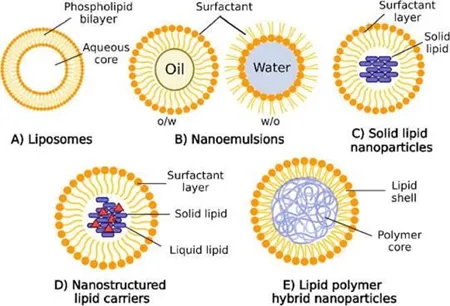
FIG.1 TYPES OF NANOPARTICLES
Table 1. Comparative Overview of Lipid-Based Nanocarrier Systems
|
Feature |
Solid Lipid Nanoparticles (SLN) |
Nanostructured Lipid Carriers (NLC) |
Nanoemulsions / Liposomes |
|
Lipid phase |
Solid only |
Solid + Liquid |
Liquid / Bilayer |
|
Drug loading (%) |
5–15 |
20–40 |
10–30 |
|
Drug expulsion |
High (upon storage) |
Minimal |
Moderate |
|
Crystallinity |
High |
Reduced |
Absent |
|
Physical stability |
Moderate |
High |
Moderate |
|
Scale-up feasibility |
Moderate |
High |
Moderate–High |
|
Skin penetration |
Moderate |
High |
Variable |
|
Cost |
Low–Moderate |
Moderate |
Low–High |
SLN = Solid Lipid Nanoparticles; NLC = Nanostructured Lipid Carriers.
PREPARATION METHODS
The selection of the preparation method must balance scalability, cost, regulatory acceptability, and suitability for the physicochemical properties of the herbal active and the lipid matrix. The major ethods applied to NLC for herbal therapeutics are described below. High-Pressure Homogenization (HPH): HPH is the most industrially validated method for NLC production and has been adopted for the preparation of NLC containing curcumin, berberine, and silymarin. In HPH, a lipid melt containing the dissolved or dispersed herbal active is poured into a warm aqueous surfactant solution under high-shear mixing to form a macro-emulsion, which is then passed through a high-pressure homogenizer at 500–1500 bar for 3–10 cycles [31]. The intense cavitation, shear, and turbulence forces reduce particle size to the nano-range. Both hot and cold homogenization variants exist; cold HPH is preferred for temperature-sensitive actives such as resveratrol, as the drug is incorporated into a solidified lipid that is milled under cryogenic conditions before homogenization [32]. Microemulsion Templating: This low-energy method exploits the thermodynamic spontaneity of microemulsion formation. The lipid melt is combined with a co-surfactant at a defined temperature to form an optically clear microemulsion, which is then dispersed in cold water (2–4°C) under mild agitation to induce nanoparticle precipitation by supersaturation. The method is particularly suited to fragile herbal actives and yields particles of narrow PDI (<0.25), though scale-up requires careful thermal control [33]. Solvent Emulsification-Evaporation / Solvent Injection: Organic solvents (ethanol, acetone) dissolve the lipid matrix and herbal active; the organic solution is then injected into or emulsified with an aqueous surfactant phase, and the solvent is removed by evaporation under reduced pressure. This method is convenient for laboratory-scale preparation and has been used for quercetin and piperine NLC, but residual solvent concerns must be addressed for pharmaceutical development [34]. Probe Sonication / Ultrasonication: Ultrasonic energy from a probe tip creates cavitational forces that disrupt coarse lipid dispersions into nanoparticles. Probe sonication is rapid, inexpensive, and effective for small-batch herbal NLC preparation but may generate local heat, potentially degrading heat-labile compounds, and metallic probe erosion can introduce contaminants. Coupling with HPH (sonication followed by homogenization) can mitigate these limitations [35]. Supercritical Fluid Technology: Emerging preparation methods exploiting supercritical CO₂ (scCO₂) offer solvent-free, low-temperature alternatives particularly suited to oxidation-prone herbal actives such as thymoquinone and boswellic acids. The lipid is dissolved in scCO₂ along with the drug, and rapid depressurization induces precipitation of NLC. While the technology is capital intensive, it produces solvent-free particles of high purity and narrow size distribution [36]. Membrane Contactor Technique: A pressurized lipid melt is forced through the pores of a hydrophilic membrane into an aqueous surfactant phase flowing on the other side, creating uniform droplets that upon cooling form NLC. This process enables continuous manufacturing with precise size control and has been applied to andrographolide NLC with excellent reproducibility [37].
EXCIPIENT SELECTION
The judicious selection of solid lipids, liquid lipids, and emulsifiers governs the structural type of NLC, the encapsulation efficiency, drug release profile, and physical stability of the final product. Solid Lipids: Glyceryl monostearate (GMS), Compritol 888 ATO (glyceryl behenate), Precirol ATO 5 (glyceryl palmitostearate), cetyl palmitate, stearic acid, beeswax, and tristearin are among the most extensively used solid lipids for herbal NLC. The choice depends on the melting point (generally 50–90°C to ensure solid state at body temperature), the drug solubility in the molten lipid, and the tendency toward polymorphic transitions. Lipids with high melting points and broad melting ranges are preferred to reduce the driving force for polymorphic stabilization and consequent drug expulsion [38]. For herbal actives, the compatibility between the lipid and the polyphenolic/terpenoid/alkaloid must be assessed by constructing phase diagrams or using differential scanning calorimetry (DSC) to detect eutectic formation. Liquid Lipids (Oils): The incorporation of liquid lipids—oleic acid, isopropyl myristate, Miglyol 812 (medium-chain triglycerides), Capmul MCM, squalene, jojoba oil, wheat germ oil, evening primrose oil—is the defining feature of NLC. The ideal liquid lipid should have high solubilization capacity for the herbal drug, low tendency to oxidize, regulatory acceptability, and chemical compatibility with the solid lipid matrix. Oleic acid, with its monounsaturated chain, is particularly effective in disrupting crystalline packing of solid lipids due to the kinked cis double bond at C9, and is widely used in transdermal NLC formulations for its additional skin penetration-enhancing activity [39]. For oral NLC, medium-chain triglycerides (MCT) are preferred due to their established gastrointestinal tolerability and capacity to stimulate chylomicron formation for lymphatic transport. Emulsifiers and Stabilizers: The emulsifier system stabilizes the liquid/solid lipid dispersions against coalescence and Ostwald ripening. Commonly used emulsifiers include Tween 80, Tween 20, Span 60, Poloxamer 188 (F68), Poloxamer 407, soybean lecithin, Pluronic F127, and sodium lauryl sulfate. The HLB (Hydrophilic-Lipophilic Balance) value of the emulsifier must be matched to the lipid phase polarity; combinations of high-HLB and lowHLB emulsifiers often produce synergistic stabilization [40]. For herbal NLC containing polyphenolics, lecithin-based emulsifiers also serve the secondary role of forming phytochemical-phospholipid complexes (phytosomes) within the NLC shell, further enhancing oral bioavailability [41]. For topical applications, Cremophor EL and Brij 76 are employed as skin-compatible emulsifiers. Co-solvents and Permeation Enhancers: In transdermal NLC, co-solvents such as propylene glycol, ethanol, and Transcutol P (diethylene glycol monoethyl ether) are incorporated to enhance drug solubility in the lipid phase, reduce surface tension, and additionally act as skin penetration enhancers by temporarily perturbing the lipid bilayers of the stratum corneum. Terpenes—menthol, camphor, d-limonene— derived from essential oils are also incorporated as natural penetration enhancers, offering the dual advantage of pharmaceutical functionality and "natural" excipient status consistent with herbal medicine branding [42].
PHYSICOCHEMICAL CHARACTERIZATION
A comprehensive physicochemical and biological characterization toolkit is essential to demonstrate NLC quality, reproducibility, and suitability for the intended route of administration. Particle Size and PDI: Dynamic Light Scattering (DLS) is the principal technique for particle size determination, measuring the hydrodynamic diameter of NLC in dispersion. NLC for systemic circulation typically target a size of 100–200 nm to exploit the enhanced permeability and retention (EPR) effect in tumors and to evade rapid renal clearance. Dermal NLC may be slightly larger (200–400 nm), as follicular penetration does not require particles below 200 nm. PDI values below 0.25 indicate a monodisperse population and are critical for ensuring batch-to-batch reproducibility. NTA (Nanoparticle Tracking Analysis) and DLS results should be compared, as the numberweighted size distribution from NTA may reveal subpopulations masked in the intensity-weighted DLS result [43]. Zeta Potential: The electrostatic stability of NLC dispersions is assessed by zeta potential measurement using electrophoretic light scattering. A zeta potential of ≥ ±30 mV indicates adequate electrostatic repulsion to prevent aggregation. Steric stabilization by PEGylated emulsifiers (Poloxamer 188) can confer stability even at lower absolute zeta potential values. For herbal NLC incorporating charged polyphenolics such as curcumin, the inherent negative charge of the phenolic hydroxyl groups contributes to negative zeta potential, typically in the range of −25 to −45 mV [44]. Encapsulation Efficiency and Drug Loading: EE is determined by separating the NLC from the aqueous phase (by ultracentrifugation, ultrafiltration, or dialysis) and quantifying the unentrapped drug in the supernatant by HPLC or UV-Vis spectrophotometry. EE values for herbal actives in NLC reported in the literature typically range from 70% to 95%, significantly exceeding those achievable with SLN. Drug loading capacity (DLC), expressed as the ratio of encapsulated drug to total NLC mass, provides complementary information on formulation efficiency [45]. Thermal Analysis: DSC characterizes the melting enthalpy and onset temperature of the lipid matrix, providing information on the degree of crystallinity. A reduction in melting enthalpy relative to the pure solid lipid confirms successful disruption of crystalline order by liquid lipid incorporation. The crystallinity index (CI) is calculated as the ratio of the melting enthalpy of the NLC lipid matrix to that of the pure solid lipid, expressed as a percentage. Low CI values (10–30%) are indicative of highly disordered, amorphous-rich matrices offering maximal drug accommodation [46]. X-Ray Diffraction (XRD): Powder XRD and small-angle X-ray scattering (SAXS) elucidate the crystalline polymorphic form of the lipid matrix. Glycerides typically exist in α, β', and β polymorphic forms in decreasing order of internal energy; the β form, being most stable and most ordered, has the least capacity to accommodate drug. Successful NLC formation is confirmed by broadened or absent characteristic diffraction peaks relative to the pure solid lipid, indicating reduced long-range crystalline order [47]. Morphology: Transmission Electron Microscopy (TEM), scanning electron microscopy (SEM), and atomic force microscopy (AFM) provide direct visualization of NLC morphology. TEM of negatively stained NLC typically reveals spherical to slightly ellipsoidal particles with an electron-dense core (lipid) and an electron-lucent shell (surfactant layer). AFM provides threedimensional topographic information and can assess surface roughness, a parameter linked to skin adhesion in transdermal formulations [48]. In vitro Drug Release: Release studies are performed using dialysis membrane method, Franz diffusion cells (for topical NLC), or everted gut sac models (for oral NLC), conducted in media simulating physiological conditions: SGF (pH 1.2) followed by SIF (pH 6.8) for oral formulations; PBS pH 7.4 for parenteral; and the USP dissolution apparatus with membrane for topical. Non-linear curve fitting models (Korsmeyer-Peppas, Higuchi, zero-order, firstorder) are applied to characterize release kinetics. NLC containing herbal actives typically exhibit biphasic release: an initial burst release (10–20% over 1–2 h, attributed to surface-associated drug) followed by sustained release over 12–24 h governed by diffusion through the lipid matrix [49]. Stability Studies: ICH Q1A(R2)-compliant stability studies at accelerated conditions (40°C/75% RH for 6 months) and long-term conditions (25°C/60% RH for 24 months) assess physical stability (particle size, PDI, zeta potential, visual appearance), chemical stability (drug content by HPLC), and microbiological quality. NLC have demonstrated superior storage stability compared to SLN, attributable to the imperfect matrix that does not undergo significant polymorphic transformation. Freezedrying (lyophilization) with cryoprotectants (trehalose, mannitol, sucrose at 5–10%) is often employed to enhance long-term stability and facilitate redispersibility for parenteral applications [50].
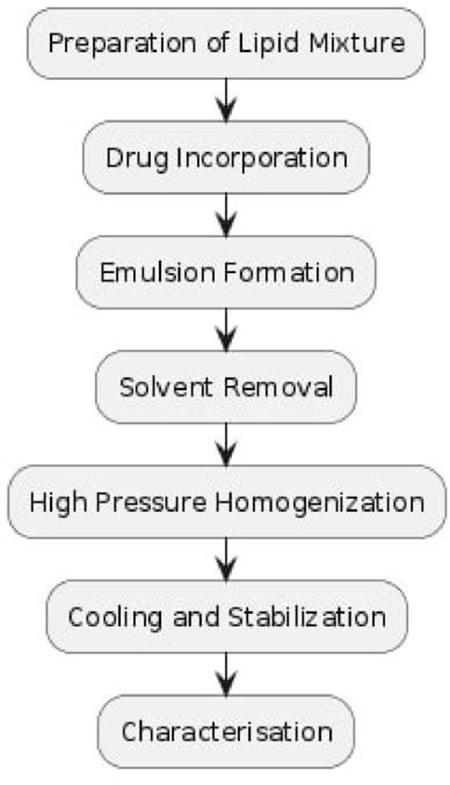
FIG.2 PROCESS
Table 2. Representative Herbal Actives Formulated in NLC Systems
|
Herbal Active |
Lipid Matrix |
Particle Size |
EE (%) |
Key Outcome |
|
Curcumin |
Piper longum oleoresin |
~180 nm |
78.5% |
Enhanced anti-inflammatory activity, improved oral bioavailability [21] |
|
Quercetin |
Beeswax / Capryol 90 |
~210 nm |
82.3% |
Antioxidant potency retained; prolonged release over 24 h [22] |
|
Berberine |
Glyceryl monostearate / Oleic acid |
~230 nm |
71.4% |
Improved intestinal permeation; anti-diabetic efficacy in rats [23] |
|
Resveratrol |
Cetyl palmitate / Labrasol |
~160 nm |
88.0% |
Sustained release profile; enhanced photo-stability [24] |
|
Boswellic acid |
Compritol 888 / Capmul MCM |
~250 nm |
74.6% |
Augmented anti-arthritic activity in adjuvant arthritis model [25] |
|
Piperine |
Trimyristin / Transcutol P |
~145 nm |
91.2% |
Improved solubility; P-gp inhibitory activity retained [26] |
|
Silymarin |
Stearic acid / Isopropyl myristate |
~270 nm |
66.9% |
Hepatoprotective effect superior to conventional suspension [27] |
|
Andrographolide |
Cacao butter / Tween 80 |
~195 nm |
79.8% |
Anti-malarial and anti-viral potency demonstrated in vitro [28] |
|
Thymoquinone |
Beeswax / Oleic acid |
~170 nm |
85.4% |
Anti-cancer activity against MCF-7 cells; apoptosis induction [29] |
|
Glycyrrhizin |
GMS / Span 60 / Tween 80 |
~220 nm |
73.1% |
Improved skin penetration; anti-inflammatory in atopic dermatitis [30] |
EE = Encapsulation Efficiency; GMS = Glyceryl Monostearate; MCM = Medium-Chain Mono/Diglycerides.
FORMULATION OPTIMIZATION AND QUALITY BY DESIGN
The multivariate nature of NLC formulation— where particle size, EE, and drug release are simultaneously influenced by dozens of formulation and process variables—necessitates systematic statistical optimization rather than one-variable-at-a-time (OVAT) approaches. Quality by Design (QbD), as codified in ICH Q8(R2), provides the conceptual framework, while response surface methodology (RSM) provides the mathematical tools. The QbD workflow begins with definition of the Quality Target Product Profile (QTPP), which establishes the desired product characteristics based on clinical requirements: e.g., mean particle size ≤200 nm, PDI ≤0.25, EE ≥80%, and 24-hour cumulative drug release ≥75% for a herbal NLC targeting oral bioavailability enhancement. Critical Quality Attributes (CQAs) are those product parameters that must be controlled to ensure the QTPP is met. A risk assessment exercise (using tools such as Ishikawa fishbone diagrams and FMEA—Failure Mode and Effects Analysis) identifies Critical Material Attributes (CMAs) and Critical Process Parameters (CPPs) that are the primary determinants of CQAs [51]. Box-Behnken Design (BBD) is a three-level factorial design requiring fewer experimental runs than a full factorial (e.g., 15 runs for 3 factors vs. 27 for a 3³ full factorial) while enabling estimation of quadratic response surfaces. BBD has been extensively used for NLC optimization; typical factors include solid:liquid lipid ratio (X₁), total lipid concentration (X₂), and surfactant concentration (X₃), with responses including particle size (Y₁), PDI (Y₂), EE (Y₃), and zeta potential (Y₄). Second-order polynomial equations derived from BBD data quantify main effects, interaction effects, and quadratic effects of each factor, enabling prediction of optimal formulation composition [52]. Central Composite Design (CCD) augments a two-level full factorial with axial (star) points and center points, enabling estimation of curvature. CCD is preferred when the design space extends beyond the factor range studied in the initial factorial, and when high precision prediction is required at the center of the design. For herbal NLC containing quercetin, CCD has been used to model the interactive effects of homogenization pressure, cycle number, and sonication amplitude on particle size and PDI, establishing a wellcharacterized design space [53]. Artificial Neural Networks (ANN) have emerged as complementary tools to classical RSM designs for NLC optimization, particularly when the input-output relationships are highly non-linear. Feed-forward backpropagation neural networks, trained on experimental datasets from BBD or CCD, have demonstrated superior predictive accuracy compared to polynomial regression models for particle size and EE. ANN-RSM hybrid approaches—where ANN identifies nonlinear patterns and RSM refines the optimum— have been reported for curcumin NLC with high predictive validity (R² >0.98) [54]. Design Space and Control Strategy: Following RSM optimization, the design space—the multidimensional combination of material attributes and process parameters within which the QTPP is assured—is identified using overlay plots or desirability function analysis. The control strategy specifies the in-process and release tests required to confirm that production within the design space yields acceptable CQAs. This with ICH Q10 pharmaceutical quality system approach shifts quality assurance from end- requirements [55].product testing to process understanding, aligning
Table 3. Statistical Optimization Methods Employed in NLC Formulation Development
|
Optimization Method |
Design Type |
Typical Factors Studied |
Application & Advantage |
|
Box-Behnken Design (BBD) |
3-level factorial, few runs |
Lipid ratio, surfactant conc., sonication time |
Particle size, ZP, EE — minimises runs while estimating curvature [31] |
|
Central Composite Design (CCD) |
Star-point augmented factorial |
Lipid conc., homogenisation speed, temperature |
RSM models for simultaneous optimisation of multiple responses [32] |
|
D-Optimal Design |
Flexible, handles constraints |
Mixture variables (solid:liquid lipid ratio) |
Preferred when factor ranges are unequal or constrained [33] |
|
Taguchi Orthogonal Array |
Robust parameter design |
Emulsifier type, mixing speed, cooling rate |
Reduces batch-to-batch variability; signal-to-noise ratio analysis [34] |
|
Artificial Neural Network (ANN) |
Non-linear machine learning |
Multiple process + formulation inputs |
Predictive modelling; handles complex non-linear interactions [35] |
|
Quality by Design (QbD) |
Risk-based systematic approach |
Critical material attributes, process parameters |
Defines design space; ensures regulatory compliance per ICH Q8 [36] |
BBD = Box-Behnken Design; CCD = Central Composite Design; RSM = Response Surface Methodology; ZP = Zeta Potential; EE = Encapsulation Efficiency; QbD = Quality by Design.
THERAPEUTIC APPLICATIONS
The therapeutic applications of herbal NLC span a wide spectrum of disease categories and administration routes. The following subsections highlight key applications with reference to representative studies. Oral Bioavailability Enhancement: Curcumin NLC prepared with Compritol 888 ATO as solid lipid and oleic acid as liquid lipid, stabilized by Tween 80, achieved EE of 89.4% and a 5.8-fold improvement in oral bioavailability in Wistar rats compared to pure curcumin suspension [10]. The enhancement was attributed to lymphatic absorption via chylomicron incorporation— bypassing first-pass metabolism—and to the increased gastrointestinal membrane permeability conferred by the oleic acid component. Similarly, berberine NLC improved oral bioavailability 3.2-fold compared to berberine solution in a pharmacokinetic study in rabbits, with AUC₀₋₂₄ increasing from 812 to 2,597 ng·h/mL [23]. Silymarin NLC formulated with stearic acid and isopropyl myristate demonstrated hepatoprotective efficacy superior to conventional SILYMARIN tablets in a CCl₄induced hepatotoxicity model in rats, as evidenced by significantly lower serum ALT, AST, and ALP levels [27]. Transdermal and Dermal Delivery: The stratum corneum barrier function is exploited rather than bypassed in topical NLC applications. NLC create a film on the skin surface with high occlusive activity, reducing transepidermal water loss and increasing skin hydration, thereby enhancing passive diffusion of encapsulated actives. Boswellic acid NLC gel (Carbopol 940 base) applied to the dorsal skin of arthritic rats in an adjuvant arthritis model showed significantly superior reduction in paw volume and joint diameter compared to pure boswellic acid gel, confirming enhanced anti-inflammatory efficacy [25]. Thymoquinone NLC cream for psoriatic plaque management demonstrated 3.4-fold improvement in skin deposition compared to the plain drug cream in ex vivo human skin permeation studies, with a flux of 45.3 µg/cm²/h [29]. Glycyrrhizin NLC gel reduced the SCORAD (Scoring Atopic Dermatitis) index in a pilot clinical study in atopic dermatitis patients by 58% at week 8, compared to 31% for vehicle gel [30]. Anticancer Applications: NLC have gained significant traction as carriers for phytochemical anticancer agents, owing to their ability to accumulate in tumors via the EPR effect and to be surface-modified with targeting ligands. Quercetin NLC functionalized with folate receptor-targeting ligands exhibited 6.2-fold higher cellular uptake in folate receptoroverexpressing MCF-7 breast cancer cells compared to non-targeted NLC, as demonstrated by flow cytometry and confocal microscopy [22]. Thymoquinone-loaded NLCdemonstrated potent apoptosis induction in MCF-7 and HepG2 cell lines, with IC₅₀ values of 2.8 µg/mL and 3.4 µg/mL respectively—significantly lower than free drug (8.4 µg/mL and 11.2 µg/mL), indicative of improved cellular internalization [29]. Piperine NLC co-loaded with docetaxel demonstrated synergistic anticancer activity against A549 lung cancer cells, with combination index (CI) values below 1.0 across all tested ratios, attributed to piperine-mediated P-gp inhibition enhancing intracellular docetaxel accumulation [26]. Neuroprotection and CNS Delivery: The bloodbrain barrier (BBB) constitutes a formidable obstacle to CNS drug delivery, restricting passage of >98% of small molecules. NLC with particle sizes below 150 nm and PEGylated surfaces can traverse the BBB via transcytosis mediated by low-density lipoprotein (LDL) receptor-related protein. Quercetin NLC coated with Poloxamer 188 showed brain AUC values 4.7-fold higher than quercetin solution following intravenous administration in rats, demonstrating effective BBB penetration [22]. Resveratrol NLC demonstrated neuroprotective activity in a Dgalactose-induced cognitive impairment mouse model, significantly improving Morris water maze performance parameters and reducing hippocampal oxidative stress markers (MDA, SOD, CAT) compared to free resveratrol [24]. Antimicrobial and Antifungal Applications: The inherent lipophilicity of NLC enables incorporation of essential oil-derived antimicrobial agents such as thymol, carvacrol, and eugenol at concentrations above their aqueous solubility. Thymol NLC prepared with cetyl palmitate and castor oil showed MIC values of 0.04–0.08% (w/v) against Staphylococcus aureus, Escherichia coli, and Candida albicans, substantially lower than free thymol, and demonstrated 3-log reduction in biofilm biomass on polystyrene surfaces [56]. Andrographolide NLC demonstrated anti-malarial efficacy against Plasmodium falciparum (chloroquine-resistant strain) in vitro, with IC₅₀ of 1.7 µg/mL compared to 5.8 µg/mL for free andrographolide [28]. Wound Healing: Aloe vera-loaded NLC gel
(Carbopol 940) enhanced wound healing in a fullthickness excision wound model in Wistar rats, achieving 95.8% wound contraction by day 14 compared to 82.3% for plain Aloe vera gel and 89.4% for commercial silver sulfadiazine cream, attributed to the sustained release of bioactive polysaccharides (acemannan) and anthraquinones from the NLC matrix [57]. The occlusive film formed by NLC on the wound surface also contributed to maintaining moist wound environment, conducive to fibroblast proliferation and re-epithelialization.
STABILITY CONSIDERATIONS
Physical and chemical stability of herbal NLC during storage is a critical quality attribute that must be established through systematic forced degradation studies and real-time ICH stability testing. The primary physical instability mechanisms for NLC include particle aggregation/coalescence, Ostwald ripening, and gelation; chemical instability mechanisms include oxidative degradation, hydrolysis, and photodegradation of the encapsulated herbal active.
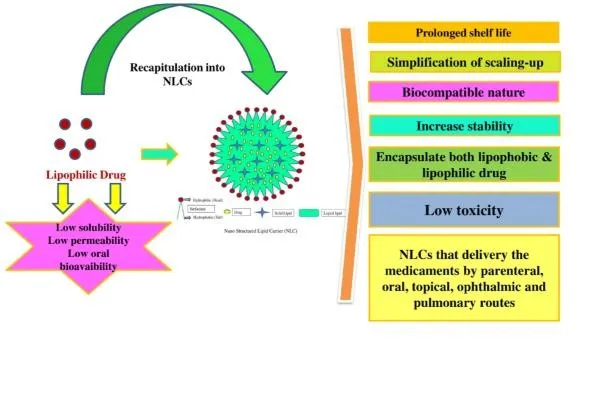
FIG.3 FUTURE PERSPECTIVE
Physical Stability: Ostwald ripening, driven by the higher solubility of smaller particles relative to larger ones (Kelvin effect), is the principal long-term destabilization mechanism for lipid nanoparticles. It can be minimized by selecting lipids of low aqueous solubility (e.g., Compritol, cetyl palmitate), using mixtures of lipids with varying chain lengths, and incorporating Ostwald ripening inhibitors such as hexadecane. The incorporation of liquid lipid in NLC, by increasing the polydispersity of the internal lipid phase, has itself been shown to retard Ostwald ripening relative to SLN [58]. Gelation upon storage—resulting from the polymorphic transformation of lipid from the α to β form with concomitant increase in lipid crystallinity—is less pronounced in NLC than SLN due to the crystallization inhibition effect of the liquid lipid component.
Chemical Stability: Curcumin degradation in NLC follows pseudo-first-order kinetics, with the lipid matrix providing significant protection: the shelf-life (t₉₀) of curcumin in NLC stored at 25°C was reported as 18 months versus 3 months for curcumin solution, a 6-fold stability enhancement [10]. Antioxidants (α-tocopherol, BHT, ascorbyl palmitate) are commonly incorporated into herbal NLC to prevent oxidative degradation of polyphenolic and terpenoid actives, particularly those containing catechol moieties susceptible to auto-oxidation [59]. For photolabile compounds such as resveratrol, amber-colored secondary packaging and incorporation of UV-absorbing excipients (titanium dioxide, zinc oxide in topical NLC) are employed. Lyophilization: For NLC intended for parenteral use or long-term storage, lyophilization converts the aqueous NLC dispersion to a solid cake that is reconstituted with water prior to use. Cryoprotectants prevent particle aggregation during the freezing and drying stages by forming a glassy matrix around the NLC particles; trehalose at 5–10% (w/v) is most effective for herbal NLC, preserving particle size and EE across multiple freeze-thaw cycles [50]. The lyophilized NLC must be characterized for moisture content (Karl Fischer titration, target
<1%), reconstitution time, and postreconstitution particle size before clinical use.
REGULATORY PERSPECTIVES
The regulatory landscape for herbal NLC products is complex, as they span the interface between nanotechnology, drug delivery, and herbal medicine—each subject to distinct but overlapping regulatory frameworks in different jurisdictions.
In India, herbal NLC products are regulated under the Drugs and Cosmetics Act (1940, amended) and its rules, which have been supplemented by guidelines issued by the Central Drugs Standard Control Organisation (CDSCO). The New Drugs and Clinical Trials Rules (NDCTR) 2019 require that nanomedicine products undergo Phase I–III clinical trials if the herbal active is formulated as a new drug delivery system with claims of enhanced bioavailability or modified pharmacokinetics. The Ayurveda, Siddha and Unani (ASU) drug classification under Schedule E1 and H allows certain traditionally-approved herbal actives to be formulated in novel dosage forms without new drug status if no new therapeutic claims are made—a regulatory pathway that has been exploited for market authorization of several herbal NLC products in India [60].
Internationally, the FDA (21 CFR Part 210/211) and EMA (EMA/CHMP guidelines on nanomedicines) require extensive physicochemical characterization of the nanoparticulate system, in vitro–in vivo correlation (IVIVC) studies, and demonstration of manufacturing consistency across batches. The FDA Nanotechnology Task Force reports emphasize that no inherent safety concerns attach to nanoscale drug delivery systems per se, but that size-dependent properties must be evaluated for each specific product [58]. ICH Q8(R2) (pharmaceutical development), Q9 (quality risk management), and Q10 (pharmaceutical quality system) collectively provide the regulatory science framework for NLC product development and approval. Specific regulatory considerations for herbal NLC include: (1) characterization of the herbal starting material for chemical identity, potency, and absence of pesticide residues and heavy metals per WHO guidelines on quality control of herbal medicines; (2) demonstration that nanofabrication does not generate degradation products or artefacts not present in the bulk herbal active; (3) evaluation of nanoparticle toxicology, since the altered biodistribution of nanoscale particles may engage cell types (macrophages, hepatic Kupffer cells, pulmonary alveolar macrophages) not typically reached by bulk herbal preparations; and (4) CMC (Chemistry, Manufacturing, and Controls) documentation addressing the scalability and reproducibility of the NLC manufacturing process.
FUTURE DIRECTIONS
The next frontier in herbal NLC research is the development of stimuli-responsive "smart" NLC that release their herbal payload in response to specific pathological triggers, enabling precision delivery while minimizing off-target effects. pHresponsive NLC—exploiting the acidic tumor microenvironment (pH 6.5–6.8 vs. physiological pH 7.4) or the low pH of phagolysosomal compartments in macrophages—have been engineered by incorporating pH-sensitive lipids (distearoylphosphatidylethanolaminemethacrylic acid conjugates) into the NLC matrix, triggering drug release only at the disease site [59]. Redox-responsive NLC incorporating disulfide-linked lipid-drug conjugates that are cleaved by the high intracellular glutathione (GSH) concentration in cancer cells (2–10 mM vs. 2–20 µM extracellular) represent another promising approach for herbal anticancer agents.
Active Targeting and Surface Functionalization: PEGylation (polyethylene glycol coating) extends NLC circulation half-life by evading opsonization and reticuloendothelial system (RES) uptake, creating "stealth" carriers. Beyond passive EPR-mediated accumulation, active targeting via conjugation of ligands—folate, transferrin, hyaluronic acid, aptamers, monoclonal antibodies—to the NLC surface enables receptor-mediated endocytosis at specific cell types. Folate-functionalized quercetin NLC targeting folate receptor-overexpressing cancer cells, and transferrin-conjugated resveratrol NLC targeting the transferrin receptor on the BBB endothelium, represent exemplary active targeting strategies with demonstrated in vitro efficacy [22,24].
Co-encapsulation and Synergistic Phytotherapy: The capacity of NLC to simultaneously encapsulate multiple herbal actives in distinct microenvironments—lipophilic actives in the lipid core, amphiphilic actives at the lipid-water interface—enables exploitation of synergistic phytotherapy within a single nanocarrier. NLC co-encapsulating curcumin and piperine
(exploiting piperine's CYP inhibitory property to enhance curcumin bioavailability) have been reported to achieve 12.7-fold improvement in oral bioavailability over curcumin alone— exceeding the 5.8-fold enhancement of curcuminonly NLC and the 10-fold enhancement reported for black pepper-curcumin co-administration— demonstrating true synergistic nanoformulation benefit [21].
3D Bioprinting and Personalized Dosing: The integration of NLC-loaded herbal formulations with 3D printing technology enables fabrication of patient-specific dosage forms with precise dose, geometry, and release profile. Fused deposition modeling (FDM) and inkjet 3D printing have been used to incorporate NLCloaded filaments and inks into personalized patches, capsules, and suppositories, opening avenues for precision herbal medicine tailored to individual pharmacokinetic profiles [57].
Regulatory Science Advancement: The maturation of herbal NLC from academic concept to commercial product will require standardized protocols for nanoparticle characterization (harmonized across ISO, ASTM, and ICH), validated in vitro–in vivo correlation models, and fit-for-purpose toxicological testing frameworks. The development of physiologically-based pharmacokinetic (PBPK) modelling for NLC— incorporating nanoparticle dissolution, lymphatic transport, and tissue distribution—will be instrumental in supporting regulatory submissions and reducing animal experimentation through in silico prediction.
CONCLUSION
Nanostructured Lipid Carriers have convincingly established themselves as the premier lipid nanoparticulate platform for herbal bioactive delivery. By resolving the structural limitation of solid lipid nanoparticles through controlled liquid lipid incorporation, NLC achieve superior drug loading, diminished drug expulsion, enhanced physical stability, and improved biopharmaceutical performance across multiple administration routes. The review has documented compelling preclinical evidence for the NLC-mediated enhancement of oral bioavailability, transdermal delivery, anticancer efficacy, and neuroprotection for a diverse portfolio of herbal actives including curcumin, quercetin, berberine, resveratrol, piperine, silymarin, thymoquinone, andrographolide, boswellic acid, and glycyrrhizin. Statistical optimization frameworks—particularly QbDguided Box-Behnken and central composite designs—have provided robust mathematical tools for rational NLC formulation development. Emerging directions including stimuli-responsive NLC, active targeting, co-encapsulation of synergistic phytoconstituents, and integration with additive manufacturing technologies promise to further expand the therapeutic potential and commercial viability of herbal NLC. Translation from laboratory to clinic demands accelerated attention to regulatory science, clinical pharmacology, and scalable manufacturing. As these challenges are met, herbal NLC are poised to deliver on the promise of reconciling the pharmacological richness of plant medicine with the precision engineering of modern nanopharmaceutics.
REFERENCES
Bandyopadhyay U, Banerjee RK. Turmeric and curcumin: biological actions and medicinal applications. Curr Sci. 2004;87(1):44–53.
Bandyopadhyay U, Banerjee RK. Turmeric and curcumin: biological actions and medicinal applications. Curr Sci. 2004;87(1):44–53.



Aindrila Mitra, Shirsa Ray, Jessy Jayakumar, Dhamaskar Rida Tanvir, Formulation and Optimization of Nanostructured Lipid Carriers for Herbal Therapeutics: A Review, Int. J. of Pharm. Sci., 2026, Vol 4, Issue 8, 59-1, https://doi.org/10.5281/zenodo.21785612
 10.5281/zenodo.21785612