View Article

  • Extraction and Evaluation of Antioxidant Potential of Annona squamosa Leaf Extract

  • Bharatiya Gramin Punarrachna Sangha's Srinath College of Pharmacy, Bajajnagar , MIDC, Waluj, Chhatrapati Sambhajinagar, Maharashtra, India

Abstract

Squamosa L., commonly known as custard apple, is widely used in traditional medicines for its healing properties. Its leaf extract shows diverse therapeutic effects like antioxidant, anticancer, and antimicrobial effects. The research focuses on identifying and analyzing the therapeutic phytochemicals and the health benefits of Annona Squamosa leaf extract using water or alcohol like methanol or ethanol. We discovered a high concentration of bioactive compounds such as flavonoids, alkaloids, tannins, saponins, etc. Our study found that the extract is packed with antioxidants and demonstrates significant antibacterial efficacy against Gram-positive and Gram-negative bacteria. In case of diabetes, blocks the alpha glucosidase enzyme. Not only leaves but also its seeds, bark and roots contain therapeutic properties due to the presence of acetogenins, squamone, alkaloids, etc. The findings state that Annona Squamosa leaf extract is a potent and significant medicine for cancer (particularly against cervical cancer) making them valuable for medicinal use. Annona Squamosa can be the most effective remedy for various diseases and research will definitely help to lead a disease free and healthy life.

Keywords

Annona squamosa, antioxidant, extract, phytochemical screening, ethanol.

Introduction

× Popup Image

In recent years, herbal products have seen substantial rise in use not only across developed nations but also in many other regions in recent years.1 The World Health Organization estimates that roughly 80% of people globally rely on herbal medicine for at least part of their primary healthcare needs. A wide range of plant species are incorporated into traditional healing systems for the management of diverse diseases.2 Over the past 20 years, oxidative stress has become a major focus in biological research due to its strong link to numerous conditions, particularly autoimmune and chronic inflammatory disorders. It occurs when the body produces an excess of reactive oxygen and nitrogen species (RONS) that surpasses its natural antioxidant defenses, creating an imbalance at the cellular level. If this imbalance persists, it can harm essential cellular components like DNA, proteins, and lipids, interfere with normal cell communication, and trigger the release of pro-inflammatory mediators3. Oxidative damage from reactive oxygen and nitrogen species (RONS) is now seen as a major driver of both the start and progression of cancer. Cancer remains one of the leading causes of death worldwide — it’s the top cause in high-income countries and the second in low- and middle-income countries — highlighting its global health impact. Standard treatments like chemotherapy, surgery, radiation, and hormone therapy can be effective in early-stage cancer. However, they are often costly and have limits in advanced stages. They also tend to cause serious side effects such as fatigue, a weakened immune system, and damage to healthy tissues, which can affect a patient’s well-being and make it harder to continue treatment. This has led to increased interest in complementary options, particularly plant-based antioxidants and natural compounds. These may help reduce oxidative damage while generally having fewer side effects.4

The growing problem of antibiotic resistance and the reduced effectiveness of chemotherapy drugs have pushed researchers to study medicinal plants for their ability to fight harmful microbes. Natural antimicrobials can come from different parts of plants like bark, stems, leaves, flowers, and fruits, as well as from animal tissues or microorganisms. While some of a plant’s healing effects can be linked to one specific compound, most herbs contain many active ingredients. It’s often the combination of these compounds that gives the plant its overall therapeutic benefit.5
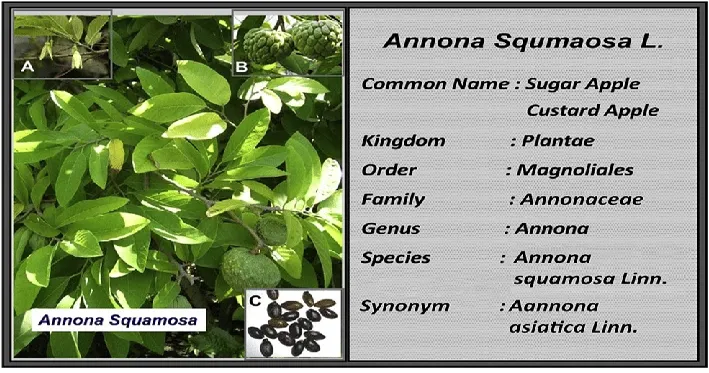
Fig. Annona squamosa Linn. plant: (A) flowers; (B) fruits; (C) seeds

Researchers have recently focused a lot on the antioxidant and antimicrobial properties of extracts from various plants. Medicinal plants are important for developing new medicines because they are often effective, have fewer side effects, and cost less than synthetic drugs. This study looks at the phytochemical compounds in the crude leaf extract of Annona squamosa (L.), along with its antibacterial, anticancer, antidiabetic, and especially its antioxidant properties.6

1.1 Drug profile:
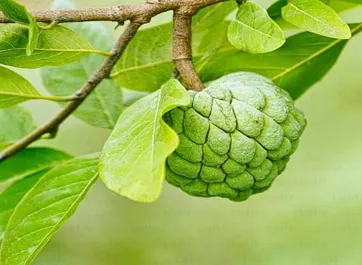
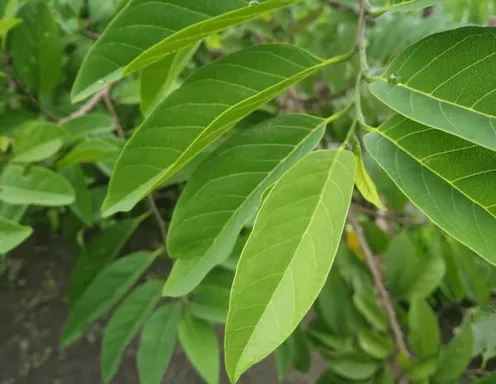
  • Annona Squamosa L.:  Traditional studies report that leaves of Annona squamosa have been used in folk medicine across various regions for its antioxidant activity. Antioxidant activity of Annona squamosa was reported in the leaf extracts. From the leaf of Annona squamosa, a bioactive flavonoid, Phenolic compounds were isolated from this plant for antioxidant property.7

Fig. Annona Squamosa L.

Fig. Leaves of Annona Squamosa L.

  • Bioactive phytoconstituents with therapeutic activity:
  1. Antioxidant activity: Antioxidants help counter oxidative stress by neutralizing free radicals, which can damage cells. Natural antioxidants, particularly flavonoids and other phenolic compounds, have been shown to protect cells against this damage. Studies on the ethanol extract of Annona squamosa leaves indicate that the leaves contain flavonoid compounds such as rutin and hyperoside, which contribute to their antioxidant activity.8
  2. Anticancer activity: Leaves of Annona squamosa have a number of phytochemicals including annonaceous acetogenins like squamocin, alkaloids like isoquinoline such as annonaine, glaucine, etc. exhibited strong cytotoxic and antiproliferative activities against breast cancer cell lines (MCF-7 and MDA-MB-231) and cervical cancer. 9
  3. Antidiabetic activity: Annona squamosa leaves are widely used as a nutritional supplement for glycemic control in diabetes. Quercetin-3-O-glucoside, a major bioactive constituent of the leaf extract, and polyphenols and flavonoids like Rutin exhibits antidiabetic activity through its insulin-secretory and antioxidant properties, making it a candidate for therapeutic application in diabetes.10
  4. Antibacterial activity: The leaves of A. squamosa contain several bioactive compounds that contribute to their antibacterial properties, with sesquiterpenes (C15H24) being among the most prevalent. The extracts also show strong antioxidant activity and are effective against both gram-positive like Staphylococcus aureus and gram-negative bacteria like Escherichia coli.11
  5. Antifungal activity: The antifungal activity in Annona squamosa leaf is due to presence of flavonoids, alkaloids like anonaine, acetogenins, tannins and saponins and essential oil terpenes like eugenol, thymol, etc. which has strong toxicity against fungi. The leaf extract of A. squamosa has been shown to suppress the growth of Fusarium oxysporum and is particularly effective against Colletotrichum capsici.12

1.2. Different species of Annona squamosa l.:

Sr. No.

Species name

Common name

Properties

Major phytoconstituents

1.

Annona Squamosa L.13

Sugar Apple/ Custard Apple

Anti-inflammatory, antimicrobial, insecticidal; used for wound healing and treating dysentery

Anonaine, squamocin, rutin, Kaurene diterpenes, palmitic acid.

2.

Annona muricata14

Soursop/ Graviola

Antioxidant, antiviral, sedative; used for hypertension, rheumatism, and inflammation.

Annonacin, muricapentocin, coreximine, reticuline, quercetin.

3.

Annona cherimola15

Cherimoya

Cardioprotective, antidepressant like effects; used to digest food and alleviate skin irritations

Cerimoline, anonaine, rutin, caffeic acid, Beta-sitosterol.

4.

Annona reticulata16

Ramphal/ Bullock’s heart

Anthelmentic, Antipyretic; used for treating diarrhea and dysentery.

Reticuline, squamone, bullatacin, kaur-16-en-19-oic acid.

5.

Annona glabra17

Pond apple/ alligator apple

Insecticidal, cytotoxic; used to treat pulmonary ailments and external parasites.

Asimicin, glabrin A and B, oxoanolobine, kaurene derivatives.

  • Justification:

Annona squamosa is chosen for antioxidant use because its leaves have higher levels of ascorbic acid18,rutin, and quercetin than A. cherimola and A. reticulata, which contain fewer active polyphenols that scavenge free radicals. In addition, unlike wild species such as A. glabra and A. muricata that produce toxic compounds like asimicin and annonacin, A. squamosa has a safer biochemical profile with low toxicity. This makes it more suitable for dietary and therapeutic applications aimed at reducing oxidative stress.19

2. LITERATURE SURVEY:

The following sections provide a theoretical literature survey detailing the work of 10 scientists and research groups who have extracted and evaluated the antioxidant potential of Annona squamosa (custard apple) leaves.

  • N. Kalidindi et al. (2015): Through sequential processing with methanol, chloroform, and water, this team analyzed the therapeutic properties of Annona squamosa foliage. They noted that the methanolic fraction generated the strongest radical-scavenging action against DPPH, nitric oxide, and hydrogen peroxide due to its dense phenolic profile.20
  • A. Awada et al. (2023): Awada evaluated the difference in final antioxidant potential between fresh leaves, naturally dried leaves, and microwave-dried leaves. Their qualitative profiling confirmed that methanolic leaf preparations yielded a high distribution of secondary metabolites, including condensed tannins and terpenoids, ensuring optimal radical neutralization.21
  • Al-Nemari et al (2020): Using 80% ethanol and 80% methanol extraction, this group compared the antioxidant behavior of different botanical segments. The leaves demonstrated the highest accumulation of total phenolics (117.2 mg GAE/g) and a superior DPPH value of 13.61 g/mL, easily outperforming the bark and pulp tissue.22
  • A. A. Mariod et al. (2012): Mariod and colleagues isolated secondary plant metabolites from leaf matter using pure methanol maceration. Their testing confirmed that the leaf layers contain a high concentration of flavonoids that successfully inhibit radical propagation, maintaining reliable clearance rates between 7.81 and 125 microgram/ml.23
  • R. Chatterjee et al. (2024): To evaluate how solvent dynamics influence yields, this research team tested leaf percolation with hexane, ethyl acetate, methanol, and water. They observed that recovery efficiency followed a descending pattern of Methanol > Water > Ethyl Acetate, with the methanol solvent yielding the highest total polyphenol count at 31.42 mg/g24.
  • M. Nguyen et al. (2020): Nguyen directed a multi-solvent extraction using fresh leaves to simultaneously monitor chemical profiles and free-radical neutralisation power. The group identified a prominent distribution of sesquiterpenes in the leaf samples, which act synergistically to curb oxidative stress while offering defensive antibacterial traits.25
  • A. Tomar et al. (2023): Tomar investigated the biochemical efficacy of polyphenol-dense water decoctions prepared from fresh leaf tissues. The resulting solution yielded a total phenol concentration of 74.9 mg GAE/g, which successfully shielded biological structures from oxidative cell damage even at minimal dosages.26
  • Y. Y. Ren et al. (2021): This team relied on an acidified water extraction routine to separate and evaluate the functional polysaccharides locked within the leaves. Their structural mapping verified that these macromolecular isolates hold significant radical-neutralizing properties, presenting an alternative, non-phenolic pathway to achieve antioxidant stability.27
  • D. S. Raj et al. (2008): Raj executed an in vivo alcoholic leaf extraction to trace the physiological behavior of the plant's compounds inside dynamic biological models. Their evaluations showed that the administered leaf extract successfully elevated the concentration of native cellular scavenging enzymes like catalase and superoxide dismutase28.
  • S. Srinivasan et al. (2015): srinivasan explored sequential organic leaf extraction to study the structural concentration-dependent paths of antioxidants using targeted reducing power assays. Their team quantified that the radical inhibition strength followed a distinct sequence of Methanol > Chloroform > Aqueous mediums.29

3. AIM:

To obtain Annona squamosa leaf extract and assess its ability to scavenge free radicals using the DPPH   assay.

Objective of work:

1. To extract phytoconstituents from Annona squamosa leaves using an appropriate solvent system.

2. To screen the leaf extract for major phytochemicals such as phenolics and flavonoids.

3. To evaluate the free radical scavenging capacity of the extract through the DPPH method.

4. To evaluate the concentration dependent free radical scavenging activity of the leaf extract.

5. To relate the antioxidant potential of the extract to its phytochemical content.

Scientific Justification:

Annona squamosa is a prominent ethnomedicinal species in India, historically recognized for its therapeutic role in managing inflammation and microbial pathogens. Given that oxidative stress is a primary driver of chronic pathologies like diabetes and cardiovascular decline, there is a critical need for biocompatible, plant-derived antioxidants to replace synthetic alternatives.30 By investigating the often-discarded leaves, this study promotes "waste-to-value" resource management, potentially validating the plant's integration into high-value nutraceutical and pharmaceutical formulations.

4. PLAN OF WORK:

The following table outlines the sequential steps from raw material collection to final reporting, spanning approximately one month.

Phase

Activity

Duration

Key tasks

1

Sample collection and preparation

15 days

Identification, cleaning, and shade drying of Annona squamosa leaves.

2

Extraction process

5 days

Grinding dried leaves and performing solvent extraction (Soxhlet)

3

Preliminary evaluation

10 days

Qualitative phytochemical screening and basic physiochemical parameter testing.

4

External laboratory testing

1 month

DPPH, ABTS, or FRAP assays conducted at a specialized faculty

5

Data analysis and reporting

5 to 7 days

Compiling lab results and finalizing the project report

6

Thesis writing

25 to 30 days

Documentation of data, formatting and references

5. METHODOLOGY:

Preparation of extract:

5.1: Collection of materials:

Fresh, fully matured leaves of Annona squamosa (L.), commonly known as custard apple, were collected from the Chhatrapati Sambhajinagar district during the early morning hours to ensure maximum phytochemical content. The collected leaves were immediately rinsed under running tap water to remove dust, debris, and surface contaminants, followed by a final wash with distilled water to eliminate any residual impurities.31 After washing, the leaves were spread evenly on clean trays and shade-dried at room temperature for 10–12 days to retain the bioactive constituents. Shade drying is preferred over direct sunlight as it prevents degradation of heat-sensitive antioxidants32. Once completely dry, the leaves were pulverized into a fine, uniform powder using a mechanical grinder and sieved to obtain consistent particle size for better solvent penetration during extraction. The powdered material was then stored in an airtight container at room temperature until extraction was carried out.

5.2: Preparation of Annona Squamosa leaf extract:

10 grams of shade-dried Annona squamosa leaf powder were placed in a cellulose thimble and loaded into the main chamber of a Soxhlet apparatus. 100 ml of ethanol were added to the round-bottom flask, and the system was fitted with a water-cooled condenser. The flask was heated to about 78°C to allow continuous reflux for 6–8 hours, until the solvent returning to the flask became clear. After the solution cooled to room temperature, it was filtered through Whatman No. 1 filter paper. The ethanol was then removed using a hot plate. This resulted in a dark green, concentrated crude extract paste. The extract was weighed to determine the yield and stored in a sealed amber vial at 4°C to preserve its activity.33
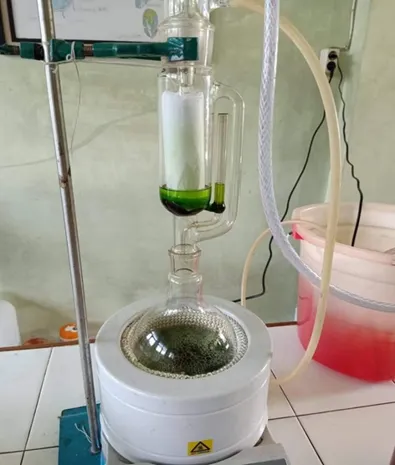
Fig. Soxhlet extraction of Annona squamosa leaf powder

5.3 Evaluation of Annona squamosa leaf extract:
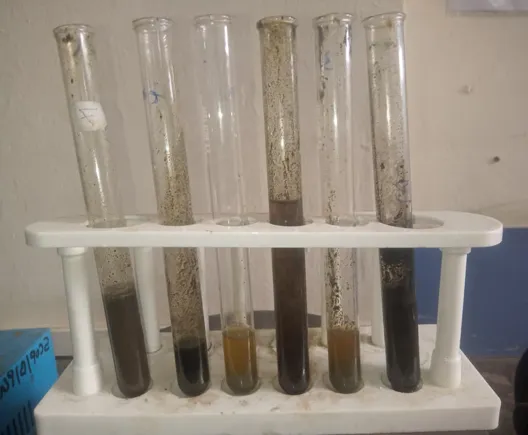
  • Preliminary Phytochemical Investigation:

Fig. evaluation tests for identification of phytochemicals

  1. Solubility test: 1 gm of Annona squamosa leaf powder is added in 10 ml water, ethanol, methanol simultaneously and shake vigorously. Annona squamosa leaf extract solubility tests show high solubility in water, methanol, ethanol.
  2. Test for carbohydrates: To 2ml of plant extracts, 1ml of Molisch’s reagent and few drops of concentrated sulphuric acid were added. Purple colour formation indicated the presence of carbohydrates.34
  3. Test for alkaloids:  alkaloids were qualitatively assessed using Mayer’s test. Briefly, 2 mL of plant extract was acidified with 2 mL of concentrated HCl, followed by the addition of a few drops of Mayer’s reagent. A green coloration was observed, indicating a positive result for alkaloids.35
  4. Test for saponins: 1 mL of the plant extract was mixed with 2 mL of 5% ferric chloride solution. A greenish-black colour change showed that tannins were present in the extract.
  5. Test for flavonoids: 5ml of dilute ammonia solution was added to a 10 ml of the aqueous filtrate of plant extract followed by addition of concentrated sulphuric acid. Yellow colour indicated the presence of flavonoids.35
  6. Test for tannins: Tannin content in the plant extract was confirmed via the ferric chloride assay. Upon addition of 2 mL of 5% FeCl₃ to 1 mL of extract, a greenish-black coloration developed, indicating the presence of tannins.

6. RESULTS AND DISCUSSION:

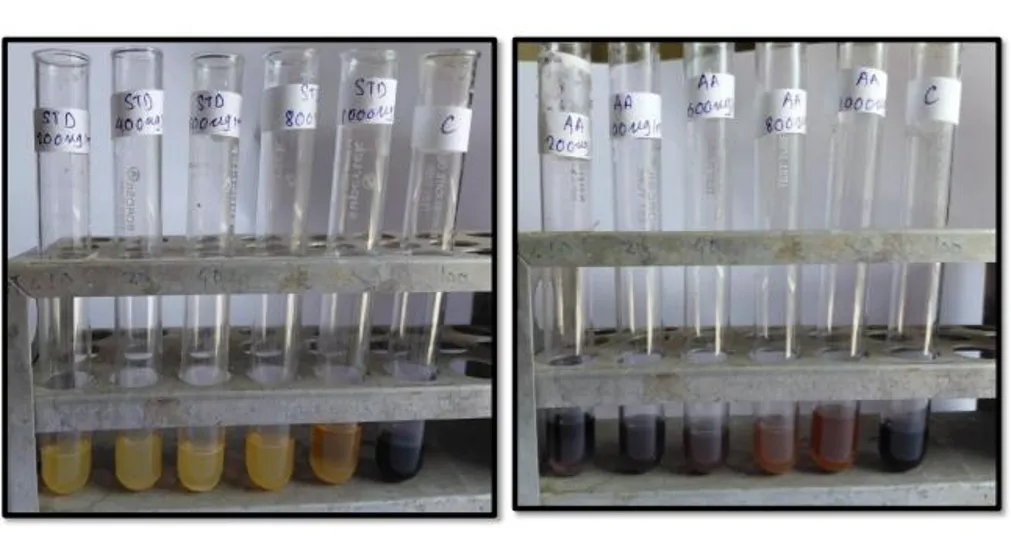
The DPPH (2,2-diphenyl-1-picrylhydrazyl) radical scavenging assay serves as a standard, efficient spectrophotometric method to quantify this specific defense capacity.36 During the procedure, antioxidant compounds in the plant extract donate electrons or hydrogen atoms to the stable DPPH radical, shifting the solution color from deep violet to light yellow. Analyzing Annona squamosa through this assay confirms its pharmacological value as a natural agent for managing oxidative stress disorders.

Principle: DPPH (2,2-diphenyl-1-picrylhydrazyl) is a stable free radical with a deep violet color. Antioxidants reduce DPPH, causing a color change from violet to yellow, which can be measured spectrophotometrically at 517 nm.

  • Antioxidant Activity by DPPH Method (Test Tube Method):

Materials Required:

  • DPPH (analytical grade)
  • Methanol or ethanol (analytical grade)
  • Test samples (plant extracts or compounds)
  • Standard antioxidant (e.g., Ascorbic Acid)
  • Test tubes
  • UV-Visible spectrophotometer
  • Pipettes and micropipettes
  • Vortex mixer
  • Aluminum foil or dark chamber
  • Reagent Preparation:
  1. DPPH Solution (0.1 mM):
  • Dissolve 3.94 mg of DPPH in 100 mL methanol.
  • Mix thoroughly until completely dissolved.
  • Store the solution in a dark-colored bottle and prepare freshly before use.
  1. Sample and Standard Preparation:
  • Dissolve the test sample and standard separately in methanol.
  • Prepare different concentrations such as 20 to 1000 µg/ml.
  • Procedure (Test Tube Method):

1. Label clean and dry test tubes for control, standard, and test samples.

2. Pipette 1 mL of each concentration of test sample or standard solution into the respective test tubes.

3. Add 1 mL of freshly prepared 0.1 mM DPPH solution to each test tube.

4. For the control, mix 1 mL methanol with 1 mL DPPH solution.

5. For the blank, use methanol without DPPH solution.

6. Vortex the reaction mixtures thoroughly to ensure proper mixing.

7. Cover the test tubes with aluminum foil or keep them in a dark chamber to protect from light.

8. Incubate the reaction mixtures at room temperature for 30 minutes in the dark.

9. After incubation, measure the absorbance of each solution at 517 nm using a UV-Visible spectrophotometer against the blank.

10. Perform all experiments in triplicate and calculate the mean absorbance values.

  • Calculation:

Inhibition (%) = (OD Control – OD Sample) / OD Control ×100

  • Antioxidant Activity of Sample by DPPH Method Spectrophotometer:

Sr. no

Sample code

Conc. Microgram/ml

OD

Mean

Percent inhibition

1.

Control

-

1.20

1.24

1.28

1.24

-

2.

Standard (Ascorbic Acid)

200

0.42

0.42

0.38

0.41

67.20

400

0.32

0.31

0.29

0.31

75.27

600

0.24

0.23

0.22

0.23

81.45

800

0.19

0.17

0.14

0.17

86.56

1000

0.09

0.08

0.08

0.08

93.28

3.

Sample-A

200

0.48

0.47

0.47

0.47

61.83

400

0.35

0.32

0.31

0.33

73.66

600

0.29

0.31

0.31

0.30

75.54

800

0.28

0.25

0.25

0.27

78.49

10000

0.25

0.23

0.23

0.24

80.65

Discussion:

The antioxidant activity of Sample-A was evaluated by the DPPH free radical scavenging assay using a spectrophotometric method and compared with the standard antioxidant, Ascorbic Acid. The DPPH assay is a widely accepted method for determining the hydrogen-donating and free radical scavenging potential of plant extracts and bioactive compounds. The results demonstrated that the standard Ascorbic Acid exhibited strong concentration-dependent antioxidant activity, with percentage inhibition increasing from 67.20% at 200 µg/ml to 93.28% at 1000 µg/ml. This indicates the high free radical scavenging efficiency of the standard compound. Sample-A also exhibited appreciable antioxidant activity against DPPH radicals. The percentage inhibition ranged from 61.83% to 80.65% across the tested concentrations. At 200 µg/ml, Sample-A showed 73.66% inhibition, indicating notable antioxidant potential even at lower concentration. Although a slight decrease in activity was observed at 400 µg/ml (61.83%), the scavenging activity subsequently increased with concentration, reaching 80.65% inhibition at 1000 µg/ml.

Hence, the present study demonstrated that Sample-A possesses significant antioxidant activity as evaluated by the DPPH radical scavenging assay using spectrophotometric analysis. The sample exhibited considerable free radical inhibition ranging from 61.83% to 80.65% at different concentrations. Although the activity was lower than the standard Ascorbic Acid, the results indicate that Sample-A has good antioxidant potential.

8. SUMMARY:

In recent years, oxidative stress has become a major health concern as it contributes to the development of chronic diseases such as cancer, diabetes, and cardiovascular disorders. Oxidative stress occurs when the body produces more reactive oxygen species than it can neutralize, leading to damage of cells, proteins, and DNA. To address this, there is increasing interest in natural antioxidants derived from medicinal plants, as they are generally safer, more economical, and have fewer side effects compared to synthetic alternatives.

So, the objective of this study is to extract and evaluate the antioxidant potential of Annona squamosa leaf extract, commonly known as custard apple, which has been traditionally used in herbal medicine for its healing properties.

By reviewing existing literature, it was found that Annona squamosa leaves contain a rich profile of bioactive compounds including flavonoids, phenolic compounds, alkaloids, tannins, and saponins. These phytochemicals are known for their ability to neutralize free radicals and protect cells from oxidative damage. Additionally, the plant has shown antibacterial and antidiabetic properties, making it valuable for multiple therapeutic applications.

The material collection and extraction process involved shade-drying fresh leaves to preserve bioactive constituents, followed by grinding into a fine powder. The powder was then subjected to solvent extraction using ethanol, methanol, or water to isolate the active compounds. The extract was further analyzed through phytochemical screening to confirm the presence of key antioxidant constituents such as polyphenols and flavonoids.

The evaluation of antioxidant activity was carried out using standard laboratory methods like DPPH radical scavenging assay, FRAP assay, and Total Phenolic Content test. These methods measure the extract’s ability to neutralize free radicals and its reducing power. The results were compared with standard antioxidants like ascorbic acid and quercetin to determine relative effectiveness.

The findings indicate that Annona squamosa leaf extract exhibits strong antioxidant activity due to the high concentration of flavonoids and phenolic compounds. The extract effectively scavenges free radicals and helps reduce oxidative stress at the cellular level. Compared to synthetic antioxidants, it offers a natural and safer alternative with additional antibacterial and antidiabetic benefits.

This study highlights Annona squamosa leaf extract as a promising natural source of antioxidants for use in pharmaceutical and nutraceutical products. It also supports the concept of waste-to-value by utilizing plant parts that are often discarded. Further research can explore its broader therapeutic applications in managing oxidative stress-related diseases.

CONCLUSION

The study shows that the leaf extract of Annona squamosa contains bioactive compounds, mainly flavonoids and phenolic substances, which contribute to its antioxidant activity. The extract was found to effectively neutralize free radicals and help reduce oxidative stress in cells.

Compared to standard antioxidants, the plant extract offers a natural alternative that is both effective and economical, with fewer adverse effects. These properties make A. squamosa leaf extract a valuable candidate for use in health and pharmaceutical products.

In summary, the results support the potential of Annona squamosa leaf extract as a natural antioxidant, and further research can explore its broader therapeutic applications.

REFERENCES
  1. Kalidindi, N.; Thimmaiah, N. V.; Jagadeesh, N. V.; Nandeep, R.; Swetha, S.; Kalidindi, B. Antifungal and Antioxidant Activities of Organic and Aqueous Extracts of Annona Squamosa Linn. Leaves. J. Food Drug Anal. 2015, 23 (4), 795–802. https://doi.org/10.1016/j.jfda.2015.04.012.
  2. Kalidindi, N.; Thimmaiah, N. V.; Jagadeesh, N. V.; Nandeep, R.; Swetha, S.; Kalidindi, B. Antifungal and Antioxidant Activities of Organic and Aqueous Extracts of Annona Squamosa Linn. Leaves. J. Food Drug Anal. 2015, 23 (4), 795–802. https://doi.org/10.1016/j.jfda.2015.04.012.
  3. Leite, D. O. D.; Camilo, C. J.; Nonato, C. de F. A.; Carvalho, N. K. G. de; Salazar, G. J. T.; de Morais, S. M.; Costa, J. G. M. da. Chemical Profile and Evaluation of the Antioxidant and Anti-Acetylcholinesterase Activities of Annona Squamosa L. (Annonaceae) Extracts. Foods 2021, 10 (10), 2343. https://doi.org/10.3390/foods10102343.
  4. Shehata, M. G.; Abu-Serie, M. M.; Abd El-Aziz, N. M.; El-Sohaimy, S. A. Nutritional, Phytochemical, and in Vitro Anticancer Potential of Sugar Apple (Annona Squamosa) Fruits. Sci. Rep. 2021, 11 (1), 6224. https://doi.org/10.1038/s41598-021-85772-8.
  5. Pinto, N. C. C.; Silva, J. B.; Menegati, L. M.; Guedes, M. C. M. R.; Marques, L. B.; Silva, T. P. D.; Melo, R. C. N. D.; Souza-Fagundes, E. M. D.; Salvador, M. J.; Scio, E.; Fabri, R. L. Cytotoxicity and Bacterial Membrane Destabilization Induced by Annona Squamosa L. Extracts. An. Acad. Bras. Ciênc. 2017, 89, 2053–2073. https://doi.org/https://doi.org/10.1590/0001-3765201720150702.
  6. Oo, W. M.; Khine, M. M. Pharmacological Activities of Annona Squamosa: Updated. Chemistry 2017, 3 (6), 86–93.
  7. Yahya, M.; Ginting, B.; Saidi, N.; Riski, C. D.; Purnama, A.; Auliansyah, T. I.; Gunana, T. Z. T. Antioxidant Activities and Toxicity of Dichloromethane and N-Hexane Extracts of Annona Squamosa L. Leaves. J. Adv. Pharm. Technol. Res. 2026, 17 (1), 24. https://doi.org/10.4103/JAPTR.JAPTR_231_25.
  8. Nguyen, M. T.; Nguyen, V. T.; Le, V. M.; Trieu, L. H.; Lam, T. D.; Bui, L. M.; Nhan, L. T. H.; Danh, V. T. Assessment of Preliminary Phytochemical Screening, Polyphenol Content, Flavonoid Content, and Antioxidant Activity of Custard Apple Leaves (Annona Squamosa Linn.). IOP Conf. Ser. Mater. Sci. Eng. 2020, 736 (6), 062012. https://doi.org/10.1088/1757-899X/736/6/062012.
  9. Kumar, M.; Changan, S.; Tomar, M.; Prajapati, U.; Saurabh, V.; Hasan, M.; Sasi, M.; Maheshwari, C.; Singh, S.; Dhumal, S.; Radha; Thakur, M.; Punia, S.; Satankar, V.; Amarowicz, R.; Mekhemar, M. Custard Apple (Annona Squamosa L.) Leaves: Nutritional Composition, Phytochemical Profile, and Health-Promoting Biological Activities. Biomolecules 2021, 11 (5), 614. https://doi.org/10.3390/biom11050614.
  10. Panda, S.; Kar, A. Antidiabetic and Antioxidative Effects of Annona Squamosa Leaves Are Possibly Mediated through Quercetin-3-O-Glucoside. BioFactors 2007, 31 (3–4), 201–210. https://doi.org/10.1002/biof.5520310307.
  11. Neethu Simon, K.; Santhoshkumar, R.; Neethu, S. K. Phytochemical Analysis and Antimicrobial Activities of Annona Squamosa (L) Leaf Extracts. J. Pharmacogn. Phytochem. 2016, 5 (4), 128–131.
  12. Ahmad, K. F.; Sultana, N. Biological Studies on Fruit Pulp and Seeds of Annona Squamosa. Jour Chem Soc Pak Vol 2003, 25 (4).
  13. Ma, C.; Chen, Y.; Chen, J.; Li, X.; Chen, Y. A Review on Annona Squamosa L.: Phytochemicals and Biological Activities. Am. J. Chin. Med. 2017, 45 (05), 933–964. https://doi.org/10.1142/S0192415X17500501.
  14. Moghadamtousi, S. Z.; Fadaeinasab, M.; Nikzad, S.; Mohan, G.; Ali, H. M.; Kadir, H. A. Annona Muricata (Annonaceae): A Review of Its Traditional Uses, Isolated Acetogenins and Biological Activities. Int. J. Mol. Sci. 2015, 16 (7), 15625–15658. https://doi.org/10.3390/ijms160715625.
  15. Mannino, G.; Gentile, C.; Porcu, A.; Agliassa, C.; Caradonna, F.; Bertea, C. M. Chemical Profile and Biological Activity of Cherimoya (Annona Cherimola Mill.) and Atemoya (Annona Atemoya) Leaves. Molecules 2020, 25 (11), 2612. https://doi.org/10.3390/molecules25112612.
  16. Chavan, S. S.; Shamkuwar, P. B.; Damale, M. G.; Pawar, D. P. A Comprehensive Review on Annona Reticulata. Int. J. Pharm. Sci. Res. 2014, 5 (1), 45.
  17. Sinchana, R.; Mani, T. T.; Pavithra, T.; Shiju, L. A Review on a Miracle Plant Annona Glabra Linn. Int. J. Pharmacogn. 2024, 11 (3), 65–77.
  18. Vikas, B.; Akhil, B. S.; Remani, P.; Sujathan, K. Free Radical Scavenging Properties of Annona Squamosa. Asian Pac. J. Cancer Prev. APJCP 2017, 18 (10), 2725.
  19. Abd-Elrazek, A.; Shapana, H.; Shukry, W.; Galilah, D. Comparison between Annona Squamosa, Annona Cherimolia and Annona Atemoya Ethanolic Extracts Extenuative Impact against Oxidative Stress, Inflammation and Apoptosis in Rat Kidney Induced by Ifosfamid. Toxicol. Res. 2021, 10 (4), 947–958. https://doi.org/10.1093/toxres/tfab078.
  20. Kalidindi, N.; Thimmaiah, N. V.; Jagadeesh, N. V.; Nandeep, R.; Swetha, S.; Kalidindi, B. Antifungal and Antioxidant Activities of Organic and Aqueous Extracts of Annona Squamosa Linn. Leaves. J. Food Drug Anal. 2015, 23 (4), 795–802. https://doi.org/10.1016/j.jfda.2015.04.012.
  21. Awada, N.; Ayoub, A.; Jaber, A.; Ibrahim, F.; Ghotmi, N.; Cheble, E. Evaluation of the Anticancer, Anti-Inflammatory, and Antioxidant Properties of Various Extracts of Annona Squamosa L. Pharm. Sci. 2023, 29. https://doi.org/10.34172/PS.2023.5.
  22. Ibrahim, F.; Jaber, A.; Ibrahim, G.; Cheble, E. ANTIOXIDANT ACTIVITY AND TOTAL PHENOL CONTENT OF DIFFERENT PLANT PARTS OF LEBANESE ANNONA SQUAMOSA LINN. Int. J. Pharm. Pharm. Sci. 2020, 100–105. https://doi.org/10.22159/ijpps.2020v12i8.36992.
  23. (PDF) Antioxidant activity of different parts from Annona squamosa, and Catunaregam nilotica methanolic extract. https://www.researchgate.net/publication/228088809_Antioxidant_activity_of_different_parts_from_Annona_squamosa_and_Catunaregam_nilotica_methanolic_extract (accessed 2026-05-23).
  24. Dwivedi, S.; Khan, K.; Jain, S. Evaluation of In-Vitro Antioxidant and Antimutagenic Effect of Annona Squamosa Leaves Extract. J. Drug Deliv. Ther. 2024, 14 (8), 10–14. https://doi.org/10.22270/jddt.v14i8.6698.
  25. Al-Nemari, R.; Al-Senaidy, A.; Semlali, A.; Ismael, M.; Badjah-Hadj-Ahmed, A. Y.; Ben Bacha, A. GC-MS Profiling and Assessment of Antioxidant, Antibacterial, and Anticancer Properties of Extracts of Annona Squamosa L. Leaves. BMC Complement. Med. Ther. 2020, 20 (1), 296. https://doi.org/10.1186/s12906-020-03029-9.
  26. Low-dose of phenolic rich extract from Annona squamosa Linn leaves ameliorates insulin sensitivity and reduces body weight gain in HF diet-induced obesity - PMC. https://pmc.ncbi.nlm.nih.gov/articles/PMC10394232/ (accessed 2026-05-23).
  27. Leite, D. O. D.; Camilo, C. J.; Nonato, C. de F. A.; de Carvalho, N. K. G.; Salazar, G. J. T.; de Morais, S. M.; da Costa, J. G. M. Chemical Profile and Evaluation of the Antioxidant and Anti-Acetylcholinesterase Activities of Annona Squamosa L. (Annonaceae) Extracts. Foods 2021, 10 (10), 2343. https://doi.org/10.3390/foods10102343.
  28. Gupta, R. K.; Kesari, A. N.; Diwakar, S.; Tyagi, A.; Tandon, V.; Chandra, R.; Watal, G. In Vivo Evaluation of Anti-Oxidant and Anti-Lipidimic Potential of Annona Squamosa Aqueous Extract in Type 2 Diabetic Models. J. Ethnopharmacol. 2008, 118 (1), 21–25. https://doi.org/10.1016/j.jep.2008.03.008.
  29. Kalidindi, N.; Thimmaiah, N. V.; Jagadeesh, N. V.; Nandeep, R.; Swetha, S.; Kalidindi, B. Antifungal and Antioxidant Activities of Organic and Aqueous Extracts of Annona Squamosa Linn. Leaves. J. Food Drug Anal. 23 (4), 795–802. https://doi.org/10.1016/j.jfda.2015.04.012.
  30. Vikas, B.; S, A. B.; P, R.; Sujathan, K. Free Radical Scavenging Properties of Annona Squamosa. Asian Pac. J. Cancer Prev. APJCP 2017, 18 (10), 2725–2732. https://doi.org/10.22034/APJCP.2017.18.10.2725.
  31. Rami, N.; Kulkarni, B.; Chibber, S.; Jhala, D.; Parmar, N.; Trivedi, K. In Vitro Antioxidant and Anticancer Potential of Annona Squamosa L. Extracts against Breast Cancer. Int J Exp Res Rev 2023, 30, 264–275.
  32. Agrawal, M. Pharmacognostical Evaluation of Annona Squamosa Linn. Int. J. Phytomedicine 2012.
  33. rjpponline.org/HTML_Papers/Research Journal of Pharmacognosy and Phytochemistry__PID__2009-1-1-11.html. https://rjpponline.org/HTML_Papers/Research%20Journal%20of%20Pharmacognosy%20and%20Phytochemistry__PID__2009-1-1-11.html (accessed 2026-05-22).
  34. Varadharajan, V.; Janarthanan, U. K.; Krishnamurthy, V. Physicochemical, Phytochemical Screening and Profiling of Secondary Metabolites of Annona Squamosa Leaf Extract. World J. Pharm. Res. 2012, 1 (4), 1143–1164.
  35. Varadharajan, V.; Janarthanan, U. K.; Krishnamurthy, V. Physicochemical, Phytochemical Screening and Profiling of Secondary Metabolites of Annona Squamosa Leaf Extract. World J. Pharm. Res. 2012, 1 (4), 1143–1164.
  36. Gulcin, İ.; Alwasel, S. H. DPPH Radical Scavenging Assay. Processes 2023, 11 (8), 2248. https://doi.org/10.3390/pr11082248.

Reference

  1. Kalidindi, N.; Thimmaiah, N. V.; Jagadeesh, N. V.; Nandeep, R.; Swetha, S.; Kalidindi, B. Antifungal and Antioxidant Activities of Organic and Aqueous Extracts of Annona Squamosa Linn. Leaves. J. Food Drug Anal. 2015, 23 (4), 795–802. https://doi.org/10.1016/j.jfda.2015.04.012.
  2. Kalidindi, N.; Thimmaiah, N. V.; Jagadeesh, N. V.; Nandeep, R.; Swetha, S.; Kalidindi, B. Antifungal and Antioxidant Activities of Organic and Aqueous Extracts of Annona Squamosa Linn. Leaves. J. Food Drug Anal. 2015, 23 (4), 795–802. https://doi.org/10.1016/j.jfda.2015.04.012.
  3. Leite, D. O. D.; Camilo, C. J.; Nonato, C. de F. A.; Carvalho, N. K. G. de; Salazar, G. J. T.; de Morais, S. M.; Costa, J. G. M. da. Chemical Profile and Evaluation of the Antioxidant and Anti-Acetylcholinesterase Activities of Annona Squamosa L. (Annonaceae) Extracts. Foods 2021, 10 (10), 2343. https://doi.org/10.3390/foods10102343.
  4. Shehata, M. G.; Abu-Serie, M. M.; Abd El-Aziz, N. M.; El-Sohaimy, S. A. Nutritional, Phytochemical, and in Vitro Anticancer Potential of Sugar Apple (Annona Squamosa) Fruits. Sci. Rep. 2021, 11 (1), 6224. https://doi.org/10.1038/s41598-021-85772-8.
  5. Pinto, N. C. C.; Silva, J. B.; Menegati, L. M.; Guedes, M. C. M. R.; Marques, L. B.; Silva, T. P. D.; Melo, R. C. N. D.; Souza-Fagundes, E. M. D.; Salvador, M. J.; Scio, E.; Fabri, R. L. Cytotoxicity and Bacterial Membrane Destabilization Induced by Annona Squamosa L. Extracts. An. Acad. Bras. Ciênc. 2017, 89, 2053–2073. https://doi.org/https://doi.org/10.1590/0001-3765201720150702.
  6. Oo, W. M.; Khine, M. M. Pharmacological Activities of Annona Squamosa: Updated. Chemistry 2017, 3 (6), 86–93.
  7. Yahya, M.; Ginting, B.; Saidi, N.; Riski, C. D.; Purnama, A.; Auliansyah, T. I.; Gunana, T. Z. T. Antioxidant Activities and Toxicity of Dichloromethane and N-Hexane Extracts of Annona Squamosa L. Leaves. J. Adv. Pharm. Technol. Res. 2026, 17 (1), 24. https://doi.org/10.4103/JAPTR.JAPTR_231_25.
  8. Nguyen, M. T.; Nguyen, V. T.; Le, V. M.; Trieu, L. H.; Lam, T. D.; Bui, L. M.; Nhan, L. T. H.; Danh, V. T. Assessment of Preliminary Phytochemical Screening, Polyphenol Content, Flavonoid Content, and Antioxidant Activity of Custard Apple Leaves (Annona Squamosa Linn.). IOP Conf. Ser. Mater. Sci. Eng. 2020, 736 (6), 062012. https://doi.org/10.1088/1757-899X/736/6/062012.
  9. Kumar, M.; Changan, S.; Tomar, M.; Prajapati, U.; Saurabh, V.; Hasan, M.; Sasi, M.; Maheshwari, C.; Singh, S.; Dhumal, S.; Radha; Thakur, M.; Punia, S.; Satankar, V.; Amarowicz, R.; Mekhemar, M. Custard Apple (Annona Squamosa L.) Leaves: Nutritional Composition, Phytochemical Profile, and Health-Promoting Biological Activities. Biomolecules 2021, 11 (5), 614. https://doi.org/10.3390/biom11050614.
  10. Panda, S.; Kar, A. Antidiabetic and Antioxidative Effects of Annona Squamosa Leaves Are Possibly Mediated through Quercetin-3-O-Glucoside. BioFactors 2007, 31 (3–4), 201–210. https://doi.org/10.1002/biof.5520310307.
  11. Neethu Simon, K.; Santhoshkumar, R.; Neethu, S. K. Phytochemical Analysis and Antimicrobial Activities of Annona Squamosa (L) Leaf Extracts. J. Pharmacogn. Phytochem. 2016, 5 (4), 128–131.
  12. Ahmad, K. F.; Sultana, N. Biological Studies on Fruit Pulp and Seeds of Annona Squamosa. Jour Chem Soc Pak Vol 2003, 25 (4).
  13. Ma, C.; Chen, Y.; Chen, J.; Li, X.; Chen, Y. A Review on Annona Squamosa L.: Phytochemicals and Biological Activities. Am. J. Chin. Med. 2017, 45 (05), 933–964. https://doi.org/10.1142/S0192415X17500501.
  14. Moghadamtousi, S. Z.; Fadaeinasab, M.; Nikzad, S.; Mohan, G.; Ali, H. M.; Kadir, H. A. Annona Muricata (Annonaceae): A Review of Its Traditional Uses, Isolated Acetogenins and Biological Activities. Int. J. Mol. Sci. 2015, 16 (7), 15625–15658. https://doi.org/10.3390/ijms160715625.
  15. Mannino, G.; Gentile, C.; Porcu, A.; Agliassa, C.; Caradonna, F.; Bertea, C. M. Chemical Profile and Biological Activity of Cherimoya (Annona Cherimola Mill.) and Atemoya (Annona Atemoya) Leaves. Molecules 2020, 25 (11), 2612. https://doi.org/10.3390/molecules25112612.
  16. Chavan, S. S.; Shamkuwar, P. B.; Damale, M. G.; Pawar, D. P. A Comprehensive Review on Annona Reticulata. Int. J. Pharm. Sci. Res. 2014, 5 (1), 45.
  17. Sinchana, R.; Mani, T. T.; Pavithra, T.; Shiju, L. A Review on a Miracle Plant Annona Glabra Linn. Int. J. Pharmacogn. 2024, 11 (3), 65–77.
  18. Vikas, B.; Akhil, B. S.; Remani, P.; Sujathan, K. Free Radical Scavenging Properties of Annona Squamosa. Asian Pac. J. Cancer Prev. APJCP 2017, 18 (10), 2725.
  19. Abd-Elrazek, A.; Shapana, H.; Shukry, W.; Galilah, D. Comparison between Annona Squamosa, Annona Cherimolia and Annona Atemoya Ethanolic Extracts Extenuative Impact against Oxidative Stress, Inflammation and Apoptosis in Rat Kidney Induced by Ifosfamid. Toxicol. Res. 2021, 10 (4), 947–958. https://doi.org/10.1093/toxres/tfab078.
  20. Kalidindi, N.; Thimmaiah, N. V.; Jagadeesh, N. V.; Nandeep, R.; Swetha, S.; Kalidindi, B. Antifungal and Antioxidant Activities of Organic and Aqueous Extracts of Annona Squamosa Linn. Leaves. J. Food Drug Anal. 2015, 23 (4), 795–802. https://doi.org/10.1016/j.jfda.2015.04.012.
  21. Awada, N.; Ayoub, A.; Jaber, A.; Ibrahim, F.; Ghotmi, N.; Cheble, E. Evaluation of the Anticancer, Anti-Inflammatory, and Antioxidant Properties of Various Extracts of Annona Squamosa L. Pharm. Sci. 2023, 29. https://doi.org/10.34172/PS.2023.5.
  22. Ibrahim, F.; Jaber, A.; Ibrahim, G.; Cheble, E. ANTIOXIDANT ACTIVITY AND TOTAL PHENOL CONTENT OF DIFFERENT PLANT PARTS OF LEBANESE ANNONA SQUAMOSA LINN. Int. J. Pharm. Pharm. Sci. 2020, 100–105. https://doi.org/10.22159/ijpps.2020v12i8.36992.
  23. (PDF) Antioxidant activity of different parts from Annona squamosa, and Catunaregam nilotica methanolic extract. https://www.researchgate.net/publication/228088809_Antioxidant_activity_of_different_parts_from_Annona_squamosa_and_Catunaregam_nilotica_methanolic_extract (accessed 2026-05-23).
  24. Dwivedi, S.; Khan, K.; Jain, S. Evaluation of In-Vitro Antioxidant and Antimutagenic Effect of Annona Squamosa Leaves Extract. J. Drug Deliv. Ther. 2024, 14 (8), 10–14. https://doi.org/10.22270/jddt.v14i8.6698.
  25. Al-Nemari, R.; Al-Senaidy, A.; Semlali, A.; Ismael, M.; Badjah-Hadj-Ahmed, A. Y.; Ben Bacha, A. GC-MS Profiling and Assessment of Antioxidant, Antibacterial, and Anticancer Properties of Extracts of Annona Squamosa L. Leaves. BMC Complement. Med. Ther. 2020, 20 (1), 296. https://doi.org/10.1186/s12906-020-03029-9.
  26. Low-dose of phenolic rich extract from Annona squamosa Linn leaves ameliorates insulin sensitivity and reduces body weight gain in HF diet-induced obesity - PMC. https://pmc.ncbi.nlm.nih.gov/articles/PMC10394232/ (accessed 2026-05-23).
  27. Leite, D. O. D.; Camilo, C. J.; Nonato, C. de F. A.; de Carvalho, N. K. G.; Salazar, G. J. T.; de Morais, S. M.; da Costa, J. G. M. Chemical Profile and Evaluation of the Antioxidant and Anti-Acetylcholinesterase Activities of Annona Squamosa L. (Annonaceae) Extracts. Foods 2021, 10 (10), 2343. https://doi.org/10.3390/foods10102343.
  28. Gupta, R. K.; Kesari, A. N.; Diwakar, S.; Tyagi, A.; Tandon, V.; Chandra, R.; Watal, G. In Vivo Evaluation of Anti-Oxidant and Anti-Lipidimic Potential of Annona Squamosa Aqueous Extract in Type 2 Diabetic Models. J. Ethnopharmacol. 2008, 118 (1), 21–25. https://doi.org/10.1016/j.jep.2008.03.008.
  29. Kalidindi, N.; Thimmaiah, N. V.; Jagadeesh, N. V.; Nandeep, R.; Swetha, S.; Kalidindi, B. Antifungal and Antioxidant Activities of Organic and Aqueous Extracts of Annona Squamosa Linn. Leaves. J. Food Drug Anal. 23 (4), 795–802. https://doi.org/10.1016/j.jfda.2015.04.012.
  30. Vikas, B.; S, A. B.; P, R.; Sujathan, K. Free Radical Scavenging Properties of Annona Squamosa. Asian Pac. J. Cancer Prev. APJCP 2017, 18 (10), 2725–2732. https://doi.org/10.22034/APJCP.2017.18.10.2725.
  31. Rami, N.; Kulkarni, B.; Chibber, S.; Jhala, D.; Parmar, N.; Trivedi, K. In Vitro Antioxidant and Anticancer Potential of Annona Squamosa L. Extracts against Breast Cancer. Int J Exp Res Rev 2023, 30, 264–275.
  32. Agrawal, M. Pharmacognostical Evaluation of Annona Squamosa Linn. Int. J. Phytomedicine 2012.
  33. rjpponline.org/HTML_Papers/Research Journal of Pharmacognosy and Phytochemistry__PID__2009-1-1-11.html. https://rjpponline.org/HTML_Papers/Research%20Journal%20of%20Pharmacognosy%20and%20Phytochemistry__PID__2009-1-1-11.html (accessed 2026-05-22).
  34. Varadharajan, V.; Janarthanan, U. K.; Krishnamurthy, V. Physicochemical, Phytochemical Screening and Profiling of Secondary Metabolites of Annona Squamosa Leaf Extract. World J. Pharm. Res. 2012, 1 (4), 1143–1164.
  35. Varadharajan, V.; Janarthanan, U. K.; Krishnamurthy, V. Physicochemical, Phytochemical Screening and Profiling of Secondary Metabolites of Annona Squamosa Leaf Extract. World J. Pharm. Res. 2012, 1 (4), 1143–1164.
  36. Gulcin, ?.; Alwasel, S. H. DPPH Radical Scavenging Assay. Processes 2023, 11 (8), 2248. https://doi.org/10.3390/pr11082248.

Photo
Rutuja Pawa
Corresponding author

Bharatiya Gramin Punarrachna Sangha's Srinath College of Pharmacy, Bajajnagar , MIDC, Waluj, Chhatrapati Sambhajinagar, Maharashtra, India

Rutuja Pawar, Extraction and Evaluation of Antioxidant Potential of Annona squamosa Leaf Extract, Int. J. of Pharm. Sci., 2026, Vol 4, Issue 8, 3340-3352. https://doi.org/10.5281/zenodo.22045771

More related articles
Formulation and Evaluation of Lornoxicam Sustained...
Siddhant Sonavale, Suhas Awati, Dinesh Pawar, Dr. S. S Mathpathi...
Global Epidemiology of Carbapenem-Resistant Klebsi...
Dr. I. Balaji, Dr S. Anbazhagan, Sunil Kumar...
A Review on Neuro Pharmacology...
Cheruvu Yashwanth, K. Malleswari, D. Rama Brahma Reddy...
A Novel Proniosomal Platform for Delivery of Lantana Camara Extract as A Natural...
Manjunath Halkeri, Veeresh k, Amitkumar, Dr. Shravan Nargund...
GLP-1 Receptor Agonists: Expanding Pharmacological Horizons Beyond Metabolic Dis...
Neha Shewale , Chandrashekhar Patil, Zubershaha Fakir, Manshri Ahire...
The Role of Laboratory Animals in Pharmacological Testing and Drug Development...
Dr. Ramadevi Pemmereddy, Mogilicherla Archana, Ambala Syama, Jarupla Mahika, Dr. Pasupulati Haritha...
Related Articles
Nanorobotics in Glioblastoma: Navigating the Blood-Brain Barrier for Precision T...
Prapti Shah, D. B. Meshram, Sapna Desai, Yagnesh Modi, Mahek Shah, Hitesha Thakur...
Formulation and Evaluation of Clove Oil Entrapped Microsponge-Based Cream for An...
Mona Piplani, Abhay Mehta, Pankaj Bhateja, Shashi Kalia...
Evaluation of HPV Vaccine: Safety, Efficacy and Public Health Impact...
Jiji K, Swathi S, Sneha S, Smitha D, B Rashmitha, Monisha M...
Preparation and Evaluation of Chitosan-Coated Probiotic Tablets for Oral Health ...
Yuvarani S., Mithun Kumar N., Kamudesh M., Devi S., Ashwin Raj P....
Formulation and Evaluation of Lornoxicam Sustained-Release Granules Encapsulated...
Siddhant Sonavale, Suhas Awati, Dinesh Pawar, Dr. S. S Mathpathi...
More related articles
Formulation and Evaluation of Lornoxicam Sustained-Release Granules Encapsulated...
Siddhant Sonavale, Suhas Awati, Dinesh Pawar, Dr. S. S Mathpathi...
A Review on Neuro Pharmacology...
Cheruvu Yashwanth, K. Malleswari, D. Rama Brahma Reddy...
Formulation and Evaluation of Lornoxicam Sustained-Release Granules Encapsulated...
Siddhant Sonavale, Suhas Awati, Dinesh Pawar, Dr. S. S Mathpathi...
A Review on Neuro Pharmacology...
Cheruvu Yashwanth, K. Malleswari, D. Rama Brahma Reddy...