

We use cookies to ensure our website works properly and to personalise your experience. Cookies policy
Department of Pharmaceutics P. Wadhwani College of Pharmacy, Yavatmal.
Itraconazole is a broad-spectrum antifungal drug belonging to Biopharmaceutical Classification System (BCS) Class II, characterized by poor aqueous solubility and variable oral bioavailability. The present study aimed to formulate and evaluate a controlled release tablet of itraconazole to improve its dissolution behavior, maintain sustained drug release, and enhance therapeutic efficacy. Four formulations were prepared using different concentrations of hydrophilic polymers, namely HPMC E15 and Carbopol, along with suitable excipients such as Poloxamer 188, lactose, mannitol, sorbitol, talc, and stearic acid. The tablets were prepared by wet granulation, followed by drying, blending, lubrication, and compression.Prior to formulation, preformulation studies including organoleptic evaluation, solubility, drug–excipient compatibility, bulk density, tapped density, angle of repose, Carr's index, and Hausner ratio were performed to assess the physicochemical properties of the drug and powder blend. The compressed tablets were evaluated for weight variation, hardness, friability, drug content, and in vitro dissolution using USP paddle apparatus in 0.1 N HCl at 37 ± 0.5°C. Drug release was determined spectrophotometrically using a previously established calibration curve. The release kinetics and physicochemical properties of the optimized formulation confirmed its suitability for sustained drug delivery and consistent pharmaceutical performance.The results demonstrated that all formulations complied with pharmacopeial quality standards. Among them, Batch F3 exhibited the most satisfactory physical characteristics and a controlled drug release profile over 12 hours due to the optimized concentration of HPMC E15 and Carbopol. The study concluded that the developed controlled release formulation effectively prolonged drug release and may improve bioavailability, reduce dosing frequency, enhance patient compliance, and provide a promising approach for the oral delivery of poorly soluble antifungal drugs.
Relative to Biopharmaceutical Classification System (BCS) class I drugs (high solubility), BCS class II and IV drugs (low solubility) are recognized for being more stubborn in nature due to their poor solubility and unusual in vivo outcomes such as incomplete bioavailability, variability in pharmacokinetic parameters among patients, incomplete drug release, and considerable food effects. Moreover, drugs with low solubility face various formulation challenges, such as restricted drug delivery methods, inconsistencies in drug release, changed dissolution characteristics during scale-up and scale-down of formulation, and unreliable in vitro/in vivo correlation predictions.
Disordered drug delivery method employs a novel idea of molecular entrapment in a high-energy non-crystalline state. The resulting amorphous or disordered drug composite provides a substantial increase in solubility and bioavailability by several times when compared to its crystalline forms. Their molecular structure resembles that of liquids, while their macroscopic structure resembles solids, thus offering the patient a practical dosage form.
Comprehending the level of molecular mobility, molecular relaxation, and molecular distribution in disordered systems through advanced analytical techniques enabled additional progress regarding reproducible and industrially scalable production of these systems. The molecular matrix of a poorly soluble drug such as itraconazole (ITZ) combined with a hydrophilic polymer creates a compelling framework for developing a disordered drug delivery system.1
ITZ is a BCS class II antifungal agent belonging to the triazole class. It has a very low solubility in water (<1 μg/ml) and a slow dissolution rate in the gastrointestinal tract (9–11). Due to its inadequate solubility characteristics, it exhibits significant variation in bioavailability among individuals following oral intake (11,12). At present, ITZ is sold as Sporanox® capsules by Janssen Pharmaceutica. Sporanox® capsules comprise ITZ coated on sugar spheres. Previous research related to the utilization of ITZ capsules in neutropenic patients for antifungal prophylaxis indicated that over 40% of patients showed significantly low plasma ITZ levels following two weeks of daily administration.
ITZ oral solution and IV injection were created as novel formulations to overcome the pharmacokinetic constraints of the existing capsule formulation . These updated formulations showed improved absorption and consistent plasma levels. Due to ITZ exhibiting dose-dependent pharmacokinetics, variability in pharmacokinetic parameters between fed and fasted states, both intra- and inter-individual variability, and various drug interactions, establishing an ideal dosing regimen for patients with severe fungal infections remains challenging .2 The idea of creating a straightforward and scalable tablet formulation arose from the pharmacokinetic limitations and the significant expenses associated with capsule formulation. Notable research on ITZ demonstrating the potential of concentration-enhancing polymeric solid dispersions, along with findings from prior art related to hot melt extrusion technique-based solid dispersions, encouraged us to explore the fundamental and mechanistic behavior of ITZ amorphous systems .3To our knowledge, the application of lower viscosity polymer for this purpose, essential scale-up factors, thorough validation of scale-up research, and human bioequivalence studies of ITZ disordered systems in tablet form have not yet been investigated. This research focuses on improving the solubility of ITZ through disordered drug delivery technology by creating a glass system of ITZ in a lower viscosity grade of hydroxypropyl methylcellulose (HPMC-3cps) to aid in processability. The glass system is further analyzed to comprehend the mechanistic factors contributing to solubilization.
ITZ was obtained from Ultratech Ltd., India. HPMC3 cps (Pharmacoat®) and sugar pellets (25/30 mesh, 30/35 mesh, and 35/40 mesh ASTM) were obtained from Signet Chemical Corporation, India. All remaining tableting excipients were obtained from Signet Chemical Corporation, India. Solvents utilized for laboratory applications were of analytical reagent grade or high-performance liquid chromatography (HPLC) grade based on the intended use, while those employed for scale-up were of commercial grade. Ammonium acetate of GR quality was obtained from Merck, India.4
Table No. 1 Formulation Table
|
Sr. No. |
Materials |
Quantity for Batch 1 |
Quantity for Batch 2 |
Quantity for Batch 3 |
Quantity for Batch 4 |
|
1. |
Itraconazole |
5 g |
5g |
5g |
5g |
|
2. |
Carbapol |
1.6g |
2.0g |
2.2g |
2.5g |
|
3. |
HPMC E15 |
0.8g |
1.2g |
2.4g |
2.6g |
|
4. |
Lactose |
1.8g |
_ |
_ |
1.5g |
|
5. |
D-Mannitol |
_ |
1.8g |
1.2g |
1.0g |
|
6. |
Sorbitol |
0.4g |
0.4g |
_ |
_ |
|
7. |
Poloxamer 188 |
0.9g |
0.9 |
0.8g |
0.7g |
|
8. |
Steric Acid |
0.06g |
0.06g |
0.03g |
0.03g |
|
9. |
Talk |
0.04g |
0.04g |
0.04g |
0.04g |
|
10. |
HPMC |
0.2g |
0.2g |
0.2g |
0.2g |
Then finally added 10ml + 2ml of IPA.
Following are the equipments used for the Formulation and Evaluation of Itraconazole Control Release Tablet .
1. Equipment for Preparation (Formulation)
In pharmaceutical manufacture, sifting and milling are essential powder processing procedures that guarantee consistent particle size, appropriate mixing, and smooth tablet compression.
Because itraconazole is poorly soluble in water, formulations such as drug-layered pellets or Amorphous Solid Dispersions (ASD) are necessary. In order to process it, accurate Vibro Sifters are needed to manage sticky excipients, and Hammer/Multi Mills are needed to mill wet masses or hot-melt extrudates without causing thermal degradation.5

Fig No. 1.:- Sifting Equipment.
b. Solubilization & Granulation Equipment
Active pharmaceutical ingredients (APIs) with low water solubility (BCS Class II and IV) are prepared into highly bioavailable, free-flowing granules using solubilisation and granulation machinery for pharmaceutical tablets.6
c. Blending & Drying Equipment
In the production of pharmaceutical tablets, blending and drying are crucial, sequential processes. Dryers securely remove moisture from granular mixes before compression, while blenders guarantee even dispersion of the Active Pharmaceutical Ingredient (API) and excipients.7
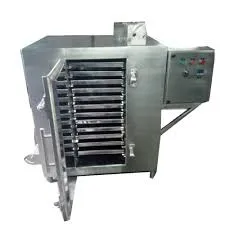
Fig. No.2 :- Dryer.
d. Tablet Compression
A tablet compression machine, also known as a tablet press, is a piece of specialised machinery used to compress granulated or powdered materials into solid tablets with consistent weight, size, and shape. It functions by applying intense pressure to the material using mechanical punches and dies.
The drug-to-polymer ratio (e.g., combining API with HPMCAS or Kollidon VA64) and disintegrants (e.g., Cross-carmellose sodium or Kollidon-CL-SF) must be taken into consideration while choosing compression parameters.
a. Compaction Pressure: Although extremely high pressure can occasionally lower the tensile strength of ASD tablets, typical compaction pressures fall between 150 and 200 MPa.9
b. Lubrication: To prevent over-lubrication, which can adversely affect tablet hardness and disintegration time, magnesium stearate is usually blended into the final mix for only one to two minutes.
Benchtop compaction simulators are quite helpful for predicting manufacturability without wasting a lot of API if you are in the formulation development stage.
Compaction Simulators: To describe the compaction, compressibility, and tensile strength profiles of itraconazole ASD powders, pharmaceutical R&D frequently uses the STYL'One Nano or Evolution (Medelpharm).10
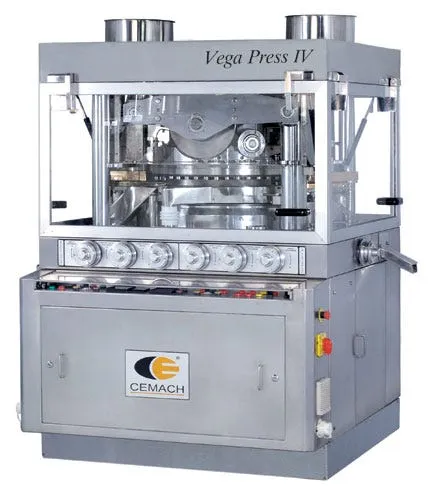
Fig.No.3 :- Tablet Compression Machine.
2. Equipment for Preformulation & Evaluation
I. Powder Flow Properties Analysis
For tablets, powder flow analysis guarantees that the material fills the die cavity consistently and evenly. In order to forecast tableting performance and reduce weight variance, it is assessed using the USP Powder Flow Guidelines, which quantify bulk/tapped density, compressibility index, Hausner ratio, and angle of repose.
II. Physical Tablet Evaluation
To guarantee that pharmaceutical tablets are safe, effective, and structurally sound for patient usage, physical tablet evaluation includes a number of crucial quality control tests.
a. Hardness Tester – Monsanto
The crushing strength (hardness) of tablets is measured in pharmaceutical labs using a traditional, portable mechanical apparatus called a Monsanto hardnes tester.
Conventional Tablet Hardness: Usually assessed between 5 and 8 kg/cm^2) to guarantee sufficient structural integrity during handling and packing without sacrificing the rate of medication release.
Optimization: To make sure the tablet dissolves efficiently in the digestive system, hardness, friability, and disintegration tests are carried out.
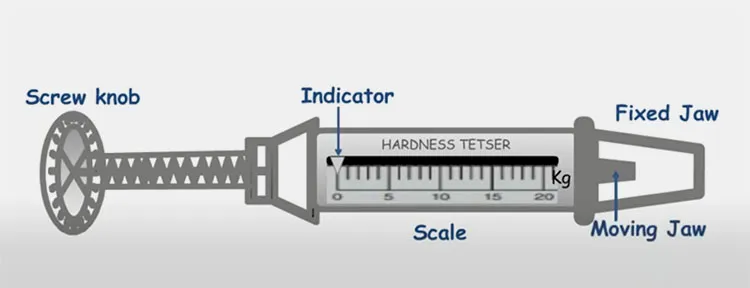
Fig.No. 4 :- Monsanto Hardness Tester .
A pharmaceutical quality control tool used to assess a tablet's mechanical strength is called a tablet friability apparatus, or friabilator.
It tumbles tablets into a revolving clear drum to determine how resistant they are to chipping, abrasion, and breakage during production, packaging, and transportation.
Itraconazole pills' physical durability is assessed using a standard Roche Friabilator, such as a dual-drum USP-compliant tester, to make sure they don't chip when handled and packaged. To maintain quality requirements, these formulations must have a target mechanical friability of less than 1%.
Sample Size: If the weight of each tablet is ≤650: Select a sample of whole tablets that totals as close to (6.5g) as feasible. If the weight of each tablet is (> 650 mg): Utilize entire tablets.
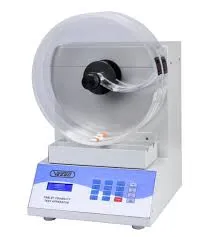
Fig.No. 5 :- Friability Test Apparatus.
III. Drug Release & Dissolution
Drug dissolution is the next stage, where the drug particles dissolve into solution, whereas drug release is the process by which a medication is released from its dosage form.
Because a medication must dissolve in gastrointestinal fluids before it can be taken into the bloodstream, these processes are essential for oral tablets.11
a. Solid Dispersions: The medication is co-processed utilizing solvent evaporation or melt techniques with hydrophilic, water-soluble polymers (such as PEG 6000, HPMC). This greatly increases the drug's aqueous solubility by changing it from a crystalline to an amorphous state.12
b. Nanocrystals and Microfibres: Itraconazole's surface area exposed to gastrointestinal fluids is significantly increased when it is formulated into nanometer-sized particles or embedded into sugar/sucrose microfibres, which facilitates a quicker and more thorough disintegration13.
c. Inclusion Complexes: By encasing the medication in a molecular cage made of cyclodextrin derivatives, inclusion complexes improve the drug's wettability and delay precipitation in the gastrointestinal tract14.
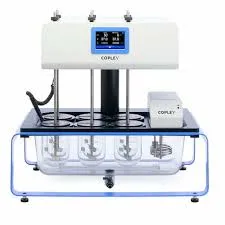
Fig.No. 6 :- Dissolution Apparatus.
IV. Disintegration.
A pharmaceutical testing device called a tablet disintegration equipment is used to calculate how long it takes for tablets or capsules to disintegrate into smaller particles in a certain liquid media15.
a. Amorphous Solid Dispersions (ASD): To lock the active pharmaceutical ingredient (API) in an amorphous state and significantly increase its surface area and wettability, it is usually melted or spray-dried with polymers (such as HPMC, HPC, or PVP).
b. Disintegrants: To encourage quick water absorption and physical disintegration of the solid mass, superdisintegrants like croscarmellose sodium (usually at 2% ratios) are added during tableting.
c. Solubilizing Agents: Adding inorganic salts like potassium chloride (KCl) or sodium chloride (NaCl) speeds up the matrix's breakdown and supersaturation rate.
d. Binder Limits: Microcrystalline cellulose binders, such as Avicel pH 102, need to be tuned because ASD particles can be cohesive. Elevated levels may cause the pill to overbind and miss disintegration goals16.
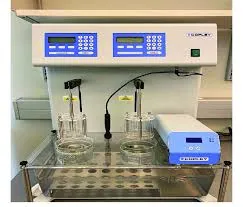
Fig. No. 7 :- Disintegration Test Apparatus.
6. Experimental Work
Pre-formulation studies are the investigations carried out before formulation development to understand the physicochemical properties of a drug and its compatibility with excipients. These studies help in designing a stable, safe, and effective controlled release (CR) tablet.17
Pre-formulation involves examining the physical and chemical properties of the drug substance individually and with excipients. The first phase in the logical progression of a pharmacological compound's dosage form is pre- formulation research18.
This research seeks to establish a data collection about the drug's components to facilitate the development of the formulation using this information. Pre-formulation studies aim to identify the excipients and physicochemical properties that may influence the pharmacokinetic-biopharmaceutical attributes, production process, and formulation design of the final product. Therefore, the goals of the program are to determine its kinetic release rate profile.19
The medication was examined for hue, scent, and flavor. It prevents the fungus from proliferating and developing by preventing the synthesis of ergosterol, an essential component of fungal cell membranes.20
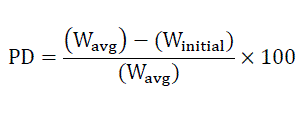
To determine the weight difference of tablets, randomly choose and weigh 20 tablets separately. Find the mean weight, calculate the percentage deviation of each tablet, and then compare your findings with standard thresholds set by organizations such as the USP or IP21.
1. The Equation
Formula to compute the percentage difference for every single tablet:
2. Typical Acceptance Boundaries
Tablets pass the weight variation test in accordance with Indian Pharmacopoeia (IP) and United States Pharmacopoeia (USP) standards if:
1. No more than two tablets differ by more than the allowed percentage from the average weight.
2. No tablet deviates from the allowed % limit by more than two times22.
Table No. 2: Weight Variation Table
|
Average Tablet Weight |
Permitted Percentage Deviation |
Maximum Permitted Deviation (2x Limit) |
|
80 mg or less |
±10% |
±20 |
|
80 mg to 250 mg |
±7.5 |
±15 |
|
More than 250 mg |
±5 |
±10 |
3. Methodical Approach
1. Choose Samples: Choose 20 tablets at random from the batch.
2. Weigh Individually: Weigh each tablet to the closest decimal place using a calibrated analytical balance, then note the weights.
3. Determine the Average by adding up all 20 tablet weights and dividing the total by 20.
4. Determine Deviation: Use the formula to determine each tablet's deviation.
5. Assess: Determine if the batch conforms by counting the number of tablets that surpass the allowed limits23.
The mass of the powder was divided by the bulk volume in cm' to determine the loose bulk density. A 25 ml graduated cylinder was carefully filled with the 10 g sample. After recording the powder's volume, the bulk density was computed. It was computed using the following equation
Df = M
Vp
Where,
D = Loose bulk density
M=Weight of samples in grams
Vp= Final volumes of granules in cm³.
The mass of a powder was divided by the tapped volume in centimeters to determine the tapped bulk density. A 25 ml graduated cylinder was caretully iilled with the 10 g sample. The cylinder was dropped 100 times from a height of 1 inch onto a hard wood surface at 2-second intervals. The final tapped volume in cm' of the sample contained in the cylinder was then divided by the sample weight in grams to determine the tapped bulk density of each formulation. It was computed using the following equation.
Formula :
Tap Density = Weight of powder
Volume after tapping
The flow characteristics of solids have been described using the angle of repose. One property associated with interparticulate friction, or resistance to particle movement, is angle of repose.
This is the greatest angle that can exist between the granule or powder pile's surface and the
horizontal plane.
tan Ɵ = h / r
Ɵ = tan-1h / r
Where,
Ɵ = Angle of repose.
h = Height.
r = Radius
A funnel was attached over the platform at a height of about 2 cm. The loose powder was gradually moved along the funnel's wall until a powder cone formed. Measure the height of the powder cone and the radius of the powder heap to find the angle of repose.
Carr's Index (CI) is a measure of powder compressibility and flow property. - It indicates how well a powder can flow and pack, which is critical in tablet and capsule manufacturing.
Carr’s index = Tapped Density – Bulk Density × 100
Tapped Density
The Hausner ratio is an indirect, widely used metric to measure the flowability of powders and granular materials .
Hausner ratio = Tapped Density
Bulk Density
Dissolution studies refer to a standardized laboratory test used in the pharmaceutical industry to measure the rate and extent at which a solid dosage form (such as a tablet, capsule, or ointment) releases its active pharmaceutical ingredient (API) into a liquid medium under controlled, simulated physiological conditions.
7. RESULT & DISCUSSION
Formulating a controlled-release itraconazole tablet aims to overcome its poor water solubility and rapid clearance. Studies show that optimizing release using polymers like HPMC and Carbopol creates a controlled-release profile, achieving up to 86% drug release over 12 hours while maintaining therapeutic plasma concentrations for fungal treatments.
The average values for pharmacokinetic measures are presented. The mean concentration–time curve for both ITZ formulations was observed in seven subjects. Peak plasma concentrations were reached around 4 hours for both the test and reference formulations.
An increase in the number of subjects from seven to 17 showed changes in pharmacokinetic parameters. The mean concentration–time curve for both ITZ formulations is illustrated. When the number of subjects was increased to 24, variations in pharmacokinetic parameters were noted in both the reference and test formulations.
The mean concentration–time curve for both ITZ formulations is depicted. As the number of individuals increased, it was shown that the ITZ levels in plasma for the test formulation decreased in comparison to the reference formulation.
Table No. 3 : Weight Variation & Friability Testing
|
Sr. No. |
Weight Variation |
Upper Limit |
Lowest Limit |
|
Batch -1 |
0.20605 |
0.6121 |
0.2121 |
|
Batch -2 |
.4376 |
0.6376 |
0.2376 |
|
Batch -3 |
0.42608 |
0.62608 |
0.22608 |
|
Batch -4 |
0.42165 |
0.02216 |
0.62165 g |
Table No. 4: Friability Evaluation Table
|
Sr. No. |
Batches
|
Friability Testing |
Criteria |
|
1.
|
Batch 1 |
0.20605 |
1. Not more than 1.0% 2. Acceptable to standard Pharmacopoeia |
|
2.
|
Batch 2 |
0.7537 |
1. Not more than 1.0% 2. Acceptable to standard Pharmacopoeia |
|
3.
|
Batch 3 |
0.01109 g
|
1. Not more than 1.0% 2. Acceptable to standard Pharmacopoeia |
|
4.
|
Batch 4 |
0.62165 |
1. Not more than 1.0% 2. Acceptable to standard Pharmacopoeia |
Table No. 5 : Hardness Table
|
Sr. No. |
Hardness |
|
Batch -1 |
4 kg/cm2 |
|
Batch -2 |
7 kg/cm2 4.8 kg/cm2 7.5 kg/cm2 |
|
Batch -3 |
7.5 kg/cm2 6.5 kg/cm2 7.9 kg/cm2 |
|
Batch -4 |
4 kg/cm2 5 kg/cm2 7.5 kg/cm2 |
100 mg of drug Itraconazole was dissolved in 0.1 N HCl and volume was make up to 100ml to make stock solution of concentration 1000μg/ml. Then 1 ml of stock solution was taken and diluted upto 100ml with the buffer of 0.1 N HCl and to get concentration of 10μg/ml and in similar way dilution were made as 10, 20, 30, 40 and 50μg/ml respectively and absorbance measured at 262nm by UV visible spectrophotometer. The absorbance values were plotted against concentration (μg/ml) to obtain the standard calibration curve.
Calibration Curve of Itraconazole in 0.1 N HCl
Table No. 6 : Calibration Table
|
Sr. No. |
Volume of Stock Solution |
Concerntration (ug/ml) |
Absorbance |
|
1. |
1ml |
10 |
0.0291 |
|
2. |
2ml |
20 |
0.0412 |
|
3. |
3ml |
30 |
0.0581 |
|
4. |
4ml |
40 |
0.0785 |
|
5. |
5ml |
50 |
0.0972 |
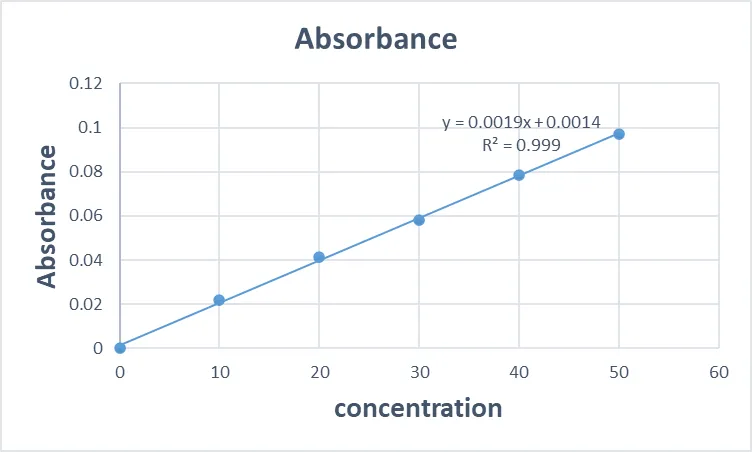
Correlation coefficient (R²) = 0.999
Equation of Regrssed line y= 0.0019 x + 0.0014
Cumulative % drug release of Tablet :
Table No. 7: Cumulative % Drug Release Table
|
Time (Hours) |
F1 |
F2 |
F3 |
F4 |
|
1 |
45.78 |
47.93 |
72.37 |
52.86 |
|
2 |
49.64 |
48.88 |
79.76 |
53.61 |
|
3 |
50.96 |
50.58 |
85.64 |
60.04 |
|
4 |
53.43 |
51.72 |
87.91 |
60.40 |
|
5 |
55.13 |
52.86 |
90.37 |
63.09 |
|
6 |
56.24 |
57.41 |
91.70 |
64.23 |
|
7 |
57.24 |
61.57 |
92.27 |
65.74 |
|
8 |
58.54 |
62.33 |
94.35 |
67.26 |
|
9 |
61.54 |
64.98 |
95.47 |
68.40 |
|
10 |
61.95 |
68.4 |
96.44 |
70.86 |
|
11 |
63.09 |
69.53 |
98.71 |
71.80 |
|
12 |
63.84 |
71.62 |
99.09 |
72.18 |
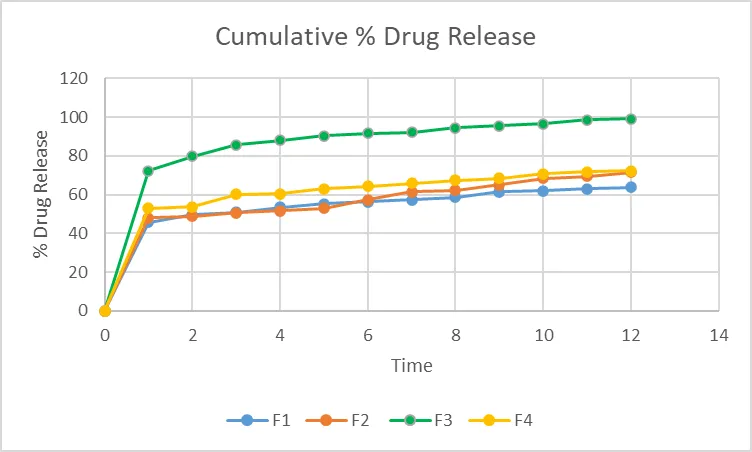
Cumulative % Drug Release of Itraconazole Tablet
Compressibility Index & Hausner Ratio
Table No. 8: Compressibility Index & Hausner Ratio Table
|
Compressibility Index (%) |
Flow Characters |
Hausner Ratio |
|
≤10 |
Excellent |
1.00-1.11 |
|
11-15 |
Good |
1.12-1.18 |
|
1-20 |
Fair |
1.19-1.25 |
|
21-25 |
Passable |
1.26-1.34 |
|
26-31 |
Poor |
1.35-1.45 |
|
32-37 |
Very Poor |
1.46-1.59 |
|
≥38 |
Very, Very Poor |
≥1.60 |
Official Standards for Friability
Table No. 9 : Official Standards for Friability Table
|
Sr.No. |
Average weight of tablet |
%weight variation acceptable (+ or -) |
|
1. |
130 or less mg |
(+ or -) 10% |
|
2. |
130 – 324 mg |
(+ or -) 7.5% |
|
3. |
≥324 mg |
(+ or -) 5% |
|
Sr.No. |
Average weight of tablet |
%weight variation acceptable (+ or -) |
|
1. |
84 or less mg |
(+ or -) 10% |
|
2. |
84 – 250 mg |
(+ or -) 7.5% |
|
3. |
≥250 mg |
(+ or -) 5% |
The Dissolution Test as per the Indian Pharmacopoeia (IP) is used to measure the rate and extent of drug release from tablets and capsules.
Dissolution Test (IP)
Principle: The dosage form is placed in a dissolution medium maintained at 37 ± 0.5°C. The apparatus rotates at a specified speed, and samples are withdrawn at predetermined intervals to determine the amount of drug dissolved.
Apparatus (IP)
Used mainly for capsules and some tablets
USP Dissolution Apparatus II
Rotating paddle
Most commonly used for tablets
General Procedure
The dissolution test for itraconazole tablets is performed to evaluate the rate and extent of drug release from the dosage form. The test is commonly carried out using USP Apparatus II (Paddle) with 900 mL of 0.1 N hydrochloric acid (HCl) as the dissolution medium, maintained at a temperature of 37 ± 0.5°C. The paddle is rotated at 100 rpm, and the test is continued for 60 minutes or according to the product specification. At predetermined time intervals, samples are withdrawn and replaced with an equal volume of fresh dissolution medium maintained at the same temperature. The collected samples are filtered and analyzed using a UV-Visible spectrophotometer at the validated wavelength or by HPLC, as specified in the analytical method. The percentage of drug dissolved is calculated using a calibration curve, and the results are compared with the specified acceptance criteria to ensure the tablet meets the required dissolution standards.
Common dissolution medium volume: 900 mL
Most commonly used apparatus: Paddle (Apparatus II)
Purpose: To ensure consistent drug release and predict in vivo performance.
DISCUSSION
The dissolution study was the most significant evaluation parameter for the controlled release formulation. Batch F3 exhibited sustained and controlled drug release over the desired time period compared with other batches. The improved performance of Batch F3 may be due to the optimized concentration of HPMC E15 and Carbopol used in the matrix system. HPMC forms a hydrophilic gel barrier upon contact with dissolution medium, thereby controlling penetration of fluid and diffusion of drug molecules. Carbopol further enhances matrix integrity and prolongs drug release.
In the present investigation, four batches (F1, F2, F3, and F4) of itraconazole controlled release tablets were formulated and evaluated using different concentrations of release-retarding polymers and excipients. The objective of the study was to formulate a controlled release dosage form capable of sustaining the release of itraconazole over an extended period while maintaining acceptable physicochemical characteristics.
Pre-compression studies including angle of repose, bulk density, tapped density, Carr’s index, and Hausner ratio were evaluated for all powder blends. The results indicated good flowability and compressibility properties suitable for tablet compression. The values obtained were within acceptable pharmacopeial limits, which may be attributed to the presence of glidants and proper blending of excipients. Similar findings were reported by Banker and Anderson, who stated that acceptable flow properties are essential for uniform die filling and tablet weight consistency.
Post-compression parameters such as hardness, thickness, friability, weight variation, and drug content uniformity were evaluated for all formulations. Among all prepared batches, Batch F3 showed the best overall evaluation results. The hardness of Batch F3 was found within the acceptable range, indicating sufficient mechanical strength to withstand handling and transportation. Friability values were less than 1%, confirming adequate resistance to abrasion. These findings correlate with the studies reported by Lachman et al., where tablet friability below 1% indicates good tablet integrity.
Weight variation and drug content uniformity studies of Batch F3 were also found within official pharmacopeial limits, suggesting uniform distribution of drug and excipients throughout the formulation. Uniformity in tablet weight and drug content is considered an important parameter for ensuring dose accuracy and therapeutic efficacy.
The dissolution study was the most significant evaluation parameter for the controlled release formulation. Batch F3 exhibited sustained and controlled drug release over the desired time period compared with other batches. The improved performance of Batch F3 may be due to the optimized concentration of HPMC E15 and Carbopol used in the matrix system. HPMC forms a hydrophilic gel barrier upon contact with dissolution medium, thereby controlling penetration of fluid and diffusion of drug molecules. Carbopol further enhances matrix integrity and prolongs drug release.
Among all the prepared batches, Batch F3 showed optimum drug release with satisfactory controlled release characteristics and better release pattern compared to other formulations. The improved dissolution behavior may be due to proper concentration and uniform distribution of polymers, which helped in maintaining matrix integrity and controlled penetration of dissolution medium.
Poloxamer 188 acted as a surfactant and solubilizing agent, improving the wettability and dissolution characteristics of poorly water-soluble itraconazole. Sorbitol and lactose/mannitol contributed to improved tablet consistency and dissolution behavior. The combination of hydrophilic polymers and solubility enhancers in Batch F3 may therefore be responsible for its superior sustained release profile.
The obtained results are in agreement with previously published research articles on controlled release matrix tablets. Similar studies reported by Colombo et al. and Patel et al. demonstrated that HPMC-based hydrophilic matrices effectively sustain drug release by swelling and gel formation mechanisms. Research studies on itraconazole formulations also reported that the use of surfactants and hydrophilic carriers improves dissolution and bioavailability of itraconazole due to its poor aqueous solubility.
Compared to conventional marketed formulations, the prepared controlled release tablet may provide advantages such as prolonged therapeutic effect, reduced dosing frequency, minimized plasma concentration fluctuations, improved patient compliance, and reduced side effects.
Hence, among all prepared formulations, Batch F3 was considered the optimized formulation because it demonstrated satisfactory pre-compression and post-compression parameters along with an effective controlled drug release profile.
8. Summary & Conclusion
The aim was to design the Itraconazole Tablet to give anti-fungal action. In the current study, carbapol and HPM E15 were used as mucoadhesive polymers and drug retardants to create itraconazole mucoadhesive sustained release tablets.19
Pre-formulation studies, including bulk density, angle of repose, tapped density, and Carr’s index, all fall within the limits prescribed in the IP, thereby meeting the test requirements and indicating favorable flow properties. The data from the pre-formulation studies are presented in the table. The physicochemical parameters of the tablet, such as thickness, hardness, friability, weight variation, and uniformity of drug content, also lie within the IP-specified limits, as shown in the tables.20
Itraconazole is formulated as a sustained-release tablet to minimise side effects related to peak medication levels, lower dosage frequency, and keep plasma concentrations above the Minimum Effective Concentration (MEC).
To make sure the prepared pills adhere to pharmaceutical standards, they are thoroughly assessed:
CONCLUSION
Itraconazole, a resistant molecule with poor solubility in biological circumstances, was successfully made amorphous by molecular embedding in a straightforward, easily accessible low viscosity polymer, such as HPMC , which was transformed into an industrially scalable formulation .The pellet milling step combined with drying resulted to a quick elimination of volatile organic solvents, according to our process.
A complete embedding of ITZ in a matrix of lower viscosity polymer, resulted from disordered drug delivery. This further aided in the quicker removal of leftover solvents, resulting in a cost-effective procedure. The method employed to fabricate the tables was straightforward, economical, and effectively tested at the scale-up stage.
Itraconazole's bio-variability was highlighted by bioavailability tests, which demonstrated a decreased equivalency with an increase in the number of individuals. We relate this unusual behaviour to the bio-variability of itraconazole and propose that a metabolite assay, if carried out, would have been helpful to comprehend the mechanistic behaviour of itraconazole in vivo.
Additional research is being conducted to better understand the bio-equivalency from a regulatory perspective. To support the bio-variability of itraconazole in such studies, more research is also necessary.
REFERENCES


Vaishnavi Jagtap, Shubham Nakshane, Vaishanvi Yadav, Sanubar Taihsin Khan, Rushikesh Wanole, Dr. Manisha Kitukale, Formualtion & Evaluation of Itraconazole Controlled Release Tablet, Int. J. of Pharm. Sci., 2026, Vol 4, Issue 7, 3889-3905, https://doi.org/10.5281/zenodo.21453329
 10.5281/zenodo.21453329