

We use cookies to ensure our website works properly and to personalise your experience. Cookies policy
Yashodeep Institute of Pharmacy Chh. Sambhajinagar
Foot ailments such as dryness, cracked heels, and minor infections are common problems affecting daily life. The present study focuses on the formulation and development of a foot healing cream using calendula oil obtained from Calendula officinalis. Calendula oil is known for its wound healing, anti-inflammatory, and antimicrobial properties, making it a suitable natural ingredient for topical applications. The cream was prepared using the emulsification method, involving the preparation of oil and aqueous phases followed by mixing at controlled temperature. Ingredients such as beeswax, cetyl alcohol, stearic acid, liquid paraffin, glycerin, and preservatives were incorporated to enhance stability, consistency, and moisturizing properties of the formulation. The prepared formulation was evaluated for organoleptic characteristics, pH, spreadability, viscosity, skin irritation, and stability studies. The results showed that the cream had good consistency, acceptable pH, smooth texture, and no irritation on skin, indicating its safety and effectiveness. In conclusion, the developed calendula oil foot cream can be considered a safe, effective, and herbal remedy for cracked heels and dry skin, providing both therapeutic and cosmetic benefits. Foot disorders such as dryness, cracked heels, roughness, and minor microbial infections are common conditions caused by environmental exposure, improper hygiene, and lack of adequate moisturization. These conditions not only affect the appearance of the skin but may also lead to discomfort and pain if left untreated. The present study aims at the formulation and development of a herbal foot healing cream incorporating calendula oil, a natural ingredient obtained from Calendula officinalis, known for its excellent wound healing, anti-inflammatory, antimicrobial, and soothing properties. The formulation of the cream was carried out using the emulsification method, which involves the preparation of two separate phases, namely the oil phase and the aqueous phase. The oil phase consisted of ingredients such as beeswax, cetyl alcohol, stearic acid, and liquid paraffin, which provide consistency, emolliency, and structural stability to the formulation. The aqueous phase included distilled water, glycerin, borax, and preservatives, which contribute to hydration, emulsification, and microbial stability. Both phases were heated to a controlled temperature and then mixed with continuous stirring to form a uniform emulsion. Calendula oil was incorporated during the cooling stage to preserve its therapeutic activity.
The skin of the feet is frequently exposed to harsh environmental conditions such as dust, dryness, and pressure, making it highly susceptible to problems like cracked heels, roughness, irritation, and infections. Proper foot care is essential to maintain healthy skin and prevent complications. Conventional treatments often contain synthetic chemicals, which may cause irritation or adverse effects with prolonged use.
Herbal formulations have gained significant importance in modern cosmetology due to their safety, efficacy, and minimal side effects. Among various medicinal plants, Calendula officinalis is well known for its therapeutic properties. Calendula oil, extracted from its flowers, possesses anti-inflammatory, antimicrobial, antiseptic, and wound healing activities, making it highly suitable for skincare applications.
Calendula oil helps in:
A foot healing cream formulated with calendula oil acts as an effective topical preparation that forms a protective layer on the skin, enhances hydration, and accelerates the healing process. The incorporation of suitable excipients such as emulsifying agents, humectants, and preservatives ensures the stability, consistency, and usability of the cream.
This project focuses on the formulation and development of a herbal foot healing cream containing calendula oil, along with the evaluation of its physicochemical properties to ensure quality, safety, and effectiveness.
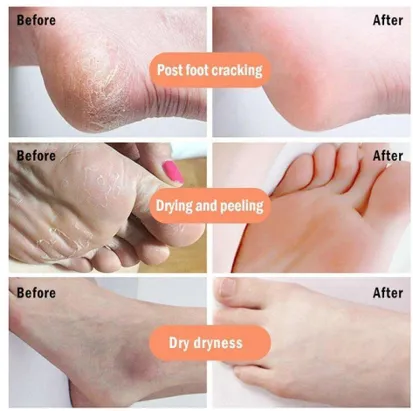
1.1 The Skin
Since most of the cosmetics preparations are meant to be applied on skin or beautification, protection or other purposes, basic knowledge of the skin and its function is very much important in designing cosmetics meant for specific purpose of the skin. The skin, the heaviest single organ of the body, combines with the linings of respiratory, digestive and urinogenital tracts. Normally the skin is very smooth. However, due to aging and exposure to heat and cold, sunrays, pressure and abrasion, dust and microbial infection, etc the smoothness may be lost and the skin becomes rougher and thicker. Aging also produces wrinkles on the skin surface. Ph of the skin varies from 4 to 5.6 and refers to the ph of the film of aqueous and other soluble materials present on the surface of the skin. Sweat and fatty acids secretes from the sebum influences the ph of the skin surface. It suggests that acidity of the skin helps in limiting or preventing the growth of pathogens and other organisms
1.2 Functions of Skin
Skin performs several functions including Contaminant of body fluids and tissues. Protection from external stimuli like chemicals, light, heat & cold radiation etc.
Reception of stimuli like pressure, heat, pain, biochemical synthesis. Metabolism & disposal of biochemical wastes.
Regulation of body temperature & Controlling of blood pressure.

Fig no:- 1. Functions of skin
Table of function of skin-
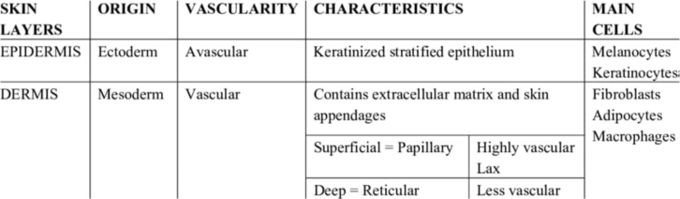
Skin contains several chemicals substances with specific functions like keratin, lipids, fatty acids, proteinase, etc.
Skin is the outer layer of the body in humans. It is the largest organ of integumentary system. It has multiple layers that guard the underlying muscles, bones, ligaments and internal organs Human skin is similar to that of most other mammals. Skin health is very important as it acts as a protective layer between the inside and the rest of the world, helps normalize body temperature. Acts as a natural filter and is constantly growing. There are mainly 5 types of skin type: Normal skin, oily skin, dry skin, sensitive skin and combination skin. Knowing skin type is essential in order to maintain healthy skin and to choose suitable
Skin products. About 1518 individuals were estimated with new cases of occupational skin diseases reported within epidermis, we will be discussing about characterization of skin types: normal, oily and dry skin based on 4 connectivity and 8 connectivity region properties
1.3 Types of skin
The Skin types can be classified into:
The normal skin type is not too dry or not too oily. It has very few imperfections and has no severe sensitivity. It has barely visible pores and gives a radiant complexion. It is soft to touch and complexion is more or less even with a regular texture. Oily skin is associated with excess oils and pores caused by overactive sebaceous glands. Oily skin refers to a skin type that is shiny, thick, slippery and heavy textured skin especially on the T-zone. It is frequent in younger women but as their age increases, their skin becomes much drier. Dry skin, also called xerosis, is a very frequent skin condition that occurs at all ages. Usually, it will not represent a serious problem but sometimes it can be difficult to treat. Moreover, it might be related to other skin diseases or associated to pathological conditions such as diabetes, hypothyroidism and hyperthyroidism, malnutrition etc Dry skin is an uncomfortable condition marked by scaling. Itching, and cracking
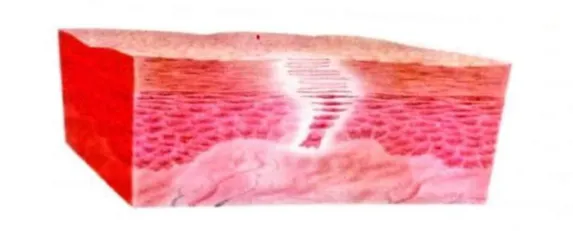
Fig no:-2. Structure of skin
Skin disorders differ greatly in symptoms and severity They can be temporary or permanent, and may be painless or painful. Some have situational causes, while others may be hereditary. Some skin conditions are minor, and others can be life-threatening. Chronic skin conditions usually aren’t curable, but they can be managed using drugs and by paying close attention to the lifestyle. Eczema is phrase for a group of medical conditions that cause the skin to become inflamed or irritated. Psoriasis is a frequent skin disorder that produces thick red plaques covered with silvery scales. Although acne remains mostly a curse of adolescence, about 20% of all cases occur in adults. Rosacea is a common disorder that mainly affects facial skin. The symptoms are redness on the nose, chin, cheeks, and forehead.
Skin cancer is the most frequent form of cancer. The two most common types are basal cell cancer and squamous cell cancer. They generally form on the head, face, hands, neck and arms. Another type of skin cancer, melanoma, is more dangerous but less common. Another common skin disorder is wrinkles. Your skin changes as you age. You might notice age spots, wrinkles and dryness. Sunlight is a major cause of skin aging. Cigarette smoking also contributes to wrinkles. The wrinkling increases rapidly with the number of cigarettes and years a person has smoked. Medications used to treat skin conditions include topical and oral drugs like Antibacterial which are medicines often used to treat or prevent infection. Antifungal creams for avoiding fugal based skin disorders and Benzoyl peroxide creams are used to treat acne and salicylic acid which forms a major component in many skin products.
1.4 Anatomy of Skin
The human skin comprises of three distinct but mutually dependent tissues (fig Given below), the stratified, avascular, ‘cellular epidermis & an under laying dermis of connective tissue. At the bottom of the epidermis lies the fatty, subcutaneous layer Human skin displays two main types. Hairy skin encloses hair follicles & sebaceous glands, but there are no encapsulated sense organs. Glabrous skin of the palms and soles is made of a thick epidermis with a compact stratum corneum, but the integuments lack hair follicles and sebaceous glands and the epidermis supports encapsulated sense organs.
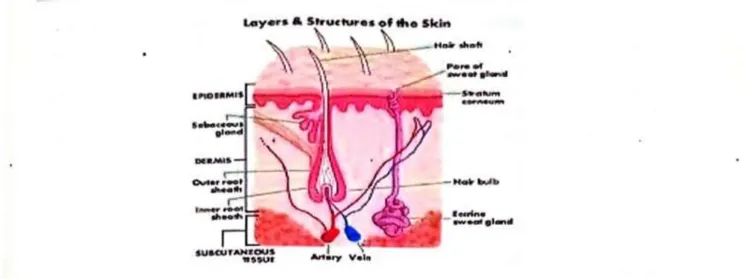
Fig.3: Anatomy Of Skin
A) Epidermis :-
The multilayered envelope of the epidermis varies in thickness, depending on cell size & the number of cell layers, ranging from about 0.8mm on the palms and soles down to 0,06mm on the eyelids.
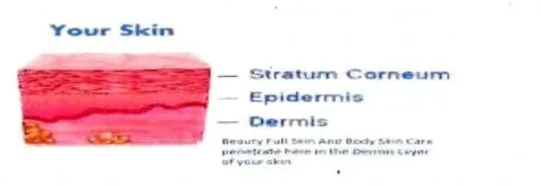
Fig no:- 4. Epidermis
The Horney layer (stratum corneum) –
At the final stage of differentiation, epidermal cells construct the most superficial layer of the dermis, the stratum corneum. Human beings owe their ability to survive in a non- aqueous environment to almost impermeable nature of this refractory honey layer. On the general body The membrane provides about 10-15 layers of much flattened, keratinized dead cells, stacking them in highly organized units of vertical columns. The honey layer may be only 10m thick when dry, but swells in water to several times thickness. However, at the friction surface of the palm and soles the thickness may be as high as several hundred micrometers. When it is a dense tissue, about 1.5 gm/ cm3. Each thin polygonal cell measures approximately 0.5-1.5 mm thick, with the diameter ranging from 34mm on the forehead 246mm on the thigh axilla.
1. Stratum Lucidum
In the palms of hand and soles of foot, an anatomically distinct, poorly staining hyaline zone forms a thin, translucent layer immediately above the granular layer. This region is the stratum lucidum
2. Stratum Granulosum (granular laver)
This layer is above the keratinocytes. They manufacture basic staining particles, the keratinohayline granules. This keratogeneous or transitional zone is a region of intense biochemical activity and morphological change. The dynamic operation manufactures the keratin to form the horney layer by an active rather by a degenerative process.
3. Stratum Spinosum (prickly laver cell)-
The cells of this layer are produced by morphological and histochemical alteration of the cells of basal layer as they move upward. The cells are flattened and their nuclei shrink. They are also called polygonal cells, prickles cells, because they are interconnected by fine prickles. Each prickles encloses an extension of the cytoplasm, and the opposing tips of the prickles of the adjacent cells adhere to form intercellular bridges, the desmosomes. These links maintain the integrity of the epidermis.
1.5 Introduction of Foot-
This is not really surprising when we consider that the human foot has to maintain the whole body weight. In spite of the fact it is equipped with a multitude of sweet glands, unequal to any other part of skin surface of the hands, It is under the dietates and necessities of modern civilization, encased first in a stocking and then in a shoe and boot. Particularly under warm and humid condition, is a good substrate for the growth of various types of micro-organisms. Although socks and stocking are frequently changed and washed and also foot bath are taken, nevertheless bacteria remain in the shoes and clean socks can be reinfected. It can be further promoted by poor ventilation as caused, for example, by impermeable rubber and synthetic resin soles. The products formed by bacterial decomposition give rise to malodour, which are particular pronounced when foot care is inadequate.
Influence of footwear:
Foot malodour :-
The hard skin which is a layer of fat cells (stratified squamous epithelial cells)bonded together by desmosomes and penetrating, is largely keratin, and this together with perspiration and fungi is a feeding ground for the skin a resident micro- organisms, bacterial decomposition gives rise to the bad odour. The contribution of Staphylococcus Epidermids, Brevibacteria and Propionibacteria in creating shoes and foot and this seems to be due to the skin rather than the shoe.
Foot infection:-
As we all know that the feet spend a long period covered with socks or stocking and encased in footwear. This result in persistently warm and moist condition which forms an ideal environment for microbial proliferation and activity."
It is an undeniable truth that the feet, while needing more care and attention than most other part of the body, in actual fact generally get far less.
1.6 COMMON PROBLEM OF FOOT:
A) Athlete's foot:
Athlete's foot is a skin fungal infection. It can lead to intense itching. cracked, blistered or peeling areas of skin, redness and scaling. It can occur on moist, waterlogged skin usually between the fourth and fifth toes initially, or on dry, flaky skin around the heels or elsewhere on the foot.
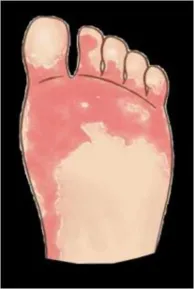
Figure no: 6
It's caused by a number of fungal species which you can pick up from someone else shedding affected skin (typically in communal areas such as pools, showers and changing rooms) or where you may walk around barefoot. Athlete's foot can also be passed on directly from person to person contact, although people who sweat more are much more prone to infection. Once your feet have been contaminated, the warm, dark and sweaty environment of feet cramped in shoes or trainers provides the ideal breeding ground for the fungus. However, athlete's foot also occurs in dry, flaky areas. It's quite common in summer with sandal wearers. The sun makes your skin dry out so it loses its natural protective oils. This combined with the constant trauma from sandals makes them more prone to infection.
Corns & Callus:-
When we walk or stand, our body weight is carried first on the heel and then on the ball of the foot, where the skin is thicker to withstand the pressure. When this pressure becomes excessive, some areas of skin thicken in the form of corns and callus, as a protective response to the body's reaction to the friction of skin rubbing against a bone, shoe or the ground.
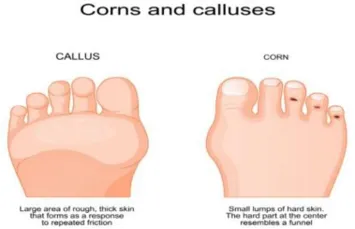
Fig no : 7
Callus (or callosity) is an extended area of thickened, hard skin on the soles of the feet. It is usually symptomatic of an underlying problem such as a bony deformity, a particular style of walking or inappropriate footwear. Some people have a natural tendency to form callus because of their skin type. Corns are caused by pressure or friction over bony areas, such as a joint, and they have a central core which may cause pain if it presses on a nerve. There are five different types of corns, the most common of which are 'hard' and 'soft' corns:
MATERIAL:
Drug (Active Ingredient)
Excipients
Equipment
METHOD:
Drug Profile of Calendula oil
Calendula oil is obtained from the dried flowers of Calendula officinalis, which belongs to the family Asteraceae.
Calendula oil is obtained from the plant Calendula officinalis, which is widely distributed and cultivated in various parts of the world.
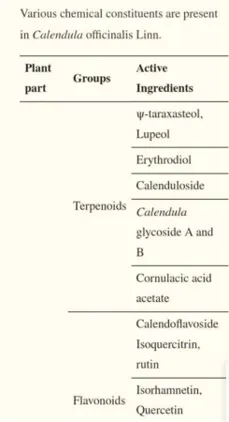
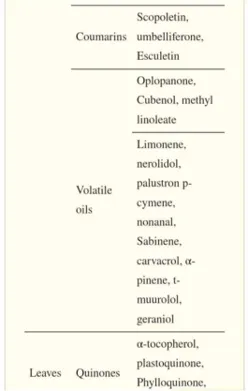
Fig no : 8
EXCIPIENTS:
Official Name: Beeswax (IP,USP,BP)
Biological Source: Obtained from honeycomb of Apis mellifera
Chemical Nature: Mixture of esters of fatty acids and long-chain alcohols
Molecular Formula: Not fixed (mixture)
Molecular Weight: Variable
Category: Stiffening agent, Emollient
Description:
Uses:
Official Name: Stearic Acid (IP, USP, BP)
Chemical Name: Octadecanoic acid
Molecular Formula: C₁₈H₃₆O₂
Molecular Weight: 284.48 g/mol
Category: Emulsifying agent, Thickener
Description:
Uses:
Official Name: Glycerin (IP, USP, BP)
Chemical Name: Propane-1,2,3-triol
Molecular Formula: C₃H₈O₃
Molecular Weight: 92.09 g/mol
Category: Humectant, Moisturizer
Description:
Uses:
Official Name: Methyl Paraben (IP, USP, BP)
Chemical Name: Methyl p-hydroxybenzoate
Molecular Formula: C₈H₈O₃
Molecular Weight: 152.15 g/mol
Category: Preservative
Description:
Uses:
Official Name: Cetyl Alcohol (IP, USP, BP)
Chemical Name: Hexadecanol
Molecular Formula: C₁₆H₃₄O
Molecular Weight: 242.44 g/mol
Category: Emollient, Thickening agent, Co-emulsifier
Description:
Uses:
6. Coconut Oil
Official Name: Coconut Oil (IP, USP, BP)
Biological Source: Obtained from dried kernel (copra) of Cocos nucifera
Chemical Name: Fixed oil (mixture of triglycerides)
Molecular Formula: Not fixed (mixture)
Molecular Weight: Variable
Category: Emollient, Moisturizer, Base
Description:
Uses:
7. Triethanolamine
Official Name: Triethanolamine (IP, USP, BP)
Chemical Name: 2,2′,2″-Nitrilotriethanol
Molecular Formula: C₆H₁₅NO₃
Molecular Weight: 149.19 g/mol
Category: Emulsifying agent, pH adjuster
Description:
Uses:
8. Propyl Paraben
Official Name: Propyl Paraben (IP, USP, BP)
Chemical Name: Propyl p-hydroxybenzoate
Molecular Formula: C₁₀H₁₂O₃
Molecular Weight: 180.20 g/mol
Category: Preservative
Description:
Uses:
Aim: Formulation and Development of Foot Healing Cream with Calendula Oil
Formulation Table - Foot Healing Cream (100 g batch)
|
Sr. No. |
Ingredient |
F1 (g) |
F2 (g) |
F3 (g) |
Purpose |
|
1 |
Calendula Oil |
5 |
7 |
10 |
Active ingredient (wound healing, anti-inflammatory) |
|
2 |
Beeswax |
8 |
7 |
6 |
Stiffening agent |
|
3 |
Stearic Acid |
10 |
9 |
8 |
Emulsifying agent |
|
4 |
Cetyl Alcohol |
4 |
5 |
6 |
Thickener, emollient |
|
5 |
Coconut Oil |
10 |
8 |
7 |
Moisturizer, base |
|
6 |
Glycerin |
5 |
5 |
5 |
Humectant |
|
7 |
Triethanolamine |
2 |
2 |
2 |
Emulsifier, pH adjuster |
|
8 |
Methyl Paraben |
0.2 |
0.2 |
0.2 |
Preservative |
|
9 |
Propyl Paraben |
0.1 |
0.1 |
0.1 |
Preservative |
|
10 |
Distilled Water |
q.s. to 100 g |
q.s. |
q.s. |
Vehicle |
Direction of Use: The cream should be applied in a small quantity on clean and dry feet, followed by gentle massage until it is completely absorbed into the skin. It is recommended to use the cream twice daily, preferably in the morning and at night, for best results. The product should be stored in a cool and dry place, away from direct sunlight to maintain its stability and effectiveness.
Evaluation Parameters
CHEMICAL TESTS
Principle: Flavonoids present in Calendula oil react with magnesium and hydrochloric acid to produce a coloured complex.
Procedure:
Observation: Pink to red colour indicates presence of flavonoids.
Principle: Saponins produce stable foam when shaken with water. Procedure:
Observation: Formation of persistent foam indicates presence of saponins.
Principle: Tannins react with ferric chloride to form coloured complexes. Procedure:
Observation: Blue-black or greenish colour indicates presence of tannins.
Principle: Steroidal compounds react with sulfuric acid to produce colour change. Procedure:
Principle: Glycosides react with ferric chloride and sulfuric acid to form coloured rings. Procedure:
Observation: Formation of a brown ring at interface indicates glycosides.
Principle: Determines acidity or alkalinity of the formulation. Procedure:
Observation: pH should be in the range of 5.5 – 7.0, suitable for skin.
Principle: Fixed oils leave a permanent greasy stain on paper. Procedure:
Observation: Permanent oily stain confirms presence of oils and fats.
Drug and Excipient Identification Summar Table :
|
Sr. No. |
Ingredient |
Type |
Identification Method / Test |
Purpose in Formulation |
|
1 |
Calendula Oil |
Drug (Active) |
- Shinoda test: Pink/red colour (flavonoids)- Foam test: Stable foam (saponins) |
Wound healing, anti-inflammatory |
|
2 |
Stearic Acid |
Excipient |
- Solubility test: Insoluble in water- Melting point test |
Emulsifying agent |
|
3 |
Cetyl Alcohol |
Excipient |
- Melting point: ~49–52°C- Waxy texture |
Thickener, emollient |
|
4 |
Beeswax |
Excipient |
- Physical test: Yellow solid, characteristic odour |
Stiffening agent |
|
5 |
Glycerin |
Excipient |
- Solubility test: Miscible with water |
Humectant |
|
6 |
Triethanolamine |
Excipient |
- pH test: Alkaline nature |
Emulsifier, pH adjuster |
|
7 |
Methyl Paraben |
Excipient |
- Solubility test in alcohol- Preservative test |
Preservative |
|
8 |
Propyl Paraben |
Excipient |
- Solubility test- Chemical test |
Preservative |
|
9 |
Distilled Water |
Vehicle |
- Clear, odourless liquid |
Vehicle/base |
CONCLUSION
The present study was carried out to formulate and evaluate a herbal foot healing cream using Calendula oil. Calendula oil, known for its anti-inflammatory, antimicrobial, and wound healing properties, was successfully incorporated into the cream base using suitable excipients. The formulation was prepared using standard pharmaceutical methods, ensuring proper mixing of oil and aqueous phases to obtain a stable and homogeneous cream. Various excipients such as stearic acid, cetyl alcohol, beeswax, glycerin, and preservatives were used to enhance the consistency, stability, and shelf life of the formulation.
The prepared cream was evaluated for different parameters including organoleptic properties, pH, spreadability, viscosity, homogeneity, washability, and skin irritation test. The results indicated that the formulation possessed good appearance, smooth texture, acceptable pH, and excellent spreadability, making it suitable for topical application. The cream was found to be non-irritant and safe for skin use.
Chemical tests confirmed the presence of active phytoconstituents such as flavonoids, saponins, and tannins in Calendula oil, which contribute to its therapeutic activity. Stability studies showed that the formulation remained stable without any significant changes in colour, odour, or consistency under different storage conditions.
Thus, it can be concluded that the formulated foot healing cream is effective, stable, and suitable for the treatment of cracked heels, dry skin, and minor wounds. The use of herbal ingredients makes it a safer alternative with minimal side effects compared to synthetic formulations.
Preformulation studies, including organoleptic characterization, solubility profiling, and specific identification tests, confirmed the purity, authenticity, and compatibility of the active ingredient (Calendula officinalis oil) and the chosen pharmaceutical excipients (such as stearic acid, cetyl alcohol, and liquid paraffin). The absence of any significant chemical interaction in the preliminary screening justified the selection of the emulsification system.
A series of oil-in-water ($o/w$) cream batches were systematically formulated and evaluated for various physicochemical parameters. The optimized formulation exhibited satisfactory physical appearance, an elegant smooth texture, homogenous distribution without phase separation, and a pleasant characteristic aroma. Crucial evaluation parameters, including pH (optimized to match the physiological skin pH range of $5.5$ to $6.5$), viscosity, spreadability, and extrudability, demonstrated that the cream possesses ideal rheological properties required for effortless topical application on thickened foot skin.
In-vitro evaluation and stability testing conducted as per ICH guidelines (at accelerated temperature and humidity conditions) revealed that the formulation maintains its structural integrity, pH, and active drug content over time. The emollient and occlusive properties imparted by the hydrocarbon and alcohol bases, combined with the proven anti-inflammatory, antimicrobial, and tissue-regenerating properties of the carotenoids and flavonoids present in Calendula oil, provide a synergistic therapeutic effect.
In conclusion, the developed polyherbal foot healing cream represents a safe, stable, and highly effective alternative to purely synthetic topical formulations. It offers enhanced skin hydration, barrier repair, and accelerated wound-healing kinetics, making it a commercially viable and patient-compliant formulation for podiatric care
REFERENCES


Nikhil Jagtap, Shivani Bamne, Vaishnavi Dawalbaje, Formulation and Development of Foot Healing Cream with Calendula Oil, Int. J. of Pharm. Sci., 2026, Vol 4, Issue 6, 961-978. https://doi.org/10.5281/zenodo.20532224
 10.5281/zenodo.20532224