

We use cookies to ensure our website works properly and to personalise your experience. Cookies policy
Bharathi College of Pharmacy, Bharathinagara, Maddur, Mandya, Karnataka, India 571422
Herbal cosmetic preparations continue to receive growing scientific and consumer interest owing to their perceived safety, cost-effectiveness, and compatibility with normal skin physiology. The present investigation was undertaken to formulate and evaluate a herbal peel-off face mask gel in which gram flour was employed as the principal active ingredient. Gram flour was selected for its recognized cleansing ability, mild abrasive nature, and oil-absorbing capacity that support the removal of surface impurities, dead cells, and excess sebum. To strengthen the formulation, fenugreek powder was incorporated for its soothing and anti-inflammatory effects, whereas neem powder was included for its antimicrobial and anti-acne potential. Multani mitti contributed additional oil-control and skin-tightening properties, while orange peel powder provided gentle exfoliation and supported improvement in skin appearance due to its natural vitamin content. Aloe vera gel served as a hydrating and calming base that helps maintain skin moisture and reduce irritation. Polyvinyl alcohol was used as a film-forming polymer to produce a uniform peelable layer upon drying. Talc enhanced the smoothness, texture, and spreadability of the preparation, and rose water acted as the vehicle, imparting suitable consistency and a refreshing feel. The prepared gel was evaluated for physicochemical and performance characteristics, including appearance, pH, spreadability, drying time, peelability, and skin compatibility. The formulation demonstrated appropriate consistency, acceptable skin-friendly pH, ease of application, satisfactory peel-off behavior, and no visible signs of irritation. Overall, the developed herbal peel-off face mask gel appears to be a promising natural and economical option for routine skincare use.
The term “cosmetic” is derived from the Greek expression kosmos tikos, which relates to the art and skill of organizing, decorating, and improving one’s appearance.
In modern usage, cosmetics refer to substances designed to enhance personal care and visual appeal. As per the Drugs and Cosmetics Act, 1940, cosmetics are products intended for application to any external part of the human body through methods such as rubbing, pouring, sprinkling, spraying, or similar means. Their primary purpose is to cleanse, beautify, promote attractiveness, or modify the overall appearance of an individual. [1,2]
Herbal cosmetics are preparations made primarily from plant-based materials such as extracts, essential oils, and powdered herbs. These formulations are intended not only to cleanse and improve the appearance of the skin and hair but also to support their health through the natural beneficial properties present in botanical ingredients. [3,4]
PEEL – OFF FACE MASKS
A peel-off mask is a facial skincare preparation that is spread evenly over the skin and left to dry before being gently removed. It is commonly used to manage concerns such as acne, early signs of aging, fine lines, and clogged pores caused by dirt and excess oil. As the mask dries, it forms a thin layer on the surface of the skin that helps lift away impurities and dead cells when peeled off, leaving the pores clearer and the skin feeling smoother. This temporary covering also supports better skin activity and circulation, giving the face a cleaner, refreshed, and more revitalized appearance. [5,6]
Benefits
MATERIALS AND METHODS
Materials : All herbal ingredients used in the formulation were obtained from a nearby local market. Gram flour was selected as the main active component.
Fenugreek seeds, neem leaves, dried orange peel, and multani mitti were collected, cleaned, shade-dried where required, and powdered using a mechanical grinder. The powders were passed through a suitable mesh sieve to obtain uniform particle size. Fresh aloe vera leaves were washed thoroughly, and the gel was manually scooped out and filtered to obtain a clear, smooth base. Rose water was procured from a local cosmetic store. Polyvinyl alcohol (PVA), talc, and other materials used in the preparation and evaluation were of laboratory grade.
1. Gram flour: Gram flour functioned as the primary active ingredient in the formulation. It was incorporated for its natural cleansing, oil-absorbing, and mild exfoliating properties, which help remove impurities and improve overall skin texture. [7]
2. Fenugreek powder: Fenugreek powder was added for its calming and anti-inflammatory effects. Its natural constituents help soothe the skin and support hydration. [8]
3. Neem powder: Neem powder was included for its antimicrobial activity. It assists in reducing microbial growth on the skin surface and supports acne control. [9]
4. Orange peel powder: Orange peel powder was used as a gentle exfoliating agent. It also contributes to improved skin appearance due to its natural vitamin and antioxidant content. [10]
5. Multani mitti: Multani mitti was incorporated for its oil-absorbing and skin-tightening properties, making the formulation suitable for cleansing and refreshing the skin. [11]
6. Aloe vera gel: Fresh aloe vera gel served as a soothing and moisturizing base, helping maintain hydration and reducing the chances of irritation during application. [12]
7. Polyvinyl alcohol (PVA): PVA acted as the film-forming polymer responsible for the peel-off effect. It was dissolved in warm distilled water with continuous stirring until a uniform solution formed. [13]
8. Talc: Talc was added to improve the smoothness and spreadability of the preparation. [14]
9. Rose water: Rose water served as the vehicle and natural fragrance, helping achieve the desired consistency and providing a refreshing feel. [15]
METHOD OF PREPARATION
Table 01 : Formulation of Herbal Peel – Off Face Mask
|
Sr. No. |
Ingredients |
F1 |
F2 |
F3 |
F4 |
|
1 |
Gram Flour |
0.5gm |
0.6gm |
0.8gm |
0.4gm |
|
2 |
Fenugreek Powder |
0.5gm |
0.4gm |
0.6gm |
0.7gm |
|
3 |
Neem Powder |
0.5gm |
0.7gm |
0.6gm |
0.5gm |
|
4 |
Multani mitti Powder |
0.5gm |
0.6gm |
0.4gm |
0.8gm |
|
5 |
Orange peel Powder |
0.5gm |
0.4gm |
0.7gm |
0.6gm |
|
6 |
Aloe vera gel |
5gm |
6gm |
5.5gm |
4.5gm |
|
7 |
Polyvinyl alcohol |
5gm |
4.5gm |
5.5gm |
6gm |
|
8 |
Talc |
2gm |
1.5gm |
2.2gm |
1.8gm |
|
9 |
Rose water |
q.s. |
q.s. |
q.s. |
q.s. |
EVALUATION TESTS
The prepared herbal peel-off mask was evaluated for its colour, appearance, consistency, texture, and odour to ensure it was smooth, uniform, pleasant, and suitable for skin application.
A small amount of the mask was dispersed in a little distilled water and tested using pH strips. The obtained value was compared with a standard chart to confirm that the formulation was within a skin-friendly pH range.
About 1 g of the formulation was placed between two clean glass slides. A known weight was applied on the upper slide so that the mask spread evenly between the slides. The distance moved by the upper slide was measured and used to calculate spreadability.
Formula:
Spreadability S=M×LT

L = Length moved by the slide (cm)
T = Time taken (sec)
A thin, uniform layer of the mask was applied on the skin and the time required for it to dry completely was recorded.
A dried strip of the mask was folded repeatedly at the same point until it broke, and the number of folds was counted to determine the flexibility of the film.
A uniform layer was applied on the hand, allowed to dry, and then gently peeled off to check whether the film formed properly and peeled smoothly in one piece.
The dried mask was rinsed with plain water to ensure that it could be removed easily without leaving any sticky or oily residue on the skin.
A small amount of the formulation was applied on the forearm and behind the ear. After a fixed period, the area was observed for redness, itching, swelling, or any irritation to confirm that the formulation was safe for skin application.
RESULTS
The Physical properties of the Prepared Herbal Peel off mask were evaluated by Colour , Odour , Appearance , Consistency and texture.
Table 02 : Result of Organoleptic properties
|
Sr. No. |
Properties |
F1 |
F2 |
F3 |
F4 |
|
1 |
Colour |
Greenish brown |
Greenish brown |
Greenish brown |
Greenish brown |
|
2 |
Odour |
Pleasant |
Pleasant |
Pleasant |
Pleasant |
|
3 |
Appearance |
Semi-solid |
Semi-solid |
Semi-solid |
Semi-solid |
|
4 |
Texture |
Good |
Good |
Good |
Good |
|
5 |
Consistency |
Good |
Good |
Good |
Good |
B. Physiochemical Parameters
The physicochemical properties of the formulated herbal peel-off mask were evaluated based on the following parameters
Table 03 : Results of Physiochemical Parameters
|
Parameters |
F1 |
F2 |
F3 |
F4 |
|
pH |
6 |
6.5 |
5.8 |
6.2 |
|
Spreadability (gm×cm/sec) |
7 |
6.3 |
5.8 |
5 |
|
Drying time |
More |
Optimum |
Optimum |
Optimum |
|
Folding Endurance test |
Good |
Good |
Good |
Good |
|
Peelability test |
Easily Peelable |
Easily Peelable |
Easily Peelable |
Easily Peelable |
|
Washability test |
Easily washable |
Easily washable |
Easily washable |
Easily washable |
|
Skin Irritation test |
Non-Irritant |
Non-Irritant |
Non-Irritant |
Non-Irritant |
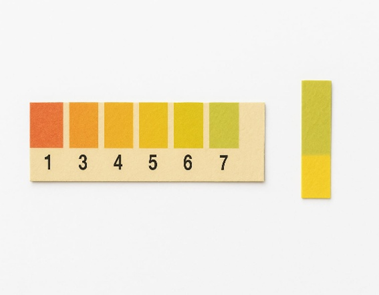
Figure 01 : pH Test
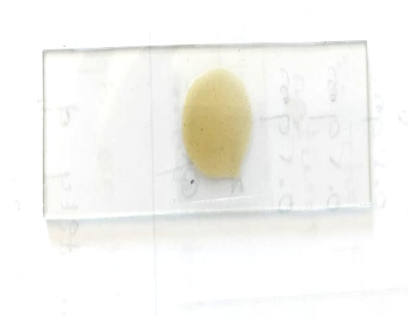
Figure 02 : Spreadability Test

Figure 03 : Peelability Test
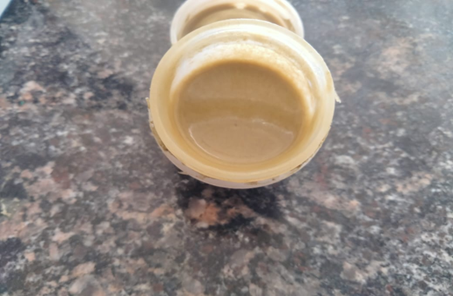
Figure 04 : Formulated Product
CONCLUSION
The present study successfully developed a polyherbal peel-off face mask gel using natural ingredients such as gram flour, neem, fenugreek, multani mitti, orange peel powder, aloe vera gel, and rose water in combination with polyvinyl alcohol as a film-forming agent. The formulation showed satisfactory physicochemical properties, including smooth consistency, appropriate pH, good spreadability, acceptable drying time, and easy peelability without causing skin irritation. The selected herbal components contributed cleansing, oil-absorbing, soothing, and antimicrobial effects, making the preparation suitable for routine skincare use.
Overall, the formulated herbal peel-off mask demonstrated stability and user-friendly characteristics, indicating its potential as a safe and effective natural cosmetic product. The study highlights that the incorporation of plant-based ingredients with a suitable polymer base can enhance skin feel and functional performance. Further studies on long-term stability, microbial limits, and user acceptability on a larger population are recommended to support its potential for commercial herbal cosmetic development.
REFERENCES


Mamatha G. T, Lokesh K. C, Formulation and Evaluation of a Natural Gram Flour–Based Herbal Peel-Off Face Mask Gel for Skin Care, Int. J. of Pharm. Sci., 2026, Vol 4, Issue 4, 1498-1504. https://doi.org/10.5281/zenodo.19483939
 10.5281/zenodo.19483939