

We use cookies to ensure our website works properly and to personalise your experience. Cookies policy
S.C.S.M.S.S Institute of Pharmacy, Maregaon
Digera muricata, Amaranthus viridis, flaxseed, pumpkin seed, peanut, amla, jaggery, and clarified butter were utilized in this study to make and evaluate a natural nutritional bar. Formulation F3 was selected as the best formulation after three were prepared because of its better overall performance. The produced bar's physicochemical, phytochemical, nutritional, and organoleptic properties were evaluated. The nutritional bar's favorable sensory attributes, sufficient hardness, low friability, and suitable moisture content all suggested good stability and shelf life. Nutritional analysis revealed the presence of carbohydrates, proteins, lipids, dietary fiber, iron, and energy value. Phytochemical screening confirmed the presence of bioactive compounds with antioxidant potential. The results of the study show that the developed bar can be used as a functional food product that is free of preservatives and healthful
Due to consumer demand, public curiosity, and continuing study into their characteristics and prospective uses, nutraceuticals and functional foods are becoming more and more popular.[1] A nutraceutical, according to Stephen DeFelice, is a food or component of a diet that provides health or medical benefits, such as illness prevention or treatment. However, the phrase is mostly employed in marketing and has no legal definition.
Energy bars contain natural ingredients like cereals, nuts, dried fruits, sugars, and herbs, making them nutritionally valuable for athletes, active individuals, and those needing an energy-dense snack.[2]An energy bar is a convenient, bar-shaped food designed to boost physical energy, enriched with vitamins, minerals, proteins, lipids, and carbohydrates.[3] The global market offers diverse bar types, including high-protein, high-fiber, high-energy, and vitamin and mineral-rich bars with appealing sensory properties.[4]
1.Concept of Nutraceuticals
The idea of nutraceuticals has begun to be recognized as one way to prevent certain illnesses. In the past, however, there was no way to verify food's ability to prevent illness. [5]
2.NUTRACEUTICAL INCLUDES
A product that contains one or more substances, such as vitamins, minerals, herbs, amino acids, concentrates, metabolites, extracts, or their mixtures, is referred to as a dietary supplement.[4] Vitamins, minerals, bioactive plant chemicals, and functional supplements are examples of nutraceuticals that are essential for preserving health and preventing illness.
Their global use has grown due to increased awareness of lifestyle disorders, preventive healthcare, and the evidence-based benefits of targeted supplementation. [5]
1.3 FUNCTIONAL FOODS
Functional foods contain essential nutrients beyond basic growth and maintenance requirements. Citrus fruits, for example, are well-known functional foods with antiviral, antioxidant, anticancer, and immune-stimulating properties. [3]
1.4 IMPORTANCE IN MODERN HEALTHCARE
The nutraceutical and functional food industries offer significant opportunities to address modern health challenges. Advancing this field requires collaboration among researchers, industry stakeholders, healthcare professionals, policymakers, and consumers to promote evidence-based practices and drive ongoing innovation.[7]
1.5 IMPORTANCE OF NATURAL INGREDIENTS
Natural substances are well known for their antioxidant, anti-inflammatory, and immune-boosting properties. [8]
2. NUTRITIONAL PROFILE OF ACTIVE INGREDIENTS
1. DIGERA MURICATA
Botanical Name: Digera muricata
Family: Amaranthaceae
Common Name: Latjira
Digera muricata is a wild edible plant rich in carbohydrates, proteins, dietary fiber, vitamins A and C, minerals such as calcium, iron, potassium and magnesium, and phytochemicals including flavonoids, phenolics, and tannins. It is traditionally used for its antioxidant, anti-inflammatory, antidiabetic, antimicrobial, and digestive support properties. In a nutraceutical bar, it serves as a functional herbal ingredient, natural antioxidant source, nutrient enhancer, and digestive fiber source.[9]
1.AMARANTHUS VIRIDIS
Botanical Name: Amaranthus
Family: Amaranthaceae
Common Name: Green Amaranthus
Amaranthus viridis is a leafy vegetable that is high in protein, essential amino acids, dietary fiber, vitamins A, C, and folate, as well as minerals including calcium, iron, magnesium, and zinc. It has long been used to treat skin conditions and dysentery as well as for its anti-inflammatory, diuretic, and digestive health qualities. It contributes to plant-based nutritional fortification in a nutraceutical bar by acting as a fiber-rich, micronutrient-boosting, protein-enriching functional ingredient with antioxidant qualities. [10]
3. MATERIALS AND METHODS
3.1. Materials:
3.2 METHOD OF PREPARATION OF NUTRITIONAL BAR
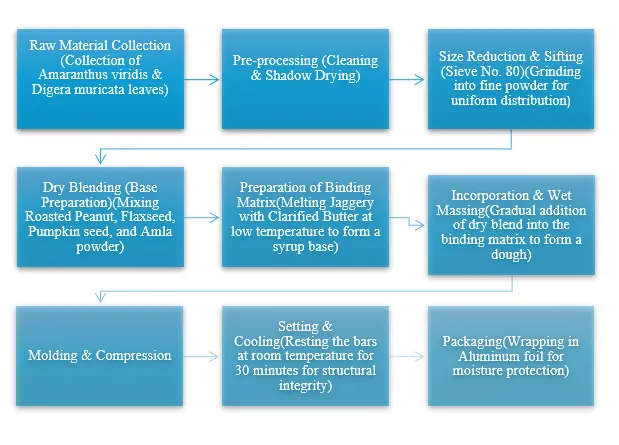
3.3 Formulation Table
Table 2. Formulation table
|
SN |
Ingredients |
F1(g) |
F2(g) |
F3(g) |
|
1 |
Amaranthus Viridis |
4 |
6 |
8 |
|
2 |
Digera Muricata |
4 |
6 |
8 |
|
3 |
Flaxseed |
3 |
3 |
4 |
|
4 |
Pumpkin Seed |
3 |
3 |
4 |
|
5 |
Peanut |
6 |
5 |
3 |
|
6 |
Amla |
2 |
2 |
2 |
|
7 |
Jaggery |
11 |
8 |
4 |
|
8 |
Clarified Butter |
2 |
2 |
2 |
Figure 1. Formulated Nutrtional Bar
“Formulation F3 was selected as the optimized formulation for further evaluation studies due to its better overall performance, whereas F1 and F2 were not selected.”
4. EVALUATION PARAMTERS:(AOAC International (2000). Official Methods of Analysis.)
The formulated natural nutritional bar was evaluated for various physicochemical, nutritional, and sensory parameters to assess its quality, stability, and acceptability. Standard analytical methods were used to determine the properties of the prepared formulation.[17]
4.1 Organoleptic Properties
Principle:Organoleptic evaluation is a sensory assessment technique that uses sensory attributes like color, taste, odor, texture, appearance, and general acceptability to determine the acceptability and quality of food products. The assessment, which is carried out utilizing human senses, aids in ascertaining consumer preference for the developed product.
Procedure: A panel of volunteers assessed the prepared nutritional bars for organoleptic qualities. Color, taste, odor, texture, appearance, and general acceptability were among the factors assessed. Based on sensory perception, each characteristic was meticulously monitored and documented. Under typical lighting conditions, the bars were examined visually. While odor and appearance were evaluated through sensory inspection, taste and texture were determined by chewing the sample. The combined sensory reactions were used to assess the formulation's overall acceptability.
Table 3. Organoleptic evaluation of formulated nutritional bar
|
SN |
Parameter Evaluated |
Observation |
|
1 |
Color |
Greenish brown |
|
2 |
Taste |
Sweet and pleasant |
|
3 |
Odor |
Characteristic aromatic odour |
|
4 |
Texture |
Soft and compact |
|
5 |
Appearance |
Uniform and attractive |
|
6 |
Overall Acceptability |
Acceptable |
4.2 Weight Variation:
Principle: Weight variation test determines the uniformity of weight among prepared bars.
Procedure:
Table 4. Weight variation test of nutritional bar
|
SN |
Weight of Bar(g) |
|
|
1 |
34.8 |
|
|
2 |
35.1 |
|
|
3 |
35.0 |
|
|
4 |
34.9 |
|
|
5 |
35.2 |
|
|
6 |
35.0 |
|
|
7 |
34.7 |
|
|
8 |
35.1 |
|
|
9 |
35.0 |
|
|
10 |
34.9 |
|
|
10 |
34.9 |
|
Formula:
Thickness test is performed to determine the uniformity in size and shape of the formulated nutritional bars. Uniform thickness ensures proper moulding and consistency of the formulation. The average thickness of the formulated nutritional bars was found to be 15.01 mm, indicating uniform size and proper moulding of the formulation.
Result: The hardness of the formulated nutritional bar was evaluated using a hardness tester to determine its mechanical strength and resistance to breakage. The hardness value was found to be 4.8 kg/cm², indicating good structural integrity and satisfactory compactness of the prepared formulation
4.5 Friability Test
Principle
Friability test determines the ability of the bar to resist crumbling during handling.
Procedure:
Formula:
Friability%= W1-W2/W1*100
Where:
W1= Initial weight
W2= Final weight
Calculation: Initial weight (𝑊1)= 35.00 g
Final weight (𝑊2)=34.78 g
Friability (%) =35.00-34.78/35.00*100=0.62%
The percentage friability of the formulated nutritional bar was found to be 0.62 %, indicating good mechanical resistance and stability.
Principle: Moisture content determines the amount of water present in the formulation. Low moisture content improves shelf life and stability.
Procedure:
Formula: Moisture Content (%) =Initial Weight- Final Weight/Initial weight*100
Calculation:
Empty Plate Weight = 28.57gm
Initial weight (plate+ sample) = 30.61gm
Final constant weight after drying = 30.50 g
Weight of sample=2g
Moisture Content (%) = 30.61−30.50 × 100 = 5.5%
2
The moisture content of the formulated nutritional bar was found to be 5.5 %, indicating good stability and reduced chances of microbial growth.
Principle: Ash value indicates the total inorganic mineral content present in the sample. Ash value indicates purity and mineral content.
Procedure: 1. About 2 g of sample was incinerated in a silica crucible at 550°C until carbon-free ash was obtained.
2. The ash was cooled and weighed.
Formula:
Ash Value (%)=Weight of AshWeight of Sample×100

1)Acid insoluble ash:
Given:



Calculation:=18.44-18.4020.41-18.40×100=1.99%

Acid insoluble ash = 1.99%
2) Water Soluble Ash
Given:
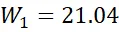
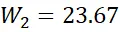
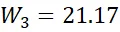
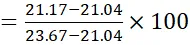
Calculation: =21.17-21.0423.67-21.04×100
=4.94%

Water soluble ash = 4.94%
3) Sulphated AshTop of FormBottom of Form
The nutritious bar's ash value was determined to be 7.76%, suggesting that the formulation contained a significant amount of minerals. Using a muffle furnace set at 550°C until carbon-free ash was produced, the ash value of the nutritional bar was calculated. To determine the total ash content, the sample was burned in a silica crucible using a muffle furnace. (AOAC International, 2000). Official Analysis Techniques.
Phytochemical Screening of Plants: Qualitative phytochemical screening of the formulated natural nutritional bar was carried out to identify the presence of various bioactive constituents responsible for nutritional and therapeutic properties. The screening was performed using standard qualitative chemical tests.
Table 5. Phytochemical Screening of Digera Muricata and Amaranthus viridis
|
SN |
Test |
Observation of Digera Muricata |
Observation of Amaranthus Viridis |
Phytoconstituent |
|
1 |
Ferric chloride test |
Dark green colour |
Dark green colour observed |
Phenol |
|
2 |
Wagner’s test |
Orange precipitate |
Orange precipitate observed |
Alkaloid |
|
3 |
Keller–Kilani test |
Brownish green colour |
Brownish green colour observed |
Glycosides |
|
4 |
Foam test |
Stable foam formed |
Stable foam formed |
Saponins |
|
5 |
Ferric chloride test |
Green colour |
Green colour observed |
Tannins |
|
6 |
Molisch’s test |
Violet ring formed |
Violet ring formed |
Carbohydrates |
REFERENCES




Sanika Soor, Sapna Akhade, Snehal Vaidya, Nilesh Chachda, Formulation and Evaluation of a Natural Nutritional Bar, Int. J. of Pharm. Sci., 2026, Vol 4, Issue 6, 7126-7133. https://doi.org/ 10.5281/zenodo.20997478
 10.5281/zenodo.20997478