

We use cookies to ensure our website works properly and to personalise your experience. Cookies policy
Genesis Institute of Pharmacy, Radhanagari.
This study presents the development of an Antiacne Cream using ethanolic extract of Achyranthes aspera. Phytoconstituent analysis confirmed the presence of ‘alkaloids, saponins, glycosides and terpenoids’ within the plant material. The formulation showed significant therapeutic potential through the following results: ‘Antimicrobial activity: The cream produced a 25 mm zone of inhibition’ demonstrating strong efficacy against acne causing bacteria compared to the 28 mm zone of the standard, streptomycin. Drug Performance: Evaluation revealed a 97% drug content and a cumulative drug release of 71.20% over 14 hours. Safety and Quality: The cream was tested for pH, spreadability, and irritability to ensure it is safe and effective for topical skin application.The findings suggest that Achyranthes Aspera is a viable, natural alternative to synthetic antiacne treatments.
As people become more understanding the high potency and unpredictable side effects of chemical compounds, natural product remedies with a basic orientation to nature are becoming more and more popular in the western world. After decennary of intense interest with the traditional system like Ayurveda, Siddha and Unnani. This is because synthetic drugs have comfortable effects. In many developing nations, plant-based remedies serve as the cornerstone of primary health care, providing accessible and affordable treatment options. [1] Achyranthes aspera is a member of Amaranthaceae family, is indigenous to tropical and subtropical areas, including portion of Asia, Africa and Europe. Because of its ability to adopt various climates, it is widely distributed and readily available to communities looking for its therapeutic effects. The plants many historic uses are the foundation of its ethnopharmacological value. Traditionally, it has been utilized for the treatment of several health conditions, including wounds, gastrointestinal issues, respiratory diseases, and inflammatory pain. Researchers are investigating its possible uses in contemporary medicine due to the wide range of its pharmacological actions, which include anti-inflammatory, antioxidant, antibacterial, and analgesic effects. [2] Peoples interest in the Ayurveda system is growing daily these days due to its beneficial advantages and lack of negative side effects. The need for natural medications is rising along with the population. Every herb can be prepared in accordance with the IP of the traditional system. The majority of medicinal plant compositions is utilized due to their precision and effectiveness or is readily accessible worldwide. The plant is receiving more attention every day. These have less harmful effects and are healthier than synthetic items. Plants are novel, safe, and biodegradable medications. [3]
• BOTANICAL DESCRIPTION:
Achyranthes aspera, an annual herb, is used medicinally worldwide. Simple leaves are one to three feet out from the stem; stamens are double-shaped; stomata are animosities; the embryology is evident; and the anther is of the indorse type with many covering structures. The cambium, vascular bundles, and medullar bundles are also present.[4]
Roots: 1 cm in diameter and cylindrical in shape. There are two groups of secondary and tertiary roots.
Leaves: shiny, simple ovate, elliptical, and opposite.
Flower: spike shaped green or red bracteolate.
Fruits: dry fruits kept in utricles.
Seeds: smooth, curled.[5]
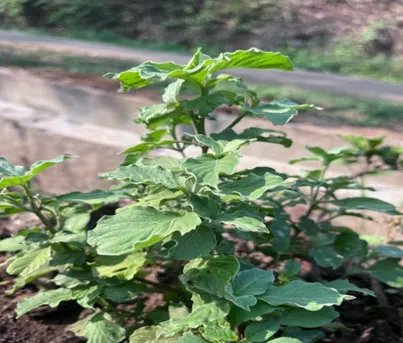
FIG.NO. 1
• GEOGRAPHICAL DISTRIBUTION:
It can naturally occur on waste sites, field margins, and roadside ditches up to an elevation of 2100 meters in South Andaman Islands and India. The plant is also widely distributed in Australia, America, Africa, Tropical Asia. [6]
• CHEMICAL CONSTITUENTS:
Additionally, apamarga is a wonderful source of vitamins and minerals. Magnesium, sodium, phosphorus, potassium, chloride and other elements may be present. Vitamin B and C are found high concentration. In general, one may find minerals, vitamins, proteins, fibers, carbs, and etc. rich in fiber and flavonoid, which have antioxidant qualities. For this cancer action, anti-cancerous chemicals may be present and mentioned in the USDA. Pregnant women may find essential oils to be hazardous in little amounts. It might include volatile oils such long chain alcohols, betane, tritricontane and achyrantene. Fatty acid-containing oils may be found in apamarga seeds. [7]
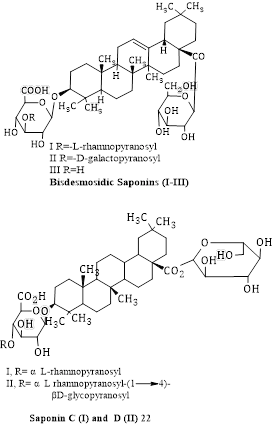
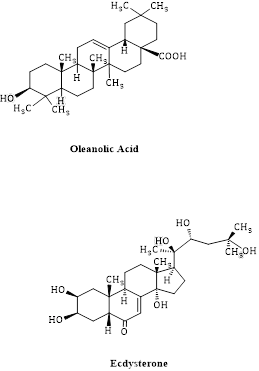
The plant may include 3-acetoxy-6 benzoyloxypangamide, βsterol, trans-13-doxynoeic acid,
N-hexacos-14-enoic, tetracontanol, strigmata, and triconone.
β-d-glucopyranosyl, 3 β-[O-α-1-rahmnopyranosyl-(1→3)-O-β-d-glucopyranuronosyloxy],
β -d-glucopyranosyl, 3-β-[O-β-d galactopyranosyl-(1→2) α-d-glucopyranuronosyloxy] also contains Bisdemosidic saponins.
Machaerinate β-D-glucopyanosyl ester of α-L rhamnopyranosyl (1→4)-β-D-glucoronpyanosyl (1→3) olenolic acid, and β-D-glucopyranosyl ester of α-L rhamnopyranosyl (1→4)-β-D-glucopyranosyl (1→4) oleanolic, sapogenin. [8]
II. PHARMACOLOGICAL ACTIVITY:
1. ANTICANCER ACTION:
Achyranthes aspera has been shown to have anti-cancer properties in numerous studies. Swiss albino mice that have been treated with mineral oils may be used in this study. The anti-cancer properties of the leaves and flowers were examined. Mice may be given dosages of plants crude extract at varying concentration. Compared to other extracts the ether extract might have more beneficial benefits against cancers. [9]
2. ANTIBACTERIAL ACTION:
For antibacterial action, the plant can be extracted from petroleum ether and methanol and treated with different concentrations of dimethyl sulphoxide. Gram negative bacteria may be more affected by the plant root extract than gram positive bacteria.[10]
3. ANTIDIABETIC ACTION:
Albino mice that may have diabetes may be used to treat ethanolic extract for diabetes mellitus. Random sugar testing may reveal the albino rats elevated glucose level. Mice may be given the ethanol extract, which may an antidiabetic effect. [11]
4. ANTIDIURETIC ACTION:
Crude aqueous extract of Achyranthes Aspera Linn diuretic activity was demonstrated in albino rats using hot water. Following IP administration Aa, a dose dependent increase in urine K+ excretion was noted Cr. The saluretic index values showed that the excretion of Na+ and K+ in urine samples from the treated groups increased in a dose dependent manner. The research shows that Aa.Cr. Shows great promise as the perfect diuretic. [12]
5. OBESITY ACTION:
Achyranthes Aspera (Aa) may help fight obesity. seeds using petroleum ether and ethanol extract. It has been found that limiting or delaying lipid absorption activity and decreasing pancreatic lipase activity are effective ways to manage obesity, which is brought on by consuming too many calories. [13]
6. IMMUNOMODULATORY ACTION:
Apamarga may have immunomodulatory qualities, according to numerous research. OVA-specific antibody response was triggered by an increase in dosage. It has been demonstrated that a hydro-alcoholic extract improves the immune system and increases phagocytic activity. [14]
7. ANTIOXIDANT ACTION:
Apamarga may include a number of components with antioxidant qualities. It may look at the plant methanolic extract using DPPH techniques for antioxidant. Parts of the flower and foliage may contain some flavonoids, which has antioxidant properties. [15]
8. ANTI-ARTHRITIC ACTIVITY:
The plants ethanolic extract may be used in this study along with the common medication diclofenac sodium. The floral portion might be useful. The common medication diclofenac with varying concentration of ethanolic extract can cause arthritis. Tannins and flavonoids are components that could be used for this.[16]
9. HEPATOPROTECTIVE ACTION:
Achyranthes aspera seed saponins were shown to provide Antiobesity, hypolipidemic, antioxidant, and Hepatoprotective properties in albino rats feed high cholesterol utilizing 50 ml of hot water for extraction. AST and ALT levels were measured after 28 days of oral administration of saponins from Achyranthes aspera, as well as any changes to the hepatic condition of rats treated with HCD. According to research, Achyranthes aspera saponins have a limited capacity to shield the liver from HCD. [17]
11. WOUND HEALING ACTIVITY:
Achyranthes aspera (Aa) ethanolic and aqueous extract of leaves used to study the plant ability to repair wounds. The wound healing activity was examined using two wound models: the incision wound model and the excision wound model.[18]
III. METHODS AND MATERIALS
• PLANT COLLECTION
The entire Achyranthes aspera plant was gathered from the neighbouring Amjai Vharwade area. The gathered plant matter was cleaned and allowed to dry in the shade. The entire plant was ground into a fine powder using a grinder when it had completely dried. To achieve uniform particle size, the powder was then run through a sieve. Ultimately, the powdered medication was employed in experimental procedures and kept in an airtight container.
CHEMICALS: White bees wax, borax, liquid paraffin, propyl paraben, ascorbic acid, titanium dioxide, linseed oil, rose oil, water
• PREPARATION OF ETHANOL EXTRACTS OF ACHYRANTHES ASPERA: BY MACERATION PROCESS
Take 20-gram powder of Achyranthes aspera; add 200 ml of ethanol in iodine flask. Keep the mixture for 3-4 days at room temperature. Shake it occasionally 2-3 times daily for proper extraction. After that solution can filter through Whatman filter paper. Evaporate the filtrate using a water bath at low temperature to obtain a thick, concentrated extract. [19]
PHYTOCHEMICAL SCREENING
TABLE NO. 1
|
Sr.no |
Phytochemical Constituents |
Tests |
Result |
|
|
Alkaloids |
Wagner’s test |
+ |
|
Dragandroff’s test |
+ |
||
|
Mayer’s test |
+ |
||
|
|
Saponins |
Ferric chloride test |
+ |
|
|
Glycosides |
Killer-killiani test |
+ |
|
Bromine test |
+ |
||
|
4. |
Terpenoid |
Test for terpenoid |
+ |
|
Salkowski test |
+ |
||
|
Lieberman Burchard test |
+ |
FORMULATION TABLE FOR W/O ANTI-ACNE CREAM
TABLE NO. 2
|
Sr. No. |
Ingredients |
Roles |
Quantity (gm)
|
|||
|
F1 |
F2 |
F3 |
F4 |
|||
|
1 |
Achyranthes Aspera Extract |
Active Ingredient (Anti-Acne) |
1.50 |
1.50 |
1.30 |
1.40 |
|
2 |
Ascorbic acid |
Anti-oxidant |
0.20 |
0.20 |
1.36 |
1.20 |
|
3 |
Linseed Oil |
Penetration Enhancer |
1.00 |
1.00 |
1.00 |
1.00 |
|
4 |
White Bees Wax |
Thickening Agent |
2.50 |
2.50 |
2.30 |
2.40 |
|
5 |
Borax |
Emulsifying Agent |
0.15 |
1.15 |
1.15 |
1.15 |
|
6 |
Liquid Paraffin |
Emollient & Lubricant |
10.00 |
9.00 |
8.00 |
8.00 |
|
7 |
Propyl Paraben |
Preservative |
0.01 |
0.01 |
1.00 |
0.02 |
|
8 |
Water |
Emulsion Base |
5.0 |
5.0 |
4.0 |
5.0 |
|
9 |
Rose oil |
Aroma |
q.s. |
q.s. |
q.s. |
q.s. |
|
10 |
Titanium dioxide |
Colouring agent |
0.04 |
0.04 |
0.05 |
0.05 |
IV. EVALUATION PARAMETERS OF CREAM
1. PHYSICAL EVALUATION: physical attributes were assessed and recorded. The colour, look, pH, spreadability, and stability of cream were assessed.
2. MEASUREMENT OF PH: One-gram weighs and mixed in suitable solvent (chloroform), then checks the pH by using digital pH meter.
3. SPREADABILITY: The cream's ability to spread easily after being applied to the skin is known as spreadability. Spreadability is another factor that affects bioavailability. The amount of time, measured in seconds, that two slides must slip from the cream when positioned between slides and subjected to a constant weight is used.
Spreadability is computed as,
S=M×L/T
Where,
S-spreadability
M-weight (gm) tied to upper slide
L-length (cm) of the glass slide
T-time (sec) taken to separate the slides
4. IRRITABILITY: On the dorsal surface of the left hand, mark an area of one square centimetres. Time was recorded after the cream was administered to the designated area. Erythema, edema, and irritation were monitored at regular intervals for up to 24 hours and reported.
5. DYE TEST: The cream is blended with the scarlet crimson colours. Put a drop of the cream on a tiny slide, cover it with a coverslip, and use a microscope to study it. The ground will be colourless if the scattered globules appear red. The type of cream is O/W. In W/O type cream, the opposite situation takes place, meaning that the dispersed globules seem colourless. [19]
6. ANTI-MICROBIAL ACTIVITY: Prepare nutrient agar plates and allow them to solidify. Spread 100 µl of bacterial culture evenly on the surface. Make 6mm wells using a sterile borer and add test solution, standard (streptomycin), and control (DMSO). Incubate plates at 370c for 24 hours. Measures the zone of inhibition to evaluate antimicrobial activity. Compared to the conventional streptomycin, the compound antiacne cream demonstrated strong antibacterial action.
ANTIBACTERIAL ACTIVITY TEST COMPOUND AGAINST P. ACNE
TABLE NO. 3
|
Sr.no |
Samples |
Zone in diameter (mm) |
|
A. |
Control |
00 |
|
B. |
Standrd (streptomycin) |
28 |
|
C. |
Anti-acne |
25 |
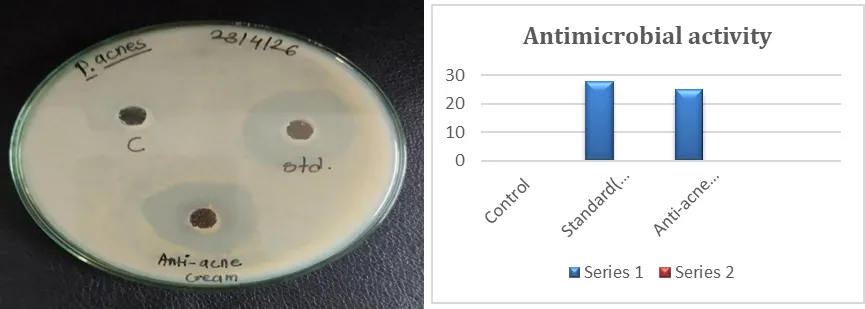
FIG. NO. 2
7. DRUG RELEASE: A dialysis membrane-equipped modified dissolution device was used to conduct an in vitro drug release investigation. A glass cylinder containing 1g of the formulation was submerged in phosphate buffer (pH 7.2) at 37 ± 10C. To maintain sink conditions, samples were removed and replaced with new buffer at predetermined intervals. A UV spectrophotometer was used to examine the samples at 257 nm in order to calculate cumulative medication release.
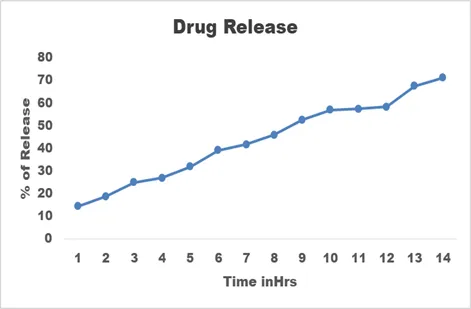
TABLE NO. 3
|
% of cumulative release |
|
|
Time (hours) |
Cream |
|
0.5 |
14.30 |
|
1 |
18.67 |
|
2 |
24.95 |
|
3 |
26.85 |
|
4 |
31.87 |
|
5 |
39.15 |
|
6 |
41.66 |
|
7 |
45.95 |
|
8 |
52.55 |
|
9 |
56.91 |
|
10 |
57.44 |
|
11 |
58.30 |
|
12 |
67.46 |
|
14 |
71.20 |
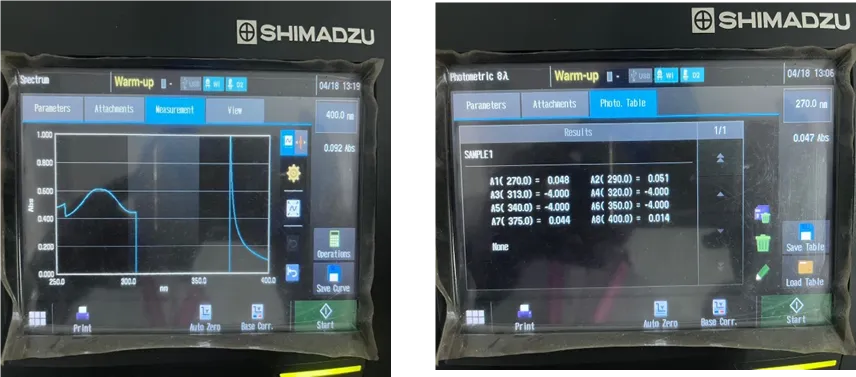
FIG. NO. 4 UV Spectroscopy
8. DRUG CONTENT: A UV spectrometer was used to determine the drug content. It determined by drug factor claim. It was found to be 97%.
DISCUSSION
According to the study, the antiacne cream prepared with Achyranthes aspera extract exhibits promising therapeutic potential. The existence of important bioactive substance with antibacterial and anti-inflammatory qualities, such as alkaloids, saponins, glycosides, and terpenoids, was verified by phytochemical screening. According to physical evaluation, the cream was safe for topical administration because of its smooth texture, good
spreadability (9.8 g.cm/sec), appropriate pH (4.94) and non-irritant in nature. Studies on drug release revealed a sustained release pattern that reached roughly 71.20% over a 14-hours period, including the formulation’s research prolonged action. Strong anti-acne efficacy was also demonstrated by the antimicrobial research, which showed a significant zone of inhibition (25 mm) against Propionibacterium acne that is comparable to the standard treatment (28 mm).
Overall, the findings confirm the effectiveness, stability, safety of herbal cream.
CONCLUSION
Achyranthes aspera can be successfully added to a stable topical cream formulation with desired pharmacological qualities, as the study successfully indicates. The developed formulation’s suitability for dermal application and patient acceptability was demonstrated by its compliance with conventional evaluation parameters.
The results demonstrate that the herbal formulation ensures consistent and stable pharmaceutical release, which may ultimately enhance therapeutic effects. An additional benefit of using plant-based substances is the reduction of any adverse effect linked to synthetic chemicals.
The promise of Achyranthes aspera as a viable natural source for creating affordable and environmentally acceptable anti-acne products is thus supported by our investigation. To confirm its effectiveness on a wider scale and investigate its commercial applicability, more clinical research is advised.
REFERENCES

Swapnagandha Patil, Shubhada Hatakar, Shriram Kumbhar, Siddhesh Karde, Kousalya Patil, Formulation And Evaluation of Anti-Acne Cream of Achyranthes Aspera, Int. J. of Pharm. Sci., 2026, Vol 4, Issue 6, 2362-2370, https://doi.org/10.5281/zenodo.20610306
 10.5281/zenodo.20610306