

We use cookies to ensure our website works properly and to personalise your experience. Cookies policy
New Montfort Institute Of Pharmacy Ashti Wardha.
Rheumatoid arthritis is a chronic inflammatory stiffness. The present study focuses on the formulation and evaluation of a herbal anti-arthritic oil containing Zingiber officinale (Ginger) and Boswellia serrata. Both herbs possess significant anti-inflammatory and analgesic properties that help reduce joint inflammation and pain. 2. The formulated herbal oil was evaluated for its of physicochemical properties and stability. The results suggest that the herbal oil may serve as a safe, effective, and natural alternative for the management of arthritis with fewer side effects compared to conventional therapies
1.1 HERBAL DRUG
An herb is a plant or plant part used for its therapeutic properties, flavor or scent. Herbal drugs are type of dietary supplements, hence they are marketed as different dosage forms like tablets, capsules, powders, in the form of tea bags, solid extracts and sometimes as fresh or dried plants. People use herbal drugs to maintain or improve their general health. [1]
1.2 RHEUMATOID ARTHRITIS
Rheumatoid Arthritis is an autoimmune inflammatory disorder, affecting synovial joints, damage articular cartilage also causes bone erosion and deformity. NSAIDs are the first line drugs and afford symptomatic relief in pain, swelling, morning stiffness, immobility, but they do not arrest the disease process.
Drug therapy is targeted to ameliorate pain, joint stiffness, articular cartilage damage, hone erosions, and also to preserve joint function Treatment usually begins with medications to reduce pain and inflammation in mild to moderate cases of arthritis Drugs such analgesics, non-steroidal anti-inflammatory drugs with some immunosuppressant drug of choice in relieving pain, inflammation and stiffness of joints.
These treatments have various side effects like gi disturbance, poor immunity, hepatic and nephrotoxicity. Herbal based treatment have good tolerability, safety and effectiveness than above conventional treatment, Herbal drugs are gaining popularity in the treatment of chronic disease like jaundice, vitiligo, rheumatoid arthritis, asthma etc.
Ginger (extract of Gingiber officinale) act as a potent anti-inflammatory 6-Gingerols, gingerdiol, gingerdione, shogaol and paradol are the active principles of ginger extract. Studies revealed that 6-gingerol shows in-vivo anti-inflammatory properties after intra peritoneal or topical administration. [2]
Till it is believed that cause of rheumatoid arthritis is unknown, but it is supposed to be triggered by the combination of genetic susceptibility and exposure to environmental factors. A critical role for T cells in the pathogenesis of RA is suggested by the strong association between RA and certain human leukocyte antigen (III.A) haplotypes. Recent data suggest that the destruction of rheumatoid joints is initiated by complexcell-cell interaction between antigen presenting cells and CD4+T cells. However, it is thought that these cell-cell interaction result in the activation of
Macrophages and induction of the inflammatory process, culminating in degradation and resorption of cartilage and bone. The drugs commonly in use for the treatment of arthritis include NSAIDS (eg Ibuprofen and naproxen) and glucocorticoids (eg-cortisone and prednisone) to
Suppress the symptoms, while. Disease-modifying antirheumatic drugs (DMARDs) such as anti-tumour necrosis factor (TNF)-a therapy (eg-etanercept, infliximab and adalinumab), anti-CD20 therapy (eg-rituximab) and abatacept are often required. To inhibit or halt the underlying immune process, [3]
1.4 Disadvantages of Herbal Anti-Arthritic Oil
2. DRUG AND EXCIPIENTS PROFILE
1.Zingiber Officinale (Ginger)

Figure No 2.1 : Ginger Rhizome and Ginger Powder
Synonyms: Zingiber, Adrak, Sonth (dried ginger)
Biological Source: It consists of dried rhizomes of Zingiber officinale.
Family: Zingiberaceae
Geographical Source: Mainly cultivated in India (Kerala, Karnataka, Maharashtra), China Jamaica, Nigeria.
Uses : Anti-inflammatory, Analgesic.
2.Boswellia Serrata

Figure No 2.2: Boswellia Serrata and Boswellia Serrata Powder
Synonyms: Indian Frankincense, Salai Guggul, Salai, Shallaki (Ayurvedic name)
Biological Source: Boswellia serrata consists of the dried oleo-gum-resin obtained by incision of the bark of Boswellia serrata.
Family: Burseraceae
Geographical Source: Boswellia serrata is mainly found in the dry hilly regions of India, particularly in the states of Madhya Pradesh, Rajasthan.
Uses: Anti-inflammator ,Analgesi.
3.Turmeric

Figure No 2.3: Turmeric Rhizome and Turmeric powder
Synonyms: Haldi, Haridra, Curcuma
Biological Source: Turmeric is the dried rhizome of Curcuma longa Linn., belonging to the family Zingiberaceae.
Geographical Source:It is mainly cultivated in India, China, Malaysia, and other tropical countries.
Chemical Constituents: Curcumin, turmerone, zingiberene, volatile oil, resin, and starch.
Uses: Anti-inflammatory agent, Relieves joint pain and swelling.
3. METHODOLOGY
|
Sr.No |
INGREDIENTS |
FAMILY |
USES |
COLLECTION |
|
1 |
Zingiber Officinale(Ginger) |
Zingiberaceae |
Anti-inflammatory , Analgesic, Antioxidant, Improve blood circulation. |
Collected from market |
|
2 |
Boswellia Serrata |
Burseraceae |
Anti-inflammatory,Analgesic, Antioxidant, Improves joint mobility. |
Collected from market |
|
3 |
Turmeric |
Zingiberaceae |
Relieves joint pain, Reduce swelling and redness, Improves joint mobility. |
Collected from market |
|
4 |
Sesame Oil |
Pedaliaceae |
Acts as a carrier base oil, Enhances skin penetration of active constituents. |
Collected from market |
|
5 |
Peppermint Oil |
Labiatae |
Provides a cooling sensation to affected joints, Reduces muscle soreness. |
Collected from market |
|
6 |
Vitamin E Oil |
Tocopherol |
Increase shelf life of formulation . |
Collected from market |
4.FORMULATION TABLE
|
SR.No |
INGREDIENTS |
F1 |
F2 |
F3 |
|
1 |
Zingiber Officinale (Ginger) |
5g |
7g |
10g |
|
2 |
Boswellia serrata |
5g |
7g |
10g |
|
3 |
Turmeric Oil |
2ml |
3ml |
5ml |
|
4 |
Sesame Oil |
86ml |
81ml |
74ml |
|
5 |
Vitamin E |
0.05ml |
0.05ml |
0.05ml |
|
6 |
Peppermint Oil |
0.05ml |
0.05ml |
0.05ml |
5. METHOD OF PREPARATION
Step 1: Collection and Preparation of Raw Materials

Figure No 5.1 Collection and Preparation of Raw Materials
Step 2: Weighing of Ingredients (as per formulation F1-F5)
Step 3: Fomentation / Heat Infusion Process
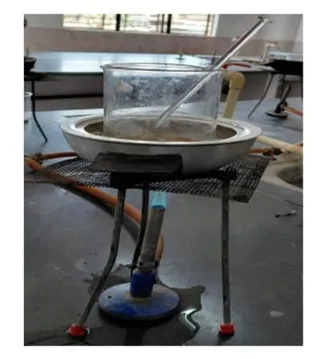
Figure No 5.2. Infusion process.
Step 4: Filtration
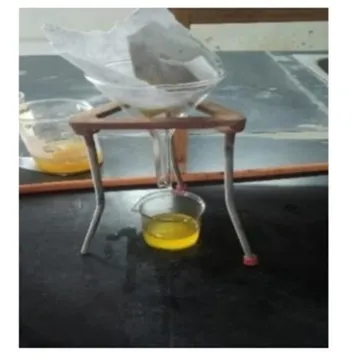
Step 5: Addition of Other Ingredients
Step 6: Storage And Packaging
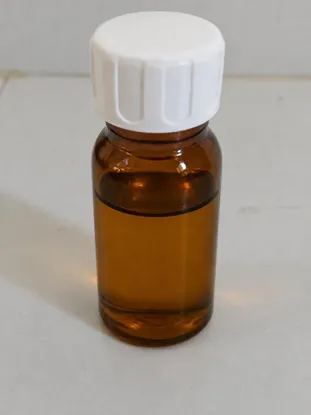

Figure 5.4(a)Storage Figure 5.4(b)
Packaging and labelling
5. RESULT
1,Organoleptic Evaluation Test

All three batches of anti-arthritic oil showed consistent organoleptic properties in terms of appearance, color, odor, texture, consistency, homogeneity, and warming sensation. Minor variations in turbidity and odor intensity were observed but remained within acceptable limits, indicating good batch uniformity and formulation consistency.
2.Skin Irritancy Test
|
Parameters |
F1 |
F2 |
F3 |
|
Itching |
Absent |
Absent |
Absent |
|
Swelling |
Absent |
Absent |
Absent |
|
Observation |
Non Irritant |
Non Irritant |
Non Irritant |
All formulations (F1-F3) of anti-arthritic oil showed no itching or swelling on topical application, indicating that the preparations are non-irritant and safe for skin use.
3.Spreadability Test
|
Parameter |
F1 |
F2 |
F3 |
|
Spradability Test |
Poor |
Good |
Best |
All formulations (F1-F3) of anti-arthritic oil showed good spreadability on skin, indicating that the oil can be easily applied and evenly distributed over the surface, ensuring proper application and effectiveness.
4.Viscosity
|
Parameter |
F1 |
F2 |
F3 |
|
Viscosity |
1.2Pa.s |
1.4Pa.s |
1.6Pa.s |
All formulations (F1-F3) showed an increase in viscosity from F1 to F3, indicating gradual thickening of the oil. The values remained within acceptable limits, suggesting good flow properties and suitable consistency for topical application.
5.pH Test
|
Parameter |
F1 |
F2 |
F3 |
|
pH Test |
6.2 |
6.3 |
6.4 |
|
Observation |
Slightly Acidic,Suitable for skin. |
Mildly Acidic.Skin friendly. |
Near Natural,Safe for topical use |
All formulations (F1-F3) showed pH in the range of 6.2-6.4, indicating a mildly acidic nature compatible with skin pH, confirming that the oil is non-irritant and suitable for external application.
CONCLUSION
The formulation of herbal anti-arthritic oil using Zingiber officinale (Ginger) and Boswellia serrata (Indian Frankincense) represents a promising natural approach for the management of arthritis and associated inflammatory conditions. Both herbal ingredients possess well-documented anti-inflammatory, analgesic, and antioxidant properties that help reduce joint pain, swelling, stiffness, and improve mobility.
The developed oil formulation provides localized drug delivery directly to the affected joints, enhancing therapeutic efficacy while minimizing systemic side effects commonly associated with conventional anti-arthritic drugs. Ginger constituents such as gingerols and shogaols contribute to pain relief and inflammation control, whereas boswellic acids from Boswellia serrata inhibit inflammatory mediators responsible for joint degeneration and discomfort.
REFERENCES


Nutan Bodhale, Irshad Ahmad, Khushbu Mohourle, Vaishnavi Shankarpure, Vaishnavi Rajurkar, Formulation Of Herbal Aniti Arthritis Oil Using Zingiber Officinale and Boswellia Serrata, Int. J. of Pharm. Sci., 2026, Vol 4, Issue 6, 7256-7262, https://doi.org/10.5281/zenodo.21033244
 10.5281/zenodo.21033244