

We use cookies to ensure our website works properly and to personalise your experience. Cookies policy
Matoshri Miratai Aaher College Of Pharmacy , Karjule Harya, Tal- Parner , Dist - Ahilyanagar
Tridax procumbens is a plant that many people use for medicine. It helps with healing wounds. It also fights germs and reduces swelling. This plant has good properties.The study is about making a special cream using Tridax procumbens leaves.The leaves were picked, dried in the shade and turned into powder.Then the powder was mixed with ethanol to get the stuff out.This was done using a machine or by just letting it sit.The liquid was then made thicker. Added to a cream. The cream was made with things like acid, cetyl alcohol, glycerin and triethanolamine.The cream was tested to see how it works. The tests checked how it looks its level, how easy it spreads its texture and how well it works with skin. The results showed that the Tridax procumbens cream feels smooth. It also spreads easily. Does not feel greasy. The pH level is good for skin between 5.5 and 6.5. There was no separation of the cream or irritation which means it is stable and works with skin. Tridax procumbens cream seems like a product. The cream has properties because of Tridax procumbens. Tridax procumbens is good, for skin
Tridax procumbens is a kind of plant that people also call Trilobata, Kansari in Hindi or Coat Button. This plant is mostly used in Indian systems of medicine. It is a type of weed that comes from Central America and is found over India especially in the states of Maharashtra, Madhya Pradesh and Chhattisgarh. Tridax procumbens has yellow flowers with white centers and really hairy leaves that are shaped like eggs or spears. It often puts down roots where the stem touches the ground.
The whole part of Tridax procumbens that grows above the ground is used for medicine. The leaves of Tridax procumbens can kill insects help wounds heal stop much fluid from coming out and lower blood pressure. The seeds of Tridax procumbens are used to stop bleeding. Tridax procumbens also has other good things about it like being able to stop cells from getting damaged hurting the liver relieving pain lowering blood sugar reducing swelling, fighting fungus and killing bad bacteria. People have been using Tridax procumbens in Indian Ayurveda for a long time. Tridax procumbens is used to make things like special oils, drinks and pastes that people put on their skin. The way Tridax procumbens protects itself and the special chemicals it has, like flavonoids, alkaloids, tannins, carotenoids and saponins are probably what make Tridax procumbens so useful.
Taxonomical Classification
|
Category |
Classification |
|
Kingdom |
Plantae |
|
Division |
Magnoliophyta (Angiosperms) |
|
Class |
Magnoliopsida (Dicotyledons) |
|
Order |
Asterales |
|
Family |
Asteraceae |
|
Genus |
Tridax |
|
Species |
Tridax procumbens Linn |
Plant Morphology
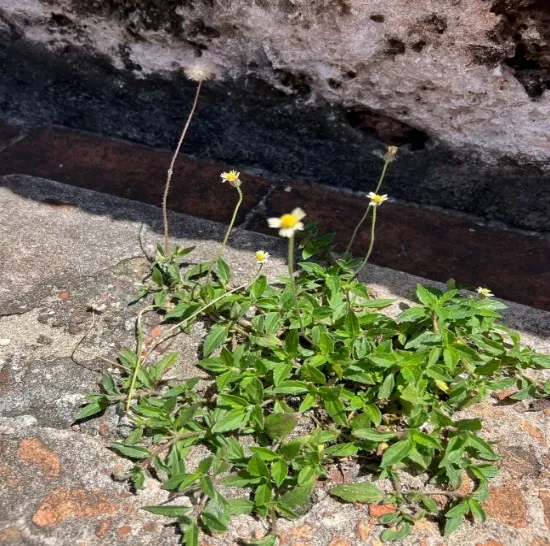
Figure 1Tridax Procumben linn
Major phytochemicals
* Flavonoids
Flavonoids are really important in Tridax procumbens leaves. They are one of the reasons why Tridax procumbens has so many good effects on our health. These compounds are made up of lots of parts that are good for us like quercetin, luteolin, kaempferol and apigenin.
* Terpenoids
Terpenoids are another important group of compounds in Tridax procumbens leaves. They help make the plant good for our health. These compounds are made from building blocks called isoprene units. We can find them in plants that are used to make medicine. Tridax procumbens has some terpenoids like oleanolic acid, betulinic acid, lupeol and β-amyrin.
* Alkaloids
Alkaloids in Tridax procumbens leaves also play a role in keeping us healthy. They help fight off germs, relieve pain control inflammation and heal wounds.
* Saponins
Saponins are compounds in Tridax procumbens leaves that can help make medicines work better. They are like soap. They help our bodies absorb the good stuff from the plant.
* Phenolic compounds
Phenolic compounds are a type of phytochemical in Tridax procumbens leaves. They include things like caffeic acid, acid and other similar compounds. These compounds are really good at fighting off things that can hurt our cells, which is why Tridax procumbens is so good, for us.
We are doing some tests on Tridax procumbens Extract to see what is in it.
The Shinoda Test is what we use for this. Here is what we do: we take the extract. Put it in a test tube then we add a few drops of concentrated HCl and a small piece of magnesium ribbon. If we see an red color that means Tridax procumbens Extract has Flavonoids.
We use Dragendorff’s Test for this. Here is what we do: we add Dragendorff’s reagent into the Tridax procumbens Extract.If we see an reddish-brown precipitate that means Tridax procumbens Extract has Alkaloids.
The Ferric Chloride Test is what we use for this. Here is what we do: we add a drops of FeCl₃ solution into the Tridax procumbens Extract. If we see a black or greenish color that means Tridax procumbens Extract has Tannins.
The Foam Test is what we use for this. Here is what we do: we shake the Tridax procumbens Extract with water hard. If we see foam that lasts for 10 to 15 minutes that means Tridax procumbens Extract has Saponins.
We use the Salkowski Test for this. Here is what we do: we mix the Tridax procumbens Extract with chloroform then we carefully add H₂SO₄. If we see a reddish-brown interface that means Tridax procumbens Extract has Terpenoids.
The Ferric Chloride Test is what we use for this. Here is what we do: we add FeCl₃ solution, into the Tridax procumbens Extract sample. If we see a blue or green color that means Tridax procumbens Extract has Phenolic Compounds.
Phytochemical Test Result :
|
Phytochemical |
Test |
Observation |
Result (+ / - ) |
|
Flavonoids |
Shinoda Test
|
Pink/red color developed |
Present + |
|
Alkaloids |
Dragendorff’s Test |
Orange precipitate formed |
Present + |
|
Tanins |
Ferric Chloride Test
|
Blue-black color observed |
Present + |
|
Saponins |
Foam Test
|
Stable foam persisted for 10–15 min |
Present + |
|
Terpenoids |
Salkowski Test
|
Reddish-brown interface formed |
Present + |
|
Phenolics |
Ferric Chloride Test
|
Deep green color observed |
Present + |
Methedology: (material and methods)
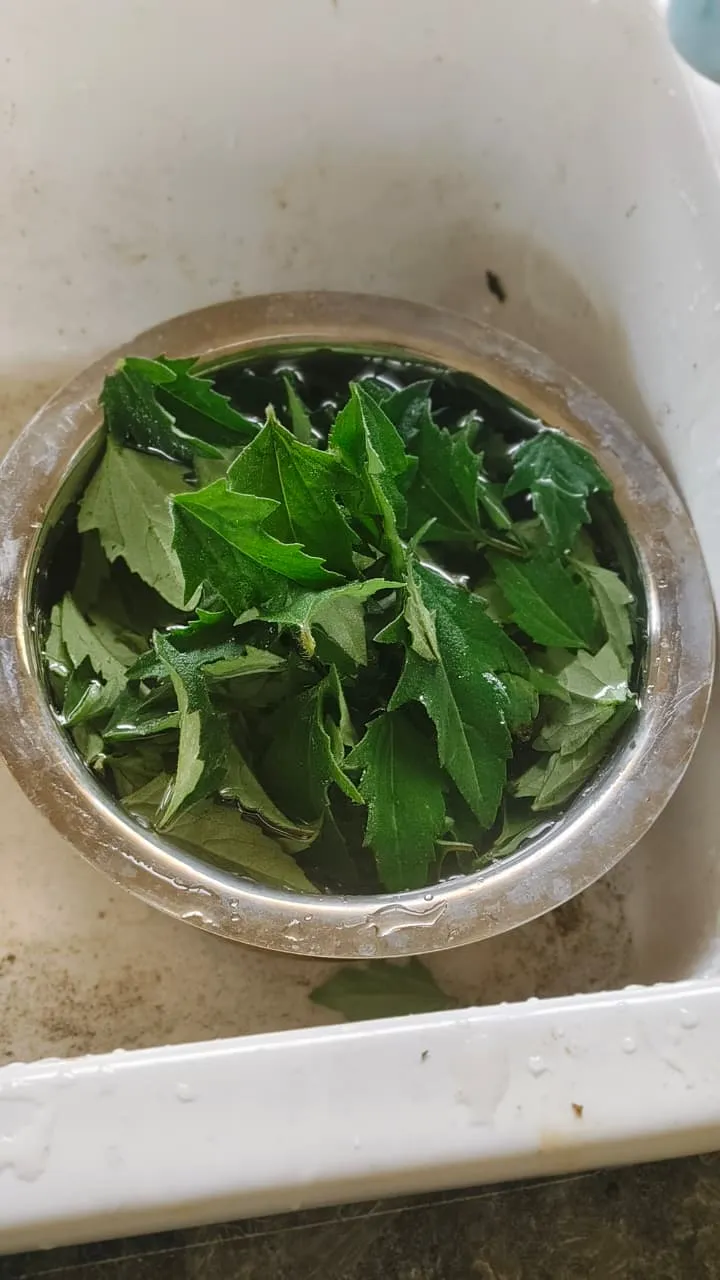
Figure 2: Tridax procumbens Linn
* Collection of plant material
leaves of Tridax procumbens Linn. Were collected from Karjule Harya, Ahilyanagar, Maharashtra, India in January during winter. The plant Tridax procumbens Linn. Was identified by its habit and hairy serrated leaves and it has yellow and white flower heads.
* Authentication
A qualified botanist, from New Arts, Commerce and Science College Ahilyanagar checked the plant material. The botanist confirmed that it is Tridax procumbens Linn.. A sample was kept for reference.
* Preparation of Powder Sample
The fresh leaves of Tridax procumbens Linn. Were washed with tap water. The leaves were then dried for 5–7 days. This helps to preserve the stuff in the leaves of Tridax procumbens Linn. And prevent it from getting bad. The dried leaves of Tridax procumbens Linn. Were cut into pieces and turned into a fine powder using a grinder.
The powder was then passed through a sieve to make sure it is the size, which helps with getting more out of it. This powder of Tridax procumbens Linn. Will be used for processing.
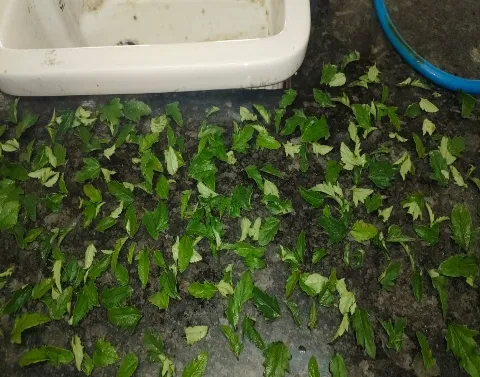
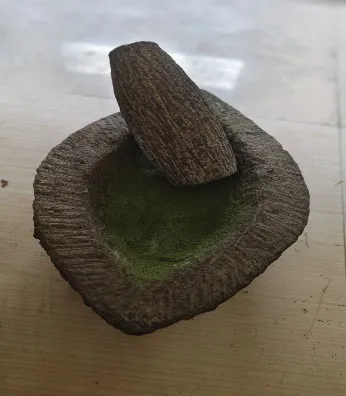
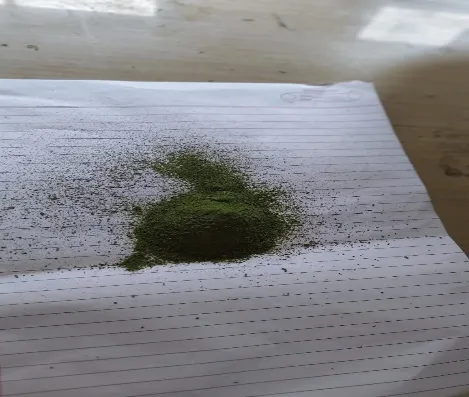
Fig 2 Fig 3 Fig 4
Preparation of Plant Extract by Soxhlet Extraction
The leaves of Tridax procumbens Linn. Were. Made into a coarse powder. Then we took around 5 to 7 grams of this powder. Put it in a special paper container. This container was placed inside the Soxhlet extractor machine.
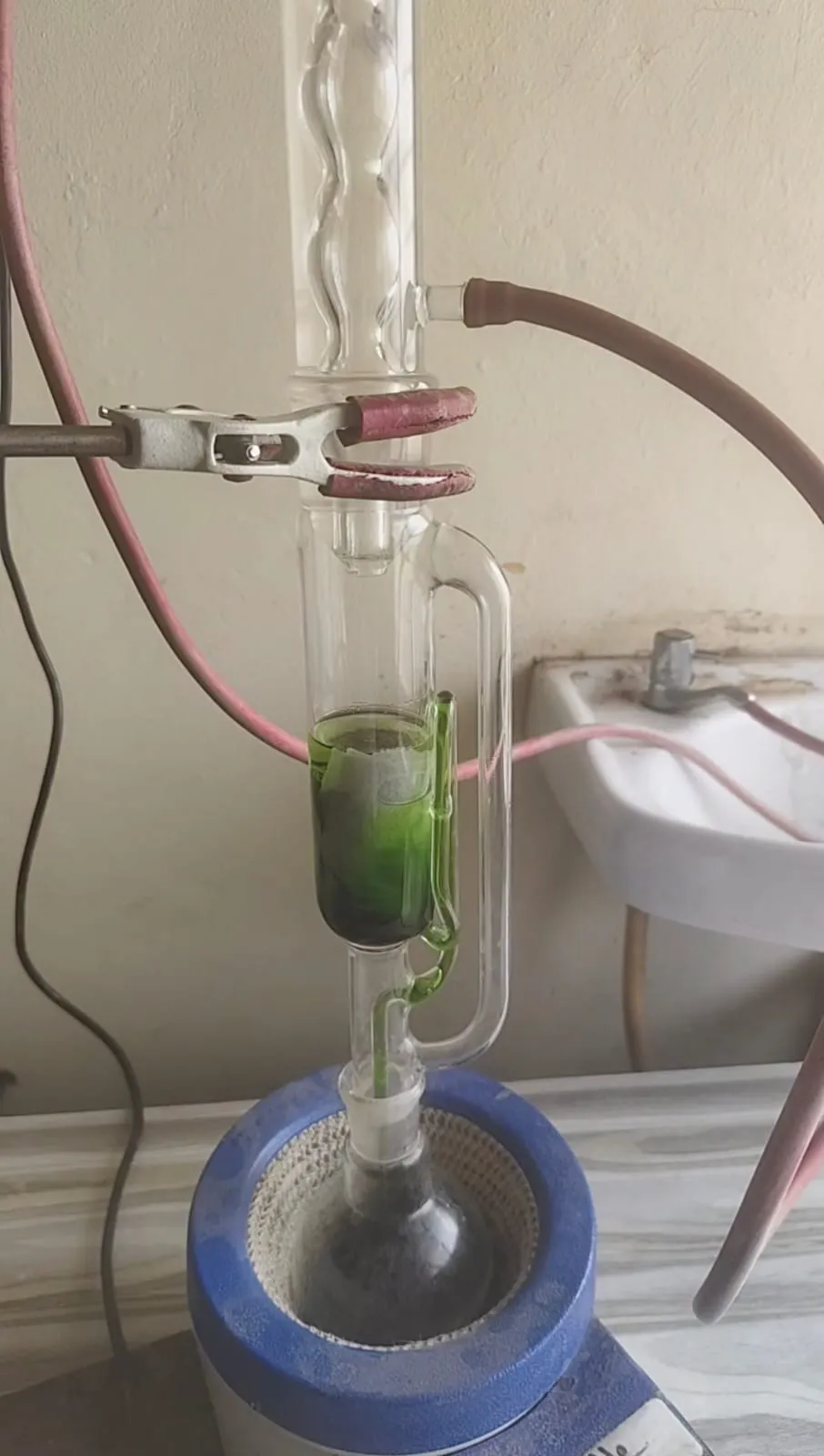
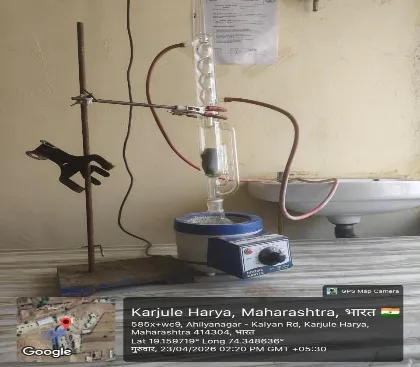
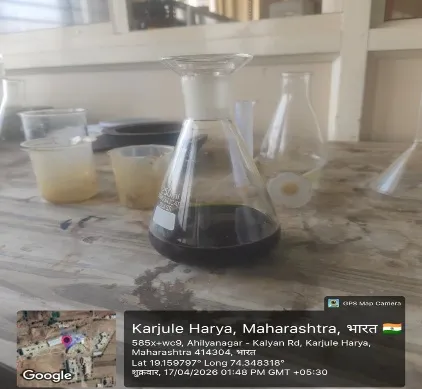
We used ethanol as the liquid to help get the extract from the plant. Around 80 to 100 milliliters of ethanol was poured into a flask that was connected to the Soxhlet machine. The machine was set up with a cooling device on top. We heated the ethanol. It kept going over the plant powder.
This process was repeated times, around 6 to 8 times until the ethanol no longer changed color when it went over the plant material. This meant that we had gotten all the extract we could from the plant. When we were done we let the ethanol cool down. Then carefully took it out of the flask. We used a water bath that was 40 to 50 degrees Celsius to slowly evaporate the ethanol. This left us with an concentrated extract, from the Tridax procumbens Linn Plant.
Preparation of Herbal Cream:
Formula:
Sr. No
|
Ingredients |
Quantity(F1) |
F2 |
F3 |
|
|
1 |
Tridax extract |
0.3g |
0.5g |
1.0g |
|
2 |
Coconut oil |
0.5g |
0.5g |
0.5g |
|
3 |
Neem oil |
0.1g |
0.1g |
0.1g |
|
4 |
Turmeric |
0.05g |
0.05g |
0.05g |
|
5 |
Stearic acid |
1.0g |
1.0g |
1.0g |
|
6 |
Cetyl alcohol |
0.3g |
0.3g |
0.3g |
|
7 |
Glycerin |
0.5g |
0.5g |
0.5g |
|
8 |
Triethanolamine |
0.2g |
0.2g |
0.2g |
|
9 |
Methyl parabe |
0.05g |
0.05g |
0.05g |
|
10 |
Distilled Water (q.s) |
6.8g |
6.8g |
6.8g |
Evaluation Of Herbal Cream :
1. Organoleptic Evaluation : We study about the following Parameters:
Color, Odor, Appearance, Texture
The cream is checked visually and gently rubbed between fingers. This test shows if patients will like the cream. It also finds out if the cream is not stable which can be seen by a change in color or smell.
2. PH Determination:
Method: Dissolve 1 gram of cream in 10 mL of distilled water & Measure using a PH meter that is calibrated
The skins pH is between 5.5 and 6.5.
This test prevents skin irritation and damage.
3. Spreadability
Method: The cream is placed between two slides. A weight is applied. The time it takes for the cream to spread is measured. This test shows how easy it is to apply the cream. It also affects how evenly the dose is spread. The cream should have moderate to spreadability.
4. Viscosity
Method: The viscosity is measured using a Brookfield viscometer. This test controls how the cream flows and its consistency. It affects: Stability & Spreadability How the drug is released
5. Homogeneity
Method: The cream is applied to a glass slide or skin. This test ensures the drug is evenly distributed in the cream. It also finds out if there are lumps or if the cream has separated.
6. Washability
Method: The cream is applied to skin and washed with water. This test shows how easy it is to remove the cream. It is important for comfort.
7. Greasiness
Method: The cream is applied and the oily residue is observed. This test affects how acceptable the cream is cosmetically. If the cream is too greasy patients will not like it.
8. Irritancy Test
Method: A small amount of cream is applied to skin and observed for 24 hours. Parameters: Redness, Itching, Swelling . This test ensures the cream is safe to use.
9. Stability Study
Method: The cream is stored at: Room temperature, Refrigeration. The following are observed: No Color change, No Phase separation, No pH variation. This test determines how long the cream will last. It ensures the cream can be used for a time.
10. Antimicrobial Activity
Method: The agar well diffusion method is used. The zone of inhibition is observed. This test confirms the cream works as expected. It is especially important, for creams used for healing.
RESULT AND DISCUSSION:
We made three versions of Tridax procumbens herbal cream. These are called F1, F2 and F3. We used amounts of things like plant extract, coconut oil, neem oil and turmeric in each one. Then we checked how they looked and felt. We also checked the pH, how well they spread, if they felt greasy and if they stayed the same over time.
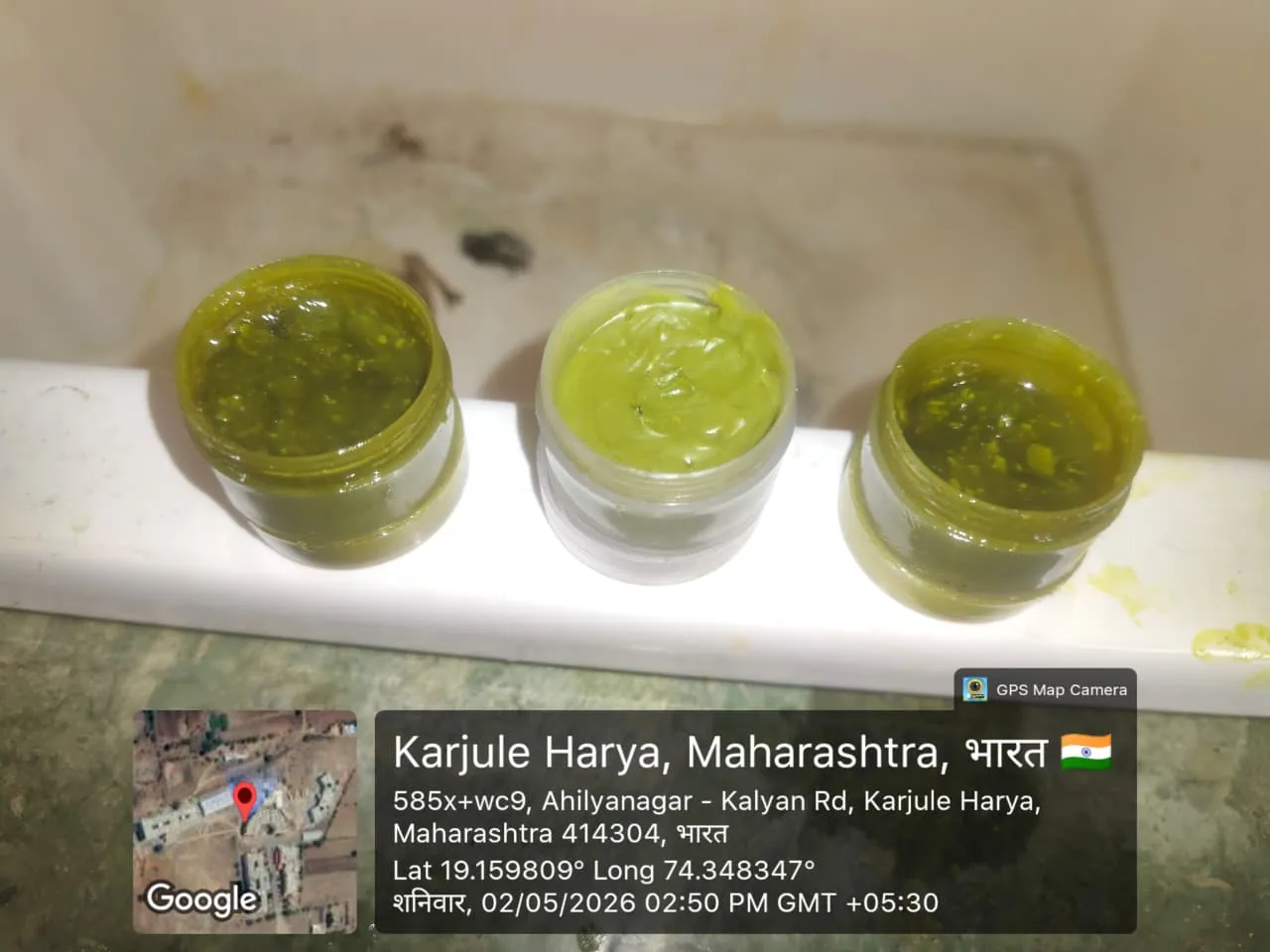
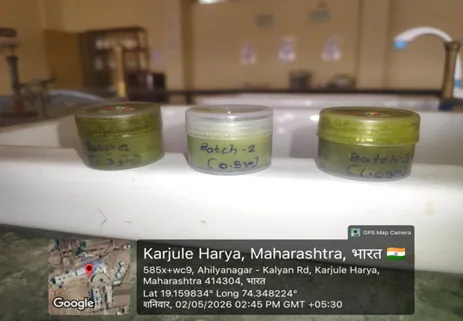
The first one, F1 was really good at spreading. Did not feel very greasy. This is because it did not have much oil in it.
The second one, F2 was the overall. It spread well had a pH was not too greasy and stayed the same. The pH was 5.8, which's just right, for putting on skin. It. Felt nice and consistent too.
The third one, F3 had some problems. It was too greasy did not spread well and was a little unstable. This might make people not want to use it.
Observational of Result :
Parameter
|
F1 (Low Conc) |
F2 (Optimized) |
F3 ( High Conc.) |
|
|
Colour |
Greenish |
Greenish Yellow |
Light Green |
|
Odor |
Mild |
Moderate |
Strong (neem odor) |
|
Consistency |
Smooth |
Smooth & uniform |
Slightly thick |
|
pH |
6.2 |
5.8 |
5.5 |
|
Spreadability |
Excellent |
Good |
Moderate |
|
Greasiness |
Low |
Moderate |
High |
|
Washability |
Easy |
Easy |
Slightly difficult |
|
stability |
Less stable |
High Stable |
Slight phase variation |
CONCLUSION
The plant extract was made using a Soxhlet extraction method. It had compounds like flavonoids, terpenoids, alkaloids, tannins, saponins and phenolic compounds. These compounds are known for their anti-inflammatory, antioxidant and wound healing properties.
Three different formulations (F1, F2 and F3) were created with amounts of active ingredients. We tested them for physicochemical parameters. The results showed that F2 formulations were stable and suitable for use on the skin. However we noticed differences in how well they spread how greasy they felt and overall acceptability.
Among the formulations F2 was the best. It had a texture spread well did not irritate, had a suitable pH for skin and was very stable without separating. The balanced mix of ingredients in F2 made it perform better than F1 and F3. The plant extract and its compounds played a role in F2s success. F2s characteristics make it a good candidate, for development.
REFERENCES
Joshi H, Patil S. Stability and evaluation of herbal topical formulations: Recent trends. International Journal of Cosmetic Science. 2025;47(1):22–30








Giri Sanket, Tupe Gaurav, Budhavant Payal, Nagare Pratiksha, Patil Bhavesh, Najan Suraj, Prof. Kadam V. N, Formulation And Evaluation of Herbal Antiseptic Cream Containing Tridax Procumbens Leaf Extract, Int. J. of Pharm. Sci., 2026, Vol 4, Issue 6, 576-583, https://doi.org/10.5281/zenodo.20508539
 10.5281/zenodo.20508539