

We use cookies to ensure our website works properly and to personalise your experience. Cookies policy
Dr. K V Subba Reddy Institute of pharmacy, Dupadu , Kurnool -518218, Andhra Pradesh, India
Herbal hair oils are widely used cosmetic and therapeutic preparations that play an important role in maintaining hair health and managing common hair and scalp disorders. The present study focuses on the formulation and evaluation of herbal hair oils using medicinal plant materials traditionally known for their hair-nourishing, growth-promoting, and scalp-conditioning properties. Selected herbal ingredients are incorporated into a suitable oil base through appropriate formulation techniques to ensure effective extraction and stability of active phytoconstituents. The formulated herbal hair oil is evaluated for various physicochemical parameters such as organoleptic characteristics, pH, viscosity, specific gravity, acid value, and stability. In addition, safety and performance evaluations, including skin irritation studies and assessment of conditioning and hair growth–promoting effects, are carried out to ensure product quality and efficacy. The results highlight that systematic formulation and comprehensive evaluation are essential for standardization, quality assurance, and scientific validation of herbal hair oils, supporting their use as safe and effective alternatives to synthetic hair care products.
Herbal hair oils are among the most widely used traditional cosmetic preparations, valued for their ability to nourish the scalp, strengthen hair roots, and enhance overall hair health. Their formulation involves the careful selection of medicinal plants based on traditional knowledge and scientifically
reported pharmacological activities such as hair growth promotion, antimicrobial action, antioxidant effects, and scalp conditioning. Commonly used herbs include Emblica officinalis (amla), Hibiscus rosa-sinensis, Azadirachta indica (neem), Trigonella foenum-graecum (fenugreek), rosemary, curry leaves, Allium cepa (onion), and black seeds, which may be incorporated in fresh, dried, or extracted forms into suitable oil bases such as coconut oil and castor oil to enhance the penetration of bioactive constituents into the scalp and hair follicles. (1) The formulation process may employ traditional techniques like decoction and infusion or modern methods such as solvent extraction and homogenization, with an emphasis on achieving stability, uniformity, and maximum therapeutic benefit. Evaluation of herbal hair oils is essential to ensure quality, safety, and efficacy and includes physicochemical parameters such as organoleptic characteristics, pH, viscosity, specific gravity, refractive index, acid value, saponification value, and peroxide value, along with microbiological studies to confirm the absence of harmful microorganisms and skin irritation tests to establish safety. In addition, performance evaluations such as hair growth studies, anti-dandruff activity, conditioning effects, and user acceptability assessments provide scientific evidence of functional benefits, supporting the standardization and validation of herbal hair oils as effective and safer alternatives to synthetic hair care products. (2)
2. MATERIALS AND METHODS
2.1 Materials
The materials used for the formulation of herbal hair oil include castor oil and coconut oil as base oils. The herbal ingredients selected were fenugreek seeds (Trigonella foenum-graecum), black seeds (Nigella sativa), amla (Emblica officinalis), hibiscus flowers and leaves (Hibiscus rosa-sinensis), neem leaves (Azadirachta indica), curry leaves (Murraya koenigii), aloe vera (Aloe barbadensis Miller), onion (Allium cepa), and rosemary (Rosmarinus officinalis). Vitamin E capsules (tocopherol) were used as an antioxidant and preservative. All plant materials were procured from authenticated herbal suppliers and identified by a qualified botanist. Analytical grade reagents and distilled water were used for evaluation studies. (3)
|
SI.N O |
NAME OF THE DRUG SOURCE |
IMAGE |
ESSENTIAL NATURALCONSTIT UENTS |
MEDICINAL USES |
|
1. |
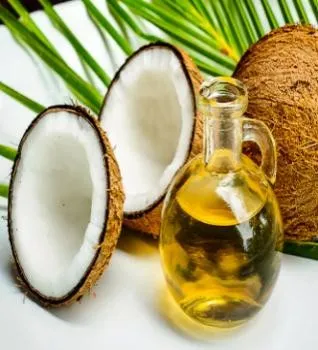
COCONUT OIL |
|
Saturated fats- lauric acid (47%), myristic and palmitic acids, vitamins, minerals, plant sterols |
Moisturises hair and scalp, reduces and prevents symptoms of scalp psoriasis |
|
2. |
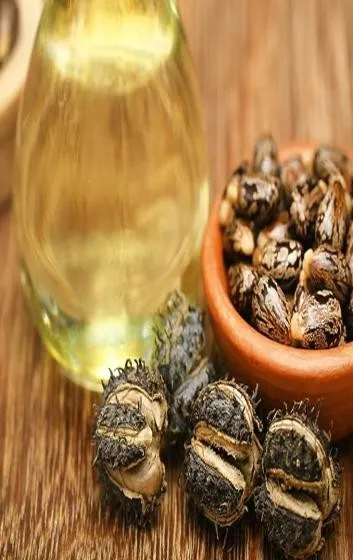
CASTOR OIL |
|
Ricinoleic Acid, Oleic Acid, Linoleic Acid, Stearic Acid, Palmitic Acid, Minor Constituents like Tocopherols (Vitamin E), Phytosterols, Trace proteins and pigment etc., |
Promotes hair growth by improving blood circulation to hair follicles. Strengthens hair roots and reduces hair fall. Helps in treating dandruff and dry scalp |
|
3. |
Hibiscus leaves and flowers (Hibiscus rosa sinensis) |

|
tannins, flavonoids, cardiac glycosides, carbohydrates, proteins, alkaloids |
Prevents hair loss by root strengthening of hair (due to flavonoids) Increase hair volume, Prevents premature graying, Dandruff, Frizz, Split ends, Dryness, Breakage |
|
4. |
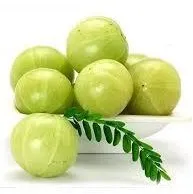
Amla (Indian gooseberry) Phyllanthus emblica |
|
Vitamin C, Anti-oxidants, amino acid, citric acid, carbohydrates, proteins, minerals, tannins, Flavonoids. |
helps in Hair growth, Treats scalp ailments (Due to presence of protein called collagen), Anti-dandruff, helps to get rid of follicle debris (due to Vit C) |
|
5. |
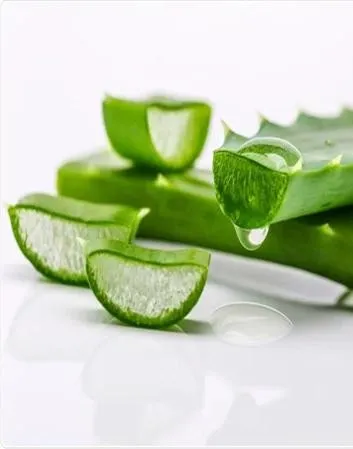
Aloe vera (Aloe barbadensis) |
|
anthraquinone glycosides, vitamins (vit B12), minerals, enzymes, polysaccharides, flavonoids, tannins sterols, saponins. |
Moisturizer, treatment of psoriasis. anti-oxidant and antibacterial, Anti-hair fall (due to vit B12) |
|
6. |
Neem leaves (Indian lilac) Azadirachta indica |
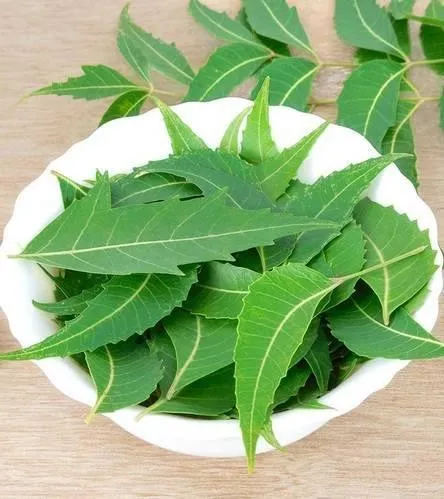
|
triterpenes, beta sitosterol tri and tetra sulphides, alkaloids, tannins, steroids, glycosides. |
Prevents premature greying, Anti-dandruff, Anti-scalp itching, Conditioner, Treatment of lice. |
|
7. |
Curry leaves Murrayakoe nigii |
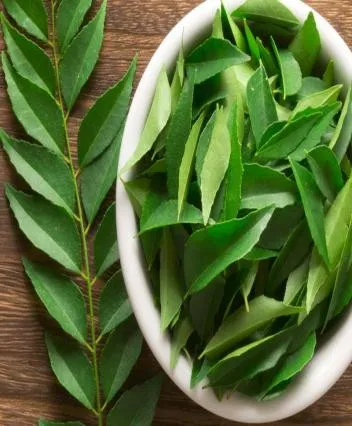
|
Vitamins A, B2 A C, Monoterpenes, Flavonoids, anti-oxidants |
Prevents hair fall and premature greying, Stimulates growth of hair follicles |
|
8. |
Fenugreek Seeds: Biological Trigonllafoe num Source: Family: Leguminosa e |
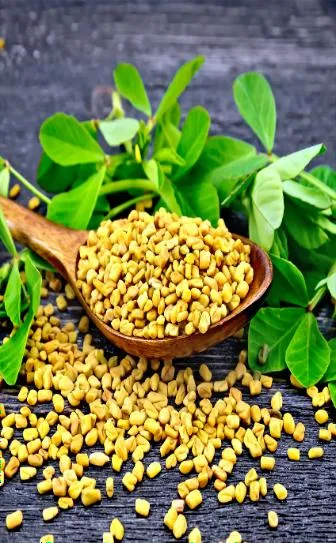
|
folic acid, vitamins A, K & C, potassium, iron calcium, protein, flavonoids, tannins, glycosides, saponins, lecithin. |
Hair replenishment (due to iron, protein, flavonoids) Hair smoothening, Prevents dandruff, Anti-fungal, Anti-inflammatory (flavonoids, saponins) |
|
9. |
Rosemary oil (Salvia rosmarinus.) |
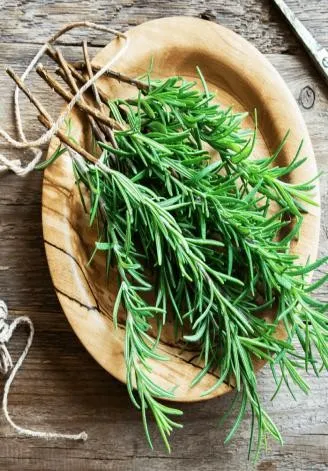
|
anti-oxidants, triterpenoid acid, flavonoids, alpha-pinene, 1,8 cineole, camphor. |
stimulates hair growth, prevents premature greying and dandruff, moisturizes dry and itchy scalp, antifungal |
|
10. |
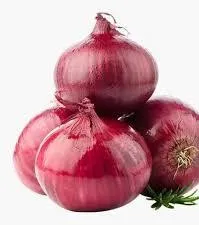
Onion: Biological Source:Alliu mpa
Family:A lliaceae |
|
Protein,carbohydrates,c ellulose, minerals, a fixed oil,an essential oil,andmorethan80%wa terare all present in onions. |
Extra sulphur from onion juice can encourage strong, thickhair,reduc ing hair loss and encouraging hair development. |
|
11. |
Black Seeds: Biological source: Nigella sativa Linn Family: Ranunculac eae |

|
Pyrazoline alkaloid that contains nigellidine and nigellicine, as wellastheisoquinolineal kaloids nigellicimine, nigellicimine n- oxide, and nigellicimine |
Enhancing the health ofthehair,decre asing hair loss, minimizing acne, minimizing inflamma tion, and lowering blood sugar levels |
|
12. |
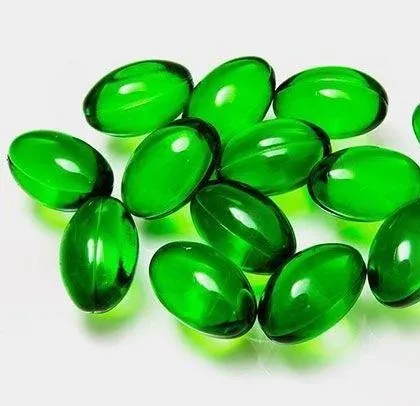
Vitamin E capsule |
|
Mainly α-tocopherol (active form of Vitamin E). Other tocopherols: β, γ, and δ-tocopherol (minor amounts). Oil base (such as soybean or sunflower oil) as carrier. |
Acts as a powerful antioxidant. Protects skin and hair from oxidative damage. Improves scalp health and hair strength |
2.2 Preparation of Plant Materials
Fresh plant materials such as hibiscus flowers and leaves, neem leaves, curry leaves, aloe vera, onion, and rosemary were washed thoroughly with distilled water to remove dirt and contaminants. They were shade dried at room temperature for 7–10 days to preserve thermolabile phytoconstituents. Fenugreek seeds, black seeds, and dried amla were cleaned and dried properly. The dried plant materials were coarsely powdered using a mechanical grinder and stored in airtight containers until further use.
2.3 Selection of Oil Base
Coconut oil and castor oil were selected as base oils due to their excellent hair-penetrating, nourishing, and conditioning properties. Coconut oil facilitates deep penetration into the hair shaft, while castor oil improves hair thickness and strength. The oils were mixed in a suitable ratio (e.g., 3:1) to obtain an effective carrier system. (4)
3. Method of Formulation of Herbal Hair Oil
3.1 Cloth Pouch Method Principle
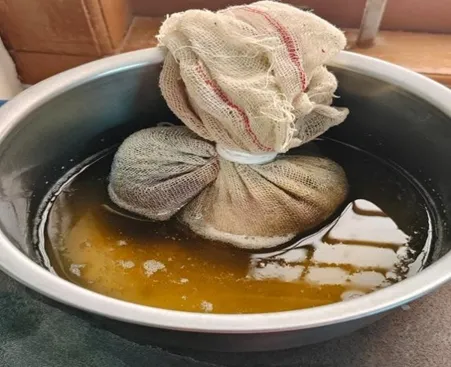
The cloth pouch method is based on the controlled extraction of herbal constituents into the oil medium while preventing direct dispersion of plant residues in the final formulation. Finely powdered herbal drugs are enclosed in a muslin cloth pouch, which allows diffusion of active phytoconstituents into the oil during heating, while retaining insoluble plant materials.
Procedure
1. The dried herbal ingredients—fenugreek seeds, black seeds, amla, hibiscus leaves and flowers, neem leaves, curry leaves, and rosemary—were coarsely powdered and mixed uniformly.
2. The powdered mixture was placed in a clean muslin cloth and securely tied to form a pouch.
3. Coconut oil and castor oil were mixed in a suitable ratio (e.g., 3:1) and transferred into a stainless-steel vessel.
4. The herbal cloth pouch was immersed completely in the oil mixture.
5. The oil was heated on a water bath at a controlled temperature of 60–70°C for 3–4 hours with occasional stirring to ensure uniform heat distribution.
6. Aloe vera gel and freshly prepared onion juice were added gradually during heating to facilitate extraction and nourishment.
7. Heating was continued until complete removal of moisture, indicated by cessation of bubbling or frothing.
8. The oil was allowed to cool, and the cloth pouch was removed and squeezed gently to recover the absorbed oil.
9. Vitamin E capsule contents were added to the cooled oil as an antioxidant.
10. The final oil was filtered if required, transferred to amber-colored bottles, and stored at room temperature.
Advantages of Cloth Pouch Method
• Produces a clear oil with minimal suspended particles
• Facilitates easy filtration and improved clarity
• Reduces chances of microbial contamination
• Suitable for large-scale preparation and improved shelf life. (5)
3.2 Direct Method Principle
The direct method involves direct mixing of powdered or fresh herbal materials into the oil base, allowing intimate contact between the plant material and oil, resulting in enhanced extraction of phytoconstituents. This method is simple, economical, and commonly used in traditional herbal preparations.
Procedure
1. Accurately weighed quantities of powdered herbal ingredients—fenugreek seeds, black seeds, amla, hibiscus leaves and flowers, neem leaves, curry leaves, and rosemary—were taken directly into a clean stainless-steel container.
2. Fresh aloe vera gel and onion juice were prepared separately and added to the herbal mixture.
3. Coconut oil and castor oil were added in a suitable ratio to completely immerse the herbal materials.
4. The mixture was heated on a water bath at 60–70°C for 2–3 hours with continuous stirring.
5. Heating was continued until complete evaporation of moisture, confirmed by the absence of frothing.
6. The mixture was allowed to cool and then filtered through muslin cloth followed by Whatman No.1 filter paper to remove herbal residues.
7. Vitamin E capsule contents were added to the filtrate and mixed thoroughly.
8. The formulated herbal hair oil was transferred into clean, airtight, amber-colored cotainers and stored at room temperature.

Advantages of Direct Method
• Simple and economical method
• Ensures strong extraction of active constituents
• Suitable for small-scale and laboratory preparation
Limitations of Direct Method
• Requires extensive filtration
• Risk of suspended particles if not filtered properly
• Slight turbidity may occur during storage (6)
4. Organoleptic Evaluation
Organoleptic evaluation is a preliminary but essential quality assessment method used to evaluate the sensory characteristics of the formulated herbal hair oil. These parameters help in determining consumer acceptability, batch-to-batch consistency, and overall aesthetic quality of the formulation. The evaluation was carried out using visual inspection and sensory perception under standard laboratory conditions. (7)
5. Physicochemical Evaluation
Physicochemical evaluation is an essential quality control step carried out to assess the purity, stability, and suitability of the formulated herbal hair oil for cosmetic application. These parameters provide information regarding the chemical integrity of the oil base, the effect of incorporated herbal constituents, and the overall stability of the formulation during storage. (8)
5.1 Determination of pH
The pH of the herbal hair oil was determined to ensure compatibility with scalp pH and to prevent irritation or dryness. A 10% v/v oil dispersion was prepared by mixing the formulation with distilled water. The pH was measured using a calibrated digital pH meter at room temperature. The electrode was immersed in the dispersion until a constant reading was obtained. The measured pH values were recorded in triplicate, and the average value was calculated. A pH range close to that of the scalp (approximately 4.5–6.5) was considered acceptable.

5.2 Viscosity Measurement
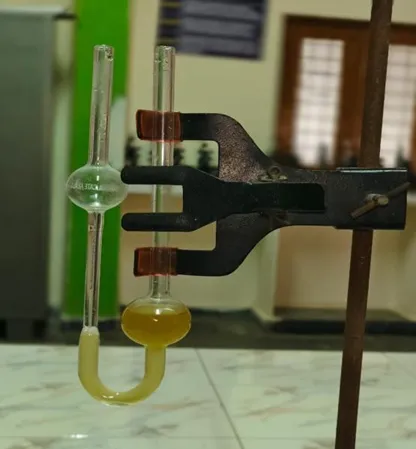
Viscosity is a critical parameter influencing the spreadability, penetration, and user acceptability of the herbal hair oil. The viscosity of the formulation was measured using a Brookfield viscometer at room temperature (25 ± 2°C). An appropriate spindle was selected, and the oil sample was placed in the sample container. The spindle was immersed up to the marked level, and readings were taken at a fixed rotational speed. Measurements were performed in triplicate, and the mean viscosity value was reported in centipoise (cP). (9,10)
5.3 Determination of Acid Value
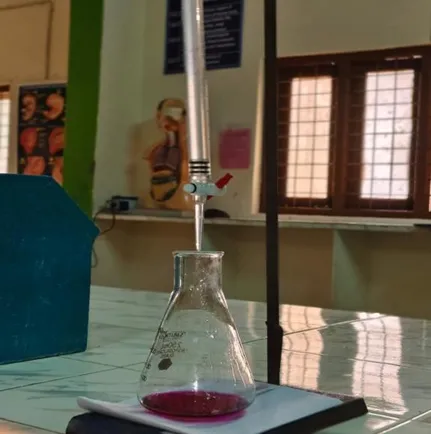
The acid value indicates the amount of free fatty acids present in the oil and serves as a measure of hydrolytic rancidity. A known quantity of herbal hair oil was dissolved in a mixture of ethanol and ether. The solution was titrated against 0.1 N potassium hydroxide using phenolphthalein as an indicator until a faint pink color persisted. The acid value was calculated using the standard formula:
Acid value = (Volume of KOH × Normality × 56.1) / Weight of sample Lower acid values indicate better quality and stability of the oil. (11)
5.4 Determination of Saponification Value
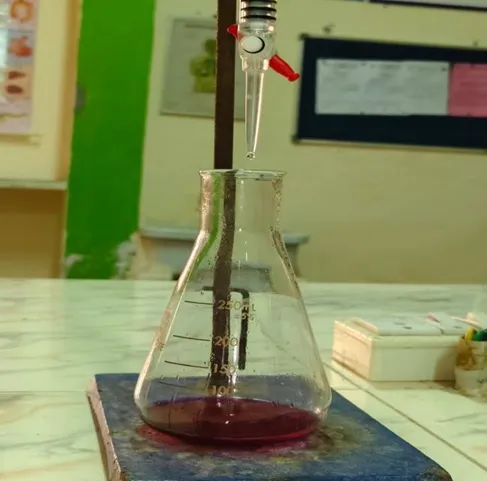
Saponification value provides information about the average molecular weight of fatty acids present in the oil. A known quantity of the herbal hair oil was refluxed with alcoholic potassium hydroxide for a specified time. The excess alkali was then titrated with standard hydrochloric acid using phenolphthalein as an indicator. The saponification value was calculated using standard equations and expressed as mg of KOH required to saponify one gram of oil. (12,13)
5.5 Skin Irritation Test
The skin irritation test was conducted on healthy human volunteers or suitable animal models after obtaining ethical approval. The formulation was applied to a small area of skin and observed for redness, itching, or inflammation for 24–48 hours.
5.6 Stability Studies
The herbal hair oil was subjected to accelerated stability studies by storing samples at different temperatures (room temperature, 40°C ± 2°C, and refrigeration). Samples were evaluated periodically for changes in colour, odour, pH, viscosity, and phase separation. (14,15)
6. Results
1. The organic poly herbal hair oil is one of the well-recognized hair treatments. The oil not only moisturises scalp but also reverse the condition of dry scalp and dry hair conditions. The oil provides numerous essential nutrients required to maintain the normal function of sebaceous glands and promotes hair growth naturally. In this dissertation, two hair oils were enriched using various herbal extracts of amla, aloe, castor oil, coconut oil, onion, curry leaves,fenugreek, hibiscus leaves and flowers, black seeds, neem and rosemary oil, vitamin E and evaluated so as to choose the best.
2. Formulation (F1) was prepared using coconut oil, castor oil which is less viscous and has a burning point of 200 degree Celsius approximately, All the mentioned ingredients were bound to extraction and their active constituents were mixed with the oil. By the phytochemical evaluations performed, it is observed that all the phytochemical constituents have remained intact, except starch.
3. Formulation (F2) was prepared using castossr oil purchased from local market. It is slightly viscous than pure coconut oil (F1). After performing phytochemical evaluations, it is observed that proteins, starch, flavonoids and triterpenoids were absent.
Various evaluation parameters like colour, odour, skin sensitivity, viscosity, pH, primary skin irritation, acid value, saponification value were performed on all the formulations.
Table 1 : Physical Evaluation of Herbal Hair oil
|
SI.NO |
EVALUATION PARAMETER |
F1 |
F2 |
|
1 |
Colour |
Greenish brown |
Light greenish brown |
|
2 |
Odour |
Characteristic |
Characteristic |
|
3 |
Texture |
Smooth, non -gritty |
Smooth, non- gritty |
|
4 |
Spread ability |
Excellent |
Good |
|
5 |
pH |
4 |
6.5 |
|
6 |
Viscosity |
0.685 poise |
0.75 poise |
|
7 |
Acid value |
1.26 |
2.97 |
|
8 |
Saponification value |
210 |
228 |
|
9 |
Skin irritation test |
No irritation |
No irritation |
|
10 |
Skin sensitivity test |
No irritation |
No irritation |
|
11 |
Stability test |
Stable |
Stable |
By the results of evaluation, it is confirmed that formulation F1 is effective as it is less viscous, has excellent spread ability, and has expected values for viscosity, acid value, saponification value and other parameters.
DISCUSSION
The discussion emphasizes the comparative performance of two organic polyherbal hair oil formulations developed for scalp nourishment and hair growth. Both F1 and F2 showed acceptable organoleptic properties, stability, and skin safety; however, F1 demonstrated superior phytochemical retention and physicochemical characteristics. The coconut and castor oil–based F1 exhibited the presence of most key phytoconstituents, lower viscosity, excellent spread ability, lower acid value, and a scalp-friendly acidic pH, indicating better extraction efficiency and formulation quality. In contrast, F2 showed the absence of several important phytochemicals and comparatively higher viscosity and acid value. Overall, the results confirm that F1 is the more effective and optimized formulation, offering better stability, bioactive integrity, and consumer acceptability as a natural herbal hair oil.
CONCLUSION
The present study reports the systematic formulation and evaluation of a polyherbal hair oil using traditionally valued medicinal plants incorporated into a coconut and castor oil base. Cloth pouch and direct extraction methods were employed to obtain bioactive phytoconstituents while ensuring formulation clarity and stability. Controlled processing conditions helped preserve thermolabile constituents and enhance therapeutic efficacy. Organoleptic evaluation indicated acceptable colour, pleasant odour, good clarity, and smooth consistency, suggesting high consumer acceptability .Physicochemical parameters such as pH, viscosity, specific gravity, refractive index, acid value, saponification value, peroxide value, and moisture content were within acceptable limits, confirming product quality and purity. Skin irritation studies demonstrated formulation safety, while stability studies confirmed resistance to degradation under varied storage conditions. The findings emphasize the importance of systematic formulation and comprehensive evaluation for standardization and quality assurance. Overall, the study supports herbal hair oils as safe, effective, and sustainable alternatives to synthetic hair care products for maintaining scalp health and improving hair quality.
REFERENCES

Dr. Aruna B, G. Pranitha, M. Manasa, V. Mamatha, S. Umar Farooq, M. Shafiul Mujnabeen, Formulation and Evaluation of Herbal Hair oil for Enhance Hair Growth Activity, Int. J. of PDr. Aruna B, G. Pranitha, M. Manasa, V. Mamatha, S. Umar Farooq, M. Shafiul Mujnabeen, Formulation and Evaluation of Herbal Hair oil for Enhance Hair Growth Activity, Int. J. of Pharm. Sci., 2026, Vol 4, Issue 7, 2244-2254, https://doi.org/10.5281/zenodo.21305163harm. Sci., 2026, Vol 4, Issue 7, 2244-2254, https://doi.org/10.5281/zenodo.21305163
 10.5281/zenodo.21305163