

We use cookies to ensure our website works properly and to personalise your experience. Cookies policy
Department of Pharmacy, Mahadev Kanchan College of Pharmaceutical Education and Research, Dr. Babasaheb Ambedkar Technological University, Lonere, Maharashtra, India.
Individuals with urea cycle diseases, such as ornithine transcarbamylase (OTD) deficiency, should not use DEET-based insect repellents since they have been demonstrated to be somewhat dangerous. The need for natural mosquito repellents that are affordable, effective, non-toxic, environmentally friendly, and biodegradable is growing as a result of these circumstances. Motivated by the impending worldwide demand, essential oils from Cymbopogon nardus (Citronella Grass), Cymbopogon citratus (Lemon Grass), Eucalyptus globules (Tasmanian blue gum or simply blue gum), and Azadirachta indica (Neem Tree) were used to create a carbopol 940-based mosquito repellent cream formulation. The oils were then assessed for appearance, pH, viscosity, spreadability, extrudability, swelling index, and accelerated studies
The American Mosquito Control Association states that mosquito control is traditionally divided into two areas of responsibility: public and individual. Mosquitoes are the vectors that spread various deadly human diseases, including malaria, Japanese encephalitis, dengue, filariasis, and yellow fever. It has been reported that mosquitoes alone are responsible for the transmission of diseases to over 700 million people and cause over 1 million deaths annually worldwide. yellow fever, filariasis, dengue, and Japanese encephalitis. According to reports, mosquitoes alone are the vectors that spread illnesses to over 700 million people worldwide and result in over a million fatalities each year. The American Mosquito Control Association states that there are two traditional areas of duty for controlling mosquitoes: public and private. Usually, it is carried outPesticide law defines a pesticide as any substance or mixture of substances intended for preventing, destroying, repelling, or mitigating any pest. It is based on the Integrated Mosquito Management concept, which is based on social, ecological, and economic criteria, a key criterion that typically integrates multidisciplinary methodologies into pest management strategies to effectively protect public health and the environment and improve the quality of life. Its foundation is social, ecological, and economic criteria, which usually incorporate interdisciplinary approaches. into pest control techniques to successfully safeguard the environment, public health, and quality of life. Any compound or combination of substances designed to prevent, eradicate, repel, or mitigate any pest is considered a pesticide under pesticide legislation.
Different kinds of insect repellents include:
a. Skin treatment (cream, gel, patch, etc.)
b. Clip-on items usually feature a repellent-filled pad and a fan or other device that spreads the repellent close to the user.
c. Spatial repellents: To spread repellent, they use a heating mechanism. Lanterns, torches, table-top diffusers, candles, and coils are common examples of distribution techniques for spatial repellents.
Due to the lack of vaccines, effective medications, and the emergence of resistant viruses or vectors, mosquito repellents are precisely a proactive step in this field. Because they are inexpensive, they are an effective way to prevent this mosquito-borne disease. Due to the likely risk of the emergence of highly resistant vectors, extensive research on mosquito control is still ongoing. The main research programs concentrate on the development of mosquito repellent from natural sources because synthetic chemical compounds pose a risk to the environment. Because it is inexpensive. They are an efficient means of preventing this disease spread by mosquitoes. Due to the potential for the evolution of highly resistant vectors, much research on mosquito control is still ongoing. The production of mosquito repellent from natural sources is the main focus of research projects since manmade chemical compounds are harmful to the environment. Citronella Oil, Eucalyptus, Clove Oil, Neem Oil are often used essential oils (EOs) in commercial mosquito repellent formulations. Essential oils (EOs) from plants are natural sources for the majority of the repellent's active chemicals. The active components in plant essential oils have the ability to repel mosquitoes. EOs that are often utilized in marketing formulations that repel mosquitoes include eucalyptus oil and citronella oil.
Herbal formulations:
The WHO defines herbs as plant materials that can be utilized in formulations to create a finished product, whether they are fresh, dried, fragmented, or powdered.
The WHO defines herbs as plant components that can be employed in formulations to create final products, whether they are fresh, dried, fractured, or powdered.goods made from plants that have medicinal properties and other health advantages are known as herbal goods. Herbal preparations are thought to be more strong since they are made by removing active ingredients from the biological sources of herbal plants. have much less adverse effects than any other synthetic chemical medicines, which is why demand for herbal remedies is rising globally.
These days, contemporary pharmaceutical corporations produce and synthesize herbal remedies in various dosage forms, which are then offered in pharmaceutical marketplaces worldwide for the purpose of healing ailments and improving human health.
The pharmaceutical industry offers a variety of herbal goods to treat various illnesses and improve public health, including:
1. Hair Oil with Herbs.
2. Creams made from herbs.
3. Gels of herbs.
4. Preparations of herbal aerosols, etc.
Herbal Creams:
Herbal creams are characterized as semisolid preparations made of an emulsion system that are typically applied to the skin. These preparations consist of an oil and water emulsion. O/W (oil in water) and W/O (water in oil) are the two categories. Herbal extracts are used to make herbal creams that protect the skin, improve its appearance, and treat illnesses. Herbal creams are made for a variety of uses, such as cold cream, cleaning cream, disappearing cream, and insect repellent cream.
Mosquito repellent:
Cream is made from the extraction of active ingredients with mosquito repelling action from biological sources of plants. Mosquitoes are one of the most unsettling insects that affect humans by sucking blood, which frequently causes itching, redness, and occasionally even leaves bumps due to the mosquito's saliva and spreading various major diseases like Dengue, Yellow fever, Chickenpox and Malaria, among others.
Mosquitoes are among the most unsettling insects that may harm humans by sucking blood, which frequently results in itching, redness, and occasionally even lumps on the skin owing to the saliva of mosquito and dispersing a number of serious illnesses, including malaria, dengue, yellow fever, and chikungunya. Creams that repel mosquitoes are made by extracting active ingredients from biological plant sources.
The composition for the herbal mosquito repellent cream is designed to give it a long-lasting effect because it must stay on the skin for a long time in order to be as effective as possible.a move. Mosquitoes use the smells that their prey releases to identify them. The mixture used in herbal mosquito repellent lotion covers the many bodily odours that human skin releases, making them nearly undetectable to harmful insects.
Skin Physiology:
Skin is the heaviest organ in the body and a multi-layered organ made up of many histological layers, including the stratum corneum, stratum lucidum, stratum granulosum, stratum spinosum, and the stratum germinativm. It is thought to be the most important layer for topical drug delivery because it is made up of five parts of epidermis microscopic sections. The skin, which incorporates the mucosal linings of the respiratory, digestive, and other organs, is thought to be the biggest organ in the human body. urinogenital tract to create a tight internal structure that keeps it apart from the outside world. The skin, which is made up of several histological layers, is the heaviest organ in the body. The epidermis, dermis, and hypodermis layers are the three main layers that are often characterized. The stratum corneum, stratum lucidum, stratum granulosum, stratum spinosum, and the stratum germinativm are the five microscopic portions that make up the epidermis, which is thought to be the most crucial layer for topical medication administration.
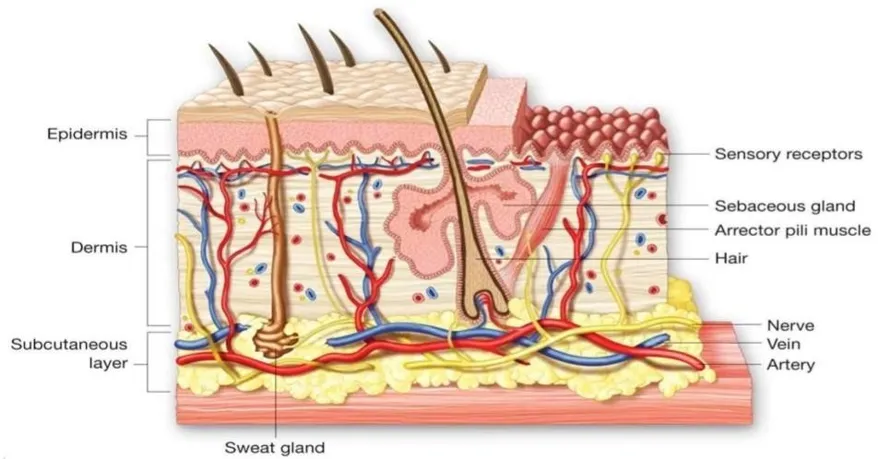
Figure: Schematic diagram of skin.
Epidermis:
The epidermis is the uppermost layer of skin that is made up of epithelial cells and lacks blood vessels. Its primary purpose is to protect the skin, maintain haemostasis, and allow the skin to absorb nutrients. Keratinocytes are the primary cell in the epidermis that makes keratin, a fibrous substance that shields the skin; melanocytes, Merkel cells, and Langerhans cells are all found in the epidermis.
Dermis:
The dermis is the layer of skin that lies in between the epidermis and the hypodermis.
It is made up of thick, irregular collagen and elastin connective tissues, which provide the integuments flexibility and stretching. The dermis layer gives the integuments elasticity, enabling stretching and flexibility.
Hypodermis:
The hypodermis, which is the layer immediately after the dermis and mostly aids in fat storage, connects the skin to fibrous tissue. It is made up of loose, areolar connective tissues, and adipose tissue serves as an insulator and a cushion for the integument.
Adipocytes, which are fat-storing cells that aid in providing an energy reserve, are primarily managed by the hypodermis.
Topical medication administration:
The topical drug delivery method is acknowledged as an efficient and effective way to deliver drugs to the skin, making it much superior to any other traditional drug administration route. therapy for conditions related to the skin. The purpose of transdermal products is to guarantee that medications enter the body and reach the intended location. Because it is limited to the use of pharmaceutical formulations comprising drugs that are designed to act on the skin with the goal of limiting the formulation's impact to the skin's surface. Topical drug delivery makes it simple to administer medications in a variety of ways depending on the needs and formulations.Topical pharmacological preparations come in a variety of forms, such as cream, lotion, gel, ointment, patches, powder, tinctures, and more. Intra-cutaneous penetration and deposition are not necessarily necessary for topical action. Intra-cutaneous penetration and deposition are not usually necessary for the topical action.
Basically the topical drug delivery includes two types of products:
1. The topical formulations are unique in that they are made for external use and may be administered to the skin by dispersing, covering, or shielding the afflicted region on cutaneous tissues.
2. In addition to being used externally, topical medications are manufactured for internal usage to treat disorders in specific locations. They are often administered to the mucosal membrane either virginally or for local action to the anorectal tissues.
Classification of Topical dosage forms:
Solid, liquid, and semisolid are the three broad categories into which topical dose forms are divided. Topical formulations are designed to apply medication to the afflicted region. where it must be reached.
Topical dose forms are designed to be conveniently accessible to the site of action by taking into account the physiology of the skin in the afflicted region.
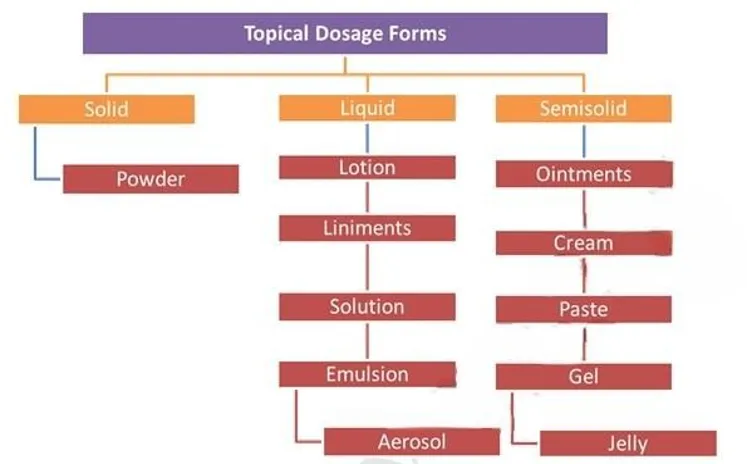
Advantages of Topical drug delivery system:
1. Topical medication administration is practical and simple to use.
2. The drug's dosage may be readily adjusted to suit the patient's needs and preferences.
3. Frequent little dosages can readily attain the necessary effectiveness.
4. It is possible to stop taking medication at any moment.
5. The topical method offers a greater surface area for medicines than the buccal and nasal cavities.
6. It is feasible to provide medication at a precise location.
7. It is possible to prevent gastrointestinal incompatibility.
8. Patient compliance is enhanced by topical administration.
9. The topical method is suitable for self-medication.
Disadvantages of Topical drug delivery
1. Topical medication administration may result in hypersensitivity reactions. likelihood of an allergic response.
2. Enzymes found in the epidermis have the ability to denature drugs and alter their characteristics.
3. Large-particle drugs are not appropriate for topical administration.
Disease profile:
Many disease-causing viruses may be spread to humans by the bite of an infected mosquito. While not all mosquito vectors spread viral infections, female mosquitoes often carry the agents that infect humans and cause a variety of illnesses, including Chikungunya. Yellow fever, Zika, and dengue.
The most efficient approach to eradicate these harmful illnesses is to manage the mosquitoes in the surrounding area by learning about their life cycle, recognizing the kinds of mosquitoes that are there, and employing the most effective techniques to keep them away.
Identifying mosquitoes:
In general, mature mosquitoes are tiny, have two wings, and have lengthy legs. These three traits set them apart from other pests.
1. They have several segmented antennas that are long.
2. They have a mouthpart system that involves piercing and sucking.
Life cycle of Mosquitoes:
The four unique phases of a mosquito's life cycle are egg, larva, pupa, and adult.
Mosquito-borne diseases:
Mosquitoes can either directly or indirectly damage humans and animals. They feed on the blood of humans, animals, and other vertebrates, which can be bothersome and disturb people while they are outside. Mosquito bites frequently result in minor allergic reactions.
Even in animals like dogs and cats, their bite can spread disease-causing pathogens. In humid regions, this paracytic round worm can cause serious symptoms like coughing, fainting, weight loss, and congestive heart failure. The indirect effects can be more dangerous.
More than any other insect, mosquitoes have a global impact on human and animal health because their bites spread a variety of infectious pathogens that cause illnesses like:
Encephalitis:
The term "encephalitis" refers to an inflammation of the brain that is often brought on by specific viruses, some of which are spread by mosquitoes. The virus is spread from bird to mosquito to human. The severity of encephalitis varies from moderate to severe. Severe sickness can result in death or long-term central nervous system damage.
Symptoms: Encephalitis symptoms includes.
? High temperature
? Convulsions
? Delirium
? And other issues with the central nervous system.
When someone has these symptoms, they seek medical attention right away.
Malaria:
Human malaria is a potentially fatal disease that is spread by female Anopheles mosquitoes and can be either acute or chronic. The parasites that cause malaria are members of the Plasmodium genus. The parasite enters the human body through the infected mosquito and multiplies within the host. liver and subsequently kills the host's red blood cells.
Symptoms: The symptoms of malaria are similar to those of the flu, and because they are so prevalent, people often misinterpret them, which can delay the diagnosis and treatment of malaria.
? A feeling of coldness and shivering
? Headache, fever, and nausea. Younger individuals can occasionally have seizures. Thirst, fatigue
? perspiration Breathing difficulties
? repeated convulsions
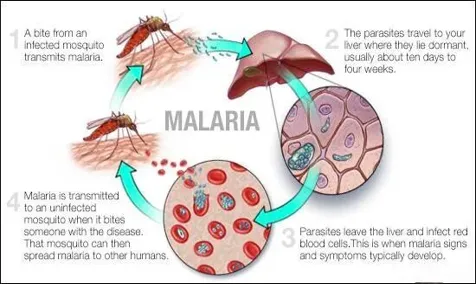
Figure: Malaria
Dengue:
Dengue is a deadly disease spread by mosquitoes that is caused by the dengue virus. When an aedes mosquito bites a human, it spreads the virus through their blood. There is no direct transmission of the dengue virus from person to person. The grave
Dengue hemorrhagic fever is the name given to the dengue illness.
Symptoms: The dengue symptoms are painful as it causes sever fever and other seriousproblems.
? An intense headache
? severe muscular and joint ache
? Nausea
? Pain behind the eyes
? vomiting.
? A sudden, high fever.
? Fatigue Skin rashes arise after the beginning of fever.
? Easy bruising, gum bleeding, or mild nasal bleeding.
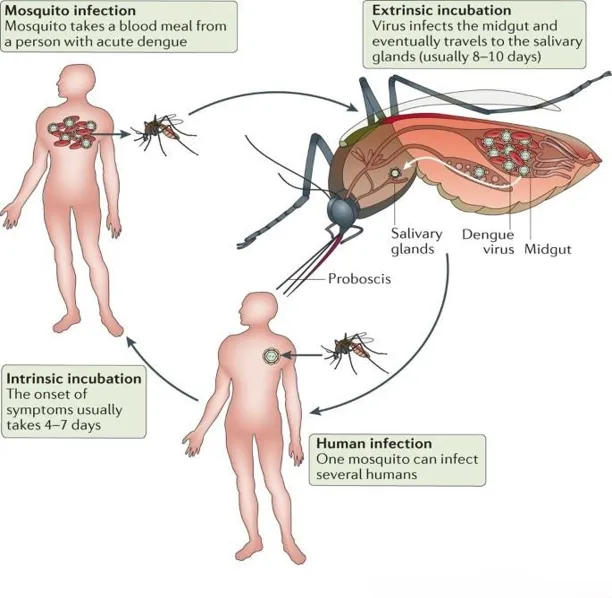
Figure: Dengue
Chikungunya:
Mosquitoes, particularly Aedes aegypti and albopictus mosquitoes, can also spread the chikungunya virus to humans. Since there is currently no vaccination to prevent mosquito bites, we should take precautions such using
When traveling outside, apply insect repellent lotion, cover your entire body with sleeves, and utilize air conditioning if you're going to a country where the chikungunya virus is prevalent.
Symptoms
? Fever, joint pain
? Discomfort, headache
? Muscle soreness
? Rashes and edema in the joints
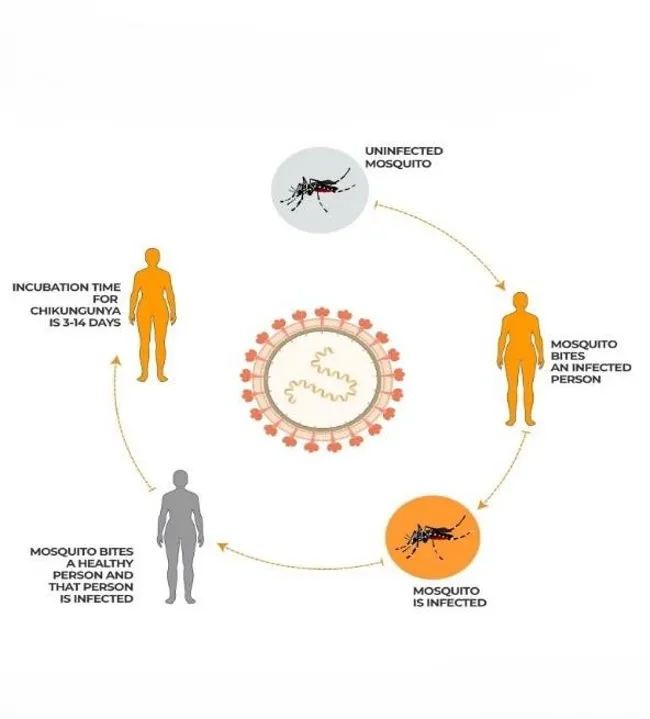
Figure: Chikungunya
Literature Review:
Table no.: 1
|
Sr no. |
Title |
Author Name |
Discription |
|
1 |
Formulation and Evaluation of Controlled Release Herbal Mosquito Repellent Gel Containing Encapsulated Essential Oils Obtained from Natural Sources Indigenous to Northeast India |
Nayanmoni Boruah, etal(2019). |
Systematic review of information |
|
2 |
Development and Evaluation of Poly Herbal Mosquito RepellentCream from Marigold Flower |
Sanjit Singh*, et al (2023). |
Information about disease and human skin |
|
3 |
Formulation and Evaluation of Herbal Mosquito Repellent Cream |
Prashant Jatkar1*, et al (2024). |
Information about active ingredients |
|
4 |
Formulation and evaluation of mosquito repellent ointment prepared with the essential oil of Zanthoxylum acanthopodium DC. Indigenous to Northeast India |
Monawara Begum1, et al (2018). |
Referring information about the repellent base |
|
5 |
Formulation and evaluation of eco-friendly handmade herbal mosquito repellent cone |
Virendra Kumar Singh1, et al (2022). |
Selecting the Suitable Ingredients |
Aim and Objective:
Aim: To Formulate and evaluate herbal Mosquito Repellent Ointment.
Objectives:
? To formulate herbal mosquito repellent cream/ointment using natural plant-based ingredients.
? To evaluate the mosquito repellent activity of the prepared herbal cream/ointment.
? To study the physiochemical properties of the formulation such as appearance, consistency, spread-ability, and ph.
? To prepare safe and skin-friendly alternative to synthetic mosquito repellents.
? To incorporate research-based herbal ingredients like lemon and eucalyptus oil and vanillin for enhanced mosquito repellent effect.
Plan of Work:
Collection of essential natural oils.

Selection of Aqueous Phase.

Selection of Proper Methodology.

Evaluation and formulated mosquito repellent ointment.
MATERIAL AND METHODS:
Materials Required:
1. Eucalyptus
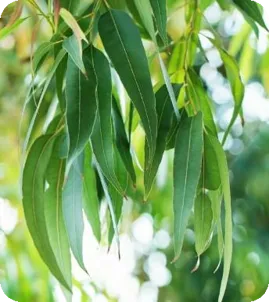
Family: Myrtaceae
Synonym: Blue Gum, Tasmanian Blue Gum, Fever Tree
Biological Source: Dried mature leaves of Eucalyptus globulus Labillardiere.
2. Lemon Grass
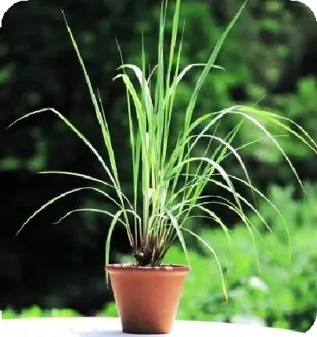
Family: Poaceae (Gramineae)
Synonyms:Andropogon citratus DC, Andropogon ceriferus Hack, Cymbopogon nardus var. citratus, Andropogon flexuosus Nees ex Steud
Biological Source: The fresh or partially dried aerial parts, leaves, and essential oil of Cymbopogon citratus (DC.) Stapf (West Indian lemongrass) or Cymbopogon flexuosus (Nees ex Steud.) W.Watson (East Indian lemongrass).
3. Neem
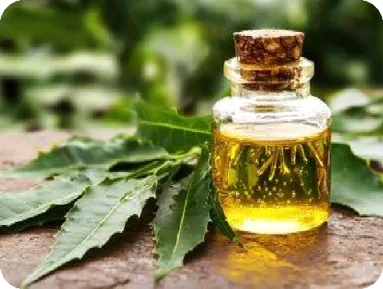
Family: Meliaceae (Mahogany family).
Synonyms:Melia azadirachta L, Melia indica (A. Juss.) Brandis, Azadirachta
indica var. siamensis Valeton, Common names: Margosa, Indian Lilac, Nimtree, Nim, Holy tree.
Biological Source:It is obtained from fully matured seeds of Azadirachta indica Linn.
4. Clove
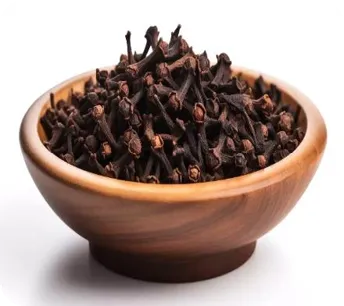
Family: Myrtaceae (Myrtle family).
Synonyms:Eugenia caryophyllata Thunb, Eugenia aromatica (L.) Baill,Caryophyllus aromaticus L.
Biological Source: It consists of the dried flower buds of Syzygium aromaticum (L.) Merr. & L.M.Perry (synonym Eugenia caryophyllata Thunb.).
5. Lavender
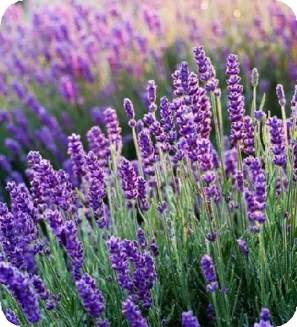
Family: Lamiaceae (Labiatae / Mint family).
Synonyms:Lavandula officinalis Chaix, Lavandula vera DC, Lavandula spica L. (in part). Biological Source: It consists of the fresh flowering tops, dried flowers, and essential oil of Lavandula angustifolia Mill. (commonly known as English lavender or true lavender).
Ingredients:
Table no.: 2
|
Ingredients |
Quantity |
Role |
|
Lemon Grass Oil |
2ml |
Natural mosquito repellent due to strong aroma and citral content |
|
Eucalyptus Oil |
1ml |
Research based long lasting mosquito repellent |
|
Lemon Oil |
1ml |
Research based long lasting mosquito repellent |
|
Neem Oil |
3ml |
Mosquito repellent and antimicrobial agent |
|
Clove Oil |
1ml |
Provides insecticidal and repellent action because eugenol |
|
Lavender Oil |
1ml |
Mild mosquito repellent and provides pleasant fragrance |
|
Vanillin (if needed) |
0.5mg |
Fixative increase duration of mosquito repellent activity |
|
Coconut Oil |
15ml |
Acts as ointment base and carrier oil for herbal ingredients |
|
Beeswax |
6g |
Thickening agent gives semi-solid ointment consistency |
|
Stearic Acid |
3g |
Helps in making aqueous Phase |
|
Aloe Vera Gel |
20g |
To getting cooling effect to the skin and good for skin health |
|
Glycerine |
4ml |
Helps in making aqueous phase |
|
Distilled Water |
25ml |
Helps in making aqueous phase |
|
Vitamin E |
0.5ml |
Antioxidant and skin-conditioning agent |
(The quantity of ingredient measured by the 100g batch)
Method of Preparation:
Step1: Preparation of Oil Phase(A)
o Take beeswax + Stearic Acid + Coconut oil in a clean beaker.
o Heat using a water bath at around 65-70oc.
o Stir until everything completely melt and forms a uniform liquid.
Step2: Preparation of Aqueous Phase(B)
o In another beaker, take distilled water + glycerine + aloe-vera gel.
o Heat this mixture also at 65-70oc.
o Stir properly to get a uniform solution.
Important: Both phases should be at same temperature to form a stable cream.
Step3: Emulsification
o Slowly add aqueous phase(B) into oil phase (A).
o Stir continuously using: (Glass / mechanical stirrer)
o Continue stirring until a smooth, creamy emulsion forms.
Step4: Cooling Phase
o Allow the mixture to cool down gradually.
o Keep stirring to avoid separation.
o Bring temperature down to 40oc
Step 5: Addition of active Herbal Ingredients Phase(C) (Add only after cooling to protect volatile compounds) Add:
o Lemon Grass Oil
o Neem Oil
o Lemon Oil
o Eucalyptus Oil
o Clove Oil
o Lavender Oil
o Vanillin (Pre-dissolved if needed)
(Mix thoroughly to ensure uniform distribution)
Step6: Final Additives Phase(D)
o Add Vitamin E
o Stir Gently
Evaluation Test for Herbal Mosquito Repellent Ointment:
Organoleptic Evaluation of Herbal Mosquito Repellent Ointment
Table no.:3
|
Sr no. |
Parameters |
Result |
|
1 |
Colour |
Pale Yellow |
|
2 |
Odour |
Pleasant |
|
3 |
Appearance |
Ointment |
|
4 |
Texture |
Fine |
Physiochemical Evaluation of Herbal Mosquito Repellent Ointment
Table no.: 4
|
Sr no. |
Parameters |
Results |
|
1 |
PH |
7 |
|
2 |
Moisture content |
Normal |
|
3 |
Solubility |
Easy to Soluble |
|
4 |
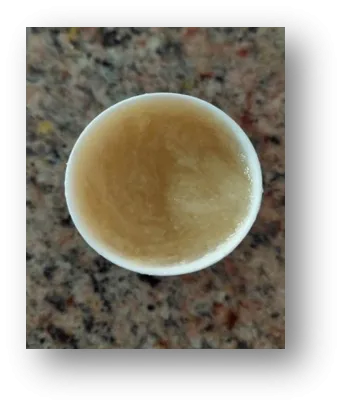
Mosquito repellent test |
Simply selecting human volunteers |
Observation Table:
Table no.: 5
|
Sr no. |
Areas |
Report given by people |
Remarks |
|
1 |
Laboratory corners |
No irritants, Mosquito escaped |
Mosquito are repelled |
|
2 |
Departments Premises |
No irritation, Mosquito escaped |
Mosquito are repelled |
|
3 |
Cafeteria |
No irritation, Mosquito escaped |
Mosquito are repelled |
RESULT
Natural herbal oils and an oleaginous base were effectively used to create a smooth, uniform herbal insect repellent ointment. The produced ointment had a pleasing smell, decent consistency, and adequate spread-ability. It was discovered that the formulation was easy to put on the skin and stable without phase separation. The inclusion of herbal components including clove oil, neem oil, lemon eucalyptus oil, and lemongrass oil helped to effectively repel mosquitoes. The ointment was found to be acceptable for topical use and to be skin-friendly.
DISCUSSION
An oleaginous foundation and natural plant-based substances were used to effectively create the herbal mosquito repellent ointment. The formulation had a pleasant look, a smooth texture, and adequate spread-ability. Coconut oil and beeswax improved the formulation's adhesion to the skin and gave the ointment a proper consistency.Because of their well-known antibacterial and mosquito-repelling qualities, herbal oils like lavender, neem, clove, lemon eucalyptus, and lemongrass were chosen. Clove oil, which contains eugenol, and lemon eucalyptus oil, which contains PMD, were added as research-based components to increase repellent efficacy and duration of action. As a fixative, vanillin was used to slow down the quick evaporation of volatile oils and extend their ability to repel mosquitoes.The prepared ointment provided a nice herbal scent and stayed stable without phase separation. The finished product had the qualities of an ointment rather than a cream since the formulation mostly consisted of oily ingredients and had no aqueous phase. When used topically, the composition could be a safer and natural substitute for synthetic insect repellents.
CONCLUSION
The current study found that natural plant-based substances including lemongrass oil, lemon eucalyptus oil, neem oil, clove oil, and lavender oil may be used to successfully manufacture a herbal insect repellent ointment. Good consistency, adequate spread-ability, stability, and a nice odour were all displayed by the created mixture. The efficacy and longevity of mosquito repellent activities were improved by the addition of research-based components including vanillin and PMD-rich lemon eucalyptus oil. It was discovered that the ointment was skin-friendly and might be a natural, affordable, and safe substitute for artificial insect repellents.
REFERENCES
Herbal mosquito repellents. Journal of Scientific Research in Pharmacy, 1(2), 82–84.
Herbal mosquito repellents. Journal of Scientific Research in Pharmacy, 1(2), 82–84.


Hrishikesh Awasare, Nitin Gawai, Disha Wadave, Formulation And Evaluation of Herbal Mosquito Repellent Ointment, Int. J. of Pharm. Sci., 2026, Vol 4, Issue 9, 927-941, https://doi.org/10.5281/zenodo.22673997
 10.5281/zenodo.22673997