

We use cookies to ensure our website works properly and to personalise your experience. Cookies policy
Djps college of pharmacy, pohetakali dist parbhani
The formulated herbal mouthwash showed promising results in terms of safety, stability, and antimicrobial effectiveness. It gives antimicrobial and anti- inflammatory action, making the formulation suitable for maintaining oral hygiene and preventing dental issues such as gingivitis, plaque, and bad breath. The evaluation results confirmed that the mouthwash remained physically stable, The physicochemical evaluation results confirm that the colour and odour of present herbal formulation is acceptable with a pleasant odour and better after effects, acceptable pH, good viscosity & foamability ,less turbidity and showed no microbial contamination. The result of zone of inhibition also confirmed that this herbal mouth rinses was found to be potent plaque inhibitor, and were preferred by the patient for its taste. The findings support the use of herbal mouthwash as a cost effective, natural, and safer alternative to chemically formulated commercial mouthwashes that may cause side effects such as staining, irritation, or taste alteration. Person can easily rinses his mouth using this herbal mouthwash and stay clear of wide variety of oral health issues. Thus, the study concludes that herbal mouthwash can be an effective natural oral care product, especially for individuals seeking chemical -free options.
Mouthwash is a simple, flavored, coloredsolution that is aimed to refresh the breath by swishing the product around the mouth, followed by spitting it out. Similar to Mouthwash it may also have additional benefits such as prevention against tooth decay, gingivitis, plaque formation or tartar formation. Mouthwashes, exclusively for bad breathe and refresh the mouth. Herbal mouthwashes have hydrogen peroxide and chlorhexidine which produce discoloration of teeth and side effects and also they are effective. Good oral hygiene is a vital for overall well-being, and mouthwash is an important component of this practice. While many conventional mouthwashes utilize antiseptic to manage plaque buildup,they frequently include artificial preservative, alcohol and synthetic flavors. In contrast herbal mouthwashes provide a natural and effective means of combating oral bacteria without adverse side effect. Herbal mouthwash is formulated with powerful plant derived ingredients recognized for their antimicrobial, anti-inflammatory, and analgesic effect. Unlike their chemical counter parts, herbal formulation operate, gently and effectively, diminishing plaque, gingivitis, and unpleasant breath while enhancing gum health. A significant benefit of herbal mouthwash is its alcohol-free formulation, rendering it a safer and gentler choice for everyday use. Mouthwash, mouth rinse , or mouth bath passively or skilled around the mouth by contraction of the personal muscles and / or movement of the head , and may be gargled where the head is tilted back and the liquid bubbled at the back of the mouth .usually mouthwashes are antiseptic solution intended to reduce the microbial load in the mouth, although other mouthwashes might be given for other reasons such as for their analgesic , anti-inflammatory or antifungal action.additionaly some rinses act as saliva substitutes to neutralize acid and keep the mouth moist in xerostomia ( dry mouth) .cosmetic mouth rinses temporarily control or reduce bad breath and leave the mouth with a pleasant taste. Herbal mouth washes are in high demand , because they act on oral pathogens and relieve the pain instantly and are also less side- effective. Chemical mouthwashes have hydrogen peroxide and chlorhexidine as an immediate whitener, sterilizer and pain reliever of teeth, buy they tend to produce decoration of teeth and may produce side effect, meanwhile they are cost effective. One of the most common infectious diseasencountered by many individual is dental carries and periodontal diseases at different stages of their life time. The mouth Washes are concentrated aqueous anti-bacterial solution that are used against oral microbes to counter oral infection, cleansing, to get rid of bad breath refreshing, anti- septic . The mouthwash plants an prominent role in the oral hygiene of an individual, it help to relieve symptoms of inflamed gums gingivitis and also it reliable used to destruct the pathogenic germs. The mouth washes are used by most of the dental patient to overcome sour mouth (xerostomia) , underrated throat and sensitive teeth .Dentists always use mouthwash as an antimicrobial agent before oral surgery of the patient, because they help to sterile the surface of the inflamed gums and teeth, thereby the contamination of any other microorganisms can be avoided.
Herbal mouthwash
Herbal mouth washes are mouthwashes which are prepared from natural plant extract. The natural extract present in herbal mouth washes are obtained from various plant leaves, fruits, seeds and various tree oils why should we prefer herbal mouthwash? Herbal mouthwashes are high in demand, because they act on oral pathogens and relive the pain instantly and are also fewer side effects. Chemical mouthwashes have hydrogen peroxide and chlorhexidine as animmidiate whitener, sterilizer and pain reliever of teeth, but they tend to produce discoloration of teeth and may produce side effect, meanwhile they are cost effective
Benefits of herbal mouthwash
Unlike chemical mouthwash, herbal mouthwash does not cause dry mouth
Goal of herbal mouthwash
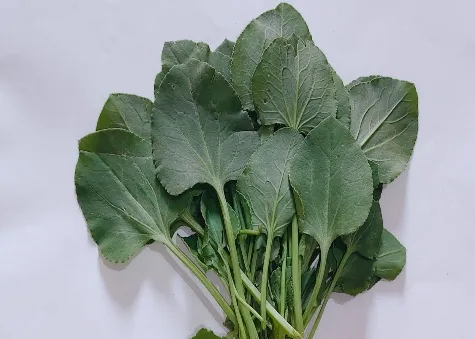
Fig .no1. RumexVesicarius
Material and method
List of Instruments& glassware used
|
Sr. No |
Name |
|
1 |
Digital pH-Meter |
|
2 |
Digital Balance |
|
3 |
Stability Chamber |
|
5 |
Autoclave |
|
6 |
Incubator |
|
7 |
Hot air oven |
|
8 |
Soxhlet apparatus |
|
9 |
Mortor and pestle |
|
10 |
Petri dish |
|
11 |
Measuring cylinder |
Extraction Process
Use young to medium-mature leaves (4-6 inches long, vibrant green)
Avoid very old or yellow leaves.
Wash thoroughly to remove dirt and surface microbes.
Shade dry at room temperature for 5-7 days.
Do not sun dry or oven dry at high temperature as it degrades sensitive compounds.
Turn leaves occasionally to ensure uniform drying.
Grind dried leaves into coarse or fine powder using grinder or mortar -pestle.
Sieve through mesh (e.g. #40) to ensure uniform size.
Use Soxhet extraction & ethanol was used as solvent for 24 hours
Store in amber glass bottles to protect from light.
Keep refrigerated at 2-8°C.
Add natural preservatives if long-term storage is needed (e.g., sodium benzoate 0.1%, citric acid 0.05%).
You need 5 ml of guava leaf extract for one formulation extraction Yield Assumption:
On average, 10 grams of dried guava leaves yield about 5 ml of extract using ethanol/water maceration (a 50% w/v extract yield).
This assumes moderately young, shade-dried leaves and efficient maceration or decoction.
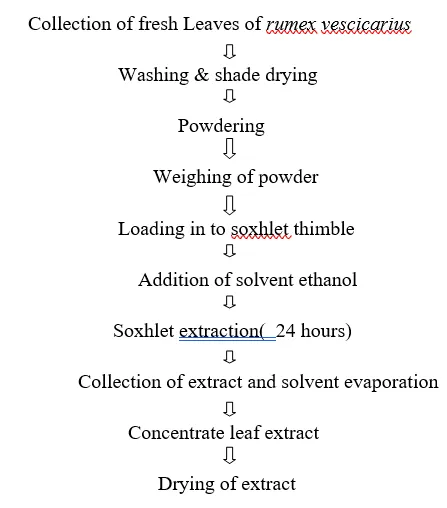
Percentage yield of latex: Percentage yield of extract was calculated by dividing the Weight of extract by the Weight of the leaf powder taken for extraction.
Percentage yield =Weight of extract (g)Weight of powder (g)
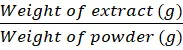
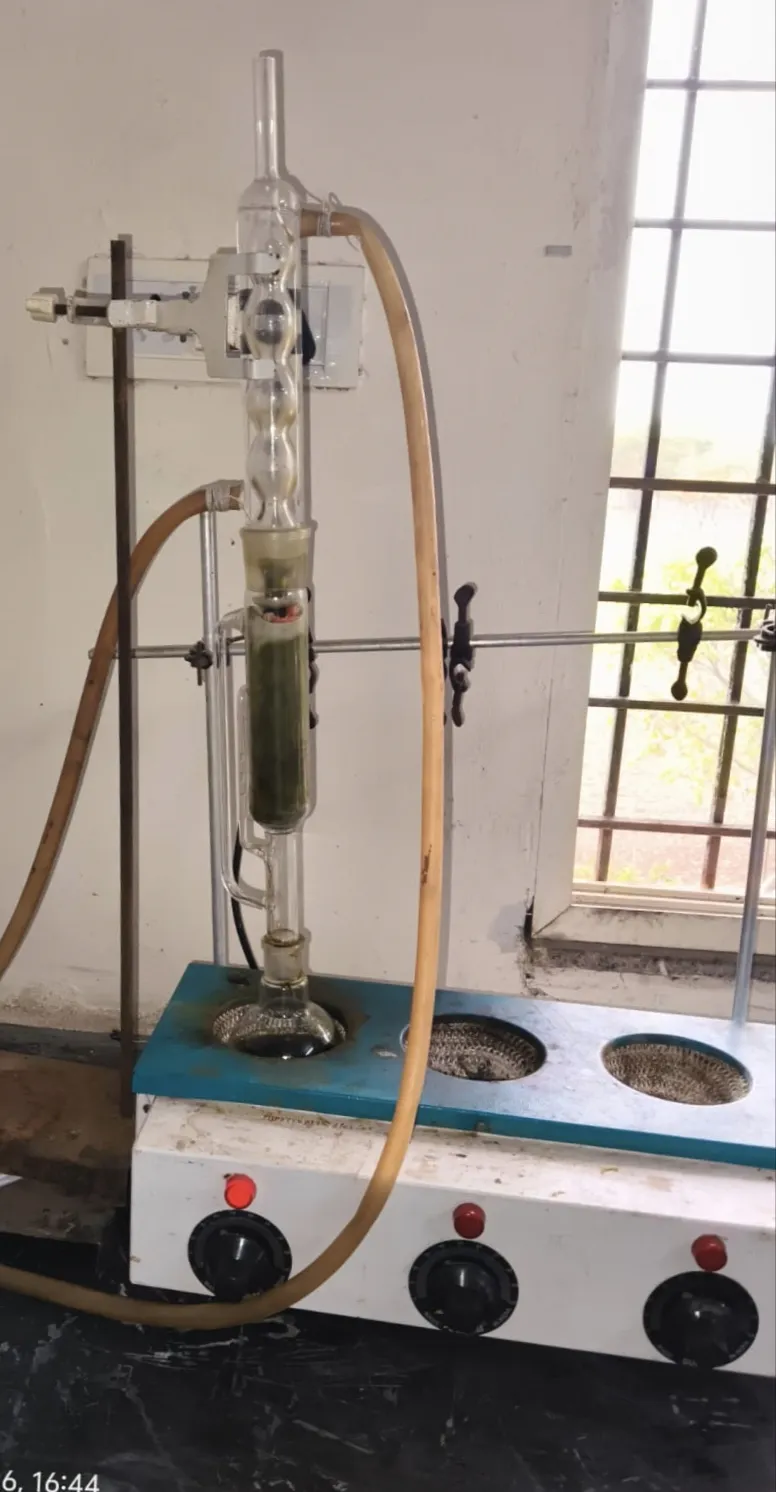
Figure .2: Extraction Rumex Vescicarius leaves
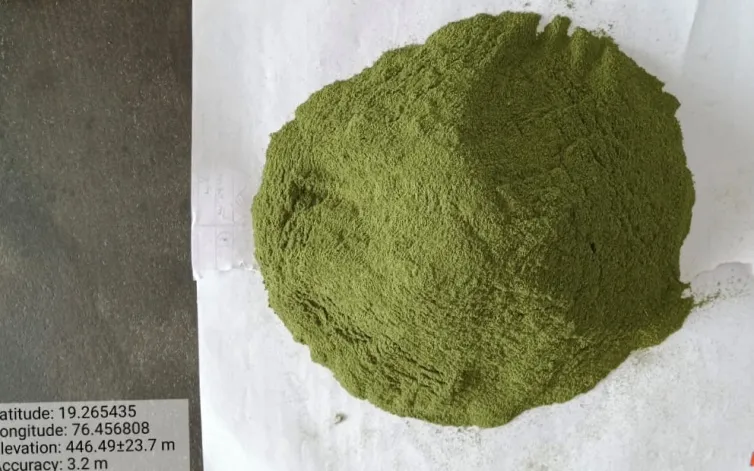
Figure 3.powder Rumex Vescicarius leaves
Preparation of Herbal Mouthwash
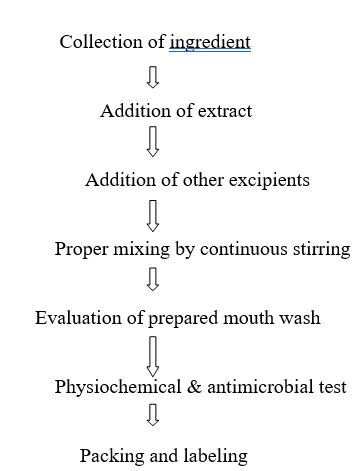
Table No.1: Five batches i.e. F1, F2, F3, F4, F5, of Herbal Mouthwash were formulated by varying quantity of Rumex Vescicariusextract
|
Sr. No |
Ingredients % w/v |
Category |
Batches |
||||
|
F1 |
F2 |
F3 |
F4 |
F5 |
|||
|
1 |
RumexVescicariusExtract (g) |
Active ingredient |
4 |
3 |
6 |
5 |
4 |
|
2 |
Papermint oil |
Flavouring agent |
1.5 |
1 |
1.5 |
1.2 |
1.4 |
|
3 |
Sodium lauryl sulphate (g) |
Surfactant |
0.3 |
0.4 |
0.3 |
0.3 |
0.3 |
|
4 |
Glycerine (ml) |
Humectants |
4 |
5 |
3 |
3 |
4 |
|
5 |
Sodium Saccharin (g) |
Sweetener |
0.06 |
0.06 |
0.06 |
0.06 |
0.06 |
|
6 |
Distilled Water (ml) |
Vehicle |
Qs |
Qs |
Qs |
Qs |
Qs |
Optimized formulation
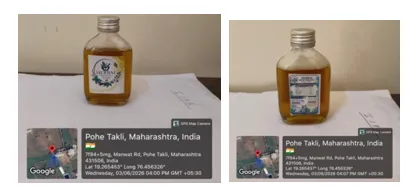
Figure 4.: optimized formulation
Evaluation of Formulated Herbal Mouth Wash
Evolution of herbal Mouth Wash was done according to “Bureau of Indian standards” and these tests were performed for all herbal Mouth Wash formulation. This test includes.
1. Physical Examination[22]
All these physical parameters of the formulation were checked visually-
2.PH: pH of prepared herbal mouthwash was measured by digital pH meter. The pH meter was calibrated using standard buffer solution about 1 ml of mouthwash was weighed and dissolved in 50 ml distilled water and its pH was measured.
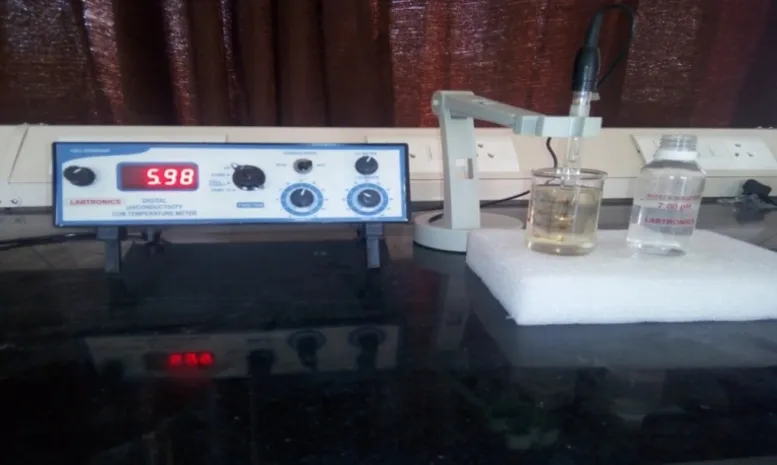
Figure 5. : Digital ph meter
3.Foam Height:
1 ml of mouthwash was mixed in 50 ml distilled water. The mixture was poured into a 500 ml measuring cylinder. Water was added to the volume to make it 100 ml. The mixture received 25 strokes, after which it was kept aside . The height of the foam above the aqueous volume was observed.
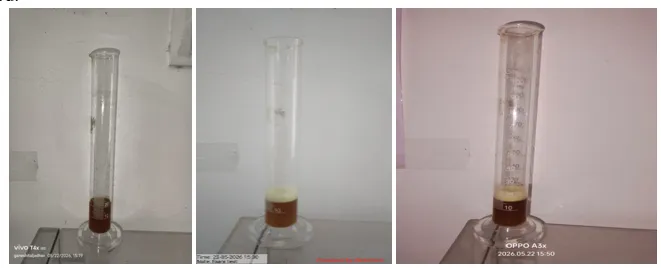
Fig .6.Determination of Foamiabiliy
4.Turbidity:
Turbidity is the term used to describe a fluids cloudiness or haziness as a result of individual particle (supended solid or liquid ) that are typically invisible to the unaided eye. The unit of turbidity from a calibrated turbidimeter are called Nephalometric Turbidity Units (NTU’s). A formulation with an NTU of less than 12 (or about 12) is referred to as a clear formulation. Turbidity of all three formulation of mouthwash was measured by using Nephelometry (Turbidity Meter).
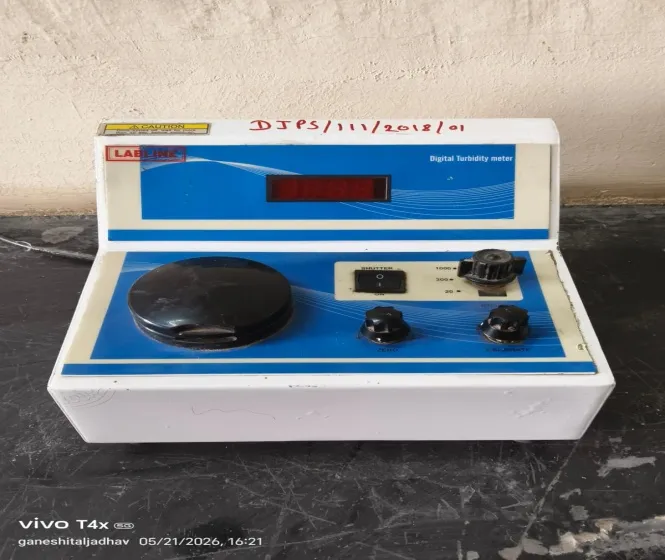
Fig. 7. Nephelometer
5. Viscosity:
Using an Ostwald Viscometer, the viscosity of mouthwash formulation was measured. The viscometer was mounted vertical position on a suitable stand. Mouthwash was filled in to the viscometer up to mark A. The time was counted for mouthwash to flow from A to mark B. Viscosity was measured in triplicate.
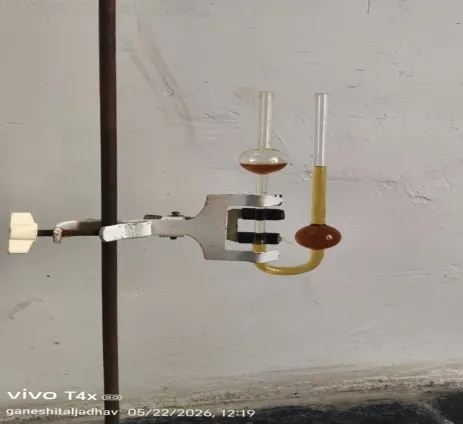
Fig.8.ostwald viscometer (viscosity determination)
5. Stability study [18, 19]:The purpose of Stability study of herbal mouth wash formulation was to provide the evidence of quality of product varies with time under the influence of temperature factors such as temperature, humidity, light. The prepared herbal Mouthwash formulation were packed in air tight container at three different temperature ,humidity conditions i.e. Refrigerator condition 40 ± 20C Room temperature 25 ± 20C/ 60% ± 5%RH, and oven 40 ± 20C/ 75% ± 5%RH. The sample were withdrawn at different time interval over a period of one month & evaluate the test of Physical appearance i. e colour, odour, appearance, other was pH, Homogeneity, Spread ability, extrudability.
RESULT
Table no .2 Pharmacognostic characterization of plant
|
Sr.No. |
Part of plant |
Description |
|
1 |
Leaves |
Dark greenish –green |
|
2 |
Flower |
pink |
|
4 |
Stem & Bark |
Green |
Table no .3.Percentage yield of extract
|
Sr. No |
Raw powder |
Solvent |
Extract quantity |
% Yield |
|
1 |
100 gm |
Petroleum ether |
24 g |
24% |
|
2 |
Ethanol |
20 g |
20% |
|
|
3 |
Methanol |
25 g |
25% |
Table no .4.Organoleptic Characteristic of extract
|
Sr. No |
Parameter |
Observation of Extract |
||
|
PE |
ET |
ME |
||
|
1 |
Physical Appearance |
Sticky paste |
Sticky mass |
Sticky paste |
|
2 |
Colour |
Dark Green |
Greenish black |
Greenish |
|
3 |
Odour |
Characteristic |
Characteristic |
Characteristic |
|
4 |
Taste |
Bitter |
Slightly bitter |
Slightly bitter |
Table Table no .5.Antibacterial Activity of Extract
|
Sample |
Zone of Inhibition(mm) |
|
E.coli |
|
|
Methanolic Extract |
18 |
|
Ethanolic Extract |
15 |
Table no .6.Antibacterial activity of Herbal mouthwash
|
Sr no |
Microorganism |
Concentration(mg/ml) |
Zone of Inhibition(mm) |
|
|
Formulation |
Standard |
|||
|
1 |
E.coli |
100 |
15±0.2 |
24±0.2 |
|
2 |
250 |
18±0.2 |
30±0.2 |
|
Figure 8.3 A) Zone of Inhibition of E .Coli
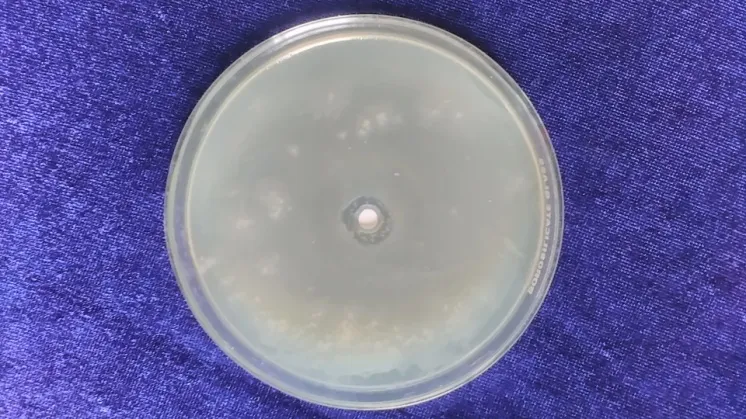
Figure 8.3 A) Zone of Inhibition of E .Coli
Table .no.7 result of formulation batches F1, F2,F3F4
|
Test
|
F1 |
F2 |
F3 |
F4 |
|
Colour |
Brown |
Brown |
Brown |
Brown |
|
Odour |
Characteristic |
Characteristic |
Characteristic |
Characteristic |
|
pH |
6 |
5.6 |
7.1 |
5.5 |
|
Foaming Test |
5 |
7 |
6 |
5 |
|
Turbidity Test |
005 |
007 |
003 |
004 |
|
Viscosity Test |
8.6 |
8.5 |
8.7 |
7.5 |
|
Homogeneity |
Homogenous |
Homogenous |
Homogenous |
Homogenous |
Results of stability tests of Herbal Mouthwash
Table .no.8. Results of stability tests
|
Temperature |
Evaluation Parameters |
Observation(months) |
|||
|
1 |
2 |
3 |
4 |
||
|
3-5 ֯C |
Visual appearance |
Light green |
Light green |
Light green |
Light green |
|
Phase separation |
Nil |
Nil |
Nil |
Nil |
|
|
Homogeneity |
Good |
Good |
Good |
Good |
|
|
Room Temperature (25 ֯CRH = 60%) |
Visual appearance |
Light green |
Light green |
Light green |
Light green |
|
Phase separation |
Nil |
Nil |
Nil |
Nil |
|
|
Homogeneity |
Good |
Good |
Good |
Good |
|
|
40֯ C± 2 ֯C RH=75% |
Visual appearance |
Light green |
Light green |
Light green |
Light green |
|
Phase separation |
Nil |
Nil |
Nil |
Nil |
|
|
Homogeneity |
Good |
Good |
Good |
Good |
|
CONCLUSION:
As per above result of Herbal Mouthwash we comes to the conclusion that the use of Herbal Mouthwash of Rumex Vesicarius is suitable for mouth problem. As per the result and discussion in table no. 04: formulation of the Mouthwash, the F4 is comparatively good formulation then the others.
ACKNOWLEDGEMENT:
We are very thankful to the principal, Djps College of pharmacy, pohetakali dist parbhani, for providing facility for research work the special thank to Mr. Suryawanshi M.B for their guidance and support
REFERENCES





Divya Golait*, Prajakta Nikam, Ashwini Dongare, Shital Bhosle, Milind Suryawanshi, Dr. Ramesh Ingole, Formulation and Evaluation of Herbal Mouthwash of Rumex Vesicarius leaves extract, Int. J. of Pharm. Sci., 2026, Vol 4, Issue 6, 3446-3456. https://doi.org/10.5281/zenodo.20692113
 10.5281/zenodo.20692113