

We use cookies to ensure our website works properly and to personalise your experience. Cookies policy
Shri Laxmanrao Mankar Institute of Pharmacy Amgaon, Gondia Maharashtra 441902.
The present study focuses on the formulation and evaluation of a herbal ointment using extracts of Murraya koenigii (curry leaves) and Hibiscus rosa-sinensis (hibiscus). Herbal formulations are gaining importance due to their safety, effectiveness, and minimal side effects compared to synthetic drugs. The plant materials were collected, cleaned, shade dried, and powdered. The formulated ointment was evaluated for various physicochemical parameters including color, odor, consistency, pH, and spreadability. Phytochemical screening confirmed the presence of bioactive constituents such as alkaloids, flavonoids, tannins, saponins, glycosides, and phenolic compounds, which contribute to the therapeutic activity of the formulation. The ointment also exhibited promising antimicrobial, anti-inflammatory, antioxidant, and wound healing properties. The study concludes that the formulated herbal ointment is safe, effective, and cost-efficient, making it a potential alternative to conventional topical formulations for the treatment of various skin conditions.
Herbal ointment:-
Herbal ointment is a semi-solid, topical preparation made by blending medicinal plant extracts or powders with an oily or waxy base. It is used for external application to treat skin conditions, reduce inflammation, heal wounds, and relieve muscle/joint pain. These natural, often anti-microbial products, such as those made from neem or turmeric, provide an alternative to synthetic medication.It is prepared by mixing medicinal plant extracts or herbal powders with a suitable ointment base such as paraffin, lanolin, or soft wax. Herbal ointments are widely used for the treatment of wounds, cuts, burns, skin infections, inflammation, rashes, and other skin disorders.Herbal formulations are gaining importance because they are natural, safe, cost-effective, and produce fewer side effects compared to synthetic medicines. Medicinal plants contain bioactive compounds such as alkaloids, flavonoids, tannins, glycosides, and phenolic compounds that possess antimicrobial, anti-inflammatory, antioxidant, and wound healing properties.The ointment base helps in easy application, better absorption of active constituents, and prolonged contact of the medicine with the skin. Herbal ointments provide soothing, moisturizing, and protective effects on the affected area and help in faster healing of damaged tissues.
TYPES OF HERBAL OINTMENT:-
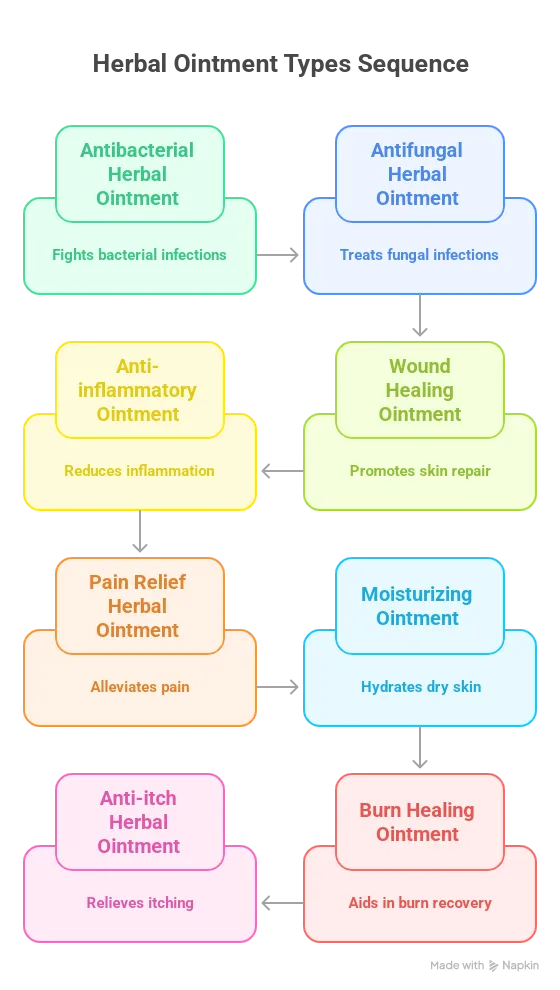
Fig. no. 1 Types of Herbal Ointment
PLANT PROFILE:-
CURRY LEAVES
Biological source:
Curry leaves consist of the fresh and dried leaves of Murraya koenigii Linn
Family:-Rutaceae.
The plant is commonly known as Curry leaf tree and is widely distributed in India and other tropical regions.
Common Names:- Curry leaf tree, Curry patta, Sweet neem
Major Chemical Constituents: Rich in volatile oils , carbazole alkaloids, Carbazole carboxylic acid, and flavonoids.
Uses :-
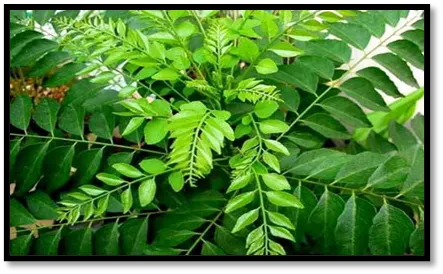
Fig. no. 2. Leaf of Murraya koengii (Curry leaves)
HIBISCUS :-
BIOLOGICAL SOURCES:-
Hibiscus consist of the fresh and dried petals of Rosa Sinensis Linn
Family: Malvaceae.
Chemical constitute:-Flavonoids,Tannins, Alkaloids,Glycosides.
Uses :-
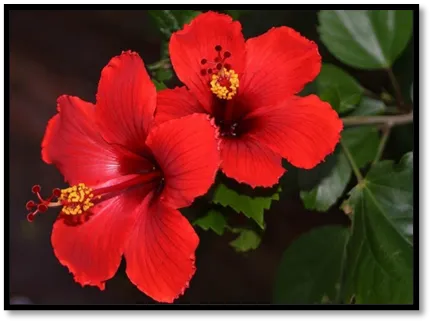
Fig.no.3. Hibiscus (Rosa Sinensis)
MATERIAL AND METHODS :-
Curry (Murrayakoenigii) leaves were procured from a local market. The stems as well as extraneous foreign material were removed. Fresh, green, un-damaged curry leaves were selected whereas, insect infested, bruised, discolored, decayed and wilted leaves were discarded before washing the leaves. The stalks of the leaves were cut from the main branches and the leaves were washed thoroughly three to four times with tap water to remove all the adhering dust, dirt particles. The curry leaves were then blanched in boiled distilled water containing 0.1 per cent magnesium oxide for 15-20 seconds. Leaves were then spread on filter paper.
Ingredient used in herbalointment:-
Table No. 1. Ingredient used in herbal ointment
|
Sr.No. |
Ingredients |
Uses |
|
1. |
Curry leaves extrract |
Antibacterial |
|
2. |
Hibiscus extract |
Anti-inflamatory |
|
3. |
Hard parraffin |
Stiffening agent |
|
4. |
Cetostearyl alcohol |
Emulsifier and stabilizer |
|
5. |
White soft parraffin |
Ointment base |
|
6. |
Wool fat (lanolin) |
Absorption base |
|
7. |
Methyl Paraben |
Antimicrobial preservative |
1.Hard paraffin:
Hard paraffin (also known as paraffin wax or hard paraffin wax) is a solid, white, odorless mixture of high-molecular-weight hydrocarbons (alkanes) derived from petroleum, coal, or shale oil. It is characterized by its crystalline structure.
2.Cetostearyl alcohol:-
Cetostearyl alcohol (also known as cetearyl alcohol or cetylstearyl alcohol) is a mixture of solid, long-chain fatty alcohols, primarily cetyl alcohol and stearyl alcohol . It is widely used in the cosmetic and pharmaceutical industries as an emulsifier, thickener, and emollient.
3.White soft paraffin:-
White soft paraffin is a highly refined, white, semi-solid hydrocarbon blend used as an emollient to moisturize and treat dry skin conditions like eczema and psoriasis. It acts as a barrier, preventing water loss from the skin. It is generally considered safe for all skin types, including sensitive skin.
4.Wool fat (Lanolin):-
Wool fat, commonly known as lanolin, is a natural, waxy secretion from sheep's wool used heavily in cosmetics, skin care (moisturizer, sore nipples), and industrial lubricants. It is yellow, fatty, and highly effective as an emollient that reduces transepidermal water loss to hydrate skin. It is hypoallergenic, sustainable, and biodegradable.
EXTRACTION OF CURRY LEAVES:-
A. Soxhlet Extraction Method:- Preparation of Herbal Ointment
Curry Leaves:-
Take 20–50 g powdered leaves

Place in a thimble inside Soxhlet apparatus

Add ethanol (250–300 mL) in round bottom flask
Heat using heating mantle Solvent evaporates → condenses → extracts compounds Continuous cycles occur for
6–8 hours

Extraction completes when solvent becomes colorless20–50 g of powdered curry leaves were placed in a thimble

The thimble was inserted into the Soxhlet apparatus

Ethanol was used as solvent (250–300 mL).Extraction was carried out for 6–8 hours (until solvent becomes colorless).

Extract was concentrated using:Rotary evaporator or Water bath at 40–50°C.A thick, semi-solid extract was obtained.
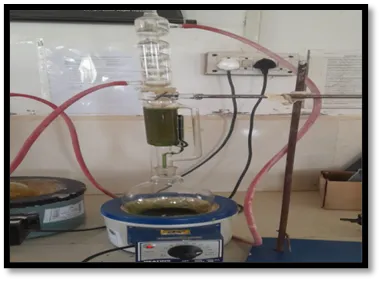
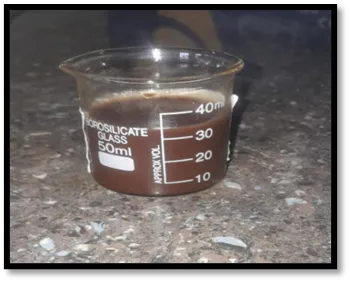
Fig.No.4. Soxhlet Apparatus Extraction Process Of Curry Leaves(Murraya Koengii )
HIBISCUS:-
. rosa-sinensis leaves were collected

They were washed using distilled water and then dried in airy conditions

The sample was then pulverized using a blender

The extraction of the leaf was done using distilled water in a hot water bath for 2 days (6 hours per day).

After extraction, the supernatant was filtered using filter paper and evaporated to dryness using a heating plate at 40-50°C

H. rosa-sinensis leaf extract was dissolved with dimethyl-sulfoxide (DMSO) to a final concentration of 0.1 mg/mL and sterilized by passing through a syringe filter (0.45 µm)

The extract was stored in sterile tubes at +4°C until used

Take 20–40 g hibiscus powder.Place in a thimble inside Soxhlet apparatus

Add ethanol (200–300 mL) in round bottom flask.Heat using heating mantle.

Solvent evaporates → condenses → extracts compounds Continue extraction for 6–8 hours Process completes when solvent becomes colorless.
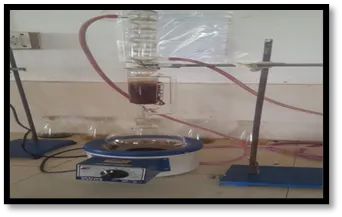
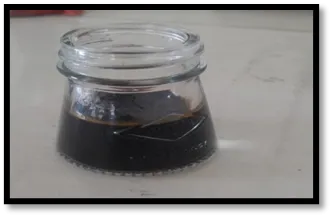
Fig . No.5.Soxhlet Apparatus Extraction Process of Rosa Sinensis (Hibiscus)
PHYTOCHEMICAL CONSTITUENT:-
CURRY LEAVES:-
|
Sr.no. |
Test |
Observation |
Inference |
|
1. |
Dragendorff’s Test
|
Orange or orange-brown precipitate. |
Alkaloids present
|
|
2. |
Mayer’s test |
Cream or pale yellow precipitate. |
Alkaloids present
|
(C) Test for Tannins and Phenols:-
|
Sr.no. |
Test |
Observation |
Inference |
|
1. |
Ferric Chloride Test
|
Blue-black or green color
|
Tannins and phenolic compounds present |
HIBISCUS (ROSA SINENSIS):-
Phytochemical examination, comprising multiple chemical tests, was performed on the testing extracts to discover secondary metabolic chemicals (flavonoids, and phenolic compounds).
Phenols Test
|
Sr.no. |
Test |
Observation |
Inference |
|
1. |
ferric chloride test |
blue-black color |
presence of phenols |
Flavonoids Test
|
Sr.no. |
Test |
Observation |
Inference |
|
1. |
Lead acetate test |
yellow precipitate. |
Presence of flavonoids |
|
2. |
Shinoda Test |
Pink/red color |
Flavonoids present
|
|
Sr.no. |
Test |
Observation |
Inference |
|
1. |
Dragendorff’s Test
|
Orange-brown precipitate formation |
Alkaloids present
|
|
2. |
Mayer’s Test
|
Cream-colored precipitate |
Alkaloids present
|
(B) Test for Tannins:-
|
Sr.no. |
Test |
Observation |
Inference |
|
1. |
Ferric Chloride Test |
Blue-black ya greenish color
|
Tannins present
|
PROCEDURE FOR PREPARATION OF HERBAL OINTMENT:-
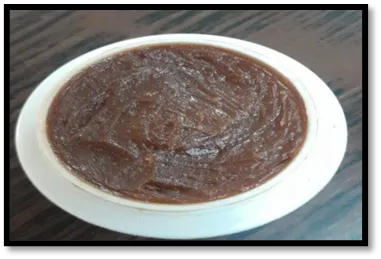
Fig no.6. Herbal ointment
FORMULATION OF HERBAL OINTMENT:-
Table no. 2 . Formulation of herbal ointment
|
Sr. no. |
Ingredients |
F1 |
F2 |
F3 |
|
1. |
Curry leaves extract (Murraya Koengii) |
2ml |
2.5ml |
3ml |
|
2. |
Hibiscus extract(Rosa Sinensis) |
2ml |
2.5ml |
3ml |
|
3. |
Hard Parraffin |
2gm |
2.5gm |
3gm |
|
4. |
White Soft Parraffin |
17.5gm |
34.5gm |
35gm |
|
5. |
Cetostearyl alcohol |
2.5gm |
3gm |
3.5 |
|
6. |
Wool Fat(Lanolin) |
2gm |
5gm |
5.5gm |
|
7. |
Methyl Paraben |
0.1gm |
0.1gm |
0.1gm |
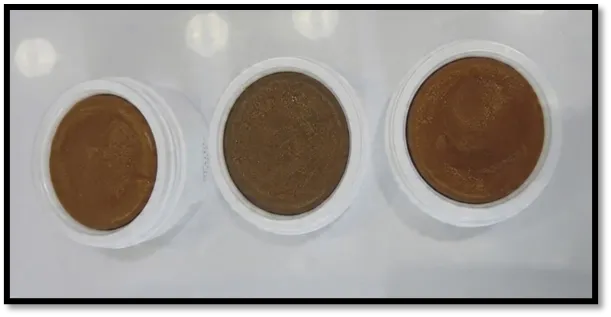
F1 F2 F3
EVALUATION PARAMETERS OF HERBAL OINTMENT
ANTIMICROBIAL TEST OF HERBAL OINTMENT
The antimicrobial activity of the herbal ointment was evaluated against different microorganisms by using the agar diffusion method. The activity was observed in the form of a clear zone of inhibition around the sample.The antimicrobial effect may be attributed to the bioactive constituents present in Murraya koenigii and Hibiscus rosa-sinensis, which possess natural antibacterial and antifungal properties. The formulation was found to be effective in controlling microbial growth and may help in preventing skin infections and promoting wound healing.
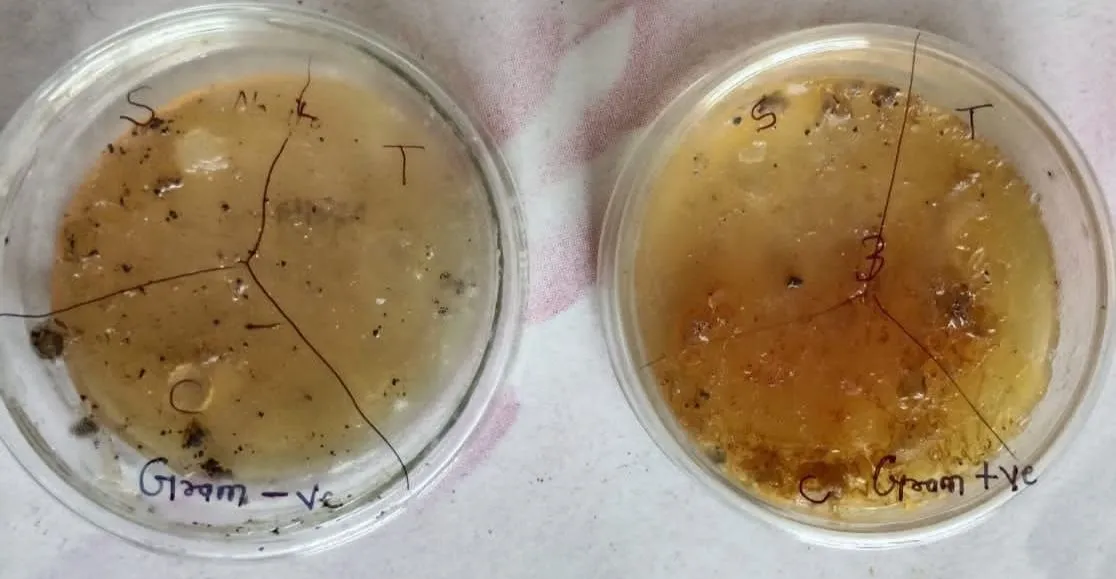
Fig no. 15. Microbial test for herbal ointment
RESULT AND DISCUSSION
|
Formulation |
Physical appearance |
PH determination |
Spreadability |
Skin Irritation |
|
|
|
Colour |
Texture |
|
|
|
|
F1 |
Dark Green |
Smooth |
6.2 |
Good |
No |
|
F2 |
Light green |
Rough |
5.8 |
Moderate |
No |
|
F3 |
Greenish brown |
Smooth |
6.5 |
Excellent |
No |
The formulated herbal ointments (F1, F2, and F3) showed acceptable physical characteristics with smooth texture and uniform appearance. The pH values were found to be near the normal skin pH, indicating suitability for topical application. Spreadability of all formulations
was satisfactory, with F3 showing the best spreadability. No signs of skin irritation, redness, or itching were observed during the irritation study, indicating that the formulations are safe for skin application. Overall, F3 formulation showed better consistency and stability compared to other formulations.
CONCLUSION
The present study successfully formulated and evaluated a herbal ointment using extracts of Murrayakoenigii and Hibiscus rosa-sinensis. Both plant extracts were selected due to their well-known medicinal properties such as antimicrobial, anti-inflammatory, antioxidant, and wound healing activities.The ointment was prepared using suitable base materials including hard paraffin, cetostearyl alcohol, white soft paraffin, and wool fat, which provided good consistency, stability, and spreadability. The formulation process was simple, cost-effective, and reproducible.Evaluation parameters such as physical appearance, pH, spreadability, consistency, homogeneity, and stability studies indicated that the prepared formulation was stable, smooth, and suitable for topical application. The absence of skin irritation further confirmed its safety.Overall, the herbal ointment demonstrated promising therapeutic potential and can be considered as an effective alternative to synthetic formulations for minor skin infections and wound healing.
Acknowledgement
The authors sincerely thank Shri Keshavrao Mankar and Dr. D. K. Sanghi of Bhavabhuti Shikshan Sanstha, Amgaon, for their guidance, support, and the facilities provided during the course of this study. Their encouragement and cooperation are greatly appreciated.
REFERENCES

Yogeshwari Motghare, Arpita Agrawal, Dr. Tulsidas Nimbekar, Dr. D. Sanghi, Formulation And Evaluation of Herbal Ointment by Using Murraya Koengii, Int. J. of Pharm. Sci., 2026, Vol 4, Issue 6, 6933-6941, https://doi.org/10.5281/zenodo.20957505
 10.5281/zenodo.20957505