

We use cookies to ensure our website works properly and to personalise your experience. Cookies policy
1Student, Shri Chatrapati Shahu Maharaj Shikshan Sanstha, Institute of Pharmacy, Maregaon, India.
2Student, Shri Chatrapati Shahu Maharaj Shikshan Sanstha, Institute of Pharmacy, Maregaon, India.
3Assistant Professor, Shri Chatrapati Shahu Maharaj Shikshan Sanstha, Institute of Pharmacy, Maregaon, India.
4Principal, Shri Chatrapati Shahu Maharaj Shikshan Sanstha, Institute of Pharmacy, Maregaon, India
Syzygium cumini (Jamun) seed extract was used in this study together with other natural ingredients like neem extract, clove oil, reetha powder, honey, glycerin, tragacanth gum, and rock salt to formulate and test a herbal teeth-whitening toothpaste. The recipe was created to offer a natural and safe substitute for traditional toothpaste in order to improve tooth look and preserve oral hygiene. A variety of physicochemical and organoleptic characteristics, including as colour, odour, taste, texture, pH, spreadability, foamability, moisture content, aroma, shape retention, and storage stability, were assessed for each batch of toothpaste. Syzygium cumini seed extract's antibacterial and antioxidant qualities are attributed to the presence of alkaloids, tannins, saponins, flavonoids, phenols, terpenoids, and amino acids, according to phytochemical screening. Good homogeneity, a pH of 7.0, enough foamability, outstanding spreadability, a nice scent, and stability during storage were all demonstrated by the optimised recipe. The herbal toothpaste's robust ability to promote oral hygiene and natural teeth whitening was supported by its effective cleaning and stain-removing qualities. According to the study's findings, herbal toothpaste can be a cost-effective, environmentally responsible, and safe substitute for synthetic oral care products.
Herbal products are becoming more and more popular worldwide. Herbal remedies are now seen as symbols of safety in contrast to synthetic chemicals, which are frequently seen to be harmful to individuals and the environment. In many different countries, people employ herbal products or pharmaceuticals as part of their healthcare practices in a number of circumstances. For thousands of years, ancient medicinal systems like Ayurveda, Unani, and Siddha have recognised the therapeutic effects of herbs, which are among the medicines that God has supplied for suffering mankind. One hundred of the 2,500 plant species utilised by Indian traditional healers are regularly employed as medicines. Studying medicinal plants and their traditional uses across the world has gained popularity in the past several decades. The World Health Organization estimates that approximately 80% of the global population relies on traditional medicines, including herbal remedies, for primary healthcare(1).
1.1 Herbal Toothpaste-
Natural ingredients, including some certified organic ones, make up herbal toothpastes. In order to avoid the artificial and synthetic flavours that are occasionally present in conventional toothpaste, a growing number of customers have begun to use natural toothpaste. There are no artificial tastes or chemicals in these natural toothpastes. They are a suitable option for people who are allergic to mint or the foaming component sodium lauryl sulphate (SLS), which is commonly included in commercial toothpaste brands (1).
After learning about the drawbacks of commercial toothpaste, people are actually far more likely to use natural formulations and non-alcoholic toothpaste. Fluorides and artificial flavours and colours are not present in natural toothpaste. In China and India, toothpaste
formulations have been manufactured and improved since the year 300–500 B.C. The nineteenth century saw the evolution of modern toothpaste compositions (2).
Three toothpastes are used as dentifrices to keep enamel clean, preserve fitness, and improve beauty. Toothpaste is typically used to maintain oral hygiene, but it can also act as an abrasive, removing food particles and dental plaque from teeth, aiding in the removal and/or masking of halitosis, and releasing active chemicals like fluoride to help prevent gum disease and tooth decay (2).
1.2 Teeth Discoloration-
Both the intrinsic colour of the teeth and any extrinsic stains that may develop on the surface of the teeth have an impact on their colour. The light-absorbing and light-scattering characteristics of the enamel and dentine have a major impact on intrinsic tooth colour, with dentine having a major influence. The adsorption of substances into the acquired pellicle on the enamel surface, which eventually results in staining, is associated with extrinsic colour.
Poor teeth brushing technique, smoking, eating coloured foods (like red wine), the subject's age, and the use of specific cationic agents like chlorhexidine or metal salts like tin and iron are all factors that affect the production of extrinsic stains. White teeth have long been highly desired by both patients and consumers, and numerous recent studies have shown that many people are unhappy with the colour of their teeth.9–11 Personal dissatisfaction with tooth colour varies from 17.9 to 52.6%, depending on the population studied, according to these research. Tooth whitening products are becoming more and more popular as a result of this desire for whiter teeth (3).
1.3 Types of Teeth Discoloration:-
Table 1- Types of teeth discoloration
|
Types |
Location |
Examples |
|
Extrinsic |
Enamel's surface
|
Tobacco and coffee stains
|
|
Intrinsic |
Tooth structure inside
|
Drugs, Flurosis
|
|
Age-Related |
Combination of enamel wear and dentin exposure |
Natural yellowing with age |
3. Aim And Objective
Aim- To create an oral cavity-whitening herbal toothpaste
Objectives
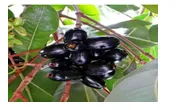
4.1Syzygium Cumini:-
|
Biological Source |
Syzygium cumini Linn. Skeels |
|
Synonym- |
Java plum, Jambolan, Malabar Plum, Rajaman, Jamblang
|
|
Family- |
Myrtaceae |
|
Common Name |
Jamun, Java plum, Indian blackberry |
|
Chemical constituents |
Tannins, flavonoids, phenolic compound, alkaloids, saponins, terpenoids amino acids |
|
Uses- |
Prevent tooth decay, Maintain healthy gums,teeth appears brighter and cleaner |
7.1 Materials and methods-
7.2 Collection of Plant-
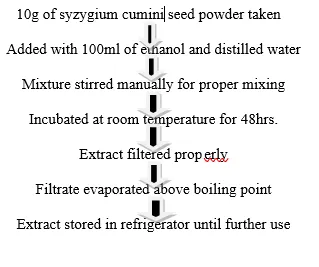
In March, Syzygium cumini seeds were gathered at the Nagpur Botanical Garden. A botanist verified the authenticity of the plant material. After that, the plant's seeds were cleaned with water to get rid of any dirt or foreign objects. Following washing, the plant material was allowed to dry completely in the shade for two to three weeks. After that, the dried seeds were ground into a fine powder using a grinder and kept in an airtight container for later usage.
7.3 Collection of Herbal Exipients-
Based on their particular roles in the toothpaste formulation, excipients were chosen. Each excipient has a crucial function, including cleansing, binding, retaining moisture, and enhancing flavour and taste.
Table-2 Excipients and there role
|
Excipients |
Role of Excipients |
|
Tragacanth gum |
Binder |
|
Honey |
Sweetening agent |
|
Glycerine |
Humectant |
|
Clove oil |
Flavouring agent |
|
Neem extract |
Preservative |
|
Reetha |
Foaming agent |
|
Salt |
Abrasive |
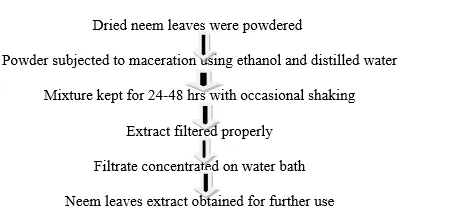
2.1 Extraction of Syzygium Cumini:-
Formulation of Herbal Toothpaste: -
Table3-Formulation of Herbal Toothpaste
|
Ingredients |
F1 |
F2 |
F3 |
|
Jamune seed Extract |
1g |
1.5g |
0.5g |
|
Tragacanth Gum |
0.3g |
0.4g |
0.5g |
|
Honey |
0.5g |
0.4g |
1g |
|
Glycerin |
1.5g |
1.4g |
3g |
|
Neem Extract |
1g |
1g |
0.7g |
|
Reetha Powder |
1g |
1g |
1g |
|
salt |
0.5g |
0.5g |
0.5g |
|
Clove oil |
1drop |
1-2 drop |
2-3drop |
10.Phytochemical Analysis-
The seed extracts of syzygium cumini were analysed for the presence of phytophenolic constituents such as alkaloids, tannins, saponins, flavonoids, phenols, terpenoids, amino acids and glycosides.
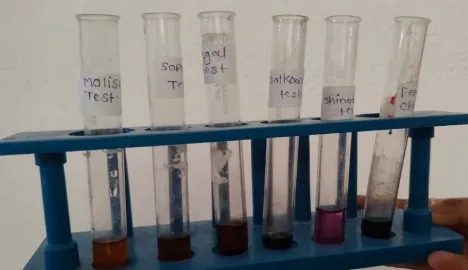
Fig-17 Chemical Test of syzygium cumini extrac
One millilitre of acidic aqueous (methanolic solution acidified with dilute hydrochloric acid) solution of sample was mixed with 1-2 drops of mayer’s reagent was added. The formation of white or pale precipitate showed the presence of alkaloids.
A test tube containing 5ml of sample was mixed with 1-2 drops of 1% solution of lead acetate solution. The formation of bulky white precipitate indicated presence of tannins.
A drop of sodium bicarbonate was added in the test tube containing 50ml extract of the sample. The mixture was vigorously shaken and kept for two minutes. A honey comb like frouth was formed and it showed the presence of saponins.
The test tube containing about 0.5 ml of alcoholic extract of sample, 5-10 drops of diluted Hydrochloric acid and trace amount of Mg or Zn were added. The solution was boiled for few minutes. The appearance of reddish pink or dirty brown colour indicated the presence of flavonoids.
One millilitre of the alcoholic solution of the sample mixed with 2 ml of distilled water which is followed by the addition of few drops of the 10% aqueous solution of ferric chloride. The formation of blue or deep green colour indicated the presence of phenols.
One milligram of extract was added with 2 ml of 2 ml of chloroform and 5-10 drops of Conc. H2SO4. Reddish brown colour was appeared which indicated the presence of terpenoids.
Two milli litre of sample extract was treated with the 1-2 drops of ninhydrin reagent. The appearance of violet or purple colour indicated the presence of amino acids(9).
11.Evaluation Parameter:-
Organoleptic evaluation of formulated herbal toothpaste was carried out by sensory and visual inspection. The formulation was evaluated for colour, odour, taste, appearance, texture and consistency.
Evaluation criteria of organoleptic properties.
The toothpaste showed a uniform brownish green colour without any discoloration.
The formulation possessed a pleasant aromatic odour due to the presence of clove oil and herbal ingredients.
The toothpaste showed a slightly bitter and sweet taste which was acceptable.
The formulation was smooth and homogeneous without any lump formation.
The toothpaste exhibited smooth texture and was non-gritty in nature.
The formulation showed good consistency and spreadability suitable for brushing(10).
The pH of the formulated herbal toothpaste was calculated using a pH meter in and was recorded as 6.75 to 9 by simply defining the basic characteristics of the formulation. This basic pH level is beneficial for oral health as it helps reduce acids made by bacteria in the mouth, thereby lowering the risk of tooth loss and enamel damage. Maintaining a basic pH can also support natural remineralization process of teeth and help to general oral health
pH was tested by dissolving 1 gm product in to 9 ml of water and shaked vigorously then aqueous solution and pH is observed by pH meter
Fig-18 PH meter
The created toothpaste's foamability was assessed by adding a small amount of formula and water to a measuring cylinder, shaking it ten times, and then changing the initial amount. The froth's final extent was cited (2).
This method uses the paste's slip and drag capability. Two grams of prepared paste were found on the floor slide underneath the research. For five minutes, the prepared paste was sandwiched between this slide and a few other glass slides to release air and provide a consistent paste film across slides. The excess paste was scraped off the edges. With the use of a line attached to the hook, the pinnacle plate was then subjected to an 80g tug. The time (sec) needed for the pinnacle slide to traverse a distance of 7.5 cm was then recorded. Higher unfold ability was indicated by a rapid C programming language (2).
Its acceptability was determined by personal observation.Five persons were asked if the smell was acceptable, and their opinions were recorded. Additionally, aroma was assessed using the criteria listed below.
The scent was just as pleasant as that of reference toothpaste.
Although not very pleasant, the scent was similar to that of the reference toothpaste.
Compared to the reference toothpaste, the toothpaste's scent was subpar (10).
After the toothpaste was completely removed from the tube and placed on a toothbrush, its condition was assessed using the criteria listed below after it had stood for ten seconds.
A. The shape is maintained immediately after the toothpaste is squeezed onto the toothbrush.
B. The shape is nearly preserved just after the toothpaste is squeezed onto the toothbrush.
C. The toothpaste lost its form after being squeezed from the toothbrush (10).
Ten grams of toothpaste were weighed in a porcelain dish and dried at 105 degrees Celsius in the oven. A desiccator was used to chill it. The weight loss is determined using the provided formula and recorded as a percentage of moisture content.
% Moisture = Original sample weight – dry sample weight/ Original sample weig
For 45 days, the toothpaste was kept in a toothpaste tube at three different temperatures: 5°C, room temperature, and 40°C. After the tube was cut through, the following criteria were used to determine whether or not the liquid component had separated from the toothpaste. Storage stabilityevaluationcriterion.
12.Result And Discussion
Jammune seed powder, neem leaves, and other natural ingredients were used to create the herbal toothpaste recipe. Due to issues with homogeneity, spreadability, and foamability, three batches were tested during the formulation trial phase. Two of the batches were permanently eliminated, and only one batch was chosen for further processing. The herbal toothpaste that was created had a brownish hue, good homogeneity, and no lumps.
Physical Examination
Table4- Physical Examination
|
Sr. No |
Parameters |
Observations |
|
1 |
Colour |
Brownish |
|
2 |
Odour |
Characteristic |
|
3 |
Taste |
Characteristic |
|
4 |
Appearance |
Homogeneous |
|
5 |
Texture |
Smooth |
Phytochemical Analysis Result
Table 5- Evaluation Result
|
Sr.no |
Parameters |
Observation |
|
1 |
PH |
7 |
|
2 |
Foamability |
10.5 |
|
3 |
spreadability |
3.5cm/sec (good) |
|
4 |
Fragrance test |
Good |
|
5 |
Shape retention |
the toothpaste is squeezed out on the toothbrush is maintained |
|
6 |
Moisture content |
15.6% |
|
7 |
Storage stability |
stable |
Table6- Phytochemical Analysis result
|
Sr. No |
Test |
Observation |
|
1 |
Test for alkaloids (Mayer’s Test)
|
white or pale precipitate |
|
2 |
Test for Tannins ( Lead acetate Test)
|
bulky white precipitate |
|
3 |
Test of Saponins |
honey comb like frouth |
|
4 |
Test for Flavonoids
|
reddish pink or dirty brown colour |
|
5 |
Test for Phenols
|
blue or deep green colour |
|
6 |
Test for Terpenoids
|
Reddish brown colour |
|
7 |
Test for Amino acids
|
purple colour |
CONCLUSION
Using Syzygium cumini seed extract and a variety of natural ingredients, including neem, clove oil, reetha, honey, glycerin, tragacanth gum, and rock salt, the current study effectively created and assessed a herbal teeth-whitening toothpaste. Smooth texture, attractive smell, acceptable taste, appropriate spreadability, suitable foamability, and high storage stability were among the positive physical attributes of the created formulation. Important bioactive components that support oral health, such as tannins, saponins, flavonoids, phenols, terpenoids, and amino acids, were found through phytochemical research.
The herbal toothpaste showed good cleaning and stain-removing qualities, which may aid in preserving oral hygiene and enhancing teeth's natural appearance. Compared to synthetic toothpaste formulations, the formulation is safer, more environmentally friendly, and has less adverse effects because it contains natural constituents. As a result, the herbal toothpaste formulation can be regarded as a potential natural substitute for preserving oral hygiene, averting dental issues, and promoting teeth whitening.
Acknowledgement
I am extremely grateful to all those who have contributed to the successful completion of this report titled Formulation and evaluation of herbal teeth whitening toothpaste First and foremost, I would like to express my heartfelt gratitude to Miss. Supriya K. Bhagat & Dr. A. M. Kandalkar, my guide, for her invaluable guidance, encouragement, and constant support throughout this research. Her expertise and insightful suggestions have been instrumental in shaping the direction and outcome of this work.
I am profoundly thankful to our respected Principal, Dr. Nilesh O. Chachda, for providing the necessary facilities and a conductive academic environment at the Institute of Pharmacy. Maregaon, which enabled the successful execution of this study.
I extend my sincere thanks to my co-author, Additionally, I would like to acknowledge my friends, family, for their unwavering support, motivation, and encouragement throughout the course of this project.
Lastly, I am deeply thankful to the entire staff of the Institute of Pharmacy, Maregaon, for their assistance and cooperation, which played a pivotal role in the successful completion of this work. This project would not have been possible without the collective efforts and contributions of everyone involved.
REFERENCES

Prerna Pardhe, Pankaj Lode, Supriya Bhagat, Nilesh Chachda, Formulation and Evaluation of Herbal Teeth Whitening Toothpaste Using Syzygium Cumini, Int. J. of Pharm. Sci., 2026, Vol 4, Issue 6, 6606-6616. https://doi.org/ 10.5281/zenodo.20919889
 10.5281/zenodo.20919889