

We use cookies to ensure our website works properly and to personalise your experience. Cookies policy
Bharathi College of Pharmacy, Bharathinagara, Mandya - 571422, Karnataka, India
Pongamia pinnata (L.), commonly known as Karanj or Indian beech, is a medicinal plant belonging to the family Leguminosae and has been widely used in traditional systems of medicine such as Ayurveda, Siddha, and Unani. The plant is rich in bioactive phytochemicals, including flavonoids, alkaloids, glycosides, sterols, fixed oils, and phenolic compounds, which contribute to its diverse therapeutic properties. This review summarizes the botanical description, traditional uses, phytochemical constituents, and pharmacological activities of Pongamia pinnata. Experimental studies have demonstrated that different parts of the plant possess significant anti-inflammatory, antioxidant, antimicrobial, antiviral, antidiabetic, antiulcer, Antiurolithiatic, neuroprotective, immunomodulatory, cardioprotective, wound-healing, anticonvulsant, anthelmintic, and anti-lice activities. These pharmacological effects are attributed to the presence of various bioactive constituents that exhibit antioxidant, anti-inflammatory, and tissue-protective mechanisms. Although extensive preclinical studies support the medicinal value of Pongamia pinnata, further well-designed clinical investigations are required to establish its safety, efficacy, and therapeutic applications in humans. Overall, Pongamia pinnata represents a promising natural source for the development of novel herbal medicines and pharmaceutical formulations for the management of various diseases.
Nature has been one of the main sources for the traditional medicine for thousands of years, and large number of modern drugs have been isolated from natural sources. Plant-derived natural products have extremely high potential to developed as medicines. Traditional herbal medicine and its preparation are widely used in the developing and developed countries due to their natural origin and lesser side effects. Utilizing natural products is considered to have safety, efficacy and quality. In medicinal history, so far, we have come across many medicinal plants used by our ancestors as their primary source for the treatment of various ailments. In consideration of their medicinal uses and phytochemicals, they were widely used in the traditional system of medicine like Ayurveda, Unani and Siddha, each of which had its own medicinal uses. Some of them are scientifically proven, and some are still to be prove.1
One such plant is Pongamia pinnata (L.) Pierre (Family: Leguminosae) is an important non-edible minor oilseed tree that grows mainly in the semiarid regions. It is probably originated from India and grows naturally in India, Pakistan, Bangladesh, Malaysia, Vietnam, Thailand, Florida, Australia, and Sri Lanka and also in northeastern Australia, Japan, Fiji, and the Philippines. In India, billions of Pongamia trees exist where Pongamia trees are cultivated commercially and seed is available from December to April.2
Classification3
Kingdom: Plantae
Division: Magnoliophyta
Class: Magnoliopsida
Order: Fabales
Family: Leguminosae
Genus: Pongamia
Species: pinnata
Morphology
Pongamia pinnata [Fig.1] is a glabrous evergreen deciduous tree which grows up to 15–25 meter; it’s a legume tree with a huge spreading canopy with linear or curved stem [Fig. 2] of the tree are short-stalked, round or cuneate at the base, young leaves are a delicate, glossy burgundy in color; as the season passes, they develop to a shiny, deep green leaves with pronounced veins.4,5 Flowering usually begins at 3–4 years, with little bunches of white, purple, or pink flowers [Fig. 3] of 50–80 cm diameter and smooth or vertical grey-brown bark. The branches are hairless and have pale stipulate scars. The alternate imparipinnate leaves {Fig. 4] which bloom throughout the year. The raceme-like inflorescences produce two to four fragrant flowers The seeds [Fig. 6] of Pongamia pinnata are elliptical in shape and covered with a hard shell [Fig. 5] that appears brown in color at the time of maturity. An average weight of P. pinnata seed is 3.18g and its thickness varying form thickness from 5-10mm flowers that measure 15–18 mm [0.59–0.71 in] in length.6
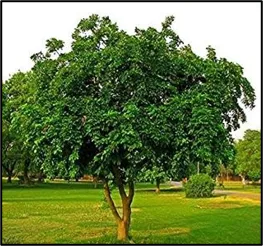
Fig 1
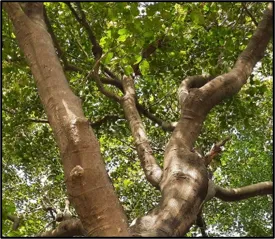
Fig 2
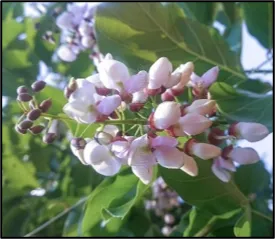
Fig 3
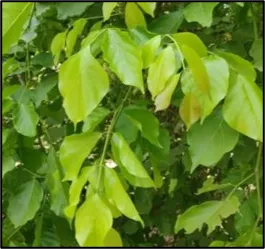
Fig 4
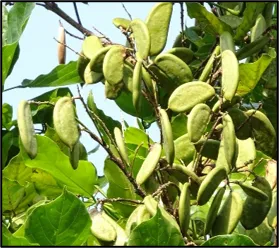
Fig 5
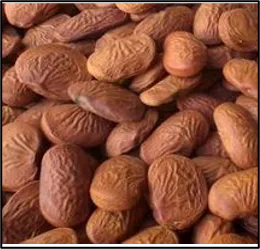
Fig 6
Botanical Classification:2
Class: Magnoliopsida
Order: Fabales
Family: Leguminosae
Genus: Pongamia
Species: Pinnata
Botanical name
Pongamia pinnata Linn
Synonyms Names:
Common names7
Hindi, Beng., Mar. and Guj: Karanj, Karanja
Sanskrit: Naktamala, Ghrtakarauja, Karanjaka, Naktahva,
English: Indian beech
Telgu: Pungu, Gaanuga
Tamil: Ponga, Pongam
Malayalam: Pungu, Punnu
Oriya: Koranjo
Punjab: Sukhehein, Karanj, Paphri
Assam: Karchuw
Bengali: Dahara Karanja, Karanja, Natakaranja
Kannada: Honge, Hulagilu
Botanical Description8
The Pongamia pinnata is a fast-growing tree which reaches 40 feet in height and spread, forming a broad, spreading canopy casting moderate shade.
Botanical Description of Pongamia pinnata
Plant type
Medium-sized, evergreen, perennial and deciduous tree
Height: -35 to 40 feet
Growth rate: -Fast
Texture: - Medium
Chromosome number: - 22
Growing requirements
Light requirement: - tree grows in full sun.
Soil tolerances: - clay; loam; sandy; slightly alkaline; acidic; well-drained.
Drought tolerance: - high
Aerosol salt tolerance: - moderate
Winter interest: - no special winter
Traditional Uses of Pongamia pinnata11
Pongamia pinnata seed-oil keeps medicinal properties and found to be fruitful for itches, abscess and other skin diseases. Its flowers are recommended for glycosuria and as a remedy for treatment of diabetes. The bark is widely used internally for bleeding piles, diabetes and beriberi’s and known to be a potential antimicrobial compound of nature. Karanja seeds are used as a medicinal plant, principally with the Ayurvedic and Sidda system of medicine in India. It was noted that crude seed extract completely prevents the growth of herpes simplex virus type 1 and type 2 in Vero cells and also retains hypoglycaemic, analgesic, anti-inflammatory, anti-ulcerogenic and antioxidative properties. It is estimated that different parts of the plant are used in outdated medicines for whooping cough, rheumatic joints, bronchitis and to quench dipsia in diabetes. The leaves are anthelmintic, laxative, hot, digestive, and used to cure wounds, piles and other inflammations. A hot infusion of plants leave is consumed as a medicinal bath for releasing rheumatic pains and for cleaning ulcers in scrofulous and gonorrhea enlargement. Distinct abstracts of seeds, leaves and roots are castoff to treat infectious syndrome for example articular and rheumatism, muscular, lumbago, leukoderma and leprosy. Plants leaves were found active along micrococcus, their nectar use for leprosy, gonorrhea, cough, diarrhea, dyspepsia, flatulence and cold also. Seed oil is used in lumbago, lever pain, chronic fever, leprosy, piles, ulcers and scabies. Roots are castoff for cleaning ulcers, teeth and gums. The bark is consumed inside for bleeding piles. Nectar from plants in addition to oil is hygienic. It is thought to be an outstanding cure for pityriasis versicolor, itch and herps. Powdered seeds are evaluated as tonic, febrifuge and in whooping cough and bronchitis. Flowers are utilized for diabetes. Bark has been used for beriberi.
Medicinal uses of different parts of Pongamia pinnata plant 12
|
Sr. No. |
Plant Part Used |
Activity Done |
|
1 |
Leaves |
Anti-diarrhoeal action, Anti-lice activity, Dyspepsia, Anti-viral activity, Anti-filarial activity, Anti-microbial activity, Gonorrhea, Leprosy, Anti-inflammatory activity, Anti-pyretic action |
|
2 |
Flowers |
Anti-hyperammonemic activity, Anti-oxidant activity, Bleeding pile, Anti-hyperglycemic activity, Anti-lipid peroxidative activity |
|
3 |
Oil |
Leprosy, Ulcers, Liver pain, Piles, Rheumatism, Arthritis, Scabies, Chronic fever, Whooping cough, Anti-fungal activity, Anti-bacterial activity, Anti-helminthic activity |
|
4 |
Fruits |
Female genital tract disorders, Leprosy, Tumour, Piles, Ulcers, Anti-filarial activity, Abdominal tumors |
|
5 |
Seeds |
Bronchitis, Whooping cough, Inflammations, Nootropic activity, Rheumatic arthritis, Hypertension, Skin ailments, Chronic fevers, Hemorrhoids, Anemia, Pectoral diseases |
|
6 |
Roots |
Anti-nociceptive activity, Anti-helminthic activity, Vaginal infections, Skin diseases, Gonorrhea |
|
7 |
Stem |
Anti-pyretic activity, CNS sedative |
|
8 |
Bark |
Swelling of the spleen, Mental disorder, Bleeding piles, Beriberi, Cough and cold |
CHEMICAL COMPOSITION OF PONGAMIA PINNATA
Six substances (two sterols, three sterol derivatives, and one disaccharide) are found in P. pinnata seeds, together with 8 fatty acids (three saturated and five unsaturated). The presence of metabolites such as galactoside, sitosteryl acetate, stigmasterol, galactoside, and sucrose was the first to be recorded; the number of saturated and unsaturated fatty acids (two monoenoic, one dienoic, and two trienoic) were the same.13
Karanjin, pinnatin, pongagalabrone, pongamol, pongapin, and kanjone have been isolated from seeds. A 'pongol' derivative of flavone is present in immature seeds. Glabrachalcone and isopongachromene are two more flavonoids that have been isolated from the seeds (Fig. 7).

Fig. (7). Phytochemicals from Pongamia pinnata.
Six compounds (two sterols, three sterols) are found in the seeds of Pongamia pinnata. Pongone, Galbone, Pongalabol, Pongagallone A, and B are just a few of the flavone and chalcone derivatives found in the plant's leaves and stem. Spectrophotometric analysis was used to deduce their structure, which was then compared to one previously published. In vitro, tests were performed on Pongamones A-E against DHBV RCs DNAP and HIV-1 RT.14
Contents of seeds15
|
Components |
Percentage |
|
Protein |
17.4% |
|
Fatty oil |
27.5% |
|
Crude fiber |
7.3% |
|
Starch |
6.6% |
|
Moisture |
19% |
|
Ash |
2.4% |
Properties and Actions (Ayurvedic)
Pongamia pinnata (L.) Pierre, commonly known as Karanj, has been widely used in traditional Ayurvedic medicine for centuries. The plant contains a diverse range of phytoconstituents, including alkaloids, glycosides, flavonoids, fixed oils, and carbohydrates, which contribute to its therapeutic properties. In Ayurvedic practice, the root paste is traditionally applied to treat scrofulous glandular enlargement. Owing to its anthelmintic activity, P. pinnata is used in the management of helminthic infections. Additionally, it is employed in the treatment of ophthalmic disorders, skin diseases (dermatopathy), gynecological conditions (vaginopathy), and ulcers due to its broad spectrum of medicinal properties.16

Pharmacological Properties:
Anti-inflammatory activity: The 70% ethanolic extract of Pongamia pinnata leaves has demonstrated significant anti-inflammatory activity in acute, subacute, and chronic inflammation models in rats. Experimental studies showed that the extract effectively reduced inflammation without producing ulcerogenic effects, suggesting a favorable safety profile. These findings indicate that P. pinnata leaf extract possesses considerable potential as a natural anti-inflammatory agent for the management of various inflammatory disorders.17
Cardioprotective activity: The cardioprotective potential of Pongamia pinnata has been evaluated in streptozotocin–nicotinamide-induced diabetic rats. Studies investigating the petroleum ether extract of P. pinnata stem bark demonstrated protective effects against diabetic cardiomyopathy, suggesting that the extract may help alleviate diabetes-associated cardiac damage and improve cardiovascular health.18
Antinociceptive and antipyretic activity: The 70% ethanolic extract of Pongamia pinnata leaves has demonstrated significant antinociceptive and antipyretic activities in experimental animal models. The antinociceptive effect was evaluated using various pain models in rats and mice, while the antipyretic activity was assessed in Brewer’s yeast-induced pyrexia in rats. The findings revealed that the leaf extract effectively reduced pain perception and lowered elevated body temperature, indicating its potential as a natural analgesic and antipyretic agent.19
Wound healing, antimicrobial, and antioxidant activities: The methanolic leaf extract of Pongamia pinnata has been evaluated for its wound healing, antimicrobial, and antioxidant properties in Wistar rats. The study demonstrated enhanced wound contraction, increased tensile strength, and elevated hydroxyproline and hexosamine contents, indicating improved collagen synthesis and tissue repair. In addition, the extract exhibited significant antioxidant activity and moderate antimicrobial effects, which collectively contributed to accelerated wound healing. These findings suggest that P. pinnata possesses considerable potential as a natural therapeutic agent for wound management.20
Anticonvulsant activity: The anticonvulsant potential of the petroleum ether extract of Pongamia pinnata stem bark and its fractions has been evaluated in experimental animal models. The extract was tested against seizures induced by pentylenetetrazol (PTZ), picrotoxin (PTX), maximal electroshock (MES), strychnine (STY), and isoniazid (INH) in mice. The results demonstrated that the petroleum ether extract exhibited significant anticonvulsant activity by effectively reducing the severity and incidence of experimentally induced seizures, suggesting its potential as a promising natural anticonvulsant agent.21
Antiviral activity: Pongamia pinnata has demonstrated promising antiviral activity in several experimental studies. The crude aqueous seed extract completely inhibited the growth of Herpes simplex virus type 1 (HSV-1) and Herpes simplex virus type 2 (HSV-2) at concentrations of 1 and 20 mg/mL (w/v), respectively, without producing any cytopathic effects. However, the crude extract of dried leaves showed no antiviral activity against rotavirus. Acute and chronic toxicological studies in Swiss albino rats further supported the safety profile of P. pinnata seed extract. Additionally, bis(2-methylheptyl) phthalate, an isolated compound from P. pinnata leaves, exhibited antiviral activity against White Spot Syndrome Virus (WSSV) in Penaeus monodon, indicating the plant's potential as a source of antiviral agents.22
Antidiabetic activity: The ethanolic extract of Pongamia pinnata flowers has demonstrated significant antidiabetic activity in alloxan-induced diabetic rats. Oral administration of the extract at a dose of 300 mg/kg body weight produced a marked antihyperglycemic effect, reducing blood glucose levels comparable to the standard antidiabetic drug glibenclamide (600 μg/kg body weight). Similarly, the aqueous flower extract exhibited potent antihyperglycemic activity by significantly increasing plasma insulin levels. Furthermore, the extract regulated the activities of key carbohydrate-metabolizing enzymes, including glucose-6-phosphatase and hexokinase, thereby improving glucose homeostasis in diabetic rats.23
Antibacterial Activity: Acetone extract was more effective than usual against E. Coli and Pseudomonas aeruginosa (Gentamycin), but Pongamia pinnata leaf chloroform extract showed greater antibacterial activity against E. Coli, Staphylococcus aureus, and Pseudomonas aeruginosa. The petroleum ether extract showed no discernible antibacterial action when compared to the standard.24
Antidiarrheal Activity: To ascertain this behaviour, the crude decoction of dried Pongamia pinnata leaves was evaluated for its antimicrobial properties. The effects on development and action of enterococcus (cholera toxin, Escherichia coli labile toxin, stable toxin) and enteropathogenic E. coli adhesion and invasion of enteroinvasive E. coli and Shigella flex epithelial cells were also assessed. This study demonstrates the specific anti-diarrheal effect of Pongamia pinnata decoction against cholera and enter invasive bacteria that caused the bloody diarrhea episode.25
Antiprotozoal activity:
The plant's anti-plasmodial activity against Plasmodium falciparum has been reported.26
Anti-Ulcer Activity
The methanol root extract of Pongamia pinnata (P. pinnata) has been reported to possess significant anti-ulcer activity. It protects the gastric mucosa against aspirin-induced mucosal damage and significantly reduces acetic acid-induced gastric ulcers after 10 days of treatment. The ulcer-protective effect is attributed to the enhancement of mucosal defence mechanisms, including increased mucin secretion, maintenance of mucosal glycoproteins, prolonged life span of mucosal cells, stimulation of cell proliferation, and prevention of lipid peroxidation. These actions help preserve the integrity of the stomach lining and promote ulcer healing.27
Anti-Hyperglycaemic and Anti-Lipid Peroxidative Activity
The ethanolic flower extract of Pongamia pinnata has been reported to exhibit significant anti-hyperglycaemic and anti-lipid peroxidative activities. Oral administration of the extract (300 mg/kg body weight) in alloxan-induced diabetic rats significantly reduced blood glucose levels and improved the body's antioxidant defence system. Its blood glucose-lowering effect was found to be comparable to the standard antidiabetic drug glipalamide. The extract also reduced lipid peroxidation, thereby protecting cells from oxidative damage. These findings suggest that Pongamia pinnata flower extract may serve as a safe and effective natural alternative for the management of diabetes.28,29
Neuroprotective Activity:
The ethanolic stem bark extract of Pongamia pinnata has demonstrated significant neuroprotective activity against monosodium glutamate (MSG)-induced neurotoxicity in rats. Neurotoxicity was induced by administering MSG (2 g/kg body weight/day, intraperitoneally) for 7 days. The stem bark extract was orally administered at doses of 200 mg/kg and 400 mg/kg one hour after MSG treatment. Dextromethorphan (30 mg/kg) was used as the standard reference drug. The study showed that the ethanolic stem bark extract effectively protected brain tissues from MSG-induced damage, indicating its potential as a natural neuroprotective agent.30
Anti-Lice Activity
The leaf extracts of Pongamia pinnata have been investigated for their anti-lice (pediculocidal) activity against the human head louse (Pediculus humanus capitis). Due to the increasing resistance of head lice to conventional pediculocidal drugs, medicinal plants are being explored as alternative treatments. Studies have shown that different leaf extracts of P. pinnata, particularly the petroleum ether and methanolic extracts, exhibit mild pediculocidal activity against head lice. These findings suggest that Pongamia pinnata may serve as a potential natural source for the development of anti-lice agents.31,32
Immunomodulatory Activity
The aqueous extract of Pongamia pinnata has demonstrated significant immunomodulatory activity. It strongly stimulates the production of nitric oxide (NO) in RAW 264.7 macrophage cells, indicating activation of immune responses. The extract also significantly increases the production of interleukin-10 (IL-10), an anti-inflammatory cytokine that helps regulate the immune system and reduce excessive inflammation. These findings suggest that Pongamia pinnata possesses promising immunomodulatory properties and may be useful in enhancing immune function and controlling inflammatory disorders.33
Anthelmintic Activity
The methanolic seed extract of Pongamia pinnata has shown significant anthelmintic (anti-parasitic) activity. In studies conducted on the Indian adult earthworm, Pheretima posthuma, the seed extract caused paralysis and death of the worms in a shorter time compared to the methanolic extracts of the leaves, wood, bark, and fruit pericarp. These findings indicate that the seed extract possesses the strongest anthelmintic activity among the tested plant parts and may serve as a potential natural treatment for helminthic infections.34
Anti-psoriatic activity:
Evaluation of anti-psoriatic activity of formulation containing P. pinnata leaves hydro alcoholic extract was evaluated using imiquimod-induced psoriatic mouse model. The results indicated noteworthy activity by reducing the psoriasis by decreasing the scaling of the skin.35
Anti-filarial activity:
Alcohol and aqueous extract of Pongamia pinnata leaves and flowers was evaluated by Invitro assays employing spontaneous movements of whole worm and nerve muscle preparation of S. cervi. Both the extracts showed potential anti-filarial efficacy against the Cattle Filarial Parasite.36
CONCLUSION
Pongamia pinnata (L.) is a valuable medicinal plant with a wide range of pharmacological properties supported by both traditional use and scientific research. Different parts of the plant, including the leaves, flowers, seeds, roots, bark, and stem, possess significant therapeutic activities such as Antiurolithiatic, anti-inflammatory, antimicrobial, antioxidant, antidiabetic, anti-ulcer, neuroprotective, immunomodulatory, anthelmintic, antiviral, wound healing, and cardioprotective effects. These medicinal properties are mainly attributed to its rich phytochemical constituents, including flavonoids, alkaloids, sterols, and fixed oils. Although the available experimental studies demonstrate promising results, further preclinical and well-designed clinical studies are required to establish its safety, efficacy, dosage, and mechanism of action in humans. Overall, Pongamia pinnata has great potential as a natural source for the development of safe and effective therapeutic agents for the treatment of various diseases.
ACKNOWLEDGEMENT: - I would like to express my sincere gratitude to Bharathi Education Trust, Bharathinagara, Mandya, Karnataka. For their invaluable support. I am also thankful to Sinchana R, Pavithra T and Shiju L, for their full support.
CONFLICT OF INTEREST: - No conflict of interest
REFERENCES






Sinchana R, Anu A M, Anjali G V, Sharath S, Sudhakar B M, Vikash B P, A Comprehensive Review of Pongamia pinnata: Phytochemistry and Pharmacological Activities, Int. J. of Pharm. Sci., 2026, Vol 4, Issue 8, 663-674. https://doi.org/10.5281/zenodo.21801633
 10.5281/zenodo.21801633