

We use cookies to ensure our website works properly and to personalise your experience. Cookies policy
Department of Pharmaceutics, Bharathi College of Pharmacy, Bharathinagara, Mandya, Karnataka-571422, India.
The present study aimed to formulate and evaluate a Gastroretentive mucoadhesive In-situ gel of Pioglitazone Hydrochloride using the ion-activated gelation method for the effective management of Type 2 diabetes mellitus. Pioglitazone Hydrochloride, an oral antidiabetic agent with a relatively short elimination half-life, was incorporated into In-situ gel formulations containing sodium alginate, gum tragacanth, trisodium citrate, calcium carbonate, and sodium bicarbonate to enhance gastric retention and provide sustained drug release. Preformulation studies, including melting point determination, UV spectrophotometric analysis, standard calibration curve, and FTIR compatibility studies, confirmed the identity of the drug and its compatibility with the selected excipients. Eight formulations (F1–F8) were prepared and evaluated for drug content, pH, floating lag time, floating duration, and in vitro drug release. The formulations exhibited satisfactory drug content ranging from 85.92% to 95.29%, with pH values between 7.31 and 7.54. All formulations showed a floating lag time of less than 1 minute and remained buoyant for more than 24 hours, indicating excellent gastro-retentive properties. The cumulative in vitro drug release ranged from 76.88% to 94.86%, demonstrating sustained drug release. Among all formulations, gastro-retentive mucoadhesive In-situ gel demonstrated promising potential for prolonging gastric residence time, sustaining drug release, improving bioavailability, and enhancing the therapeutic efficacy of Pioglitazone Hydrochloride in the management of Type 2 diabetes mellitus.
The oral route remains the most preferred and extensively employed method of drug administration because of its convenience, non-invasive nature, safety, affordability, and better patient compliance. It accommodates a wide range of dosage forms, including tablets, capsules, and liquid preparations, and enables the development of controlled and sustained-release systems to maintain therapeutic drug concentrations over an extended period while reducing dosing frequency. However, the effectiveness of oral drug delivery may be limited by several physiological factors, such as fluctuations in gastric pH, enzymatic degradation within the gastrointestinal tract, hepatic first-pass metabolism, and variability in gastric emptying time. These factors can reduce drug bioavailability and present significant challenges during the formulation and development of oral drug delivery systems.[1]
Gastro-retentive drug delivery systems are advanced oral formulations developed to remain in the stomach for a prolonged duration, thereby enhancing the absorption of drugs with a narrow absorption window, improving bioavailability, and providing sustained or controlled drug release in the upper gastrointestinal tract. These systems employ different mechanisms, such as floating, swelling or expanding, mucoadhesion, high-density formulations, or delayed gastric emptying, to prolong gastric residence time and retain the dosage form within the stomach. As a result, gastro-retentive systems can reduce dosing frequency, maintain consistent plasma drug concentrations, improve therapeutic effectiveness for suitable drugs, and enhance patient compliance.[2]
Mucoadhesive drug delivery systems have gained considerable interest as advanced drug delivery approaches due to their ability to enhance drug bioavailability by increasing the residence time of the dosage form at the site of absorption and providing controlled drug release. Mucoadhesion is the phenomenon by which a dosage form or polymer adheres to the mucosal surface through interaction with the mucus layer, thereby retaining the formulation at the target site for an extended period. Various mucoadhesive dosage forms, including tablets, microspheres, patches, films, and in-situ gels, are designed to attach to mucosal tissues such as the gastric mucosa. This prolonged retention facilitates sustained drug release and may improve drug absorption and bioavailability by maintaining close contact with the absorptive surface.[3]
Type 2 diabetes mellitus is a long-term metabolic disorder characterized by insulin resistance, in which peripheral tissues exhibit a reduced response to insulin, often accompanied by impaired insulin secretion. These abnormalities result in persistent hyperglycaemia and disrupted glucose metabolism. If left inadequately controlled, the disease may lead to severe complications, including cardiovascular disorders, diabetic nephropathy, neuropathy, retinopathy, and other systemic complications. Effective management of type 2 diabetes mellitus requires adequate glycaemic control through lifestyle modifications along with appropriate pharmacological therapy, including oral antidiabetic agents and insulin, to minimize the risk of disease progression and associated complications.[4]
In-situ gel systems are liquid formulations that undergo sol–gel transition upon exposure to physiological conditions such as pH, temperature, or ionic strength. The incorporation of mucoadhesive polymers into these formulations enables the system to adhere to mucosal surfaces, thereby enhancing the residence time and bioavailability of the drug. Upon administration, the system transforms into a gel that remains at the site of application, providing sustained and controlled drug release.[5]
Pioglitazone Hydrochloride (HCl) is an oral antidiabetic agent belonging to the thiazolidinedione class, used in the management of Type II Diabetes Mellitus. It works by enhancing insulin sensitivity in peripheral tissues such as skeletal muscle, adipose tissue, and the liver, without stimulating insulin secretion. Pioglitazone activates peroxisome proliferator-activated receptor gamma (PPAR-γ), leading to improved glucose uptake and utilization. It has a relatively intermediate elimination half-life, ranging from 3 to 7 hours.[6.7]
The basic idea behind the development of such a system is to maintain a constant level of drug in the gastrointestinal tract for action, The drug usually keeps mucoadhesive in the gastric fluid and slowly dissolves at a pre-determined rate to release the drug slowly from the dosage form.
Hence aim of this study is to formulation and evaluation of Mucoadhesive In-situ gel of Pioglitazone HCl for enhanced gastric retention to improve patient compliance.
MATERIALS AND METHOD:
sodium alginate from rolex chemical industries Mumbai, gum tragacanth from loba chemie pvt.ltd Mumbai, sodium bicarbonate from qualigens fine chemicals Mumbai, calcium carbonate from s d fine-chemical Ltd Mumbai, trisodium citrate from Loba Chemie Pvt. Ltd. Mumbai, all the chemicals were used for in-situ gel preparation.
PREFORMULATION STUDIES: [8,11]
Determination of melting point of the drug
The melting point of Pioglitazone HCl determined using the capillary tube method with the aid of a melting point apparatus.
Determination of absorption maximum (λmax) of the drug
A solution of Pioglitazone HCl with a concentration of 10 µg/mL was prepared using0.1N HCl. The prepared solution was scanned in the wavelength range of 200–400 nm using a UV-Visible spectrophotometer to determine the wavelength of maximum absorption (λmax). The absorption spectrum obtained was used to identify the λmax of Pioglitazone HCl.
Fourier transform infrared spectroscopy (FTIR) studies
FTIR studies were carried out to investigate the compatibility between Pioglitazone HCl and the selected excipients. The infrared spectra of pure Pioglitazone HCl and its physical mixtures with sodium alginate, gum tragacanth, trisodium citrate, sodium bicarbonate, calcium carbonate were recorded over a spectral range of 650–4500 cm⁻¹using a Shimadzu IR Spirit FTIR spectrophotometer.
Standard calibration curve of Pioglitazone HCl
Calibration curve was constructed by using 0.1N HCl 100 mg accurately weighed metronidazole was dissolved in 0.1N HCl and the volume is made up to 100ml with 0.1N HCl and filtered using Whatman filter paper and solution was used as standard solution.
METHOD[12]
Ion activated method
In around 75% water, measured quantity of Sodium alginate required to make a solution was dissolved in distilled water at 60℃ using heating magnetic stirrer. After cooling to below 40℃, appropriate amounts of polymer Trisodium citrate. The drug was dissolved in appropriate solvent long with gas generating agents (Calcium carbonate or Sodium bicarbonate), Gum tragacanth were dissolved uniformly into Sodium alginate solution with continuous stirring the stirring was continued after complete addition until uniform dispersion was obtained and dispersion was allowed to cool at room temperature. Finally, the volume was adjusted to 100% with distilled water and the mixture was mixed well to get final preparation which was stored in amber colour bottle
COMPOSITION OF MUCOADHESIVE ORAL IN-SITU GEL FORMULATIONS
23 Factorial design
Table 1: Composition Mucoadhesive oral In-situ gel formulation
|
Formulation code |
Drug (%w/v) |
Sodium Alginate (%W/V) |
Trisodium citrate (%W/V) |
Gum Tragacanth (%W/V) |
CaCO3 (%W/V) |
NaHCO3 (%W/V) |
|
F1 |
0.15 |
1.5 |
0.25 |
0.5 |
0.6 |
0.4 |
|
F2 |
0.15 |
1.5 |
0.25 |
0.5 |
0.6 |
0.6 |
|
F3 |
0.15 |
1.5 |
0.25 |
1.0 |
0.6 |
0.4 |
|
F4 |
0.15 |
1.5 |
0.25 |
1.0 |
0.6 |
0.6 |
|
F5 |
0.15 |
2.0 |
0.25 |
0.5 |
0.6 |
0.4 |
|
F6 |
0.15 |
2.0 |
0.25 |
0.5 |
0.6 |
0.6 |
|
F7 |
0.15 |
2.0 |
0.25 |
1.0 |
0.6 |
0.4 |
|
F8 |
0.15 |
2.0 |
0.25 |
1.0 |
0.6 |
0.6 |
EVALUATION[13-17]
Determination of Drug Content
Accurately, 6.7 ml of formulation (containing the equivalent of 10 mg Pioglitazone HCl) from different batches was measured and transferred to 100 ml volumetric flask. To this 50-70 ml of 0.1 N HCl was added and sonicated for 30 min. Volume was adjusted to 100 ml. Complete dispersion of contents was ensured visually and the dispersion was filtered using Whatman Filter Paper. From this solution, required sample was withdrawn and make appropriate dilution with 0.1 N HCl. Contents of Pioglitazone HCl was measured at maximum absorbance at 269 nm using UV-Visible Spectrophotometer.
pH Measurement
In-situ solution formulation pH was measured by using calibrated digital pH meter at room temperature.
In Floating Lag Time
In this parameter 10 ml of In-situ formulation was added into the 100 ml beaker containing 0.1N HCl at 37℃. The time taken by the formulation to emerge on medium surface (floating lag time) and the time formulation constantly floated on surface of dissolution medium (duration of floating).
In vitro floating duration
The invitro floating study was carried out by introducing 10ml of formulation into beaker containing 100ml of 0.1N HCl, pH (1.2) at 37℃ without much disturbance. The time formulation took emerge on the medium surface (floating lag time) and time of formulation constantly floated on the surface of the dissolution medium (duration of floating) were recorded.
In vitro Drug Release
The dissolution studies were performed in triplicate using a type II (paddle method) dissolution apparatus. The dissolution medium used was 900 ml of 0.1 N HCl (pH 1.2), maintained at 37 ºC. The stirring rate was adjusted to 50 rpm. This speed was believed to simulate the in vivo existing mild agitation and was slow enough to avoid the breaking of gelled formulation. At predetermined time intervals, 10 ml samples were withdrawn and replaced by fresh dissolution medium, filtered through Whatman filter paper, diluted, and assayed at maximum absorbance at 269 nm using UV-Visible Spectrophotometer.
RESULT AND DISCUSSION
The melting point of Pioglitazone HCl was determined by the capillary tube method using a melting point apparatus. The melting point of the pure drug was found to be 184.3°C, which is in close agreement with the reported value. The sharp and narrow melting range indicated the purity and identity of Pioglitazone HCl and confirmed the absence of impurities or degradation products.
Determination of ℷ max of Pioglitazone HCl
The λmax of Pioglitazone HCl was determined by scanning a 10 µg/mL solution in 0.1NHCl using a UV-Visible spectrophotometer in the wavelength range of 200–400 nm. The maximum absorbance (λmax) was observed at 269 nm. Therefore, 269 nm was selected as the analytical wavelength for the estimation of drug content and in vitro drug release studies.
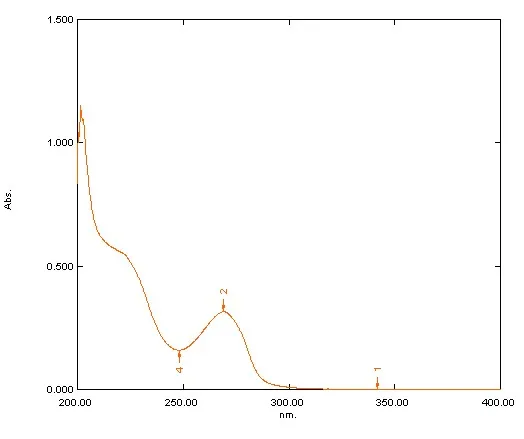
Fig 1: λ max of Pioglitazone HCl
STANDARD CALIBRATION CURVE OF PIOGLITAZONE HCL
From the standard curve it obeys beer’s law in concentration range of 0-30µg/ml in 0.1N HCL. Drug shows good linearity with regression co CONC IN µgm/ml efficient (r2=0.9995) and the equation for this line obtained was found to be (y=0.0318x) which is used for the calculation of amount of drug in dissolution study and content uniformity.
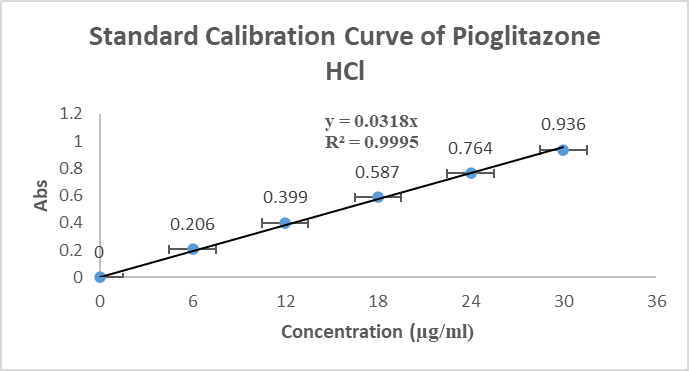
Figure 2: Standard calibration curve of Pioglitazone HCl
Fourier transform infrared spectroscopy (FTIR) studies
Drug-excipients compatibility studies were carried out using FT-IR. FTIR spectra of pure Pioglitazone HCl pure drug and polymers mixtures showed sharp characteristic peaks for functional groups. The results revealed that there was no deviation in the wave number of the peaks nor in the intensity of peaks of the pure drug, polymers mixture, confirms that there is no interaction between drug and polymer.
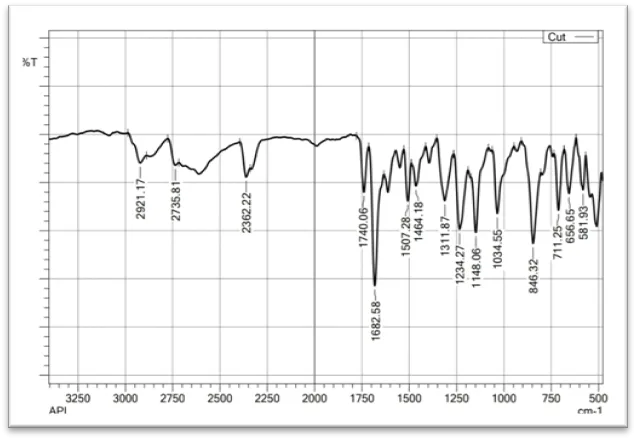
Figure 3: FT-IR Spectra of Pioglitazone HCl
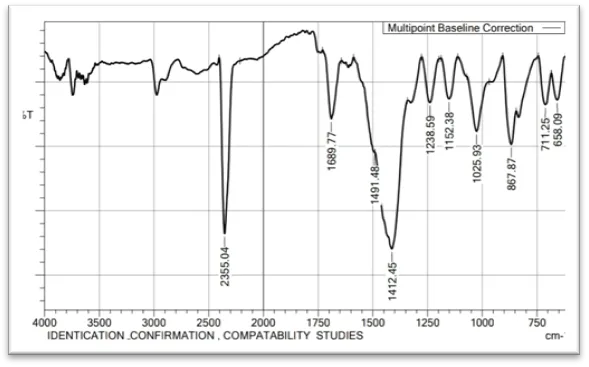
Figure 4: FTIR spectrum of drug and polymers mixture.
Drug content
The drug content of the formulated Pioglitazone HCl In-situ gels ranged from 85.92% to 95.29%. Among the formulations, F2 showed the highest drug content (95.29%), while F8 exhibited the lowest (85.92%). The variation in drug content may be attributed to differences in polymer concentration and increased viscosity, which could have affected uniform drug distribution during formulation. Overall, the results indicated satisfactory incorporation of Pioglitazone HCl into the In-situ gel formulations, although slight variations in drug content were observed among the batches.
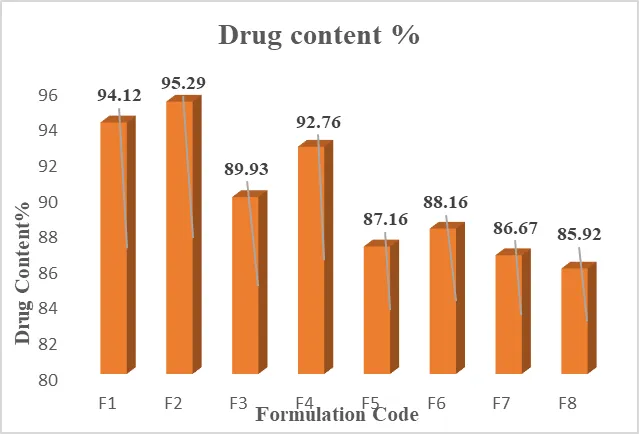
Figure 5: Drug content
pH
Measurement of pH is very important for oral preparations; otherwise it leads to irritation to the throat. All the formulation has a pH around neutral or slightly alkali. The pH of formulations was found in the range of 7.1-7.54
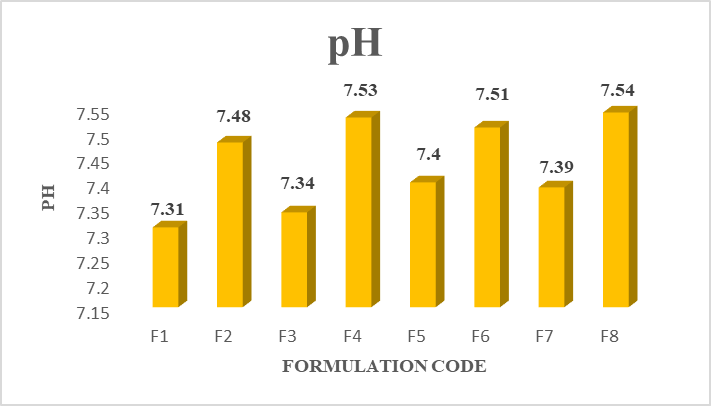
Figure 6: pH
Floating lag time and floating duration
All the formulated in-situ gels (F1–F8) exhibited a floating lag time of less than 1 minute, indicating rapid buoyancy upon contact with the acidic medium. This rapid floating behavior can be attributed to the carbon dioxide generated by the reaction of sodium bicarbonate and calcium carbonate in the acidic environment, which became entrapped within the gel matrix, reducing its density and enabling it to float
All formulations remained buoyant for more than 24 hours, demonstrating excellent floating ability and prolonged gastric retention. The combination of sodium alginate and gum tragacanth formed a stable gel network capable of retaining the generated gas for an extended period. These findings suggest that all formulations possess satisfactory floating characteristics, making them suitable for gastro-retentive drug delivery and prolonged drug release
Table 2: Floating lag time and Floating duration of Mucoadhesive oral in-situ gel formulation
|
Formulation code |
Floating lag time (min) |
Floating duration (hrs.) |
|
F1 |
< 1 |
>24 |
|
F2 |
< 1 |
>24 |
|
F3 |
< 1 |
>24 |
|
F4 |
< 1 |
>24 |
|
F5 |
< 1 |
>24 |
|
F6 |
< 1 |
>24 |
|
F7 |
< 1 |
>24 |
|
F8 |
< 1 |
>24 |
Invitro drug release
The cumulative in-vitro drug release of the formulations ranged from 76.88% (F7) to 94.86% (F2). Formulations F1 and F2 exhibited higher drug release (92.19% and 94.86%, respectively), which may be attributed to the lower concentrations of sodium alginate (1.5%) and gum tragacanth (0.5%), resulting in a less dense gel matrix and faster drug diffusion. As the concentrations of sodium alginate and gum tragacanth increased, the drug release gradually decreased due to the formation of a more viscous and compact gel network that effectively retarded drug diffusion. Although increasing sodium bicarbonate from 0.4% to 0.6% slightly enhanced drug release by creating a more porous gel structure, the release-retarding effect of the polymers was more pronounced. Among all formulations, F7 showed the lowest drug release (76.88%), indicating the maximum sustained-release effect, while F8 exhibited a slightly higher release (79.25%) due to the higher sodium bicarbonate concentration. Overall, the results demonstrate that polymer concentration was the primary factor governing drug release from the in-situ gel formulations.
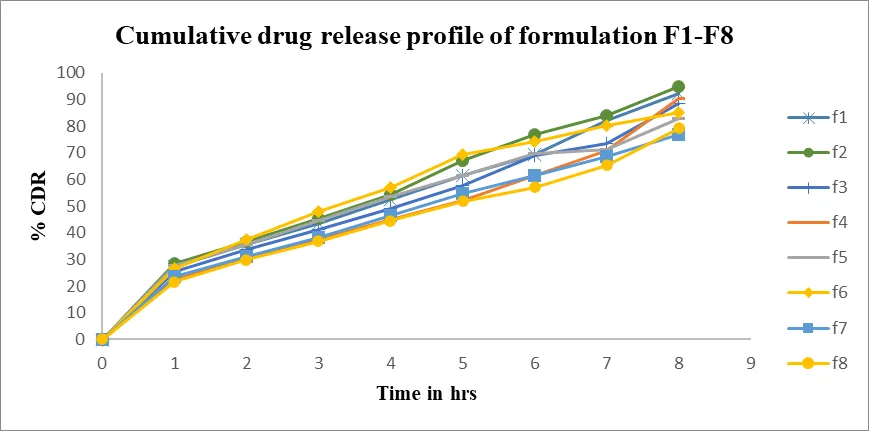
Figure 7: Cumulative drug release profile
CONCLUSION
The present study successfully formulated and evaluated Pioglitazone Hydrochloride gastro-retentive mucoadhesive In-situ gel by the ion-activated gelation method. The prepared formulations exhibited satisfactory physicochemical characteristics, including acceptable drug content, suitable pH, rapid floating with a floating lag time, and floating duration. The formulations also demonstrated sustained in vitro drug release, indicating their suitability for gastro-retentive drug delivery. The optimized formulation provided prolonged drug release, ensuring sustained therapeutic effect. Hence, the developed gastro-retentive In-situ gel of Pioglitazone Hydrochloride can be considered a promising oral drug delivery system for improving gastric retention, sustaining drug release, enhancing bioavailability, in the management of Type 2 diabetes mellitus.
REFERENCES


Mohammad Ali, Kishor S., Parthiban S., Formulation And Evaluation of Mucoadhesive Insitu Gel for Enhanced Gastric Retention, Int. J. of Pharm. Sci., 2026, Vol 4, Issue 8, 277-286, https://doi.org/10.5281/zenodo.21772582
 10.5281/zenodo.21772582