

We use cookies to ensure our website works properly and to personalise your experience. Cookies policy
Final Year B. Pharm, Dept. of Pharmacognosy, Bharathi College of Pharmacy, Bharathinagara, Mandya – 571422, Karnataka, India
Cardiovascular disease are one of the leading cause of death worldwide. Major factor contributing to cardiovascular disease is oxidative stress.Herbal medicines are highly being preferred due to their therapeutic benefits, natural origin and lower side effects. This study aimed to formulate and evaluate herbal gummy containing ethanolic extracts of Hibiscus sabdarifa( Roselle) and Terminalia Arjuna for their cardioprtective and antioxidant potential. The plant materials were extracted by using soxhlet extraction method . Herbal gummies were formulated using gelatin, suitable excipients and natural sweeteners for enhancing palatability and pateint compliance. Formulated gummies were evaluated for appearance,weight variation,pH, phytochemical constituent and moisture content. The prepared gummies exhibited acceptable physicochemical characteristics,good stability,and good antioxidant activity due to the presence of bioactive phytochemicals. The study suggest that the developed herbal gummy is a convenient and patient - friendly dosage form providing cardioprotective benefits. Future in vivo and clinical studies are recommended to evaluate it's long-term efficacy and safety.
Herbal medicine refers to the use of plants and plant products for treating disorders and managing health. It is one of the primeval forms of healthcare and has been practised for thousands of years in countries like India, China, Egypt, Greece, and Rome. In India, herbal medicine forms significant part of traditional systems such as Ayurveda, Siddha, and Unani. Tulsi, neem, ashwagandha, amla are commonly used medicinal plants for treating various diseases. Globally, herbal medicine is used by nearly 75-80% of the world population. India has a rich biodiversity and huge amount of traditional knowledge related to medicinal herbs. Herbal formulations are commonly used for memory, digestion, improving immunity and treating age related diseases. The World Health Organization has also acknowledged the importance of traditional medicine and issued guidelines for assessment and standardization of herbal medicines. [19]
Hibiscus sabdariffa, commonly known as Roselle, belongs to the family Malvaceae and is widely recognized by various names such as Karkade, Roselle, Sorrel, Red Sorrel, Jamaica Sorrel, Indian Sorrel, Guinea Sorrel, Sour-sour, and Queensland Jelly Plant. It is believed to have originated either in West Africa or India and is now cultivated in tropical and subtropical regions across the world. Roselle belongs to the genus Hibiscus, which includes nearly 400 species distributed globally. The plant exists mainly in two varieties: Hibiscus sabdariffa var. sabdariffa and Hibiscus sabdariffa var. altissima. The variety sabdariffa is commonly cultivated for its edible parts such as calyces, leaves, and seeds, whereas the variety altissima is mainly grown for its bast fibre, which is used as a natural substitute for jute in cordage and textile applications.[11]
The calyces of Roselle are the most important medicinal part and are rich in bioactive compounds such as polyphenols, anthocyanins, flavonoids, protocatechuic acid, hydroxycitric acid, and organic acids. These phytoconstituents are responsible for its strong antioxidant, anti-inflammatory, antihyperlipidemic, antihypertensive, hepatoprotective, antidiabetic, and cardioprotective properties.[9]
Roselle has gained significant attention in pharmaceutical and nutraceutical research due to its Hibiscus polyphenol-rich extract (HPE), which shows strong free radical scavenging activity and helps reduce oxidative stress. It is traditionally used for the management of hypertension, liver disorders, obesity, diabetes, and cardiovascular diseases.[9]
Its antihyperlipidemic and antioxidant effects make it particularly useful in the prevention and management of atherosclerosis by reducing LDL oxidation, improving endothelial function, and protecting against vascular inflammation. Because of its excellent therapeutic potential and natural safety profile, Roselle is considered a promising herbal candidate for the development of novel pharmaceutical formulations such as effervescent tablets for antioxidant-mediated management of atherosclerosis.[17]
Terminalia arjuna is a large tree found largely in South Asia. It is a significant medicinal plant used in Ayurveda. It has various therapeutic effects and has been used for a long time especially for heart-related problems. Terminalia arjuna helps treat heart diseases, cough and breathing problems, ulcers, inflammation and- asthma. The bark is mainly useful in lowering cholesterol, also acts as an antioxidant and improve heart health. Terminalia arjuna grows widely in India, Sri Lanka, Africa, Australia and South America.[6]
The stem of Terminalia arjuna is used to prevent the heart. It helps with hypertension, heart disease, hypercholesterolemia and works as an antioxidant in humans. The ethanol extract from the bark of Terminalia arjuna can reduce / lower high levels of fats in the blood. In studies on rats with hyperlipidemia giving 250 mg/kg of body weight of ethanol extract reduced total cholesterol, triglycerides and phospholipids in the blood. This action may be due to a compound called arjunic acid and its related substances. These substances are converted into active forms in the liver and help lower fat levels in the body. The heart protecting effect of Terminalia arjuna bark may also be associated to a decrease in thyroid activity when taken in certain doses.[6]
According to the experimental study done by Sumita Halder et al. Terminalia arjuna bark shows anti-inflammatory action mainly by decreasing inflammation in experimental study model. In the study it importantly decreased oedema caused by formalin in a group of mice although it did not show much effect in carrageenan-induced inflammation. It suggests that its action may be precise to certain types of inflammatory processes. The anti-inflammatory effect is likely due to its function to interfere with inflammatory mediators either by reducing their production, inhibiting their release, or protecting their action on target tissue. Terminalia arjuna has antioxidant compounds like flavonoids and tannins which help decrease oxidative stress — an important factor in inflammation. Additionally, its mild immunomodulatory effect may help control immune responses, thereby decreasing inflammation. Study indicates that T. arjuna decreases inflammation through a combination of antioxidant activity, immune response modulation and interference with inflammatory pathways.
Herbal gummies are dietary supplements made from natural, plant-based ingredients. They usually come as chewy, fruit-flavoured candies, which makes them an easy and enjoyable way to consume herbal remedies. These gummies combine the health benefits of herbs with the convenience and taste of candy, making them appealing for everyday use. They may include herbs like turmeric, ginger, or ajwain, each known for different benefits such as boosting immunity, reducing stress, or improving digestion. People often prefer herbal gummies because they are more pleasant to take compared to traditional forms like powders or tablets. They can support overall health, help with specific wellness goals, or be used alongside medical treatments. However, it’s important to use them carefully and consult a healthcare professional to make sure they are suitable for your individual needs.[16]
Key Ingredients in Gummy Formulation Active Ingredients. These are the main components that provide health benefits. In herbal gummies, active ingredients may include:
Agar is commonly used to give gummies their chewy texture. It is a plant-based alternative often used instead of gelatine.
Flavouring agents are added to make gummies taste good. These can be natural or artificial, often with fruity flavours like orange or lemon. Natural fruit juices or concentrates are also used, which may provide extra benefits like antioxidants.
Gummies are usually brightly coloured to make them more attractive. Natural colorants, such as turmeric, can be used to add colour.
Preservatives help extend shelf life and prevent spoilage. Common ones include citric acid and sodium benzoate. Some products avoid preservatives by using natural methods to keep the gummies fresh.
TYPES OF GUMMIES[16]
These gummies do not contain gelatine. Instead, they use plant-based ingredients like agar or pectin. They may include herbal extracts, vitamins, and other nutrients.
These gummies are made without added sugar. They use sugar substitutes like sugar alcohols or other sweeteners.
These are made for specific health benefits, such as boosting immunity or improving digestion (for example, elderberry gummies).
These gummies contain a mix of vitamins and minerals like vitamin C, vitamin D, B vitamins, and zinc. They help support overall health and well-being.
These gummies are made to support skin, hair, and nail health. They often contain ingredients like biotin, collagen, and other nutrients that help improve appearance and strength.[16]
PLANT PROFILE
Patwa (Hindi)
Pundibijja (Kannada).
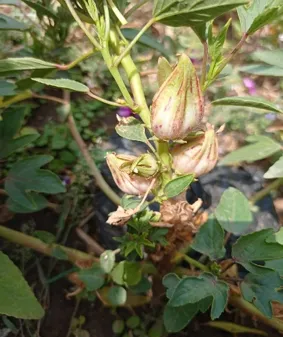
Fig.1: Roselle (hibiscus sabdariffa Linn)
Table 1: Taxonomy of Roselle
|
Taxonomic Rank |
Name |
|
Kingdom |
Plantae |
|
Branch |
Spermaphytes |
|
Sub-phylum |
Angiosperms |
|
Clade |
Dicotyledons |
|
Sub-clade |
Dialypetals |
|
Series |
Thalamiflora |
|
Order |
Malvales |
|
Family |
Malvaceae |
|
Genus |
Hibiscus |
|
Species |
Hibiscus sabdariffa Linn. |
Roselle calyces are rich in anthocyanins, protocatechuic acid, and minerals.
Flavonoids: Hibiscetin, hibiscitrin, sabdaretine.
Organic acids: Citric acid, malic acid, tartaric acid, hibiscus protocatechuic acid.
Vitamins: Ascorbic acid (Vitamin C), niacin, pyridoxine (Vitamin B6)
Red colour is due to high anthocyanin content.
Antioxidant activity: Scavenges free radicals and prevents cells from oxidative stress.
Antihypertensive activity: Helps decrease blood pressure through vasorelaxant and ACE inhibitory effects.
Anticancer activity: Inhibits tumour formation and causes apoptosis in cancer cells.
Antipyretic activity: Decreases fever in experimental models.
Antinociceptive activity: Generates pain relieving effects.
Anti-inflammatory activity: Shows mild to moderate anti-inflammatory effects.
Anti-cholesterol activity: Decreases cholesterol and triglyceride levels and reduces Chances of atherosclerosis.
Antibacterial activity: Suppresses growth of certain bacteria.
Diuretic / Renal activity: Modifies urinary electrolyte excretion and shows uricosuric action.
Neer matti (Kannada)
Marudhamaram (Tamil)
Family: Combretacea
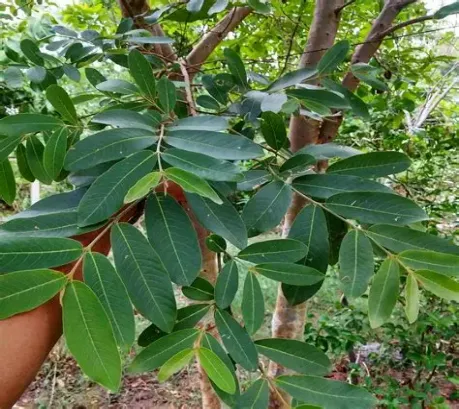
Fig.2: Arjuna (Terminalia arjuna)
Table 2: Taxonomy of Arjuna
|
S. No. |
Taxonomic Rank |
Name |
|
1 |
Kingdom |
Plantae |
|
2 |
Division |
Magnoliophyta |
|
3 |
Class |
Magnoliopsida |
|
4 |
Order |
Myrtales |
|
5 |
Family |
Combretaceae |
|
6 |
Genus |
Terminalia |
|
7 |
Species |
Terminalia arjuna |
Triterpenoids: Arjunin, Arjunic acid, Arjunolic acid, Terminic acid
Glycosides: Arjunetin, Arjunoside I, Arjunoside II, Terminoside A
β Sitosterol flavonoids: Arjunolone, Arjunone, Gallic acid, Ethyl gallate, Luteolin
Tannins: Penicillin, Pyrocatechols, Punicalagin, Terflavin C, Terchebulin, Casuariin
Minerals/ trace elements: Calcium, Aluminium, Magnesium, Silica, Zinc, Copper
Cardioprotective activity: Prevents the heart and enhances cardiac function.
Antioxidant activity: Scavenges free radicals and decreases oxidative stress.
Wound healing activity: Enhances tissue repair and epitheliazation.
Anti-inflammatory activity: Decreases inflammation by suppressing inflammatory pathways.
Antidiabetic activity: Helps control diabetes and oxidative damage.
Antitumour activity: Prevents cancer cells growth and supress apoptosis.
Hypolipidemic activity: Decreases cholesterol and lipid levels.
Hypotensive activity: Decreases elevated blood pressure.
Hepatoprotective activity: Prevents the liver from toxic damage.
Nephroprotective activity: Protects toxin-induced kidney damage.
MATERIALS AND METHODS
Table 3: Materials
|
Ingredients |
Category |
|
Roselle powder |
Antioxidant and cardioprotective |
|
Arjuna powder |
Anti-inflammatory and cardioprotective |
|
Agar Agar |
Gelling agent |
|
Jaggery syrup |
Sweetener |
|
Honey |
Plasticizer/ humectant |
|
Citric acid |
Acidifier |
|
Sodium benzoate |
Preservative |
|
Purified water |
Vehicle |
METHODS
Preparation of plant extract
The plant extract was obtained by soxhlet extraction method to ensure that maximum phytochemicals extracted from the crude drug.
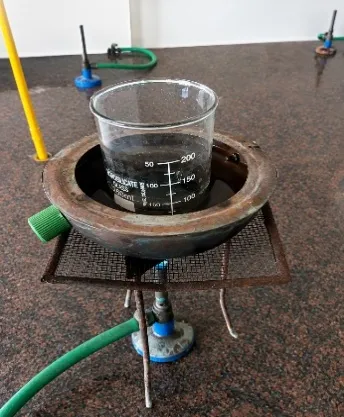
Fig. 3: Soxhlet Extraction
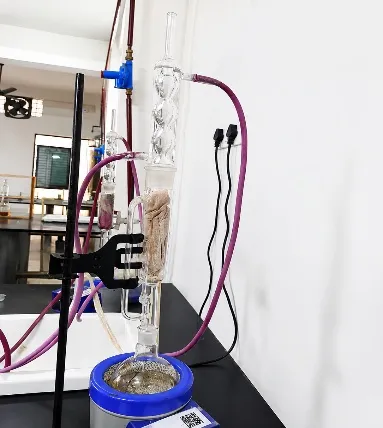
Fig. 4: Evaporation Solvent
The powdered calyces of Roselle and powdered bark of Arjuna were procured from a local herbal supplier and used for extraction. About 50 g of each powdered drug was separately packed in a Soxhlet thimble and extracted using 250 mL ethanol as solvent. The Soxhlet apparatus consisting of a round bottom flask, extraction chamber, and condenser was assembled, and extraction was carried out for 6–8 hours until the solvent in the siphon tube became colorless. During the process, ethanol was continuously vaporized, condensed, and circulated through the powdered material for efficient extraction of phytoconstituents. The obtained extracts were filtered and concentrated using a water bath maintained at 40–50°C to remove excess solvent and obtain semisolid extracts. The extracts were stored in airtight containers for further formulation of herbal gummies. [8,10]
Formulation of herbal gummies:
The agar-based herbal gummies containing extracts of Roselle and Arjuna were prepared by heating and congealing method using agar-agar as the gelling agent, jaggery syrup as sweetener, and honey as humectant.
Initially, agar-agar was dispersed in approximately 40–50 mL purified water and allowed to soak for 15–20 minutes for proper hydration.
The soaked agar solution was then heated with continuous stirring until a clear uniform solution was obtained.
Meanwhile, jaggery syrup was prepared by dissolving jaggery in a small quantity of warm water and filtering to remove impurities and foreign particles.
The jaggery syrup was added slowly into the agar solution with continuous stirring. Honey was then incorporated as a humectant and flavor enhancer.
Previously prepared ethanolic extracts of roselle and arjuna were dissolved in a small quantity of warm water and added to the mixture under continuous stirring to obtain a homogeneous mass.
Citric acid and sodium benzoate were added in suitable quantities to improve taste and preservation.
The mixture was heated gently until a uniform viscous consistency was obtained, avoiding excessive heating to prevent degradation of pytoconstituents and weakening of agar gel strength.
The final gummy mass was poured immediately into pre-lubricated silicone molds and allowed to cool at room temperature, followed by refrigeration for 30–60 minutes for proper setting. The prepared gummies were carefully removed from molds and stored in airtight containers for further evaluation studies. [1,2,4]
Table 4: Materials/Ingrediants
|
Ingredients |
F1 |
F2 |
F3 |
Use |
|
Roselle extract |
6g |
6g |
6g |
Active ingredient |
|
Arjuna extract |
2g |
2g |
2g |
Active ingredient |
|
Agar-agar |
3.5 g |
4g |
4.5g |
Gelling agent |
|
Jaggery syrup |
12g |
12g |
12g |
Sweetener |
|
Honey |
6 g |
6 g |
6 g |
Plasticizer/ humectant |
|
Citric acid |
0.3 g |
0.3 g |
0.3 g |
Acidifier |
|
Sodium benzoate |
0.1g |
0.1g |
0.1g |
Preservatives |
|
Purified water |
40-50 ml |
40-50 ml |
40-50 ml |
Vehicle |

Fig. 5: Formulation of Gummies
EVALUATION PARAMETERS
1.Organoleptic Evaluation
The formulated gummies were evaluated for colour, odour ,taste, texture and overall appearance by visual inspection. [4]
2.Weight variation test
To evaluate uniformity of weight 10 gummies were individually weighed and there average weight was calculated, each gummy was then compared to its average weight.
Acceptance criteria: As per pharmacopoeial standards, weight of individual gummy should not deviate from average weight more than ± 5% for units ≥250 mg. [4]
3.Moisture content
Moisture content was determined by drying the gummies in hot air oven for 3 hours and then weighed .
4.pH determination
pH of gummies solution were tested by digital pH meter to ensure formulation stability and suitability .1 gm of gummy sample was dissolved in 10-20 ml of distilled water and tested in digital pH meter. [4]
5.Phytochemical tests
Preliminary phytochemical tests were performed for the presence of various phytoconstituents such as alkaloids, flavonoids, tannins, saponins, glycosides and phenolic compounds in the herbal extracts.[18]
Preparation of gummy extract:
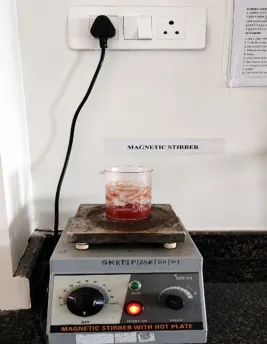
Fig. 5: Preparation Of Extract Stock Solution For Phytochemical Test On Magnetic Stirrer
Add few drops of NaOH to 2 ml extract followed by dilute HCl.
If yellow colour disappears after acid addition then Flavonoids present.
Add few drops of FeCl solution to 2 ml extract.
Greenish-black colour indicates presence of tannins.
Add dil. HCl followed by NaOH to 2 ml extract.
Red to bluish-green colour indicates presence of Anthocyanin.
Add bromine water dropwise to 2 ml of plant extract.
Decolourization of the brown bromine water and the formation of a white creamy precipitate shows presence of phenols.
Shake 5 ml extract with 5 ml water vigorously.
If the mixture stays stable it means saponins are present
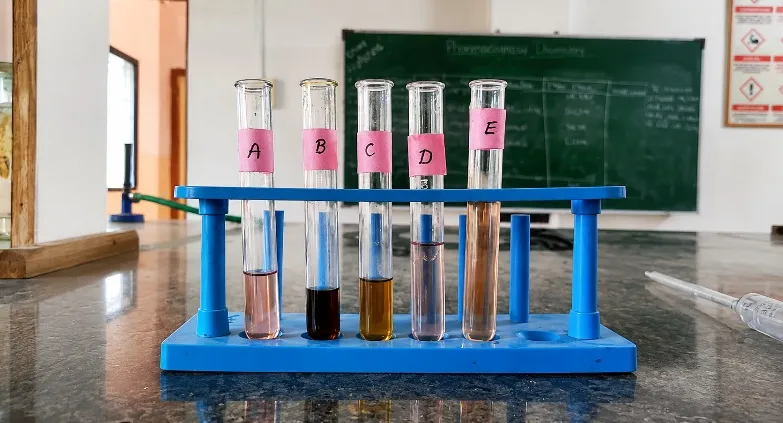
Fig. 6: Result of Phytochemical Tests
Table 5: Organoleptic Evalution
|
Parameters |
F1 |
F2 |
F3 |
|
Appearance |
Smooth, uniform shaped, |
Smooth, uniform shaped, |
Smooth, uniform shaped, |
|
Colour |
Reddish brown |
Reddish brown |
Reddish brown |
|
Taste |
Pleasant, sour, slightly sweet |
Pleasant, sour, slightly sweet |
Pleasant, sour , slightly sweet |
|
Softness |
Chewy and soft |
Chewy and soft |
Chewy and soft |
|
Stickiness |
Non- sticky |
Non- sticky |
Non- sticky |
Table 6: Weight Variation
|
Batches |
Average weight (g) |
|
Batch F1 |
1.59 g |
|
Batch F2 |
2.18 g |
|
Batch F3 |
2.66g |
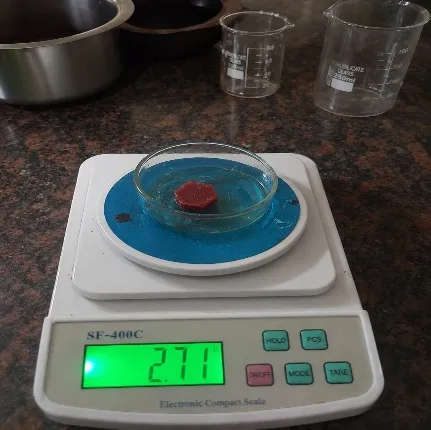
Fig. 7: Weight Variation Test
Table 7: Moisture Content
|
Batches |
Moisture content |
|
F1 |
8.3% |
|
F2 |
7.9% |
|
F3 |
7.3% |
Table 8 : pH Test
|
Batches |
pH |
|
F1 |
2.96 |
|
F2 |
3.21 |
|
F3 |
3.5 |
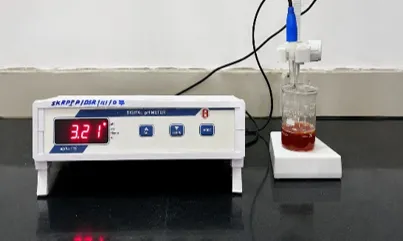
Fig. 8: PH Test on Digital PH Meter
Table 9: Phytochemical Evaluation
|
Test |
Observation |
Result |
|
Flavonoids Tannins Anthocyanin Phenols Saponins |
Yellow colour disappears Green-black colour Red to bluish-green Formation of white creamy ppt Stable foam
|
Present Present Present Present Present |
RESULT AND DISCUSSION
The present study successfully formulated and evaluated polyherbal gummies containing Roselle (Hibiscus sabdariffa) and Arjuna (Terminalia arjuna) extracts with potential antioxidant and cardioprotective benefits. Ethanolic extracts of both drugs were prepared by Soxhlet extraction and incorporated into agar-based gummies using jaggery syrup, honey, citric acid, and sodium benzoate. Three formulations (F1, F2, and F3) were prepared with varying concentrations of agar.
All formulations showed satisfactory organoleptic properties including smooth appearance, reddish-brown colour, pleasant sour-sweet taste, soft chewy texture, and non-sticky nature. The colour of gummies was mainly due to anthocyanins present in Roselle extract.
The average weight of formulations F1, F2, and F3 was found to be 1.59 g, 2.18 g, and 2.66 g respectively, indicating acceptable weight uniformity. Moisture content ranged from 7.3% to 8.3%, which was suitable for maintaining texture and stability of gummies. The pH values ranged from 2.96 to 3.5, showing a slightly acidic nature beneficial for preservation and palatability. The acidic pH may contribute to preservation, however further optimization is required to improve consumer acceptability.
Preliminary phytochemical screening confirmed the presence of flavonoids, tannins, anthocyanins, phenols, and saponins in the prepared gummies. These phytoconstituents are well known for antioxidant and cardioprotective activities. Roselle contains anthocyanins and polyphenols with strong free radical scavenging activity, while Arjuna possesses flavonoids and triterpenoids known for improving cardiac health and reducing oxidative stress.
Among all formulations, F3 was found to be the optimized batch due to its better firmness, lower moisture content, improved texture, and enhanced stability resulting from higher agar concentration. Overall, the study demonstrated that Roselle and Arjuna can be successfully formulated into a stable, palatable, and patient-friendly herbal gummy dosage form with promising therapeutic potential.
CONCLUSION
The present study successfully developed and evaluated Roselle and Arjuna herbal gummies with potential antioxidant and cardioprotective benefits based on phytochemicals constituent and literature evidences.. The prepared gummies showed satisfactory organoleptic properties, acceptable weight variation, suitable moisture content, and stable pH.
Phytochemical screening confirmed the presence of important bioactive constituents such as flavonoids, tannins, anthocyanins, phenols, and saponins. Among the formulations, F3 was found to be the optimized batch due to its better texture and stability.
The study concludes that Roselle and Arjuna can be effectively formulated into a palatable and patient-friendly herbal gummy dosage form with promising therapeutic potential.
REFERENCES







Krutika Mule*, Anamika Ghosh, Rounak Titarmare, Mansi Dahalkar, Ayush Khedikar, Ranutai Dharne, Akansha Akre, Formulation And Evaluation Of Roselle And Arjuna Herbal Gummies With Potential Cardioprotective And Antioxidant Benefits., Int. J. of Pharm. Sci., 2026, Vol 4, Issue 8, 5190-5204. https://doi.org/10.5281/zenodo.22204244
 10.5281/zenodo.22204244