

We use cookies to ensure our website works properly and to personalise your experience. Cookies policy
DJPS College of Pharmacy, Pathri, Parbhani.
To improve patient compliance, reduce the frequency of dose, and maintain constant drug plasma levels, sustained-release matrix tablets are a cutting-edge drug delivery method that releases therapeutic agents over an extended period. The principles, formulation techniques, and assessment methodologies related to sustained-release matrix tablets are all thoroughly covered in this paper. The notion of sustained release systems is introduced at the outset, with an emphasis on its benefits over traditional dose forms, especially in the treatment of chronic illnesses. The presentation includes a thorough explanation of formulation methods, such as wet granulation, direct compression, and new technologies like 3D printing and hot-melt extrusion. The paper also discusses evaluation techniques in vitro and in vivo, with an emphasis on drug release kinetics and pharmacokinetic characteristics that are essential for the creation of these systems. Recent developments in the field are also highlighted in the study, such as the utilization of pulsatile release devices, nanotechnology, and microparticles for improved drug delivery. In summary, further research into novel materials and customized delivery methods will continue to influence the future of sustained- release matrix tablets in pharmaceutical science, even if they have achieved great strides in therapeutic applications. Researchers and formulators working on the creation of sustained-release matrix systems will find this review to be a useful resource.(1)
Tablet:-Tablet is defined as solid pharmaceutical dosage form containing drug substances with or with thought suitable diluents and prepared by either compression or molding method.[1]
Tablets are the most widely used solid dosage forms in the pharmaceutical industry, accounting for approximately 70% of all ethical pharmaceutical preparations produced. They are solid unit dosage forms containing medicament's with or without suitable excipients, prepared either by compression or molding. Tablets vary in shape, size, and weight, depending on the amount of medicinal substances and the intended mode of administration[2]
USES OF TABLETS[3]
Tablets are used for wide range of therapeutic purposes including :
1. Analgesic
2. Antibiotics
3. Antihypertensives
4. Anti-diabetics
5. Vitamins and supplements
Sustained Release: - Sustained release drug delivery systems are designed to achieve a prolonged therapeutic effect by continuously releasing medication over an extended period of time. The goal in designing oral sustained or controlled delivery systems is to reduce the frequency of the dosing or to increase effectiveness of the drug by localizing at the site of action, reducing the dose required or provide uniform drug delivery, thereby also improving patient compliance. Sustained release dosage forms provide a better control of plasma drug levels, less dosage frequency, less side effect, increased efficacy and constant delivery.[4]
Matrix Tablet:-Matrix systems appear to be a very attractive approach from the economic as well as from the process development and scale-up points of view in controlled-release systems 4-5 Hydroxypropyl methyl-cellulose (HPMC) or methcel K100M CR is used frequently as a rate- controlling polymer in matrix tablets. HPMC offers the advantages of being non-toxic and relatively inexpensive; it can be compressed directly into matrices and is available in different chemical substitution and hydration rates and viscosity grades [5]
Polymer:-Resin a film-forming bio-polymer and its byproduct broadly form used for film coating and micro-encapsulation materials to accomplish sustained drug release[6]
Example: Poly vinyl Pyrrolidone 9Pup0 : Polyvinyi Alcohol (PVA): Polyethylene Glycol (PEG)
Various types of polymers are 1.Hytrogels-PAEMA,PUA,PVA
2. Soluble polymer-PEG,PVA,PUP
3.Bio degradable polymer- PLA,PGA,PCL
4. non-Biodegradable polymer–PLA,PGA,PCL
5. Muco adhesive polymer-PUC,EC,CA
SALBUTAMOLSULPHATE:- Salbutamol Sulphate is a selective β2-adrenergic receptor agonist used predominantly for the symptomatic relief and prophylaxis of bronchial asthma, chronic bronchitis, and other obstructive airway diseases. It exerts a bronchodilating action by relaxing bronchial smooth muscle and has a relatively short half-life of 4–6 hours, necessitating frequent administration (3–4 times a day) to maintain effective therapeutic plasma concentrations. Such frequent dosing is often associated with poor patient compliance and fluctuating plasma drug levels, leading to sub-optimal therapeutic outcomes To overcome these limitations, controlled release (CR) drug delivery systems have gained considerable attention. Among various approaches, matrix tablets have emerged as a reliable method for achieving prolonged and consistent drug release . Hydrophilic polymers, particularly Hydroxypropyl Methyl-cellulose (HPMC), are extensively studied for this purpose owing to their swelling, gel-forming, and erosion-controlling characteristics.[7]
Salbutamol tablets are a bronchodilator (beta-2 agonist) used to treat respiratory conditions like asthma and COPD by relaxing airway muscles to improve breathing. Common side effects include tremors, headaches, and rapid heart rate (palpitations). Typical adult dosages are 2mg to 4mg three or four times daily, with a maximum of 8mg per dose.[8]
ASTHAMA:-Asthma is a common chronic inflammatory disease characterized by variable and recurring symptoms, airflow obstruction, and bronchospasm with wheezing, coughing, chest tightness, and shortness of breath. These acute episodes may be triggered by such things as exposure to an environmental stimulant (or allergen), cold air, exercise or exertion, or emotional stress. In children, the most common triggers are viral illnesses such as those that cause the common cold [9] During asthma attacks, the smooth muscle cells in the bronchi constrict, the airways become inflamed and swollen, and breathing becomes difficult. This is often referred to as a tight chest and is a sign to immediately take medication . The treatment of asthma generally includes conventional oral dosage forms like tablets, capsules, oral liquids and inhalation therapy, but oral administration is the most widely accepted route of delivery due to its ease of administration, convenience, compatibility and patient compliance.[10]
METHOD AND MATERIAL
Salbutamol also known as albuterol, is a selective β2-adrenergic receptor agonist widely used as a bronchodilator for the treatment and prevention of bronchospasm associated with respiratory disorders such as Asthma and Chronic Obstructive Pulmonary Disease. It works by relaxing the smooth muscles of the airways, resulting in rapid dilation of the bronchial passages and improved airflow to the lungs. Salbutamol is commonly administered through inhalers, nebulizers, tablets, and syrups, with inhalation providing the fastest onset of action. The drug is characterized by its quick relief of symptoms such as wheezing, shortness of breath, chest tightness, and coughing. It is generally well tolerated; however, side effects may include tremors, nervousness, headache, palpitations, and increased heart rate. Due to its rapid action and effectiveness, Salbutamol is considered a first-line rescue medication for acute bronchospasm and is included in the essential medicines lists of many healthcare organizations worldwide.[11]
Hydroxypropyl Methylcellulose (HPMC), also known as hypromellose, is a semi-synthetic, inert, and water-soluble polymer derived from cellulose that is widely used in pharmaceutical formulations as an excipient. It serves multiple functions, including binder, film-forming agent, thickening agent, suspending agent, and controlled-release matrix former in tablets, capsules, ophthalmic preparations, and topical products. HPMC exhibits excellent biocompatibility, non-toxicity, and stability over a wide pH range, making it suitable for both immediate-release and sustained-release dosage forms. In controlled-release tablets, HPMC hydrates upon contact with gastrointestinal fluids, forming a gel layer that regulates drug release and enhances formulation performance. Additionally, it is commonly used in tablet coating applications to improve appearance, protect active ingredients from environmental factors, and facilitate swallowing. Due to its versatility, safety profile, and regulatory acceptance, HPMC is one of the most extensively utilized pharmaceutical polymers in modern drug delivery systems.[12]
Sodium alginate is a naturally occurring, biodegradable, and biocompatible polysaccharide obtained from the cell walls of brown seaweed. It consists primarily of β-D-mannuronic acid and α-L-guluronic acid residues and is widely used in pharmaceutical, food, and biomedical applications due to its excellent gelling, thickening, stabilizing, and film-forming properties. In pharmaceutical formulations, sodium alginate is commonly employed as a tablet binder, disintegrant, suspending agent, controlled-release matrix former, and encapsulating material for drug delivery systems. When exposed to divalent cations such as calcium ions, it forms a gel matrix that can effectively control the release of active pharmaceutical ingredients. Sodium alginate is also used in gastro-retentive and mucoadhesive drug delivery systems because of its ability to swell and form viscous gels in aqueous environments. Its non-toxic nature, biodegradability, and compatibility with a wide range of drugs make it a valuable excipient in modern pharmaceutical formulations and advanced drug delivery technologies.[13]
Starch is a naturally occurring polysaccharide composed of amylose and amylopectin and is widely obtained from plant sources such as corn, potato, rice, and wheat. It is one of the most commonly used pharmaceutical excipients due to its biodegradability, biocompatibility, non-toxicity, and low cost. In pharmaceutical formulations, starch functions as a diluent, binder, disintegrant, and absorbent in tablets and capsules. As a disintegrant, it promotes the breakup of tablets upon contact with gastrointestinal fluids, facilitating drug release and absorption. Modified starches, such as pregelatinized starch, are frequently employed to enhance flow properties, compressibility, and formulation stability. Starch also serves as a carrier in various drug delivery systems and is widely utilized in food, cosmetic, and biomedical applications. Its versatility, safety, and regulatory acceptance make starch an important excipient in the development and manufacture of pharmaceutical dosage forms.[14]
Polyvinylpyrrolidone (PVP), also known as povidone, is a synthetic, water-soluble polymer widely used as a pharmaceutical excipient because of its excellent binding, film-forming, solubilizing, and stabilizing properties. It is available in various molecular weight grades, which are selected according to the specific requirements of the formulation. In tablet manufacturing, PVP is commonly employed as a binder in wet granulation processes to improve tablet hardness and mechanical strength. It also acts as a solubilizing agent for poorly water-soluble drugs, enhancing their dissolution rate and bioavailability. Additionally, PVP is used as a suspending agent, dispersant, and stabilizer in liquid and semisolid formulations. Due to its biocompatibility, non-toxicity, chemical stability, and compatibility with a wide range of active pharmaceutical ingredients, PVP has become one of the most extensively utilized polymers in pharmaceutical, cosmetic, and biomedical applications.[15]
Talc is a naturally occurring hydrated magnesium silicate mineral widely used as a pharmaceutical excipient due to its excellent lubricating, glidant, antiadherent, and moisture-resistant properties. It is a fine, soft, white to grayish powder that improves the flow characteristics of powders and granules during tablet and capsule manufacturing. In tablet formulations, talc is commonly employed to reduce friction between particles and processing equipment, thereby preventing sticking and facilitating smooth compression and ejection of tablets. It also acts as an anti-caking agent and is frequently incorporated into tablet coatings and topical preparations. Pharmaceutical-grade talc is highly purified to meet stringent quality standards and ensure safety for medicinal use. Because of its chemical inertness, stability, and compatibility with a wide range of active pharmaceutical ingredients, talc remains one of the most commonly used excipients in pharmaceutical dosage forms.[16]
Magnesium stearate is a magnesium salt of stearic acid and palmitic acid that is extensively used as a pharmaceutical excipient, particularly as a lubricant in tablet and capsule formulations. It appears as a fine, white, hydrophobic powder and is added in small quantities to reduce friction between pharmaceutical powders and manufacturing equipment during compression, encapsulation, and ejection processes. Magnesium stearate improves powder flow characteristics, prevents ingredients from adhering to punches and dies, and enhances manufacturing efficiency. Due to its excellent lubricating properties, chemical stability, and compatibility with a wide range of active pharmaceutical ingredients, it is one of the most commonly used excipients in solid dosage forms. However, excessive concentrations may slow tablet disintegration and drug dissolution because of its hydrophobic nature. Magnesium stearate is generally recognized as safe and is widely accepted by major pharmacopeias for use in pharmaceutical, food, and cosmetic products.[17]
Lactose is a naturally occurring disaccharide sugar composed of glucose and galactose and is primarily obtained from milk. It is one of the most widely used pharmaceutical excipients due to its excellent stability, compatibility, palatability, and compressibility. In pharmaceutical formulations, lactose serves mainly as a diluent or filler in tablets, capsules, and dry powder inhalation products, particularly when the active pharmaceutical ingredient is present in small quantities. Lactose is available in various grades, including anhydrous lactose, lactose monohydrate, and spray-dried lactose, each possessing specific properties suitable for different manufacturing processes. Its good flow characteristics and compressibility make it especially useful in direct compression tablet formulations. Lactose is chemically inert toward many drugs and contributes to uniform drug distribution within dosage forms. Because of its safety, low cost, and regulatory acceptance, lactose remains one of the most commonly employed excipients in the pharmaceutical industry.[18]
Gelatin is a natural protein obtained by the partial hydrolysis of collagen derived from animal connective tissues, bones, and skin. It is widely used in pharmaceutical formulations because of its excellent biocompatibility, biodegradability, film-forming ability, and non-toxic nature. In the pharmaceutical industry, gelatin is primarily employed in the manufacture of hard and soft capsules, where it serves as the capsule shell material due to its ability to form strong, flexible, and transparent films. It is also used as a binder, stabilizer, gelling agent, and coating material in various dosage forms. Gelatin exhibits good solubility in warm water and forms a gel upon cooling, making it suitable for controlled-release systems, microencapsulation, and other advanced drug delivery applications. Its compatibility with a wide range of active pharmaceutical ingredients and its established safety profile have made gelatin one of the most extensively used excipients in pharmaceutical, biomedical, and food industries.[19]
Microcrystalline cellulose (MCC) is a purified, partially depolymerized cellulose obtained from α-cellulose derived from fibrous plant materials. It is one of the most widely used pharmaceutical excipients because of its excellent compressibility, binding capacity, flow properties, and chemical inertness. MCC is commonly employed as a diluent, binder, disintegrant, and filler in tablet and capsule formulations, particularly in direct compression processes. Its high compactibility enables the production of tablets with adequate mechanical strength without the need for additional binders. MCC also facilitates rapid tablet disintegration by promoting water uptake and swelling, thereby enhancing drug release. It is non-toxic, non-irritating, biocompatible, and compatible with a wide range of active pharmaceutical ingredients. Due to its versatility, stability, and regulatory acceptance, MCC has become a preferred excipient in the formulation and manufacture of solid oral dosage forms.[20]
Experimental Work
Pre-formulation Study:- At the start of development of sustain release matrix tablet , it is essential that certain fundamental physical and chemical properties of the drug molecule and other derived properties of the drug powder are determined and should be considered in the formulation in relation to purposed dosage form and route of administration. These studies should focus on those physicochemical properties of the drug that could affect drug performance and development of an efficacious dosage form.[22]
A typical Pre-formulation program should begin with the description of the organoleptic qualities of the drug substance. The colour, odour, and taste are the immense value in developing an aesthetically acceptable formulation.[22]
Micro metric properties, (like bulk density, tapped density, Carr’s index, Hausner’s ratio and angle of repose) solubility, (in various solvents like water, phosphate buffer PH 6.8, ethanol, methanol and acetone) melting point of drug were determined. Standardization of drug carried out using distilled water by UV spectrophotometer .[33]
Identification and characterization of Salbutamol
Melting point determination:-The melting point of compound is the temperature at which it changes from a solid to liquid. This is a physical property often used to identify compounds.
Capillary melting tube was taken. A small amount of compound was placed on a clean surface. The compound was put in to open end of capillary tube. The capillary melting point tube was placed in melting point apparatus (Macro scientific works). The sample was observed continuously, so that the melting point of the sample was not missed. Slow heating was done for most accurate results. The melting range was recorded which beings when the sample first starts to melt and ends when the sample completely melted.[22]
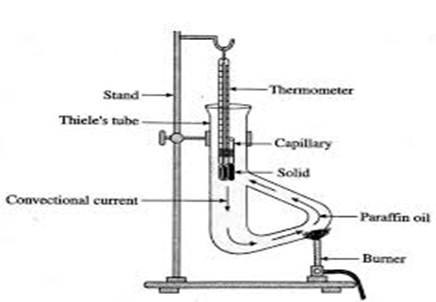
Fig
Physical appearance:-Drug sample has been noted for it’s organoleptic properties. The organoleptic properties like- colour, odour, taste, solubility.[22]
U.V. Spectrophotometry:-Double beam UV-Visible spectrophotometer (SHIMADZU-1900i) with 1cm matched quartz cells was used for the measurement of absorbance. Electroni23]
The organic molecule in solution when exposed to light in the ultra-violet region of the spectrum, absorbed light of particular wavelength depending on the type of electronic transition associated with absorption.[24]
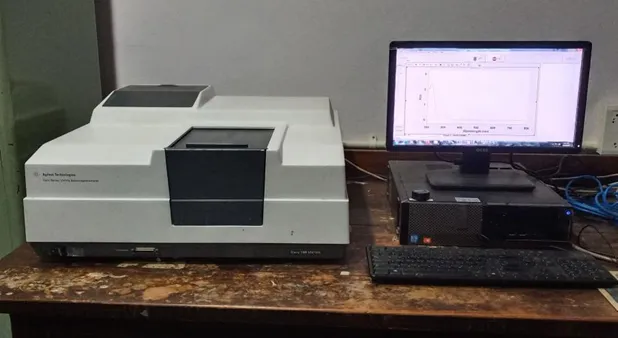
Fig-1
λ max determination:-The samples were subjected to UV spectrophotometric analysis and were scanned for absorption maxima (λmax) in the range of 200-400nm using UV is spectrophotometer in an appropriate medium. [24]
Standard calibration curve:-Stock solution 1:100 mg of Darunavir was weighed and transferred to 1000 ml of clean and dry volumetric flask and dissolved in distilled water and the solution was made up to volume 1000 ml with distilled water to get 1000 µg/ml of Darunavir. • Stock solution 2:10 ml of this (stock solution 1) is diluted to 100 ml with distilled water to get a stock solution containing 100 µg/ml of drug.
Formulation And Development :-For the drug salbutamol, all the excipients were added in different percentage concentration. salbutamol and other excipients were mixed thoroughly. The blend was then compressed directly. The blend were screened and the final formulation with favourable disintegration time and percent drug release results were taken.[25]
Evaluation of powder:-
Pre compression parameters:-
A) Angle of repose:-The angle of repose is determined by the funnel method. The granules allowed to flow through the funnel freely on to the surface. The diameter of the granules cone is measured and angle of repose is calculated using the following equation,[28]
tan θ = h/r or θ = tan -1 (h/r)
where,
θ=angle of repose,
h=height of repose cone,
r= radius of the cone base
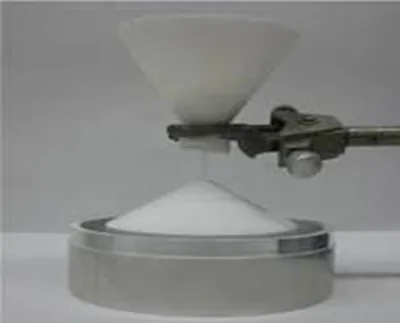
B) Compressibility Index & Hausner's Ratio:- In recent years the compressibility index and the closely related Hausner's ratio have become the simple, fast, and popular methods of predicting powder flow characteristics. The Carr’s compressibility index was found by the equation,[29]
Carr’s Index (%) = (TBD – LBD)/TBD X 100 Hausner Ratio = TBD/LBD
Where,
TBD= tapped bulk density
LBD= loose bulk density
C) Bulk density:-The bulk or fluff density (ρb) was determined by slowly pouring the granulate into a 10 ml graduated glass cylinder. The excess granulate was leveled off with a spatula. The bulk density was obtained by dividing the weight of granulate by the volume. The mean of three determinations was recorded. The bulk density was calculated using following formula,[30]
Pb=M/Vb
Where,
M = weight of powder
Vb = bulk volume
D) Tapped density:-The tapped density (ρt) was determined by tapping a graduated glass cylinder containing a known weight of granulates for a fixed time period. The tapped density was obtained by dividing the weight of granulate by the minimum volume of granulate attained after tapping. The mean of three determinations was recorded. The tapped density was calculated using following formula,[3]
Pt=M/Vt
Where,
M = weight of blend
Vt = minimum volume occupied in cylinder
Evaluation of Tablet:-
|
Sr.No. |
Drugs |
F1 |
F2 |
F3 |
F4 |
F5 |
|
1 |
Salbutamol |
4.0 |
4.0 |
4.0 |
4.0 |
4.0 |
|
2 |
HPMC |
40.0 |
- |
- |
- |
50.0 |
|
3 |
Sodium Alginate |
- |
40.0 |
- |
- |
- |
|
4 |
Starch |
10 |
10 |
10 |
10 |
10 |
|
5 |
PVP |
10 |
10.0 |
10.0 |
10.0 |
- |
|
6 |
Talc |
5.0 |
5.0 |
5.0 |
5.0 |
5.0 |
|
7 |
Magnesiun Sterate |
1.0 |
1.0 |
1.0 |
1.0 |
1.0 |
|
8 |
Lactose |
80 |
80 |
80 |
80 |
80 |
|
9 |
Gelatin |
- |
- |
40.0 |
- |
- |
|
10 |
MCC |
- |
- |
- |
40.0 |
- |
|
|
Total |
150 |
150 |
150 |
150 |
150 |
METHOD
Direct Compression:-This technique will affect compression of drugs at relatively low fillers to drugs ratio, with addition of preparatory techniques. Materials used as dry binders should possess adequate cohesive or compressibility properties in order to form satisfactory tablets of acceptable hardness and friability.[33]
The powder blends were compressed into tablets by direct compression technique on rotary table-ting machine. The compression force was optimized by proper adjustment of upper and lower punches. The tablets formed did not show and defects like capping or chipping. The tablets of each formulation type were evaluated for various properties such as thickness, diameter, weight variation, hardness, friability, etc. Each excipients was individually mixed with DRA (API) in the ratio of used in formulation and directly compressed in the machine.[21]
Advantages of Direct Compression:-[22]
The advantages of direct compression are as follows.
1. Being a dry process, risk of deterioration of the active ingredients, is decreased.
2. Tablets disintegrate into their primary particles rather than granular aggregates.
3. Economy in labor, time, equipment operational energy, and space.
4. Problems due to heat and moisture eliminated.
5. Greater physical stability provided; hardness and porosity changes less with time when direct compression is broadly compared to wet granulation systems.
6. Extraction of the drug from the dosage form is not inhibited during the assay procedure
Limitations of Direct Compression:- [22]
There are several reasons so direct compression is not suitable in some products.
1. Critical nature of the raw materials; need for greater quality control in purchasing to assure batch uniformity.
2. Difficulty obtaining dense hard tablets for high-dose drugs.
3. Non-homogeneous distribution of low-dose drugs due to segregation after blending (content uniformity).
4. Sensitivity of direct compression "running" blends to over lubrication.
5. Limitations in color variations.
6. Need for assisted feed and per-compression for some high-dose drugs.
7. Need for commensurate particle size or particle size distribution between drug and excipients.
8. A large-dose drug may present problems with direct compression if it is not easily compressible by itself.
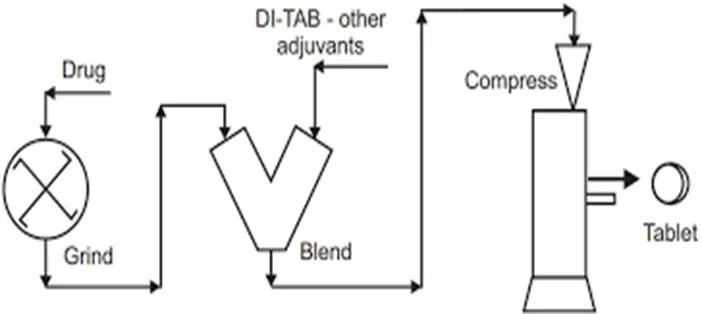
Fig.3. Direct Compression Method[35]
Hardness:-
Hardness is the force required to break a tablet in a diametric compression test. It was measured using Monsanto tablet hardness tester. It is expressed in kg/cm2. 10 tablets were randomly selected from each formulation and hardness of the same was determined. The results are expressed in average value. Hardness of 4 kg is considered suitable for handling the tablets.[24]
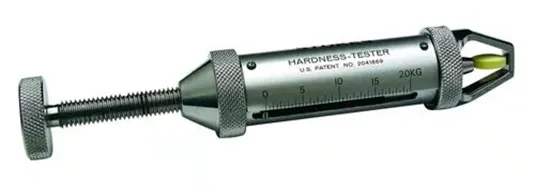
Fig-4
Thickness:-
The thickness of the tablets was determined by using vernier calliper s. Five tablets from each batch were used and average values were calculated[25]
Friability:-Friability test is performed to assess the effect of friction and shocks, which may often cause tablet to chip, cap and break. Roche friabilator was used for the purpose. This device subjects a no of tablets to the combined effect of abrasion and shock by utilizing a plastic chamber that revolves at 25rpm dropping the tablets at a distance of 6 inches with each revolution. Pre-weighed sample of ten tablets was placed in friabilator, which was then operated for 100 revolutions. Tablets were dusted and reweighed. Compressed tablets should not loose more than 1% of their weight. The friability (F) is calculated by the following formula.[26]
F = Wtinitial - Wtfina / Wtinitial × 100

Fig-5
Weight variation:- Weight variation test was done by weighing 20 tablets individually, calculating the average weight and comparing the individual tablet weight to the average.[26]
Disintegration Time:- The time required for disintegration of six tablets, placed in each tube of basket rack assembly of disintegration test apparatus running at a speed of 28-32 cpm, was measured using distilled water maintained at 37oC.[26]
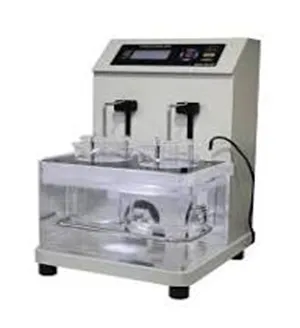
Fig-6
Wetting time:- Wetting time is an important step in the disintegration process. Wetting is closely related to the inner structure of tablet and to the hydrophilicity of excipients. The method reported bu yunexia was used to measure tablet wetting time. A piece of tissue paper folded twice was placed on the distilled water (6ml) which was taken in a small petridish (6.5cm diameter). One tablet was placed on the paper and the time for complete wetting of the tablet was measured.[27] Water Absorption Ratio:-
A piece of paper folded twice placed in small petridish containing 6 ml of water in which amaranth, a water soluble dye was added. A tablet was put on the paper and the time required for the complete wetting was measured. The wetted tablet was then weighed. Water absorption ratio R, was determined by using the equation [28]
R = 10(Wa/Wb)
Where,
Wa = weight of the tablet after absorption.
Wb = weight of the tablet before absorption.
RESULTS
Pre-formulation study
a)Physical apprance
Table No.2
|
1 |
color |
white |
|
2 |
odor |
Odorless |
|
3 |
nature |
bronchodilator, |
|
4 |
solubility |
Freely soluble in water |
b)Melting Point
Table No.3
|
Melting Point |
Observed value |
Standerd value |
|
155°C |
155-160°C |
c) λmax of Salbutamol
The drug sample subjected to UV Spectrophotometric analysis showed absorption maxima (λmax) at a wavelength of 276 nm.
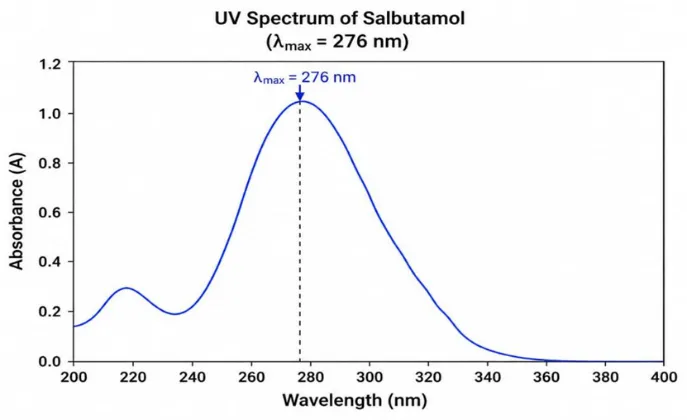
Fig-7
Standerd calibration Curve
In Distilled Water
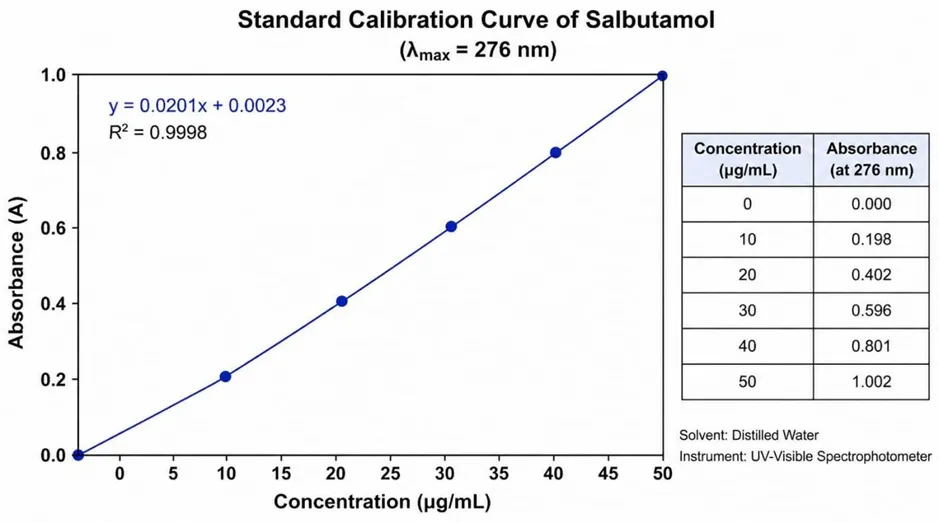
Fig.8
Determination Of Absorption maxim
Evaluation Test
Pre Compression Test
Table No.4
|
Sr no |
Parameters |
F1 |
F2 |
F3 |
F4 |
F5 |
|
1 |
Bulk density(g/cc) |
0.38 |
0.37 |
0.39 |
0.40 |
0.39 |
|
2 |
Tapped density (g/cc) |
0.52 |
0.50 |
0.54 |
0.53 |
0.51 |
|
3 |
Angle of repose (°) |
34.5 |
35.8 |
33.9 |
33.5 |
35.1 |
|
4 |
Carr’s index (%) |
26.9 |
26.0 |
27.7 |
27.1 |
26.5 |
|
5 |
Hausner’s ratio |
1.36 |
1.35 |
1.38 |
1.37 |
1.39 |
Post- Compretion test
Table No.5
|
Sr no |
Parameter |
F1 |
F2 |
F3 |
F4 |
F5 |
|
1 |
Thickness(mm) |
3.32 |
3.45 |
3.38 |
3.40 |
3.42 |
|
2 |
Hardness(kg/cm2) |
5.8 |
6.2 |
6.5 |
6.4 |
6.3 |
|
3 |
Weight variation (mg) |
150.1 |
150 |
150.4 |
150.3 |
150 |
|
4 |
Friability (%w/w) |
0.72 |
0.65 |
0.60 |
0.70 |
0.68 |
|
5 |
Drug content (%) |
98.2 |
99.0 |
99.4 |
99.1 |
99.3 |
1)Thickness
The thickness of tablets was measured using Vernier caliper.
Result:
Thickness was found in the range of 3.2 – 3.6 mm, indicating uniform die filling.
2) Hardness test
The hardness of tablets was determined using Monsanto hardness tester.
Result:
Hardness was found between 5.8 – 6.8 kg/cm², which is within acceptable limits, indicating good mechanical strength..
3) Weight variation test
20 tablets were weighed individually and average weight calculated.
Result:
Average weight ≈ 150 mg
Deviation was within ±7.5% (IP limit for 150 mg tablets) → Passed.
4) Friability test
Friability was evaluated using Roche friabilator.
Formula:
F = [(W₁ − W₂) / W₁] × 100
Result:
Friability was found in the range of 0.55 – 0.82%, which is < 1%, indicating good tablet strength.
5 ) Drug content uniformity
Drug content was analyzed using UV spectrophotometer at 276 nm.
Result:
Drug content was found between 97.5% – 99.2%, which is within acceptable limits (95–100)
6)Dissolution study (Sustained Release)
Dissolution test was performed using USP Type II apparatus.
Medium: 0.1 N HCl (first 2 hrs), then phosphate buffer pH 6.8
Volume: 900 mL Temperature: 37 ± 0.5°C Speed: 50 rpm
Result:
Tablets showed controlled drug release up to 12 hours, confirming sustained release behavior.
SUMMERY & CONCLUSION
The sustained-release matrix tablets of Salbutamol Sulphate were successfully formulated using different polymers and evaluated for various pre-compression and post-compression parameters. The powder blends exhibited satisfactory flow properties, with acceptable bulk density, tapped density, Carr's index, Hausner ratio, and angle of repose values
REFERANCES


Hanuman Kolse, Ramesh Ingole, Vasundhara Giram, Vaishnavi Rohankar, Vaishnavi Kulthe, Gayatri Awachar, Formulation and Evaluation of Sustained Release Matrix Tablet of Salbutamol, Int. J. of Pharm. Sci., 2026, Vol 4, Issue 6, 2972-2984, https://doi.org/10.5281/zenodo.20644171
 10.5281/zenodo.20644171