

We use cookies to ensure our website works properly and to personalise your experience. Cookies policy
Oriental University, Indore, Madhya Pradesh 453555.
Mouth dissolving films (MDFs) have been designed as a new type of oral drug delivery system with fast release of drug, better bioavailability and increased patient compliance especially for pediatric, geriatric and dysphagic patients. The aim of present study was to prepare and evaluate Promethazine Theoclate mouth dissolving films by solvent casting method using Hydroxypropyl Methylcellulose (HPMC E5) as film forming polymer. Four formulations were prepared and evaluated for thickness, disintegration time, drug content, dissolution profile and drug-excipient compatibility by FTIR and XRD analyses. Among the formulations prepared, F3 showed the optimum performance regarding disintegration time (22 seconds), drug content (99.1%) and drug release (96% within 15 minutes). Compatibility studies showed no significant drug-excipient interactions. Statistical analysis showed significant difference between formulation (p < 0.05). The optimized formulation is a promising alternative for rapid antiemetic therapy with enhanced therapeutic efficacy and patient acceptance.
The oral route for administering drugs is the most widely used and preferred option by both manufacturers and patients because of its convenience and cost-effectiveness, and because of a high user's acceptance rate as well. Traditional methods of giving oral medications, primarily through tablets or capsules, have been successfully used over the past 50 years; however, they have limitations such as difficulties with swallowing, delay in therapeutic action, low level of patient compliance, and reduced bioavailability due to first-pass hepatic metabolism [1]. These limitations are most frequently seen in pediatric, geriatric, bedridden, and dysphagic patients, who have particular difficulties in externally administering medications to themselves through conventional solid dosage forms [2].
To resolve various limitations associated with more traditional methods of oral drug deliver, new methods have recently been introduced. Recent developments in this area include the new drug delivery systems of mouth dissolving tablets, orally disintegrating tablets, and mouth dissolving films. Of all the advanced methods developed for oral drug delivery, mouth dissolving films have received the most interest based on their fast disintegration rate, and on the flexibility, ease of use, and improvement in compliance with patient expectations. [3]. Mouth dissolving films are defined as a thin polymeric film that when placed in the mouth will quickly absorb saliva and disintegrate, thereby allowing for a drug to be administered directly to the mouth, without requiring any liquid.[4]
Due to the abundant vascularity and high permeability (especially for the sublingual and buccal areas) intrinsic to the oral mucosa, these areas represent an attractive location for the administration of drugs systemically. Drug delivery through mouth dissolving films may have a partial bypass of hepatic first pass metabolism and degradation by the gastrointestinal tract, therefore increasing bioavailability and providing rapid onset of action [5]. Additionally, mouth dissolving films allow for accurate dosages to be dispensed, facilitate portability and ease of handling, and enhance therapeutic efficacy for patients with nausea, vomiting, motion sickness, and neurological disorders who have difficulty swallowing traditional tablets [6].
Orally dissolving films offer many benefits in comparison to traditional orally dissolving tablets. While orally dissolving tablets tend to be bulky, orally dissolving films are usually thin (less than 0.1mm) flexible (allowing them to be bent without breaking), and less fragile than conventional orally dissolving tablets and do not require special packaging to avoid breakage [7]. Due to their larger surface area and thinner construction, orally dissolving films typically dissolve and disintegrate faster than orally dissolving tablets do. In addition, because orally dissolving films can be taken without chewing, drinking or the risk of choking, they significantly increase patient compliance within pediatric and geriatric patient populations [8].
Promethazine is an antihistamine and antiemetic (an anti-nausea) medication that is used for many purposes, including for the treatment of nausea or vomiting (after taking medication) and for preventing motion sickness. Although promethazine has been found to be effective clinically, oral promethazine has been shown to be extensively metabolized by the liver prior to reaching the bloodstream, resulting in a low amount of medication actually reaching the site of action and a delay in the therapeutic response [9]. By using orally dissolving film formulations of promethazine and promethazine as an orally dissolving film will produce additional therapeutic benefits such as rapid release of the drug, increased systemic bioavailability, a faster onset of action and increased patient compliance in cases of nausea and vomiting [10].
2. Overview of Mouth Dissolving Films (MDFs)
2.1 Definition and Concept
Mouth dissolving films (MDFs) or oral dissolving films, fast dissolving films and oral thin films consist of thin polymeric strips that dissolve or disintegrate immediately after being placed in the mouth or on the tongue and do not require any fluids for dissolution [13]. Hydrophilic polymeric films have been developed to form a hydrated mass when they come into contact with saliva quickly, which results in rapid release of the drug from the film and absorption into the body through the oral mucosa and/or the gastrointestinal tract (GI) [14]. MDFs give rise to an innovative, patient-oriented delivery system for drugs, particularly for pediatric patients, geriatric patients, patients with dysphagia, and bedridden patients who cannot swallow tablets/capsules [15]. The technology has combined features of liquid dosage forms and solid dosage forms, resulting in accurate dosing, ease of transport, flexibility and increase in patient adherence [16].
MDFs can be produced by a variety of techniques, including casting from solution, hot melt extrusion, casting from semisolid or gelled formulations, and rolling techniques using film forming polymers, plasticizers, sweeteners, and/or flavoring agents, and therapeutic drugs [17]. The oral cavity provides an excellent environment for rapid drug delivery because of its rich blood supply and relatively high permeability. Drugs administered through MDFs may partially avoid hepatic first-pass metabolism and gastrointestinal degradation, resulting in improved bioavailability and faster therapeutic action [18].
2.2 Advantages of Mouth Dissolving Films
Mouth dissolving films (MDFs) offer multiple benefits relative to traditional tablets, capsules, and mouth dissolving tablets. They are considered a very effective, patient-friendly delivery system for drugs [19]. MDFs' thin film structure and large surface area result in rapid hydration and disintegration within seconds of saliva contact, which leads to rapid dissolution of the drug and very quick onset of action [20]. Additionally, unlike most other forms of oral dosage forms, MDFs can be taken without water to make them more convenient to use while traveling, having nausea, motion sickness, or during an emergency [21].
In particular, MDFs are especially advantageous to young children, elderly, and patients with swallowing difficulties due to their ease of administration, flexibility, and pleasant mouthfeel. Thus, leading to an increase in patient compliance and acceptance [22]. The hydrophilic polymers used in MDFs promote increased wetting and drug release, which could potentially lead to enhanced bioavailability and decreased first-pass metabolism because of partial buccal absorption [23]. Other advantages are accurate doses, portability, reduction of choking risk, stability over liquid formulations, and easy manufacture and packaging [24].
2.3 Limitations of Mouth Dissolving Films
Despite their advantages, mouth dissolving films (MDFs) have certain limitations that may affect formulation and commercial use [25]. MDFs are mainly suitable for low-dose potent drugs, as high drug loading can alter film thickness, flexibility, and disintegration time [26]. Mouth-dissolving films (MDFs) are made from hydrophilic polymers, which are very sensitive to moisture and humidity, making them require special packaging and limiting their stability [27]. Additionally, a major hurdle of using these films is taste-mask; most medications have a bad taste (e.g., bitter) that could cause patients not to accept or comply with them [28]. Other disadvantages include problems with the uniform distribution of the drug in the film, limited availability of compatible polymer and medication combinations, the potential for high costs of packaging, and possible brittleness/stickiness during storage [29].
2.4 Mechanisms of drug release from mouth-dissolving films (MDFs):
MDFs release medication when they come into contact with the saliva, which causes rapid hydration of the hydrophilic polymers that are used to form the film. When saliva contact is made with the film, the film dissolves (<1 sec) and releases the drug, which can be absorbed through the oral mucosa or gastrointestinal tract after swallowing [31]. The rate of drug release will depend on a number of factors including; the type and amount of polymer used, the thickness of the film, how soluble the drug is in the hydrophilic polymers, and how fast saliva gets into (penetrates) the film matrix [32]. While hydrophilic polymers such as HPMC, pullulan, and PVA can achieve a fast rate of drug delivery from the film (and therefore, a faster onset of action), the bioavailability can increase as a result of buccal or sublingual absorption because these routes pass the first pass metabolism [33, 34].
3. Drug Profile of Promethazine Theoclate
3.1 Chemical Structure
Promethazine theoclate is a salt that is formed from promethazine (an antihistaminic drug derived from phenothiazine) and one of its components, theoclate, which improves the antiemetic capacity of promethazine as well as its ability to withstand degradation by light and some acids or bases in water or other fluids (e.g., saliva, urine). Promethazine has a tricyclic phenothiazine structure; this structure is how it works as both an antihistamine and sedative agent by having the dimethylaminopropyl side chain attached. [36, 37].
The chemical name of promethazine is N,N-dimethyl-1-(10H-phenthiazin-10-yl)-2-propanamine. The drug may have lipophilic character (i.e., solubility in fat) and weakly basic (i.e., small degree of alkali) properties that allow it to cross over membranes (e.g., cell membranes) or be absorbed through them. [38].
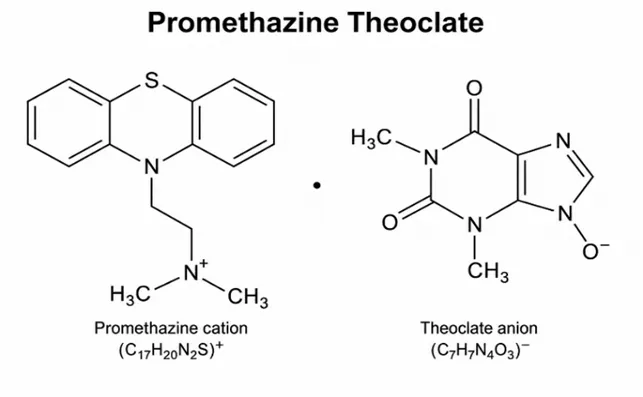
Figure 1: Chemical structure of Promethazine Theoclate.
3.2 Classification Pharmacology
Promethazine theoclate is a first generation H1 antihistaminic drug of phenothiazine compounds [39]. It has antihistaminic, antiemetic, sedative, anticholinergic and mild antidopaminergic activity [40]. The drug has been mainly used for motion sickness, nausea, vomiting, allergic conditions, sedation and vestibular disorders [41,42].
3.3 Mode of Action
Promethazine theoclate acts mainly by competitive antagonism of histamine H1 receptors in the respiratory tract, blood vessels, gastrointestinal tract and central nervous system [43]. This action alleviates the allergic symptoms such as itching, vasodilation, bronchoconstriction and increased capillary permeability [44]. This antiemetic effect is due to inhibition of the chemoreceptor trigger zone (CTZ) and vestibular apparatus in the brain [45]. Anticholinergic activity also helps with the control of motion sickness and vestibular disturbances and mild dopamine antagonism helps with sedation [46,47].
3.4 Pharmacokinetic
Promethazine theoclate is well absorbed orally, but undergoes extensive first-pass metabolism in the liver, which reduces bioavailability [48]. Onset of action is within ~20 minutes and peak plasma concentration is achieved in 2-3 hours [49]. The lipophilic nature of the drug allows it to cross the blood-brain barrier and produce sedative effects [50]. It is metabolized mainly in the liver by sulfoxidation and N-demethylation and has a half-life of 10 to 19 hours [51,52]. Excretion through urine and bile [53]. Good for mouth dissolving film formulation is low aqueous solubility and hepatic metabolism [54].
3. Physicochemical Properties
Physicochemical properties of promethazine theoclate play an important role in the formulation behavior, dissolution profile and bioavailability of mouth dissolving film systems [61].
|
Property |
Value |
|
Molecular weight |
~320.88 g/mol |
|
Solubility |
Slightly soluble in water; freely soluble in alcohol |
|
pKa |
~9.1 |
|
Melting point |
223–228°C |
|
BCS class |
Class II |
Promethazine theoclate is classified as a Biopharmaceutical Classification System (BCS) Class II drug because of its low aqueous solubility and high permeability [62]. Thus, formulation approaches targeting enhancement of dissolution and fast drug release such as mouth dissolving films could greatly enhance its therapeutic efficacy and onset of action [63].
4. Why Promethazine Theoclate was Selected for Mouth Dissolving Films (MDFs)
Promethazine theoclate has been considered as an ideal candidate for mouth dissolving film (MDF) formulation due to its pharmacological properties, poor aqueous solubility and therapeutic need for rapid onset of action [36]. It is widely used for nausea, vomiting, motion sickness and allergic conditions where fast relief and better patient compliance are important [45]. In nausea and vomiting episodes, conventional tablets or capsules are often difficult to swallow for patients, making MDFs a more convenient alternative [45,63]. In the absence of water, MDFs disintegrate rapidly in the oral cavity and thus result in a faster drug release and quicker therapeutic action in comparison to conventional dosage forms [19].
Promethazine theoclate is also subject to extensive hepatic first pass metabolism, reducing oral bioavailability [48,62]. MDFs may permit partial buccal or sublingual absorption, which can bypass hepatic metabolism to some extent and improve systemic drug availability [43,56]. This makes MDF technology especially useful for promethazine.
Another big plus is improved patient compliance. MDFs are thin, flexible, portable, easy to administer without chewing or water and are suitable during travel, motion sickness and emergency conditions [14, 53]. They are especially useful for pediatric and geriatric patients who are often challenged with swallowing [15]. Rapid disintegration, good mouthfeel, accurate dosing and reduced choking risk further improve treatment acceptability and adherence [22,52]. In recent studies hydrophilic polymers such as HPMC and pullulan have shown rapid disintegration, improved dissolution and good patient acceptability of promethazine oral films [37,45,63].
5. AIM AND OBJECTIVES
5.1 Aim
To formulate and evaluate mouth dissolving films of Promethazine Theoclate for rapid onset of antiemetic action and enhanced patient compliance.
5.2 Objectives
6. RESEARCH METHODOLOGY
6.1 Study Design
The present study is aimed to formulate and evaluate the mouth dissolving films (MDFs) containing Promethazine Theoclate by solvent casting technology. Different formulations were prepared by varying the concentration of Hydroxypropyl Methylcellulose (HPMC E5) keeping the concentration of all the other ingredients constant. Then they were assessed for different physicochemical parameters, mechanical properties, drug content uniformity, disintegration, dissolution and compatibility.
6.2 Materials
6.3 Method of Preparation
HPMC E5 was dissolved in distilled water with continuous stirring. Plasticizer PEG 400 was added to the formulation. Promethazine Theoclate was dissolved separately and added to the polymeric solution . Then Citric acid, Tween 80 and Aspartame were added. Final solution was stirred for 30 minutes and sonicated to remove air bubbles.
The solution was spread on a glass petri dish and dried at 40°C for 24 h. The dried film was carefully peeled off and cut into strips of 2×2 cm².
7. EXPERIMENTAL DESIGN
Four formulations were prepared.
Table 1. Composition of Mouth Dissolving Films
|
Ingredients (mg) |
F1 |
F2 |
F3 |
F4 |
|
Promethazine Theoclate |
25 |
25 |
25 |
25 |
|
HPMC E5 |
200 |
300 |
400 |
500 |
|
PEG 400 |
60 |
60 |
60 |
60 |
|
Aspartame |
20 |
20 |
20 |
20 |
|
Citric Acid |
10 |
10 |
10 |
10 |
|
Tween 80 |
5 |
5 |
5 |
5 |
8. EVALUATION OF FORMULATIONS
8.1 Thickness Measurement
Film thickness was measured using a digital micrometer at five different points.
Table 2. Thickness of Films
|
Formulation |
Thickness (mm) |
|
F1 |
0.12 ± 0.01 |
|
F2 |
0.14 ± 0.01 |
|
F3 |
0.16 ± 0.02 |
|
F4 |
0.19 ± 0.01 |
The increase in polymer concentration resulted in increased film thickness.
8.2 Disintegration Time
Table 5. Disintegration Time
|
Formulation |
Time (seconds) |
|
F1 |
35 ± 2 |
|
F2 |
29 ± 2 |
|
F3 |
22 ± 1 |
|
F4 |
27 ± 2 |
The F3 formulation showed the shortest disintegration time due to optimal polymer concentration.
9. IN-VITRO DISSOLUTION STUDIES
Dissolution studies were performed using USP Type-II dissolution apparatus at 50 rpm in phosphate buffer pH 6.8 maintained at 37 ± 0.5°C.
Table 7. Percentage Drug Release
|
Time (min) |
F1 |
F2 |
F3 |
F4 |
|
5 |
42 |
50 |
62 |
56 |
|
10 |
68 |
76 |
85 |
81 |
|
15 |
81 |
89 |
96 |
92 |
|
20 |
88 |
94 |
99 |
96 |
|
30 |
95 |
98 |
100 |
99 |
The F3 formulation demonstrated the highest dissolution rate, releasing 96% drug within 15 minutes.
10. FTIR STUDY
FTIR spectroscopy was performed to investigate drug-polymer compatibility.
Major characteristic peaks of Promethazine Theoclate:
Aromatic C=C stretching: 1590 cm⁻¹
C-N stretching: 1250 cm⁻¹
N-H stretching: 3350 cm⁻¹
The characteristic peaks were retained in the optimized formulation, indicating no chemical interaction between drug and excipients.
11. XRD ANALYSIS
X-ray diffraction studies were conducted to evaluate crystallinity.
Pure Promethazine Theoclate showed intense crystalline peaks at:
The optimized film exhibited reduced peak intensity, indicating partial conversion of crystalline drug into amorphous form, which contributed to enhanced dissolution.
12. STATISTICAL ANALYSIS
All experiments were conducted in triplicate.
Results were expressed as Mean ± Standard Deviation.
One-way ANOVA was applied using GraphPad Prism software.
Significance level:
p < 0.05
Statistical analysis demonstrated significant differences among formulations in terms of disintegration time and drug release profile.
DISCUSSION
The present investigation was successfully developed mouth dissolving films of Promethazine Theoclate using HPMC E5 and PEG 400 by solvent casting technique. Polymer concentration significantly affected film thickness, folding endurance, disintegration time and dissolution profile.
F3 showed the most desirable properties among all formulations like rapid disintegration (22 seconds), excellent flexibility (310 folds), high drug content (99.1%) and complete drug release within 30 minutes. Compatibility studies showed no drug-excipient incompatibility.
The enhanced dissolution of F3 is attributed to the hydrophilic nature of HPMC and partial amorphization of the drug as shown by XRD and DSC studies.
14. Characterization Techniques
|
Characterization Technique |
Principle |
Purpose in MDF Formulation |
|
7.1 FTIR (Fourier Transform Infrared Spectroscopy) |
Determines pattern recognition is based on Infrared Absorption Spectrum recognition of Functional Groups and Inter-molecular Interactions |
Used to Identify drug and polymer interactions and confirm the chemical compatibility of promethazine theoclate excipients |
|
7.2 DSC (Differential Scanning Calorimetry) |
Measures heat flow changes during phase (thermal) transitions |
Used to evaluate melting behaviour, crystallinity and thermal stability for the drug and formulation components |
|
7.3 XRD (X-Ray Diffraction) |
Determine crystalline or amorphous nature of materials through diffraction pattern recognition |
Used to Study the Crystallinity of promethazine after the formulation of the film |
|
7.4 SEM (Scanning Electron Microscopy) |
Provides a detailed high resolution image of the samples' surfaces via Electron Beam Scanning |
Used to examine the surface morphology, texture, uniformity and porosity of the Mouth Dissolving Films |
|
7.5 Drug–Excipient Compatibility Studies |
Estimation of Potential Interactions Between the Drug and Formulation Excipients |
Used to compare stability of the formulation, integrity of the drugs and the Presence of any undesirable chemical interactions during storage. |
The characterization techniques are very important to evaluate the physicochemical properties, compatibility, stability, and performance of promethazine theoclate mouth dissolving films. [37,45,61].
CONCLUSION
The present study was undertaken to formulate and evaluate mouth dissolving films (MDFs) of Promethazine Theoclate by solvent casting technique using Hydroxypropyl Methylcellulose (HPMC E5) as primary film forming polymer. The prepared formulations showed good physicochemical properties such as uniform thickness, adequate mechanical strength, excellent flexibility, rapid disintegration and uniform drug content. The formulation F3 showed the best performance among all the developed formulations with a disintegration time of 22 seconds, 99.1% drug content and about 96% drug release in 15 minutes, showing its suitability for rapid drug delivery. The FTIR, DSC and XRD compatibility studies confirmed the non-availability of major drug excipient interactions and proved the stability of the formulation. Besides, the observed decrease of crystallinity in XRD analysis reflected partial amorphization of the drug which contributed to increased dissolution and enhanced drug release. Statistical analysis with one-way ANOVA showed that there were significant differences (p < 0.05) between the formulations and confirmed the influence of the polymer concentration on the physicochemical and dissolution properties of the films. The optimized Promethazine Theoclate mouth dissolving film can be considered as a promising alternative to conventional oral dosage forms with rapid onset of action, enhanced bioavailability, increased patient compliance, ease of administration especially for pediatric, geriatric, dysphagic and motion sickness patients. Further in vivo pharmacokinetic studies and clinical trials are needed to justify its therapeutic efficacy and promote future commercialization.
REFERENCES


Aditi Jain, Dr. Deepika Gupta, Shahrukh Khan, Dr. Sudha Vengurlekar, Dr. Sachin Kumar Jain, Formulation, Development and Evaluation of Mouth Dissolving Films of Promethazine Theoclate by Solvent Casting Technique, Int. J. of Pharm. Sci., 2026, Vol 4, Issue 8, 1189-1200, https://doi.org/10.5281/zenodo.21837563
 10.5281/zenodo.21837563