

We use cookies to ensure our website works properly and to personalise your experience. Cookies policy
Dr. Kolpe Institute of Pharmacy Kolpewadi, Maharashtra.
The pharmaceutical industry is a source of significant tension to the environment even though it is one of the keys to human well-being. It causes excessive wastage (E-factors 25-100 +), uses hazardous solvents, and increases antimicrobial resistance and disruption of an ecosystem through drug remnants. It is a review which attempts to investigate new approaches in a bid to align pharmaceutical production to global health. The utilization of the principles of Green Chemistry that improves the atom and step economy, the use of non-dangerous solvents (ex. CyreneTM), the development of catalysts (biocatalysis, electrochemistry, photoredox), is one of the vital strategies. Renewable feedstocks (e.g. bio-based artemisinin) and process intensification (through continued production) also reduce consumption of resources and emissions respectively. Environmentally friendly development involves such systems of low impact delivery such as dry powder inhalers, environmentally friendly dosage and green excipients such as microcrystalline cellulose. Minimization of waste is done through circular economy methods such as solvent recovery, by-product valorization and zero liquid discharge. Digital twins, Process Analytical Technology (PAT), or AI-assisted route scouts are the examples of digital enablers that increase real-time monitoring and decision-making. Industry alliances like ACS GCI PR and the transformation of legislation like the ERA and the Zero Pollution Action Plan of the EU have supported these developments which indicate a change of the non-linear, wasteful production and consumption modes and the movement into regenerative, circular modes of pharmaceutical operation. Autonomous labs and microbial biosynthesis are new avenues that have given prospects to really sustainable production of pharmaceuticals despite the problem of scale, cost concerns, and regulatory bifurcation.
1.1. Background and Context
The pharmaceutical industry is on a focal crossroads of environmental point. Though it has a very important role in protecting human health, the annual defined daily dosage of over 4 billion of each substance has become more and more unbearable as to its environmental impact of the production processes themselves. Around the world, biologically active chemicals of drugs, or more precisely, the active pharmaceutical ingredients (APIs) are manufactured annually in quantity of more than two million metric tons (1) As the LCA literature shows that the percentage of carbon footprint of the sector is high, pharmaceutical manufacturing in isolation creates approximately 55 percent of the total carbon footprint of the sector, which is huge relative to the per-kilogram carbon footprint intensity that other sectors like the automotive or the aerospace sector has (2,3) This relative effect or impact compared to that of volume is because of the inherent inefficiencies of the classical synthetic strategies which majorly involve resource-intensive multi-step batch strategies.
Solvent consumption, which makes up 60-80 percent of the total mass input in the normal batch production, is one area of environmental concern in the process of API synthesis (4) Even though these solvents are the most appropriate to control and purify reactions, commonly used solvents are dichloromethane (DCM), N, N-dimethylformamide (DMF), and dimethyl sulfoxide (DMSO), which are typically produced through fossil feeds, very volatile, and extremely toxic and difficult to degrade(5) This is further complicated by the fact that transition metal catalysts, especially, palladium (Pd) and nickel (Ni) are commonly used, although despite demonstrating desirable reactions of bond formation, they leave behind residues (0.1-100 ppm) that need to be purified through expensive and energy-intensive processes in order to meet the demanding regulatory provisions of metal impurities in a final drug product (6)
Outside the factory fence line, there exist environmental consequences. Common in aqueous effluents of pharmaceutical manufacturing plants include bioactive substances, including antibiotics, anticonvulsants, and nonsteroidal anti-inflammatory medications (NSAIDs) in concentrations of micrograms to milligrams per liter(7) These substances have been detected in the surface waters globally due to their common resistance to the conventional method of wastewater treatment. Indicatively, European, North American, and South Asian rivers have been identified to harbour a host of 8 -lactam and fluoroquinolone antibiotics, carbamazepine, an antiepileptic and diclofenac, an NSAID(8,9) The environmental effect is colossal: it is recorded that the environment suffers antimicrobial resistance (AMR) as a result of prolonged exposure to sub-therapeutic concentrations of antibiotics in numerous environmental bacteria (10). On the same note, low doses of the artificial estrogen 17alpha-ethinylestradiol (EE2), such as 1 ng/L, has been found to feminize and cause reproductive failure in fish (11). Fluoxetine (Prozac) is a neuroactive drug that induces alterations in the eating habits of the fish and the evasion patterns of predation by fish, altering the normal workings of the ecosystems (12).
These empirical effects indicate an institutional weakness in traditional pharmaceutical innovation: the emphasis on synthetic health and immediate commercialization against sustainability of the environment in the long run. The disconnection between the innovation of pharmaceuticals and the destruction of the environment is high time since medicine consumption in the world will probably be more than 1.5 trillion by 2023 (13).
1.2. Definition and Scope of Green Pharmaceutical Manufacturing
In response to these challenges, the concept of green pharmaceutical manufacturing has emerged as a broad structure that takes into account the concept of sustainability throughout every stage of the medication research and production. The two pillars that are complementary to each other and form the basis of this paradigm are Green Chemistry and Green Engineering.
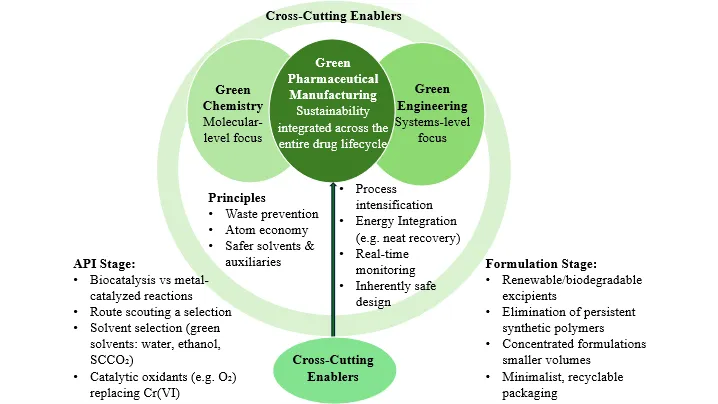
Green Chemistry suggests twelve principles of reducing or avoiding the use and generation of harmful substances, which was officially outlined by Anastas and Warner in their seminal book of 1998 (14). These concepts are translated into actual strategies in the pharmaceutical sector, including preventing waste instead of processing it, designing safer chemicals and solvents, ensuring that atom economy is used, and ensuring that pharmaceuticals disintegrate into non-toxic substances once they are used. E.g., one replacement of a catalytic, aerobic oxidant by a stoichiometric oxidant such as chromium (VI) can add immediately the principles of safer chemistry and prevention of waste.
|
|
Figure 1: Integrated Framework for Green Pharmaceutical Manufacturing Across the Drug Lifecycle
Along with this molecular-level concentration, Green Engineering, as suggested by Jiménez-Gonzalez and Constable (15), focuses on systems-level thinking. It favors the designing of processes, which are long-lasting, energy-combined, chemically efficient and inherently safe. Green engineering considers the whole production ecosystem, including the links of suppliers, utilities, material flows and equipment design in order to find synergies that mitigate cumulative environmental effects. This includes methods of minimizing resource use and operational risk like process intensification, heat integration and real time monitoring.
More importantly, there are two distinct, yet closely related, areas in green pharmaceutical production.
Thus, the concept of green pharmaceutical production represents a multidisciplinary philosophy, not a one-technology that unites the supply chain management, chemical engineering, toxicology, synthetic chemistry, and regulatory science in providing life-saving medicines that do not harm the well-being of the earth.
2. Environmental Impact of Pharmaceutical Manufacturing
2.1. Sources and Quantification of Pollution
Astutely high resource input relative to mass production defines the pharmaceutical manufacturing industry; this technical contradiction is due to the nature of the synthesis of high purity of structurally complicated products with rigid control conditions. The inefficiency is measured in key green chemistry measurements like the Environmental Factor (E-factor) ratio of total waste mass/product mass. Pharmaceutical industry also records values up to 25-100 and in more advanced multi-step reactions, values exceeding 200 have been recorded (17,18). On the contrary, bulk chemical businesses generally have E-factors of <1-5. The cause of this glaring discrepancy is the extent of the usage of auxiliary materials, principally solvents, reagents, and chromatography media, required to ensure the selectivity of the reaction, purification of the intermediate, and quality of the final product.
The major source of this waste is the API synthesis. In conventional batch processes, solvents constitute 80-90 per cent. of the total mass input (4). A typical API synthesis has six to ten separate steps, each of which needs a solvent: reaction, extraction, washing and crystallization. Popular solvents such as dichloromethane (DCM), N, N-dimethylformamide (DMF), tetrahydrofuran (THF), and toluene are more desirable because they are able to dissolve a wide range of organic intermediates and allow more control over temperature. Nevertheless, they are highly volatile, flammable and toxic and therefore must be carefully contained and recovered. The carbon emission to the upstream production process is also substantial since a vast proportion of these solvents are produced using non-renewable petroleum feedstock (19). A more systematic statistic, which takes into account all of the input materials (water, reagents, and solvents), is the Process Mass Intensity (PMI) which highlights the huge amount of material throughput needed to generate relatively low yields of products which often exceed 100 kg of input per kilogram of API (20).
The other significant cause of pollution is utilizing transition metal catalysts, i.e. palladium (Pd), platinum (Pt), and nickel (Ni), which facilitate the formation of significant carbon carbon and carbonhetero atom bonds. Catalytic, although in theory catalyst deactivation or low turnover numbers may demand stoichiometric or near stoichiometric loadings in practice, such completely stoichiometric loadings are usually achieved only by using catalysts of high purity and high concentration. The ICH Q3D(R2) of 5-10 ppm of Pd in oral products are not even close to the amount of residual metal in crude batches of API, which ranges between 0.1 and100 ppm (6). Some of the multi-stage purification methods that are needed to remove these remnants are scavenger resins, activated carbon treatment, or recrystallization; each of them consumes more solvents and yields a second stream of waste. Its mining and refining are energy-intensive units contributing to the environmental footprint; the Pd mining extraction generates more than a 20,000 kg CO2-equivalent per kilogram of metal (21).
The effects of drug formulation on the environmental impact of the industry after API stage are significant. Approximately 70 percent of prescriptions are in solid oral dosage, e.g. pills and capsules, and require a large number of unit operations, e.g. mixing, granulating, drying, compression, and coating. Each step will produce excipient dust, off-spec tablets, and cleaning trash. Most excipients like lactose and microcrystalline cellulose are typically nontoxic, although the production of these substances (wood pulp or dairy, e.g.) has energy, water, and land use footprint (21). Of greater concern is the waste packaging pertaining to drugs. The vast majority of municipal systems cannot recycle single dose blister packs (typically consisting of polyvinyl chloride/aluminum laminated products) due to the complexity of the material. The pharmaceutical packaging is believed to create over 100,000 tons of plastic waste every year globally, much of which decomposes into microplastics, which absorb and transport hydrophobic APIs through the water masses (16).
Finally, aqueous effluents are the persistent and cunning cause of contamination. Besides unreacted starting materials, API intermediates, parent chemicals, human metabolites, and transformation products that are produced during the synthesis or storage, inorganic salts and remnant solvents are also present in wastewater of industrial plants (22). Conventional activated sludge treatment plants which are designed to treat biodegradable organic wastes are virtually useless when it comes to bioactive, resistant drugs. Due to their desired metabolic steady condition, numerous APIs are low in biodegradability and high in persistence (half-lives over 100 days in water) (23). Due to this reason, the discharge streams of pharmaceutical production zones often have 1-250 g/L to 1-250 mg/L of such substances as ibuprofen, ciprofloxacin, carbamazepine, and others, particularly in the poor and middle-income countries when strict regulations are not followed (24).
2.2. Ecotoxicological and Public Health Risks
However, compared to the conventional chemical toxicity, as the bioactive drugs are released to the environment, they pose a multi-dimensional dose of threat to the environment and human health.
The most pressing problem in the short term could be the introduction of environmental levels of antibiotic residues to antimicrobial resistance (AMR). Sub-inhibitory concentrations of antibiotics can cause stress responses, mutagenesis and horizontal gene transfer (HGT) in environmental bacteria and have a tendency of occurring at 101000 times below clinical breakpoints (9). An example of mobile genetic items includes the plasmids and integrons which carry resistance genes (e.g. blaCTX-M, mcr-1) that disseminate throughout bacterial taxa and become reservoirs of resistance in the microbiomes of soil and water. The level of resistance genes in historic researches of the discharges of pharmaceuticals in China and India is more than 1001000 times higher than the quantity of genes in the background controls and directly proportional to the dose of antibiotics in the area (10,25). The World Health Organization (WHO) currently considers pharmaceutical polluting to be the sole contributor to the global AMR problem which when unchecked, can take away 10 million lives every year by 2050 (26).
Endocrine disruption is another ecological impact that has been proved. Even the hormones present in the oral contraceptives such as 17alpha-ethinylestradiol (EE2) are not treated in the wastewater treatment due to their release in their raw nature. EE2 has been observed to induce the production of vitellogenin in the male fish at low levels of 1 ng/L leading to intersex gonads, reduced fertility and population collapse (27). In the same manner, low dose doses of the glucocorticoids, such as dexamethasone and anti-androgens, and including flutamide, have an interfering impact on immunological and reproductive functions on aquatic vertebrates (11).
Neuroactive drugs also cause minimal but significant impacts to the environment. Compounds such as fluoxetine modify serotonergic communication in fish and invertebrates which lead to reduction in the feeding rates, inability to avoid predation, and shoaling behaviour (28). Fluoxetine 1 µg/L also has the anti-survival effect in experiments regarding predation, and facilitates the aggressiveness of the crustaceans (12).
The behavioural changes can influence the activities in an ecosystem and assemblage of communities through food web cascading.
Threats to the human health are not as serious and are examined closer. On the same level of concern, low dose exposure to pharmaceutical mixtures due to the ingestion of drinking water, although primarily within the range of ng/L, there is concern on the way the developmental, reproductive and carcinogens of the mixtures evolved despite the duration of the exposure (29). Some examples of lipophilic drug are diclofenac and other antipsychotics, which can bioaccumulate in the aquatic organism or be absorbed by the food chain (30). The cocktail effect of multifaceted mixtures is a poorly comprehended and unregulated notion, regardless that the modern risk assessment often arrives at the understanding that the concentration of the numerous ingredients is less than that of apprehension (31).
2.3. Regulatory Landscape and Stakeholder Pressure
Consequently, the regulatory response to the pharmaceutical contamination has been diffused due to the variations in the policy of the environment and the perception of risk.
The European Union has counter attacked. Since the year 2006, the Environmental Risk Assessment (ERA) has to be done on every new human medical product as dictated by guideline EMEA/CHMP/SWP/4447/00 (32). The ERA requires testing of the fate and effects in case the estimates of APIs are above 0.01 µg/L in the surface water and are also likely to be above the anticipated action limit of 0.01 µg/L. The risk mitigation strategies, which may include sophisticated wastewater treatment or take-back schemes, are to be suggested in case a risk is identified. The EU then further intensified the strategy by adding the factors on the environment to the manner in which people acquire goods and services and reducing by half the pharmaceutical release by 2030 with the Zero Pollution Action Plan (33).
On the other hand, the US lacks the required pharmaceutical ERA framework. Food and Drug Administration (FDA) promotes green chemistry through guideline documentations although it does not require any type of environmental data to approve any drug (34). The clean water act has a system called the National Pollutant Discharge Elimination System (NPDES) of the environmental protection agency (EPA), which regulates the discharges of industries. It is, however, mostly reactive and not preventive and in the unusual cases, there is no pharmaceutical specific effluent limit (35). The newly enacted law like the Pharmaceutical Pollution Prevention Act aims at sealing this gap even though they are yet to catch on.
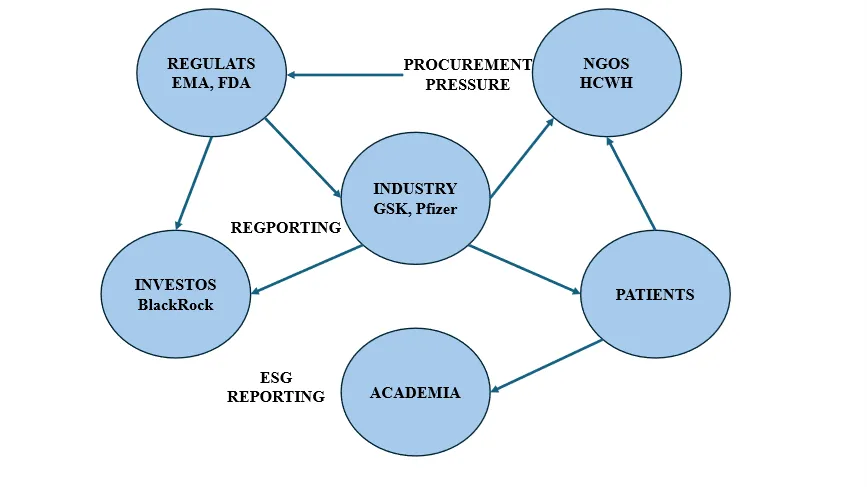
The industry action is also being caused by the pressures of the market besides the government regulations. The BlackRock and Vanguard, which are the institutional investors, require Environmental, Social and Governance (ESG) disclosures as part of the fiduciary responsibilities, and pharmaceutical businesses are being asked about the carbon intensity and water stewardship (36). Due to the investor anticipation, more than 70 percent of the giant pharma companies now declare water-related risks according to the Carbon Disclosure Project (CDP) (37). In addition, the scorecards that assess the environmental performance of businesses which determine the government and hospital procurement decisions and brand reputation are also published by non-governmental organizations (NGOs) like the Health Care Without Harm and Changing Markets Foundation (38).
3. Green Chemistry in API Synthesis (Deep Dive)
The most active and waste producing and chemically challenging stage of the drug production cycle is the active pharmaceutical ingredient (API). This implies that it provides the best chance to reduce environmental impact by employing the use of green chemistry principles in a strategic manner. In the past decade, the pharmaceutical sectors have made a massive step of reconsidering the synthetic processes to make atoms more efficient, dropping out of the poisonous substances, and using renewable resources as demanded by the regulations, the cost factors, and the sustainability commitments. There are five main green chemistry approaches redesigning the process of the API synthesis in an unprecedented manner, they are optimization of the atom economy, safer solvents, improved catalysis, feedstock renewable and intensifying the process, which are critically addressed in this section.
3.1. Economy of Step and Reduction of Atom.
Because of the use of protective groups, stoichiometric reactants, and chain reactions, traditional API syntheses tend to be low-atom economy, i.e. the fraction of the reactant atoms that is included in the work product. The shift of the paradigm to cost-effective approaches in addition to the minimization of waste lowers the costs of capital and operation. The example of sitagliptin, the active compound of Januvia 2 in the redesign of Merck, is a ground breaker. The former was a metal catalyst, purified hydrogen and intensive purification to eliminate any remaining rhodium in order to establish the chiral center by using a high-pressure rhodium-catalyzed enamide hydrogenation (39). Merck and Codexis invented a transaminase enzyme that can directly transform a prochiral ketone directly to a chiral amine in an aqueous buffer under room pressure. In this biocatalytic reaction, the E-factor was lowered by 86-74, all metal catalyst was eliminated and the overall performance was enhanced by 56 percent and waste was cut back by 10-13 percent (40). This process was a prototype of green route redesign as it since won a U.S. Presidential Green Chemistry Challenge Award in 2010.
The systematic discovery of such opportunities is also becoming more and more the domain of computer-aided retrosynthetic analysis. Along with conventional feasibility metrics, plans such as IBM RXN and Synthia (Merck KGaA) match reaction data banks with algorithms that rank pathways by green metrics of the number of steps, PMI and solvent hazard (41). In this regard, the Synthia green chemistry module can label such routes which need high-E-factor reactions or hazardous reagents (e.g. phosgene or azides) and allow scientists to consider intrinsically-safe alternative at a more advanced stage of the research process. These instruments are making green chemistry a post-hoc optimization mission into a component of molecular design.
3.2. Safer Solvents
The solvents are also an important factor in the environmental performance due to the fact that it makes up 60 to 90 percent of the mass inputs that are used in the manufacture of API. Projects initiated by the industry have resulted in widely-applied solvent selection guidelines, which attribute a classification on the health, safety and environmental impact of solvents. The first company to adopt this strategy was GlaxoSmithKline (GSK): Preferred (with water, ethanol and ethyl acetate), Usable (with isopropanol and heptane) and Undesirable (with DCM, DMF, NMP and benzene) (42). In the same manner, Pfizer and AstraZeneca conducted a European joint venture to create the CHEM21 solvent guide which employs information on the life cycle assessment (LCA) to analyze solvents using ten environmental indicators, among them being aquatic toxicity and carbon footprint (43).
The new generation solvents are also being developed along with substitution to contain the drawbacks of the previous solutions. CyreneTM (dihydrolevoglucosenone), a bio-based, biodegradable analogue of DMF and NMP -solvents, which are prohibited by the EU REACH due to their reproductive toxicity, is prepared with cellulose waste (5). It has been noted that Cyrene has been successfully used in pilot scale by Merck and Sanofi and has shown to be efficient in cross-coupling palladium, peptide synthesis and polymerizations (44). Switchable solvents are another invention in which the solvents can change to a new level of polarity depending on external factors (adding or removing CO2). As an example, when CO2 bubbles N, N-dimethylcyclohexylcyclohexane (DMCHA) is soluble in water; reaction conditions are homogeneous and yield products are easily separable by simply letting the products vent to the atmosphere drastically cutting down on the application of solvents in the reaction of extraction (45).
Table 1. Green Chemistry Strategies in API Synthesis: Principles, Technologies, and Impact
|
Strategy |
Core Principle |
Key Technologies / Methods |
Case Example |
Environmental Impact |
|
Atom & Step Economy |
Maximize atoms in final product; minimize synthetic steps |
Biocatalysis, AI retrosynthesis (IBM RXN, Synthia) |
Sitagliptin (Merck/Codexis) |
E-factor ↓ from 86 → 74; 56% ↑ yield; metal eliminated |
|
Safer Solvents |
Replace hazardous petrochemical solvents |
GSK/CHEM 1 solvent guides; Cyrene™; switchable solvents |
Cyrene™ (Merck, Sanofi) |
Non-reprotoxic; biodegradable; replaces DMF/NMP |
|
Advanced Catalysis |
Use catalytic (not stoichiometric) methods |
Biocatalysts (KREDs, nitrilases); electrochemistry; photoredox |
Pregabalin (Pfizer); Verubecestat (Mercy) |
Eliminates cyanide/MnO₂; 150 kg waste ↓/kg API |
|
Renewable Feedstocks |
Use biomass instead of fossil carbon |
Fermentation, synthetic biology, plant cell culture |
Artemisinin (Sanofi/Amyris); Paclitaxel (Taxus culture) |
35–50M treatments/yr; protects biodiversity |
|
Process Intensification |
Shift from batch to continuous, integrated systems |
Continuous flow, telescoping, real-time control |
GSK HIV candidate; MIT-Novartis API |
PMI ↓ from 120 → 45; 90% ↓ solvent; 95% ↓ footprint |
3.3. Catalysis
Green synthesis remains based on catalysis, and allows reactions to be conducted in softer conditions with greater selectivity and less waste. There are three catalytic modes that are most revolutionary in the present API manufacture:
Biocatalysis refers to an act of making very specific changes on water at room temperature through the aid of designed enzymes. Ketoreductases (KREDs) are currently frequently used in place of stoichiometric reductions using boranes or metal-catalyzed asymmetric hydrogenations to produce chiral alcohols with enantiomeric excess better than 99%. Individually, KREDs created by Codexis enabled the synthesis of the atorvastatin side chain (Lipitor, 100,000 tons) without use of freezing conditions and harmful reagents (46). In that way, nitriles can be degraded to carboxylic acids, not to cyanide intermediates, which is poisonous, by nitrilases (as the production of pregabalin (Lyrica 1)) by Pfizer proves (47).
Heterogeneous catalysis addresses the problems of a metallic contamination of homogeneous systems. In contrast to, soluble complexion like Pd (PPh 3) 4, Pd on carbon (Pd/C) reduces drastically Pd leaching because filtering and reuse of the catalysts is simplified. Improvements in immobilization of nanoparticles onto surface such as silica or magnetic bead also increase their recyclability and stability and, in some systems, have been shown to be stable to >10 reactions per cycle (48).
A sort of frontier technology is photoredox and electrochemical catalysis, which substitutes electrophiles or photons with stoichiometric oxidants and reductants. By replacing an oxidation of MnO2 (that is stoichiometric) with an anodic reaction in a flow cell, electrochemical synthesis of a verubecestat intermediate (to treat Alzheimer disease) by Merck eliminated 150 kg of waste MnO2 per kg of product and simplified workup significantly (49). Similarly, photoredox C H functionalization can be used to make direct bonds without pre-functionalized substrates to shorten the synthetic sequences, which Lilly has shown in its synthesis of a prexasertib analog (50).
3.4. Renewable Feedstocks
Substitution of building blocks made with petroleum feeds with bio-based feeds reduces dependence on fossil fuels as a source of carbon emissions and often enhances biodegradability. The semi-synthesis of artemisinin, a key antimalarial, is the best example of this transition. Traditional extraction of the Artemisia annua plants was not in large amounts and yielded very low values. Amyris, Sanofi and UC Berkeley collaborated in developing a yeast strain that fermented glucose that was produced by converting sugarcane into yielding artemisinic acid. Subsequently, photochemical oxidation is used to convert this intermediate to artemisinin, and it can be produced in a stable and scalable manner that was at its peak producing 35 -50 million treatments annually (51). Like this, fermentation of plant cells with Taxus cell cultures is now the most commonly used technique to produce paclitaxel (Taxol®) which was previously obtained by extracting the Pacific yew trees a species that is endangered. This is done to maintain biodiversity and ensure quality is always maintained (52).
The achievements do not eliminate problems. To meet pharmaceutical specifications, bio-based feedstocks are often required to be purified considerably and in the absence of scale or regulatory support, bio-based feedstocks are not necessarily cost-competitive with petrochemicals. In addition, land-use alteration and biomass agriculture-related agro-inputs should also be controlled to avoid any unexpected environmental trade-offs (53).
3.5. Process Intensification
It has been processing intensification that is the redesign of processes which are much smaller, cleaner, and more energy-efficient which has become popular due to continuous production and telescoping. Continuous flow reactors are superior to batch vessels in terms of heat and mass transfer when dealing with exothermic reactions, photochemistry, and dangerous intermediates (e.g. diazonium salts). Compared to 24 hours batch, the MIT-Novartis Center of Continuous Manufacturing created a synthesis of API using a residence time of less than 10 minutes, reducing the use of solvents by 90 percent and footprint by over 95 percent (54).
Telescoping (the direct transfer of crude reaction mixtures to later stages without intermediate separation) is another way of reducing solvent and energy consumption. Telescoping can reduce processing time by half and by 40-60 percent aggregate solvent consumption since the process eliminates filtration, drying and re-dissolution. GSK telescoped the synthesis of an HIV medication candidate, which removed three steps in isolation, reducing PMI by 120 to 45 and enabling a small, closed-space facility to produce the drug (55).
All of these tactics together reveal a paradigm shift in wasteful, linear batch synthesis to integrated, circular and inherently safer manufacturing and proved that green chemistry is not only financially but also environmentally sound.
4. Sustainable Drug Formulation
Even though the production of API has been the point of the most of the research on the production of green pharmaceuticals, the production of the formulation phase, where the active substance is mixed with excipients and put into a form of delivery is also a point of quantitative, but unrecognized impact on the environment. The manufacture (this is mainly through excipient preparation) and consumption of energy-demanding unimanufactured processes (including drying and milling) and the packaging of solid oral dosage forms also contribute approximately 30 percent to the carbon footprint of the dosage form (56). Furthermore, the excipient and delivery system choice also affects the patient compliance, post-consumer waste, and the API dose directly and has a domino impact on the environment. In order to reduce the negative impact on the environment and retain the therapeutic properties, the section will analyze the implementation of the concepts of green to the choice of excipients, the development of dosage forms, and the modes of administration.
4.1. Green Excipients
Drug stability and manufacturing, as well as bioavailability are dependent on excipients which are the pharmacologically neutral substances including lubricants, binders, fillers, disintegrants, etc. Not all excipients are however environmentally safe. Traditional synthetic polymers like polysorbates and polyethylene glycol (PEG) are not that good in terms of sustainability. PEG is a product of ethylene oxide that is a high-energy content petrochemical that may emit harmful aldehydes and carboxylic acids to the water (2). Other ethoxylated surfactants such as Polysorbates also frequently include minute amounts of 1, 4- dioxane which is a groundwater pollutant and a likely carcinogen to humans but hard to eliminate in wastewater treatment (57).
Instead, healthier alternatives of biodegradable and renewable excipients are available. Microcrystalline cellulose (MCC) is a common filler and disintegrant that is manufactured using cotton or wood pulp and not as ecotoxic and biodegradable (58). Accordingly, lactose is a renewable sugar whose safety is proven and is dairy waste. In green excipients screening systems developed by industrial consortia, MCC and lactose are both preferred (16).
Table 2. Green vs. Conventional Excipients: Environmental and Functional Comparison:
|
Excipient Type |
Conventional (Petrochemical) |
Green Alternative (Renewable/Biodegradable) |
Source |
Biodegradability |
Ecotoxicity |
Regulatory Status (FDA/EMA IID) |
|
Filler/Disintegrant |
Crospovidone (PVP-based) |
Sodium starch glycolate, Microcrystalline cellulose (MCC) |
Wood pulp, corn starch |
High |
Low |
Both approved |
|
Binder |
Polyvinylpyrrolidone (PVP) |
Starch, Chitosan |
Crustacean shells, fungi |
High |
Very low |
Chitosan limited in some routes |
|
Surfactant |
Polysorbate 80 (ethoxylated) |
Saponins, lecithin |
Plant/soy |
High |
Low (no 1,4-dioxane risk) |
Lecithin widely accepted |
|
Solubilizer |
Polyethylene glycol (PEG) |
Cyclodextrins (α, β, γ) |
Enzymatic starch hydrolysis |
High |
Low; enhances API bioavailability |
Cyclodextrins approved |
|
Lubricant |
Magnesium stearate (often palm-derived) |
Stearic acid (RSPO-certified), talc |
Sustainable palm or mineral |
Moderate |
Low if sustainably sourced |
Generally recognized |
Excipient design is an innovation that is on the rise. Superdisintegrants starch-based like sodium starch glycolate may be substituted with cross-linked polyvinylpyrrolidone (crospovidone) to ensure a rapid disintegration of tablets without applying a synthetic change to the tablet. Chitosan is a biopolymer by fungi biomass or crustacean shells and as a mucoadhesive delivery system to nasal or buccal delivery, it is also getting a special treatment as it can be delivered at a lower dose and with less systemic exposure (59). Better still, drugs that are not water soluble can be made more soluble by the use of cyclodextrins which are cyclic oligosaccharides formed by hydrolyzing starch enzymatically. This would minimize the mass needed of API and related load of synthesis (60).
Such developments have not done away with regulatory barriers. A significant obstacle to the introduction of bio-based substitutes is the purpose of the FDA Inactive Ingredient Database (IID) and the EMA List of Excipients is that both bodies demand a significant amount of toxicological data regarding new excipients. It must be propelled forward, in which international excipient standards are made congruent, and the so-called green by design specifications of assessment, such as carbon footprint, aquatic toxicity, and biodegradability, are proposed (61).
4.2. Eco-Design of Dosage Forms
Besides excipient chemistry, the dosage form of a drug may also contribute to its sustainability depending on its physical design. Concentrated liquid formulations reduce the volume of water and packaging that will be required during transportation. An oral solution of 200 mg/mL, which saves shipping weight by 90 percent over a 20 mg/mL solution, therefore, saves transport-associated CO2 emissions, a critical consideration given the fact that pharmaceutical logistics contribute about 15 percent to the total emissions (62). Similarly, fixed-dose combination (FDC) pills, such as Atripla 2 HIV, have two or more APIs in a single tablet (63). and reduce the number of separate syntheses, and the total number of pills, packaging materials, and the burden on patients (64).
Packaging is another area of hotspot. The carbon footprint of solid oral dose is approximated to be 40 percent, with a conventional blister pack, typically constructed of PVC/aluminum laminates, and thus it is incompatible with recycling (3). Mechanical recycling can be achieved through changing to mono-material design (alternative to PVC) like the blister made of polypropylene (PP) or bio-based polylastic acid (PLA). Pfizer also cut down on packaging-related emissions by a quarter by replacing some of its goods in recyclable PP blisters, which was consistent with the guidelines of the New Plastics Economy of the Ellen MacArthur Foundation (65). The reduction of waste is further achieved through the use of reusable containers in long-term prescription prescriptions and simple secondary packaging (e.g. elimination of cardboard boxes used to pack pharmacy-dispensed medicine).
4.3. Advanced Delivery Systems
With the help of innovative delivery systems, it is possible to reduce the dose or eliminate harmful substances, which will have a lesser impact on the environment. Inhalers with metered doses that use hydrofluoroalkane (HFA) propellants have been largely replaced by inhalers that use dry powder (DPIs) that deliver medications by spraying the powder based on the breath. HFAs are potent greenhouse gases because of having global warming potentials (GWPs) 1,480 times that of CO2 (66). The NHS of the UK points out that this change where all the patient with asthma are switched to DPIs instead of MDIs can reduce the carbon footprint of the health system to approximately 500,000 tons of CO2-equivalent per annum, equivalent to taking 200,000 cars off the road (67).
Transdermal patches are another dose-saving mechanism. They achieve therapeutic blood concentrations at 30-70 per cent reduced API dosages compared with oral route since there is no first-passed hepatic metabolism (68). This reduces directly the quantity of API which would have to be produced and the potential load which might be discharged into wastewater by excretion. Transdermal patches containing Fentanyl such as 25-100 µg/h, however, oral forms of Fentanyl require milligram, making the environmental release seriously minimized.
Through its ability to create on-demand, personalized production at point-of-care, new technologies such as 3D printing (additive manufacturing) minimize over-production, inventory and expiry of medications. Such water soluble, biodegradable polymers as PVA (polyvinyl alcohol) offer minimal post-use impact, and a hospital-based 3D printer that can make personalized doses of various drugs can cut back on unnecessary pharmaceutical waste by up to 60 percent (69).
4.4. Life Cycle Assessment (LCA) in Formulation
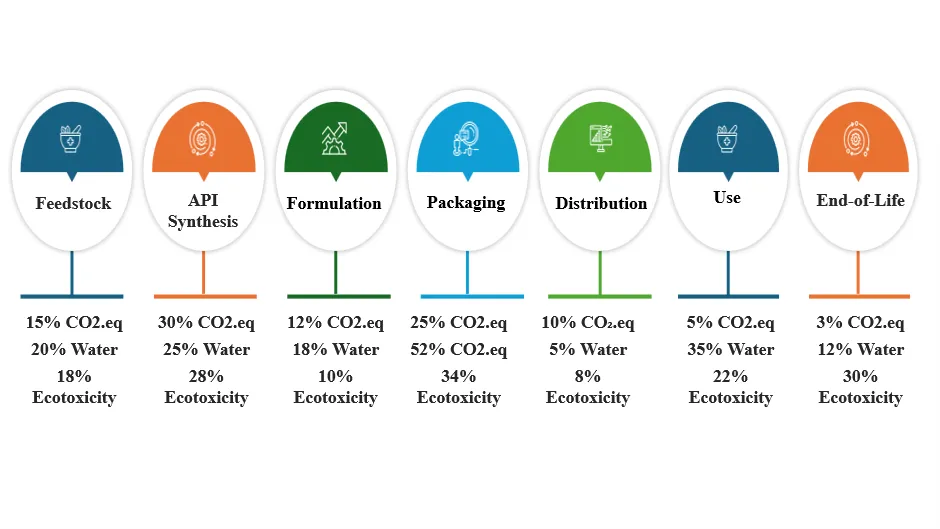
The application of Life cycle Assessment (LCA), based on ISO 14040/44 criteria, has become one of the essential methods of decision support in order to estimate and compare these strategies. According to cradle-to-grave LCAs, the packaging and distribution of many solid oral drugs primarily contribute to their carbon footprint, and not the synthesis of API. In a study of a generic statin, the API was found to supply 18% of the total CO2-eq, though main packaging (blister + bottle) supplied 52% (21). The discovery shifts green formulation to the focus of material substitution, lightweighting, and optimization of logistics.
|
|
Figure: Life Cycle Stages of a Pharmaceutical Product with Environmental Hotspots
An example is glass bottles which are recyclable without a limit but due to the weight, they contribute to transportation emissions. Recycled PET bottles, on the other hand, are less carbon intensive, although due to the contamination problem, may not be quite as recyclable once they are used in pharmaceutical processing. Multi-criteria LCA frameworks, including carbon, water consumption and ecotoxicity and circularity measures are necessary to support a comprehensive decision-making process (70).
Pharmaceutical companies are starting to increasingly incorporate LCA in their formulation development. Although the Sustainable Formulation Toolkit created by GSK enables a developer to select excipients and formats with minimal environmental performance, the Green MTI (Manufacturing Transparency Index) of Novartis includes KPIs derived by LCA on packaging (71).The regulatory bodies like the EMA will examine the need to label pharmaceuticals with environmental labels thus making LCA data crucial in terms of compliance as well as market differentiation (72).
5. Waste Minimization & Circular Economy
|
|
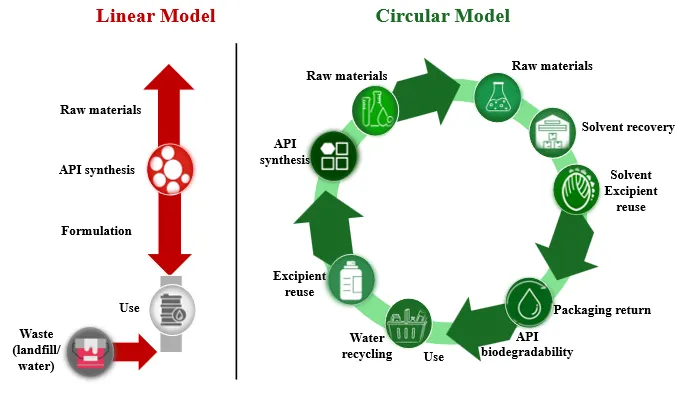
Figure: Linear vs. Circular Pharmaceutical Manufacturing Model
The transition to a circular economy is increasingly a major concern of green pharmaceutical manufacturing in terms of replacing a linear take-make-dispose model. The waste streams to collect, reuse, and repurpose strategies are important in reducing the cost of operation and impact on the environment since most of the process mass consists of water and solvents. The three pillars of circularity in the pharmaceutical operations discussed in this section are solvent recovery, by-product valorization, and improved water management. Technologies, converting waste liabilities into resource opportunities, are pointed out.
Table 3. Circular Economy Interventions in Pharma Manufacturing:
|
Waste Stream |
Circular Strategy |
Technology / Method |
Recovery / Benefit |
Commercial Example |
|
Organic Solvents |
Closed-loop recovery |
Fractional distillation, pervaporation, nanofiltration |
90–98% recovery; reused in production |
Lonza (Visp); Pfizer (Groton) |
|
Inorganic Salts (Na₂SO₄) |
By-product valorization |
Crystallization + purification |
Sold to glass/textile industries |
BASF, Merck take-back schemes |
|
Organic Sludge |
Energy recovery |
Anaerobic digestion → biogas |
15% of plant thermal energy; ↓ landfill GHG |
Novartis (Stein, CH) |
|
Wastewater |
Pollutant destruction + reuse |
Ozonation + GAC; MBRs; BDD electro-oxidation |
>90% API removal; water reuse |
AstraZeneca (Södertälje) |
|
Packaging |
Material simplification |
Mono-material PP/PLA blisters |
Recyclable; ↓ carbon footprint by 25% |
Pfizer (80% PP conversion) |
|
Aqueous Effluent |
Zero Liquid Discharge (ZLD) |
MVR evaporators + crystallizers |
>90% freshwater reduction; salt recovery |
Dr. Reddy’s, Aurobindo (India) |
5.1. Solvent Recovery
Solvents often contribute over 80 percent of the total mass in batch processes; hence, they represent the sole largest mass input in API production (4). Thus, solvent recovery is the best method of waste reduction in the short term. In industrial applications, a series of separation technologies are applied based on the purity needs, the mixture complexity, and the solvent volatility of the mixture.
Fractional distillation remains to be the best process of obtaining pure solvents out of relatively simple mixtures. The solvent recovery efficiency of 90-95 percent are often achieved in special solvent recovery units (SRUs) of common solvents like isopropanol (IPA), toluene and ethyl acetate (21). Such recovered solvents are often reusable directly in non-critical operations (such as washing or extraction) or in reaction operations after polishing (such as the use of molecular sieves to remove water). Lonza multi-product facility in Visp, Switzerland is a demonstration of best practices since their multi-product plant recovers over 95% of all solvents during campaigns, recycles purified streams back into production and reduces their yearly purchases of fresh solvents by thousands of tons (73).
Separations using membranes can offer energy-efficient separations in azeotropic mixtures (e.g. ethanol/water) or thermal-reactive solvents. Pervaporation is highly applicable in dehydrating alcohols or removing trace organics in water due to the fact that selective membranes are applied to separate components based on solubility and diffusivity. In the case of IPA recovery, GSK pilot study revealed pervaporation required 40 percent of less energy compared to azeotropic distillation and a payback period of under the two years (74). In the same manner, reaction mixtures can be separated by nanofiltration (NF) membrane to recover the catalysts, which can be recycled together with solvents.
The ideal level of solvent circularity is the closed-loop system that turns the streams of solvents into a closed production train with minimal leechage. Continuous production has enabled steady-state operation so that in-line separation units can be more readily integrated, so that such systems are increasingly real. The continuous API plant in Groton, Connecticut, Pfizer is 60 percent less PMI than historical batch processes with an integrated distillation loop to recover and reuse more than 98 percent of process solvents (63).
5.2. By-Product Valorization
Inorganic and organic byproducts are valued to complete more material loops besides solvent recovery. A characteristic waste stream of API production is inorganic salts, in particular sodium sulfate (Na2SO4), which is formed during acid-base workups or sulfonation reaction. Na2SO4 has been treated in a landfill but it is being valued into a commodity. The high-purity grades are used in the manufacture of glass (as a fining agent), textiles (as a leveling agent), and detergents (as a filler). Through creating take-back contracts with chemical recyclers, BASF and Merck have avoided hundreds of tons of sulfate waste permeating landfills annually (75).
Anaerobic digestion is applicable in converting wastewater treatment organic sludge that contains a lot of carbonaceous material to energy. The organic waste is degraded by microbes in the absence of oxygen in this process to produce biogas (60 to 70% methane) that can be burned to generate steam or electricity. The Novartis organic sludge in Stein, Switzerland, factory uses a full-scale anaerobic digester to treat over 90 percent of organic sludge which yields sufficient biogas to supply at least 15 percent of the thermal energy needs of the premises (83). This also reduces the cost of disposing of sludge and greenhouse gas emissions of landfills (methane is 28 times more potent than CO2 as a GHG) in addition to reducing the use of fossil fuels.
One of the new strategies is catalytic conversion of waste streams to feedstocks. An example of such is the depolymerization of lignin containing residues left behind by the production of bio-based APIs to aromatic monomers to make polymers (76). Although they are still in the experimental phase, these innovations can benefit the zero-waste ideal. These innovations can be used even at the pilot level, though, and their results are consistent with the future vision of zero-waste biorefineries, according to which each product has a specific purpose.
5.3. Water Management
Water is an important resource as well as a source of waste in the manufacture of pharmaceuticals. An API plant averagely consumes 10 -50 L of water per gram of product, a greater part of which is polluted with micropollutants (metals, solvents, and APIs) that cannot be eliminated by typical biological treatment methods (77). Consequently, the overall aims of the sophisticated water management techniques include zero liquid discharge (ZLD), water reuse, and destruction of pollutants.
Advanced oxidation processes (AOPs) are rather effective when it comes to disintegrating obstinate organics. The oxidation process generated by Ozonation is the hydroxyl radical (•OH) that indiscriminately degrades APIs to smaller biodegradable molecules. This is occasionally done in conjunction with hydrogen peroxide (O3 /H2O2) or UV light. A system consisting of ozonation + granular activated carbon (GAC) was set in place at AstraZeneca in S oedr Talje, Sweden, to attain over 90% removal of target pharmaceuticals including diclofenac and metoprolol which can subsequently be discharged into the municipal sewers without harm (78). In on-site treatment, electrochemical oxidation by using boron-doped diamond (BDD) anodes is gaining increased popularity because of its similar efficacy with reduced chemicals (79).
The use of membrane bioreactors (MBRs) is a viable method of biological treatment that can be used for facilities that face water stress or have a high discharge limit. To enhance solids retention and allow more biomass density and extended sludge ages to be used, which are necessary to decompose slow-degrading substances, MBRs combine activated sludge with ultrafiltration membranes. When nitrifying bacteria are added to the MBRs or specific degraders (i.e., Sphingomonas spp. with beta-blockers) are exposed, MBRs may eliminate 7085 percent of API (80).
The most ambitious water plan is Zero Liquid Discharge (ZLD) that purifies all aqueous effluent by extracting water and crystallizing salts that can be disposed or reused. The ZLD systems commonly combine crystallizers with either mechanical vapor recompression (MVR) or multi-effect evaporators (MEE). Owing to the regulatory pressure and due to the shortage of water, the Laboratories of Dr. Reddy, and Aurobindo Pharma have adopted ZLD in various sites in India. ZLD guarantees the reduction of shifting discharge standards and more than a 90 percent reduction in freshwater consumption, even though it is costly (capital-wise) at $5–20 million per facility (81). However, despite the common purity criteria limiting the available options of secure landfilling, recovered salts (e.g., NaCl and Na2SO4) may be marketable occasionally.
6. Analytical & Digital Enablers
Environmentally friendly pharmaceutical production does not only require chemical innovation but advanced analytical tools and digital technology that makes it possible to gain precise control, provide prompt feedback and make informed decisions based on data. These enablers make green chemistry more than a dream because they ensure that the sustainable processes are developed not only but also strictly implemented, controlled and optimized. To accelerate the uptake of sustainable practices across the pharmaceutical value chain, this section considers three key digital and analytical pillars namely Process Analytical Technology (PAT), green metrics, and artificial intelligence (AI) and digital twins.
Table 4. Digital and Analytical Enablers of Green Pharmaceutical Manufacturing:
|
Enabler Category |
Tool / System |
Primary Function |
Sustainability Benefit |
Industry Example |
|
Process Monitoring |
Raman, NIR, ATR-FTIR spectroscopy |
Real-time CPP/CQA monitoring |
↓ Off-spec batches; ↓ reprocessing by 30% |
Merck (Raman in hydrogenation) |
|
Green Metrics |
PMI, DOZN™ 2.0, LCA |
Quantify environmental performance |
Standardized benchmarking; target setting |
ACS GCI PR; Novartis PMI reporting |
|
AI and Machine Learning |
IBM RXN, Bayesian optimization |
Predictive route scouting & optimization |
Identifies low-PMI routes; ↓ solvent use by 40% |
MIT photoredox optimization |
|
Digital Twins |
Physics-informed virtual models |
Simulate process behavior under variability |
↓ Pilot trials; ↓ scrap by 15%; virtual scale-up |
Novartis direct compression line |
|
Autonomous Labs |
Chemputer, robotic chemists |
Self-executing reaction screening |
Real-time green scoring; rapid convergence to sustainable routes |
Liverpool/Carnegie Mellon platforms |
6.1. PAT (Process Analytical Technology)
Process Analytical Technology (PAT) has become central in green manufacturing and this technology was formally endorsed by the U.S. FDA in its 2004 guidance as a manufacturing design, analysis, and control tool based on timely measurements (82). PAT decreases the need of offline testing, reduces batch failures and prevents production of off-spec material by providing real-time in-line monitoring of key process parameters (CPPs) and critical quality attributes (CQAs). This has a direct effect of reducing waste and consumption of resources.
These significant PAT devices are raman spectroscopy, near-infrared (NIR) spectroscopy, and attenuated total reflectance fourier-transform infrared (ATR-FTIR) spectroscopy. Since Raman spectroscopy is not affected by water and can penetrate through glass or sapphire reactor windows, it can be highly effective in conversion, polymorphic form, and crystallinity of reaction in making API. An example can be given of a continuous flow of hydrogenation reactor which was operated by Merck using Raman probes to monitor the real-time disappearance of a nitro group. This enabled fast responses to the catalyst concentration and the flow of H2 to ensure over 99% conversion, eliminating the post-reaction HPLC analysis and decreasing reprocessing by 30% (83).
NIR spectroscopy is excellent in the formulation processes when it comes to measuring moisture content in the drying of fluids, the consistency of the mix in powder mixers, and coating the tablet. NIR blend monitoring at Pfizer-Groton plant reduced the batch release time by eight hours per campaign, reduced the sampling rate by ninety percent, and reduced the quantity of solvent utilized to conduct analytical tests (84). Like this, ATR-FTIR is commonly used in distillation and extraction units to perform in-line solvent identification and concentration monitoring to ensure optimal recovery and prevent cross-contamination.
The combination of PAT with automated feedback control systems makes self-corrective procedures that maintain green performance in the changing circumstances possible. FBRM (Focused Beam Reflectance Measurement) and PVM (Particle Vision and Measurement) worked together to present real time data of particle size distribution in continuous crystallization process at GSK. This information was fed to a controller that adjusted the rate of addition of anti-solvent to ensure the correct size of the crystal was maintained and filtration efficiency increased by 25 percent and fines were reduced by half (85). Such closed-loop solutions reduce waste of energy and materials, thus showing how PAT can enhance sustainability besides quality assurance.
6.2. Green Metrics
Environmental performance needs quantification to set goals, benchmark, and to demonstrate progress. The pharmaceutical industry has been united by the ACS Green Chemistry Institute Pharmaceutical Roundtable (ACS GCI PR) that advocates a set of standardized green metrics which provide a language that allows a common evaluation of sustainability.
The most commonly used metric Process Mass Intensity (PMI) is explained as follows:
PMI also gives a more holistic view of resource efficiency as it considers all the components such as solvents, reagents, water and processing aids as opposed to the E-factor which does not take into consideration water (86). An industrial score of below 10 is considered aspirational by the commercial API processes by 2030 with historical averages of 50-100 as per the industry standards of ACS GCI PR (87). The publicity of the PMI of material products by companies like Novartis and AstraZeneca enables transparency and benefits the benchmarking of the competitive position of these products.
In a more or less complementary approach to PMI, Life Cycle Assessment (LCA) provides a cradle-to-gate or cradle-to-grave evaluation of environmental impacts in various categories:
System-level thinking has been found to be necessary by the studies of LCA that provide unintuitive results. As a case in point, in the event that the energy source is coal-based, the carbon footprint of the solvent recovery by distillation can be larger than that of using fresh solvent (88). IMI CHEM21 consortium generated a sector-specific LCA database comprising of inventory data of typical solvents, reagents and unit operations so that LCA could be standardized in the pharmaceutical sector and comparisons made across businesses can be made uniformly (89).
One of the other new metrics is the DOZNTM 2.0 tool which is a quantitative scoring methodology founded on the 12 Principles of Green Chemistry which assigns the synthetic pathways numerical scores based on hazard, efficiency, and renewability (90). Using these technologies, researchers are able to evaluate the various paths in an objective manner during the initial phases of development taking into account sustainability as part of the molecular design process.
6.3. Digital twins and AI
To achieve a maximum green performance, artificial intelligence (AI) and machine learning (ML) have thrived, as the amount of process data has grown, as provided by PAT, manufacturing execution systems (MES), and laboratory information management systems (LIMS). The ability of AI algorithms to discover the relationships between process factors and sustainability outcomes, which are not easily revealed to the human naked eye, makes predictive optimization achievable.
Catalyst-reaction-solvent compatibility is an important application. Relevant AI models can be used to predict the reaction yield, selectivity, and by-product production of new solvent-catalyst combinations with graph neural networks (GNNs) trained on reaction databases like Reaxys or USPTO and accelerate the screening of green options. An example of this is that scientists will avoid hazardous substances prior to venturing into the laboratory since to IBM RXN to Chemistry platform forecasts the results of the reactions with over 85 percent accuracy (49).
A sequential machine learning method, bayesian optimization has been shown to efficiently explore complex parameter spaces (e.g. temperature, residence time, stoichiometry) in production via continuous optimization to find conditions that maximize the yield in a production process, while also reducing PMI or energy usage. Within 15 experimental cycles, Bayesian optimization allowed MIT researchers to identify a setpoint that managed to reduce the amount of solvent used to carry out a reaction by 40 percent and 3-fold space-time yield in a photoredox C-N coupling reaction (91).
The most radical digital enabler is likely the digital twin, an active, physics-informed virtual analog of a real-life process. Digital twins can model process behaviour on thousands of scenarios with first-principles models (ex: mass/energy balances) and real-time sensor data. A digital twin of a continuous direct compression line at Novartis predicts the effect of the variability of raw materials on the hardness and dissolving of the tablet, allowing the proactive adjustments that reduce the scraps by 15 percent (83). Digital twins enable virtual scale-up of API synthesis eliminating costly pilot trials and associated waste.
Over time, self-driven laboratories self-planning, executing, and optimizing tests with minimal human help are being developed due to the combination of AI, PAT and automation. University of Liverpool mobile robot chemist and the University of Carnegie Mellon Chemputer have already shown the ability to program an autonomous route scouting of APIs, evaluation of green metrics in real-time to converge towards the most sustainable synthesis (92). Although commendable in terms of endorsing the idea of green chemistry, these sites purport to decrease the development timeframes by years to weeks.
Green manufacturing nervous system consists of numerous digital and analytical enablers, each of which offers the visibility, insight, and agility needed to translate sustainability commitments into measurable outputs.
7. Regulatory & Industry Landscape
The evolution of green pharmaceutical manufacturing is determined by a dynamic interaction of changing legislative frameworks, cross-industrial cooperation, and corporate sustainability leadership. This is due to the legislative and institutional environment dictating the rate and extent of adoption although technological development can provide the tools with which to improve the environment. This part focuses on how industry consortia are de-risking green transitions by colluding pre-competitively, how major firms are building sustainability into their operating DNA and how global regulations are beginning to encourage sustainability.
7.1. Key Regulations
Despite the fact that the approaches still remain diverse, worldwide regulatory authorities are increasingly taking into account the environmental aspects in the development and production of pharmaceuticals.
The ICH Q13 guideline on Continuous Manufacturing approved in a draft in 2022, and finalized in 2023 is an important development (93). ICH Q13 recognizes explicitly the benefits of continuous processing which is one of the aspects of green engineering in consistency, resource use and waste minimization over conventional batch processes though its main goal may be to assure quality. ICH Q13 minimises regulatory risk and accelerates the adoption of naturally greener technologies by the industry by creating a standardized global platform of continuous manufacturing of API and medicinal products. The adoption of the guideline by FDA, EMA, PMDA (in Japan) and Health Canada ensures that companies investing in continuous platforms do not have to submit their application to foreign regulators without justification.
The European Union has more prescriptive environmental regulations. Any new human drugs should pass a Environmental Risk Assessment (ERA) under EMEA/CHMP/SWP/4447/00 in line with EU Pharmaceutical Strategy to Europe (2020). In case of expected environmental levels greater than 0.01 µg /L (40). risk mitigation is required. To further expand on this, the EU Green Deal, through its action plan of Zero Pollution, proposes that environmental standards in the procurement of drugs and pharmaceuticals should be introduced to the market, and it sets the target of reducing pharmaceutical emissions into the environment by 50 percent by 2030 (41). Also, the Urban Wastewater Treatment Directive (UWWTD) has been updated to require monitoring and eliminating priority medicines at large facilities. This will imply that the manufacturers will now take the role of designing more degradable molecules at the upstream.
America, however, still adopts a more diffused strategy. FDA does not need environmental information to approve of medicine, but contributes to green chemistry with its Green Chemistry Program and Presidential Green Chemistry Challenge (42). The Clean Water Act places environmental regulation and control of industrial discharges on the EPA via the National Pollution Discharge Elimination System (NPDES). Nevertheless, the enforcement process is typically reactive, and the effluent limits of pharmaceuticals are not very common. The Pharmaceutical Pollution Prevention Act (2023) and other new legislative efforts seek to make new drugs undergo a green chemistry analysis, yet they still are not enforced because of the intensive lobbying by the industry (94).
This regulatory asymmetry may result in the supply chain bearing green haves and have-nots because it causes challenges to multinational corporations that have to manage stricter regulations in Europe and has to deal with lenient regulation in the United States. Harmonization under the auspices of such organizations as the International Council in Harmonization (ICH) remains the most promising way to a fair playing field across the world.
7.2. Collaborative Initiatives
The pharmaceutical industry has been on the forefront in pre-competitive collaboration to develop common tools, standards, and best practices since it has realized that the issue of sustainability is not limited to the corporate lines.
The strongest one is the ACS Green Chemistry Institute Pharmaceutical Roundtable (ACS GCI PR) that was founded in 2005 and includes over 20 multinational corporations, such as Pfizer, Merck, Novartis and GSK (95).
The tools hasten the process of green practices in the sector and reduce duplication of efforts. An example is the downloading of the solvent guide over 50,000 times and its inclusion being part of nearly all R&D processes of member companies (104).
Another significant initiative is the AMR Action Fund, which is a public-private effort consisting of 20 pharmaceutical manufacturers and the World Bank and WHO (96). The Fund has a definite connection between antibiotic sustainability and environmental stewardship although its main aim is to deliver two to four new medicines to the market by the year 2030. In order that new antibiotics do not worsen AMR by environmental discharge, the involved manufacturers are to invest in environmental risk management measures, e.g. increased wastewater treatment and green synthesis routes. The prerequisite of having environmental performance in order to gain entrance in the market is a paradigm shift.
Innovative Medicines Initiative (IMI) CHEM21 (20132017) a project funded by the EU to the tune of 20 million generated open-access LCA databases, solvent guides as well as biocatalysis toolkits particularly in any pharmaceutical application at the academicindustry interface (105). CHEM21 lowered the barrier to entry of small and medium-sized businesses (SMEs) with no internal sustainability knowledge by open access to these resources.
7.3. Corporate Case Studies
Large pharmaceutical companies are transforming collaborative and compliance models into evident functional effectivenesses.
GlaxoSmithKline (GSK) has set research-based goals that are challenging according to the Paris Agreement. GSK realized 100 per cent renewable power through its operations in the UK and 20 per cent carbon intensity decrease between 2010 and 2020 (97). Though its Solvent Recovery Program recycles over 90 percent of process solvents at large scale production plants, its Sustainable Formulation Toolkit assists developers in selecting which excipients and packaging methods have the least environmental effects. Besides, GSK showed that bio-based replacements of harmful dipolar aprotic solvents were possible by being the first to use CyreneTM to prepare API (53).
|
|
Figure : Stakeholder Ecosystem Driving Green Pharma Transition
Novartis integrates sustainability in manufacturing through its Green Manufacturing Transparency Index (Green MTI) a site level KPI system which tracks energy consumption, water resource, waste generation, and PMI around its world network (83). Site rankings every quarter promote intra company competition and continuous growth. In comparison to batch manufacturing, the continuous manufacturing technology of Novartis, employed in the production of drugs such as tasimelteon, has reduced the amount of solvents by 65 percent, and footprint by 90 percent. Besides, its digital twin initiative streamlines the use of energy in real-time (63).
Pfizer is an excellent example of the use of the circular economy. The Groton, Connecticut continuous API factory with solvent recovery, closed-loop and PAT enabled process control results in a PMI of 28 of a highly complex oncology medicine, which is greatly less than the industry average of more than 80 (21). Pfizer has also been on the forefront in environmentally friendly packaging which has seen it replace 80 percent of its blister pack to recyclable polypropylene (PP) and eliminate PVC and reduce packaging related emissions by a quarter (76).
These case studies demonstrate that sustainability has become part and parcel of operations and strategy and is no longer a secondary CSR practice. Green principles also provide the businesses with a competitive advantage (through investor confidence, regulatory authorization, and brand recognition) as soon as they are adopted early, which proves the reciprocal interdependence of environmental protection and profitability.
8. Challenges
Even when the advantages to the environment and the rising market and regulatory pressures are very compelling the major technological, financial and institutional obstacles to the large-scale use of green pharmaceutical production are present. These situations are especially acute in small and medium-sized enterprises (SMEs) and when resources are scarce and the rules are not transparent enough, introducing the risk in such a manner that it is enhanced by finances. The obstacles should be known to develop the effective intervention and policy leverage sources to speed up the green transition.
8.1. Technical Challenges
The easy application of the principles of green chemistry is compromised by various technical limits that are at both molecular and process-levels.
Despite the fact that biocatalysis is highly selective and sustainable, it is usually unstable in high-solvent or aqueous conditions. Hydrophobic intermediates are dissolved in organic solvents in most API syntheses and, although these solvents can dissolve the already insoluble hydrophobic intermediates, they can also cause denaturation or inactivation of enzymes. This is despite the fact that both can be improved by using protein engineering (e.g., directed evolution) to improve robustness, or binding the enzyme to solid surfaces, which complicates and increases the cost of these two methods. An example is that the transaminase in the sitagliptin process of Merck took 11 mutagenesis rounds, a resource-intensive technology, which could only be done with blockbuster drugs (48).
The use of heterogeneous catalysts as a form of separation is an issue in continuous flow systems since they can be leached and deactivated. Indicatively, palladium nanoparticles on carbon (Pd/C) at high shear / acidic conditions may release metal to solution which will contaminate products exceeding ICH Q3D. Sintering nanoparticles can be used to regenerate spent catalysts, which may have to be recrystallized under high temperatures to remove sinter, and reduce surface area, and performance with recycles (57). Scaling Photoredox and electrochemical reactors is likewise difficult since they can easily be contaminated by electrodes, scatter light, and are affected by mass transfer.
Uncertainty on regulation indicates that it becomes more difficult to be innovating in technology. In order to meet the FDA/EMA quality standards, new excipients (e.g. bio-based polymers or derivatives of chitosan) or continuous production systems are to be strictly tested. Lack of standardized digital twin validation or real time release testing (RTRT) does not encourage investment on state of the art technologies. One survey of the regulatory risk by regulators showed that it is the leading reason why more than 60 percent of process chemists continue to use legacy batch routes despite the alternatives that are more environmentally conscious being available (104).
8.2. Economic Barriers
Even as it continues to increase, the economic case of green manufacturing remains to be skewed, long-term, and contrary to the cash-driven demands.
Capital intensity is one of the major hindrances. Zero liquid discharge (ZLD) systems must be installed in water-stressed regions, which range in the price of $5-20 million per plant, require over 7-10 years to cost (97). Equally to this, ongoing manufacturing requires an initial outlay of 10 50 million flow reactors, PAT integration and control systems, which is difficult to justify in the case of generic drugs that have very thin profit margins. An analysis of 2022 states that the payback of green solvent replacement (e.g., CyreneTM of DMF) depends on scale and solvent recovery infrastructure with an ROI average of 3-7 years, a few years longer than the horizon of most finance departments (53).
Disproportionately affected are CDOs and SMEs operating as contract development and manufacturing companies (CDMOs). Unlike the global corporations, they lack the R&D resources, internal sustainability expertise and tolerance to risk to test new green technology. A survey carried out by European Federation of Pharmaceutical Industries and Associations (EFPIA) found less than 20 percent of SMEs use official green measures such as PMI and the primary barriers to this practice are the absence of standardized instruments and training (98). Lack of access to shared infrastructure or pre-competitive data (e.g. of ACS GCI PR) means that SMEs are trapped in traditional and high-waste paradigms. Moreover, there are still market failures: the price premium is not directly rewarded by the companies that invest in a green manufacturing process because the costs of the environmental pollution (including AMR and ecological damages) are not directly reflected in the drug prices. The financial until green performance activities are linked to payment or acquisition. Economic incentive is also weak until it has been associated with green performance and reimbursement or procurement.
8.3. Systemic and Organizational Hurdles
The obstacles to holistic sustainability are not limited to technology and economics owing to the existence of organizational silos and unsuitable motivation. Traditionally, the pharmaceutical R&D was sharing, and the engineering staff of production, the formulation scientists, and APIs chemists often had different KPI and deadlines. The reward packages are applied in regard of the stability and bioavailability and API teams on speed and yield respectively compared to PMI. Compartmentalism attitude has been an obstruction to the design-for-environment approaches. To use chemically good high-dose API as an example, more packaging and larger pills may be required; this is not a compromise that is regularly assessed because of no cross-functional green actions (16).
Sustainability has in many cases been excluded in the mainstream R&D and production decision making and has been on the corporate social responsibility (CSR) sections. Without executive compensation in environmental KPIs or board requirements, green projects are given a low priority. According to 2023, such 50 pharmaceutical companies involved in research only 12% of them had sustainability executives speaking directly to the CEO, which limited their chances of impacting the strategies (45).
Lastly, inefficiency is created by global regulatory fragmentation. Business enterprises may have two supply chains, sustainable supply chain and a traditional one, which presents an additional complication and cost burden as a green supply chain passed by ERA in the EU may fail the same test in the U.S. or in India. Management of the environment through a global green pharma standard (equivalent to ISO 14001) is lacking and that undermines benchmarking and accountability. It needs concerted actions to address such set-backs that can include restructuring the organizations to include the sustainability in all the parts of product lifecycle, industry collaboration to share the risk, expertise, regulation to level out the playing field.
9. FUTURE PERSPECTIVES
The green pharmaceutical manufacturing direction is accelerating due to the convergence of the biotechnology, digitalization, and policy developments. The following decade will be one of radical transformation that will mean reconsidering what is possible in the field of sustainable medication production, as current initiatives focused on small-scale achievements such as waste recovery, catalytic efficiency, and the replacement of solvents. To facilitate the transition of the industry towards becoming less bad to becoming regenerative and circular pharmaceutical systems, three frontiers that are interconnected are discussed in this section; emerging technology, enabling regulations, and comprehensive integration frameworks.
9.1. Technology Frontiers
Most radical advances in the works have applied autonomous experimentation and synthetic biology in order not to use traditional chemical synthesis at all. Engineered microbial biosynthesis promises complete manufacturing of API in fermentation tanks, eliminating multi-step organic synthesis and the waste, metals, and solvents that accompany it. Groundbreaking research has already demonstrated complete biosynthetic pathways to complex compounds:
Opioids: Smolke and colleagues have trained Saccharomyces cerevisiae to produce hydrocodone by a one-step fermentation of sugar into hydrocodone (99).
Benzodiazepines: Researchers at the University of California developed strains of E. coli that synthesize diazepam precursors in non-ribosomal peptide synthetases (NRPS) to titers over 1 g/L (100).
Anticancer agents Yeast co-cultures producing over thirty heterologous enzymes are currently being used to produce vinblastine and vincristine that had previously been purified by Catharanthus roseus at a rate of 0.0005%. Octant Bio is at present engaged in commercial scale-up (101).
These systems are operated in aqueous, ambient, and utilize renewable feedstocks (e.g. glucose) and yield almost insignificant E-factors. Even though downstream purification remains a problem, the hosts are also toxic to its products and pathway optimization is still an issue, advances in CRISPR-based genome editing and dynamic metabolic control are rapidly eliminating these challenges (102).
Autonomous laboratories, a combination of robots, artificial intelligence and real time analytics are set to transform the current state of green route discovery. Platforms like Chemputer at Carnegie Mellon or mobile robot chemist at University of Liverpool are capable of conducting thousands of tests each week and not only measure yield and purity but also real time PMI and energy usage and hazard scores (110). Those systems meet on routes to improve the functions of therapeutic systems and minimize the destruction of the environment by the repeated optimization of the synthetic strategies with reinforcement learning. These labs could be a standard practice in the early-stage development in five to ten years, ensuring that only naturally environmentally friendly development goes to clinical trials.
The other frontier is solar-powered and electrified synthesis. To either remove stoichiometric oxidants such as MnO2 or electrophiles such as NaBH4, photoelectrochemical reactors powered by renewable power can catalyze redox reactions based on water as source of oxygen or protons as reducing agents. Merck and Siemens solar-powered flow reactors of API intermediates have shown over 90 percent lower carbon intensity of the process when augmented with green hydrogen (58). With the further decreasing price of renewable energy, solar pharma will be a reality in sun-rich production centers in Africa, Brazil or India.
9.2. Policy Recommendations
Without policies, which will enable green manufacturing to be developed, technological development is not enough to develop it internationally.
First of all, financial incentives can be employed to fasten its adoption. Tax subsidies on on-going investment in continuous production, ZLD system or in solvent recovery (as per clean tech of the U.S. Inflation Reduction Act) should be offered by the governments.
lower regulatory costs of the drugs that are manufactured using PMI below 20 or ACS GCI PR-conforming green standards.
through which SMEs can have access to common green chemistry systems, e.g. biocatalysis screening systems.
Second, there would be the mandatory environmental openness which would empower the stakeholders. Similar to nutrition information, EU should increase its pharmaceutical policy to ensure that all packaging of medications have environmental labelling, which reveals:
Carbon footprint (kgCO 2-equivalent/dose)
Water scarcity (L world-eq) Effect.
Biodegradability score (including results of OECD test 301)
This type of label would allow hospitals, insurance firms, and patients to make intelligent decisions that would require the utilization of environmentally friendly products. The NHS in England has already tested carbon-weighted procurement, where they prefer to buy generics and inhalers that have less negative implications to the environment (78).
Third, the international standardization is required. The ICH should also establish a new guideline, dubbed Q14 Environmental Quality by Design, in order to integrate the concept of green chemistry in the Quality Target Product Profiles (QTPPs). This will render sustainability one of the qualities attributes of sustainability that will require the sponsors to consider environmental impact, safety and efficacy criteria when choosing their candidates (103).
Lastly, producers should be held accountable to such post-consumer pharmaceutical wastes under the regulations of extended producer responsibility (EPR). The goods which do not wish to go to the sewerage or landfills may be avoided with the help of take-back programs which are financed with industry levies (143).
9.3. Holistic Integration
The ultimate objective would be the systemic integration where green concepts would be implemented throughout the entire value chain to the end-of-life which includes molecule design.
Quality by Design (QbD) paradigm is the first in this approach, which is a regulatory framework and greatly focuses on product and process understanding. Green chemistry should be of the first rank to QbD; to achieve this, environmental risk needs to be addressed with critical quality characteristics (CQAs). Using the AMR as one instance, a QTPP of an emergent antibiotic should include information on the strength and stability as well as an aerobic biodegradability half-life under 40 days (7).
Organizational silos should also be disintegrated through integration. Cross-functional Green Product Teams consisting of API chemists, formulation scientists, sustainability officers and supply chain managers ought to work together and come up with molecules with common metrics such as Total Environmental Burden (TEB) = PMI × carbon intensity × ecotoxicity potential. Real-time dashboards of these indicators in the different stages of development can be seen on cloud computing, e.g. SAP, Siemens, Mendix, etc (104).
CONCLUSION
This is a critical junction that pharmaceutical industry must balance the huge impact on the environment that it has relative to the crucial role in human health. The review explains the importance of the pharmaceutical manufacturing as a regenerative and sustainable business by applying the concepts of Green Chemistry, Circular Economy, and using digital enablers. Atom- and step-efficient syntheses, safer solvents (e.g. CyreneTM), improved catalysis (biocatalysis, electrochemistry), renewable feedstocks (e.g. bio-based artemisinin), and intensification of processes (continuous manufacturing) are such methods that make a big difference in reducing waste, energy consumption, and emissions. Sustainable formulation is also eco-friendly with excipients, dosage forms and other delivery modes like dry powder inhalers also being environmentally friendly. Solvents that could be implemented in a circular manner to minimize pollution and material loop are solvent recovery, by-product valorization, and zero liquid discharge. The digital products, like Process Analytical Technology (PAT), the route AI-scouting and digital twins make it possible to monitor a business in real-time, optimize processes in advance, and scale up virtually, introducing sustainability to production and R&D. The industry alliances like the ACS GCI Pharmaceutical Roundtable and regulatory framework are assisting to speed up the adoption particularly in the EU. However, there are still such issues as the organizational silos, fragmentation of regulation, economic and technical barriers to the SMEs and technical scalability. The following step of improvement is based on new technologies (autonomous laboratories, microbial biosynthesis), an internationally combined legal system and the inclusion of sustainability in Quality by Design in all aspects. Finally, the innovation of pharmaceuticals can be and must be to a large extent compatible with planetary health with the aim of making sure that medicines are able to treat illnesses and do not pose a risk to the environment.
REFERENCES
SAP. Sustainability Control Tower for Life Sciences; SAP SE: Walldorf, 2023

Pooja Kedar, Kuldipak Parkhe, Vaibhav Ghongate, Prem Shinde, Janhavi Patil, Priyanka Supare, Transforming Pharmaceutical Manufacturing for Planetary Health: A Review on Green Chemistry, Circularity, and Digital Enablers, Int. J. of Pharm. Sci., 2026, Vol 4, Issue 10, 977-1008, https://doi.org/10.5281/zenodo.23204230
 10.5281/zenodo.23204230