

We use cookies to ensure our website works properly and to personalise your experience. Cookies policy
RSM's N N Sattha College of Pharmacy.
Gene Therapy Shows Promise As A Means Of Developing A Connection Between Dentistry And Medicine. Rapid Advancements Have Been Made In The Dynamic Therapeutic Modalities Of Gene Therapy. In An Effort To Be More Thorough And Preventative, Traditional Methods Are Being Redesigned To Eliminate The Need For Surgery And Medication Completely. Protein Manufacturing Instructions Are Conveyed Via The Complementary Base Sequences Known As Genescon. In Order To Treat Adenosine Deaminase Insufficiency, The First Major Gene Therapy Trial Was Conducted In 1990. Because Genetic Engineering Has Advantages Over Traditional Treatment Methods, The Idea Has Grown More And More Enticing An Illustration Of How This Innovation Works Could Change Gene Therapy Is Used In Dentistry To Treat Oral And Dental Disorders. This Article's Goal Is To Examine How Gene Therapy May Affect The Domains Of Implantology, Periodontology, And Dentistry. Furthermore, Focus Has Been Given To The Therapeutic Parameters Of Disease Therapy, Minimum Invasion, And Appropriate Outcome. This Paper Highlights Gene Therapy's Various Applications In Dentistry, Particularly In The Fields Of Orthodontic Treatment, Periodontal Repair, Chronic Pain, Salivary Gland Problems, DNA Vaccinations, Bone Repair And Implantology, Head And Neck Cancer, And Tooth Regrowth.
In Order To Create Functional Proteins, Gene Therapy Involves Substituting The Faulty Genes With Their Accurate Equivalents[1]. Gene Therapy Has The Ability To Avoid, Treat, And Sometimes Reverse Basic Ailments Like Cancer, Infectious Diseases, Autoimmune Disorders, And Genetic Issues, According To Data. It Appears That Gene Therapy Will Help Bridge The Future Divide Between Clinical Medicine And Dental Care. Any Living Being That Contains An Alternative DNA Sequence Component Utilized To Control, Fix, Replace, Improve, Or Eliminate A Genetic Component Is Referred To As A Gene Therapy Medicinal Product. However, Vaccines That Prevent Disease Transmission Are Not Regarded As Gene Therapy Medications[2]. The Technique Used To Achieve This Is Gene Therapy. As Time Has Gone On, There Are Now Novel Gene-Transfer Technologies, Techniques, Strategies, And Viewpoints Available. The Phrase "Gene Therapy" Was First Used To Describe "Genetic Substitute Surgery" In The Early 1980s, But It Has Subsequently Expanded To Include Any Gene Transfer Procedure. The First Stage Of Gene Therapy Involves Removing The Human Genetic Information From The Therapeutic Enzyme And Inserting It Into The Genome Of A Vector Or Carrier, Typically An Infected Virus[3]. The DNA Sequence That Integrates Into The Chromosome Is Released By The Modified Vector Once It Reaches The Target Human Cells In The Second Stage. The Cells With The Modified Genetic Design Begin Developing The Necessary Protein Treatment As Soon As The Gene Is "Turned On" At The Correct Location. Microbial Assault And Various Host Immune Responses Influenced By Environmental And Genetic Factors variables Are Among The Many Causes Of Periodontal Disease[4].
Although Germ Line Gene Therapy Has Been Restricted To Animal Models Due To Ethical Concerns, It May One Day Be Used To Treat Genetic Illnesses. The Potential For Unanticipated Harm To The Growing Fetus Is Another Significant Issue Impeding The Adoption Of Cell Line Gene Treatments For Both Ethical And Therapeutic Experiments Involving Humans[5]. A Significant Medical Advancement At The Moment Is Gene Therapy, And Numerous Researchers Have Focused On Applying The Most Recent Developments In DNA Treatment To Address Serious Diseases And Resistant Illnesses, Including Cancer Treatment, Hematological Disorders, Metabolic Disorders, HIV Prevention, And Stem Cell Approaches. With Encouraging Results, Advanced Human And Animal Models Are Being Used In Therapeutic Trials For A Range Of Purposes Since The1990s, When Gene Therapy Was First Introduced For Dental Uses.
By Changing Gene Expression Or The Biological Characteristics Of Live Cells, Gene Therapy Is The Most Advanced Medical Technique That Works To Treat Or Prevent Diseases[6]. In Order To Improve Therapeutic Effects Or Treat Genetic Abnormalities, It Involves Altering, Removing, Or Adding Genetic Material Within An Individual's Cells.
Since DNA Was Found To Be The Fundamental Building Block Of Heredity, Medicine Has Been Trying To Alter The Human Genome Locally. Gene Therapy Is A Therapeutic Approach That Aims To Improve Genes By Correcting Altered (Developed) Genes Or Site-Specific Changes[7]. A Description Of The Various Methods Commonly Used To Achieve This Goal Is Provided Later. Germline Gene Therapy Alters Stem Cells, Including Sperm And Egg Cells, By Introducing Integrated, Effective Genes Into The DNA Structure. The Following Generation Inherits And Carries On The Modifications. This Approach Should, In Theory, Be Very Effective In Preventing Hereditary And Genetic Diseases. Gene Therapy Using Somatic Cells Is An Upcoming Development Of Introducing Medicinal Genes Into The Somatic Cells Of A Patient. Any Changes Or Impacts Are Unique To That Patient And Do Not Pass On To Subsequent Generations.
Genetic Therapy Technique: Gene Release
The Process Of Gene Therapy Is Replacing The Defective Gene That Causes A Particular Disease With A Normal Gene. The Most Important Of The Many Difficulties In The Process Is The Difficulty Of Releasing The Gene Into The Stem Cell[8]. To Be Produced And Made Available On A Large Scale, A molecular carrier called a "vector, which is used to release the gene, must be highly specific, effective in releasing one or more genes of the sizes needed for clinical applications, immune system-evasive, and purified in large quantities and high concentrations[9]."
Other Types Of Genetic Therapy Using Somatic Cells[10] Have Since Been Investigated For The Medical Management Of Illnesses That Are Not Principally Brought On By Inherited Genes, Such As Cancer And AIDS. More Than 100 Clinical Trials Have Been Conducted On Somatic Cell Gene Therapy, Although Only A Small Percentage Of Them Have Been Effective Thus Far.
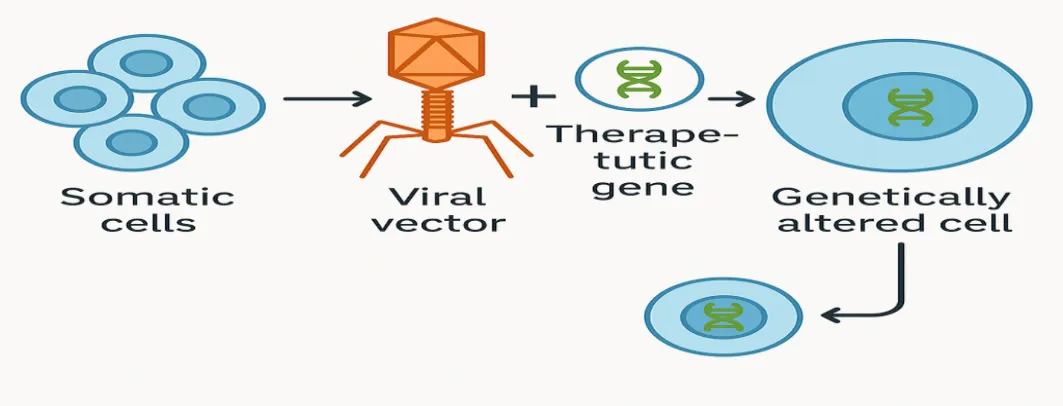
Fig No2:- Somatic Gene Cell Therapy
The Use Of Germ Line Gene Therapy Is Far More Contentious (Nelson 2000). "Normal" Human Genes Would Be Inserted Into The Child's Fertilized Egg Or Early Embryo, Or Into The Parents' Sperm Or Eggs. The Goal Would Be To Change The Future Child's Genetic Composition. This Can Be Done To Add Anatomical Variation That Is "Enhancing" Or To Prevent A Hereditary Ailment. The Scientific Community Has Not Tested Human Germ Line Gene Therapy; In Fact,Informally Banned The Attempt At Human Germ Line Gene Therapy. It's Uncertain Whether It's Worth It Or Not. It Has Been Possible To Successfully, Albeit Inefficiently, Introduce New Genes Into The Germ Lines Of Other Mammals[11].
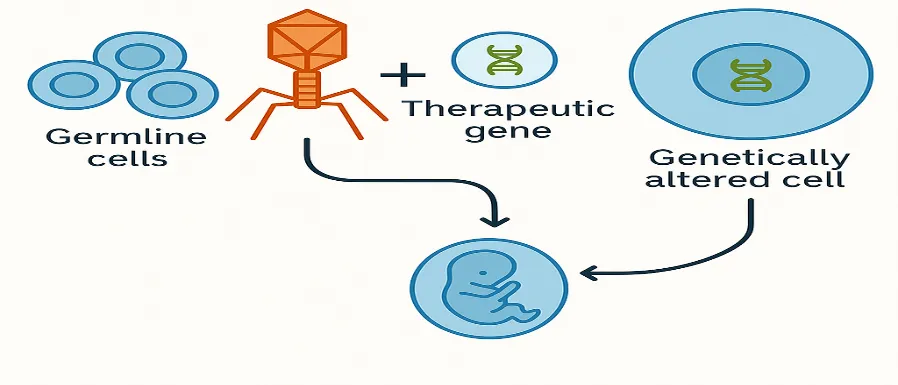
Fig No3:- Germline Gene Therapy
Dentistry Is The Branch Of Medicine Concerned With The Mouth, Teeth, And Gums. It Is Also Such As Periodontal And Dentistry. It Addresses The Assessment, Medical Care, Administration, And Prevention Of Ailments, Conditions, And Disorders That Impact The Mouth., Including Aprimary Focus On The Oral Mucosa And Dentition (The Growth And Placement Of Teeth)[12]
3.1 Application Of Gene Therapy In Dentistry
Numerous Gene Therapy Applications In Dentistry Have Shown Considerable Advancements.
A] Salivary Gland
Therapy That May Repair Or Regenerate Damaged Salivary Gland Tissue Is Highly Desired. Conditions That Can Cause Loss Of Salivary Gland Tissue Include Tumors And Their Surgical Removal, Autoimmune Illnesses Like Sjogren's Syndrome[13], And Postradiation Fibrosis. Because Salivary Glandular Tissue Is Easily Accessible Through Retrograde Medication Instillation Through The Salivary Ducts And Is Physically Encapsulated From Surrounding Structures, It Lends Itself Well To Gene Therapy, Lowering Concerns Related To Viral Vector Transduction. Deliver Genes That Code For Enzymes That, Inside Tumor Cells, Transform Innocuous Prodrugs Into Strong Chemotherapeutic Agents To Achieve Targeted Cytotoxicity. Numerous Genes, Including As Those That Produce Membrane Proteins, Hormones, Antimicrobial Agents, Transcription Factors, Protease Inhibitors, And Salivary Glands Use A Variety Of Nonmammal "Reporter Proteins" And Proteins That Control Apoptosis[14]. One Type Of Autoimmune Disease Is Sjogren's Syndrome (SS). The Two Main Characteristics Are Dry Mouth And Eyes That Are Dry. The Syndrome Is Commonly Linked To Immune System Disorders Like Rheumatoid Arthritis And Lupus. This Has Created A Broad Basis For Developing Novel Protein-Based And, More Recently, Gene-Based Therapies For A Number Of Autoimmune Illnesses, Including SS.
B] Bone Repair
Numerous Oral Disorders, Bone Loss Can Be Caused By A Variety Of Conditions, Such As Congenital Abnormalities, Trauma, Neoplastic Pathology, Reconstructive Surgery, And Periodontal Disease[15]. At The Moment, The Main Focus Of Efforts To Treat Such Bone Abnormalities Is The Use Of Harvested Or Manufactured Substitute Materials. The Ideal Outcome Would Be Targeted Bone Regeneration To Satisfy The Required Requirements. The Key Components Of Bone Physiology, Such As Osteoinduction, Osteoblast Differentiation And Creation Of Osteoid Matrix, Osteoconduction, And Mechanical Stimulation[16], Would Need To Be Altered For This To Occur PDGF Has Antiapoptotic Biological Actions That Impact Cell Motility, Proliferation, And Extracellular Matrix Synthesis Matrix[17]. The Gas Gene Gene For Growth Arrest) Ceases Functioning. The Growth Arrest Gene's Inhibitory Effects, Which Are Essential For Wound Healing, Have Been Avoided Thanks To The Creation Of The Bioactive PDGF Gene.
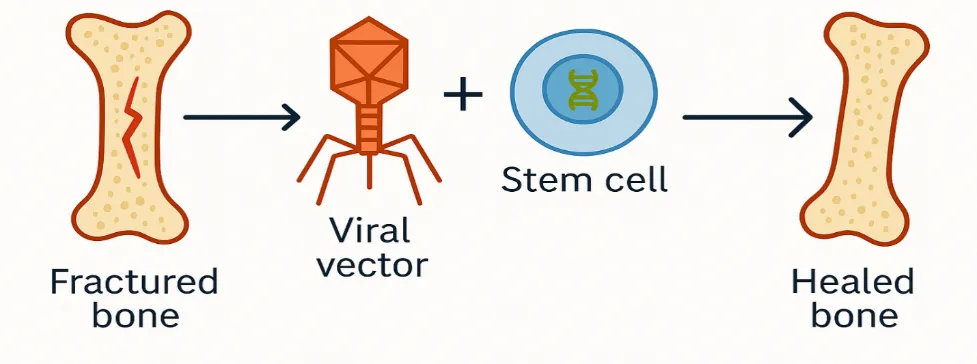
Fig.No.4 Bone Repair And Gene Therapy
C] Carcinomas
The Phrase " Head And Neck Skin Malignancies Are Referred To As "Squamous Cell Carcinoma Of The Head And Neck" (SCCHN), Larynx, Pharynx, Paranasal Sinuses, And Oral Cavity[18]. Globally, It Is Regarded As The Sixth Most Prevalent Kind Of Cancer. Careful Research Has Been Done On A Unique Gene Therapy Strategy That Particularly Grows And Kills Tumor Cells. For The Management Of Malignancies Devoid Of P53 The E1B 55kd Gene Deletion Adenovirus ONYX-015 (D11520) Was Recently Created[19]. ONYX-015 Can Be Safely Injected Intratumorally Into Individuals With Resistant Or Recurrent Squamous Cell Carcinoma. There Was, However, Minimal Evidence Of Anticancer Effect When This Specific Form Of Gene Treatment Was Used Exclusively.
Another Method Of Treating Carcinomas Is The Insertion Of Suicide Genes By Viral Vectors, In Which Genes Encoding A Pro-Drug Are Transferred To Cells Via The Herpes Virus Or Adenovirus. These Enzymes Metabolize Medications That Cause Cell Death When They Are Produced Intracellularly. Ganciclovir's Metabolism Is Initiated By The Herpes Simplex Virus-Thymidine Kinase (HSV-TK), Which Ultimately Stops DNA Synthesis[20].
Pain In The Face, Neck, And Head's Soft And Hard Tissues Is Referred To As Orofacial Discomfort. Due To Their Complexity And The Etiological Processes That Are Uncertain, Given Etiology, A Number Of Orofacial Pain Disorders, Particularly Chronic Ones, Can Be Extremely Difficult To Diagnose And Manage. If The Acute Illness Is Not Appropriately And Promptly Treated, 20% Of Acute Aches May Progress To Chronic Pain. Analgesic And Narcotic Medications Are Frequently Used Help Alleviate Discomfort. In A Mouse Model, It Was Demonstrated That Expressing The Human Preproenkephalin Gene Via A Herpes Simplex Vector Decreased Neuropathic Pain[21].
4.2 Growth And Restoration Of Teeth
The Pulp Is One Organ That Can Regenerate And Repair Itself Quite Well. Dental Pulp Cells Have The Ability To Terminally Differentiate Into Odontoblast-Like Cells[22]. For The Purpose Of Producing Reparative Dentine. Pulp Cells Transfected With Growth/Differentiation Factor 11's Capacity To Undergo Odontogenic Differentiation Has Been Demonstrated In Gene Therapy Technique Tests. Growth Factors (Gfs) Including BMP2 And The Synthetic Glucocorticoid Dexamethasone Are Used To Encourage Pulp Cells To Develop Into Cells That Resemble Odontoblasts[23]. Furthermore, In Vivo Factual Data In Animals Suggests That Dental Mucosa Stem Cells May Provide A Novel Cell Type For The Growth And/Or Repair Of Teeth, Bones, Muscles, Brains, And Hearts.
4.3 Orthodontic Tooth Movement
Osteoclasts And Osteoblasts Regulate The Remodeling Of Alveolar Bone, Which Is Necessary For Tooth Movement. Hemoietic Cells (Osteoclasts) And Stromal Cells (Osteoblasts) Are The Two Distinct Sources Of These[24]. Hematopoietic Precursors Must Interact With Cells Of The Osteoblastic Lineage In Order To Develop Into Mature Bone-Resorbing Osteoclasts.
Thus, Osteoblastic Or Periodontal Ligament Cells Are Thought To Be Required To Promote Osteoclastogenesis[25]. The Chemical That Facilitates This Connection Is Known As Receptor Activator Of The NF-Kappa B (RANK) Ligand, Or RANKL. RANK, The RANKL Receptor, Is Expressed By Osteoclastic Precursors[26]. Moreover, RANKL Binds To Osteoprotegerin (OPG), Which Is Generated By Osteoblastic Or Periodontal Ligament Cells. By Functioning As A Dummy Receptor For RANKL, OPG Stops RANKL From Binding To RANK. Consequently, Osteoclastic Development May Be Inhibited By OPG Overexpression[27]. Without Causing Any Systemic Effects, RANKL Gene Transfer To The Periodontal Tissue After 21 Days Enhanced Orthodontic Tooth Movement By About 150%. After Applying OPG Gene Transfer Forcefully For 21 Days, There Was Around 50% Less Tooth Movement. In 40 Years, Comparable Practices Probably.
A] Genes:-
For Many Diseases The Gold Standard For Diagnostics Is Now Genetic Material-Based, And During The 2020 Pandemic, It Was Crucial To Successfully Contain COVID-19.
Along With Common It Is Now Feasible To Separate And Isolate Circulating Tumor Cells (Ctcs) And Cancer Stem Cells (Cscs) From A Background Of Healthy Blood Cells Thanks To Cellular Genetic Resources[28]. Extracellular Vesicles Called Exosomes Are Released Into The Bloodstream By Both Healthy And Cancerous Cells. They are made up of nucleic acids and proteins that are specific to tumors. Broken nucleic acids released into the bloodstream by necrosis or apoptosis are known as cell-free nucleic acids[29]. Include Cell-Free DNA (Cfdna) And Cell-Free RNA (Cfrna). It Is Well Recognized That Circulating Tumor DNA (Ctdna) Is Cfdna That Cancer Patients' Tumor Cells Release[30].
Tableno1:- Genetic Biomarker And Their Type And Method
|
Source Of Biomarker |
Type Of Marker |
Method |
Use In Oral Cancer |
|
Plasma |
HPV Cfdna |
Meta Analysis |
To Manage Oral Squamous Cell Carcinoma In The Mouth |
|
Saliva |
HPV DNA |
Qpcr |
For Therapy Of Oral Squamous Cell Carcinoma |
|
Tissue |
HPV Ctdna |
RT-Qpcr |
Prevalence Of Oral Squamous Cell Cancer 30.9% |
|
Blood Serum |
Micro RNA |
Methodical Evaluation
|
Oral Squamous Cell Carcinoma Increased In Comparison To The Control |
B] Transcriptome:-
The Well-Known Oncogene DEK Has Been Demonstrated To Alter Protein Structure And Chromatin. The Downregulation Of Plasma DEK Oncogene Levels Was Seen In HNSCC Patients With Advanced Tumor Stage And HPV-Negative Status[31]. According To Palaia Et Alusing Bioinformatic Techniques The Thyrotropin-Releasing Hormone (TRH) Gene's Differentially Methylated Cpg Site, Cg01009664[33], Showed Promise For Epigenetic Modifications As A Diagnostic Criterion For OSCC, With A Sensitivity Of 82.61% And Sensitivity Of 92.59%. The Prognosis Of OSCC Can Be Predicted By Analyzing RNA Biomarkers, Such As Micrornas (Mir), Which Are Known To Have Oncogenic Or Suppressive Effects On Their Target Genes Under Specific Circumstances. A Good Or Bad Prognosis For OSCC Has Been Predicted Using Microrna Overexpression And Decrease. Specifically, OSCC Expresses Circular RNA For FAT1 (Circfat1)[32], Whereas Normal Neighboring Epithelial Tissues Do Not. Comparing Human OSCC With Lymph Node Metastases To Those Without, There Was A Substantial Increase In Circfat1.
C] Circulating Tumor Cells (CTC) And Cancer Stem Cells (CSC):-
Because They The Subgroup Of Cancer Cells Known As Cancer Stem Cells (Cscs)[34] Can Produce A Range Of Cancer Cell Types And Share Traits With Stem Cells, Including Asymmetrical Cell Division And Self-Renewal. The P-Glycoprotein 1 (CD44) marker, which is also a marker for breast CSC, or other generic markers of embryonic stem cells, like SRY-Box Transcription Factor 2 (SOX2), Octamer-Binding Transcription Factor 4 (OCT4), and Nanog Homeobox (NANOG)[35], have been the basis for the majority of CSC isolated from oral cancers. After Actively Or Passively Separating From A Primary Tumor, Circulating Tumor Cells (Ctcs) Travel Through The Bloodstream. Ctcs Display Tumor Heterogeneity Without The Need For An Invasive Tissue Sample Because Of The Various Iatrogenic Or Spontaneous Factors That Contribute To This Process.
Tableno2:- Protein Based Biomarkers And Their Method
|
Source |
Method |
Protein Identified |
|
Saliva |
Methodical Evaluation
|
Hemostasin, Serotransferrin, Transthyretin, Fibrinogen Β, Tnfα, Vegfα, Aatα, Hapβ, C3, IL‐1α, IL‐1β, IL‐6‐8, IL‐1Ra, MMP1, MMP2, MMP3, MMP9, And IL‐10 |
|
Saliva |
ELISA |
CD44, CYFRA 21-1, IL-17, LDH, Amylase, And MMP-9
|
|
Tissue |
Meta-Analysis |
P53, Β-Catenin, SGLT-1, SGLT-2, GLUT-1, GLUT-3, GLUT-2, GLUT-4, GLUT-8, And GLUT-13 |
|
Tissue And Cell Lines |
Nanolc-MS/MS
|
DNAJB11, THBS2, LGALS3BP, |
High-Throughput Screening Techniques Were Used To Identify 16 Possible Biomarkers For OSCC, Such As Serum Amyloid A-1, Fibronectin-1[36], And Thrombin Alpha And Beta Chains Were Up To 5.36 Times Higher In The OSCC Group. A Significant Distinction, Though, Is That A Saliva-Based Method Is More Sensitive Than A Serum-Based One. According To Ferrari Et Al., Every Study Showed OPMD levels were significantly lower than OSCC but significantly higher than controls (OSCC > OPMD > Control).The Region Under The Curve (AUC) For The Samples' Effective Power Of Discriminating Ranged From 0.70 To 0.99. More Systematic
Review Research Is Required In Light Of These Findings To Ascertain Whether OPMD Is A Distinct Category From OSCC And Controls[37].
Identifying And Evaluating The Metabolomic Indicators Linked To Oral Cancer[38]. For Metabolomic Investigations And Small Molecule Detection, Nuclear Magnetic Resonance (NMR) Spectroscopy, Frequently Used Methods Include Ultra-High-Performance Liquid Chromatography (UHPLC), Capillary Electrophoresis (CE), Gas Chromatography (GC), and Mass Spectrometry (MS) in conjunction with liquid chromatography (LC).
Table No3:- Metabolites Biomarkers And Their Source
|
Source |
Method |
Metabolites |
|
Saliva |
Systematic Evaluation
|
Hisxaphenol, Octanoic Acid, Heptanoic Acid, Citrulline, Ornithine, Proline, Glycine, And October 3rd, Nonanoic Acid, 3-Eptanone, E-2octenal, E-2-Nonenal, 2,4-Decadienal, And 9-Undecenoic Acid Thymidine, Adenosine, Putrescine, Cadaverine, 5, Phosphocholine, Glucose, Serine, Adrenic Acid, Hippuric Acid, 1,3-Butanediol, 1,2-Pentanediol, 1-Hexadecanol, Choline BBCA |
|
Saliva, Serum |
Investigate
|
S-Adenosylmethionine, Glutamic Acid, Glycyl-Leucine, Choline, Leucine, Isoleucine, Phenylalanine, Pipecolate, Choline, Betaine, Pipecolinic Acid, Propionylcholine, Lactic Acid, Acetone, Acetate, Putrescine, Aspartic Acid, Glutamate, Proline, Aspartic Acid, Alpha-Aminobutyric Acid, Serine, Indole-3-Acetate, Ethanolamine Phosphate, S-Adenosylmethionine, Glutacute |
|
Plasma , Urine |
NMR |
Glycine, Tyramine, Creatine, And Creatine Phosphate Aspartate, Glycine, Glutamate, Glutathione, Guanosine, Sucrose, Butyrate, And Glutamate |
|
Tissue |
GC-MS NMR IHC |
Glutamate, Nicotinamide N-Methyltransferase, Proline, And Aspartic Acid Lactic Acid, Glucose-6-Phosphate, 1,3-Dihydroxyacetone, 2 Oxoglutarate, 4 Aminobutyrate, Asparagine, Aspartate, Betaine, Carnitine, Choline, Creatine, Ethanol, Fumarate, Acetate, Adenine, Alanine, And |
The oral microbiome is the collective genome of the bacteria that inhabit the oral cavity. After the gut, it is the second-largest microbial colony in humans[39]. Compared to other parts of the body, their expected protein functions are significantly different. The components of a core microbiome and a shifting microbiome The Microbiome in Humans. Despite Having The Same Underlying Microbiome, Each Person's Microbiome Is Distinct Because Of Their Lifestyle Choices And Physiological Variations. The Oral Mucosa And The Hard And Soft Tissues Of Teeth Are The Two Surfaces In The Oral Cavity Where Germs Can Grow[40]. Culture-Based Approaches Are Insufficient To Demonstrate The Full Variety Of The Oral Microbiome. Currently, About Half Of The 700 Bacterial Species That Are Thought To Be Commonly Found In The Oral Cavity Have Been Isolated, Produced, Recognized, Described, And Classed By A Number Of Researchers.
1] Techniques Based On Gel
The Microbial Populations Have Been Analyzed At High Throughput Thanks To A Number Of Culture-Independent Methods. Temperature Gradient Gel Electrophoresis, Among The Techniques Used Include Denaturing Gradient Gel Electrophoresis (DGGE) And Restriction Fragment Length Polymorphism[41].
2] Reactions Based On Polymerase Chains
Multilocus Sequence Typing, There Are Numerous PCR-Based Methods For Microbe Identification[42], Including PCR-RELP, PCR-DGGE, Repetitive Element-Based PCR, Conventional Polymerase Chain Reaction (PCR), Random Amplified Polymorphic DNA/Arbitrarily Primed PCR, Real-Time Quantitative PCR, And Terminal-RELP.
3] The Microarray Made Of DNA
The Scientific Community Has Recognized Phylogenetic DNA Micro-Arrays As Useful Instruments For Investigating Bacterial Populations In A Range Of Microbial Habitats, Including The Oral Microbiota, In A High-Throughput, Quantitative, And Systematic Manner[43].
4] The 16S Rrna Sequencing Method
The Study Of Uncultivated Oral Microbial Populations Frequently Use DNA Sequencing methods like 16S RNA Sequence Analysis and Metagenomics. 16S Rrna Sequencing Sequences the Conserved 16S Rrna Gene, While Whole-Genome Shotgun Sequencing(WGS) Is Used In Metagenomics[44]. Nearly All Bacteria Contain 16S Rrna, Which Has Remained Constant Throughout Time And Is Sufficiently Large For Informatics Applications. This Gene Is More Advantageous Than Using The Full Genome Because It Is Highly Conserved. Metagenomics WGS Data Provide Taxonomy And Biological Functional Profiles, While 16S Rrna Profiling Provides Biological Composition.
C] CRISPR BASED DIAGNOSTICS
Gene Treatments Address Illnesses That Are Incurable With Traditional Medications By Delivering Nucleic Acids To The Patient's Cells[45]. Nucleases Such As Zfns And Talens Are Used In Current Treatments To Alter Genomes By Focusing On Particular DNA Sequences. However, DNA Target Cloning Is Complicated, And Target Arrangement Prediction Is Difficult. Because Of Its Ease Of Use, Multiplex Genomic Modification, And Simple Off-Target Site Prediction, CRISPR-Cas9 Gene Therapy Has Been Used Recently To Treat A Variety Of Disorders[46]. CRISPR/Cas Therapy Is Quicker And Easier Than Conventional Techniques, And It Shows Promise In Curing Gene Diseases.
Table No4:- CRISPR Diagnostics With There Type
|
NAME |
ENZYMES |
SAMPLE PREPARATION & READOUT DEVICE |
APPLICATION |
|
CRISPR Type 2 |
|||
|
NASBACC |
Cas9 |
Colometry Based On Columns
|
ZIKV Targeting African And American |
|
CRISDA |
Cas9nickase |
Fluorescence Based On Columns
|
Gdna Detection
|
|
CRISPR Type V |
|||
|
DETECTR |
Cas12a |
Unrefined Extraction, Fluroscence |
Finding HPV16 And HPV18 |
|
Cas14 DETECTER |
Cas14 (Cas12f) |
Crude Extraction, Fluroscence |
HERC2 SNP Identification In Human Samples |
|
CRISPR Type V |
|||
|
SHERLOCK |
Cas13 |
Crude Or Column-Based Extraction The Fluorescence |
Identification Of Bacteria And Viruses (DENV, ZIKV) |
|
Sherlockv2b |
Cas13 |
Crude Or Column-Based Extraction The Fluorescence |
Identification Of Bacteria And Viruses (DENV, ZIKV) |
The Study, Diagnosis, And Treatment Of Periodontal (Gum) Diseases Are The Main Goals Of The Dental Specialty Known As Periodontics. A New Area Of Study Called Gene Therapy In Periodontics Aims To Improve The Management Of Periodontal Diseases By Altering Genetic Variables. Gene Therapy Is Being Investigated As A Means Of Controlling Periodontal Infections, Enhancing Host Immune Responses, And Regenerating Alveolar Bone[47].
A] Vaccination Against Periodontal Diseases
Certain Antibodies Against Porphyromonas Gingivalis Can Be Produced Via The Synthesis Of Fimbrial Protein By The Salivary Glands Of Mice[48]. Streptococcus Gordonii Vectors[49] That Have Been Genetically Modified To Express P. Gingivalis Are Useful In Avoiding Periodontitis. Fischer Rats With P. Gingivalis Infections Can Avoid Bone Loss By Taking Hemagglutinin, Which Is A Crucial Part Of The Pathogen's Lethality[50].
B] Antibiotic Resistance In Biofilms
Because Biofilm-Forming Bacteria Have Antibiotic Resistance That Is Up To 1,000 Times Greater Than That Of Their Wild Counterparts, Research Suggests That They Are Challenging To Manage[51]. The Gene Ndvb,82 Of The Pseudomonas Aeruginosa RA14 Strain Generates The Glycosyltransferase[52] Required For The Synthesis Of Periplasmic Glucans, Was Recently Discovered By Mah Et Al.
C] Alveolar Bone Remodeling Via Electroporation
In Response To Factors Including Inflammation And Mechanical Pressure, Periodontal Tissue Actively Regenerates By Producing A Variety Of Substances[53]. Transferring The Lacz Gene, Which Codes Multiple Remodeling Molecules, Into The PDL In Vivo And Employing Combining Transient Transfection (Electric Impulse) With Plasmid DNA As A Vector To Introduce The Gene Into Cells Has Been Confirmed To Can Result In Predictable Alveolar Redevelopment[54].
D] Tight Compliance Gene For Controlling Periodontal Disease Development
The Invasion Of Target Tissue By A Periodontal Pathogen[55], Such As Actinobacillus Actinomycetemcomitans, Is A Crucial Initial Step In The Development Of Localized Aggressive Periodontitis. It Was Discovered That Actinobacillus Actinomycetemcomitans Requires "Tight Adherence" In Order To Adhere And Become Virulent. By Preventing The Recruitment And Pathogenesis Of A. Actinomycetemcomitans, The "Tight Adherence Gene," Which Researchers Discovered In A Mutant Strain, May Actually Predictably Affect The Progression Of Periodontal Disease[56].
Numerous Stimulus-Responsive Nanocarriers Have Been Developed To Address Illnesses That None Of The Stimulus-Responsive Gene Carriers Can Cure. These Kinds Of Reactions Are Employed By Systems That Are Capable Of Responding To Various Inputs. For Example, Two Polymeric Micelles Were Utilized To Create Ph/Temperature-Sympathetic Nanocarriers Using Poly(N-Isopropylacrylamide) Substrates Functionalized With Sulfonamide. In Mildly Acidic Settings (Ph 6.8), Surface-Functionalized Micelles Of Sulfadimethoxine And Sulfamethazine Demonstrated Improved Intracellular Absorption When Activated With A Proof-Of-Concept Antiproliferative Medication At Temperatures Significantly Higher Than Their Lower Critical Solution Temperatures. Gene Delivery Systems Or Intracellular Ph And Temperature-Responsive Medications Could Be Developed Using Either Type Of Microemulsion.
The Great Majority Of Features And Disorders Are Polygenic, Yet Single Nucleotide Polymorphisms And Single Gene Disorders Can Be Found, Examined, And Genetically Altered. These Genes Are Not Only Located At Several Loci But Also Involve Multiple Genes Working Together. Furthermore, Because Environmental Influences Have Varied Degrees Of Influence, People Are Different In Their Sensitivity To Such Features. Furthermore, A Trait's Genetic Etiology May Be Linked To Unrelated Genes As Well As Genes That Cause Disease. The Largest Obstacle To The Realization Of Personalized Therapy Is Deciphering These Intricate Gene Connections.
In Response, There Are A Number Of Innovative Technologies That Could Significantly Influence Genetic Research. Rapid Genetic Editing Is Made Possible By Clustered Regularly Interspaced Short Palindromic Repeat Sequences. Gene Sequencers And Computer Processing Power Are Growing Quickly, Making Whole Genome Sequencing Possible And Affordable. Algorithmic Deep Learning Is Also Assisting In The Analysis Of Gene Expression And Regulation. The Use Of Genetic Alterations To Cure And Prevent Oral Disease Is Being Investigated In The New Field Of Gene Therapy In Dentistry. By Treating Issues At The Molecular Level As Opposed To Just Using Conventional Treatments, It Has The Potential To Completely Transform Dental Care.
CONCLUSION
Clinical Research On Despite Intense Interest, There Is Little Treatment For Periodontal Disease And Dentine Repair. Cell-Based Bioengineering And Material Sciences Must Yield Reliable, Repeatable Outcomes For Safety And Efficacy. Gene Therapy Is Being Researched For Several Biological And Dental Uses And May Improve Oral Health And Quality Of Life. Future Clinical Orthodontics Will Benefit From Biological Research Targeted At Avoiding Gene Therapy From Becoming A Common Therapeutic Choice.
REFERENCES


Niraj Chorbele, Dr. Prashant Patil, Dr. Vishal Pande, Gene Therapy for Oral and Periodontal Diseases: A Review of Recent Advances, Int. J. of Pharm. Sci., 2026, Vol 4, Issue 7, 3906-3921, https://doi.org/10.5281/zenodo.21453390
 10.5281/zenodo.21453390