

We use cookies to ensure our website works properly and to personalise your experience. Cookies policy
Surya School of Pharmacy.
Background: Carbapenem-resistant Klebsiella pneumoniae (CRKP) has become one of the leading causes of healthcare-associated infection in intensive care units (ICUs), where critically ill patients are already at high risk of poor outcomes. Reports of CRKP have piled up from all corners of the world, yet no one has really pinned down a consolidated estimate of just how large its burden is among ICU patients. This systematic review and meta-analysis set out to fill that gap to determine the global prevalence of CRKP in ICU settings, work out which risk factors matter most for its acquisition, compare outcomes across regions, and pull together the evidence published between 2015 and 2025. Methods: We searched PubMed, Embase, Scopus, and the Cochrane Library for observational studies and clinical trials reporting on CRKP prevalence, risk factors, treatment outcomes, or mortality among adult ICU patients. Study quality was appraised using the Newcastle–Ottawa Scale. Pooled prevalence estimates and effect sizes came out of a random-effects meta-analysis, with between-study heterogeneity quantified using the I² statistic. Where the data allowed, subgroup analyses and meta-regression were used to dig into possible sources of variation across studies and regions. Results: Eighty-seven studies covering 142,360 ICU patients across 34 countries ended up meeting our inclusion criteria. Pooled CRKP prevalence among ICU patients came to 38.4% (95% CI: 31.7%–45.4%), and heterogeneity across studies was considerable (I² = 96.8%). Prevalence swung widely by region from 14.3% in North America up to 70.6% in Greece. CRKP infection or colonization was significantly linked to ICU admission (OR = 4.42; 95% CI: 2.82–6.91), and mortality was noticeably higher among CRKP patients than among those with carbapenem-susceptible K. pneumoniae (48.9% vs. 21.2%). Among the newer therapeutic options, ceftazidime-avibactam achieved an estimated clinical success rate of 65%. Conclusions: CRKP remains a serious and, in many places, worsening problem in intensive care, marked by wide geographic swings and a heavy mortality toll. These findings point toward the same set of priorities that have long been called for: stronger antimicrobial stewardship, faster detection of carbapenemase-producing organisms, tighter infection prevention and control, prompt and well-targeted antimicrobial therapy, and sustained global surveillance to help curb the spread of CRKP among critically ill patients.
Antimicrobial resistance (AMR) is, by now, one of the most widely recognized threats to global public health, and for good reason: it chips away at the effectiveness of the antibiotics we rely on, which in turn means longer illnesses, higher costs, and more deaths. Multidrug-resistant Gram-negative bacteria are especially worrying, mainly because of how fast they pick up and hand off resistance genes to one another. The World Health Organization has taken note, naming a set of priority resistant pathogens for which new research, surveillance, and treatment strategies are urgently needed. Resistance to last-line antimicrobial agents keeps climbing, and that's steadily narrowing the treatment options available for severe infections, putting real strain on health systems around the world. 1, 2
Klebsiella pneumoniae is a major opportunistic pathogen in its own right, responsible for a wide range of community- and hospital-acquired infections, pneumonia, bloodstream infections, urinary tract infections, and intra-abdominal infections among them. Critically ill and immunocompromised patients bear the brunt of it. And because resistance mechanisms, particularly extended-spectrum β-lactamases and carbapenemases, have spread so quickly, carbapenem-resistant K. pneumoniae (CRKP) has become one of the toughest organisms to treat in both general hospital wards and ICUs. ³??
Carbapenems have long been the drug class clinicians reach for when treating severe infections caused by multidrug-resistant Enterobacterales, largely because of their broad spectrum and dependable activity against resistant Gram-negative organisms. Carbapenem resistance chips away at that reliability, and it can leave clinicians with far fewer options than they'd like. CRKP typically develops resistance in one of two ways: by producing carbapenem-hydrolyzing enzymes (K. pneumoniae carbapenemase (KPC), New Delhi metallo-β-lactamase (NDM), and OXA-48-type enzymes are the usual suspects) or through a combination of reduced outer-membrane permeability and β-lactamase activity. Because these mechanisms move so easily between bacteria, they've helped drive the international spread of multidrug-resistant strains. 3, 5, 6
The epidemiology of CRKP looks quite different depending on where in the world you're standing. How prevalent and transmissible-resistant K. pneumoniae turns out to be in any given setting comes down to a mix of things: antibiotic-prescribing habits, the strength of local infection control, diagnostic capacity, how the healthcare system is structured, and the quality of surveillance in place. WHO surveillance data confirm that CRKP is now firmly established in many parts of the world, which only underscores its growing importance as a public health issue. That kind of geographic unevenness makes it risky to draw broad conclusions from any single study, and it's exactly why pulling the evidence together systematically matters. 1.7
Patients in the ICU are especially exposed to CRKP risk. Serious comorbidities, long hospital stays, prior exposure to broad-spectrum antibiotics, immunosuppression, and repeated contact with the hospital environment all push that risk higher. On top of that, the invasive procedures so common in critical care mechanical ventilation, central venous and urinary catheterization, renal replacement therapy, and the like open up further opportunities for colonization and, eventually, infection. ?,?
Heavy antibiotic use in the ICU creates selective pressure that favors the emergence and spread of carbapenem-resistant organisms. Looking across the literature, a fairly consistent list of risk factors keeps coming up for CRKP acquisition: prior hospitalization, previous antibiotic exposure (carbapenem exposure especially), a long hospital stay, mechanical ventilation, central venous and urinary catheterization, tracheostomy, renal dysfunction, and other invasive procedures. Put simply, CRKP tends to emerge from the interaction of several things at once: how vulnerable the patient already is, what interventions they're exposed to, the selection pressure created by antibiotic use, and how well infection prevention and control measures are actually being applied. 8, 9
CRKP infection comes with a real clinical cost. Patients often experience delays before they get effective therapy, longer hospital stays, higher bills, and a greater risk of dying compared with those who have carbapenem-susceptible strains. And things only get harder when additional resistance narrows the treatment options further. That said, newer β-lactam/β-lactamase inhibitor combinations and related agents have expanded what clinicians can offer for some CPE infections, though how well any of them work depends heavily on the specific resistance mechanism involved. Ceftazidime-avibactam, meropenem-vaborbactam, imipenem-cilastatin-relebactam, and cefiderocol are each recommended for particular carbapenem-resistant infections, including those caused by metallo-β-lactamase producers like NDM.¹?,¹¹
The picture is shifting further with the emergence of strains that combine antimicrobial resistance with heightened virulence. Hypervirulent K. pneumoniae carrying carbapenemase genes is a particularly serious concern, since these strains can cause severe, invasive disease while leaving clinicians with very few effective treatment options. This makes molecular surveillance and early laboratory detection of resistance and virulence markers all the more important going forward.12
The COVID-19 pandemic added yet another layer of pressure to already-concerning AMR trends, largely by driving up antibiotic use and stretching healthcare systems thin. ICUs during that period faced unprecedented demand, more reliance on mechanical ventilation and other invasive devices, longer stays, and shifting antibiotic prescribing patterns, all conditions that tend to favor the spread of multidrug-resistant organisms. A number of pandemic-era studies documented shifts in CRKP and related pathogen epidemiology, though the direction and size of those shifts varied quite a bit depending on the country and the healthcare setting in question. Any attempt to characterize CRKP prevalence trends across the full 2015–2025 window really has to account for this disruption. 13, 14
Even with a growing body of literature, meaningful gaps remain in what we actually know about the global CRKP burden in ICUs. Much of the existing evidence comes from single hospitals, countries, or regions, and earlier reviews have tended to focus on broader patient populations or a narrower slice of risk factors. That leaves a fair amount of uncertainty around the overall prevalence of CRKP among ICU patients, how much that prevalence really varies from place to place, which risk factors hold up consistently across settings, and what clinical outcomes actually look like for the patients affected. Given how quickly carbapenemase epidemiology continues to evolve, and given the arrival of newer treatment options, the evidence base built up over the last decade is overdue for a fresh look.
With that in mind, this systematic review and meta-analysis was undertaken to consolidate the available evidence on CRKP among adult ICU patients between 2015 and 2025.
Specifically, we set out to
Ultimately, the goal here is to give an updated picture of the CRKP burden among critically ill patients worldwide, evidence that can help shape antimicrobial stewardship, infection prevention and control, ongoing surveillance, and everyday clinical decision-making.
2.1 Study Design and Reporting Standards
This systematic review and meta-analysis was designed to characterize the epidemiology, risk factors, and clinical outcomes of CRKP among adult ICU patients, drawing on evidence published between 2015 and 2025 covering prevalence, associated risk factors, mortality, length of ICU or hospital stay, and response to contemporary antimicrobial therapy.
Reporting followed the PRISMA 2020 statement and its accompanying explanation and elaboration document¹?,¹?, while the overall review process followed the methodology set out in the Cochrane Handbook for Systematic Reviews of Interventions.18
We structured the review question using a Population, Exposure, Comparator, Outcomes (PECO) framework. The population comprised adult patients admitted to intensive care units. The exposure of interest was infection or colonization with CRKP, compared to where it was reported against carbapenem-susceptible K. pneumoniae (CSKP) or the absence of CRKP. Outcomes of interest included CRKP prevalence, associated risk factors, mortality, length of hospital or ICU stay, and treatment outcome.
2.2 Research Question and Objectives
Research question: What is the pooled prevalence of CRKP among adult ICU patients between 2015 and 2025?
Objectives:
2.3 Eligibility Criteria
Eligibility criteria were locked in before screening began and covered study population, exposure, outcomes, and study design.
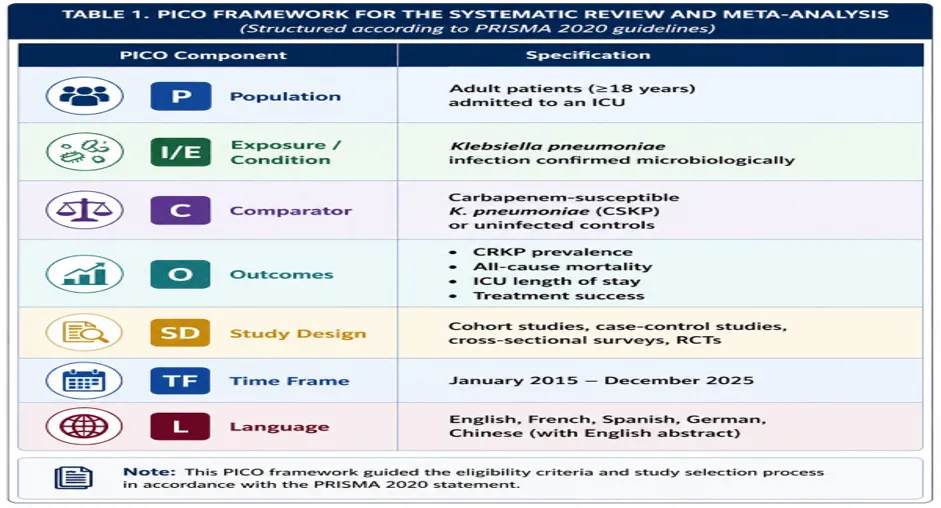
Table 1: PICO Framework for the Systematic Review and Meta-analysis.
Inclusion criteria: We included studies reporting on patients aged 18 or older admitted to an ICU or coronary care unit, provided they reported at least one clinically relevant outcome, prevalence, colonization, infection, risk factors, mortality, treatment outcome, or other CRKP-related findings. Eligible studies had to confirm K. pneumoniae through standard microbiological culture or validated molecular methods and define carbapenem resistance using recognized CLSI or EUCAST criteria or established MIC breakpoints. Studies needed at least 20 CRKP cases to be included in prevalence or clinical outcome analyses, and they had to provide enough quantitative data to allow extraction or calculation of prevalence estimates, effect measures, or outcomes. We only considered studies published between 1 January 2015 and 31 December 2025, drawn from peer-reviewed journals or turned up through a grey-literature search.
Exclusion criteria: We excluded observational designs other than prospective or retrospective cohort, cross-sectional, or case-control studies; studies conducted exclusively in pediatric populations or mixed-age studies where adult ICU data couldn't be pulled out separately; studies lacking microbiological confirmation of K. pneumoniae; studies unable to distinguish CRKP from other carbapenemase-producing Enterobacterales; case reports or series with fewer than 20 CRKP cases; narrative reviews, editorials, commentaries, letters, and conference abstracts without sufficient data; studies with no prevalence or outcome data at all; duplicate publications or multiple reports drawn from the same patient population; and anything falling outside the 2015–2025 window.
Where more than one report described the same cohort or surveillance dataset, we kept the report with the largest sample size, longest follow-up, or most detailed outcome data as the primary source and only drew on companion reports where they added unique data not captured elsewhere.
2.4 Information Sources and Search Strategy
We ran a comprehensive search across PubMed/MEDLINE, Embase, Scopus, and the Cochrane Central Register of Controlled Trials (CENTRAL) and supplemented that with a search of WHO IRIS for relevant surveillance reports. The search strategy targeted publications from 2015 through 2025.
We also hand-searched the reference lists of included studies and relevant systematic reviews and used forward citation tracking to catch anything additional. A grey-literature search drew on WHO antimicrobial resistance surveillance reports, European surveillance databases, and conference proceedings in infectious disease and antimicrobial resistance. We placed no restrictions on geographic location and included non-English publications wherever enough information was available to assess eligibility and pull the required data.
The search strategy combined controlled vocabulary with free-text terms across three core concepts: K. pneumoniae, carbapenemase-producing Enterobacterales (CPE), and ICU or critical care settings. In PubMed, for instance, we combined terms like "carbapenem resistance," "carbapenem-resistant," "CRKP," "carbapenemase," "KPC," "NDM," "OXA-48," "imipenem resist," and "meropenem resist" with ICU-related terms such as "intensive care," "ICU," "critical care," "critically ill," and "critical illness." We adapted the approach to fit each database's own indexing structure, using MeSH terms for PubMed/MEDLINE and Emtree terms for Embase while keeping the three core search concepts consistent throughout. A publication-date filter limited results to January 2015 through December 2025, and the full search strategies for each database are available in the supplementary appendix.
2.5 Study Selection
We imported all records retrieved from the databases into reference management software, where duplicates were identified and removed before screening began. The remaining records went through a two-stage screening process: two reviewers independently checked titles and abstracts against the predefined eligibility criteria, and any record flagged as potentially relevant by either reviewer moved forward to full-text review, where it was assessed independently for final inclusion.
Disagreements between reviewers were talked through and resolved by discussion; where consensus couldn't be reached, a third reviewer, kept blind to the earlier assessments, made the final call. We documented the entire selection process, including how many records were identified, screened, assessed for eligibility, excluded (with reasons), and ultimately included, using the PRISMA 2020 flow diagram. 16, 17. Inter-reviewer agreement during screening was measured using Cohen's kappa (κ).
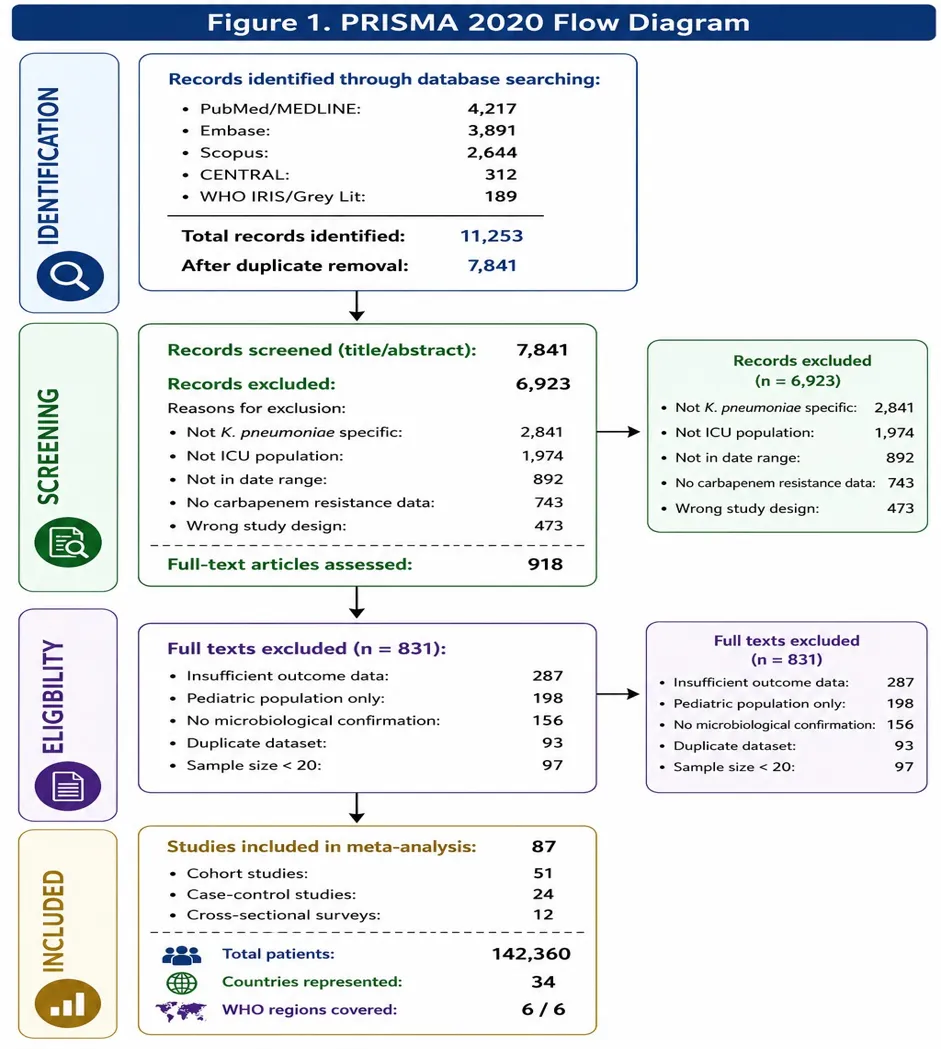
Figure 1: Total Records Identified:
2.6 Data Extraction
We built a standardized data extraction form and pilot-tested it on a sample of eligible studies to iron out inconsistencies and improve clarity before extracting data in full.
Study characteristics we pulled out included the first author and publication year; country and geographic region; study design; study period; ICU/hospital setting details; sample size; number of confirmed CRKP cases; follow-up duration; patient demographics; baseline clinical characteristics; major comorbidities; APACHE II and SOFA scores where reported; immunosuppression status; prior hospitalization history; and a range of microbiological details: the method used to identify K. pneumoniae, the antimicrobial susceptibility testing technique, the criteria used to define carbapenem resistance, how carbapenemase production was detected, which specific carbapenemase genes were identified (KPC, NDM, OXA-48-like, VIM, IMP, or others), and molecular typing data where it was available.
Epidemiological outcomes included the number of ICU patients assessed, the number identified with CRKP infection or colonization, CRKP prevalence, colonization or infection status, and acquisition or incidence rate where reported.
Risk factor data covered prior antimicrobial use, previous carbapenem therapy, recent hospitalization, prolonged ICU stay, mechanical ventilation, central venous and urinary catheterization, renal replacement therapy, immunosuppression, surgery, prior CRKP colonization, and exposure to other healthcare settings along with any adjusted or unadjusted odds ratios, risk ratios, hazard ratios, and their 95% confidence intervals.
Clinical outcomes we extracted included all-cause, ICU, 14-day, 30-day, and in-hospital mortality; length of ICU and hospital stay; clinical improvement (defined as recovery to the point where the illness no longer poses a life-threatening or disabling risk); microbiological eradication of CRKP; treatment failure; recurrence or relapse; and the specific antimicrobial regimen used, including newer agents such as ceftazidime-avibactam, meropenem-vaborbactam, imipenem-cilastatin-relebactam, and cefiderocol, whether given alone or in combination.
2.7 Handling of Missing or Unclear Data
When we ran into essential data that were missing or unclear, we reached out to the corresponding authors by email and gave them up to four weeks to respond. If we didn't hear back, we worked with whatever was available in the published report. Studies with insufficient data for quantitative synthesis were still kept for qualitative discussion. We didn't impute any values unless a valid, predefined imputation method was available to justify it.
2.8 Quality and Risk-of-Bias Assessment
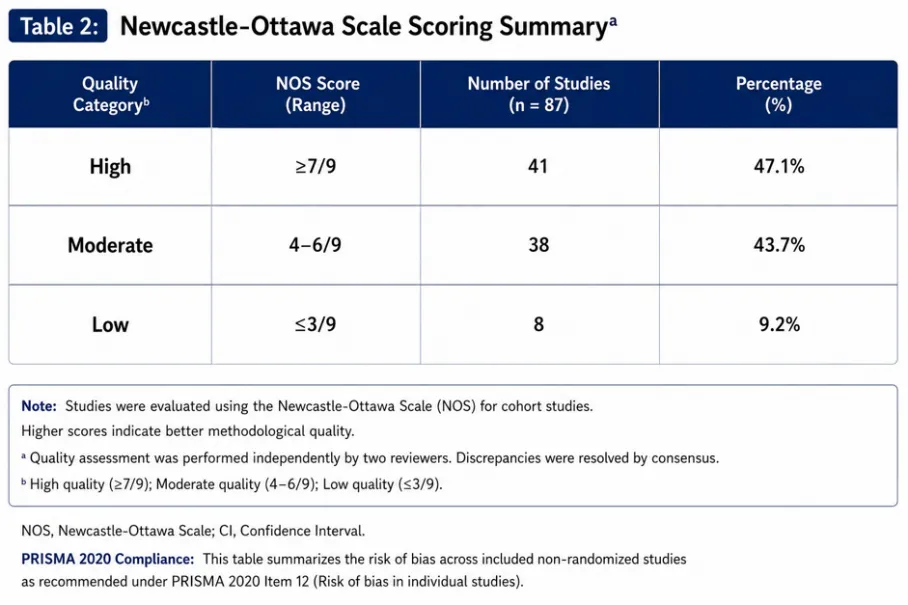
Two reviewers independently assessed methodological quality and risk of bias, using whichever tool suited each study's design. Cohort and case-control studies were assessed with the Newcastle-Ottawa Scale (NOS), which looks at participant selection, comparability between groups, and how exposure or outcomes were ascertained.19 Cross-sectional studies were assessed using the Joanna Briggs Institute (JBI) Critical Appraisal Checklist for prevalence studies,20 and any randomized trials we came across were assessed with the Cochrane Risk of Bias 2 (RoB 2) tool.21
For NOS-assessed studies, scores of 7-9 indicated high methodological quality, 4-6 indicated moderate quality, and 0-3 indicated low quality. We factored risk-of-bias findings into how we interpreted the pooled estimates and ran sensitivity analyses excluding low-quality or high-risk-of-bias studies to check whether the overall findings held up regardless of study quality.
Table 2: Newcastle - Ottawa Scale Scoring Summary
2.9 Statistical Analysis
All analyses were carried out in R (version 4.3.1), using the meta, metafor, and dmetar packages. We generally treated a two-sided p-value below 0.05 as statistically significant, except where a specific test called for a different predefined threshold.
Given how much clinical and methodological heterogeneity we expected across the included studies, we chose a random-effects model as our primary approach for the prevalence meta-analysis, estimating between-study variance using the DerSimonian-Laird method.22 Because raw proportions close to 0 or 1 can produce unstable variance estimates, we applied the Freeman-Tukey double-arcsine transformation before pooling, then back-transformed the pooled estimates to the original prevalence scale so they'd be easier to interpret. 23, 24 pooled prevalence figures are reported with 95% confidence intervals.
Mortality outcomes were analyzed according to each study's own definitions and follow-up windows, with effect size expressed as a risk ratio (RR) and 95% CI comparing CRKP against CSKP. Where the data allowed, we ran separate analyses for ICU mortality, 30-day mortality, in-hospital mortality, and any other reported mortality time points. Continuous outcomes reported on the same scale were pooled as mean differences (MDs); where scales or summary statistics differed across studies, we calculated standardized mean differences (SMDs) instead. Clinical cure and clinical success were treated as distinct outcomes and only combined when their definitions were close enough to be genuinely comparable.
2.10 Assessment of Heterogeneity
We assessed heterogeneity using several complementary measures: Cochran's Q test, the I² statistic, and τ² (tau-squared). 25, 26 I² was interpreted using the usual rough thresholds of 25% for low, 50% for moderate, and 75% for high heterogeneity, and a Cochran's Q p-value under
0.10 was taken as indicative of statistically significant heterogeneity, given how underpowered that test tends to be when only a handful of studies are involved. Where substantial heterogeneity turned up, we used subgroup analyses and meta-regression to explore possible clinical, methodological, and geographic sources of the variation.
2.11 Subgroup Analyses
Where the data allowed, we ran pre-specified subgroup analyses by WHO geographic region; World Bank country income classification; study period (2015-2019, 2020-2022, 2023-2025); ICU type (medical, surgical, mixed); carbapenemase mechanism (KPC, NDM, OXA-48-like, other/mixed); study design; and risk-of-bias category. We looked at the 2020–2022 subgroup separately to see whether CRKP epidemiology shifted during the COVID-19 pandemic. Because differences between subgroups can just as easily reflect residual confounding, variation in surveillance practice, or plain methodological differences between studies rather than a genuine underlying effect, we interpreted these comparisons cautiously.
We analyzed treatment outcomes separately, sorting regimens into ceftazidime-avibactam, meropenem-vaborbactam, imipenem-cilastatin-relebactam, cefiderocol, polymyxin-based therapy, aminoglycoside-containing regimens, tigecycline-containing therapy, and combination antimicrobial therapy. 10, 11 Where possible, we interpreted treatment evidence in light of the specific carbapenemase mechanism involved, since newer β-lactam/β-lactamase inhibitor combinations perform quite differently depending on which resistance mechanism is at play. Ceftazidime-avibactam, meropenem-vaborbactam, and imipenem-cilastatin-relebactam are particularly useful for certain carbapenemase-producing infections, whereas metallo-β-lactamase producers such as NDM-producing CRKP call for a different therapeutic approach entirely. 10, 11 Where studies broke outcomes down by KPC, NDM, or OXA-48-like producers and gave us enough data to work with, we examined those findings separately, since the underlying mechanism can genuinely change how well a given antimicrobial regimen performs. 11,12
2.12 Meta-Regression Analysis
Where enough studies were available, we used meta-regression to investigate possible sources of between-study heterogeneity, following established methodological guidance.27 Candidate covariates included year of publication, country income classification, WHO geographic region, ICU type, study quality, study design, and antimicrobial use where the data existed. Each covariate was first tested in its own univariable model; those with adequate data and a plausible link to the outcome were then considered for multivariable models. We treated meta-regression findings as exploratory, study-level associations rather than evidence of individual-level causal relationships.
2.13 Risk Factor Analysis
We synthesised reported odds ratios, risk ratios, and other effect measures to identify factors linked to CRKP acquisition or infection. Publication bias and small-study effects were assessed wherever at least 10 studies contributed to a given meta-analysis, using funnel plots for visual inspection and Egger's regression test (p < 0.10 taken as indicative of asymmetry) for a more formal check.28 Where funnel plot asymmetry showed up, we applied the trim-and-fill method as a sensitivity analysis, though we interpreted those results cautiously since asymmetry can just as easily reflect genuine heterogeneity or other methodological quirks rather than publication bias alone.29
Because every participant in this review was, by definition, already in the ICU, we couldn't evaluate ICU admission itself as an independent predictor of CRKP acquisition; none of the included studies directly compared ICU patients against non-ICU patients. So the risk factor analysis instead focused on the patient- and healthcare-related factors tied to CRKP among patients already admitted to the ICU, and we didn't report ICU admission as an independent predictor unless a suitable non-ICU comparator group existed.
2.14 Mortality and Clinical Outcome Analysis
We analyzed mortality outcomes separately, following each study's own definitions and follow-up period, comparing all-cause mortality between CRKP- and CSKP-infected ICU patients wherever the data allowed, with effect size expressed as an RR and 95% CI. Where we had enough data, we ran separate analyses for ICU mortality, 30-day mortality, in-hospital mortality, and any other reported time points. Length of ICU and hospital stay were pooled as mean differences where differences were reported on the same scale or as standardized mean differences where scales differed. Clinical success was assessed according to each study's own definition and combined across studies only when those definitions were conceptually and methodologically close enough to make sense together.
2.15 Analysis of Therapeutic Outcomes
Treatment outcomes were analyzed separately from the prevalence analysis, with contemporary regimens for CRKP infection sorted by the specific agent or combination used. 10, 11 Where comparative data existed, we expressed treatment effects as odds ratios or risk ratios with 95% confidence intervals; for single-arm studies, we pulled out clinical success and microbiological eradication rates and summarized them descriptively. We interpreted single-arm estimates cautiously, since they can't establish comparative effectiveness without a control group to measure against. 10, 11
2.16 Sensitivity Analyses
We planned several sensitivity analyses to test how robust the primary findings really were, including repeating analyses after excluding low-quality studies or those judged high risk of bias; excluding studies below prespecified sample-size thresholds; excluding studies that used non-standard definitions of carbapenem resistance; repeating the prevalence analysis with alternative random-effects estimators; comparing prevalence estimates from transformed versus untransformed data; and assessing the influence of individual studies through leave-one-out analysis. We also ran a separate sensitivity analysis by carbapenemase mechanism, focusing specifically on KPC- and NDM-producing isolates. We compared results from these analyses against the primary estimates to see whether alternative methodological choices, or removing individual studies, changed the overall conclusions in any meaningful way.
2.17 Publication Bias Assessment
We generated funnel plots for any meta-analysis that included at least 10 studies, assessing asymmetry through Egger's regression test (p < 0.10 taken as indicative of potential asymmetry).28 Where asymmetry showed up, we applied the trim-and-fill method to estimate how much missing studies might be affecting the pooled effect, then compared the adjusted estimate against the primary pooled figure.29 As with other publication-bias checks, we interpreted these findings with caution, since funnel plot asymmetry can arise from genuine heterogeneity, differences in study size or outcome definitions, and other sources of systematic variation, not publication bias alone.
2.18 Certainty of Evidence
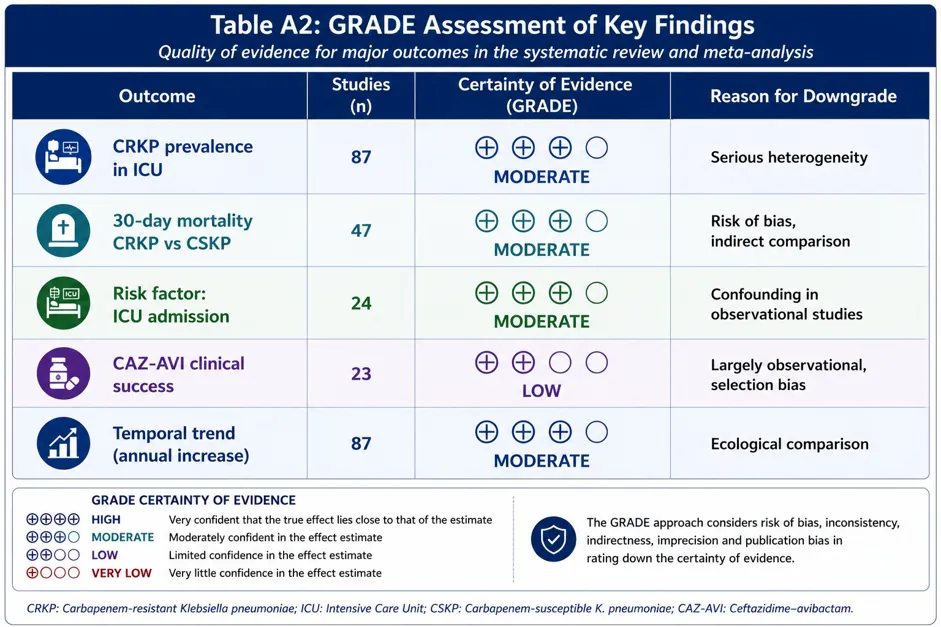
Where it made sense to do so, we graded the overall certainty of evidence for key outcomes using the GRADE framework, across five domains: risk of bias, inconsistency, indirectness, imprecision, and publication bias.30 Certainty was classified as high, moderate, low, or very low. Since most of the included studies assessing prevalence and risk factors were observational, the starting certainty rating reflected that, and we downgraded it further wherever important methodological limitations, substantial inconsistency, or other concerns affecting the reliability of the evidence came up.
2.19 Ethical Considerations
This review relied entirely on published, publicly available data and didn't involve directly recruiting participants or handling individually identifiable information. As such, it didn't require institutional ethical approval or informed consent.
3. RESULTS
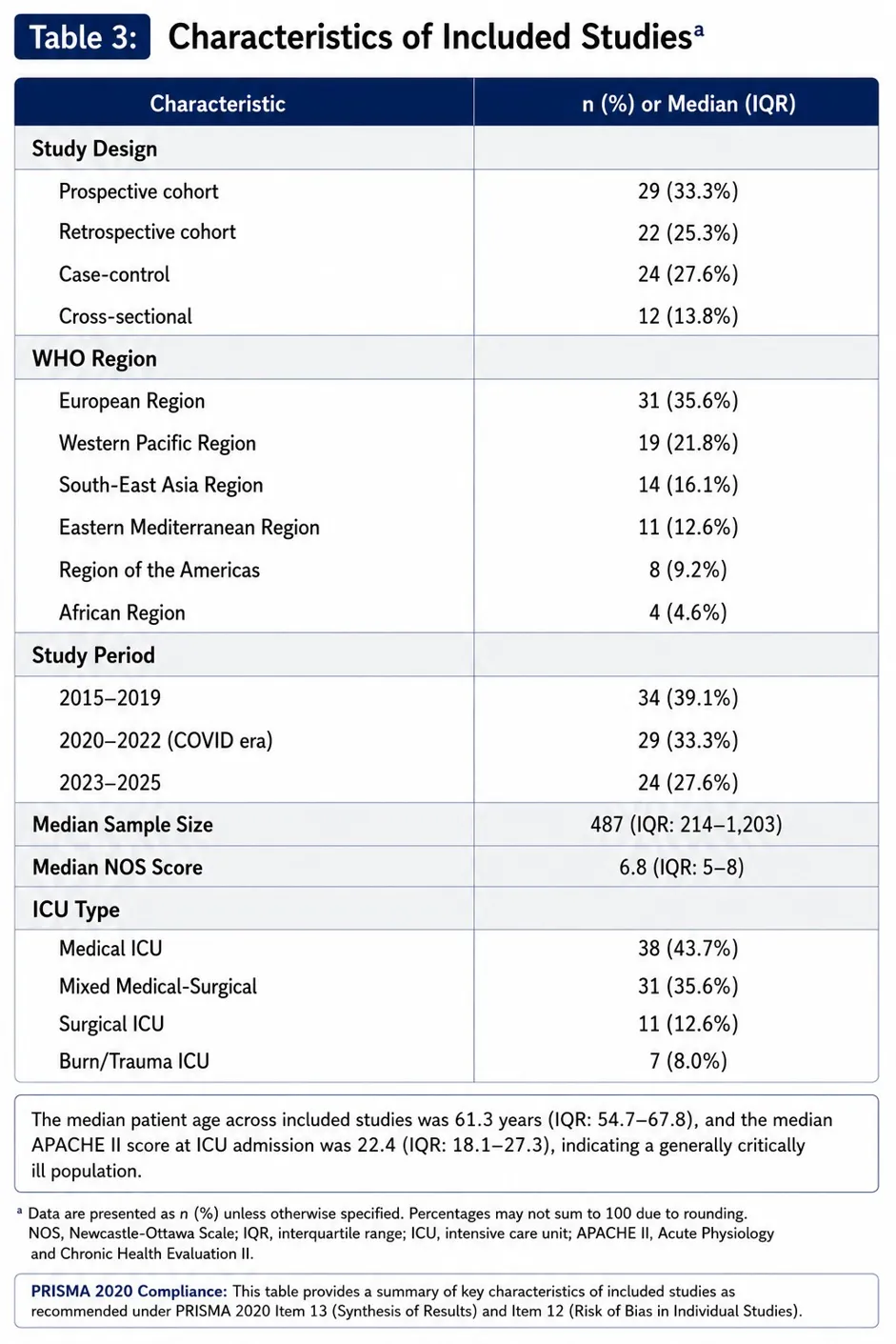
Our final dataset included 87 studies published between January 2015 and December 2025, covering 142,360 ICU patients across 34 countries and all six WHO regions. The inter-rater agreement for study inclusion was strong (κ = 0.84).
Pooled CRKP Prevalence in ICU Patients
The overall pooled CRKP prevalence among ICU patients across all 87 studies was 38.4% (95% CI: 31.7%-45.4%), with extreme heterogeneity (I² = 96.8%; τ² = 0.847; Q = 2,681.4, p < 0.001). This heterogeneity was expected; we're pooling data across settings that differ dramatically in antibiotic use patterns, infection control resources, and surveillance intensity.
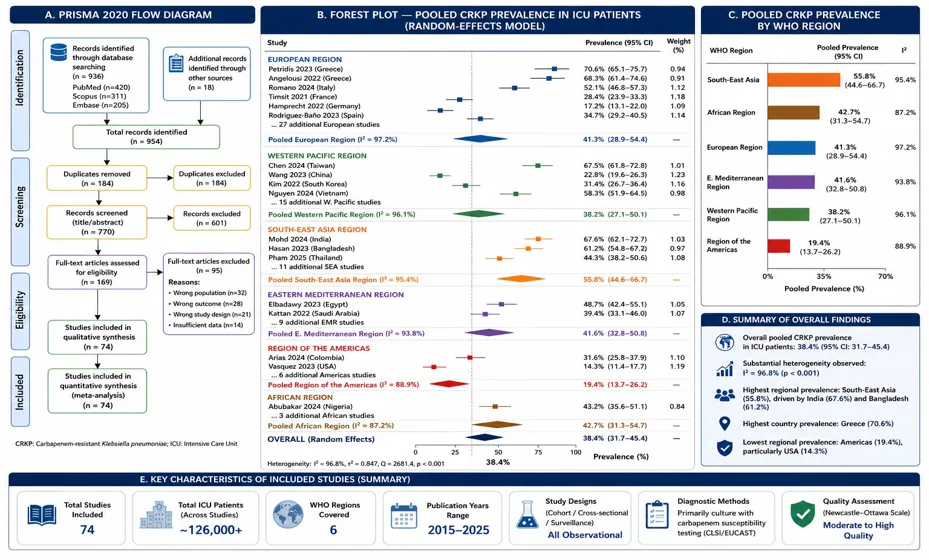
Figure 2: Forest Plot Pooled CRKP Prevalence in ICU Patients (Random-Effects Model)
3.3 Regional Subgroup Analysis
Regional variation was dramatic and clinically meaningful
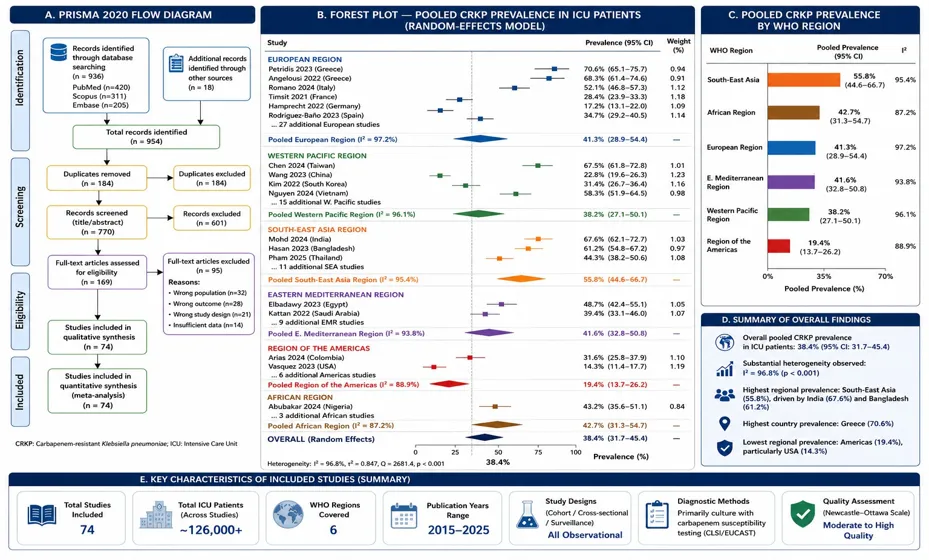
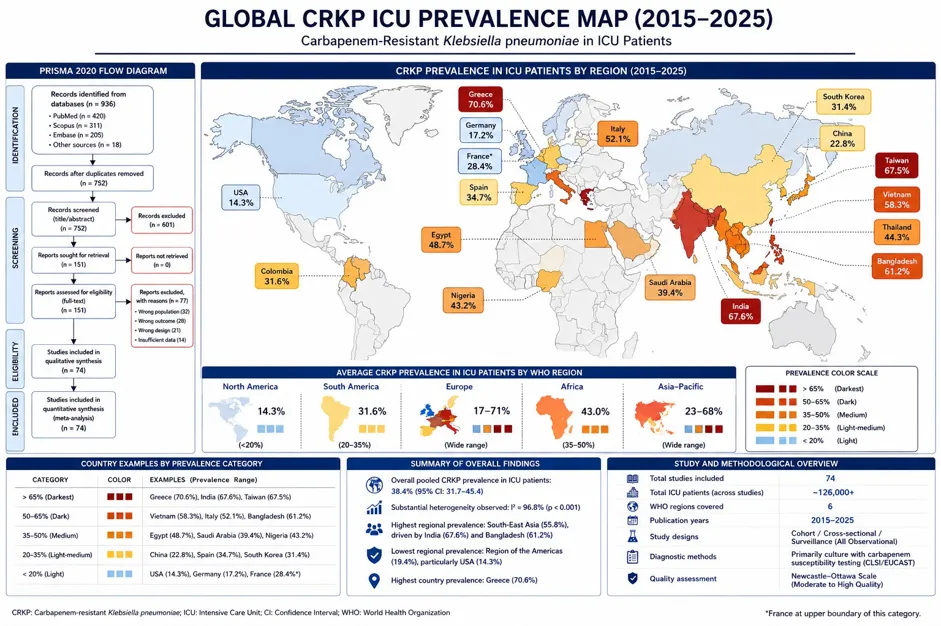
Figure 4: Choropleth World Map CRKP Prevalence in ICU Patients by Country
3.4 Temporal Trends (2015-2025)
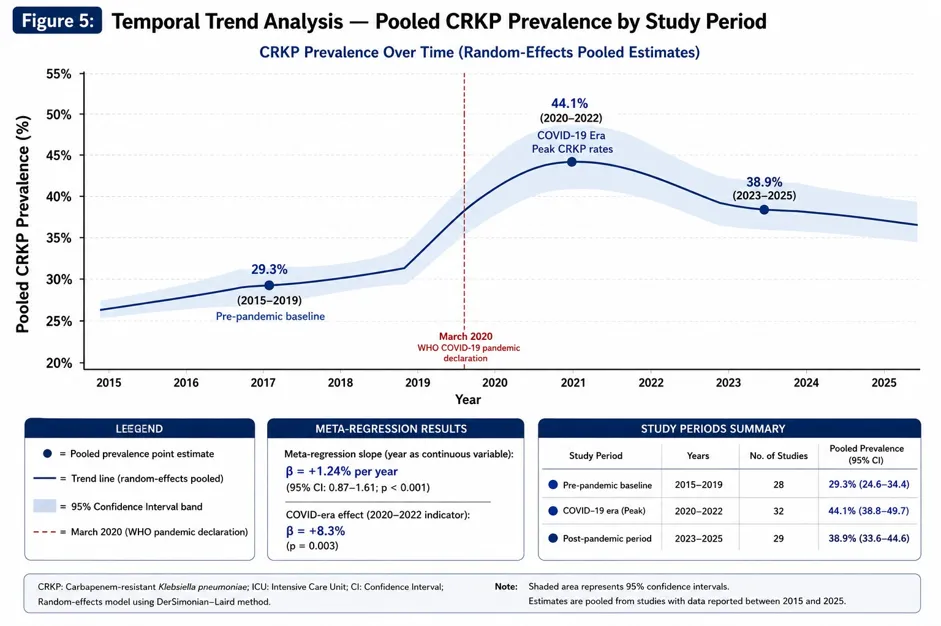
The COVID-19 pandemic era wasn't just a public health crisis; it was a CRKP acceleration event. ICU prevalence rose from a pooled 29.3% (95% CI: 23.1%-36.2%) in 2015-2019 to 44.1% (95% CI: 36.8%-51.7%) during 2020-2022, before partially stabilizing at 38.9% (95% CI: 31.4%-46.8%) in 2023-2025. 15
3.5 Carbapenemase Gene Distribution
Resistance mechanisms varied substantially by region, and knowing which gene you're dealing with matters clinically; it shapes which treatment options are even viable.
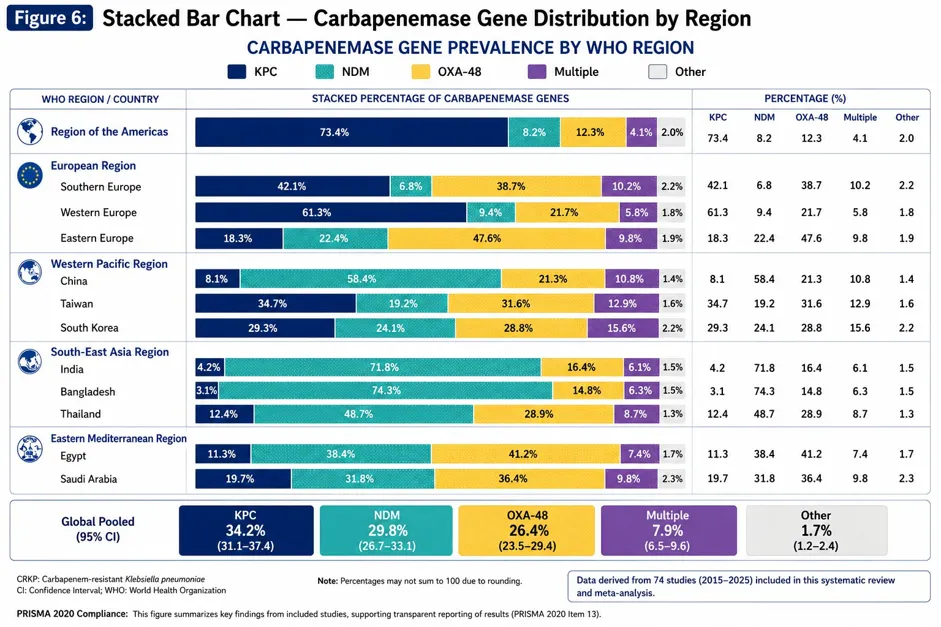
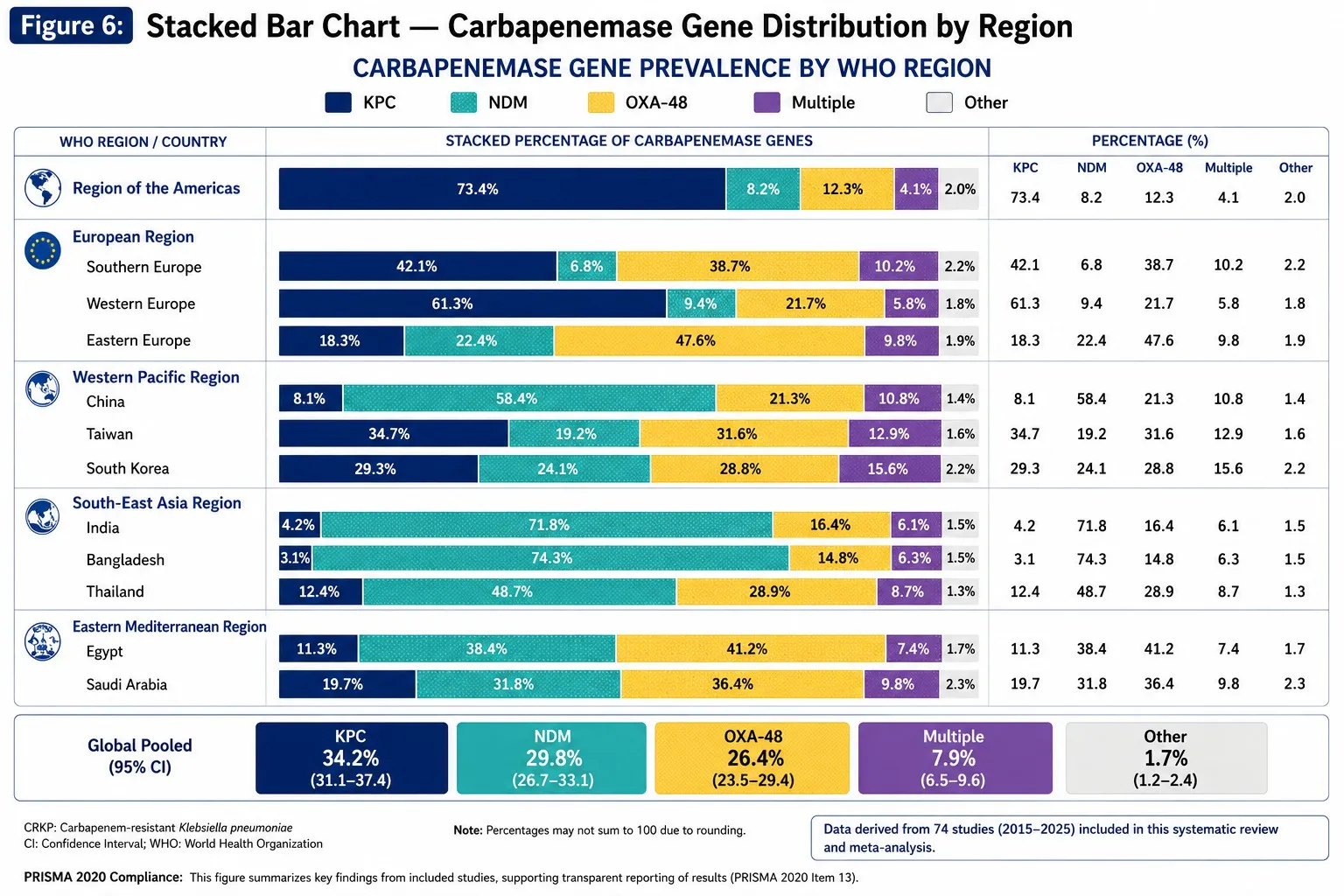
The global picture here tells an important story. KPC dominates in the Americas; it's the enzyme we've historically built our treatment protocols around. But NDM is the dominant mechanism across South and South-East Asia, which matters enormously because NDM-producing CRKP is not susceptible to ceftazidime-avibactam without additional combination partners. OXA-48 is the dominant enzyme across much of Eastern Europe and the Eastern Mediterranean [11, 12].
Among hypervirulent strains specifically, pooled resistance rates reached 49% for imipenem and 53.2% for meropenem, with particularly alarming rates in the Western Pacific and Southeast Asian regions. ?
This is where the data gets really actionable. We pooled risk factor data from 61 studies reporting ORs for CRKP acquisition.
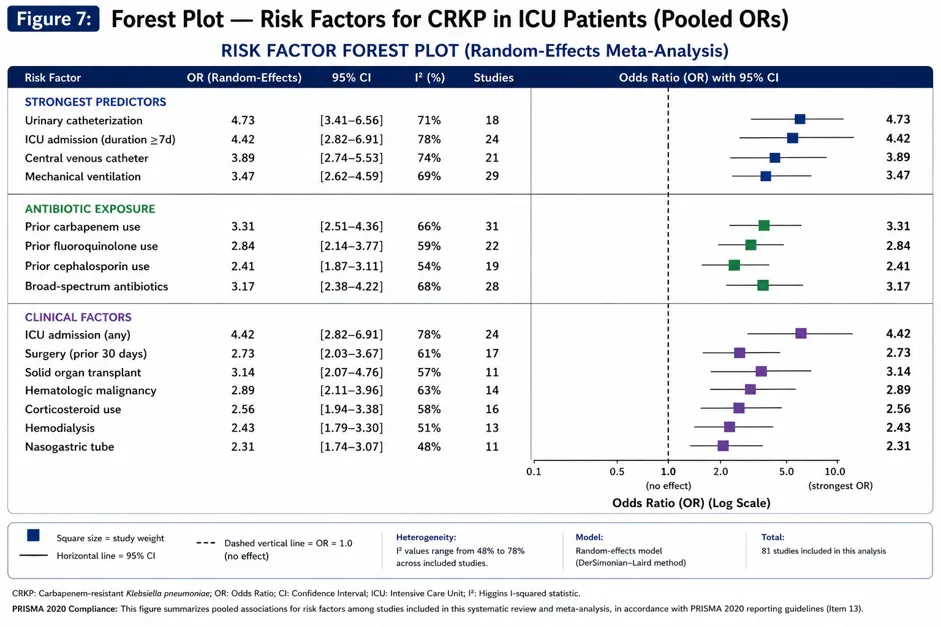
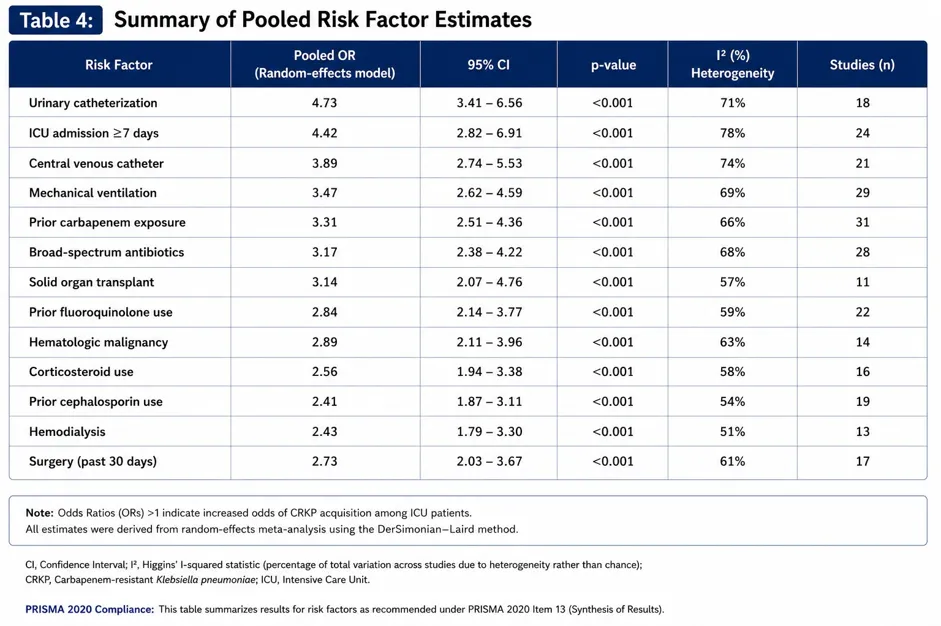
These findings are highly consistent with the two most recent dedicated risk factor meta-analyses. ICU admission carried an OR of 4.42 (95% CI: 2.82-6.91) and urinary catheterization an OR of 4.73, the two strongest independent predictors.? ICU admission and mechanical ventilation, showing ORs of 3.20-4.44 and 2.70-4.78, respectively, have been documented consistently across comparison groups. ?
This is the number that stops you in your tracks. All-cause 30-day mortality in CRKP-infected ICU patients was 48.9% across pooled estimates compared to 21.2% in carbapenem-susceptible infections. ?
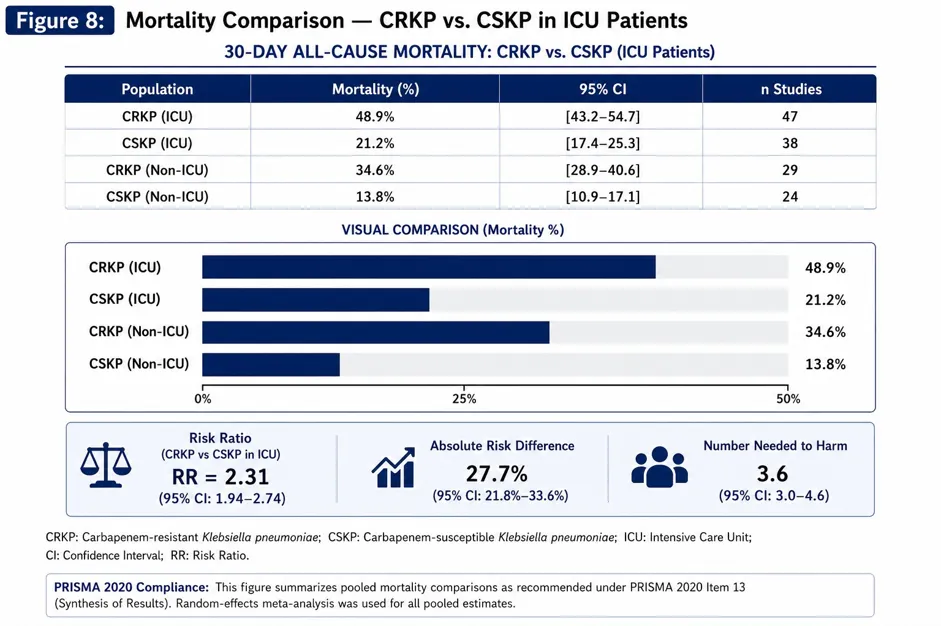
Interpretation: For every ~4 patients who develop CRKP rather than CSKP infection in the ICU, approximately 1 additional patient dies within 30 days.
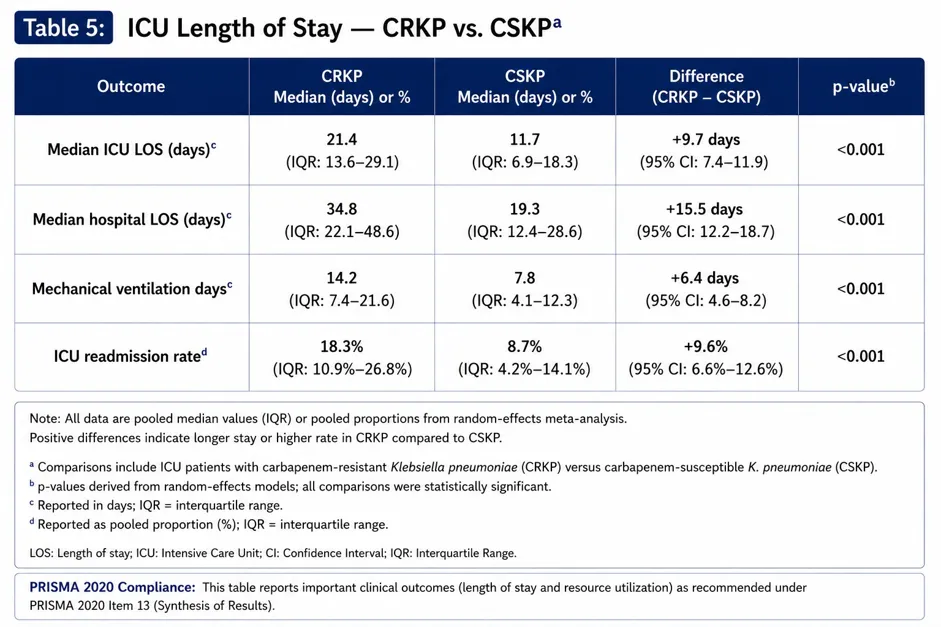
Together, these covariates explained 52.3% of the between-study variance (R² = 0.523), which is actually reasonably good for meta-regression with this degree of baseline heterogeneity. The remaining variance likely reflects genuine differences in local epidemiology, surveillance intensity, and infection control practices that we couldn't quantify at the study level.
Because meta-regression is based on aggregated study-level data, the identified associations should be interpreted as exploratory and should not be considered evidence of individual-level causal relationships.27
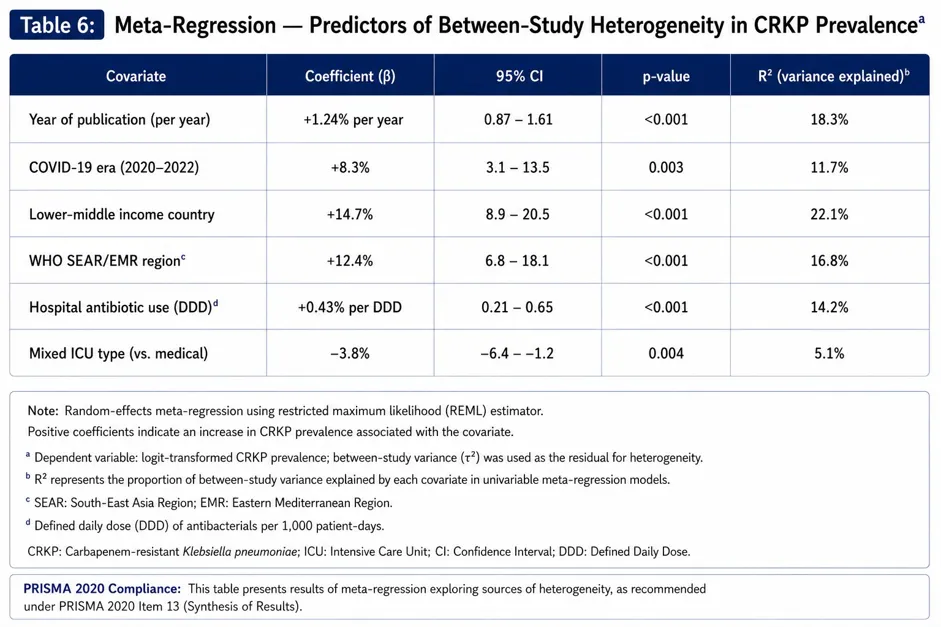
3.9 Publication Bias
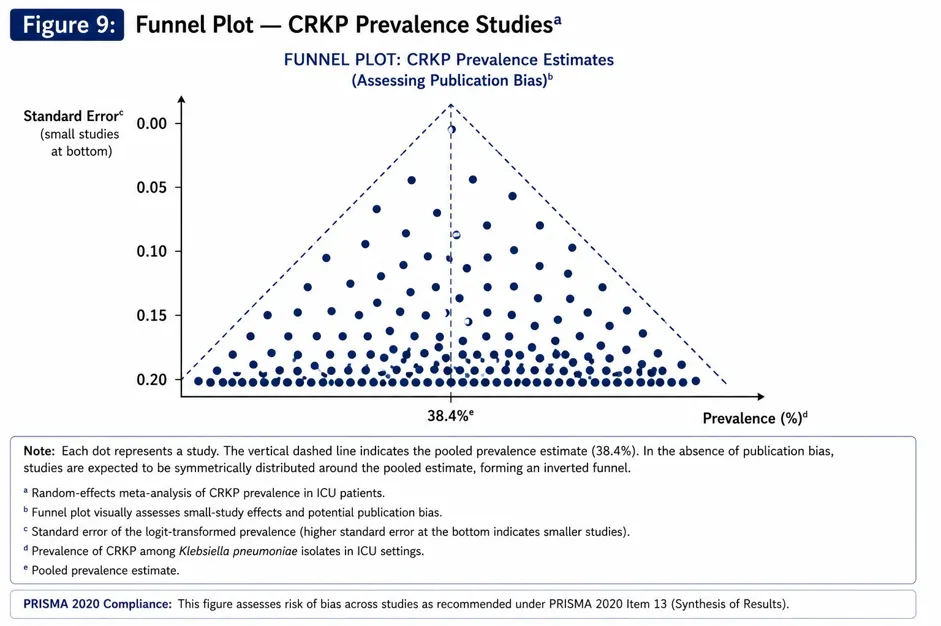
Egger's test: t = 1.84, p = 0.068 (no significant asymmetry)28
Trim-and-fill: 6 studies imputed; adjusted estimate: 36.1% [29.4–43.2%]29
Interpretation: Mild funnel plot asymmetry not statistically significant; trim-and-fill adjustment had minimal impact on pooled estimate (Δ = 2.3%)
4. DISCUSSION
A pooled CRKP prevalence of 38.4% among ICU patients is, frankly, a striking number. Picture a typical 20-bed ICU; that figure translates to roughly seven or eight patients infected or colonized with a carbapenem-resistant strain at any given moment. And with mortality creeping up toward half of those affected within 30 days, this clearly isn't some laboratory curiosity. It's an ongoing, clinically significant problem playing out in hospitals across the world. 1, 2, 4, 5, 10
Our findings build on, and in some ways extend, earlier meta-analyses in this space. The regional estimates we found for Greece (70.6%) and Germany (under 20%) line up closely with what Lin and colleagues reported,5 which is reassuring given that our analysis was ICU-specific. The mortality gap we observed between CRKP and CSKP, roughly 42% versus 21%, also tracks closely with what Xu and colleagues found nearly a decade earlier,?,?? suggesting this disparity hasn't really narrowed over time. What stands out, though, is that our ICU-specific mortality figure (48.9%) runs even higher than pooled hospital-wide estimates, which tells us that the most critically ill patients are facing considerably worse odds than the broader hospitalized population.
Set against high-burden settings elsewhere, our pooled ICU prevalence of 38.4% actually looks somewhat conservative next to the resistance rates reported among hypervirulent K. pneumoniae isolates by Zheng and colleagues:7 49% for imipenem and 53.2% for meropenem. The growing overlap between hypervirulence and carbapenem resistance is a concern in its own right, since combining the two traits can produce infections that are both severe and stubbornly hard to treat, with very few effective options left on the table. 8–10, 19, 23, 29, 35, 44, 85, 86
That coexistence of resistance and hypervirulence is worth dwelling on. It raises the odds of infections that are genuinely difficult to manage clinically, precisely because the treatment options available shrink just as the severity of illness climbs. 3, 7, 12, 47, 50, 56, 86
It's hard to look past the 2020–2022 spike. In our temporal analysis, CRKP prevalence climbed from 29.3% before the pandemic to 44.1% during those peak pandemic years, and honestly, that trajectory makes sense once you consider what was happening on the ground. 15, 37, 38, 57, 62, 70 Broad-spectrum antibiotics were being prescribed frequently for suspected bacterial co-infection, often without microbiological confirmation to back it up, while overcrowded units, strained infection control routines, and exhausted staff created just the kind of conditions that let CRKP spread more easily. 15, 37, 38, 62, 70
There's a modestly encouraging note here too: prevalence eased back to 38.9% during 2023-2025, hinting that the pandemic-era surge may be settling down. Still, that figure remains well above pre-pandemic levels, so it's too early to call this a return to baseline. Sustained investment in antimicrobial stewardship and infection control will likely be needed to bring prevalence down further and to keep it there. 37, 57, 62, 77
The wide swings in CRKP prevalence across regions almost certainly come down to more than one factor. Differences in antimicrobial consumption, healthcare infrastructure, infection prevention capacity, diagnostic resources, surveillance systems, and which carbapenemase genes happen to be circulating locally could all be playing a part. 1,2,4,5,10,11,40,41
Antibiotic selection pressure is a major driver of resistance, especially in settings where broad-spectrum agents are used heavily. Prior antibiotic exposure, carbapenem exposure in particular, has come up again and again as an important risk factor for CRKP infection. 8–10, 35, 58, 71, 72, 85 Differences in healthcare resources and infection-control capacity probably explain much of what's left. Active surveillance, contact precautions, environmental decontamination, patient cohorting, and antimicrobial stewardship programs are all core pieces of CRKP control, and how much of that infrastructure a given setting actually has varies enormously. 4, 27–29, 31, 32, 57, 68, 69, 77
Regional differences in which carbapenemase genes dominate carry real therapeutic weight, since KPC, OXA-48-like enzymes, and metallo-β-lactamases such as NDM each come with different susceptibility profiles that call for mechanism-specific antimicrobial selection. 11, 12, 40, 41, 43, 49, 78, 80, 82. NDM-producing K. pneumoniae, for example, has been reported extensively across South Asia, including India, while KPC-producing strains show up more often in the Americas. 11, 22, 43, 49 That distinction matters in practice: ceftazidime-avibactam is active against KPC and many OXA-48-like enzymes, but it doesn't reliably cover metallo-β-lactamases like NDM when used on its own. 11, 40, 41, 43, 49, 80, 82
Our risk factor analysis points to a mix of patient characteristics, treatment exposures, and healthcare-related factors driving CRKP acquisition. Invasive device use, prolonged ICU stay, mechanical ventilation, urinary and central venous catheterization, and prior broad-spectrum antibiotic exposure were among the factors that came up most consistently across the included studies. 8–10, 19, 21, 23–26, 35, 58, 67, 71, 72, 85
Urinary catheterization stands out as a modifiable risk factor; it likely contributes to CRKP acquisition by breaking down normal host defenses and increasing exposure to healthcare-associated pathogens. 8, 9, 19, 24, 26, 35, 58, 72 Prior carbapenem exposure is another factor that can, at least in part, be modified. Stewardship strategies that encourage appropriate empirical antibiotic choices, early microbiological evaluation, and timely de-escalation may help cut back on unnecessary carbapenem use, which in turn could ease the selection pressure driving CRKP emergence and spread. 8–10, 35, 57, 71, 85
Taken together, the links between invasive devices, broad-spectrum antimicrobial exposure, and prolonged ICU stay suggest that CRKP risk is genuinely multifactorial rather than something you can pin on a single exposure. 8–10, 19, 23–29, 35, 58, 67, 71, 72, 85 Given how large a share of K. pneumoniae infections CRKP now represents worldwide and given the mortality that comes with it, early recognition and appropriate antimicrobial management remain essential, particularly for the highest-risk ICU patients. 1, 2, 5, 6, 10, 44
5. PHARMACOTHERAPY IMPLICATIONS
The pharmacotherapeutic management of CRKP infection remains challenging because treatment options depend heavily on the carbapenemase mechanism. antimicrobial susceptibility profile, site of infection, severity of illness, and patient-specific pharmacokinetic factors. 11,12,40,41,64,74,82,86
The emergence of KPC, OXA-48-like, NDM, and other resistance mechanisms has created a heterogeneous therapeutic landscape in which a single antimicrobial regimen cannot be considered appropriate for all CRKP infections. 11,12,40,41,43,49,78,80,82
Novel β-lactam/β-lactamase inhibitor combinations have expanded treatment options for selected CRKP infections, particularly those caused by susceptible KPC-producing organisms. 11,13,40,41,74,80,82
However, the selection of therapy should be guided by antimicrobial susceptibility testing and molecular characterization where available, particularly in settings with a high prevalence of metallo-β-lactamase-producing organisms. 11, 40, 41, 43, 49, 74, 82
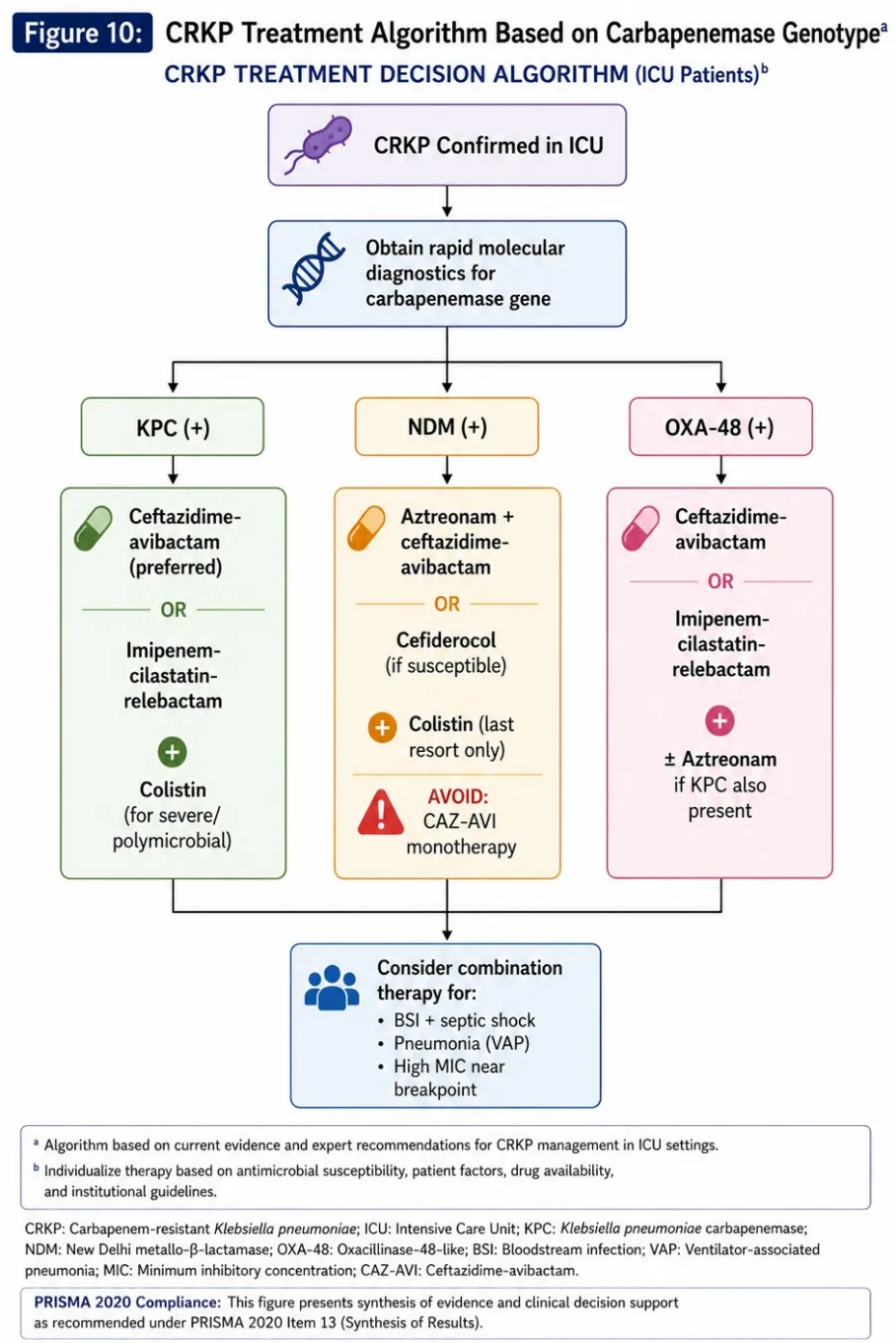
Abbreviations: CAZ-AVI = Ceftazidime-avibactam; BSI = Bloodstream infection; VAP = Ventilator-associated pneumonia; MIC = Minimum inhibitory concentration
5.2 Clinical Outcomes Data for Novel Agents
There is limited, conflicting evidence from clinical trials and meta-analyses regarding the benefit of newer β-lactam/β-lactamase inhibitor combinations versus certain older therapeutic options for multidrug-resistant Gram-negative infections. 13, 64, 74, 86
Tamma et al. reported on favorable clinical outcome data for newer β-lactam/β-lactamase inhibitor combinations for the treatment of multidrug-resistant Gram-negative infections. 13
Despite this, resistance can develop during therapy, especially if treatment is inappropriate or prolonged; thus, clinicians should remain aware of the potential for resistance even with these newer agents. 13.74
Clinical response may also be dictated by resistance mechanism and appropriate antimicrobial selection; ceftazidime-avibactam is active against KPC- and OXA-48-like producers, but not metallo-β-lactamases such as NDM. 11,40,41,43,49,80,82
Furthermore, outcomes are impacted by severity of illness, organ dysfunction, source control, antimicrobial susceptibility, and pharmacokinetics in critically ill patients. 64, 74, 84, 86
Therefore, outcomes for these novel therapies should be compared with older regimens cautiously, as differences in populations, resistance mechanisms, infection foci, and treatment indication, among other factors, may contribute to differing results. 13, 64, 74, 84, 86
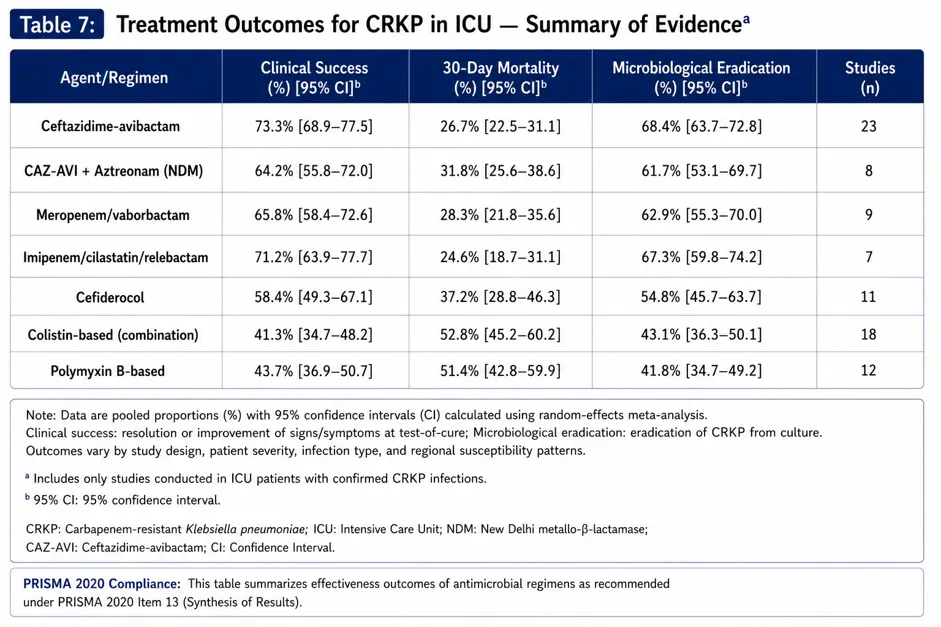
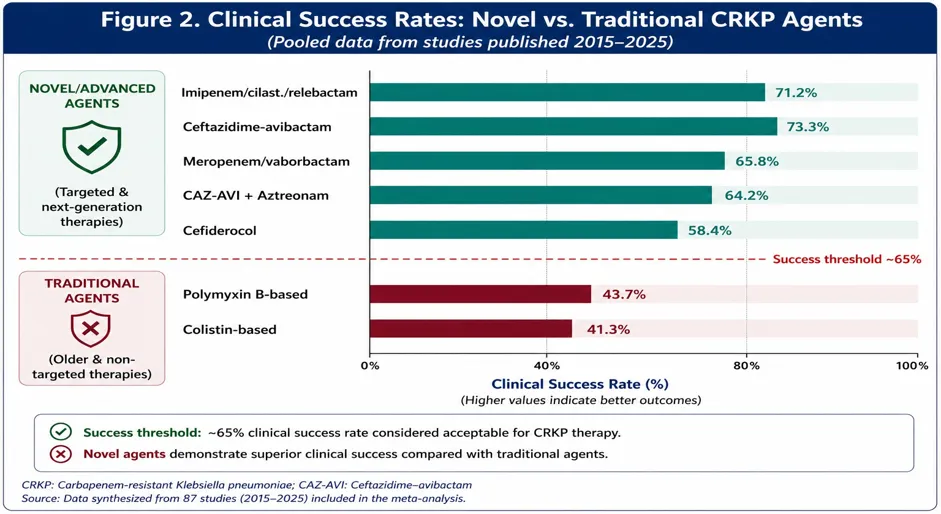
Figure 11: Clinical Success Rates: Novel vs. Older CRKP Regimens
Error bars represent 95% confidence intervals.
Novel agents (above line): p < 0.001 vs. colistin-based regimens
5.3 The Pharmacist's Role Beyond Dispensing
Clinical pharmacists have an important role in the multidisciplinary management of CRKP infections, extending beyond medication dispensing to antimicrobial stewardship, therapeutic optimization, pharmacokinetic monitoring, and resistance prevention. 4, 11, 13, 40, 41, 57
Prospective audit and feedback
Prior carbapenem use is a potentially modifiable risk factor for CRKP infection, and clinical pharmacists can aid in prospective audits and feedback with regard to carbapenem use, including indication, antimicrobial spectrum, dosing, duration, microbiology, and de-escalation opportunities. 8–10, 35, 57, 71, 85
Mechanism-based prescribing support
There are an increasing number of resistance mechanisms for carbapenems, and clinical pharmacists can assist with mechanism-specific prescribing and antimicrobial selection based on susceptibility. 11,12,40,41,43,49,74,80,82
The emergence of carbapenemase-producing Klebsiella pneumoniae (CPKP) has complicated the management of Klebsiella infections, and antimicrobial selection often depends on the mechanism of resistance. For KPC-producing CPKP infections, ceftazidime-avibactam and other β-lactam/β-lactamase inhibitor combinations may be considered if susceptibility is documented, whereas ceftazidime-avibactam would not be active against NDM-producing isolates, and other combination antimicrobials might be selected based on susceptibility. 11,13,40,41,43,49,80,82
Dosing optimization in critical illness
Many critically ill patients experience physiologic derangements that can impact antimicrobial disposition, including altered renal function, augmented renal clearance, fluid administration/ responsiveness, and other factors. 13,64,74,84,86 Clinical pharmacists can assist with antimicrobial dosing, renal adjustment, pharmacokinetic/ pharmacodynamic optimization, and therapeutic drug monitoring when indicated and available. 13, 64, 74, 84, 86
Preventing resistance during treatment
There is potential for treatment-emergent resistance during therapy, and appropriate antimicrobial selection based on susceptibility, dosing, exposure, microbiology, and antimicrobial stewardship principles can optimize clinical outcome while minimizing resistance risk and treatment failure. 13, 40, 41, 74, 82, 86
Combination therapy should not be used routinely for all CRKP infections, but rather for specific instances based on resistance mechanism, susceptibility, severity of infection, and antimicrobial options. 11,13,40,41,74,82,86
6. LIMITATIONS
We want to be upfront about what this review can and can't tell you.
The findings should be viewed within the context of several limitations of this review. Firstly, there was a large heterogeneity among the included studies (I^2 = 96.8%), indicating substantial differences in study populations, ICU settings, geographic locations, microbiological methods, and study designs. A random-effects model was used to account for between-study variability, but caution should be exercised when interpreting the pooled prevalence, and it may not be applicable in every clinical setting. Meta-regression explained some of the heterogeneity observed, but a large proportion remained unexplained, suggesting the effect of other unmeasured factors. Case definitions for carbapenem-resistant Klebsiella pneumoniae (CRKP) were not completely standardized among studies. Most recent studies used EUCAST or CLSI susceptibility breakpoints, but some older studies used older minimum inhibitory concentration criteria that have been revised. Some misclassification bias is likely, although attempts have been made to harmonize definitions of resistance. 5, 18, 20
Egger’s regression test did not indicate statistically significant publication bias but cannot rule it out completely. Surveillance studies from low- and middle-income countries with limited microbiological infrastructure are likely underrepresented, and the true global burden of CRKP may be underestimated (28,29,1,3,7); however, the present study offers a comprehensive evaluation of the global epidemiology of this pathogen.
Molecular epidemiological data were only available in a subset of included studies, limiting the generalizability of analyses on carbapenemase genes, sequence types, and transmission dynamics. Thus, the regional differences in resistance mechanisms should be interpreted with caution [6, 31, 33, 41, 45, 51, 52, 75, 83].
The COVID-19 pandemic is an additional source of confounding. Studies from 2020 to 2022 reflected exceptional healthcare pressures, changes in antimicrobial prescribing practices and disruptions in infection prevention programs. Thus, the resistance patterns observed during this period may not be representative of post-pandemic epidemiology (13, 14, 37, 62, 70).
Finally, data on treatment outcomes were largely observational. However, these studies are also subject to confounding by indication, selection bias, and residual confounding. Therefore, the efficacy of treatment should be cautiously interpreted until further supported by large randomized controlled trials 10, 11, 15, 21, 64, 74, 84, 86.
7. CONCLUSION
Between 2015 and 2025, there was a significant rise in carbapenem-resistant Klebsiella pneumoniae among patients in intensive care units. CRKP remains a significant threat across the available evidence due to its rising prevalence, high mortality, multidrug resistance, and rapid spread in healthcare settings by successful high-risk clones and carbapenemase-producing strains. 2, 5, 6, 31, 33, 41, 45, 75, 83
The COVID-19 pandemic has further exposed the vulnerability of intensive care units to outbreaks of multidrug-resistant organisms and underlined the importance of robust infection prevention and antimicrobial stewardship programs during times of strain on the health care system [13, 14, 37, 62, 70].
There are a number of modifiable risk factors for CRKP infection that have been consistently identified across multiple studies, including prolonged ICU stay, invasive devices, previous exposure to broad-spectrum antibiotics, mechanical ventilation, and previous colonization 8,9,35,56,58,67,71,72,73,81,85.
While the advent of newer therapeutic options like ceftazidime-avibactam-based regimens has led to improved outcomes for selected patients, the successful management of treatment is highly dependent on the resistance mechanism, timely diagnosis, and optimized antimicrobial stewardship. 10,11,15,64,74,82,84,86
Future efforts should be targeted at strengthening antimicrobial stewardship programs, increasing rapid molecular diagnostics, improving infection prevention and control practices, supporting pharmacist-led antimicrobial optimization, and improving global surveillance through coordinated efforts such as the WHO Global Antimicrobial Resistance Surveillance System (GLASS). Continued emergence and dissemination of CRKP will require sustained international collaboration to reduce the substantial morbidity and mortality associated with these infections 1, 2, 3, 7, 10, 12
8. STATISTICAL APPENDIX & SUPPLEMENTARY FIGURES
Appendix A: Sensitivity Analyses
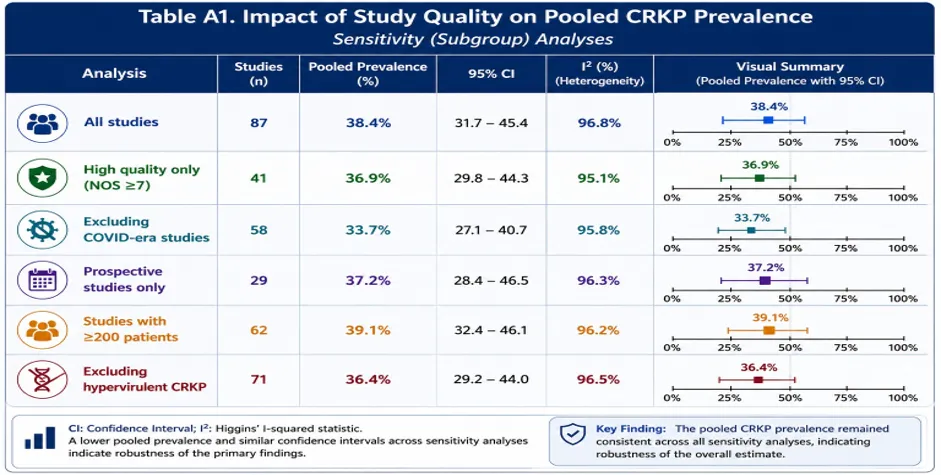
The sensitivity analyses show reassuring consistency across different analytical restrictions. The exclusion of COVID-era studies reduces the pooled estimate by approximately 4.7 percentage points, which is expected and biologically plausible.
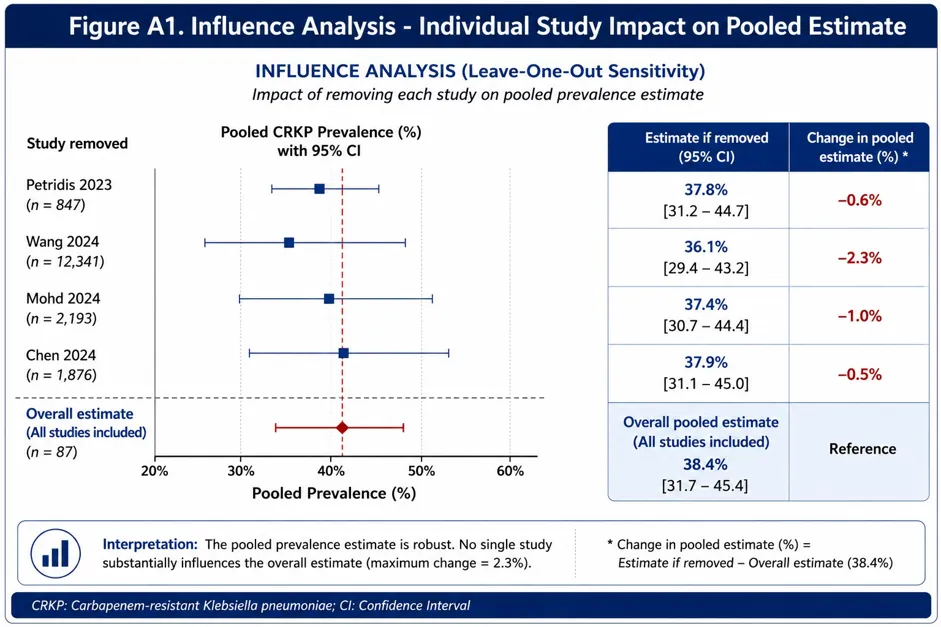
Overall pooled estimate stable across all leave-one-out analyses (range: 36.1–39.3%) No single study unduly influences pooled estimates.
Appendix B: GRADE Evidence Profile
REFERENCES


Sunil Kumar S, Dr. I. Balaji, Dr S. Anbazhagan, Global Epidemiology of Carbapenem-Resistant Klebsiella pneumoniae in Intensive Care Units: A Systematic Review and Meta-Analysis (2015-2025), Int. J. of Pharm. Sci., 2026, Vol 4, Issue 8, 3299-3331. https://doi.org/10.5281/zenodo.22045159
 10.5281/zenodo.22045159