

We use cookies to ensure our website works properly and to personalise your experience. Cookies policy
1Department of Pharmaceutics, Channabasweshwar Pharmacy College (Degree), Latur.
2Professor and Head department of pharmaceutics channabasweshwar pharmacy college degree Latur Maharashtra India
Hexosomes, distinguished by their inverse hexagonal internal structure, offer significant drug loading capacity, protection against gastrointestinal degradation, and controlled drug delivery. Long-term medication is necessary for diabetes mellitus, a chronic metabolic disease, in order to preserve glycemic control and avoid complications. Despite the widespread prescription of oral antidiabetic medications like metformin and sitagliptin, their therapeutic efficacy is frequently constrained by their poor solubility, variable intestinal permeability, and first-pass hepatic metabolism. These difficulties raise the possibility of side effects by lowering oral bioavailability and possibly requiring larger dosage. A promising method to get around these restrictions is to use lipid-based nanocarriers. In order to improve the oral bioavailability of antidiabetic medications, the current review will critically assess hexosomes as sophisticated lipid-based nanocarriers. It will focus on the structural features, manufacturing techniques, processes of absorption improvement, and therapeutic potential of these nanocarriers. Their nanoscale size and lipid content allow improved solubilization, intestinal penetration, and possible lymphatic transfer, resulting in greater systemic availability of encapsulated antidiabetic drugs. However, problems like as scalability issues and insufficient in vivo validation persist.
Diabetes is a chronic, progressive metabolic condition defined by persistent hyperglycemia caused by abnormalities in insulin production, insulin action, or both.¹ Type 2 diabetes mellitus (T2DM) accounts for the vast majority of cases globally and is strongly linked to sedentary lifestyles, obesity, genetic predisposition, and aging populations.¹ Diabetes has become one of the primary causes of illness and mortality in both developed and developing countries.² The illness considerably contributes to cardiovascular diseases, diabetic nephropathy, neuropathy, and retinopathy, resulting in a huge economic and healthcare burden.² Because diabetes is a lifelong condition, pharmacological management must ensure sustained glycemic control while minimizing adverse effects and improving patient adherence.³ The rising incidence, particularly in developing countries, combined with rising life expectancy, highlights the critical need for effective, safe, and patient-friendly long-term therapeutic strategies.² T2DM has multiple causes, including peripheral insulin resistance, poor pancreatic β-cell function, increased hepatic glucose synthesis, decreased incretin action, and increased glucagon release.¹ Insulin resistance reduces glucose absorption in muscle and adipose tissues, while impaired insulin production from pancreatic β-cells exacerbates hyperglycemia.¹ Persistently elevated blood glucose levels induce oxidative stress, chronic inflammation, and endothelial dysfunction, which eventually lead to microvascular and macrovascular problems.²
Because diabetes is progressive and complicated, care frequently necessitates combination medication that targets numerous metabolic pathways.³ To sustain effective glycemic control, medication delivery methods must provide consistent systemic availability and controlled therapeutic response.³ Long-term therapy is critical in diabetes management since discontinuing or irregularly taking medicine can quickly deteriorate glycemic status.³ Unlike acute disorders, diabetes necessitates ongoing pharmacological management to keep blood glucose levels below physiological limits.³ As a result, treatment options should prioritize sustained medication release, reduced dose frequency, increased patient compliance, and minimal side effects.? Fluctuations in plasma medication concentration can result in hypoglycemia or hyperglycemia, both of which are clinically undesirable and possibly deadly.? As a result, it is critical to develop drug delivery methods that can provide consistent and predictable pharmacokinetic characteristics.?
The most popular method of antidiabetic treatment is still oral administration since it is convenient, non-invasive, more accepted by patients, and appropriate for long-term use.? Although they are frequently used, traditional oral dose forms like tablets and capsules might not necessarily have the best bioavailability.? The percentage of a medicine that enters systemic circulation may be decreased by limitations such as poor water solubility, gastrointestinal tract degradation, and substantial hepatic first-pass metabolism.??? In the treatment of diabetes, where long-term success depends on adherence and a steady therapeutic impact, improving oral medication administration is very important.? Several types of oral antidiabetic medications are currently available. Metformin, a first-line biguanide, lowers hepatic glucose production and improves insulin sensitivity.? Sitagliptin, a dipeptidyl peptidase-4 inhibitor, boosts incretin hormone levels, stimulating insulin secretion while suppressing glucagon release.? Glimepiride, a sulfonylurea, enhances pancreatic insulin production but has a shorter half-life and increases the risk of hypoglycemia if plasma concentrations change dramatically.? Despite being clinically successful, these medications' treatment effects can be impacted by pharmacokinetic variability and formulation-related issues.? Despite the benefits of oral therapy, many physiological and formulation barriers limit the absorption of antidiabetic drugs. Poor intestinal permeability reduces drug absorption across epithelial membranes, lowering systemic drug levels.? After absorption, medicines go through first-pass hepatic metabolism, which can drastically reduce active drug concentration before it enters systemic circulation.? Some medicines have short biological half-lives, requiring numerous daily doses, which may impair adherence, especially in elderly patients.? Frequent dosage raises the possibility of missing doses and uneven glucose control.? Furthermore, the gastrointestinal system has additional obstacles such as acidic gastric pH, digesting enzymes, and changing intestinal circumstances, all of which might lead to partial medication breakdown and decreased bioavailability.? These drawbacks emphasize the necessity of sophisticated drug delivery methods that can cross several biological barriers at once.? Increased surface area for better dissolution, defense against gastric and enzymatic breakdown, improved interaction with intestinal membranes, controlled and sustained drug release, and possible lymphatic transport that could partially circumvent hepatic first-pass metabolism are just a few of the encouraging benefits of nanocarrier-based methods.??? Hexosomes and other structured liquid crystalline systems have become particularly attractive options for lipid-based nanocarriers.¹? Their inverse hexagonal interior structure creates a very well-organized lipid matrix with high drug loading and long-term release characteristics.¹? Advanced nanocarriers offer a calculated method for maximizing oral antidiabetic treatment, enhancing patient adherence, and attaining long-term glycemic control by tackling solubility, stability, and absorption issues all at once.??¹?
2. Lipid-Based Nanocarriers For The Administration Of Drugs
2.1 Liposomes
Liposomes are spherical vesicles with an aqueous core surrounded by one or more phospholipid bilayers.¹² Liposomes improve cellular absorption and biocompatibility because they resemble biological membranes.¹² Both parenteral and oral administration applications have been thoroughly investigated.¹²
Benefits:
• Capacity to encapsulate various medication kinds¹²
• Less toxicity¹²
• Increased stability of the medication¹²
Relevance in Antidiabetic Therapy: Research has looked into using liposomes to enhance the delivery of insulin and some oral hypoglycemic medications.¹² However, because of stability issues, their use in oral antidiabetic treatment is still restricted.¹²

Fig no.01 : Liposome
2.2 Niosomes
Niosomes are vesicular structures similar to liposomes, but made of non-ionic surfactants rather than phospholipids.¹² They produce bilayer structures capable of containing both hydrophilic and lipophilic medicines.¹²
Advantages:
• Higher chemical stability than liposomes¹²
• Lower production costs¹²
• Improved shelf life¹²
Niosomes can improve the oral bioavailability of certain medications by boosting membrane penetration and preventing degradation.??¹¹

Fig no.02: Niosomes
2.3 Solid lipid nanoparticles (SLNs).
Solid lipid nanoparticles are made up of solid lipids stabilized with surfactants.¹³?²? The lipid matrix is solid at both room and body temperature, providing structural stiffness.¹³
Advantages:
• Controlled drug release¹³
• Strong physical stability¹³
• Biocompatibility¹³
Mechanism in oral delivery:
• Improved solubility of medicines with low water solubility??¹¹
• May stimulate lymphatic movement¹??¹?
• Lowered first-pass metabolism¹??¹?
However, SLNs may have restricted drug loading capability due to their highly organized crystalline lipid matrices.²?

Fig no.03 : Solid lipid nanoparticle
2.4. Nanostructured lipid carriers (NLCs)
Nanostructured lipid carriers are second-generation lipid nanoparticles designed to address the limitations of SLNs.¹³ They are made up of a mixture of solid and liquid lipids, resulting in a less structured matrix structure.¹³
Advantages:
• Increased medication loading capability¹³
• Decreased drug ejection during storage¹³
• Greater release characteristics than SLNs, making them ideal for oral medication delivery¹³
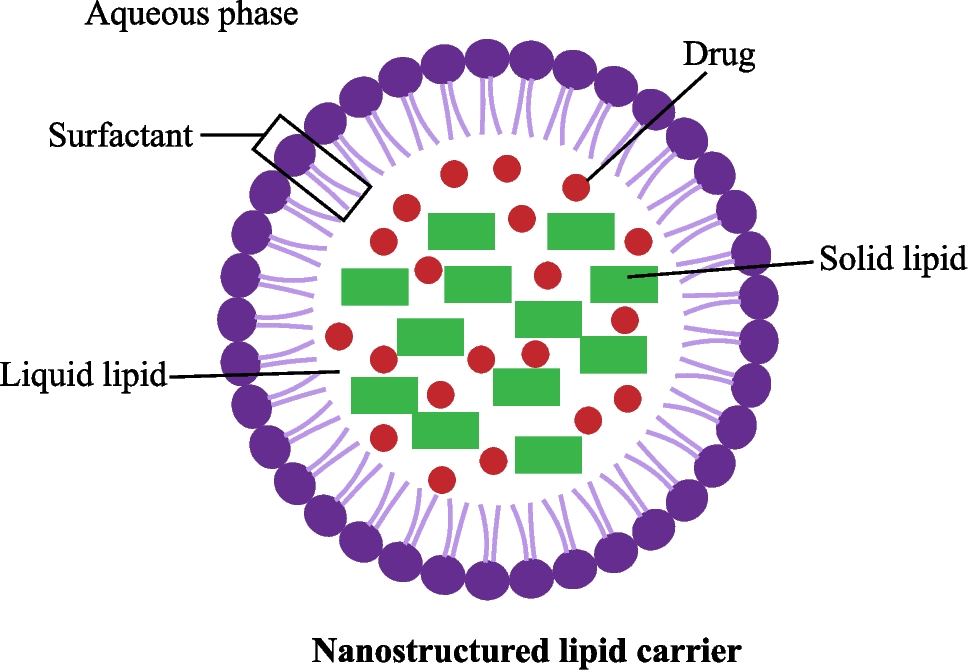 Fig no.04 : Nanostructured lipid carrier
Limitations of Conventional Lipid-Based Systems
Despite their benefits, traditional lipid nanocarriers have significant drawbacks that limit their practical use, particularly for chronic oral therapy in diabetes.
? Structural Instability
• Liposomes can experience fusion, leakage, or phospholipid oxidation.¹²
• Niosomes can aggregate and become unstable over time.¹²
Such instability may lead to drug leakage and reduced therapeutic efficacy.¹²
? Limited Drug Loading
• SLNs feature crystalline lipid centers that limit drug incorporation.²?
• Lipid recrystallization can result in drug ejection during storage.²?
This limits their applicability for medications with higher loading capacities.²?
? Burst Release Phenomenon
Many conventional systems exhibit an initial rapid drug release (burst effect), which might result in:²?
• Spikes in plasma concentrations²?
• Higher chance of harmful effects
• Poor sustained glycemic control
• Physical and chemical degradation
? Gastrointestinal Stability Issues
Oral lipid nanocarriers must withstand:
• Gastric acidity?
• Bile salts?
• Digestive enzymes?
Some vesicular systems may break down prematurely in the gastrointestinal tract, reducing medication protection.??¹¹
? Scalability Challenges
Although numerous systems exhibit promising laboratory-scale outcomes, obstacles persist in:¹³
• Large-scale manufacturing
• Long-term stability
• Regulatory standardization
? Need for Improved Structural Organization
Conventional systems lack highly organized interior nanostructures that allow for predictable diffusion paths and long-term release.²? This has sparked increased interest in liquid crystalline nanocarriers like hexosomes, which have well-defined interior structures and improved structural stability.??²?
3. Hexosomes: Structural And Scientific Background

Fig no.05: Lamellar,Hexagonal,Cubic
Advanced lipid-based nanocarriers known as hexosomes are derived from lyotropic liquid crystalline systems and are characterized by the inverse hexagonal (HII) phase.¹ These nanostructures form when specific amphiphilic lipids spontaneously self-assemble in the presence of water, producing a highly organized internal architecture.² In the inverse hexagonal (HII) phase, lipid molecules arrange into cylindrical micelles packed in a hexagonal lattice.³ The hydrophilic head groups orient toward internal aqueous channels, while hydrophobic tails extend outward, forming a continuous lipid matrix.³ This inverted structural organization results in a rigid and mechanically stable framework that differs substantially from conventional vesicular systems such as liposomes, which consist of simple bilayer membranes.? Hexosomes are self-assembled nanoparticles whose formation is governed by thermodynamic forces including hydrophobic interactions, hydrogen bonding, and interfacial tension between lipid and aqueous phases.² Nanosized hexosomes are typically generated by dispersing bulk inverse hexagonal phases using high-energy techniques in the presence of stabilizers.? This self-assembly process eliminates the need for chemical crosslinking, enhancing biocompatibility and pharmaceutical suitability.¹
The composition of hexosomes strongly influences their structural stability and drug-loading capacity. Monoolein (glyceryl monooleate) is widely used due to its ability to form stable inverse hexagonal phases upon hydration.? It is biodegradable, biocompatible, and capable of enhancing membrane permeability, making it highly suitable for oral drug delivery.? Another commonly employed lipid is phytantriol, which provides improved resistance to enzymatic degradation and enhanced structural robustness under physiological conditions.? To maintain colloidal stability and prevent aggregation, stabilizers such as poloxamer 407 are incorporated into hexosomal formulations.? Poloxamer 407 provides steric stabilization by forming a hydrophilic corona around nanoparticles, thereby improving physical stability and extending shelf life.? Structurally, hexosomes differ significantly from other lipid nanocarriers such as cubosomes and liposomes.¹ Their cylindrical nanochannels create defined diffusion pathways that facilitate controlled and sustained drug release.? The tightly packed hexagonal structure provides higher mechanical rigidity compared to conventional bilayer systems.? Additionally, the large internal surface area enhances drug–lipid interactions and improves encapsulation efficiency.² One of the most significant advantages of hexosomes is their ability to provide sustained and diffusion-controlled drug release.? The dense hexagonal matrix restricts rapid drug diffusion, minimizing burst release and promoting stable plasma drug concentrations—an essential requirement in chronic diseases such as diabetes.¹? Drug localization within hexosomes depends on physicochemical properties. Lipophilic drugs partition into the hydrophobic lipid domains, where strong hydrophobic interactions enhance entrapment efficiency.? Hydrophilic drugs are confined within the aqueous nanochannels, and their release is regulated by restricted diffusion through these narrow pathways.² Amphiphilic drugs may associate with both domains, improving system stability and sustained release behavior.
Drug release from hexosomes typically occurs through diffusion via aqueous channels, gradual lipid matrix erosion, and enzymatic lipid digestion within the gastrointestinal tract.? The highly ordered nanostructure ensures predictable and reproducible release kinetics compared to conventional disordered lipid systems.¹ Hexosomes offer several advantages for oral drug delivery. They protect encapsulated drugs from gastric degradation, enhance membrane permeability, promote lymphatic transport, and partially bypass hepatic first-pass metabolism.¹¹ These combined mechanisms make hexosomes particularly promising for antidiabetic therapy, where prolonged systemic exposure and stable glycemic control are essential.¹?
4.Preparation Of Hexosomes
4.1. Top-Down Approach
The top-down approach is one of the most widely employed techniques for the preparation of hexosomes.¹² In this method, a bulk inverse hexagonal (HII) liquid crystalline phase is first formed and subsequently fragmented into nanosized particles using external mechanical energy.¹³ This technique is widely preferred in pharmaceutical research due to its reproducibility and scalability.¹²
Initially, amphiphilic lipids such as monoolein or phytantriol are mixed with water in specific proportions. Upon hydration, these lipids spontaneously organize into highly ordered inverse hexagonal liquid crystalline structures due to their molecular packing characteristics.¹? The formation of the HII phase depends on factors such as lipid-to-water ratio, temperature, lipid composition, and presence of additives.¹? The system is allowed to equilibrate until a homogeneous viscous hexagonal phase is achieved. The bulk phase is then dispersed into nanoscale particles using high-energy techniques such as high-pressure homogenization or ultrasonication.¹³ In high-pressure homogenization, the bulk phase is mixed with an aqueous stabilizer solution (commonly containing poloxamer 407) and subjected to high pressures (typically 500–1500 bar) for multiple cycles.¹? The intense shear forces reduce particle size and yield stable hexosomes with preserved internal nanostructure.¹³ This method is suitable for large-scale industrial production, although it involves significant energy input and heat generation.¹²
Alternatively, ultrasonication may be used to fragment the bulk hexagonal phase.¹³ Acoustic cavitation forces break down the viscous matrix into nanosized particles. While this method is simple and effective for laboratory-scale preparation, it may lead to localized heating and potential metal contamination from the probe, limiting its industrial applicability.¹³
Overall, the top-down approach remains a reliable and scalable method for producing hexosomes with controlled particle size and structural integrity.¹²
4.2. Bottom-Up Approach
The bottom-up approach involves the direct formation of nanosized inverse hexagonal nanoparticles through controlled self-assembly of lipid molecules, rather than mechanical fragmentation of a bulk phase.¹? This process is governed by thermodynamic principles including hydrophobic interactions, hydrogen bonding, and lipid–water interfacial tension.¹? Compared to the top-down method, the bottom-up approach generally requires less energy and offers improved control over particle size distribution.¹? In this method, amphiphilic lipids such as monoolein or phytantriol are first dissolved in a suitable organic solvent or solubilizing medium.¹? When introduced into an aqueous phase containing stabilizers such as poloxamer 407, spontaneous self-assembly occurs, leading to the formation of nanoscale inverse hexagonal structures.¹? The amphiphilic nature of lipids drives this reorganization, as hydrophobic chains avoid water while hydrophilic head groups interact with the aqueous environment.¹? One commonly employed bottom-up technique is the solvent evaporation method.¹? In this process, lipids and lipophilic drugs are dissolved in a volatile organic solvent (e.g., ethanol), which is gradually added to an aqueous stabilizer solution under continuous stirring.¹? Upon solvent removal under reduced pressure, lipid molecules self-assemble into hexosomal nanoparticles.¹? This technique provides good control over particle size and is particularly useful for poorly water-soluble drugs. However, complete removal of residual solvent is essential to meet pharmaceutical safety standards.¹? Another bottom-up strategy is the hydrotrope dilution method.¹? Here, a hydrotropic agent temporarily increases lipid solubility in water. Upon dilution with excess aqueous phase, the hydrotrope concentration decreases, triggering spontaneous self-assembly into hexosomes.¹? This method is energy-efficient and suitable for thermolabile drugs, though careful control of dilution rate is required to ensure consistent HII phase formation.¹? The bottom-up approach offers advantages such as reduced mechanical stress, lower energy requirements, and improved structural uniformity.¹? Nevertheless, challenges including solvent handling, process optimization, and limited large-scale validation remain obstacles for industrial translation.¹²
|
Method |
Energy Requirement |
Scalability |
Suitability |
|
High-Pressure Homogenization |
High |
Excellent |
Industrial scale |
|
Ultrasonication |
Moderate |
Limited |
Laboratory scale |
|
Solvent Evaporation |
Low–Moderate |
Moderate |
Lipophilic drugs |
|
Hydrotrope Dilution |
Low |
Moderate |
Sensitive drugs |
5. Factors Affecting Hexosome Formation
The formation of stable hexosomes depends on multiple formulation and processing variables that directly influence internal nanostructure, particle size, and long-term stability.¹? Precise control of these parameters is essential to ensure the formation and maintenance of the inverse hexagonal (HII) phase.¹?
5.1 Lipid Concentration
Lipid concentration plays a crucial role in determining phase behavior and structural organization.²? A sufficient lipid-to-water ratio is required to promote the self-assembly of amphiphilic molecules into cylindrical micellar structures characteristic of the HII phase.¹? If lipid concentration is inadequate, alternative phases such as micellar or lamellar structures may form instead of the desired hexagonal arrangement.²? Therefore, optimization of lipid content is critical for achieving structural integrity and maintaining internal order within hexosomes.
5.2 Temperature
Temperature significantly influences lipid self-assembly and phase transitions.¹? Amphiphilic lipids exhibit temperature-dependent polymorphism, and changes in temperature may induce transitions between cubic, hexagonal, or lamellar phases.²¹ For example, increasing temperature can promote transformation from cubic to inverse hexagonal phase in certain lipid systems.²¹ However, excessive heat may destabilize the nanostructure or degrade thermolabile drugs incorporated within the system.¹? Controlled temperature conditions during preparation and storage are therefore essential to maintain structural stability and prevent undesirable phase transitions.
5.3 Surfactant/Stabilizer Concentration
Stabilizers such as poloxamer 407 are critical for maintaining colloidal stability and preventing aggregation.²² The surfactant concentration directly affects particle size, surface charge, dispersion stability, and steric protection.²² Insufficient surfactant may lead to aggregation and phase separation, whereas excessive surfactant levels may interfere with internal liquid crystalline organization and alter curvature stress within the lipid matrix.¹? Thus, an optimized lipid-to-surfactant ratio is required to preserve both nanoscale dispersion stability and internal hexagonal architecture.
5.4 Physicochemical Properties of the Drug
The physicochemical characteristics of the encapsulated drug significantly influence hexosome formation and structural behavior.¹? Parameters such as molecular weight, solubility, ionization constant (pKa), and lipophilicity (log P) determine drug partitioning within lipid or aqueous domains.¹? Highly lipophilic drugs preferentially localize within hydrophobic lipid regions, often enhancing entrapment efficiency and structural stabilization.¹? Hydrophilic drugs are generally confined to aqueous nanochannels, where their presence may influence internal curvature and diffusion pathways.¹? Amphiphilic drugs may interact with both domains, potentially altering phase behavior and affecting overall nanostructural stability.²? Understanding drug–lipid interactions is therefore essential for designing a stable and efficient hexosomal formulation with predictable release kinetics.¹?
6. Characterization Of Hexosomes
Comprehensive physicochemical characterization is essential to confirm the formation of the inverse hexagonal (HII) phase, evaluate structural stability, and determine suitability for oral drug delivery.²³ Due to their complex internal liquid crystalline architecture, hexosomes require advanced analytical techniques beyond conventional nanoparticle evaluation methods.²³
6.1 Particle Size, Polydispersity Index (PDI), and Zeta Potential
Particle size is a critical parameter influencing oral absorption, surface area, drug release behavior, and biological interaction.²? It is commonly measured using dynamic light scattering (DLS), which analyzes fluctuations in scattered light caused by Brownian motion of nanoparticles in suspension.²? For oral delivery applications, a particle size range of approximately 100–300 nm is generally considered optimal, as smaller particles enhance mucosal adhesion and intestinal permeability.²? Larger particles may aggregate, reducing absorption efficiency and stability.
The polydispersity index (PDI) indicates the uniformity of particle size distribution.²? A PDI value below 0.2 reflects a highly homogeneous system, while values between 0.2 and 0.3 are typically acceptable for lipid-based nanocarriers.²? Higher values suggest broader size distribution and potential instability. Zeta potential reflects surface charge and predicts colloidal stability.²? Values greater than +30 mV or less than −30 mV generally indicate good electrostatic stability. However, steric stabilizers such as poloxamers can provide adequate stabilization even at near-neutral zeta potential values.²² Surface charge also influences interaction with intestinal mucosa and cellular uptake.
6.2 Small-Angle X-ray Scattering (SAXS)
Small-angle X-ray scattering (SAXS) is the most important technique for confirming the internal nanostructure of hexosomes.²? SAXS measures diffraction patterns generated by periodic nanostructures at small scattering angles. For the inverse hexagonal (HII) phase, characteristic diffraction peak ratios of 1 : √3 : √4 : √7 : √9 confirm hexagonal cylindrical packing.²? This method also enables determination of the lattice parameter, representing the distance between adjacent cylindrical aqueous channels.²?
Changes in lattice parameter may occur due to drug incorporation, temperature variation, or pH changes, directly influencing drug diffusion and release behavior.²³ Without SAXS analysis, definitive confirmation of HII phase formation is not possible.²?
6.3 Cryogenic Transmission Electron Microscopy (Cryo-TEM)
Cryogenic transmission electron microscopy (Cryo-TEM) provides direct visualization of hexosome morphology in a near-native hydrated state.¹ Samples are rapidly frozen to prevent dehydration artifacts and structural collapse.
Cryo-TEM images typically reveal cylindrical internal channels arranged in a hexagonal pattern within a dense lipid matrix, confirming structural organization.¹ Unlike conventional TEM, Cryo-TEM preserves internal architecture and provides accurate morphological confirmation.
6.4 Thermal and Chemical Characterization
Differential scanning calorimetry (DSC) is used to evaluate thermal transitions, lipid polymorphism, and drug–lipid interactions.¹³ The disappearance of the drug’s characteristic melting peak in DSC thermograms often indicates successful encapsulation within the lipid matrix.¹³ Fourier transform infrared spectroscopy (FTIR) is employed to assess chemical compatibility and molecular interactions between drug and excipients.¹? Shifts or broadening of characteristic absorption peaks may suggest hydrogen bonding or other intermolecular interactions.
6.5 Entrapment Efficiency and Drug Loading
Entrapment efficiency (EE%) and drug loading capacity are essential formulation parameters that determine the proportion of drug successfully incorporated into hexosomes.¹? High entrapment efficiency indicates strong drug–lipid affinity and effective formulation design, whereas low values may result from poor compatibility or premature drug leakage.¹?
6.6 In Vitro Drug Release Studies
In vitro release studies are commonly performed using dialysis membranes or diffusion cells to evaluate drug release kinetics.? Hexosomes typically exhibit reduced initial burst release followed by sustained diffusion-controlled release due to their tightly packed hexagonal nanochannels.? Release behavior often follows Higuchi or Korsmeyer–Peppas kinetic models, reflecting diffusion-governed mechanisms.?
7. Mechanism Of Enhanced Oral Bioavailability Of Hexosomes 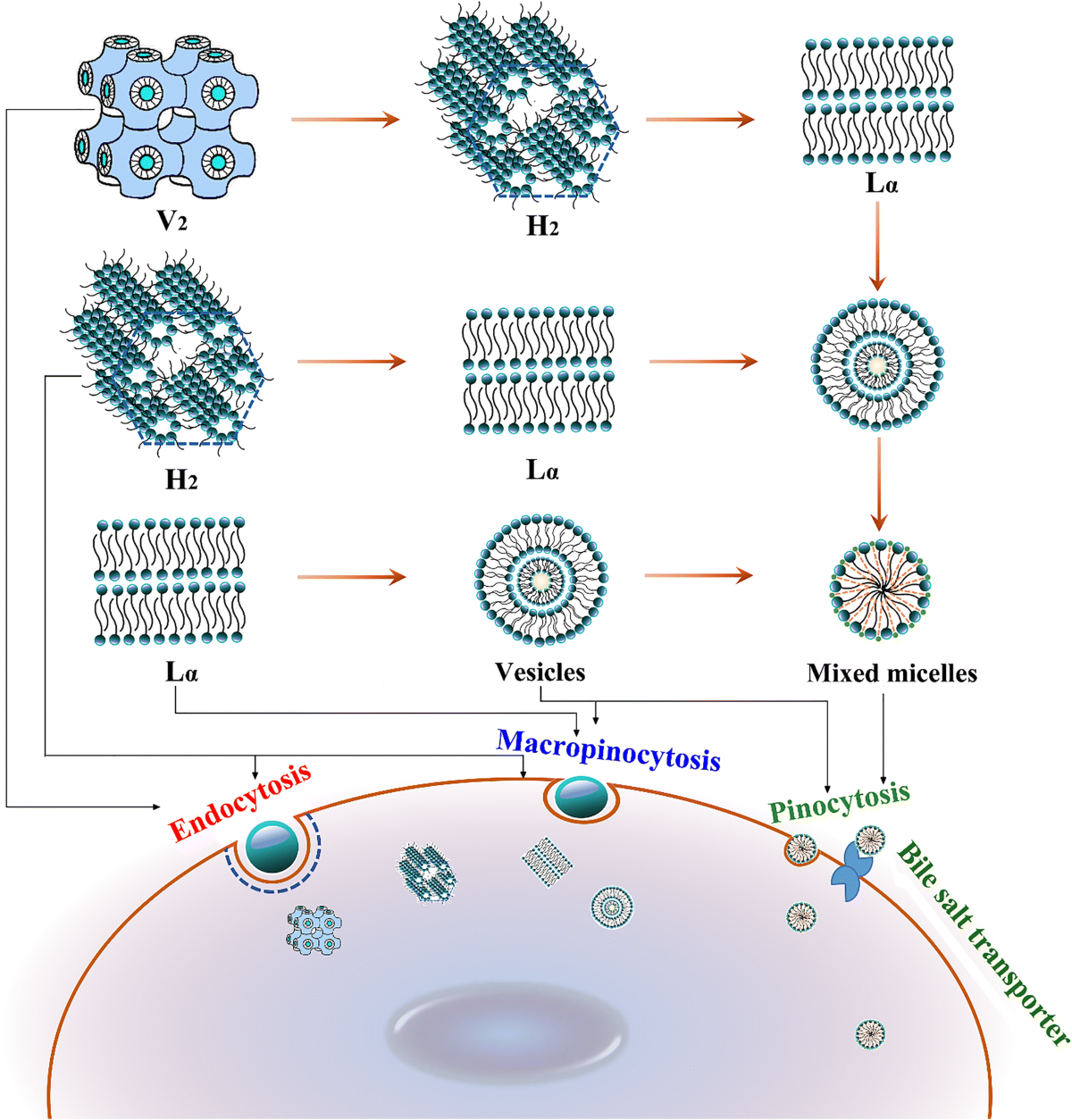
Fig No.06 : Mechanism Of Hexosomes
Hexosomes enhance oral bioavailability through multiple complementary mechanisms arising from their highly organized inverse hexagonal (HII) internal structure.¹ These mechanisms include protection from gastrointestinal degradation, enhanced solubilization, improved membrane interaction, lymphatic transport, prolonged gastrointestinal retention, and controlled drug release.²
7.1 Protection Against Gastrointestinal Degradation
Following oral administration, drugs are exposed to harsh gastrointestinal conditions, including acidic gastric pH, digestive enzymes, and bile salts, which may degrade or inactivate therapeutic agents.³ Lipid-based formulations provide a protective microenvironment that shields encapsulated drugs from chemical and enzymatic degradation.? In hexosomes, lipophilic drugs are incorporated within the hydrophobic lipid matrix, while hydrophilic drugs are confined within narrow aqueous nanochannels.¹ This structural organization reduces direct exposure to gastric fluids and enhances drug stability during transit through the stomach and small intestine.?
7.2 Enhanced Solubilization and Dissolution
Poor aqueous solubility is a major limitation for many oral antidiabetic drugs.? Hexosomes function as lipid reservoirs, maintaining poorly soluble drugs in a solubilized state.? The large internal surface area and organized nanochannels improve apparent solubility and dissolution rate.¹
Improved dissolution enhances concentration gradients across the intestinal epithelium, facilitating passive diffusion and increasing systemic absorption.?
7.3 Improved Membrane Interaction and Permeability
The lipidic nature of hexosomes promotes interaction with biological membranes.? Lipid components such as monoolein can enhance membrane fluidity and facilitate transcellular transport across intestinal epithelial cells.?
Additionally, nanoscale particle size (100–300 nm) increases surface contact with intestinal mucosa, improving adhesion and absorption efficiency.? This enhanced interaction contributes to improved drug permeability and bioavailability.?
7.4 Lymphatic Transport and Reduced First-Pass Metabolism
One of the most significant advantages of lipid-based nanocarriers is their ability to promote intestinal lymphatic transport.? After digestion, lipid components stimulate chylomicron formation within enterocytes.? Drugs associated with these lipoprotein particles can enter the intestinal lymphatic system instead of the portal circulation.? This pathway partially bypasses hepatic first-pass metabolism, thereby increasing systemic drug exposure.? For antidiabetic drugs susceptible to hepatic metabolism, this mechanism significantly enhances oral bioavailability.?
7.5 Prolonged Gastrointestinal Retention
Hexosomes may exhibit improved mucosal adhesion due to their nanoscale size and surface modification with stabilizers such as poloxamer 407.¹? Increased residence time within the gastrointestinal tract prolongs drug–epithelium contact, enhancing absorption.¹? Prolonged retention also allows gradual and sustained drug diffusion through the organized nanochannel network.¹
7.6 Controlled and Sustained Drug Release
The tightly packed cylindrical nanochannels of the inverse hexagonal phase create defined diffusion pathways that regulate drug release.¹¹ Unlike conventional lipid systems that may exhibit burst release, hexosomes provide diffusion-controlled and sustained drug release kinetics.¹¹
This sustained release maintains stable plasma drug concentrations, reducing fluctuations that could lead to hypoglycemia or hyperglycemia in diabetic patients.? Stable pharmacokinetics improve therapeutic outcomes and patient compliance in chronic therapy.?
8. Applications Of Hexosomes
Hexosomes are advanced lipid-based liquid crystalline nanoparticles characterized by an inverse hexagonal (HII) internal structure.¹ Their highly organized nanochannels, large internal surface area, and mechanical rigidity make them suitable for a wide range of pharmaceutical and biomedical applications.²
8.1 Oral Drug Delivery
Hexosomes are extensively investigated for improving the oral bioavailability of poorly soluble and poorly permeable drugs.³ Their lipid matrix enhances drug solubilization, protects drugs from gastrointestinal degradation, and promotes lymphatic transport, thereby reducing first-pass metabolism.³?? These properties make hexosomes particularly suitable for chronic therapies such as antidiabetic, antihypertensive, and anticancer treatments where sustained systemic exposure is required.?
8.2 Controlled and Sustained Release Systems
The tightly packed cylindrical nanochannels of the inverse hexagonal phase enable diffusion-controlled drug release.? This structural feature allows hexosomes to provide prolonged and predictable release kinetics compared to conventional lipid systems.? Sustained release reduces dosing frequency, improves patient compliance, and maintains stable plasma drug concentrations—especially important in chronic diseases such as diabetes.?
8.3 Delivery of Poorly Water-Soluble Drugs
A significant proportion of newly developed drugs fall under Biopharmaceutics Classification System (BCS) Classes II and IV, where poor solubility limits bioavailability.³ Hexosomes function as lipid reservoirs, maintaining drugs in a solubilized state and enhancing apparent solubility and dissolution rate.³ This application is particularly relevant for lipophilic antidiabetic agents and other drugs with dissolution-limited absorption.?
8.4 Lymphatic Drug Delivery
Due to their lipid composition, hexosomes can stimulate chylomicron formation within enterocytes following digestion.? Drugs incorporated into chylomicrons are transported via the intestinal lymphatic system, partially bypassing hepatic first-pass metabolism.? This strategy enhances systemic drug exposure and is beneficial for drugs undergoing extensive hepatic metabolism.?
8.5 Targeted Drug Delivery
Hexosomes can be surface-modified with ligands, polymers, antibodies, or targeting moieties to achieve site-specific drug delivery.? Such modifications enable selective interaction with diseased tissues or receptors.? Targeted hexosomal systems have potential applications in cancer therapy, inflammatory disorders, and localized infections.?
8.6 Topical and Transdermal Delivery
The lipidic composition of hexosomes enhances interaction with the stratum corneum, increasing skin permeability.? Their nanoscale size improves dermal penetration and drug retention.? Hexosomes have therefore been explored in gels, creams, and dermal formulations for controlled topical drug delivery.?
8.7 Parenteral Delivery
Hexosomes have also been investigated for injectable and intravenous applications due to their nanoscale dimensions and sustained release properties.¹ However, careful stabilization and sterility considerations are necessary to ensure safety and compatibility.¹
8.8 Protein and Peptide Delivery
The structured lipid matrix of hexosomes can protect sensitive biomolecules such as peptides and proteins from enzymatic degradation.? This protective capability makes them promising candidates for non-invasive delivery of biologics.?
8.9 Vaccine and Immunotherapy Applications
Due to their organized nanostructure and ability to incorporate antigens, hexosomes may function as adjuvant systems.² They can enhance antigen stability and immune response, offering potential applications in vaccine delivery.²
8.10 Herbal and Nutraceutical Delivery
Natural bioactive compounds such as curcumin and resveratrol often exhibit poor bioavailability due to low solubility and instability.³ Hexosomes improve their solubilization and systemic absorption, enhancing therapeutic potential.³
9. Comparison: Hexosomes Vs Cubosomes Vs Liposomes
|
Parameter |
Hexosomes |
Cubosomes |
Liposomes |
|
Internal Structure |
Inverse hexagonal (HII) phase with cylindrical micelles arranged in hexagonal lattice |
Bicontinuous cubic phase with 3D interconnected water channels |
Spherical vesicles composed of one or more phospholipid bilayers |
|
Structural Organization |
Highly ordered, tightly packed cylindrical nanochannels |
Highly ordered 3D periodic minimal surface |
Simple bilayer membrane enclosing aqueous core |
|
Common Lipids Used |
Monoolein, Phytantriol |
Monoolein, Phytantriol |
Phosphatidylcholine, cholesterol |
|
Mechanical Rigidity |
High (compact hexagonal packing) |
Moderate to high |
Low to moderate |
|
Drug Loading Capacity |
High (especially lipophilic drugs) |
Moderate to high (both hydrophilic and lipophilic) |
Moderate (hydrophilic in core, lipophilic in bilayer) |
|
Encapsulation of Hydrophilic Drugs |
Limited but possible (in narrow aqueous channels) |
Good (large interconnected aqueous channels) |
Good (aqueous core) |
|
Encapsulation of Lipophilic Drugs |
Excellent (within lipid matrix) |
Good |
Good (within bilayer) |
|
Surface Area |
Very high internal surface area |
High internal surface area |
Comparatively lower |
|
Controlled Release Ability |
Strong diffusion-controlled sustained release |
Sustained release (less restricted than hexosomes) |
Often rapid release unless modified |
|
Initial Burst Release |
Minimal |
Moderate |
Higher tendency |
|
Physical Stability |
High due to rigid structure |
Moderate |
Lower (fusion, leakage, oxidation risk) |
|
Thermodynamic Stability |
More stable under certain conditions |
Thermodynamically stable cubic phase |
Thermodynamically unstable; requires stabilization |
|
Particle Size Range |
100–300 nm (typical) |
100–300 nm (typical) |
50 nm – several micrometers |
|
Preparation Complexity |
Moderate to complex |
Moderate |
Relatively simple |
|
Scalability |
High (via high-pressure homogenization) |
Moderate |
Well-established industrial scale |
|
Oral Bioavailability Enhancement |
Strong (lymphatic uptake + sustained release) |
Good |
Limited (susceptible to GI degradation) |
|
Protection from Gastric Environment |
High |
Moderate |
Low to moderate |
|
Lymphatic Transport Potential |
High |
Moderate |
Limited |
|
Suitability for Chronic Therapy |
Excellent (stable plasma levels) |
Good |
Moderate |
|
Topical/Transdermal Use |
Good |
Very good |
Very good |
|
Parenteral Applications |
Emerging |
Emerging |
Well-established |
|
Industrial Maturity |
Emerging technology |
Emerging technology |
Clinically established and marketed |
10. Advantages Of Hexosomes In Antidiabetic Therapy
Type 2 diabetes mellitus (T2DM) requires long-term pharmacological management to maintain stable glycemic control and prevent microvascular and macrovascular complications.¹ Hexosomes offer several structural and functional advantages that make them highly suitable for oral antidiabetic drug delivery.²
10.1 Improved Oral Bioavailability
Many oral antidiabetic drugs suffer from poor aqueous solubility and limited intestinal permeability, leading to variable bioavailability.³ Hexosomes enhance drug solubilization within their lipid matrix and increase absorption by promoting membrane interaction and potential lymphatic transport.? This improves systemic drug exposure and reduces variability in therapeutic response.?
10.2 Sustained and Controlled Drug Release
The inverse hexagonal (HII) internal structure of hexosomes contains tightly packed cylindrical nanochannels that regulate drug diffusion.² This structural organization provides sustained and predictable drug release profiles.² For diabetes management, sustained release is critical to maintain steady plasma drug concentrations and avoid fluctuations that may cause hypoglycemia or hyperglycemia.¹
10.3 Reduced Dose Frequency and Improved Compliance
Chronic diseases such as diabetes require lifelong therapy.¹ Frequent dosing schedules can reduce patient adherence. Sustained-release hexosomal systems allow reduced dosing frequency, improving patient compliance and long-term treatment success.² Improved adherence directly correlates with better glycemic control and reduced complications.¹
10.4 Protection from Gastrointestinal Degradation
Certain antidiabetic agents are susceptible to degradation in acidic gastric conditions or enzymatic breakdown in the intestine.³ The lipid matrix of hexosomes protects encapsulated drugs from chemical and enzymatic degradation during gastrointestinal transit.? This protection enhances drug stability and ensures improved therapeutic efficacy.?
10.5 Reduced First-Pass Metabolism
Lipid-based nanocarriers, including hexosomes, may promote intestinal lymphatic transport following lipid digestion and chylomicron formation.? This mechanism allows partial bypass of hepatic first-pass metabolism.? For drugs with significant hepatic metabolism, this results in increased systemic availability and improved therapeutic effect.?
10.6 Minimized Burst Release and Plasma Fluctuation
Conventional lipid systems may exhibit an initial burst release, leading to rapid spikes in plasma drug concentration.² Hexosomes, due to their organized hexagonal nanochannels, demonstrate diffusion-controlled release with minimal burst effect.² Stable pharmacokinetic profiles are particularly important in diabetes therapy to maintain consistent glycemic control.¹
10.7 High Drug Loading for Lipophilic Antidiabetics
Hexosomes provide extensive lipid domains suitable for incorporation of lipophilic antidiabetic drugs.³ Their organized internal structure supports higher drug loading compared to conventional crystalline lipid systems.² This allows formulation of therapeutically effective doses within nanoscale carriers.²
10.8 Enhanced Stability for Long-Term Therapy
Hexosomes exhibit greater mechanical rigidity compared to liposomes due to tightly packed cylindrical structures.² This enhances physical stability during storage and administration.² Stable formulations are essential for chronic diseases that require long-term pharmaceutical products.
11. Limitations And Challenges :
Despite their promising advantages in oral drug delivery, hexosomes face several scientific, technological, and regulatory challenges that must be addressed before large-scale clinical translation.¹
11.1 Complex Manufacturing Processes
Hexosome preparation often requires high-energy techniques such as ultrasonication or high-pressure homogenization to achieve nanoscale particle size.² These processes may be difficult to scale up while maintaining uniform particle size distribution and structural integrity.² Reproducibility and batch-to-batch consistency remain critical challenges in industrial production.¹
11.2 Sensitivity to Environmental Conditions
The formation of the inverse hexagonal (HII) phase is influenced by temperature, hydration level, lipid composition, and stabilizer concentration.³ Small variations in these parameters may induce phase transitions into cubic or lamellar structures.³ Such structural transitions can alter drug release behavior and stability.³
11.3 Limited Clinical Data
Although hexosomes show promising in vitro and preclinical results, clinical studies remain limited.¹ Most research is currently confined to laboratory and animal models.¹ Comprehensive pharmacokinetic, pharmacodynamic, and long-term safety studies are necessary to support clinical translation.?
11.4 Stability During Storage
While hexosomes exhibit greater rigidity than liposomes, long-term stability may still be affected by lipid oxidation, aggregation, or phase transformation.³ Appropriate stabilizers and optimized storage conditions are required to preserve structural integrity.²
11.5 Gastrointestinal Variability
Upon oral administration, lipid-based systems interact with bile salts, digestive enzymes, and varying pH conditions.? These factors may alter nanostructure and influence drug release or absorption.? Understanding in vivo digestion behavior remains an important research area.?
11.6 Regulatory and Standardization Challenges
Liquid crystalline nanocarriers represent advanced and relatively new delivery systems.¹ Regulatory frameworks for characterization, quality control, and long-term safety evaluation are still evolving.? Standardized analytical methods for phase identification and structural verification are required to ensure regulatory acceptance.³
12. Future Perspectives And Research Directions
Hexosomes represent a rapidly evolving platform in nanomedicine with significant potential for improving chronic disease management, particularly diabetes. Their unique inverse hexagonal nanostructure offers controlled release, enhanced stability, and improved bioavailability, making them promising candidates for next-generation oral drug delivery systems. Future research should focus on the following areas:
12.1 Clinical Translation
Large-scale clinical studies are required to evaluate the safety, efficacy, pharmacokinetics, and long-term tolerability of hexosomal formulations in humans. Demonstrating clear therapeutic advantages over conventional formulations will be essential for regulatory approval and commercialization.
12.2 Surface Functionalization and Targeting
Advanced surface modification strategies using polymers, ligands, antibodies, or receptor-specific moieties may enhance targeted delivery to specific tissues or intestinal transport pathways. Targeted hexosomal systems could improve therapeutic efficiency while minimizing systemic side effects.
12.3 Combination Therapy Platforms
Since diabetes management often requires multiple medications, hexosomes offer the potential to co-encapsulate two or more drugs within a single nanocarrier. This strategy could simplify dosing regimens, improve patient adherence, and provide synergistic therapeutic effects.
12.4 Scale-Up and Industrial Manufacturing
Future efforts should prioritize the development of scalable, reproducible, and cost-effective manufacturing processes. Optimization of production parameters, stabilization techniques, and quality control standards will be critical for large-scale pharmaceutical production.
12.5 Personalized Nanomedicine
Emerging research may explore personalized hexosomal formulations tailored to individual metabolic profiles and therapeutic needs. Such customized systems could enhance glycemic control while reducing adverse effects.
12.6 Integration with Advanced Technologies
Combining hexosomes with smart drug delivery systems, stimuli-responsive materials, or digital health monitoring platforms may enable more precise and adaptive diabetes management in the future.
CONCLUSION:
Hexosomes are advanced lipid-based liquid crystalline nanocarriers with a highly organized inverse hexagonal (HII) internal structure that provides significant advantages for oral drug delivery. Their cylindrical nanochannel arrangement offers high mechanical stability, improved drug loading capacity, and controlled sustained release compared to conventional lipid systems. In diabetes management, where consistent and long-term glycemic control is essential, hexosomes help overcome common limitations of oral antidiabetic drugs such as poor solubility, low permeability, and first-pass metabolism. Their lipid composition enhances drug solubilization, protects drugs from gastrointestinal degradation, and promotes lymphatic uptake, leading to improved systemic bioavailability. The sustained-release behavior of hexosomes maintains stable plasma drug levels, reducing fluctuations that can cause hyperglycemia or hypoglycemia. This stability may also reduce dosing frequency and improve patient compliance and therapeutic outcomes. However, challenges such as phase instability, manufacturing complexity, higher formulation costs, and limited clinical validation still restrict large-scale commercial application. With further research and optimization, hexosomes have strong potential as next-generation oral nanocarriers for improving the efficacy of antidiabetic therapy.
REFERENCES



Ankita Bardapure*, Shivappa Nagoba, Shreya Pawar, Maheshwari Kapale, Shubham Chilarge, Vaishnavi Karbhari, Hexosomes as a Promising Lipid Nanocarrier for Enhancing Oral Bioavailability of Antidiabetic Drugs, Int. J. of Pharm. Sci., 2026, Vol 4, Issue 4, 5077-5095. https://doi.org/10.5281/zenodo.20291193
 10.5281/zenodo.20291193