

We use cookies to ensure our website works properly and to personalise your experience. Cookies policy
Shri Gurudatta Shikshan Prasarak Sanstha’s Institute of Pharmacy, Kaulkhed, Akola.
The present study focuses on the implementation of hydrotropic solubilization as an eco-friendly alternative to conventional organic solvents in UV spectrophotometric analysis of poorly water-soluble drugs. Telmisartan and Indomethacin were selected as model drugs due to their limited aqueous solubility. A 2 M urea solution was employed as a hydrotropic agent to enhance drug solubility without the use of toxic organic solvents such as methanol. The maximum absorption wavelengths (?max) were determined to be 240 nm for Telmisartan and 320 nm for Indomethacin. Calibration curves were constructed within the concentration range of 10–100 ?g/mL and exhibited excellent linearity with correlation coefficients (R²) of 0.9978 and 0.9968, respectively. The proposed method demonstrated simplicity, accuracy, precision, cost-effectiveness, and environmental sustainability. Greenness evaluation indicated a significant reduction in hazardous solvent consumption, supporting the principles of Green Analytical Chemistry. The developed method is suitable for routine pharmaceutical quality control and can be extended to other poorly soluble drugs
UV-visible spectrophotometry is a widely used analytical technique in pharmaceutical analysis due to its simplicity, accuracy, rapidity, and cost-effectiveness.[1] However, the estimation of poorly water-soluble drugs often requires organic solvents such as methanol and ethanol, which are associated with toxicity, environmental hazards, and disposal challenges.[2]Hydrotropy is an effective solubilization technique that enhances the aqueous solubility of poorly soluble drugs through the use of hydrotropic agents such as urea, sodium benzoate, and nicotinamide. These agents provide a safer, economical, and environmentally friendly alternative to conventional organic solvents.[3]
Telmisartan, an angiotensin II receptor blocker, and Indomethacin, a non-steroidal anti-inflammatory drug, are both poorly water-soluble drugs that present difficulties in routine spectrophotometric analysis.[4] The present study explores the use of 2 M urea as a hydrotropic solvent for the UV spectrophotometric estimation of Telmisartan and Indomethacin.[5] The method aims to reduce the use of hazardous organic solvents while maintaining analytical accuracy, precision, and reliability. Additionally, the greenness of the developed analytical procedure was evaluated in accordance with Green Analytical Chemistry principles, highlighting its suitability for sustainable pharmaceutical analysis.[6]
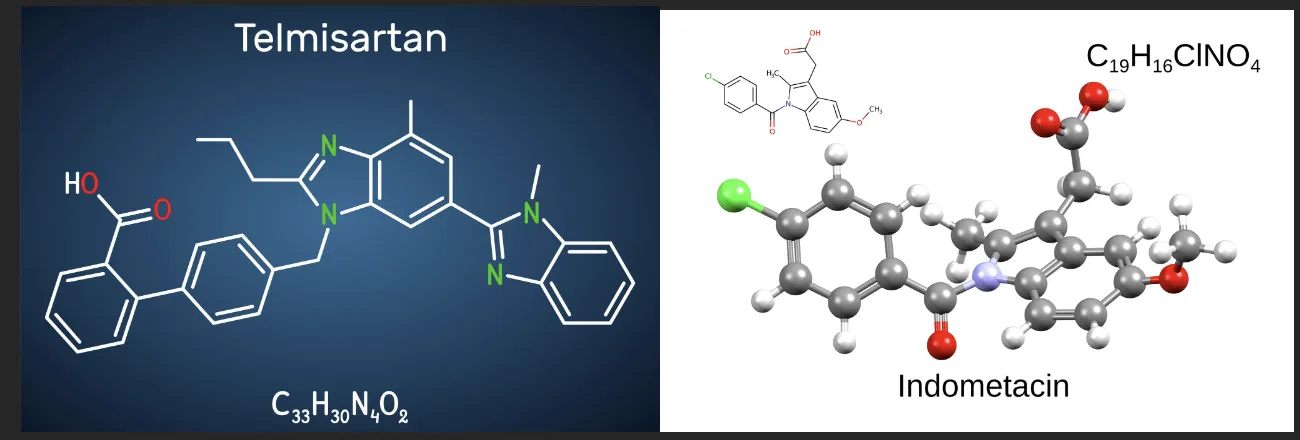
Figure 1. Chemical Structures of Telmisartan and Indomethacin
Materials
Telmisartan and Indomethacin active pharmaceutical ingredients (APIs) were used as model drugs in the present study. Urea of analytical reagent grade was employed as the hydrotropic agent to enhance the aqueous solubility of the drugs. Distilled water was used for the preparation of the hydrotropic solution and all subsequent dilutions. All chemicals and reagents used in the study were of analytical grade and were used without further purification.
instrumentation
Analysis was performed using a Shimadzu UV-1800 Double Beam UV-Visible Spectrophotometer equipped with 1 cm matched quartz cells.[7]
Preparation of Hydrotropic Solvent
A 2 M urea solution was prepared by dissolving 12.01 g of urea in distilled water and making the volume up to 100 mL.[8]
Method:
Preparation of Standard Stock Solution
Accurately weighed 10 mg of drug was transferred into a 100 mL volumetric flask. Approximately 30 mL of 2 M urea solution was added, and the mixture was sonicated until complete dissolution. The volume was then adjusted to 100 mL using the same solvent to obtain a stock solution of 100 μg/mL.[9]
Preparation of Working Solutions
Aliquots of stock solution were diluted with 2 M urea solution to obtain concentrations ranging from 10–100 μg/mL.[10]
Determination of λmax
The prepared solutions were scanned between 200–400 nm against a reagent blank containing 2 M urea solution.[11]
Construction of Calibration Curve
Absorbance was measured at the respective λmax values, and calibration curves were plotted between concentration and absorbance.[12]
RESULTS
UV Spectral Characteristics
Table 1. Maximum Absorption Wavelengths (λmax) of Telmisartan and Indo
|
Drug |
λmax (nm) |
|
Telmisartan |
240 |
|
Indomethacin |
320 |
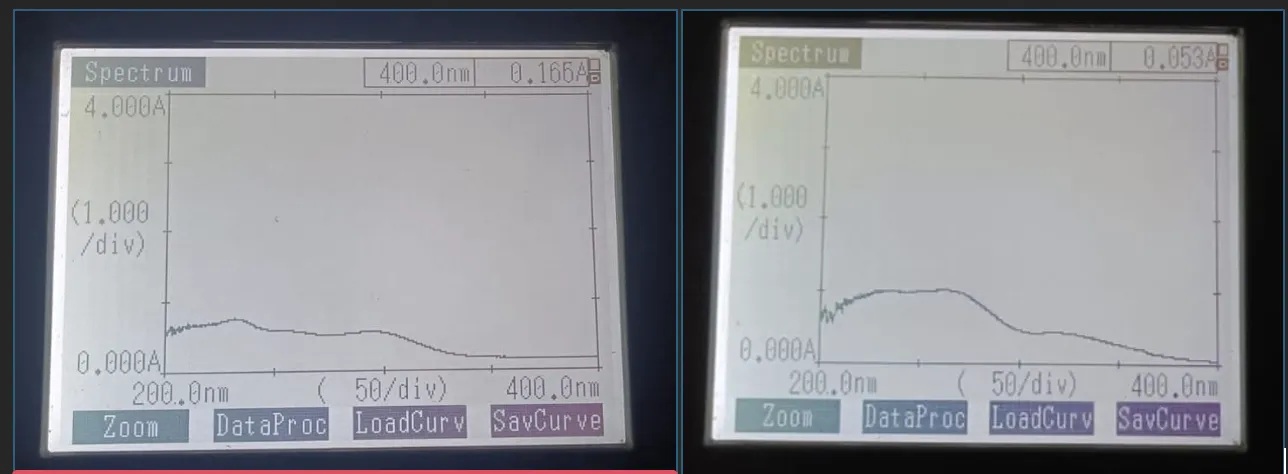
Figure 2. UV Absorption Spectra of Telmisartan and Indomethacin in 2 M Urea Solution Showing λmax at 240 nm and 320 nm, Respectively.
The hydrotropic solvent did not interfere with absorbance measurements and produced well-defined absorption maxima.
Calibration Data of Telmisartan
Table 1. Calibration Data of Telmisartan in 2 M Urea Solution at 240 nm
|
Concentration (μg/mL) |
Absorbance |
|
10 |
0.103 |
|
20 |
0.197 |
|
30 |
0.303 |
|
40 |
0.410 |
|
50 |
0.523 |
|
60 |
0.632 |
|
70 |
0.709 |
|
80 |
0.805 |
|
90 |
0.886 |
|
100 |
0.987 |
Regression coefficient (R²) = 0.9978
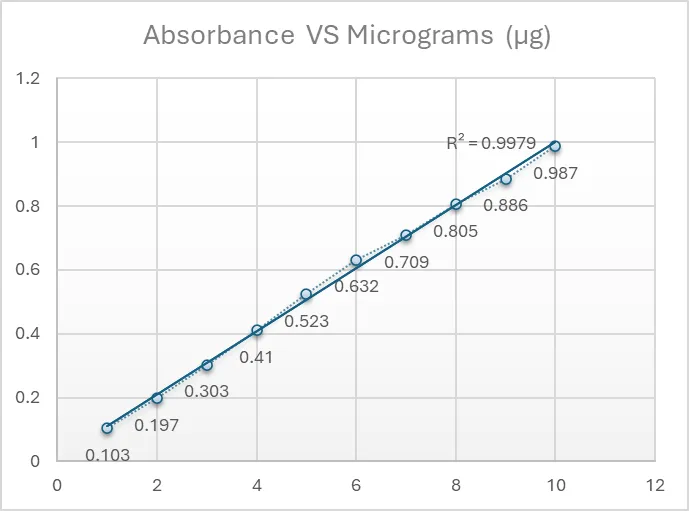
Figure 3. Calibration Curve of Telmisartan in 2 M Urea Solution
Calibration Data of Indomethacin
Table 2.Calibration Data of Indomethacin in 2 M Urea Solution at 320 nm
|
Concentration (μg/mL) |
Absorbance |
|
10 |
0.110 |
|
20 |
0.251 |
|
30 |
0.405 |
|
40 |
0.552 |
|
50 |
0.692 |
|
60 |
0.820 |
|
70 |
0.990 |
|
80 |
1.200 |
|
90 |
1.300 |
|
100 |
1.400 |
Regression coefficient (R²) = 0.9968
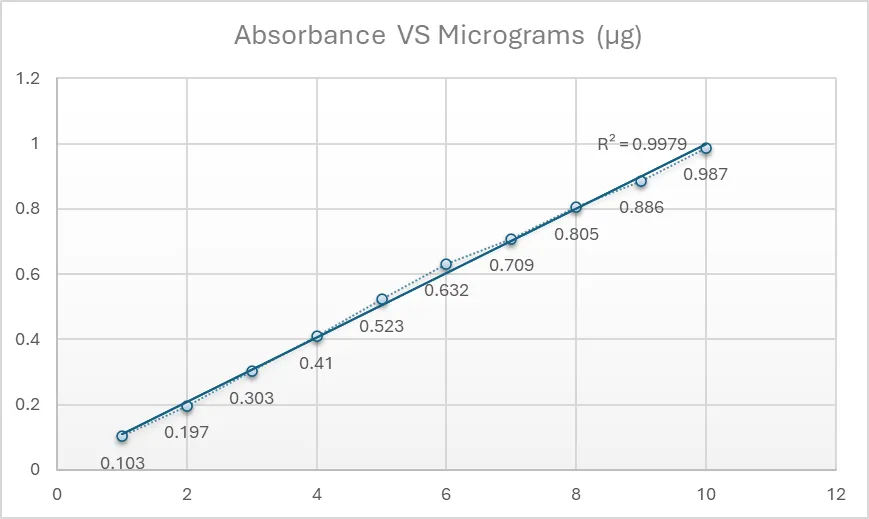
Figure 4. Calibration
Curve of Indomethacin in 2 M Urea Solution
The calibration curves followed Beer-Lambert’s law over the selected concentration range, indicating excellent linearity and suitability for quantitative estimation.
CONCLUSION
The study successfully demonstrated the application of hydrotropic solubilization for UV spectrophotometric determination of Telmisartan and Indomethacin. A 2 M urea solution effectively enhanced the aqueous solubility of both drugs without affecting their spectral characteristics. The developed methods exhibited excellent linearity, simplicity, accuracy, and reproducibility. Furthermore, the replacement of conventional organic solvents with urea represents a greener and safer analytical alternative. The proposed approach is suitable for routine pharmaceutical quality control and supports sustainable analytical chemistry practices.
REFERENCES

Darshana Paraskar, Aachal Budhbaware, Jayesh Patel, Aryan Shirpurkar, Implementation Of Hydrotropic Solvents for Uv Spectrophotometric Assessment of Telmisartan and Indomethacin: A Green Analytical Approach, Int. J. of Pharm. Sci., 2026, Vol 4, Issue 6, 1232-1236, https://doi.org/10.5281/zenodo.20551994
 10.5281/zenodo.20551994