

We use cookies to ensure our website works properly and to personalise your experience. Cookies policy
1Postgraduate Research Scholar, Department of Pharmaceutics, Shri Indra Ganesan Institute of Medical Sciences, College of Pharmacy, Manikandam, Tiruchirappalli – 620012, Tamil Nadu, India.
2Associate Professor and Head, Department of Pharmaceutics, Shri Indra Ganesan Institute of Medical Sciences, College of Pharmacy, Manikandam, Tiruchirappalli – 620012, Tamil Nadu, India.
3Principal, Shri Indra Ganesan Institute of Medical Sciences, College of Pharmacy, Manikandam, Tiruchirappalli – 620012, Tamil Nadu, India.
Background: Domperidone is a prokinetic and antiemetic drug whose conventional oral administration is affected by limited aqueous solubility and presystemic metabolism. Mucoadhesive oromucosal films were investigated as an alternative dosage-form platform. Objective: To formulate and characterize domperidone-loaded polymeric films and identify a formulation balancing mechanical properties, mucoadhesion, controlled release and ex-vivo permeation. Methods: Ten solvent-cast formulations (F1–F10) containing HPMC E15, Carbopol 934P and PEG 400 were compared using physicochemical, mechanical, mucoadhesive, release and permeation tests. Results: F5 showed a thickness of 0.174 ± 0.006 mm, folding endurance of 131 ± 4, surface pH 6.70 ± 0.06, drug content 99.12 ± 0.86%, mucoadhesive strength 1.28 ± 0.07 N and residence time 112 ± 5 min. Drug release reached 92.1% and ex-vivo permeation 74.6 ± 2.3% at 6 h. The reported kinetic best fit was Korsmeyer–Peppas (R² = 0.997; n = 0.71). Conclusion: F5 provided a balanced in-vitro/ex-vivo profile in the reported experimental comparisons. Further reproducibility, safety, stability and clinical studies are needed before therapeutic benefit can be established.
Functional dyspepsia is characterized by postprandial fullness, early satiation, epigastric discomfort and related symptoms. Drug-delivery approaches directed at gastrointestinal motility may have a role in selected patients, although the disorder has heterogeneous mechanisms and requires individualized clinical assessment. Domperidone acts predominantly as a peripheral dopamine D₂-receptor antagonist with prokinetic and antiemetic actions. The drug has limited aqueous solubility and undergoes substantial first-pass metabolism after oral administration.
Oromucosal administration is being explored to provide a patient-friendly, thin, flexible drug-delivery platform. A mucoadhesive film can hydrate on contact with saliva and remain associated with the mucosal surface, allowing drug release over time. Whether this strategy improves systemic exposure or clinical outcomes for domperidone must be demonstrated experimentally rather than assumed.
The film matrix must balance multiple, sometimes competing, properties. Increasing polymer content can improve film strength and mucosal residence while slowing drug release. Plasticizer content influences brittleness and elongation. The present formulation therefore uses HPMC E15 as the main film-forming component, Carbopol 934P to provide mucoadhesion and PEG 400 as a plasticizer.
2. Aim and objectives
The study aimed to design, develop and characterize domperidone-loaded mucoadhesive oromucosal films for potential application in functional dyspepsia. Its experimental objectives were to examine drug properties and compatibility; prepare ten solvent-cast films; characterize physical, mechanical and hydration properties; quantify drug content, mucoadhesion and residence time; determine in-vitro release kinetics and ex-vivo permeation; and identify an optimized composition.
MATERIALS AND METHODS
3.1 Materials and formulation design
Domperidone, HPMC E15, Carbopol 934P, PEG 400 and suitable solvents were used for formulation development. Supplier details, material grades and batch numbers should be documented in the study records.
Table 1: Formulation composition of batches F1–F10.
| Formulation | Domperidone (mg) | HPMC E15 (mg) | Carbopol 934P (mg) | PEG 400 (mg) | Solvent system* |
|---|---|---|---|---|---|
| F1 | 10 | 100 | 10 | 20 | q.s. |
| F2 | 10 | 100 | 20 | 20 | q.s. |
| F3 | 10 | 100 | 30 | 20 | q.s. |
| F4 | 10 | 150 | 10 | 20 | q.s. |
| F5 | 10 | 150 | 20 | 20 | q.s. |
| F6 | 10 | 150 | 30 | 20 | q.s. |
| F7 | 10 | 200 | 10 | 20 | q.s. |
| F8 | 10 | 200 | 20 | 20 | q.s. |
| F9 | 10 | 200 | 30 | 20 | q.s. |
| F10 | 10 | 150 | 20 | 30 | q.s. |
HPMC E15 was selected for film formation, Carbopol 934P for mucoadhesion and PEG 400 for flexibility. Differences among F1–F10 were used to assess the combined influence of polymer and plasticizer loading.
3.2 Preformulation and compatibility assessment
Preformulation studies included organoleptic assessment, solubility testing in selected media, melting-point determination, aqueous-dispersion pH, n-octanol/water partitioning, UV-visible spectrophotometry, Fourier-transform infrared spectroscopy (FTIR) and differential scanning calorimetry (DSC). Compatibility was assessed by examining characteristic spectral and thermal features.
3.3 Preparation by solvent casting
The drug was incorporated into a suitable solvent system, while polymer solutions were prepared separately. The components were combined with plasticizer, mixed to form a casting dispersion, spread onto a suitable casting surface, dried and cut into films of the intended dimensions.
The casting area, drying temperature and drying duration should be reported in accordance with the experimental procedure used.
3.4 Evaluation of films
The films were examined for appearance, transparency, surface texture, thickness, weight uniformity, folding endurance, tensile strength, percentage elongation and surface pH. Additional studies included moisture content, moisture uptake, swelling index, drug-content uniformity, scanning electron microscopy, mucoadhesive strength and mucosal residence time.
Table 2: Main evaluation tests and scientific purpose.
| Test | Purpose |
|---|---|
| Thickness and weight | Assess casting consistency |
| Folding endurance, tensile strength, elongation | Assess handling and flexibility |
| Surface pH | Characterize the film–mucosa microenvironment |
| Moisture uptake and swelling | Assess hydration response |
| Drug content | Evaluate distribution of drug |
| Mucoadhesive strength and residence | Assess mucosal interaction |
| In-vitro release and ex-vivo permeation | Characterize drug availability and transport |
3.5 Drug release, kinetic analysis and ex-vivo permeation
In-vitro drug release was evaluated over 0.5–6 h for ten formulations. Release profiles were fitted to zero-order, first-order, Higuchi and Korsmeyer–Peppas models and compared using coefficients of determination. Ex-vivo permeation was evaluated for F5, F8 and F9 using cumulative permeation, flux and permeability coefficient.
Details of tissue source, ethics approval or exemption, membrane preparation, receptor medium, diffusion apparatus and replication are not included in this manuscript.
RESULTS
4.1 Drug preformulation
The drug was a white, odourless crystalline powder. It was slightly soluble in purified water and phosphate buffer and more soluble in methanol, ethanol and hydroalcoholic medium.
The melting range was 244–248°C, the aqueous-dispersion pH was 5.68, the partition coefficient was 2.84, and the UV absorption maximum was 284 nm.
Table 3: Selected preformulation findings.
| Parameter | Reported result |
|---|---|
| Appearance | White, fine crystalline powder; odourless |
| Aqueous solubility | Slightly soluble |
| Hydroalcoholic medium | Freely soluble |
| Melting range | 244–248°C |
| Aqueous dispersion pH | 5.68 |
| Partition coefficient | 2.84 |
| UV λmax | 284 nm |
4.2 Calibration and compatibility
UV calibration measurements increased consistently across the investigated concentration range of 2–20 µg/mL. FTIR and DSC observations indicated no major incompatibility between domperidone and the selected excipients.
Table 4: UV calibration data at the reported analytical wavelength.
| Concentration (µg/mL) | Absorbance |
|---|---|
| 2 | 0.084 |
| 4 | 0.169 |
| 6 | 0.251 |
| 8 | 0.337 |
| 10 | 0.421 |
| 12 | 0.506 |
| 14 | 0.590 |
| 16 | 0.674 |
| 18 | 0.759 |
| 20 | 0.843 |
4.3 Film appearance and physical characteristics
The ten films were described as smooth and visually uniform. Their thickness and mass varied with formulation composition.
Across F1–F10, thickness ranged from 0.142 to 0.211 mm and film weight from 49.8 to 64.8 mg. These trends were consistent with the differences in solid content among the casting formulations.
Table 5: Thickness and weight of prepared films.
| Batch | Thickness (mm) | Weight (mg) |
|---|---|---|
| F1 | 0.142 ± 0.006 | 49.8 ± 1.1 |
| F2 | 0.148 ± 0.005 | 50.6 ± 1.0 |
| F3 | 0.153 ± 0.006 | 51.4 ± 1.2 |
| F4 | 0.168 ± 0.005 | 55.2 ± 1.1 |
| F5 | 0.174 ± 0.006 | 56.4 ± 1.0 |
| F6 | 0.181 ± 0.005 | 57.8 ± 1.2 |
| F7 | 0.196 ± 0.007 | 62.1 ± 1.3 |
| F8 | 0.203 ± 0.006 | 63.5 ± 1.2 |
| F9 | 0.211 ± 0.006 | 64.8 ± 1.1 |
| F10 | 0.176 ± 0.005 | 56.8 ± 1.1 |
4.4 Mechanical properties
The films exhibited folding endurance values between 111 and 151 folds, tensile strength between 2.18 and 3.41 N/mm², and percentage elongation between 18.6% and 31.8%. Differences among the formulations indicate that the balance between polymer and plasticizer content influenced film mechanical behavior. F5 had a folding endurance of 131 ± 4, tensile strength of 2.82 ± 0.12 N/mm² and elongation of 23.4 ± 1.2%.
Table 6: Mechanical evaluation of F1–F10.
| Batch | Folding endurance | Tensile strength (N/mm²) | Elongation (%) |
|---|---|---|---|
| F1 | 118 ± 4 | 2.18 ± 0.12 | 18.6 ± 1.1 |
| F2 | 115 ± 3 | 2.31 ± 0.11 | 19.4 ± 1.0 |
| F3 | 111 ± 4 | 2.42 ± 0.13 | 20.1 ± 1.2 |
| F4 | 126 ± 3 | 2.64 ± 0.14 | 21.8 ± 1.1 |
| F5 | 131 ± 4 | 2.82 ± 0.12 | 23.4 ± 1.2 |
| F6 | 124 ± 3 | 2.91 ± 0.13 | 22.6 ± 1.0 |
| F7 | 138 ± 4 | 3.12 ± 0.15 | 24.8 ± 1.3 |
| F8 | 142 ± 3 | 3.28 ± 0.14 | 26.1 ± 1.2 |
| F9 | 136 ± 4 | 3.41 ± 0.16 | 25.4 ± 1.1 |
| F10 | 151 ± 4 | 2.67 ± 0.13 | 31.8 ± 1.4 |
These values describe bench-scale film properties and do not independently establish in-vivo performance or patient acceptability.
4.5 Surface pH, hydration and drug content
Surface pH values for all ten formulations were clustered around 6.6–6.8. F5 had a reported surface pH of 6.70 ± 0.06. Moisture content, moisture uptake and swelling varied with polymer composition, particularly Carbopol 934P concentration. Drug content ranged from 97.42 ± 1.18% for F1 to 99.48 ± 0.76% for F8. The F5 drug content was 99.12 ± 0.86%.
Table 7: Surface pH, swelling and drug content.
| Batch | Surface pH | Swelling index (%) | Drug content (%) |
|---|---|---|---|
| F1 | 6.72 ± 0.08 | 82.4 ± 3.1 | 97.42 ± 1.18 |
| F2 | 6.68 ± 0.07 | 96.8 ± 3.4 | 98.16 ± 1.05 |
| F3 | 6.61 ± 0.06 | 112.6 ± 3.7 | 98.74 ± 1.12 |
| F4 | 6.76 ± 0.05 | 101.5 ± 3.2 | 98.36 ± 0.94 |
| F5 | 6.70 ± 0.06 | 124.8 ± 3.9 | 99.12 ± 0.86 |
| F6 | 6.63 ± 0.07 | 143.6 ± 4.1 | 98.68 ± 0.91 |
| F7 | 6.79 ± 0.06 | 132.4 ± 3.8 | 99.26 ± 0.82 |
| F8 | 6.73 ± 0.05 | 158.7 ± 4.2 | 99.48 ± 0.76 |
| F9 | 6.66 ± 0.06 | 181.5 ± 4.6 | 98.92 ± 0.88 |
| F10 | 6.71 ± 0.05 | 126.3 ± 3.7 | 99.36 ± 0.79 |
The drug-content values indicate relatively consistent drug incorporation across the formulations. Statistical significance and batch-to-batch reproducibility were not assessed.
4.6 Mucoadhesive properties
Mucoadhesive strength increased from 0.82 ± 0.05 N in F1 to 1.74 ± 0.09 N in F9. Residence times ranged from 82 ± 4 min to 151 ± 6 min. The increasing mucoadhesion and residence seen in polymer-rich formulations are consistent with enhanced hydration and interaction of the polymer matrix with mucosal tissue. F5 showed 1.28 ± 0.07 N and 112 ± 5 min, representing a compromise between adhesion and drug release.
Table 8: Mucoadhesive strength and residence time.
| Batch | Mucoadhesive strength (N) | Residence time (min) |
|---|---|---|
| F1 | 0.82 ± 0.05 | 82 ± 4 |
| F2 | 0.96 ± 0.06 | 91 ± 4 |
| F3 | 1.12 ± 0.07 | 103 ± 5 |
| F4 | 1.04 ± 0.06 | 96 ± 4 |
| F5 | 1.28 ± 0.07 | 112 ± 5 |
| F6 | 1.43 ± 0.08 | 126 ± 5 |
| F7 | 1.36 ± 0.07 | 121 ± 5 |
| F8 | 1.58 ± 0.08 | 138 ± 6 |
| F9 | 1.74 ± 0.09 | 151 ± 6 |
| F10 | 1.31 ± 0.07 | 116 ± 5 |
Because the study is ex-vivo/in-vitro, these results should not be presented as measured clinical retention or proof of improved efficacy.
4.7 In-vitro release
All ten formulations released domperidone over the six-hour observation period, with differences attributable to the polymer matrix. At 6 h, F1 showed 97.2% release, F5 92.1%, F8 88.7% and F9 84.3%. The comparatively slower release from F8 and F9 coincided with their higher mucoadhesive strength and residence time.
Table 9: Cumulative in-vitro release (%) for selected batches.
| Time (h) | F1 | F5 | F8 | F9 |
|---|---|---|---|---|
| 0.5 | 34.8 | 29.6 | 26.5 | 24.2 |
| 1 | 56.7 | 48.5 | 43.8 | 40.2 |
| 2 | 78.4 | 68.3 | 62.4 | 57.8 |
| 3 | 89.6 | 80.2 | 74.1 | 69.5 |
| 4 | 94.2 | 87.2 | 81.9 | 77.4 |
| 5 | 96.1 | 90.4 | 86.2 | 81.8 |
| 6 | 97.2 | 92.1 | 88.7 | 84.3 |
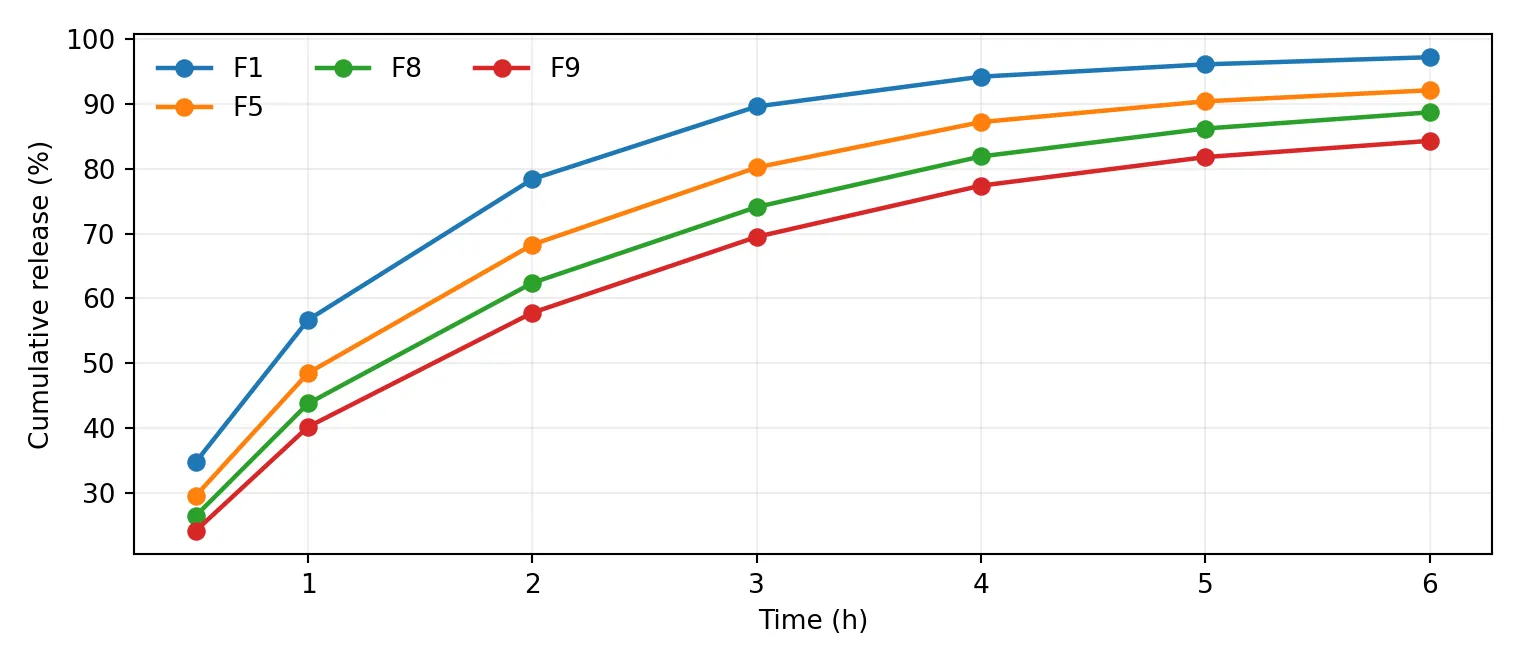
Figure 1: Drug release profiles of selected formulations.
4.8 Drug-release kinetics
The Korsmeyer–Peppas model showed the highest reported coefficient of determination for each formulation. For F5, R² was 0.997 and the release exponent (n) was 0.71. This value is consistent with anomalous (non-Fickian) release, involving contributions from drug diffusion and polymer relaxation; however, model fitting alone does not establish a unique release mechanism.
Table 10: Reported release kinetic parameters.
| Formulation | Zero-order R² | First-order R² | Higuchi R² | Korsmeyer–Peppas R² | n value | Best-fit model |
|---|---|---|---|---|---|---|
| F1 | 0.962 | 0.981 | 0.987 | 0.992 | 0.63 | Korsmeyer–Peppas |
| F2 | 0.967 | 0.983 | 0.989 | 0.994 | 0.65 | Korsmeyer–Peppas |
| F3 | 0.971 | 0.985 | 0.991 | 0.995 | 0.67 | Korsmeyer–Peppas |
| F4 | 0.973 | 0.986 | 0.992 | 0.996 | 0.68 | Korsmeyer–Peppas |
| F5 | 0.977 | 0.988 | 0.994 | 0.997 | 0.71 | Korsmeyer–Peppas |
| F6 | 0.975 | 0.987 | 0.993 | 0.996 | 0.72 | Korsmeyer–Peppas |
| F7 | 0.978 | 0.989 | 0.994 | 0.997 | 0.70 | Korsmeyer–Peppas |
| F8 | 0.980 | 0.990 | 0.995 | 0.998 | 0.73 | Korsmeyer–Peppas |
| F9 | 0.982 | 0.991 | 0.996 | 0.998 | 0.75 | Korsmeyer–Peppas |
| F10 | 0.974 | 0.987 | 0.993 | 0.996 | 0.69 | Korsmeyer–Peppas |
4.9 Ex-vivo permeation
The ex-vivo comparison was performed on selected batches F5, F8 and F9. At 6 h, F5 had the greatest reported cumulative permeation (74.6 ± 2.3%), followed by F8 (70.8 ± 2.2%) and F9 (65.2 ± 2.1%). F5 also had the highest reported flux and permeability coefficient among these selected formulations.
Table 11: Ex-vivo permeation profile for F5, F8 and F9.
| Time (h) | F5 cumulative permeation (%) | F8 cumulative permeation (%) | F9 cumulative permeation (%) |
|---|---|---|---|
| 0.5 | 12.4 ± 0.8 | 10.8 ± 0.7 | 9.6 ± 0.6 |
| 1 | 22.7 ± 1.1 | 20.1 ± 1.0 | 18.2 ± 0.9 |
| 2 | 38.6 ± 1.5 | 35.4 ± 1.4 | 31.8 ± 1.3 |
| 3 | 51.8 ± 1.8 | 47.9 ± 1.7 | 43.6 ± 1.5 |
| 4 | 61.7 ± 2.0 | 57.6 ± 1.9 | 52.1 ± 1.8 |
| 5 | 68.9 ± 2.1 | 64.8 ± 2.0 | 59.3 ± 1.9 |
| 6 | 74.6 ± 2.3 | 70.8 ± 2.2 | 65.2 ± 2.1 |
Table 12: Permeation parameters at 6 h.
| Formulation | Cumulative permeation at 6 h (%) | Flux (µg/cm²/h) | Permeability coefficient (cm/h) |
|---|---|---|---|
| F5 | 74.6 ± 2.3 | 18.42 ± 0.74 | 0.0184 ± 0.001 |
| F8 | 70.8 ± 2.2 | 17.16 ± 0.69 | 0.0172 ± 0.001 |
| F9 | 65.2 ± 2.1 | 15.82 ± 0.64 | 0.0158 ± 0.001 |
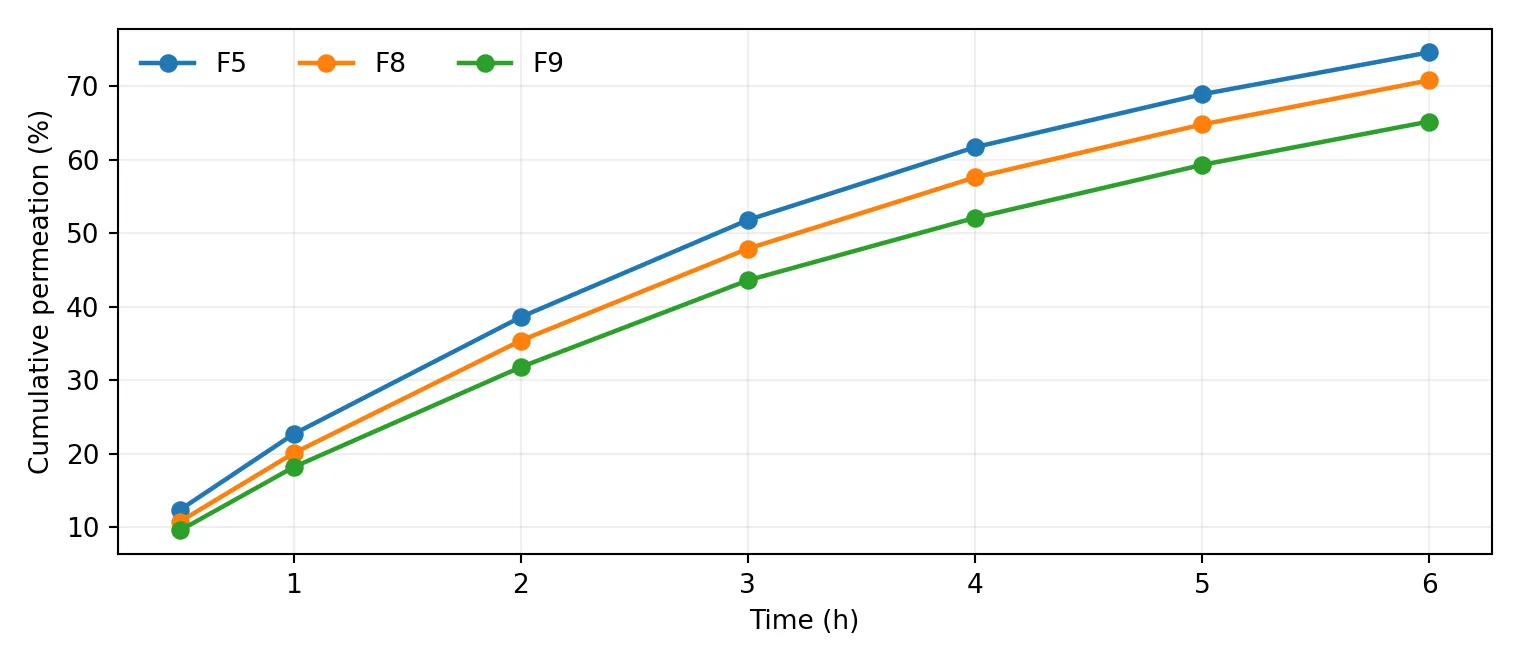
Figure 2: Ex-vivo permeation profiles of F5, F8 and F9 (mean values).
4.10 Comparative selection of optimized formulation
F5 was selected as the optimized formulation because it balanced film thickness, drug content, swelling, mucoadhesion, drug release and ex-vivo permeation. F8 and F9 showed greater mucoadhesive strength and longer residence times but lower drug release and permeation.
Table 13: Comparative optimization parameters for F5, F8 and F9.
| Parameter | F5 | F8 | F9 | Preferred characteristic |
|---|---|---|---|---|
| Thickness (mm) | 0.174 | 0.203 | 0.211 | Lower/uniform |
| Folding endurance | 131 | 142 | 136 | Higher |
| Tensile strength (N/mm²) | 2.82 | 3.28 | 3.41 | Adequate |
| Surface pH | 6.70 | 6.73 | 6.66 | Near-neutral |
| Swelling index (%) | 124.8 | 158.7 | 181.5 | Moderate |
| Drug content (%) | 99.12 | 99.48 | 98.92 | Near 100% |
| Mucoadhesive strength (N) | 1.28 | 1.58 | 1.74 | Adequate |
| Residence time (min) | 112 | 138 | 151 | Adequate |
| Drug release at 6 h (%) | 92.1 | 88.7 | 84.3 | Desired release |
| Permeation at 6 h (%) | 74.6 | 70.8 | 65.2 | Higher |
| Overall assessment | Very good | Good | Good | F5 |
F5 was selected based on the overall balance of the evaluated properties rather than the highest value for each individual parameter.
DISCUSSION
The experimental findings show that HPMC E15–Carbopol 934P films can be prepared with reproducible-looking physical characteristics and measurable differences in hydration, mechanical performance, mucoadhesion and release. The stronger mucoadhesion observed with higher Carbopol levels was associated with longer residence, while the more polymer-rich films showed reduced release and ex-vivo permeation. This pattern is consistent with a hydrated polymer network creating a longer diffusional pathway.
The results also illustrate the importance of optimizing a dosage form against its intended performance profile rather than maximizing a single attribute. F9 showed the greatest mucoadhesive strength (1.74 ± 0.09 N) and residence time (151 ± 6 min), but its 6 h release and permeation were lower than F5. F5 offered a more balanced performance profile, with 92.1% release and 74.6 ± 2.3% ex-vivo permeation at 6 h.
The study remains a laboratory-stage investigation. Ex-vivo permeation cannot be equated directly with human bioavailability or improvement in functional dyspepsia symptoms. Additional work should confirm method validation, batch-to-batch reproducibility, stability, mucosal safety, and appropriate clinical pharmacokinetics and safety. Domperidone has clinically important safety considerations that require separate evaluation before any novel route can be recommended.
CONCLUSION
Domperidone-loaded mucoadhesive oromucosal films were formulated and evaluated using HPMC E15, Carbopol 934P and PEG 400. Among the evaluated formulations, F5 showed a balanced profile of physical characteristics, drug content, mucoadhesive properties, in-vitro release and ex-vivo permeation. Further studies are required to establish its reproducibility, stability, mucosal safety and clinical efficacy.
Declarations
Ethics Approval and Tissue Sourcing
Ethics approval or exemption and the source of ex-vivo tissue were not specified in this manuscript.
Funding
Funding information was not provided.
Conflicts of Interest
The authors’ conflict-of-interest declarations were not provided.Author Contributions
Author contributions were not specified.
Data Availability
Data availability information was not provided.
Acknowledgments
No acknowledgments were provided.
REFERENCES

Niveatha M., V. Sugumar Pandi, Dr. B. Edwin Jose, Design, Development and Characterization of Domperidone-Loaded Mucoadhesive Oromucosal Films for the Management of Functional Dyspepsia, Int. J. of Pharm. Sci., 2026, Vol 4, Issue 10, 3039-3047. https://doi.org/10.5281/zenodo.23524507
 10.5281/zenodo.23524507