
View Article

Abstract

The nasal route of drug delivery has gained significant attention due to its several advantages, including rapid onset of action, improved patient compliance, avoidance of hepatic first-pass metabolism, and the possibility of direct drug transport to the brain. However, despite these benefits, nasal drug delivery faces notable limitations, particularly the short residence time of drugs in the nasal cavity caused by mucocilliary clearance. To overcome this challenge, in situ forming gels have emerged as a promising strategy. These systems undergo a sol-to-gel transition in response to specific physiological or environmental stimuli at the site of administration. In situ gels combine the beneficial properties of hydrogels, such as elasticity and high water-retention capacity, with stimulus responsiveness, allowing easy administration through spraying or extrusion while ensuring prolonged nasal residence time. Furthermore, the incorporation of mucoadhesive polymers, functional additives, and nanocarriers enables further optimization of gel properties for nasal drug delivery. This review highlights recent advancements in in situ gel systems for nasal applications. It first outlines the barriers associated with nasal drug delivery and the desired characteristics of in situ nasal gels. Subsequently, it discusses commonly used gelling polymers, including poloxamers and polysaccharides, which constitute the majority of reported nasal gel formulations, as well as newly developed tailored materials.

Keywords

Nasal drug delivery, In situ forming gel, Thermoresponsive gels, Sol–gel transition, Mucociliary clearance, Hydrogels, Poloxamers

Introduction

× Popup Image

Intranasal drug delivery has been recognized as a therapeutic approach in the Ayurvedic system of Indian medicine since ancient times and has gained renewed interest in modern pharmaceutical research. The nasal route offers several advantages over conventional oral and parenteral administration, including rapid onset of action, improved systemic bioavailability, and avoidance of first-pass metabolism. The nasal mucosa provides a large, highly vascularized surface area with neutral pH and low enzymatic activity, which enhances drug permeability and absorption. Additionally, nasal administration minimizes the lag time associated with oral drug delivery and improves patient compliance due to its non-invasive nature and ease of self-administration. A significant advantage of this route is its potential for direct nose-to-brain drug delivery by bypassing the blood–brain barrier via the olfactory pathway, thereby increasing therapeutic efficacy while reducing systemic toxicity. Furthermore, intranasal delivery has emerged as a promising strategy for vaccination, as antigens administered to the nasal-associated lymphoid tissue can induce both humoral and cell-mediated immune responses, making it particularly suitable for rapid mass immunization programs, especially in developing countries [ Qian et.al 2025].(1,2)


https://cdnintech.com/media/chapter/40266/1512345123/media/image1.jpeg

Figure 1 : Nasal Delivery Route


Nasal Drug Delivery System:         

1] Local (Topical) Delivery:

Intranasal route is mainly used for treatment of nasal disorders.

Common conditions treated:

  • Rhinosinusitis
  • Allergic rhinitis
  • Common cold

Commonly used drugs:

  • Antihistamines
  • Corticosteroids
  • Nasal decongestants

Advantages:

  • Rapid onset of action
  • Quick relief of nasal symptoms
  • Reduced systemic side effects
  • Intranasal route is the primary choice for local nasal therapy [Chand P et.al].(3)

2] Systemic Delivery

Acts as an alternative to:

  • Oral route
  • Injectable (intravascular) route

Advantages:

  • Avoids first-pass metabolism
  • Improved bioavailability
  • Faster absorption

Examples of drugs administered intranasally for systemic action:

  • Analgesics: Morphine
  • Cardiovascular drugs: Propranolol, Carvedilol
  • Hormones: Insulin, Levonorgestrel, Progesterone
  • Anti-inflammatory drugs: Indomethacin, Ketorolac
  • Antiviral drugs: Acyclovir [Karavasali C et.al].(4)

Anatomy And Physiology of Nose:

Anatomy of the Nose : Surrounds the nostrils

Includes about one-third of the nasal cavity.

Nasal cavity: Divided into two chambers

Approximate dimensions: Height: 5 cm Length: 10 cm

Total surface area: ~150 cm² Total volume: ~15 mL

Nasal valve (internal ostium): Located ~1.5 cm from the nares Narrowest part of the nasal airway

Cross-sectional area: ~30 mm² on each side responsible for ~50% of total nasal airflow resistance applied Physiology of the Nose.

Physiology of Nose:
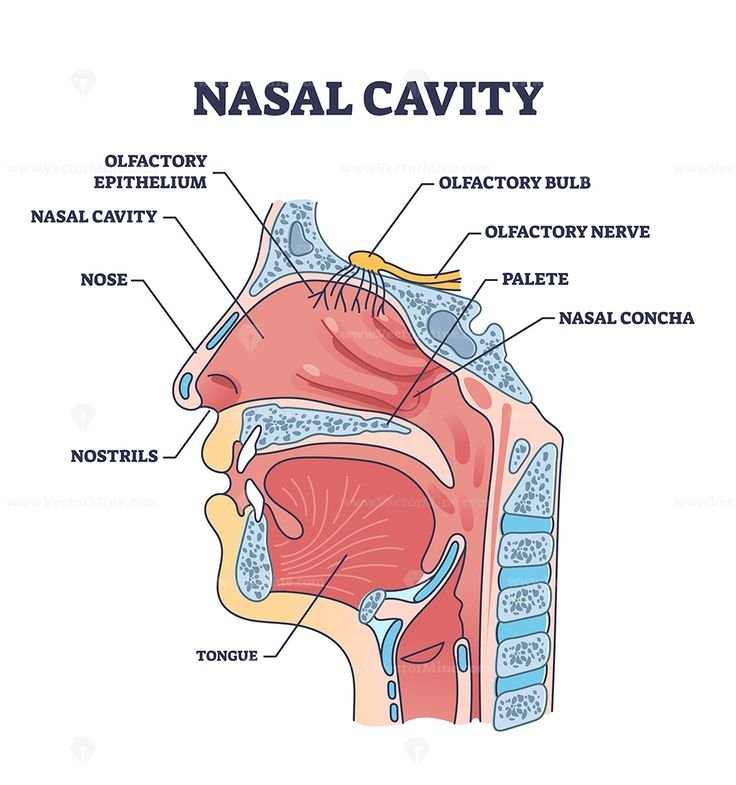
  • Olfaction (Smell)
  • Sensory function
  • Conditioning of Inspired Air
  • Warming of air
  • Humidification of air
  • Filtration/cleaning of inhaled air
  • Removal of dust
  • Removal of microorganisms
  • Pathology of Rhinitis [Nields Mygind et.al].(5)


Figure 2: Anatomy Physiology Nose


Advantages Of Intranasal Delivery :

  • Rapid Onset Of Action
  • Less Drug Degradation
  • High Rate Of Absorption
  • High Patient Compliance
  • Self Administration By Patient
  • Direct Nose To Brain Delivery
  • Non-invasive Drug Delivery.
  • Avoid 1st Pass Metabolism
  • Avoid BBB

Limitations :

  • High Chances Of Drug Elimination
  • Low Bioavailability
  • Irreversible Damage Of Nasal Mucosa
  • Drug Dose Loss Due To Improper Use
  • Mechanical Loss Of Dose Due To Unprpoer Administration Technique
  • Mechanism Of Drug Transport Still Un Clear
  • Drug Elimination Due To Mucocilliary
  • Clearance [MDPI]. (6)

Barriers For Intranasal Delivery :

1] Low Bioavailability of Nasal Drugs

  • The nasal route shows low bioavailability, especially for polar drugs and peptides.
  • Low molecular weight polar drugs show about 10% bioavailability.
  • Peptides and proteins (e.g., insulin, calcitonin) show less than 1% bioavailability.
  • High molecular weight drugs have poor nasal absorption.
  • Drug Transport Pathways

Drugs cross the nasal membrane by:

  • Transcellular route (through cells) paracellular route (between cells).
  • Polar drugs with molecular weight below 1000 Da mainly use the paracellular route.
  • Nasal absorption of polar drugs can be improved by using absorption enhancers.
  • Effect of Polarity and Molecular Weight.
  • Low molecular weight lipophilic drugs → ~100% bioavailability
  • High molecular weight amphipathic drugs → ~10% bioavailability
  • Peptides → < 1% bioavailability

Examples of Absorption Enhancers :

  • Surfactants: Sodium lauryl sulfate, sodium dodecyl sulfate
  • Bile salts: Sodium glycocholate, sodium taurocholate
  • Fatty acids: Linoleic acid
  • Phospholipids: Lysophosphatidylcholine
  • Polymers: Chitosan, poly-L-arginine, poly-L-lysine
  • Others: Fusidic acid derivatives

2] Mucocilliary Clearance :

  • Mucocilliary clearance is the natural cleaning process of the nose.
  • It removes foreign particles but also clears drugs quickly.
  • Non-bioadhesive formulations are cleared within 15–30 minutes.
  • This reduces drug absorption.

3] Enzymatic Degradation:

  • Use bioadhesive excipients.
  • Retain formulation in the anterior (less ciliated) part of the nasal cavity.
  • Enzymatic Degradation
  • Peptides and proteins may be broken down by enzymes in the nasal cavity.
  • This leads to reduced bioavailability.

   Types of Enzymes :

  • Exopeptidases: Break peptide ends (N and C terminals)
  • Endopeptidases: Break internal peptide bonds
  • Solutions
  • Use enzyme inhibitors
  • Use co-solvents
  • Develop prodrugs[Kaur P et.al].(7)

Mechanism Of Drug Absorption [Y.B Chavan et.al].(8) :

1] Transcellular Route (Through the cells)

Drugs pass through the epithelial cells by crossing the lipid membrane. Absorption mainly depends on lipid solubility and molecular size.

a) Passive Diffusion

  • Most common transcellular mechanism
  • Small, lipophilic drugs are absorbed easily
  • Nasal absorption decreases sharply when molecular weight > 1000 Da
  • Absorption depends on:
  • Molecular size
  • Degree of ionization
  • Drug pKa and nasal pH (5.5–6.5)

b) Carrier-Mediated Transport

  • Involves specific transport proteins
  • First suggested by Kimura et al.
  • Transporters present in nasal mucosa include:
  • P-glycoprotein
  • Organic cation transporter
  • Dopamine transporter
  • Amino acid transporters
  • Mainly found in olfactory mucosa
  • Important for transport of amino acids, amines, and cations

c) Endocytic Process

  • Drug/particles taken into cells by vesicle formation
  • Mostly occurs through M cells
  • Useful for vaccine and gene delivery
  • Naked DNA uptake is poor, so:
  • Nanoparticles
  • Hypotonic shock are used to improve uptake

2) Paracellular Route (Between the cells)

Drugs move between adjacent epithelial cells via tight junctions

Occurs by passive diffusion or solvent drag

Suitable for small, hydrophilic, polar, and charged drugs

Effective for drugs with molecular weight < 1000 Da

Transport follows Fick’s First Law of diffusion

Tight junctions are the main barrier limiting this route


Profile of an Ideal Drug Candidate for Nasal Delivery [Kundan A et.al](9)

Parameter

Ideal Requirement

Dose

Low dose required (generally < 25 mg)

Solubility

Sufficient solubility to deliver required dose in 25–150 µL per nostril

Nasal Absorption

Good nasal permeability and absorption

Irritation Potential

Non-irritating to nasal mucosa

Onset of Action

Rapid onset of therapeutic effect

Clinical Justification

Clear advantage of nasal route over other routes

Metabolism

No toxic or harmful nasal metabolites

Odor / Taste

No unpleasant odor or aroma

Stability

Chemically and physically stable in nasal formulation


IN-SITU NASAL GEL :

 Intranasal delivery is one of the most interesting and challenging endeavors facing pharmaceutical scientists. The conventional nasal drug delivery systems including solutions, suspensions, and ointments show drawbacks such as short residence in the nasal cavity, highly variable efficiency, low permeability, and inconvenient administration. In situ gel-forming systems are an interesting polymeric system that exists as flowing aqueous solution before administration and undergoes phase transition to form a viscoelastic gel in a physiologic environment. Benefiting from the merits of both a solution and a gel, an impressive number of in situ gel-forming systems induced by temperature, pH, and ions have been prepared for use in nasal drug delivery in the past few years. In situ gel-forming systems increase the retention of drugs in the nasal cavity, and some of them also show permeation-enhancing capabilities. This article reviews the in situ gel-forming systems used for nasal drug delivery and introduces their gelling mechanisms and other favorable features for intranasal delivery. It also describes the release patterns and drug stability of in situ gels as well as their in vivo performances and local safety following nasal administration [Kothiyal P et.al].(10)

PROPERTIES OF NASAL IN- SITU GEL :

  • It should have a long residence time.
  • It should be low viscous.
  • Free-flowing allows for reproducible administration to the nasal cavity.
  • The nasal in-situ gel follows the phase transition mechanism and shear forces in nasal cavity wall.

APPROACHES OF IN-SITU GELLING SYSTEM :

 Various approaches for an in-situ gelling system:

 A) Stimuli Responsive In-Situ Gelling System

    1. Temperature induced in-situ gel system.

    2. pH induced in-situ gel systems.

 B) Osmotically Induced In-Situ Gelling System

 C) Chemically Induced In-Situ Gelling System

    1. Ionic cross linking.

    2. Enzymatic cross linking. 3. Photo- polymerization.

 D) In situ formation based on the physical mechanism.B [Ban MM et.al].(11)

METHODS OF FORMULATION

1. Cold Method:

In this method, the drug is stirred with a sufficient quantity of double distilled water and kept overnight at 4°C in a refrigerator. The in situ gelling polymers are then added slowly with stirring. The dispersion is stored in a refrigerator till a clear solution is formed and finally volume is adjusted with distilled water. This method is chosen when poloxamer, chitosan or Carbopol is used as a gelling polymer. Considering the fact that polymeric dispersion of poloxamer is in solution at lower temperature and gets converted into a gel at higher nasal temperature because the solubility of polypropylene oxide chain of Poloxamer decreases at a high temperature which results in precipitation or salting-out of a polymer. Similarly, chitosan also requires the low temperature to remain as a solution at room temperature, its hydrophobicity increases temperature.

2. Hot Method:

 With an increase in Journal of Drug Delivery & Therapeutics. 2020; 10(2-s):183-197 B) Suspension Polymerization Spherical hydrogel microparticles with a size range of 1μm to 1mm are prepared by the suspension polymerization method. In the non-solvent solution, the monomer solution is dispersed to form fine droplets and a stabilizer is added in this solution to stabilize the fine droplets. Thermal decomposition of free radicals is used to initiate polymerization. Unreacted monomers, crosslinking agents and initiators are removed by washing from prepared microparticles. This method is used to prepare the hydrogel microparticles of polyvinyl alcohol.

3. Other methods of preparation:

 A) Solution polymerization/cross linking

 B) Suspension polymerization

 C) Polymerization by irradiation

 D) Chemically cross-linked hydrogel

 E) Physically cross-linked hydrogel [Nirmal HB et.al].(12)

DIFFERENT POLYMERS USED FOR THE PREPARATION OF IN-SITU GELLING SYSTEM [Xie H et.al]. (13)


Parameter

Ideal Requirement

Polymer used for pH-sensitive In-situ gelling system

a) Carbopol

B) Polymer used for temperature-sensitive In-situ gelling system

a) Poloxamer

b) Xyloglucan

c)Chitosan


C) Polymer used for ion-sensitive In-situ gelling system-

a) Sodium alginate:

b)Gellangum

c) Pectin

d) Xanthum gum


EVALUATION PARAMETERS OF NASAL IN-SITU GELS  

  1. Clarity
    The clarity of the in-situ gel formulation is evaluated by visual observation. The formulation is inspected against both black and white backgrounds to ensure the absence of any particulate matter or turbidity.
  2. Sol–Gel Transition Temperature and Gelling Time
    For in-situ gel systems, the temperature and pH at which the formulation changes from sol to gel are determined. The time required for gel formation under physiological conditions is also recorded.
  3. Gelling Capacity
    The gelling capacity of the formulation is assessed by mixing the in-situ gel with simulated nasal fluid. The formulation (25 µL) is mixed with 7 µL of nasal fluid, which represents the normal nasal environment, and the gel formation is observed.
  4. Viscosity
    The viscosity and flow behavior of the formulation, both in sol and gel form, are measured using viscometers such as a Brookfield viscometer or cone-and-plate viscometer. This helps in understanding the rheological properties of the polymeric system.
  5. Texture Analysis
    Texture analysis is carried out to evaluate parameters such as firmness, consistency, and cohesiveness of the formulation. These properties indicate the ease of administration of the sol through a syringe and its suitability for in vivo application.
  6. Invitro Drug Release Studies
    In vitro drug release studies for in-situ gels intended for oral, ocular, or intranasal delivery are performed using a plastic dialysis cell. This study helps in determining the drug release pattern from the formulation.
  7. Sterility Testing
    Sterility testing is conducted according to the Indian Pharmacopoeia (IP, 1996). The formulation is incubated for at least 14 days. For bacterial growth, incubation is done at 30–35°C in fluid thioglycolate medium, while for fungal growth, incubation is carried out at 20–25°C in soybean casein digest medium.
  8. Accelerated Stability Studies
    Accelerated stability studies are performed as per ICH guidelines. The formulation is filled in amber-colored vials, sealed with aluminum foil, and stored at 40 ± 2°C and 75 ± 5% relative humidity for a short-term stability assessment.
  9. Appearance
    The appearance of the in-situ nasal gel is examined visually to check clarity and uniformity in both sol and gel states.
  10. pH of Gel
    The pH of the in-situ nasal gel is measured using a calibrated digital pH meter to ensure compatibility with nasal mucosa.
  11. Measurement of Gelation Time
    To measure gelation time, 2 mL of the formulation is taken in a test tube and placed in an oven maintained at 37°C. The time taken for the sol to convert into a gel is recorded.
  12. Water-Holding Capacity
    The water-holding capacity of the formulation is determined by transferring 1 mL of the gel into a pre-weighed centrifuge tube. Then, 250 µL of artificial nasal fluid is added and mixed to evaluate the formulation’s ability to retain water.
  13. InVitro Mucoadhesive Strength:
    Mucoadhesive strength is defined as the force required to detach the formulation from nasal mucosa. It is measured using a modified physical balance method to assess the bioadhesive properties of the formulation.
  14. Differential Scanning Calorimetry (DSC)
    DSC studies are performed to identify possible interactions between the drug and excipients. Thermograms of the formulation stored at 40 ± 2°C and 75 ± 5% RH for two months are recorded. Samples are sealed in aluminum pans and scanned at a heating rate of 10°C per minute over a temperature range of 30–200°C. [J.U.Kute].(14)

Bottom of Form

CONCLUSION

Intranasal drug delivery has emerged as an efficient and patient-friendly route for both local and systemic therapy due to its rapid onset of action, non-invasive nature, high patient compliance, and ability to bypass hepatic first-pass metabolism and the blood–brain barrier. However, the clinical effectiveness of conventional nasal formulations is often limited by low bioavailability, enzymatic degradation, and rapid mucociliary clearance, which significantly reduce drug residence time and absorption.

In situ nasal gel systems offer a promising solution to these challenges by combining the ease of administration of liquid formulations with the prolonged residence time and controlled drug release of gels. Stimuli-responsive polymers such as poloxamers, carbopol, chitosan, alginate, and other polysaccharides enable sol-to-gel transition under physiological conditions, enhancing nasal retention and improving therapeutic efficacy. The incorporation of mucoadhesive polymers, absorption enhancers, and nanocarriers further optimizes drug stability, permeability, and bioavailability.

Overall, in situ nasal gels represent an advanced and versatile drug delivery platform capable of overcoming the limitations of conventional nasal dosage forms. Continued research focused on the development of novel polymers, standardized evaluation methods, and long-term safety studies is expected to expand their clinical applicability, making in situ nasal gels a valuable approach for future nasal and nose-to-brain drug delivery systems.

REFERENCES

  1. Li Q, Cook MT, Dreiss CA. In situ gels for nasal delivery: formulation, characterization and applications. Macromol Mater Eng. 2025;310(3):e202400356. doi:10.1002/mame.202400356.
  2. TN N, DM R. An overview on in-situ nasal gel for drug delivery. Int J Pharm Sci Rev Res.019;11(7):695124.
  3. Chand P, Gnanarajan G, Kothiyal P. In situ gel: a review. Indian J Pharm Biol Res. 2016;4(2):11–19.
  4. Karavasili C, Fatouros DG. Smart materials: in situ gel-forming systems for nasal delivery. Drug Discov Today. 2016;21(1):157–166.
  5. Mygind N, Dahl R. Anatomy, physiology and function of the nasal cavities in health and disease. Adv Drug Deliv Rev. 1998;29(1–2):3–12. doi:10.1016/S0169-409X(97)00058-6.
  6. Intranasal route delivery system [PowerPoint presentation]. M. Pharm; year not specified.
  7. Kaur P, Garg T, Rath G, Goyal AK. In situ nasal gel drug delivery: a novel approach for brain targeting through the mucosal membrane. Artif Cells Nanomed Biotechnol. 2016;44(4):1167–1176.
  8. Gaikwad VM, Dandge B. Nasal absorption of drugs – barriers and solutions. Aurangabad (India): Department of Pharmaceutics, Y.B. Chavan College of Pharmacy; year not specified.
  9. Kapadnis KA, Jadhav PK, Shinkare DM, Gedam SD, Jadhav AG. Nasal drug delivery system. Int J Pharm Sci Rev Res. Year not specified; volume(issue):pages not specified.
  10. Chand P, Gnanarajan G, Kothiyal P. In situ gel: a review. Indian J Pharm Biol Res. 2016;4(2):11–19.
  11. an MM, Chakote VR, Dhembre GN, Rajguru JR, Joshi DA. In situ gel for nasal drug delivery. J Pharm Res. 2018;(March):pages not specified.
  12. Nirmal HB, Bakliwal SR, Pawar SP. In-situ gel: new trends in controlled and sustained drug delivery system. Int J PharmTech Res. 2010;2(2):1398–1408.
  13. Xie H, Li L, Sun Y, Wang Y, Gao S, Tian Y, et al. An available strategy for nasal brain transport of nanocomposite based on PAMAM dendrimers via in situ gel. Nanomaterials. 2019;9(2):article number not specified.
  14. Kute JU, Darekar AB. In situ gel: novel approach for nasal delivery. World J Pharm Pharm Sci. 2014;3(1):187–203.
  15. Prasanth VV, Grace D, Parambi T, Vinod B, Mathew ST, Sheri PS. In-situ nasal gels – an update. Int J Pharm Sci Rev Res. 2016;5(11):591–612.
  16. Nirmal HB, Bakliwal SR, Pawar SP. In-situ gel: new trends in controlled and sustained drug delivery system. Int J PharmTech Res. 2010;2(2):1398–1408.

Reference

  1. Li Q, Cook MT, Dreiss CA. In situ gels for nasal delivery: formulation, characterization and applications. Macromol Mater Eng. 2025;310(3):e202400356. doi:10.1002/mame.202400356.
  2. TN N, DM R. An overview on in-situ nasal gel for drug delivery. Int J Pharm Sci Rev Res.019;11(7):695124.
  3. Chand P, Gnanarajan G, Kothiyal P. In situ gel: a review. Indian J Pharm Biol Res. 2016;4(2):11–19.
  4. Karavasili C, Fatouros DG. Smart materials: in situ gel-forming systems for nasal delivery. Drug Discov Today. 2016;21(1):157–166.
  5. Mygind N, Dahl R. Anatomy, physiology and function of the nasal cavities in health and disease. Adv Drug Deliv Rev. 1998;29(1–2):3–12. doi:10.1016/S0169-409X(97)00058-6.
  6. Intranasal route delivery system [PowerPoint presentation]. M. Pharm; year not specified.
  7. Kaur P, Garg T, Rath G, Goyal AK. In situ nasal gel drug delivery: a novel approach for brain targeting through the mucosal membrane. Artif Cells Nanomed Biotechnol. 2016;44(4):1167–1176.
  8. Gaikwad VM, Dandge B. Nasal absorption of drugs – barriers and solutions. Aurangabad (India): Department of Pharmaceutics, Y.B. Chavan College of Pharmacy; year not specified.
  9. Kapadnis KA, Jadhav PK, Shinkare DM, Gedam SD, Jadhav AG. Nasal drug delivery system. Int J Pharm Sci Rev Res. Year not specified; volume(issue):pages not specified.
  10. Chand P, Gnanarajan G, Kothiyal P. In situ gel: a review. Indian J Pharm Biol Res. 2016;4(2):11–19.
  11. an MM, Chakote VR, Dhembre GN, Rajguru JR, Joshi DA. In situ gel for nasal drug delivery. J Pharm Res. 2018;(March):pages not specified.
  12. Nirmal HB, Bakliwal SR, Pawar SP. In-situ gel: new trends in controlled and sustained drug delivery system. Int J PharmTech Res. 2010;2(2):1398–1408.
  13. Xie H, Li L, Sun Y, Wang Y, Gao S, Tian Y, et al. An available strategy for nasal brain transport of nanocomposite based on PAMAM dendrimers via in situ gel. Nanomaterials. 2019;9(2):article number not specified.
  14. Kute JU, Darekar AB. In situ gel: novel approach for nasal delivery. World J Pharm Pharm Sci. 2014;3(1):187–203.
  15. Prasanth VV, Grace D, Parambi T, Vinod B, Mathew ST, Sheri PS. In-situ nasal gels – an update. Int J Pharm Sci Rev Res. 2016;5(11):591–612.
  16. Nirmal HB, Bakliwal SR, Pawar SP. In-situ gel: new trends in controlled and sustained drug delivery system. Int J PharmTech Res. 2010;2(2):1398–1408.

Photo
Ramole Samruddhi
Corresponding author

Department of Pharmaceutics, P.S.G.V.P.Mandal’ College of Pharmacy, Shahada Maharashtra, India

Photo
Dhankani Mansi
Co-author

Department of Pharmaceutics, P.S.G.V.P.Mandal’ College of Pharmacy, Shahada Maharashtra, India

Photo
Dr. S. Pawar
Co-author

Department of Pharmaceutics, P.S.G.V.P.Mandal’ College of Pharmacy, Shahada Maharashtra, India

: Ramole Samruddhi, Dhankani Mansi, Dr. S. Pawar, In Situ Forming Gels as Advanced Platforms for Nasal Drug Delivery, Int. J. of Pharm. Sci., 2026, Vol 4, Issue 4, 2194-2202, https://doi.org/10.5281/zenodo.19567439

More related articles
Next Generation Incretin Therapies in Obesity: Evo...
Sonale S, Gowtham Arumugam , Revanth R...
A Review on Diuretic Activity, Pharmacological Use...
Mohd Sahil, Sudhir Kumar, Kamal Kishore...
Formulation and Evaluation of Polyherbal Shampoo...
Priyanka Bandichhode, Predeep Chabukswar, Shruti Narayankar, Kris...
Formulation and Evaluation of Natural Herbal Face Wash Tablets Containing Sandal...
Pradeep Chabukswar, Priyanka Bandichhode, Shivani Biskite, Deepak Bhosale...
A Research on Formulation and Evaluation of Herbal Soap...
Gurude Sneha, Shivraj Suryawanshi, Hambire Shradha, Gudde Saraswati, Ghevare Omkar, Gangapure Sakshi...
Virtual Screening of Bioactive Constituents of Lagenaria siceraria as Potential ...
Dinesh Kawade, Gun Chourasia, Shashwati Motghare, Dipak Rinait, Alpana Asnani...
More related articles
Formulation and Evaluation of Polyherbal Shampoo...
Priyanka Bandichhode, Predeep Chabukswar, Shruti Narayankar, Krishnamurthy Kamalapurkar...
Formulation and Evaluation of Polyherbal Shampoo...
Priyanka Bandichhode, Predeep Chabukswar, Shruti Narayankar, Krishnamurthy Kamalapurkar...
