

We use cookies to ensure our website works properly and to personalise your experience. Cookies policy
Tamil Nadu Dr. M.G.R.Medical University, Chennai, Approved by pci New Delhi.
Isoniazid (INH) and rifampin (RIF) had remained the key drugs in the treatment of drug-susceptible Mycobacterium tuberculosis for more than four decades. This study was conducted to evaluate their antibacterial effects individually and in combination using in vitro experiments and mathematical modeling. The MICs of INH and RIF were determined against the H37Rv strain and three clinical strains belonging to the Beijing, Euro-American, and Indo-Oceanic lineages. Time-kill experiments were performed to assess the antibacterial activity of each drug alone and in combination. The Hill equation was used to model the effects of individual drugs, while response-surface modeling was applied to evaluate their combined action. Both drugs showed concentration-dependent antibacterial effects, with RIF demonstrating a stronger concentration dependence near the MIC. The combination of INH and RIF showed synergistic activity against H37Rv, Beijing, and Euro-American strains, whereas an additive effect was observed against the Indo-Oceanic strain. The findings demonstrated the usefulness of quantitative pharmacological modeling for evaluating combinations of antituberculous drugs
TUBERCULOSIS:
Tuberculosis is a chronic granulomatous disease that has more than 1 million cases per year in India. It is caused by bacteria Mycobacterium tuberculosis. Generally, it affects the pulmonary portion of the human body, but it can also affect other parts if it remains. As per WHO statistics for 2014, there were 9.6 million new TB cases globally, to which India was the highest contributor with 2.2 million cases. India has the dubious distinction of being the highest TB burden country for the past many years; where about 600 people die from TB every day. Thus, TB kills more adults in India than any other infectious disease. In 2012 the Government of India has declared TB to be a notifiable disease, so that any doctor who treats a TB patient has to notify it to the Govt. Control and treatment of TB in India is covered under a national programme which provides free treatment to all TB cases. The Revised National Tuberculosis Control Programme (RNTCP) was launched in 1997, and its treatment guidelines have been successively revised, the last time in 2016.Isoniazid is an excellent antitubercular agent and an essential component of all antitubercular drugs. It acts on extracellular as well as on intracellular TB (bacilli present within macrophages) and is equally active in acidic or alkaline medium. It is one of the cheapest antitubercular drugs. Its full therapeutic potential could be utilized only after 1952 when isoniazid was produced to accompany it. Among the available antitubercular drugs Isoniazid has gained prominence due to its proven efficacy, safety, affordability, and additional metabolic benefits. It is recommended by most international guidelines as the initial drug of a choice in patient with tuberculosis.
HISTORICAL BACKGROUND:
Early Development (1910s–1940s):
Isoniazid is a derivative of isonicotinic acid. Compounds related to it were first synthesized in the early 20th century, but their medical importance was not recognized at that time.
Discovery Of Antitubercular Activity (1951–1952):
The antitubercular properties of isoniazid were independently discovered around 1951– 1952 by researchers at pharmaceutical companies such as Bayer, Hoffmann-La Roche, and Squibb.
Introduction Into Clinical Use (1952):
Isoniazid was introduced into clinical practice in 1952, marking a major breakthrough in the treatment of Tuberculosis. It quickly became one of the most effective and widely used anti-TB drugs.
Impact On Tuberculosis Treatment:
Before isoniazid, treatment relied on drugs like Streptomycin and Para-aminosalicylic acid, which had limitations such as toxicity and resistance.Isoniazid significantly improved cure rates and reduced mortality.
Role in Combination Therapy:
Due to rapid resistance when used alone, isoniazid became a key component of multidrug therapy, often combined with Rifampicin and other agents.
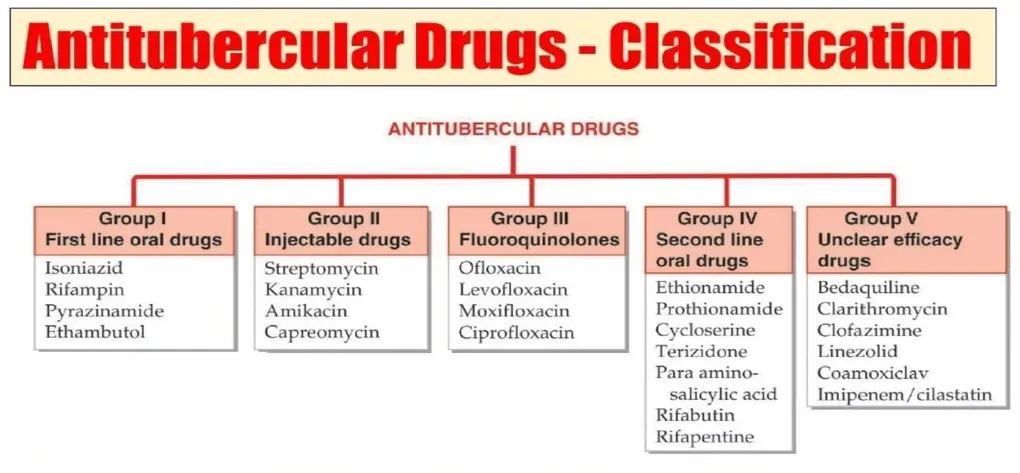
DRUG PROFILE
A) ISONIAZID
CHEMICAL STRUCTURE AND PHYSIOCHEMICAL PROPERTIES:
Isoniazid is chemically known as Isonicotinic acid hydrazide (also called isonicotinyl hydrazine). It has a molecular formula of C₆H₇N₃O and molecular weight 137.14 g/mol and it Contains a pyridine ring (heterocyclic aromatic ring with one nitrogen) Has a hydrazide functional group (CONHNH₂) Substitution at para (4-position). It is odourless and occurs as nearly colourless crystalline solid that is very soluble in water. Taste is slightly sweet at first and then bitter. pH (1% aqueous solution) 5.5-6.5. pH (5% aqueous solution) 6-8. It is prepared by reacting the methyl ester of Isonicotinic acid with hydrazine.
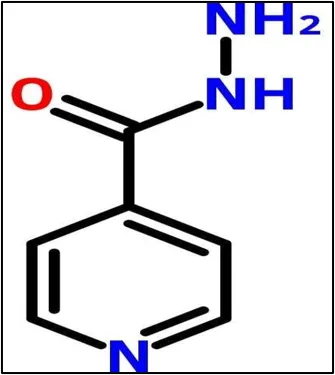
STRUCTURE OF ISONIAZID
CLASSIFICATION:
Isoniazid is pharmacologically classified as a hydrazine derivative antitubercular agent. Isoniazid is categorized under the Biopharmaceutics Classification System (BCS) as a Class III drug, characterized by high aqueous solubility but low intestinal permeability. This classification presents specific challenges in drug delivery, often necessitating high doses and specialized formulation strategies to overcome limited absorption windows in the upper gastrointestinal track.
KEY CLASSIFICATION
Chemical Class: Hydrazine derivative Therapeutic Class: Antitubercular agents.
BCS Class: Class III (High Solubility, Low Permeability) Therapeutic Indication: First line drug for tuberculosis.
MECHANISM OF ACTION:
The primary mechanism of action of INH is inhibition of synthesis of mycolic acids which are unique fatty acid components of mycobacterial cell wall. This may explain the high selectivity of INH for mycobacteria (it is not active against any other microorganism). The lipid content of mycobacteria exposed to INH is reduced. Two gene products labelled ‘InhA’ and ‘KasA’, which function in mycolic acid synthesis are the targets of INH action. INH enters sensitive mycobacteria which convert it by a catalase-peroxidase enzyme into a reactive metabolite. This then forms adduct with NAD that inhibits InhA and KasA. The reactive INH metabolite forms adduct with NADP as well which inhibits mycobacterial DHFRase resulting in interruption of DNA synthesis.
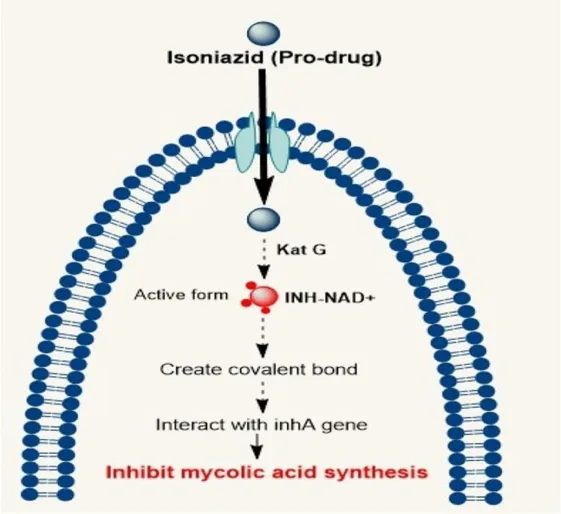
Mechanism of action of Isoniazid
PHARMACOKINETICS:
Isoniazid is completely absorbed orally and penetrates all body tissues, tubercular cavities, placenta and meninges. It is extensively metabolized in liver; most important pathway being Acetylation by NAT2. The acetylated metabolite is excreted in urine. The rate of INH acetylation shows genetic variation.
There are either:
Fast acetylators (30–40% of Indians) — t½ of INH is 1 hr. Slow acetylators (60–70% of Indians) — t½ of INH is 3 hr.
The proportion of fast and slow acetylators differs in different parts of the world. However, acetylator status does not matter if INH is taken daily, but biweekly regimens are less effective in fast acetylators. Isoniazid induced peripheral neuritis is more common in slow acetylators. A hepatotoxic minor metabolite is produced by CYP2E1 from acetyl hydrazine.
PHARMACODYNAMICS:
Isoniazid is a bactericidal agent active against organisms of the genus Mycobacterium, specifically M. tuberculosis, M. bovis and M. kansasii. It is a highly specific agent, ineffective against other microorganisms. Isoniazid is bactericidal when mycobacteria grow rapidly and bacteriostatic when they grow slowly.
DOSE AND ADMINISTRATION:
Forms and strengths:
• 300 mg and 100 mg tablets.
• 100 mg and 50 mg dispersible tablets, to be dispersed in 10 ml water.
Dosage:
• Child under 30 kg: 10 mg/kg (7 to 15 mg/kg) once daily.
• Child 30 kg and over and adult: 5 mg/kg (4 to 6 mg/kg) once daily.
• Maximum dose: 300 mg daily.
ADVERSE EFFECTS
Isoniazid is well tolerated by most patients. Peripheral neuritis and a variety of neurological manifestations (paresthesias, numbness, mental disturbances, rarely convulsions) are the most important dose-dependent toxic effects. These are due to interference with production of the active coenzyme pyridoxol phosphate from pyridoxine, and its increased excretion in urine.Pyridoxine given prophylactically (10 mg/day) prevents the neurotoxicity even with higher doses. Prophylactic pyridoxine must be given to diabetics, chronic alcoholics, malnourished, pregnant, lactating and HIV infected patients, and when high dose INH is used. INH neurotoxicity is treated by pyridoxine 100 mg/day.Hepatitis, a major adverse effect of INH, is rare in children, but more common in older people and in alcoholics (chronic alcoholism induces CYP2E1 which generates the hepatotoxic metabolite). INH must be stopped at the first sign of hepatotoxicity, which is due to dose-related damage to liver cells, and is reversible on stopping the drug. Other side effects are lethargy, rashes, mild anaemia and arthralgia.
CONTRAINDICATION AND PRECAUTIONS:
Do not administer to patients with severe hepatic impairment. May cause:
1. Peripheral Neuropathy
2. Hepatotoxicity
3. Hypersensitivity reaction
4. Optic neuritis
5. Psychiatric reaction
6. Seizure and Depression Monitor closely:
1. pregnant and breastfeeding women; patients with renal impairment, diabetes, malnutrition or HIV infection (increased risk of neuropathy).
2. patients with alcohol dependence (increased risk of neuropathy and hepatotoxicity).
3. patients with chronic hepatic disease or taking rifampicin or ≥ 35 years (increased risk of hepatotoxicity).
4. patients taking antiseizure medications, benzodiazepines (risk of toxicity), warfarin (risk of bleeding). Dose adjustment may be required
B) RIFAMFIN:
It is a semisynthetic derivative of rifamycin B obtained from Streptomyces mediterranei. Rifampin is bactericidal to M. tuberculosis and many other gram-positive and gram-negative bacteria like Staph. aureus, N. meningitidis, H. influenzae, E. coli, Klebsiella, Pseudomonas, Proteus and Legionella. Against TB bacilli, it is as efficacious as INH and better than all other drugs. The bactericidal action of rifampin covers all subpopulations of TB bacilli, but it acts best on slowly or intermittently dividing ones (spurters). M. leprae is also highly sensitive, while MAC and some other mycobacteria, but not M. fortuitum, are moderately susceptible. Both extra- and intracellular bacilli are affected, so that it has good sterilizing and resistance preventing actions.
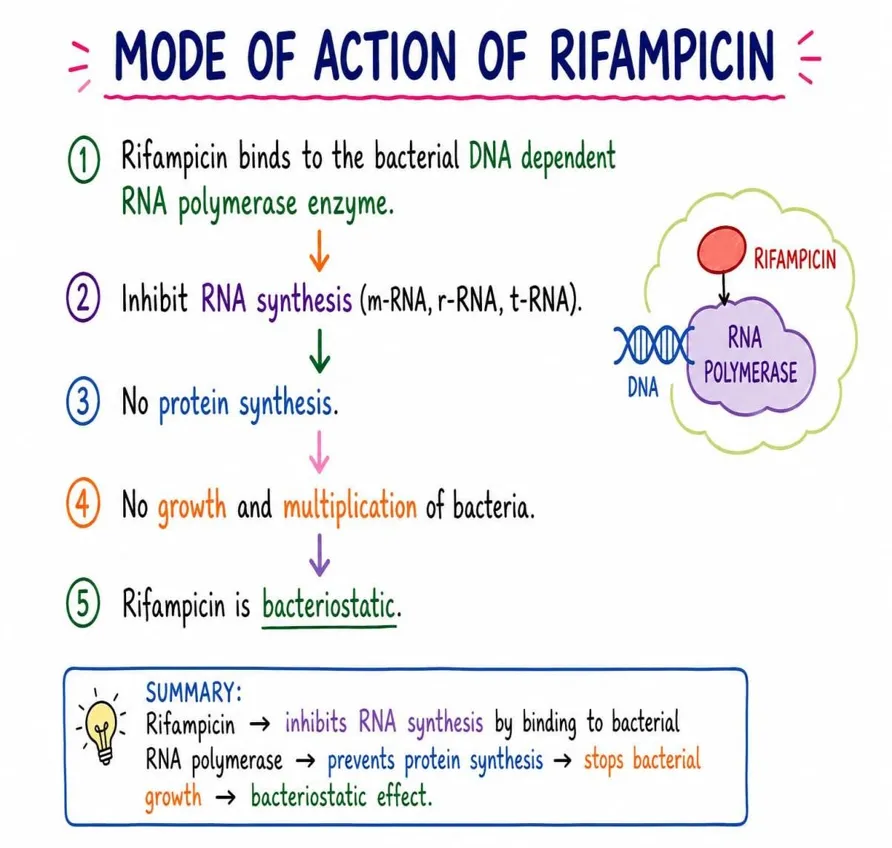
Rifampin interrupts RNA synthesis by binding to β subunit of mycobacterial DNA-dependent RNA polymerase (encoded by rpoB gene) and blocking its polymerizing function. The basis of selective toxicity is that mammalian RNA polymerase does not avidly bind rifampin.
CHEMICAL STRUCTURE OF RIFAMPIN
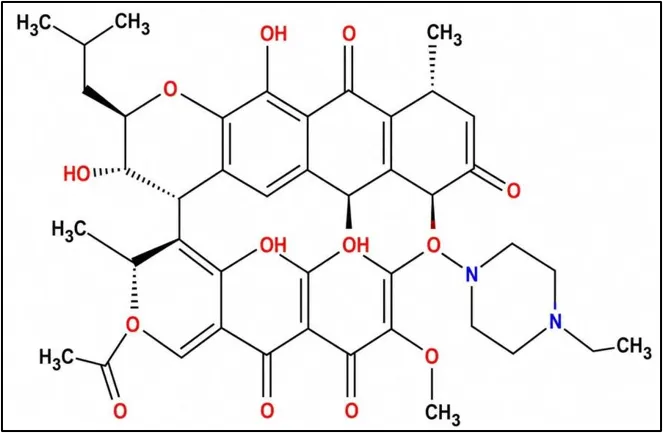
Structure of Rifampin
MECHANISM OF ACTION OF RIFAMPIN:
PHARMACOKINETICS
Rifampin is well absorbed orally (bioavailability is ~70%), but food decreases absorption; it is to be taken in empty stomach. It is widely distributed in the body: penetrates intracellularly, enters tubercular cavities, caseous masses and placenta. Though rifampin crosses meninges, it is largely pumped out from CNS by P-glycoprotein. It is metabolized in liver to an active deacetylated metabolite which is excreted mainly in bile, some in urine also. Rifampin and its deacetyl derivative undergo enterohepatic circulation. The t½ of rifampin is variable (2–5 hours)
INTERACTIONS
Rifampin is a microsomal enzyme inducer—increases several CYP450 isoenzymes, including CYP3A4, CYP2D6, CYP1A2 and CYP2C subfamily. It thus enhances its own metabolism (area under the plasma concentration-time curve is reduced by ~35%) as well as that of many drugs including warfarin, oral contraceptives, corticosteroids, sulfonylureas, HIV protease inhibitors, non-nucleoside reverse transcriptase inhibitors (NNRTIs), theophylline, metoprolol, fluconazole, ketoconazole, clarithromycin, phenytoin, etc. Contraceptive failures have occurred. It is advisable to switch over to an oral contraceptive containing higher dose (50 μg) of estrogen or use alternative method of contraception.
ADVERSE DRUG REACTIONS
The incidence of adverse effects is similar to that with INH. Hepatitis:
• A major adverse effect, generally occurs in patients with preexisting liver disease and is dose related. It is infrequent with ≤ 600 mg/day dose. Development of jaundice requires discontinuation of rifampin, after which it is reversible.
Minor reactios:
• Usually not requiring drug withdrawal and more common with intermittent regimens, are:
Cutaneous:
• Flushing, pruritus + rash (especially on face and scalp), redness and watering of eyes.
Flu like symptoms:
• Chills, fever, headache, malaise and bone pain.
Abdominal cramps:
• Nausea, vomiting, diarrhoea.
Other Serious But Rare Reactions Are:
• Purpura
• Haemolysis
• Shock and renal failure.
PLAN OF WORK
REVIEW OF ARTICLE
TITLE SELECTION
DRUG IDENTIFICATION
COLLECTION OF DRUGS
STUDY OF THERAPEUTIC EFFECT OF DRUG
COLLECTION OF MATERIALS
PREPARATION OF ANTIMICROBIAL SOLUTION
PREPARATION AND MAITENANCE OF BACTERIAL CULTURE
DETERMINATION OF MINIMUM INHIBITORY CONCENTRATION (MIC)
IN VITRO DRUG SUSCEPTIBILITY TESTING
EVALUATIO OF ISONIAZID AND RIFAMPIN ACTIVITY
DISCUSSION
CONCLUSION
MATHODS AND MATERIALS
|
MATERIALS |
DETAILS |
|
Antimicrobials used |
Isoniazid (INH) and Rifampin (RIF) |
|
Source of Drugs |
IndiaMART |
|
Stock solution |
100% Dimethyl sulfoxide (DMSO) |
|
Dilution medium |
Middlebrook 7H9 medium |
|
Medium supplement |
10% OADC (oleic acid, albumin, dextrose, catalase |
METHOD:
Experimental Procedure for MIC Determination of Isoniazid and Rifampin:
1. Preparation of Antimicrobial Solutions
2. Preparation and Maintenance of Bacterial Cultures
3. Determination of Minimum Inhibitory Concentration (MIC)
4. In Vitro Drug Susceptibility Testing
5. Evaluation of Isoniazid and Rifampin Activity
PROCEDURE:
1. Antimicrobials used:
Isoniazid (INH) and Rifampin (RIF)
2. Source of drugs:
IndiaMART
3. Stock solution preparation:
Antibiotics were dissolved in 100% dimethyl sulfoxide (DMSO)
4. Dilution medium:
Middlebrook 7H9 medium
5. Medium supplement:
10% OADC (oleic acid, albumin, dextrose, catalase)
6. Bacterial organism:
Mycobacterium tuberculosis
7. Clinical strains:
Three INH/RIF-susceptible clinical strains
8. Strain lineages:
Beijing, Indo-Oceanic, and Euro-American lineages
9. Reference/control strain:
H37Rv (ATCC 27294)
10. Bacterial culture medium: Middlebrook 7H9 + 10% OADC
11. Cell density estimation:
Plating on Middlebrook 7H10 agar + 10% OADC
12. Incubation for viable count: 3–4 weeks
13. MIC determination method: Standard microdilution method
14. Microtiter plate:
96-well microtiter plate
15. Drug dilution:
Serial 2-fold dilutions of INH and RIF
16. Drug concentration range: 16 to 0.0015 mg/L
17. Final bacterial inoculum: Approximately 5 × 10⁵ CFU/mL
18. Incubation temperature: 37°C
19. Incubation period for MIC: 12–18 days
20. MIC assessment:
Based on visible turbidity
21. MIC definition:
Lowest drug concentration showing no visible turbidity
22. Drug concentration normalization:
INH and RIF concentrations were normalized to their respective MIC values
23. Final expression:
Drug concentrations expressed as multiples
RESULTS:
1. ISONIAZID AND RIFAMPIN MIC VALUES:
The MIC of isoniazid (INH) was 0.03 mg/L for the Beijing and Euro-American strains and 0.06 mg/L for the Indo-Oceanic and H37Rv strains. For rifampin (RIF), the MIC was 0.25 mg/L for the Euro-American strain and 0.12 mg/L for the other strains.
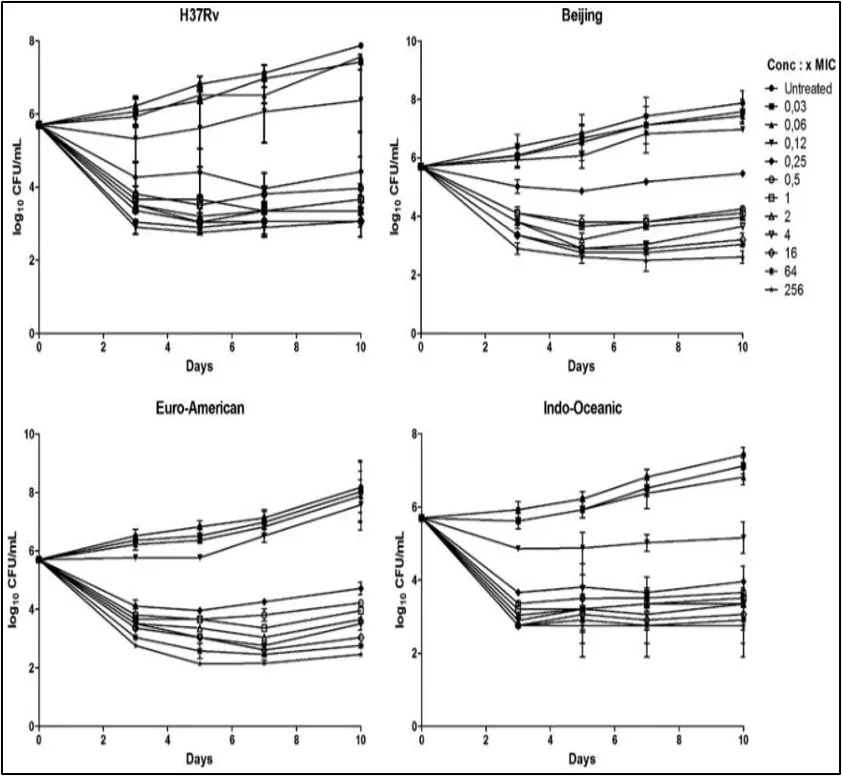
MIC VALUES OF ISONIAZID
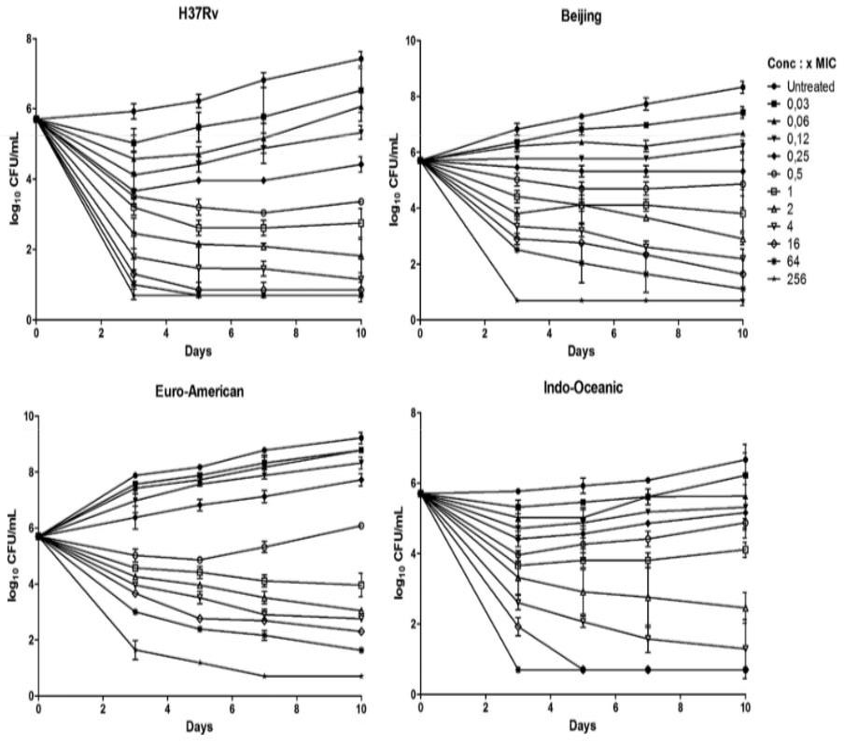
MIC VALUES OF RIFAMPIN
2. SINGLE DRUG PHARMACOKINETICS:
• The time-kill studies showed the antibacterial effects of INH and RIF against all four
M. tuberculosis strains. No significant regrowth was observed with either drug.
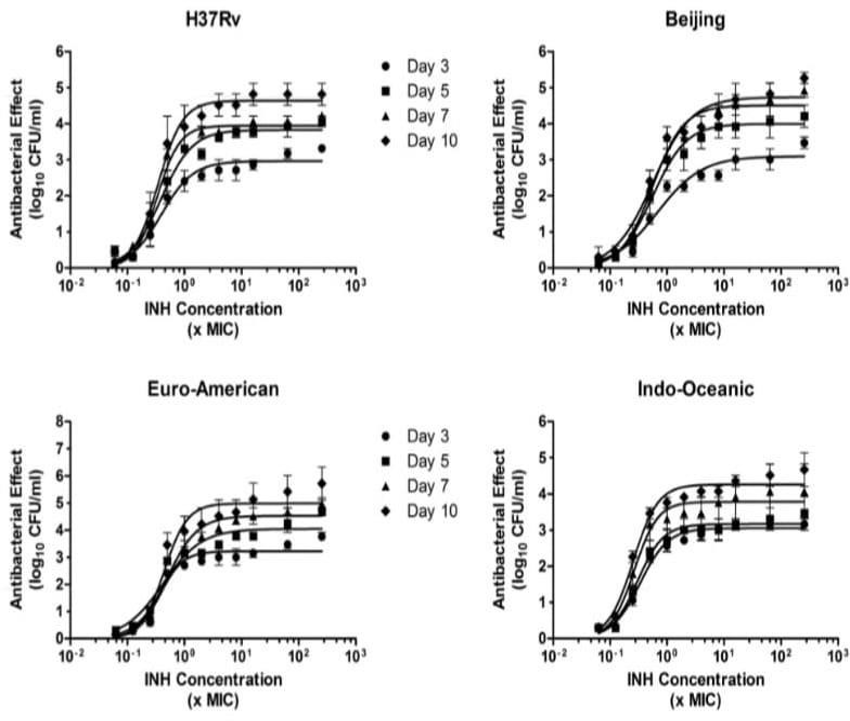
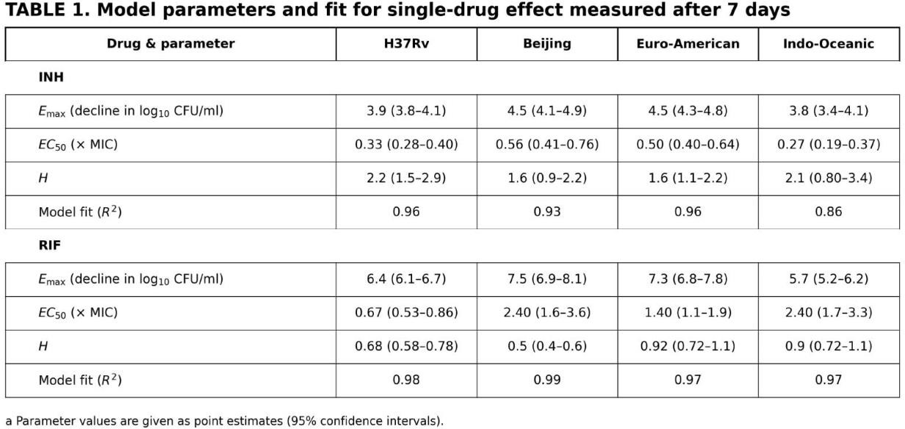
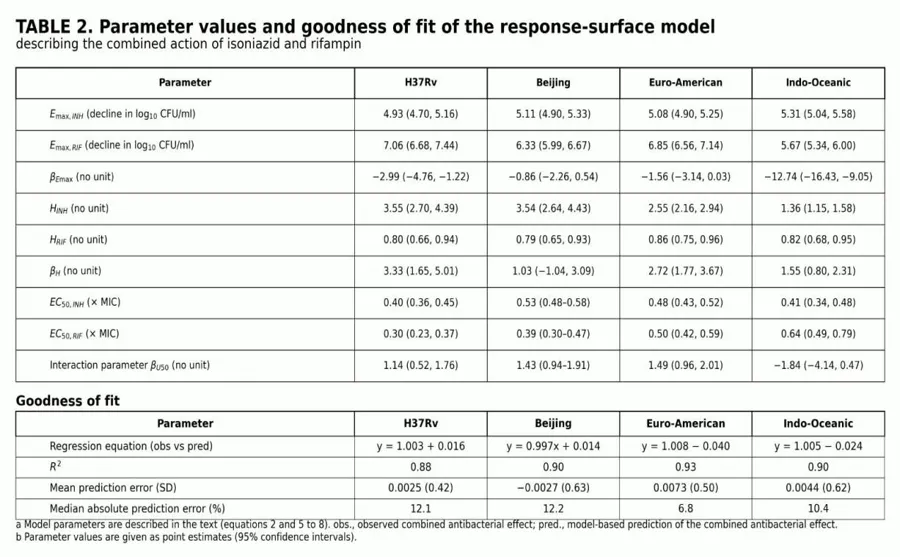
• The Hill pharmacodynamic model fitted the experimental data well, with R² values greater than 0.85. INH and RIF showed different concentration–effect patterns. INH generally showed lower EC₅₀ values and higher Hill coefficients, whereas RIF showeda higher maximum effect (Emax) but generally lower Hill coefficients and potency. The H37Rv strain showed greater sensitivity to RIF because of its lower EC₅₀ value.
• The effect of INH was similar among all four strains. For RIF, the H37Rv strain showed greater potency, while the Indo-Oceanic strain showed the lowest Emax for both drugs.
3. COMBINED EFFECT OF INH AND RIF:
• A total of 328 experimental measurements were used to evaluate the effects of INH and RIF alone and in combination. The Minto response-surface model described the combined antibacterial effect well, with R² ≥ 0.88 and low bias and imprecision.
• Some differences were observed between the parameters obtained from single-drug experiments and those obtained from the combination model. The larger dataset used for the response-surface model (n = 328) provided more reliable parameter estimates than the smaller single-drug dataset.
4. DIFFERENCES BETWEEN M.tuberculosis STRAINS:
• There were no major differences in single-drug activity among the four strains, except for the Emax of RIF, which was lower against the Indo-Oceanic strain.
• However, more important differences were observed in the combined drug effects. The Indo-Oceanic strain showed a significantly lower βEmax value than the other three strains.
5. INTERACTION BETWEEN INH AND RIF:
• The interaction parameter βU50 showed that the combination of INH and RIF produced a synergistic effect against the H37Rv, Beijing, and Euro-American strains, because their βU50 values were positive and their confidence intervals did not include zero.
• In contrast, the βU50 value was negative for the Indo-Oceanic strain, suggesting a different interaction pattern compared with the other strains.
DISCUSSION
1. NEED FOR COMBINATION STUDIES:
• Although TB is routinely treated with multiple drugs, most preclinical studies have mainly examined individual drugs.
• Therefore, identifying effective drug combinations during the preclinical stage is important for improving TB treatment.
2. STUDY OBJECTIVE:
• This study developed an in-vitro experimental and modelling approach to evaluate the combined action of anti-TB drugs.
• The isoniazid (INH) + rifampin (RIF) combination was selected because it has been an important combination in TB treatment for many years.
3. EFFECT OF INH AND RIF:
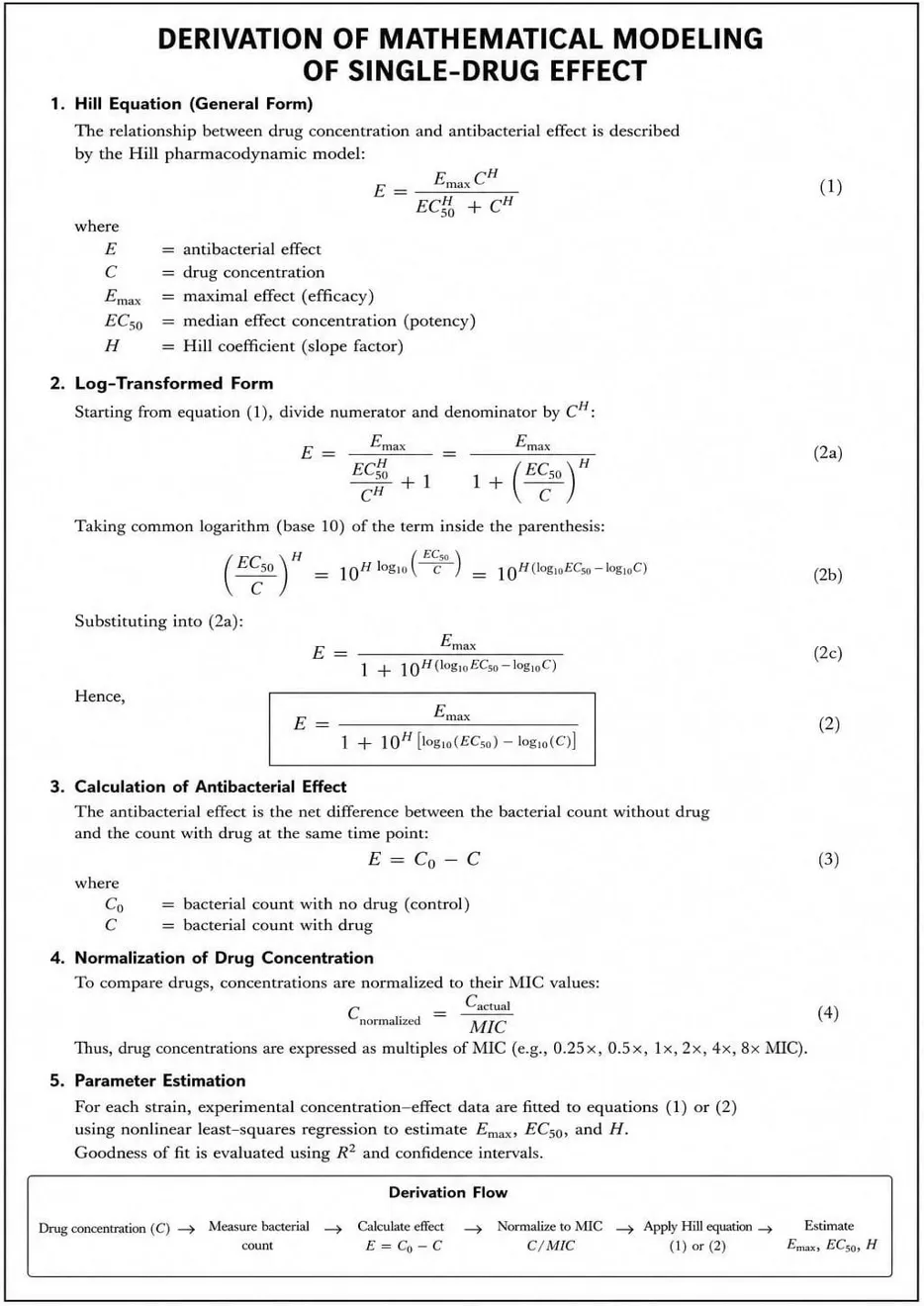
• The antibacterial effects of INH and RIF, both individually and in combination, were well described using the Hill pharmacodynamic model.
• INH showed a steeper concentration–effect curve, whereas RIF showed a lower slope and higher maximum effect (Emax).
4. INH ACTIVITY:
• INH produced a rapid increase in antibacterial activity as its concentration increased.
• Its effect approached the maximum at approximately 1–10 × MIC for all tested strains.
• The EC₅₀ of INH was lower than the MIC, which may be related to differences between MIC testing and time-kill experimental conditions.
5. RIF ACTIVITY:
• The antibacterial effect of RIF increased more gradually with increasing concentration.
• Its maximum effect was not reached at 10 × MIC for all strains, suggesting that higher RIF exposure may further improve its antibacterial activity.
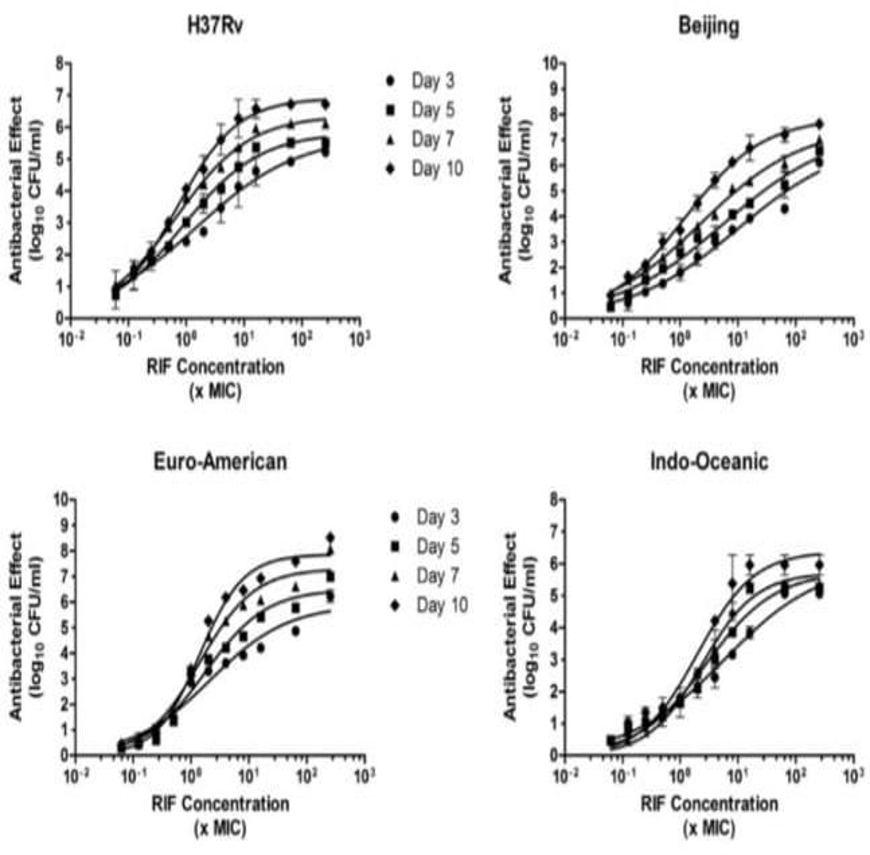
6. EFFECT OF INCREASING RIF CONCENTRATION:
• the Beijing strain, RIF concentrations of 8×, 16×, 64×, 128× and 256× MIC produced
approximately 92%, 95%, 98%, 99% and 99.4% of Emax, respectively.
7. NOVELTY OF STUDIES:
• The major novelty of this study was the use of a response-surface modelling approach to evaluate the combined effect of INH and RIF against clinical M. tuberculosis strains. A total of 328 in-vitro observations were analysed. The Minto model described the drug combination effectively and provided an interaction parameter to identify synergy or antagonism.
8. SYNERGISTIC EFFECT OF INH AND RIF:
• Synergistic activity was observed in the H37Rv, Beijing, and Euro-American strains. In contrast, the Indo-Oceanic strain showed mainly an additive effect. These findings indicate that the combined antibacterial activity of INH and RIF may vary between different M. tuberculosis strains.
9. COMPARISION WITH PREVIOUS STUDIES:
• Earlier studies reported different patterns of drug combinations, including additive, indifferent, and antagonistic effects. Some studies found no additional benefit when INH and RIF were combined, while other combinations such as RIF with moxifloxacin or linezolid showed possible antagonistic effects. Therefore, drug interactions may depend on the drug combination, bacterial state, and experimental conditions.
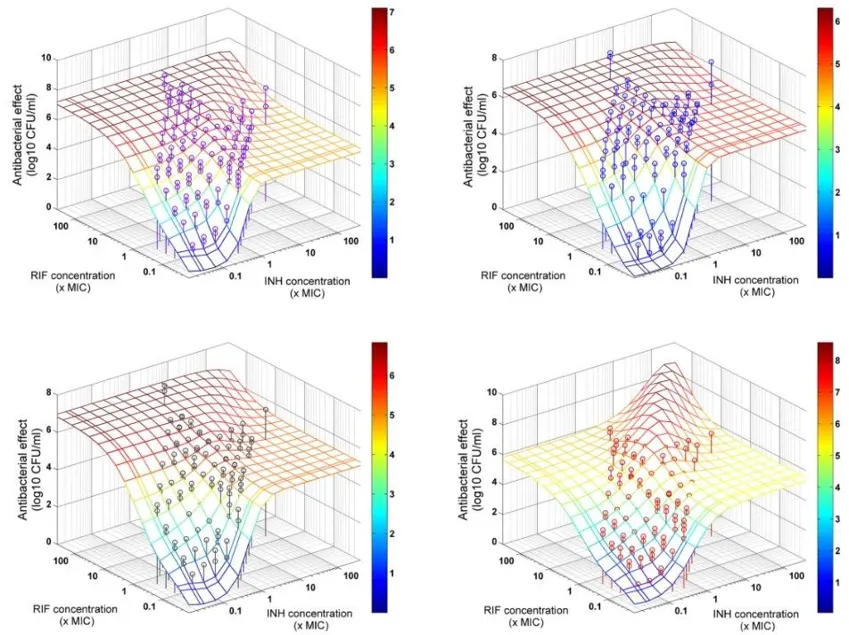
EXPERIMENTAL DATA AND RESPONSE SURFACE MODELS OF THE COMBINED ANTIBACTERIAL EFFECT OF ISONIAZID AND RIFAMPIN
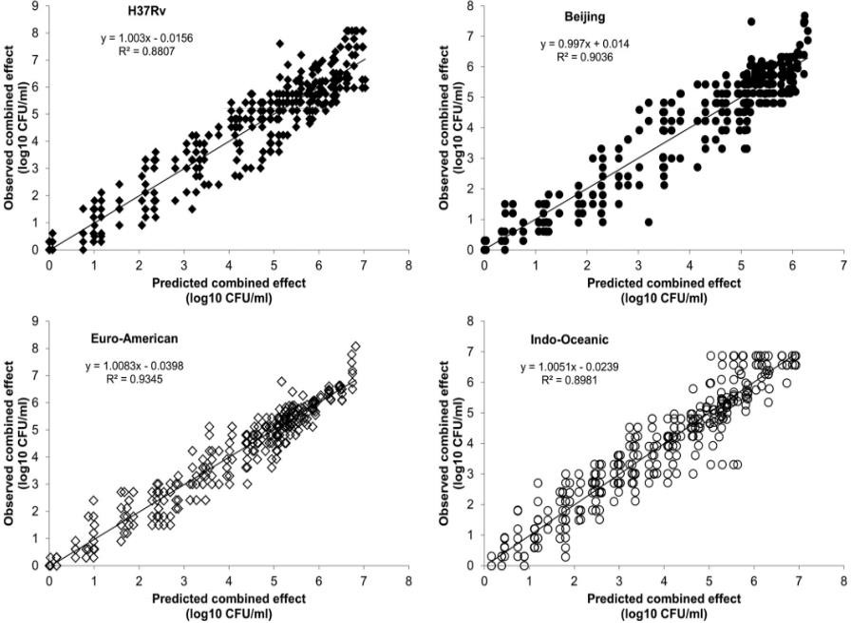
OBSERVED COMBINED EFFECT OF ISONIAZID AND RIFAMPIN VERSUS MODEL BASED PREDICTION FOR MYCOBACTERIUM TUBERCULOSIS
10. CLINICAL AND REASEARCH IMPORTANCE:
• The response-surface approach can help identify effective synergistic combinations before clinical studies. It may also help exclude combinations showing antagonistic effects and support the development of better anti-TB treatment regimens.
11. STUDY LIMITATION:
• The study used static in-vitro conditions, with constant drug concentrations, and the response-surface analysis was based mainly on the day-7 results. Therefore, the findings may differ at other time points. Dynamic models such as the hollow-Fiber system could provide results that better represent drug exposure in patients.
12. LIMITED BACTERIAL CONDITION:
• The study examined only a single population of M. tuberculosis during the exponential growth phase. Other important conditions, such as dormant bacteria, stationary-phase growth, anaerobic conditions, regrowth, and drug-resistant populations, were not investigated.
13. NEED FOR FUTHER RESEARCH:
• This study was mainly a pilot proof-of-concept study. Future research should evaluate the INH–RIF combination in persistent, dormant, and drug-resistant populations and under more clinically relevant experimental conditions.
KILLING KINETICS OF INDIVIDUAL DRUGS:
For each bacterial strain, approximately [5 \times 10^5] CFU/mL of bacteria were prepared in 7H9 Middlebrook medium. The cultures were divided into different groups:
• A growth-control group without antibiotics.
• Groups treated with isoniazid (INH).
• Groups treated with rifampicin (RIF).
The drugs were tested at concentrations ranging from [1/32\times] to [256\times] their MIC. The cultures were incubated in 96-well plates at 37°C.
Samples were collected after 3, 5, 7, and 10 days of drug exposure. Each sample was mixed thoroughly, serially diluted, and plated on 7H10 agar. The number of surviving bacteria was measured as CFU/Ml. Each experiment was repeated twice.
KILLING KINETICS OF THE INH AND RIF COMBINATION:
A similar bacterial inoculum was prepared for testing the combination of INH and RIF. Twelve different concentrations of INH, ranging from 0 to [64\times] MIC, were combined with different concentrations of RIF.The experiment used an incomplete checkerboard design. This means that not every concentration of INH was combined with every concentration of RIF. Depending on the INH concentration, between 2 and 12 RIF concentrations were tested.
At the highest INH concentration, only 0 and 2 mg/L of RIF were used because this condition was expected to act almost like INH alone.
The cultures were incubated under the same conditions as the single-drug experiments. Bacterial survival was measured after 7 days by determining the CFU/mL. A total of 328 measurements were obtained for each strain.
CONCULSION
In future studies, the combined in-vitro effects of INH and RIF against clinical strains of M. tuberculosis will be further quantified and modelled using the response-surface approach. This method will help to confirm the synergistic potential of the INH–RIF combination, which has remained a key component of TB therapy for decades. The findings will support the development of optimized dosing regimens by considering both bacterial characteristics and treatment-related factors. Furthermore, this experimental and modelling approach will provide a useful framework for the preclinical evaluation of new anti-TB drug combinations.
REFERENCES







Sivam S, Abishek R, Logeshwaran M, Gokul S, Prasanna K, Rajalingam D, In Vitro Evaluation of The Combined Antibacterial Activity of Isoniazid and Rifampin Against for Strains of Mycobacterium Tuberculosis, Int. J. of Pharm. Sci., 2026, Vol 4, Issue 8, 5071-5086, https://doi.org/10.5281/zenodo.22201800
 10.5281/zenodo.22201800