

We use cookies to ensure our website works properly and to personalise your experience. Cookies policy
1Mansarovar Global University, Sehore, Madhya, Pradesh- 466111, India.
Background: Asparagus racemosus Willd. is a medicinal plant widely used in traditional systems of medicine and is known to contain several bioactive phytoconstituents, including flavonoids. Among these, rutin is an important flavonoid with diverse pharmacological properties.Objective: The present study aimed to isolate and characterize rutin from the ethyl acetate leaf extract of Asparagus racemosus using physicochemical and spectroscopic techniques.Methods: The ethyl acetate extract of A. racemosus leaves was subjected to chromatographic purification for the isolation of rutin. The isolated compound was characterized based on its physicochemical properties, copper acetate test, thin-layer chromatography (TLC), and Fourier-transform infrared (FTIR) spectroscopy.Results: The isolated compound was obtained as a greenish-yellow powder with a melting point of 188–190°C and was soluble in water. It produced a positive copper acetate test, indicating the presence of a flavonoid. TLC analysis using n-butanol:acetic acid:water (5:3:5) as the mobile phase yielded a single spot with an Rf value of 0.82. FTIR analysis revealed characteristic absorption bands corresponding to hydroxyl, aromatic C–H, aliphatic C–H, and aromatic C=C functional groups, which closely matched the reported spectrum of authentic rutin.Conclusion: The findings confirmed the successful isolation and identification of rutin from the ethyl acetate leaf extract of Asparagus racemosus. The study provides useful information for the phytochemical standardization and quality control of this medicinal plant and supports its potential for future pharmacological investigations.
Medicinal plants have long served as an important source of therapeutic agents owing to their rich diversity of bioactive secondary metabolites. Among these, flavonoids have gained considerable scientific attention because of their antioxidant, anti-inflammatory, antimicrobial, cardioprotective, and anticancer properties (1,2). Rutin (quercetin-3-O-rutinoside), a naturally occurring flavonol glycoside, is one of the most extensively studied flavonoids and exhibits a broad spectrum of biological activities including free radical scavenging, anti-inflammatory, vasoprotective, neuroprotective, and antiproliferative effects (3,4). These pharmacological properties make rutin an attractive candidate for the development of phytopharmaceuticals.
Asparagus racemosus Willd. (Family: Asparagaceae; formerly Liliaceae), commonly known as Shatavari, is a medicinal plant widely employed in Ayurveda and other traditional systems of medicine. Different parts of the plant have been used for the management of gastrointestinal disorders, reproductive ailments, inflammation, diabetes, immune dysfunction, and general debility (5). Phytochemical investigations have revealed that A. racemosus contains steroidal saponins, flavonoids, phenolic compounds, tannins, alkaloids, and glycosides, which contribute to its diverse pharmacological activities (6). Although the roots of A. racemosus have been extensively investigated, comparatively fewer studies have focused on the phytochemical constituents present in the leaves.
Isolation and characterization of bioactive constituents are essential for the standardization, quality control, and therapeutic validation of herbal medicines. Chromatographic techniques such as thin-layer chromatography (TLC) are widely employed for the preliminary identification and purification of phytoconstituents because of their simplicity, reproducibility, and cost-effectiveness (7). Furthermore, Fourier-transform infrared (FTIR) spectroscopy provides valuable structural information by identifying characteristic functional groups present in isolated compounds and is commonly used for the authentication of plant-derived flavonoids (8).
Therefore, the present investigation was undertaken to isolate and characterize rutin from the ethyl acetate leaf extract of Asparagus racemosus Willd. using chromatographic separation followed by physicochemical evaluation, chemical testing, TLC, and FTIR spectroscopy. The findings of this study are expected to contribute toward the phytochemical standardization of A. racemosus leaves and provide a scientific basis for future pharmacological investigations.
MATERIALS AND METHODS
Plant Material
Fresh leaves of Asparagus racemosus Willd. were collected during the flowering season, authenticated by a qualified taxonomist, and a voucher specimen was deposited in the departmental herbarium for future reference. The leaves were washed thoroughly with distilled water, shade dried at room temperature, and pulverized into coarse powder using a mechanical grinder before extraction (9).
Preparation of Ethyl Acetate Extract
Approximately 500 g of the powdered leaves were successively extracted with solvents of increasing polarity using a Soxhlet extraction apparatus. The ethyl acetate fraction was concentrated under reduced pressure using a rotary vacuum evaporator below 45°C to obtain a semisolid extract. The dried extract was stored in an airtight container at 4°C until further analysis (10).
Isolation of Rutin
The concentrated ethyl acetate extract was subjected to repeated chromatographic purification on silica gel. Fractions exhibiting similar chromatographic profiles were pooled, concentrated, and allowed to crystallize. The purified compound was collected, dried under reduced pressure, and preserved in a desiccator for further characterization (11).
Physicochemical Characterization
The isolated compound was evaluated for colour, physical appearance, melting point, and solubility. Melting point was determined using a digital melting-point apparatus without correction. Solubility was assessed in distilled water and commonly used organic solvents according to standard pharmacopoeial procedures (12).
Chemical Identification Test
The purified compound was subjected to the copper acetate test for flavonoids. Development of an emerald green colour after addition of copper acetate reagent was considered indicative of rutin (13).
Thin-Layer Chromatography
Thin-layer chromatography was performed on precoated silica gel 60 F254 aluminium plates. The isolated compound was applied as a narrow band and developed using n-butanol:acetic acid:water (5:3:5, v/v/v) as the mobile phase. After development, the chromatograms were air-dried and examined under ultraviolet light. The retention factor (Rf) value of the isolated compound was calculated and compared with that of authentic rutin (7).
Fourier-Transform Infrared Spectroscopy
Infrared spectral analysis of the isolated compound was carried out using the potassium bromide (KBr) pellet method. Approximately 1–2 mg of the purified sample was mixed with spectroscopic-grade potassium bromide, compressed into transparent pellets, and scanned over the spectral range of 4000–400 cm⁻¹ using an FTIR spectrophotometer. The characteristic absorption bands were interpreted by comparing the observed spectra with published reference data for rutin (8,14).
Statistical Analysis
All physicochemical observations were performed in triplicate wherever applicable, and the results were expressed as mean values.
3. Results
3.1 Isolation and Physicochemical Characterization of the Isolated Compound
Repeated chromatographic purification of the ethyl acetate extract of Asparagus racemosus leaves yielded a greenish-yellow powdered compound. The isolated compound was readily soluble in water and exhibited a melting point of 188–190°C, indicating a high degree of purity (Table 1). The physicochemical characteristics were found to be consistent with the reported properties of rutin.
The isolated compound responded positively to the copper acetate test, producing a characteristic emerald green colour, which is indicative of the presence of flavonoids, particularly rutin. These preliminary observations suggested that the purified compound belonged to the flavonoid class.
Table 1. Physicochemical properties of the isolated compound
|
Parameter |
Observation |
|
Colour |
Greenish-yellow |
|
Nature |
Powder |
|
Melting point |
188–190°C |
|
Solubility |
Soluble in water |
|
Copper acetate test |
Emerald green colour (Positive for rutin) |
3.2 Thin-Layer Chromatographic Analysis
Thin-layer chromatography of the isolated compound was performed using n-butanol: acetic acid: water (5:3:5, v/v/v) as the mobile phase. A single well-defined spot was obtained with an Rf value of 0.82 (Figure 1). The chromatographic behaviour and retention factor were comparable with those reported for authentic rutin, indicating successful isolation of the target flavonoid.
Table 2. Thin-layer chromatographic characteristics of the isolated compound
|
Parameter |
Observation |
|
Stationary phase |
Silica gel TLC plate |
|
Mobile phase |
n-Butanol : Acetic acid : Water (5:3:5) |
|
Number of spots |
One |
|
Rf value |
0.82 |
3.3 Fourier Transform Infrared (FTIR) Spectral Analysis
The isolated compound was characterized by FTIR spectroscopy using the KBr pellet method. The spectrum exhibited characteristic absorption bands at 3363.45 cm⁻¹ (O–H stretching), 3085.70 and 2935.40 cm⁻¹ (aromatic and aliphatic C–H stretching), 2726.45 cm⁻¹ (aldehydic C–H stretching), 1648.40 and 1609.40 cm⁻¹ (aromatic C=C stretching), 1538.34 cm⁻¹ (aromatic skeletal vibration), and 1488.90 cm⁻¹ (C–H bending). The FTIR profile closely matched that of authentic rutin, confirming the identity of the isolated compound (Figure 2, Table 3).
Table 3. FTIR spectral characteristics of the isolated compound
|
S. No. |
Functional group |
Observed wave number (cm⁻¹) |
|
1 |
O–H stretching |
3363.45 |
|
2 |
Aromatic C–H stretching |
3085.70 |
|
3 |
Aliphatic C–H stretching |
2935.40 |
|
4 |
Aldehydic C–H stretching |
2726.45 |
|
5 |
Aromatic C=C stretching |
1648.40, 1609.40 |
|
6 |
Aromatic skeletal vibration |
1538.34 |
|
7 |
C–H bending |
1488.90 |
3.4 Identification of the Isolated Compound
Identification of the purified compound was carried out based on physicochemical characteristics, colour reaction, chromatographic behaviour, melting point, and FTIR spectral analysis. The compound exhibited a melting point of 188–190°C, produced a positive copper acetate reaction, and showed a single TLC spot with an Rf value of 0.82. Furthermore, the FTIR spectrum demonstrated characteristic functional group absorptions corresponding to those reported for rutin. Collectively, these findings confirmed that the isolated phytoconstituent obtained from the ethyl acetate leaf extract of Asparagus racemosus was rutin.
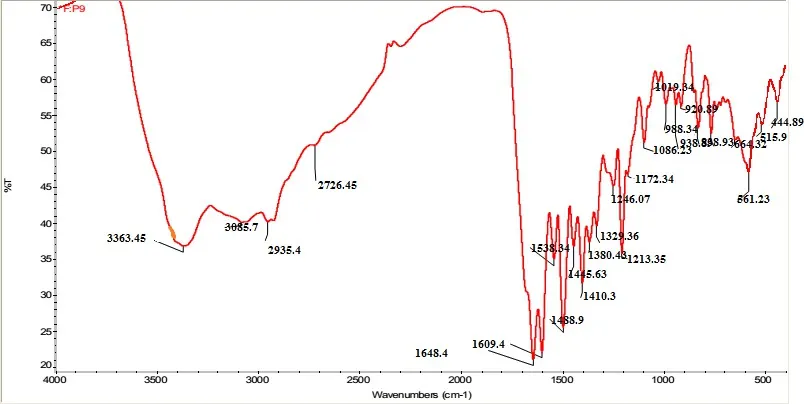
Figure 01: FTIR spectrum of the isolated rutin recorded using the KBr pellet method.
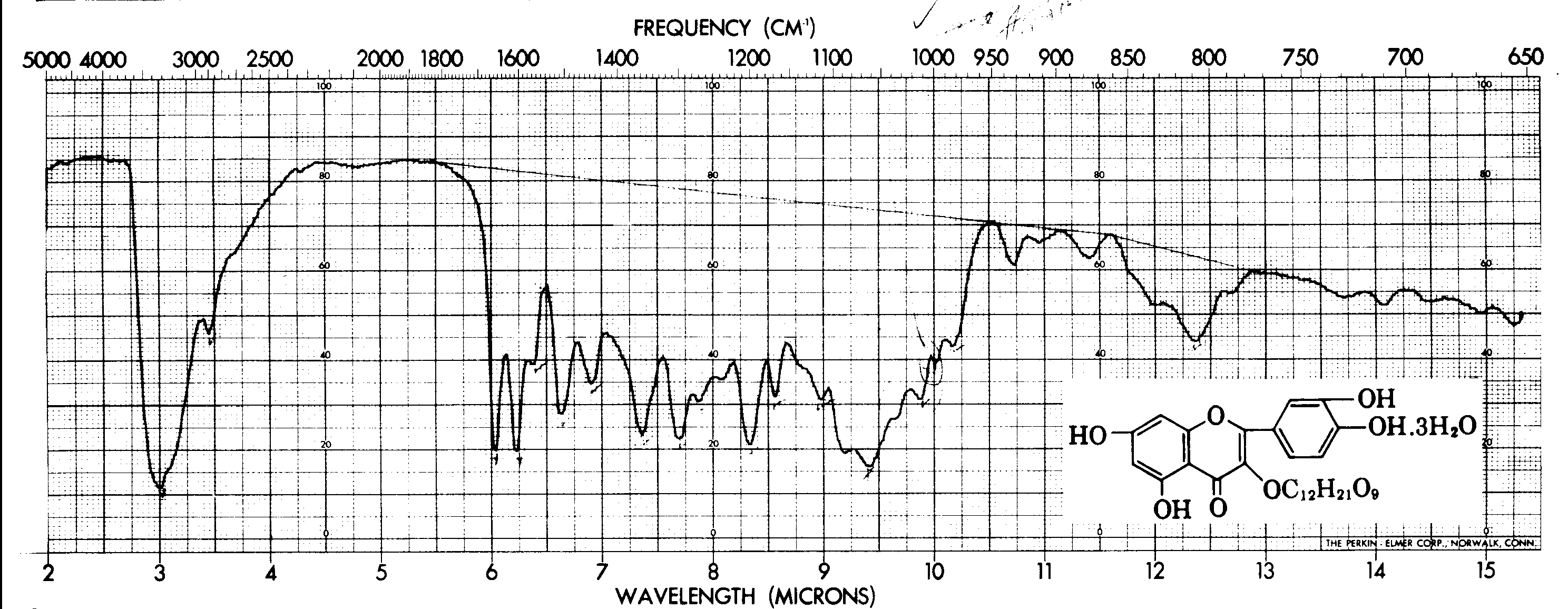
Figure 2. Comparative FTIR spectrum of the isolated compound and the reported standard rutin showing similar characteristic absorption peaks.
4. Discussion
The isolation and characterization of bioactive phytoconstituents are essential for the standardization and quality assessment of medicinal plants and provide scientific evidence for their therapeutic applications. In the present investigation, rutin was successfully isolated from the ethyl acetate leaf extract of Asparagus racemosus and characterized using physicochemical evaluation, chemical testing, thin-layer chromatography (TLC), and Fourier-transform infrared (FTIR) spectroscopy. These analytical approaches are widely accepted as preliminary techniques for the identification and authentication of plant-derived flavonoids (15).
The isolated compound appeared as a greenish-yellow powder and exhibited a melting point of 188–190°C, which is in close agreement with the reported melting range of pure rutin in previous phytochemical studies (16). Melting point determination remains an important criterion for assessing the purity of isolated natural compounds, and the narrow melting range observed in the present study suggests that the isolated compound possessed a high degree of purity. Similar physicochemical characteristics have been reported for rutin isolated from several medicinal plants including Sophora japonica, Fagopyrum esculentum, and Asparagus racemosus (17).
The copper acetate test produced a characteristic emerald green colour, confirming the flavonoid nature of the isolated compound. Copper acetate forms coloured complexes with hydroxyl groups present in flavonoid molecules and has been widely employed as a rapid qualitative test for rutin and structurally related flavonol glycosides (18). Although qualitative colour reactions alone cannot establish structural identity, they provide useful preliminary evidence when combined with chromatographic and spectroscopic analyses.
Thin-layer chromatography remains one of the simplest and most economical analytical techniques for the separation and identification of phytoconstituents. In the present investigation, TLC analysis using n-butanol:acetic acid:water (5:3:5) as the mobile phase produced a single well-defined spot with an Rf value of 0.82, indicating successful purification of the isolated compound. The observed Rf value was comparable with published reports describing chromatographic separation of rutin using similar solvent systems (19). The appearance of a single spot also indicates the absence of detectable impurities, suggesting efficient chromatographic isolation.
FTIR spectroscopy was employed to further confirm the identity of the isolated compound by analysing its characteristic functional groups. The broad absorption band observed at 3363.45 cm⁻¹ corresponds to hydroxyl stretching vibrations, which are characteristic of polyphenolic flavonoids possessing multiple hydroxyl substituents. The absorption bands recorded between 3085 and 2935 cm⁻¹ represent aromatic and aliphatic C–H stretching vibrations, whereas the peaks observed at 1648.40 and 1609.40 cm⁻¹ correspond to aromatic C=C stretching vibrations within the flavonoid nucleus. These spectral features are consistent with previously reported FTIR spectra of authentic rutin (20). Furthermore, the absorption band at 1538.34 cm⁻¹ and the C–H bending vibration observed at 1488.90 cm⁻¹ further support the presence of a flavonol skeleton.
Comparison of the FTIR spectrum of the isolated compound with previously published spectra demonstrated close similarity in both peak position and functional group assignments. Such agreement strongly supports the successful isolation of rutin from the ethyl acetate extract of A. racemosus. Comparable FTIR fingerprints have been reported by several investigators during the characterization of rutin isolated from medicinal plants and commercial reference standards (21).
The successful isolation of rutin from the ethyl acetate fraction also highlights the importance of solvent polarity during phytochemical extraction. Ethyl acetate is considered an efficient solvent for the extraction of moderately polar phenolic compounds and flavonoids because of its favourable selectivity and extraction efficiency (22). The present findings therefore support previous reports indicating that ethyl acetate fractions are often enriched with flavonoids and other polyphenolic constituents.
Rutin has attracted considerable attention because of its broad pharmacological activities, including antioxidant, anti-inflammatory, antimicrobial, cardioprotective, neuroprotective, and anticancer effects. Numerous experimental studies have demonstrated that rutin suppresses oxidative stress, modulates inflammatory cytokines, induces apoptosis, inhibits angiogenesis, and regulates multiple signalling pathways involved in tumor progression (23). Therefore, the successful isolation of rutin from A. racemosus leaves may partially explain several of the pharmacological activities previously reported for this medicinal plant.
Although the present study successfully established the identity of the isolated compound using physicochemical parameters, TLC, and FTIR spectroscopy, additional spectroscopic techniques such as ultraviolet-visible spectroscopy, high-performance liquid chromatography (HPLC), liquid chromatography-mass spectrometry (LC-MS), and nuclear magnetic resonance (¹H- and ¹³C-NMR) would provide more comprehensive structural confirmation. Furthermore, biological evaluation of the isolated rutin against cancer cell lines and experimental tumor models would help establish its contribution to the overall anticancer activity of A. racemosus leaves (24).
Overall, the present findings demonstrate that the ethyl acetate leaf extract of Asparagus racemosus is a rich source of rutin and provide valuable phytochemical information for future quality control, standardization, and pharmacological investigations.
CONCLUSION
The present study successfully isolated and characterized rutin from the ethyl acetate leaf extract of Asparagus racemosus Willd. The isolated compound exhibited physicochemical properties, TLC characteristics (Rf = 0.82), and FTIR spectral features consistent with those of authentic rutin, confirming its identity. These findings demonstrate that A. racemosus leaves are a valuable source of rutin and provide useful information for the phytochemical standardization and quality control of the plant. Further studies involving advanced spectroscopic techniques and biological evaluation are warranted to explore the therapeutic potential of the isolated compound.
REFERENCES

Arun Maurya*, Neetu Sahu, Satish Kumar Sarankar., Isolation, Purification And Spectroscopic Characterization Of Rutin From The Ethyl Acetate Leaf Extract Of Asparagus Racemosus Willd, Int. J. of Pharm. Sci., 2026, Vol 4, Issue 7, 4081-4088. https://doi.org 10.5281/zenodo.21470645
 10.5281/zenodo.21470645