

We use cookies to ensure our website works properly and to personalise your experience. Cookies policy
1Department of Pharmaceutics, SNJB’s Shriman Sureshdada Jain college of pharmacy
Lipid-polymer hybrid nanoparticles (LPHNs) have emerged as a promising platform for transdermal drug delivery by combining the structural stability of polymeric nanoparticles with the biocompatibility and skin affinity of lipid-based carriers. The outer stratum corneum remains the main barrier to effective drug penetration through the skin, but the hybrid core-shell design of LPHNs helps improve permeation, prolong drug release, and enhance retention at the target site. Their lipid shell interacts with skin lipids, while the polymer core provides controlled release and improved drug loading capacity. LPHNs can encapsulate both hydrophilic and lipophilic compounds, making them suitable for a wide range of therapeutic agents, including anti-inflammatory drugs, analgesics, anticancer agents, antimicrobials, and herbal Bioactives. Surface modification and advanced preparation methods further improve targeting efficiency, stability, and clinical potential. Despite these advantages, challenges such as large-scale production, long-term stability, and regulatory approval must still be addressed. Overall, LPHNs represent a versatile and effective nanocarrier system for advancing transdermal therapy and improving patient outcomes.
Transdermal drug delivery systems (TDDS) have become a promising option compared to traditional methods of giving medicine by mouth or through injection. This is because TDDS can release drugs in a controlled manner, help patients take their medicine more consistently, avoid the first-pass effect in the liver, and keep steady levels of the drug in the blood. Using the skin to deliver medicine has several benefits, such as not needing to pierce the skin, being easy to apply, requiring fewer doses, and reducing side effects that affect the stomach. However, the effectiveness of this method is greatly restricted by the outermost part of the skin, known as the stratum corneum. This layer is a strong barrier that prevents most drugs from passing through the skin and reaching the bloodstream in enough amounts to be effective. As a result, only a small number of drugs with the right physical and chemical features can successfully pass through the skin and reach the body's system in therapeutic amounts. [1]
Overcoming the skin's natural barrier has been a major challenge in drug delivery, and scientists have explored many different approaches to tackle this problem. These include chemical penetration enhancers that make the skin more permeable, physical methods like iontophoresis (using electric current) and sonophoresis (using sound waves), microneedles that create tiny pathways, vesicular systems like liposomes, and various nanoparticle-based delivery methods. Among all these options, nanotechnology-based carriers have really caught the attention of researchers and pharmaceutical companies. The reason is simple – these tiny carriers can do so much more than just deliver drugs. They make poorly soluble drugs more soluble, help medicines penetrate deeper into the skin, release drugs at a controlled rate over time, and even target specific areas where treatment is needed most. What makes these nanocarriers particularly special is how they work with the skin rather than against it. Instead of damaging the stratum corneum (the outermost protective layer), they interact with it gently. They help hydrate the skin, change how drugs are distributed within different skin layers, and keep medicines in the skin for longer periods. This means better therapeutic results with lower doses and fewer side effects. Essentially, nanotechnology turns the skin from a stubborn barrier into a more welcoming pathway for medication. [2]
Lipid-based nanocarriers, such as liposomes, solid lipid nanoparticles (SLNs), and nanostructured lipid carriers (NLCs), have been widely studied for use in transdermal drug delivery due to their good biocompatibility and ability to interact with the skin's lipid layers. Although these carriers offer several benefits, they also have certain drawbacks, including the possibility of drug leakage during storage, limited capacity to carry drugs, changes in the physical form of lipids, and a lack of precise control over when the drug is released. On the other hand, polymeric nanoparticles provide better structural stability, longer drug release periods, higher efficiency in drug encapsulation, and improved overall stability. However, their use can sometimes lead to lower biocompatibility, reduced ability to be taken up by cells, and potential toxic effects, which depend on the type of polymer used. [3]
Lipid-polymer hybrid nanoparticles (LPHNs) are next-generation core-shell nanostructures that combine the best features of lipid-based and polymeric carriers. They have a polymeric core wrapped in a lipid layer, stabilized with surfactants or PEG. This design gives them the structural stability and controlled release of polymeric nanoparticles along with the biocompatibility and biomimetic properties of lipid systems. As a result, LPHNs offer superior drug encapsulation, enhanced stability, controlled drug release, longer circulation time in the body, and the ability to cross biological barriers that typically block drug delivery. [4]
In recent years, lipid-polymer hybrid nanoparticles (LPHNs) have gained great attention for transdermal drug delivery. This is because they have the ability to improve drug penetration through the skin, while providing sustained drug release and increased retention at the target site. The lipid layer of these nanoparticles can interact well with the natural lipids of the skin and allow the drug to pass through the intercellular spaces. Meanwhile, the polymer core serves as a storage location, allowing the drug to be released in a controlled manner over time. On top of this, LPHNs are capable of encapsulating water-soluble and fat-soluble drugs including several types of molecules such as small drugs, peptides, proteins, nucleic acids and bioactive compounds from herbal sources. These properties make LPHNs a promising alternative for treatment of skin disorders, inflammatory diseases, wound healing, pain management and systemic delivery of drugs through the skin.
The buzz around lipid-polymer hybrid nanoparticles (LPHNs) is really growing, and there's a solid reason for it. Thanks to major advances in nanotechnology, smarter ways to formulate these particles, and better techniques for making them on a large scale, scientists can now create LPHNs that are highly stable, perfectly consistent, and customizable for specific medical needs. These hybrid nanoparticles are becoming a game-changer for delivering drugs through the skin. They're particularly attractive because they fix the problems that come with traditional transdermal formulas (like patches that don't work well) and also solve the limitations of using just lipid particles or just polymeric particles alone. Instead, LPHNs combine the best features of both, making them a versatile and powerful option for skin-based drug delivery. [5]
Skin Structure and Barrier Function in Transdermal Drug Delivery
The skin is the body's largest organ and serves as the first line of defence against harmful environmental factors, infections, and excessive water loss. Structurally, it has three main layers: the epidermis (outermost), dermis, and hypodermis (innermost). The epidermis's outer layer, the stratum corneum, acts as the primary barrier that limits drug passage across the skin. This layer is made of dead skin cells called corneocytes, surrounded by a highly organized matrix of lipids- mainly ceramides, cholesterol, and free fatty acids. Scientists often describe this arrangement as the "brick-and-mortar" model, where corneocytes are the bricks and lipids are the mortar. This structure creates a strong barrier, especially for hydrophilic (water-loving) and large drug molecules.
Drugs can penetrate the skin through three routes:
However, the stratum corneum's strong barrier function severely limits how effective these pathways are. Because of this, advanced drug delivery systems are needed to boost skin penetration and improve treatment outcomes. [6]
Limitations of Conventional Transdermal Drug Delivery Systems
Traditional transdermal drug delivery methods, such as creams, ointments, gels, and patches, have demonstrated significant therapeutic benefits. However, their effectiveness in clinical settings is often limited because the drugs do not penetrate the skin effectively. Only certain drugs, which possess specific physical and chemical characteristics like low molecular weight, sufficient lipid solubility, and strong potency, can be successfully transported through the skin. In addition, conventional delivery systems typically have limited capacity to hold a large amount of drug, inconsistent absorption rates, may cause skin irritation, and offer limited control over how and when the drug is released. These limitations have led to the development of new approaches using nanocarriers that aim to enhance drug penetration, prolong its presence in the skin, and improve its overall effectiveness. [7]
|
Parameter |
Liposomes |
SLNs |
NLCs |
Polymeric NPs |
LPHNs |
|
Stability |
Moderate |
Good |
Better |
Excellent |
Excellent |
|
Drug Loading |
Moderate |
Low |
High |
High |
Very High |
|
Controlled Release |
Moderate |
Good |
Good |
Excellent |
Excellent |
|
Skin Permeation |
Good |
Good |
Very Good |
Moderate |
Excellent |
|
Biocompatibility |
Excellent |
Excellent |
Excellent |
Good |
Excellent |
Lipid-Polymer Hybrid Nanoparticles (LPHNs)
Lipid-polymer hybrid nanoparticles (LPHNs) are a new group of nanocarriers that integrate the benefits of both polymeric nanoparticles and lipid-based delivery systems. LPHNs generally consist of a biodegradable polymer in the core, a lipid shell surrounding it and surfactants to keep the particles together. The core of the nanoparticle provides stability, controlled drug release and high drug loading. The lipid layer allows the nanoparticles to better compatibility with the body, prevent the leakage of medication and facilitate their interaction with cell membranes. This combination of features means that LPHNs take the best of each system and improve on their weaknesses. These properties have made LPHNs a widely studied option for the transdermal drug delivery. [8,9]
|
Advantages |
Limitations |
|
High drug loading |
Complex manufacturing process |
|
Improved stability |
Higher production cost |
|
Controlled release |
Scale-up challenges |
|
Better skin permeation |
Regulatory hurdles |
|
Encapsulation of hydrophilic and lipophilic drugs |
Long-term stability concerns |
|
Enhanced bioavailability |
Limited clinical studies |
Components of Lipid-Polymer Hybrid Nanoparticles
Polymeric Core
The polymeric core acts as the primary reservoir for the drug and is crucial for controlling the release of the drug and the stability of the nanoparticle. Commonly used polymers are poly(lactic-co-glycolic acid) (PLGA), polycaprolactone (PCL), polylactic acid (PLA), chitosan and alginate. Such materials are characterized by good ability to degrade in the body, compatibility with biological systems and ability to provide a controlled release of the drug, all contributing to better treatment results. [10,5]
Shell (Lipid)
The lipid shell wraps around the polymeric core and helps to improve the biocompatibility of the nanoparticle and its ability to interact with membranes. Typical lipids used in lipid-polymer hybrid nanoparticles (LPHNs) are phosphatidylcholine, lecithin, cholesterol, glyceryl monostearate and stearic acid. This lipid layer allows for better interaction with the lipid structure of the outer layer of the skin, the stratum corneum, and improves drug penetration through the skin. [11]
Surfactants and Stabilizers
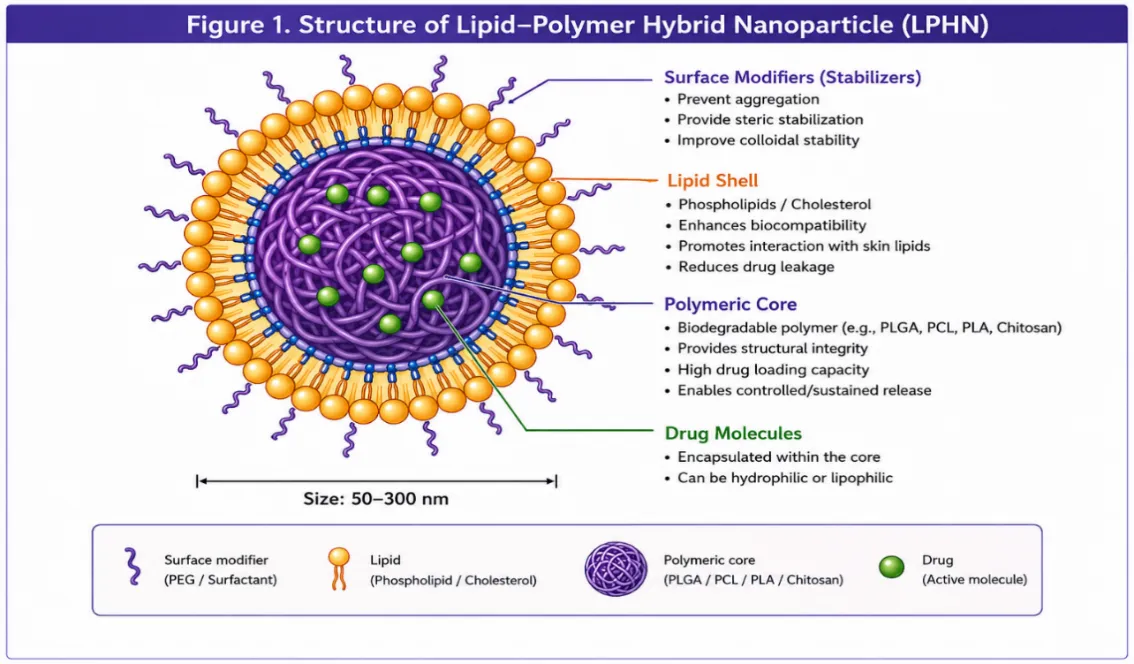
Surfactants and stabilizers are included in formulations to prevent the clumping together of nanoparticles and to enhance the stability of the colloidal system. Frequently used stabilizers include polyethylene glycol (PEG), Tween 80, Poloxamer 188, and polyvinyl alcohol (PVA). Additionally, modifying the surface of nanoparticles with PEG can further improve their stability and extend their time in the bloodstream. [4]
Advantages of Lipid-Polymer Hybrid Nanoparticles for Transdermal Drug Delivery
LPHNs offer certain benefits compared to traditional delivery methods and single nanocarriers. They have a greater capacity to carry drugs, improved efficiency in encapsulating the drug, controlled and steady release of the drug, better physical stability, improved penetration through the skin, and reduced drug breakdown. Additionally, LPHNs can enclose both water-soluble and fat-soluble drugs, thereby expanding their use in treatment. The lipid layer enables direct contact with the skin, while the polymer core functions as a drug storage site, leading to extended therapeutic effects and improved adherence from patients.
Mechanism of Skin Penetration of LPHNs
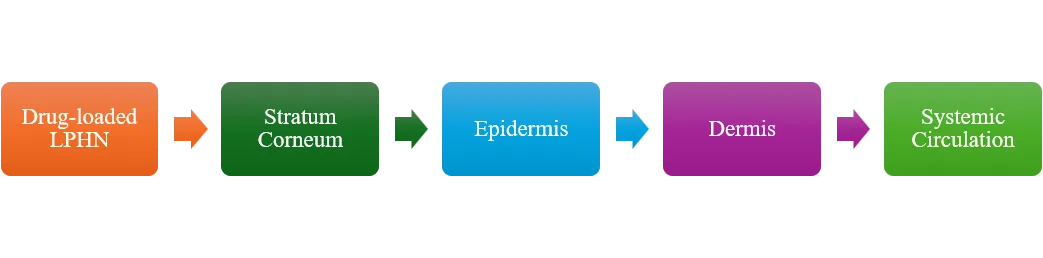
LPHNs contribute to improved transdermal delivery through various mechanisms. The lipid layer interacts with the lipid structures in the stratum corneum, leading to increased skin hydration and alteration of lipid organization. Their small size allows for better interaction with the skin surface and easier passage through the spaces between skin cells and hair follicles. Additionally, the polymer core supports prolonged drug release, helping to maintain a consistent concentration level that enhances drug movement across the skin. These combined effects result in better drug penetration, longer retention, and greater therapeutic effectiveness. [12
Applications of Lipid-Polymer Hybrid Nanoparticles in Transdermal Drug Delivery
LPHNs have been studied for their ability to deliver a variety of therapeutic agents, including anti-inflammatory drugs, pain relievers, cancer treatments, antimicrobial substances, and bioactive compounds from herbs. Many studies have demonstrated that LPHNs can improve the absorption of drugs through the skin and provide a steady release of medications such as diclofenac, ketoprofen, curcumin, resveratrol, paclitaxel, and lidocaine. Additionally, their ability to encapsulate plant-based compounds has expanded their application in therapies based on herbal and natural products. [13]
Challenges and Future Perspectives
There are several challenges that need to be addressed before LPHNs can be effectively used in clinical settings. These challenges involve increasing production volume, ensuring long-term stability of the nanoparticles, achieving consistent results in manufacturing, obtaining regulatory approval, and ensuring that the cost is manageable. Future research should focus on creating nanoparticles that respond to specific stimuli, developing targeted delivery methods, and advancing manufacturing techniques to support large-scale production. As nanotechnology and pharmaceutical science continue to progress, LPHNs are expected to play an important role in the field of transdermal drug delivery. [13,14,15]
Methods of Preparation of Lipid–Polymer Hybrid Nanoparticles
Various methods have been developed to create lipid-polymer hybrid nanoparticles (LPHNs). The selection of a particular technique depends on factors such as the drug's chemical and physical characteristics, the desired size of the nanoparticles, the efficiency of drug encapsulation, the ability to scale up the process, and the intended use of the nanoparticles. Commonly used methods include nanoprecipitation, emulsification-solvent evaporation, double emulsion, high-pressure homogenization, and microfluidic approaches. These techniques facilitate the creation of a polymeric core covered by a lipid layer, resulting in hybrid nanoparticles that offer better stability and enhanced drug delivery outcomes. [13,16,17]
Single-Step Nanoprecipitation Method
The nanoprecipitation technique is a commonly used approach for making LPHNs. In this process, the polymer and the drug are mixed in a water-mixing organic solvent like acetone or acetonitrile. At the same time, lipids and surfactants are dissolved in water and stirred continuously. The organic solution is then carefully added to the water solution, leading to the automatic formation of a lipid layer around the polymer core. This happens because the solvent evaporates and the materials interact at the interface. This method has several benefits, such as being easy to perform, producing consistent results, using less energy, and creating nanoparticles that are all about the same size. [18]
Emulsification–Solvent Evaporation Method
The emulsification-solvent evaporation method requires dissolving the drug and polymer in a water-insoluble organic solvent like dichloromethane or chloroform. This organic solution is then mixed with an aqueous phase containing lipids through high-speed homogenization or ultrasonication to form an emulsion. After the emulsion is formed, the organic solvent is removed by reducing the pressure or by stirring continuously, leading to the creation of lipid-polymer composite nanoparticles. This technique is especially effective for drugs that are not soluble in water and provides high drug encapsulation along with uniform particle size control. [19,20]
Double Emulsion Method
The double emulsion (W/O/W) technique is commonly used to encapsulate hydrophilic substances such as drugs, proteins, peptides, and nucleic acids. Initially, an aqueous solution containing the drug is mixed with an organic polymer solution to create a primary water-in-oil emulsion. This emulsion is then spread into a solution of lipids in water, forming a water-in-oil-in-water emulsion. When the organic solvent is removed, lipid-polymer hybrid nanoparticles (LPHNs) are formed, which effectively trap hydrophilic therapeutic agents. This approach provides a protective environment that prevents degradation and allows for the controlled, extended release of delicate biomolecules. [21]
High-Pressure Homogenization
High-pressure homogenization is a method that can be scaled up and used in industrial settings for the production of lipopolymer nanoparticles (LPHNs). In this process, a mixture composed of polymer, lipid, and drug is forced through a narrow gap under high pressure. The intense shear forces and cavitation that occur during this process help to reduce the size of the particles and promote the creation of uniform nanoparticles. This technique is beneficial for large-scale manufacturing and produces nanoparticles that are highly reproducible and stable. [22]
Microfluidic Technology
Microfluidic technology has become a highly effective method for the controlled production of LPHNs. It involves the precise mixing of polymer and lipid solutions within microchannels, which allows for the controlled formation of nanoparticles. This technique provides excellent control over the size, shape, and consistency of the nanoparticles, while also reducing variations between different batches. Because of its ability to scale and its high level of precision, microfluidics has attracted significant interest for the development of nanomedicines that can be used in clinical settings. [23]
Recent Advances and Applications of Lipid–Polymer Hybrid Nanoparticles in Transdermal Drug Delivery
Significant progress in nanotechnology has broadened the use of lipid–polymer hybrid nanoparticles (LPHNs) for delivering drugs through the skin. The special structure of LPHNs, which combines a lipid layer with a polymer core, offers benefits like better drug encapsulation, improved penetration through the skin, controlled release of the drug, and greater stability than traditional methods. These features have made it possible to deliver various types of medicines effectively, such as anti-inflammatory drugs, pain relievers, cancer treatments, antimicrobial agents, and compounds from plants. Recent research has shown that LPHNs can bypass the outermost layer of the skin, called the stratum corneum, and deliver drugs more effectively to deeper layers, thus improving treatment outcomes while reducing harmful side effects that affect the whole body. [5]
Delivery of Anti-Inflammatory Drugs
Conditions like rheumatoid arthritis, osteoarthritis, and other inflammatory issues often need long-term treatment. Taking nonsteroidal anti-inflammatory drugs (NSAIDs) by mouth can cause problems such as stomach irritation, liver damage, and side effects throughout the body. LPHNs offer a better option for delivering anti-inflammatory drugs through the skin because they can release the drug slowly over time and improve how well it passes through the skin.
Studies have found that drugs like diclofenac, ketoprofen, ibuprofen, and celecoxib can be successfully packed into LPHNs. The lipid layer helps the nanoparticles mix with skin lipids, making it easier for the drug to pass through, while the polymer part ensures a steady release of the medicine. As a result, the amount of drug absorbed by the body increases, the medicine stays effective for longer, and the need for frequent dosing is reduced. [11]
Delivery of Analgesic Drugs
Using analgesics through the skin can be more effective in managing pain because it provides a steady release of the drug and avoids the ups and downs in drug levels in the blood. LPHNs have been studied for delivering local anaesthetics like lidocaine and tramadol. Their small size allows them to interact closely with the skin, helping them move through the spaces between skin cells. The slow release of the drug from the polymer core helps provide longer-lasting pain relief and makes it easier for patients to follow their treatment plan.
Delivery of Anticancer Agents
Treating skin cancers and tumours is difficult because many chemotherapy drugs don’t reach the affected areas well and can cause harmful side effects throughout the body. LPHNs have shown great potential in delivering anticancer drugs like paclitaxel, docetaxel, curcumin, and doxorubicin. These hybrid nanoparticles increase drug stability, help the medicine stay within the tumour for longer, and allow for controlled release. Moreover, modifying the surface of these nanoparticles can help target the cancer cells more effectively, leading to better treatment results while protecting healthy tissues. [24,25]
Delivery of Antimicrobial Agents
Infections of the skin caused by bacteria, fungi, and other microbes are a major health issue. LPHNs are being increasingly considered for delivering antimicrobial drugs because they can better transport the medicine into the infected area and keep the drug active for a longer time. Drugs such as ciprofloxacin, amphotericin B, and mupirocin have been successfully packed into these hybrid systems. These formulations have shown stronger antimicrobial action, better stability of the drug, and less frequent dosing.
Delivery of Herbal Bioactive Compounds
Many natural products and plant-based ingredients have useful health benefits but face challenges like poor solubility in water, low absorption in the body, and difficulty passing through the skin. LPHNs have been widely explored as a way to carry these bioactive compounds, such as curcumin, resveratrol, quercetin, and extracts from Centella asiatica. Encapsulating these compounds in LPHNs improves their stability, protects them from breaking down, and helps them pass through the skin more efficiently. These improvements have increased the potential of herbal medicines for uses like healing wounds, controlling inflammation, providing antioxidant protection, and promoting skin repair.
Application in Wound Healing
Healing wounds is a complex process that involves inflammation, tissue growth, and the rebuilding of damaged skin. LPHNs have shown promise in managing wounds due to their ability to provide a steady release of drugs, help the medicine stay in the skin longer, and promote healing. By including growth factors, antimicrobial agents, and plant-based extracts in these nanoparticles, treatments can speed up wound healing, reduce inflammation, and encourage the production of collagen. Recent studies suggest that LPHNs can be effective tools for advanced wound care and regenerative medicine.
Application in Psoriasis and Other Skin Disorders
Conditions like psoriasis, eczema, acne, and other chronic skin diseases need ongoing treatment and often don’t respond well to standard topical treatments. LPHNs help medicines get deeper into the skin and work for a longer time. Their ability to keep the drug in specific skin layers while reducing the amount that enters the bloodstream makes them a good choice for treating various inflammatory and autoimmune skin conditions. Preclinical studies have shown better treatment results and fewer side effects with LPHNs. [24]
|
Drug |
Polymer |
Lipid |
Major Findings |
|
Diclofenac |
PLGA |
Lecithin |
Improved skin permeation and sustained release |
|
Ketoprofen |
PCL |
Phosphatidylcholine |
Enhanced bioavailability and prolonged therapeutic effect |
|
Lidocaine |
PLGA |
Cholesterol |
Improved transdermal permeation and analgesic efficacy |
|
Curcumin |
PLGA |
Lecithin |
Enhanced stability and antioxidant activity |
|
Paclitaxel |
PLA |
Lipid mixture |
Increased skin retention and anticancer efficacy |
|
Ciprofloxacin |
Chitosan |
Lecithin |
Improved antimicrobial activity |
|
Resveratrol |
PLGA |
Phospholipids |
Enhanced skin deposition and sustained release |
|
Centella asiatica Extract |
PLGA/Chitosan |
Lecithin |
Improved wound healing and skin regeneration potential |
Future Prospects of Lipid–Polymer Hybrid Nanoparticles
The future outlook for lipid-polymer hybrid nanoparticles (LPHNs) in transdermal drug delivery appears very positive. Progress in nanotechnology, surface modification techniques, and pharmaceutical production methods is anticipated to support the creation of multifunctional hybrid nanoparticles that offer better targeting and improved therapeutic effectiveness. New strategies such as ligand-based targeting, responsive systems triggered by environmental changes, and personalized nanomedicine could further boost the practical application of LPHNs in clinical settings. Moreover, combining LPHNs with microneedles, hydrogels, and intelligent transdermal patches is seen as a promising way to improve drug delivery efficiency and patient results. [5]
Unique Features and Emerging Trends of Lipid–Polymer Hybrid Nanoparticles for Transdermal Drug Delivery
Why Lipid–Polymer Hybrid Nanoparticles Are Better Than Traditional Nanocarriers
Many different nanocarrier systems, including liposomes, solid lipid nanoparticles (SLNs), nanostructured lipid carriers (NLCs), nano emulsions, and polymeric nanoparticles, have been widely studied for delivering drugs through the skin.
However, each of these systems has its own limitations. Liposomes can be unstable and may leak drugs, while polymeric nanoparticles may not interact well with skin cells and might be less safe. Lipid–polymer hybrid nanoparticles (LPHNs) combine the best aspects of both lipid-based and polymeric systems. The polymeric core gives the nanoparticles a strong structure and helps release drugs slowly over time. The lipid outer layer improves how well the nanoparticles work with the skin, making them more compatible and better at getting through the skin. As a result, LPHNs are more effective at carrying and delivering drugs, and they provide better results compared to traditional nanocarriers. [26]
Role of LPHNs in Getting Past the Stratum Corneum Barrier
The outer layer of the skin, called the stratum corneum, is the biggest challenge for delivering drugs through the skin. LPHNs have unique properties that help them pass through this barrier. The lipid layer of the nanoparticles interacts with the skin’s natural lipids, causing a temporary change in the structured lipid layer of the stratum corneum. At the same time, the small size of the nanoparticles increases their surface area and allows them to come into close contact with the skin. This dual action makes it easier for drugs to move deeper into the skin. [5]
Potential of LPHNs for Targeting Hair Follicles
Hair follicles have become an important pathway for delivering drugs through the skin. Because of their small size and surface properties, LPHNs can collect in hair follicles and sebaceous glands. This allows the drugs to be stored in these areas and released slowly, leading to higher concentrations of the drug near the target site. This feature is especially useful for treating conditions like acne, hair loss, folliculitis, and localized skin infections. This ability sets LPHNs apart from many standard topical treatments. [28,29]
Stimuli-Responsive Lipid–Polymer Hybrid Nanoparticles
New developments have led to the creation of LPHNs that respond to specific signals in the environment, such as changes in pH, temperature, enzymes, light, magnetic fields, or redox conditions. These smart delivery systems offer more control over when drugs are released, which can improve treatment effectiveness and reduce unwanted side effects. pH-sensitive LPHNs are especially useful for treating inflammatory skin conditions and certain types of cancer, since these tissues often have different pH levels compared to healthy tissues. [14]
Surface Functionalization for Improved Targeting
Modifying the surface of LPHNs has greatly improved their performance. Adding ligands, antibodies, peptides, aptamers, or other molecules to the surface helps the nanoparticles target specific cells and tissues. Surface-modified LPHNs can accumulate in damaged areas of the body, enabling more precise drug delivery. A common method is using polyethylene glycol (PEG) to coat the nanoparticles, which increases their stability and helps them stay in the bloodstream longer. Future transdermal therapies are likely to rely heavily on these targeting strategies. [29]
LPHNs for Delivering Herbal Medicines
One exciting use of LPHNs is in delivering bioactive compounds from herbal medicines. Many plant-based compounds are highly effective but face issues like poor solubility in water, difficulty entering the skin, and quick breakdown. By enclosing these compounds in LPHNs, their stability and ability to be absorbed by the body are greatly improved. Examples include curcumin, resveratrol, quercetin, catechins, and extracts from Centella asiatica. These compounds have shown better therapeutic results when delivered using LPHNs. This field has gained a lot of attention due to increasing interest in natural and plant-based treatments. [30,31]
Combining LPHNs with Advanced Transdermal Technologies
Recent studies have focused on integrating LPHNs with modern transdermal delivery methods like microneedles, hydrogels, transdermal patches, and 3D-printed systems. These combined approaches can enhance how well the skin absorbs the drug and improve the drug’s effect. For instance, using microneedles creates small skin channels that allow LPHNs to reach deeper layers and work more effectively. Similarly, embedding LPHNs in hydrogels helps them release drugs over time, making them stay on the skin longer. [32]
Clinical Use and Commercial Potential of LPHNs
Even though LPHNs have shown promising results in lab studies, very few products based on these nanoparticles are currently available for use in clinics. Challenges such as making them on a large scale, getting them approved by regulatory agencies, keeping them stable, and maintaining consistent quality are holding back commercial applications. However, improvements in manufacturing techniques, such as microfluidics, continuous processing, and quality-by-design methods, are making large-scale production possible. Because of their versatility and strong therapeutic potential, LPHNs are seen as one of the most promising nanocarrier systems for future transdermal drug delivery. [13]
Research Gaps and Future Outlook
Although there has been significant progress with LPHNs, several areas still need more research.
Future studies should focus on:
Addressing these issues will help bring LPHNs from research labs into real-world pharmaceutical products and broaden their use in next-generation transdermal treatments.
Preparation of Lipid–Polymer Hybrid Nanoparticles (LPHNs)
Lipid–polymer hybrid nanoparticles (LPHNs) are created by combining the beneficial characteristics of polymeric nanoparticles with those of lipid-based carriers. A range of methods have been developed to produce hybrid nanoparticles that have specific features such as size, encapsulation efficiency, stability, and controlled drug release. The selection of the method depends on the physical and chemical properties of the drug, the polymer used, the lipid composition, and the intended therapeutic purpose. Some of the commonly used methods include single-step nanoprecipitation, emulsification-solvent evaporation, double emulsion, spray drying, and microfluidic approaches. [13]
1. Single-Step Nanoprecipitation Method
The single-step nanoprecipitation method is a widely utilized approach for fabricating LPHNs. In this process, the drug and polymer are dissolved in a water-miscible organic solvent such as acetone, ethanol, or acetonitrile. Meanwhile, lipids and surfactants are mixed in an aqueous solution at a temperature above the melting point of the lipid. The organic solution is then slowly added to the aqueous phase while continuously stirring. As the solvent spreads into the aqueous phase, the polymer comes out of solution to form the core, while the lipids organize around the core, forming a stable hybrid nanoparticle system. This method is straightforward, easy to repeat, and useful for manufacturing on a large scale. [4,33]
2. Emulsification–Solvent Evaporation Method
The emulsification–solvent evaporation method is often used for encapsulating hydrophobic drugs. In this method, the drug and polymer are dissolved in a water-immiscible organic solvent like dichloromethane or chloroform. This organic mixture is then dispersed into an aqueous solution containing lipids and surfactants through homogenization or ultrasonication. The formed emulsion is further treated by evaporating the solvent under reduced pressure or with continuous stirring. As the solvent disappears, the polymer precipitates to create the nanoparticle core, while the lipid layer forms around it to produce LPHNs. This method typically results in high encapsulation efficiency and uniform particle sizes. [4]
3. Double Emulsion Method (W/O/W)
The double emulsion technique is particularly helpful for encapsulating hydrophilic drugs, peptides, proteins, and nucleic acids. The process begins by emulsifying an aqueous solution of the drug into an organic solution containing the polymer, forming a primary water-in-oil (W/O) emulsion. This emulsion is then divided into an external aqueous lipid solution to create a water-in-oil-in-water (W/O/W) emulsion. After solvent removal, lipid–polymer hybrid nanoparticles are produced. This method provides excellent protection for sensitive biomolecules and allows for a controlled release of the drug. [34]
4. High-Pressure Homogenization Method
High-pressure homogenization is a scalable and widely used technique in pharmaceutical production. It involves passing a mixture containing the drug, polymer, lipid, and stabilizers through a narrow gap at very high pressure. The intense mechanical forces, including shear and cavitation, reduce the size of the particles and assist in forming hybrid nanoparticles. This technique results in nanoparticles with a narrow size range and good consistency, making it appropriate for large-scale manufacturing. [4,35]
5. Spray Drying Method
Spray drying is a single-step process used to produce dry, powdered LPHNs. A formulation containing the drug, polymer, lipid, and stabilizers is atomized into a heated chamber where the solvent evaporates quickly. The resulting dry particles are collected using a cyclone separator. Spray drying offers benefits such as better long-term storage, easier transport, and suitability for manufacturing on a large scale. [36,37]
6. Microfluidic Method
Microfluidics has developed as a highly controlled and reproducible method for preparing LPHNs. This technique involves introducing polymer and lipid solutions into microchannels where they mix quickly and precisely. The self-assembly of lipids around the polymeric core leads to the formation of nanoparticles with a uniform size. Microfluidics provides control over formulation parameters and is considered a promising approach for developing new types of hybrid nanocarriers. [4]
Advantages of Modern Preparation Techniques
The development of modern techniques has made it possible to produce LPHNs with high encapsulation efficiency, improved stability, controlled drug release, and better skin penetration. These methods allow for the creation of nanoparticles with customizable physical and chemical properties and support the transition from research in laboratories to use in clinical and commercial settings. [4,16]
CONCLUSION:
Lipid-polymer hybrid nanoparticles (LPHNs) have become a promising and flexible nanocarrier system for delivering drugs through the skin by combining the benefits of both polymeric nanoparticles and lipid-based carriers into one structure. The distinct core-shell design of LPHNs merges the structural stability, high ability to carry drugs, and controlled release features of polymeric systems with the good biocompatibility, ability to interact with cell membranes, and capacity to enhance drug penetration of lipid carriers. This combination allows LPHNs to effectively manage many issues that are common in traditional transdermal treatments and individual nanocarriers.
Many studies show that LPHNs can greatly improve the passage of drugs through the skin, help in keeping drugs within the skin layers for longer, ensure a steady and controlled release of drugs, and boost the availability of both man-made drugs and natural active compounds. Moreover, their ability to hold both water-soluble and fat-soluble substances makes them very useful for a variety of medical uses, such as treating inflammation, managing pain, fighting infections, treating cancer, aiding in wound healing, and addressing skin conditions.
Recent developments in making these nanoparticles, changing their surfaces, using microfluidic methods for production, and creating systems that respond to environmental changes have broadened the possibilities of using LPHNs for skin drug delivery. Also, combining LPHNs with newer technologies like microneedles, hydrogels, and intelligent transdermal patches marks an important progress in creating advanced, custom drug delivery systems.
Even though LPHNs have many advantages, challenges such as making them on a large scale, keeping them stable over time, getting approval from regulators, and applying them in real medical settings still need to be solved. Future work should focus on refining the ways they are made, ensuring their safety, and carrying out clinical trials to help bring them to market. Overall, LPHNs are a very promising platform that could change how drugs are delivered through the skin and play a major role in advancing nanomedicine and pharmaceutical technology.
REFERENCES

Neha Khadke*, Lipid-Polymer Hybrid Nanoparticle for Transdermal Drug Delivery’ An Emerging Synergistic Approach, Int. J. of Pharm. Sci., 2026, Vol 4, Issue 6, 6325-6340. https://doi.org/10.5281/zenodo.20842673
Severity: 8192
Message: substr(): Passing null to parameter #1 ($string) of type string is deprecated
Filename: frontend/article.php
Line Number: 706
Severity: 8192
Message: substr(): Passing null to parameter #1 ($string) of type string is deprecated
Filename: frontend/article.php
Line Number: 706
Severity: 8192
Message: substr(): Passing null to parameter #1 ($string) of type string is deprecated
Filename: frontend/article.php
Line Number: 706
 10.5281/zenodo.20842673
Severity: 8192
Message: substr(): Passing null to parameter #1 ($string) of type string is deprecated
Filename: frontend/article.php
Line Number: 890
Severity: 8192
Message: substr(): Passing null to parameter #1 ($string) of type string is deprecated
Filename: frontend/article.php
Line Number: 890
Severity: 8192
Message: substr(): Passing null to parameter #1 ($string) of type string is deprecated
Filename: frontend/article.php
Line Number: 925
Severity: 8192
Message: substr(): Passing null to parameter #1 ($string) of type string is deprecated
Filename: frontend/article.php
Line Number: 925
Severity: 8192
Message: substr(): Passing null to parameter #1 ($string) of type string is deprecated
Filename: frontend/article.php
Line Number: 925
Severity: 8192
Message: substr(): Passing null to parameter #1 ($string) of type string is deprecated
Filename: frontend/article.php
Line Number: 957
Severity: 8192
Message: substr(): Passing null to parameter #1 ($string) of type string is deprecated
Filename: frontend/article.php
Line Number: 957
Severity: 8192
Message: substr(): Passing null to parameter #1 ($string) of type string is deprecated
Filename: frontend/article.php
Line Number: 957