

We use cookies to ensure our website works properly and to personalise your experience. Cookies policy
Department of Pharmaceutics, M.A.B.D. Institute of Pharmaceutical Education & Research.
Fungal infections are a serious health concern, particularly in individuals with weakened immune systems. Conventional antifungal treatments have certain limitations, including poor drug penetration and unwanted side effects. Nanogels are advanced drug delivery systems that offer several advantages, such as controlled drug release, improved stability, and better drug delivery. Herbal ingredients such as pomegranate peel (Punica granatum) and dragon fruit peel (Hylocereus polyrhizus) contain bioactive compounds, including phenols, flavonoids, tannins, and betacyanins, which may possess antimicrobial properties. Combining these herbal extracts in a nanogel formulation may provide a promising approach for topical antifungal treatment. This review focuses on the properties, advantages, and potential applications of herbal nanogels containing pomegranate peel and dragon fruit peel for antifungal activity. Further experimental studies are required to evaluate their effectiveness, safety, and stability.
A significant increase in fungal infections in recent years has raised concerns, particularly among individuals with weakened immune systems. These infections may cause serious health complications and require appropriate antifungal treatment. One of the most common organisms responsible for fungal infections is Candida species, which can cause hospital-acquired infections.
Nanogels have gained considerable attention in drug delivery systems due to their potential antimicrobial properties and ability to improve drug stability. They are also useful in the development of advanced drug delivery systems for various diseases.¹
Oral or intravenous systemic medications or topical formulations like creams, gels, and ointments are the mainstays of conventional antifungal therapy. These dosage forms do, however, have a number of disadvantages. Topical formulations frequently exhibit poor stratum corneum penetration, limiting drug delivery to deeper skin layers that may harbor fungal infections. Oral antifungal medications can also cause gastrointestinal issues and hepatotoxicity, among other systemic side effects. An effective antifungal drug, amphotericin B, has a serious nephrotoxicity problem that restricts its clinical application.2
Nanogels, which are defined as three-dimensional networks of cross-linked polymers with particles typically ranging in size from 10 to 200 nm, combine the advantages of hydrogel matrices with nanoscale particles.3 They might facilitate long-term medication release and enhance drug absorption through physiological barriers.10 Their capacity to react to environmental factors including pH, temperature, and ionic strength could aid in controlled and site-specific medication release. 11
Herbal medicines are gaining attention because plants contain various bioactive compounds with potential therapeutic properties. However, herbal extracts may have certain limitations, such as poor solubility, instability, and low bioavailability. Nanogel-based drug delivery systems may help improve the delivery and stability of herbal extracts.⁵
• Physically Cross-Linked Nanogels:
Weak interactions between polymer chains result in the formation of physically cross-linked nanogels. These interactions consist of electrostatic forces, hydrophobic interactions, and hydrogen bonding. Temperature and pH variations may alter their structure. They are beneficial for regulated medication administration.2
• Chemically Cross-Linked Nanogels:
Strong covalent connections between polymer chains create chemically cross-linked nanogels. Their structural stability is higher. Free radical polymerisation and photopolymerization are two techniques for cross-linking. They are helpful for long-term medication administration.2
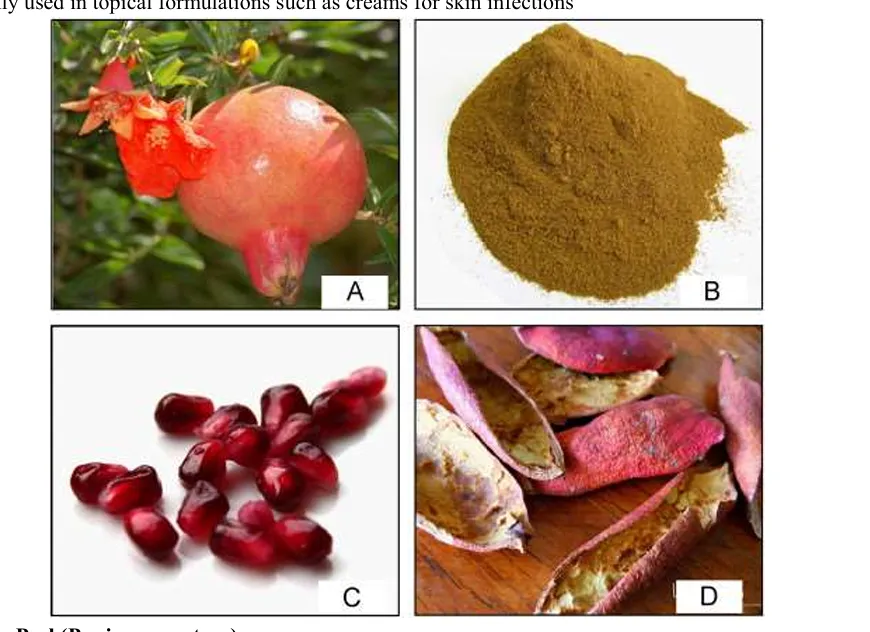
• Pomegranate Peel (Punica granatum):
• Main Compounds:
The potential antifungal activity of Pomegranate peel are attributed to the presence of Tannins, Ellagic Acid, Flavonoids, and Punicalagin.
• Mechanism of Action:
These phytochemicals work by causing damage to the fungal cell membrane, which prevents spore germination and lowers oxidative stress, ultimately leading to the death of fungal cells. According to reports, pomegranate peel extract has demonstrated potent antifungal activity against Trichophyton rubrum, Aspergillus niger, and Candida albicans, among other fungi.7
• Medicinal Benefits:
1. Antioxidant Activity: Helps protect cells from oxidative damage.
2. Antimicrobial Activity: Shows activity against certain microorganisms.
3. Antifungal Activity: Pomegranate peel extract has shown antifungal potential against certain fungal species.
4. Anti-inflammatory Activity: Helps reduce inflammation.
5. Wound Healing Activity: May support tissue repair and wound healing.19
• Side Effects:
1. May cause skin irritation, redness, or itching in sensitive individuals.
2. May cause allergic reactions in some individuals.
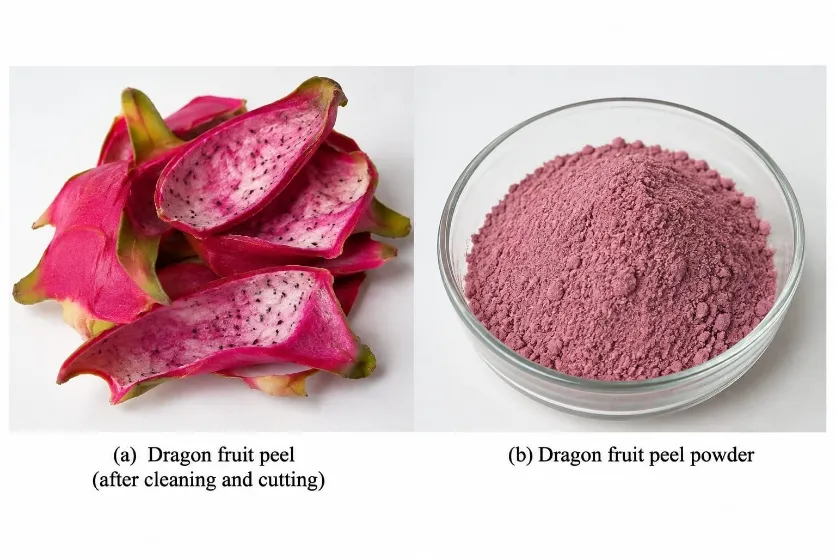
• Dragon fruit (Hylocereus polyrhizus):
• Main Compounds:
Red Dragon Fruit contain Phenolic Compounds, Flavonoids, Ascorbic acid (vitamin C) and Betacyanin are the major contributors to its Antioxidant effects.
• Medicinal Benefits:
1. Antioxidant Activity: Helps protect cells from oxidative damage.
2. Anti-inflammatory Activity: May help reduce inflammation.
3. Antimicrobial Activity: Shows potential activity against certain microorganisms.
4. Health Benefits: Contains bioactive compounds such as betalains and phenolics that may provide health benefits.18
• Side Effects of Dragon Fruit Peel
1. May cause mild skin irritation.
2. May cause itching and redness.
3. May cause allergic reactions in sensitive individuals.
4. May cause skin sensitivity.
• Literature Review:
1. Sindhu et al. (2022)
This study examined the most recent advancements in nanogel production and drug delivery. Phytochemistry is a discipline of chemistry that studies herbal compounds. Herbal substances have aided in the development of innovative remedies for a wide range of illnesses. Several of these compounds are forbidden from being used in medications due to broad medical characteristics and pharmacokinetics. A variety of new technical approaches have been investigated to ameliorate herbal discoveries in the pharmaceutical sector. The article focuses on the historical data for herb-related nanogels that are used to treat a variety of disorders with great patient compliance, delivery rate, and efficacy. Stimulus-responsive nanogels such as temperature responsive and pH-responsive systems are also discussed. Nanogel formulations, which have been hailed as promising targets for drug delivery systems, have the ability to alter the profile of a drug, genotype, protein, peptide, oligosaccharide, or immunogenic substance, as well as its ability to cross biological barriers, biodistribution, and pharmacokinetics, improving efficacy, safety, and patient cooperation.6
2. Sahu,G.K et al (2024)
Skin fungal infections are very common and are becoming harder to treat because many antifungal medicines have side effects and some infections are becoming drug resistant. Due to this natural and safer remedies from plants and traditional sources are gaining interest. Pomegranate peel is a fruit waste material, but it contains many natural compounds like tannins, flavonoids, ellagic acid and punicalagin which can damage fungal cells and stop their growth.many studies show that pomegranate peel extract works well against different skin-infecting fungi, including candida albicans, aspergillus niger, and Trichophyton rubrum. It is also antioxidant, anti-inflammatory and helps in wound healing which makes it useful for topical skin products.7
3. Deepak et al 2025
Moringa gum was grafted with pectin and silver to synthesize the nanogel composite (Ag-Mog-Pec) by a multi-step process, which was used for evaluating its swelling nature, anticancer activity and for enhancing the efficacy of antifungal medications. The average size of synthesized Ag-Mog-Pec was determined to be approxi mately 175.67 ± 0.88 nm. The synthesized nanogel was analyzed using Fourier Transform Infrared Spectroscopy (FTIR), Field Emission Scanning Electron Microscopy (FESEM), X-ray Diffraction (XRD) and Dynamic Light Scattering (DLS) to confirm successful synthesis and evaluate potential applications. The evaluation of swelling nature was performed to find out the water absorption capacity of the synthesized nanogel under two distinct thermal conditions (25 °C and 37 °C) and across the various pH levels (2.2, 4.2, 6.5, 7.4 and 8.2). The effectiveness of the synthesized nanogel against cancer was tested using the MTT assay, which showed IC50 values of 13.12 and 18.79 μg/ml for the A549 and L929 cell lines, respectively. The antifungal investigations were performed on four distinct fungal strains, such as Candida albicans, Candida parapsilosis, Trichophyton rubrum and Trichophyton violaceum. The antifungal study revealed a more efficient inhibitory zone, particularly against Candida albi cans, Candida parapsilosis and Trichophyton rubrum, with Itraconazole (a known antifungal drug) being used as a positive control.1
4. Kale et al. (2026)
Fungal infections represent a major public health concern worldwide, affecting millions of individuals annually. These infections range from mild superficial skin conditions such as dermatophytosis and candidiasis to severe systemic diseases that may lead to life-threatening complications, particularly in immunocompromised patients. Conventional antifungal therapies, including topical creams, ointments, and systemic formulations, often suffer from several limitations such as poor drug solubility, low bioavailability, limited penetration through biological barriers, and significant systemic side effects. Drugs like Amphotericin B, although highly effective, are associated with serious toxicities including nephrotoxicity and infusion-related reactions. Nanotechnology has emerged as a promising field in pharmaceutical sciences to overcome these limitations. Among various nanocarriers, nanogels have gained significant attention due to their unique structural and functional properties. Nanogels are nanosized, three-dimensional cross-linked polymeric networks capable of absorbing large amounts of water while maintaining structural integrity. These carriers combine the advantages of hydrogels and nanoparticles, including high drug loading capacity, biocompatibility, tunable drug release, and improved stability. Nanogel-based antifungal delivery systems offer several advantages such as enhanced drug solubility, targeted drug delivery, controlled release profiles, improved skin penetration, and reduced systemic toxicity. The selection of appropriate polymers, crosslinking techniques, and preparation methods plays a crucial role in determining the therapeutic efficiency of nanogel formulations. This review focuses on the formulation and evaluation of nanogel-based antifungal drug delivery systems. It discusses various polymers used in nanogel preparation, methods of synthesis including physical and chemical cross-linking techniques, and the critical evaluation parameters required to ensure formulation stability, safety, and therapeutic effectiveness. Additionally, recent advances, clinical challenges, and future perspectives of nanogel technology in antifungal therapy are also highlighted.2
5. Harshitha, S.et al (2024)
Dragon fruit (Hylocereus spp.) has emerged as a globally significant fruit crop, valued for its distinctive appearance and nutritional profile. Native to Central America, this cactaceous vine has adapted to various tropical and subtropical regions worldwide. The fruit's vibrant exterior houses a white or red pulp studded with numerous edible seeds. Cultivation techniques have evolved to optimize yield and quality, with vertical or horizontal support systems and specific nutrient management strategies being crucial for successful production. Dragon fruit propagation primarily relies on stem cuttings, which can bear fruit within 14-18 months under favorable conditions. The fruit's nutritional composition is noteworthy, containing high levels of antioxidants, vitamins (particularly vitamin C), minerals, and dietary fiber. These components contribute to its potential health benefits, including cholesterol reduction, improved digestion, and enhanced immune function. Pharmacological studies have demonstrated various biological activities of dragon fruit extracts, such as anti-hyperlipidemic, hepatoprotective, and anti-ulcer effects. These properties are attributed to bioactive compounds like betalains, phenolics, and flavonoids present in the fruit. Additionally, dragon fruit shows promise in managing chronic conditions like diabetes and obesity, potentially through its effects on blood glucose regulation and lipid metabolism.8
• Proposed Methodology:
The outlined approach consists of extracting pomegranate peel and dragon fruit peel, followed by their amalgamation into a compatible nanogel formulation. The composition is suggested for assessment for its visual characteristics, pH level, viscosity, spreadability, particle dimensions, stability, and antifungal efficacy. Additional experimental investigations are necessary to validate the creation and efficacy of the nanogel.
MATERIALS AND METHODS:
| Crude | A | B |
|---|---|---|
| Image | ||
| Common Name | Pomegranate | Dragon fruit |
| Biological Name | Punica granatum | Hylocereus polyrhizus |
| Family | Punicaceae | Cactaceae |
| Part Used | Peel of fruit | Peel of fruit |
| Chemical Constituents | Punicalagin , Punicalin , Tannins, Gallic Acid etc. | Phenolic compounds, Flavonoids, Ascorbic acid (vitamin C), and Betacyanin etc. |
| Extract | Ethanol | Hydroalcoholic |
| Uses | Antimicrobial, antioxidant, Antidiabetic Activity etc. | Antioxidant activity, Antimicrobial Activity, Natural colouring agent |
• List of Ingredients for Antifungal Nanogel Formulation
| Sr.No | Ingredients | purpose |
|---|---|---|
| 1 | Pomegranate peel extract | Herbal active ingredient |
| 2 | Dragon fruit peel extract | Herbal active ingredient |
| 3 | Carbopol 940 | Gelling agent |
| 4 | Propylene glycol | Co-solvent |
| 5 | Sodium lauryl sulfate | Surfactant |
| 6 | Triethanolamine | pH adjustment & gel formation |
| 7 | Glycerine | Humectant |
| 8 | Ethanol | Solvent |
| 9 | Purified Water | Solvent /Vehicle. |
METHOD:
Preparation of Pomegranate Peel Extract:
Preparation of Dragon Fruit Peel Extract:
Preparation of Nanogel Base:
Incorporation of Herbal Extracts:
Evaluation of Herbal Nanogel:
The proposed formulation may be evaluated for the following parameters:
1. Physical appearance
2. pH
3. Viscosity
4. Spreadability
5. Homogeneity
6. Particle size
7. In-vitro skin irritation test ((OECD Test Guideline 439 – Reconstructed Human Epidermis Method).
8. Antifungal activity.
RESULTS & DISCUSSION:
Pomegranate and dragon fruit peels contain a variety of bioactive substances, including phenols, flavonoids, tannins, and betacyanins, according to the reviewed literature.20 These substances have antioxidant and potential antifungal properties. Extracts from pomegranate peels have demonstrated possible antifungal efficacy against Trichophyton rubrum and Candida albicans, among other fungal species. Beneficial phytochemicals found in dragon fruit peel may also contribute to its biological qualities.18
Potential benefits of nanogel-based drug delivery systems include better skin distribution, controlled drug release, and increased drug stability. Pomegranate and dragon fruit peel extracts combined in a nanogel formulation may offer a potential method for topical antifungal applications. However, additional experimental research is required to confirm the suggested formulation's efficacy, safety, stability, and antifungal activity.10
• Future Scope:
1. Herbal nanogel may improve the delivery and antifungal activity of herbal constituents.
2. It may provide sustained drug release and better skin penetration.
3. Further studies can evaluate its safety, stability, and effectiveness against different fungal strains.
4. Clinical studies may establish its potential for treating fungal skin infections.
5. Optimization and scale-up may support future commercial development of herbal nanogel as a topical antifungal formulation.
CONCLUSION:
The potential antifungal properties of pomegranate and dragon fruit peels may be attributed to the presence of bioactive compounds such as phenols, flavonoids, tannins, and betacyanins. Because of its potential for better skin delivery, enhanced stability, and controlled release, herbal nanogel presents a viable medication delivery method. These herbal extracts together might have antifungal uses. Further experimental studies are required to evaluate the composition, safety, stability, and antifungal efficacy of the proposed nanogel formulation.
• Acknowledgment:
I would like to express my sincere gratitude to everyone who supported and guided me throughout the completion of my B. Pharmacy Review Project entitled “A Review on Formulation and Evaluation of Herbal Nanogel Containing Pomegranate Peel and Dragon Fruit Peel for Antifungal Activity”.
First and foremost, I express my heartfelt gratitude to our respected Principal, Dr. Vivekanand Ankush Kashid, for providing the necessary facilities, encouragement, and institutional support to complete this review work successfully.
I am deeply thankful to my respected Guide, Dr. Rushikesh Kailash Salve, for his valuable guidance, continuous support, encouragement, and suggestions throughout the preparation of this review paper.
I also extend my sincere thanks to my Co-Guide, Mr. Rahul Rajendra More, for his valuable assistance, cooperation, and support.
I am also thankful to my parents and friends for their constant encouragement and support throughout this work.
Name of Student: Shweta Babasaheb Satalkar
REFERENCES






Shweta Satalkar, Priyanka Bhagwat, Dipali Bidgar, Aditya Jawarkar, Dr. Rushikesh Salve, Dr. Vivekanand Kashid, Rahul More, Akshada Gangurde, A Review on Formulation and Evaluation of Herbal Nanogel Containing Pomegranate Peel and Dragon Fruit Peel for Antifungal Activity, Int. J. of Pharm. Sci., 2026, Vol 4, Issue 11, 3976-3984. https://doi.org/10.5281/zenodo.24415545
 10.5281/zenodo.24415545